
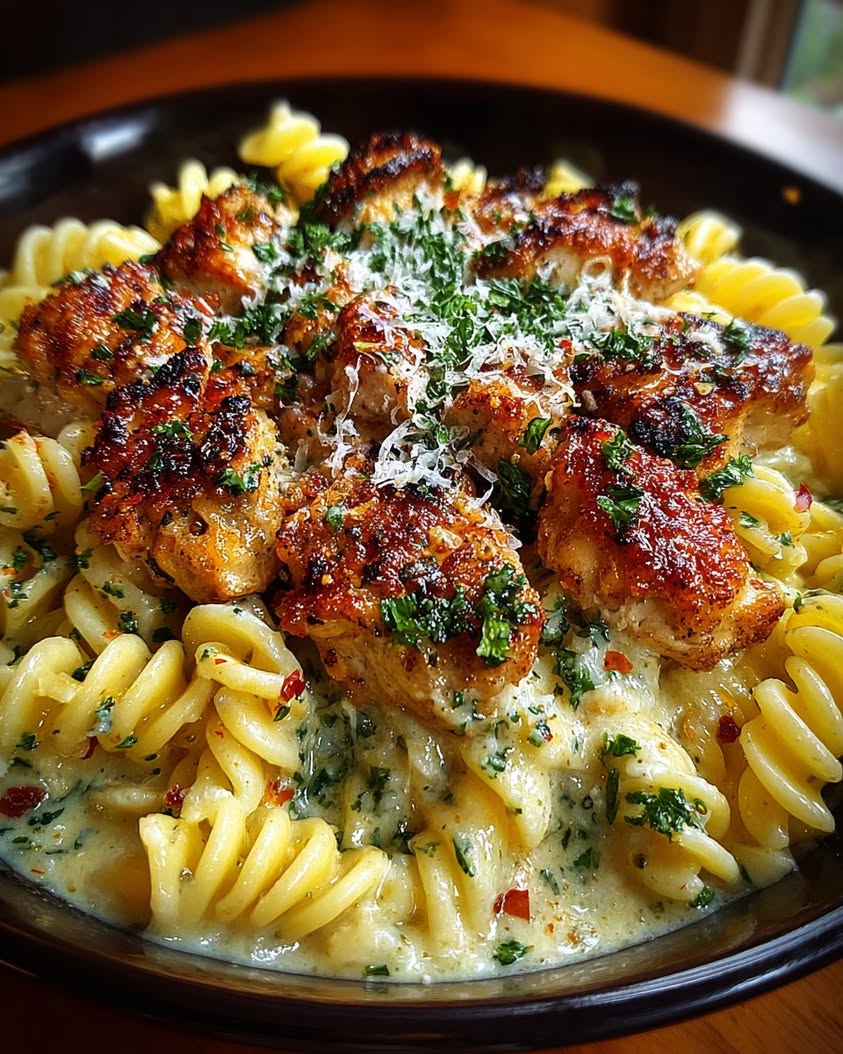
Creamy Garlic Butter Chicken & Rotini in Parmesan Sauce: A Weeknight Wonder
Imagine a dish that delivers the ultimate comfort food experience with minimal kitchen effort. This Creamy Garlic Butter Chicken & Rotini in Parmesan Sauce is exactly that kind of magic. Moreover, it combines tender, pan-seared chicken with twirlable pasta, all enveloped in a luxuriously smooth sauce. The aroma of garlic sizzling in butter alone will have your family gathering in the kitchen. Ultimately, this recipe proves that a decadent, restaurant-quality meal is completely achievable on a busy weeknight.
The beauty of this Creamy Garlic Butter Chicken Rotini lies in its harmonious balance. For instance, the savory, golden-brown chicken provides a perfect contrast to the silky, cheesy sauce. Meanwhile, the rotini pasta acts like little edible spoons, capturing every drop of the creamy parmesan sauce in its corkscrew shape. Consequently, each forkful is a perfect bite of flavor and texture. This dish is a true crowd-pleaser, guaranteed to satisfy even the pickiest eaters around your table.
Furthermore, this recipe is incredibly versatile. You can easily adapt it based on what you have in your pantry or fridge. Whether you need a quick family dinner or an impressive dish for casual entertaining, this creamy garlic butter chicken pasta delivers every single time. Let’s dive into why this recipe deserves a permanent spot in your dinner rotation.
Quick Recipe Highlights
- Flavor Profile: This dish features a rich, savory foundation from the garlic and butter, beautifully complemented by the nutty, salty depth of parmesan cheese. The cream adds a luxurious sweetness that balances the savory elements perfectly.
- Texture: Expect tender, juicy chicken bites paired with perfectly al dente rotini pasta. The sauce itself is velvety and clings to every component, creating a wonderfully cohesive and satisfying mouthfeel.
- Aroma: The cooking process fills your kitchen with the irresistible scent of garlic toasting in melted butter, followed by the warm, inviting fragrance of simmering cream and parmesan cheese.
- Visual Appeal: The finished dish boasts appealing golden-brown chicken pieces nestled in creamy, white sauce-coated pasta, often garnished with vibrant green parsley for a fresh pop of color.
- Skill Level Needed: This is a beginner-friendly recipe. It requires basic techniques like pan-searing chicken and making a simple pan sauce, making it an excellent choice for novice cooks building confidence.
- Special Equipment: You only need a large skillet or sauté pan and a pot for boiling pasta. A sturdy wooden spoon or spatula is helpful for stirring the sauce.
Recipe Overview
- Difficulty Level: We rate this recipe as “Easy” because it uses straightforward, common cooking methods. The steps are sequential and logical, primarily involving cooking the chicken, boiling pasta, and combining them with a simple sauce. There are no advanced techniques like tempering eggs or making a roux required.
- Category: This dish falls squarely into the main course category for dinner. It is a complete, protein-and-carb centered meal that is hearty and filling. Additionally, it can be considered a comfort food classic and a family-friendly weeknight dinner solution.
- Cuisine: While inspired by Italian-American pasta dishes, this is a modern fusion recipe. It draws on Italian techniques for cooking pasta and using parmesan, but the creamy, garlic-butter sauce is a popular contemporary twist found in home kitchens worldwide.
- Cost: This is a mid-range cost recipe. Chicken breast and pantry staples like garlic and butter are affordable. The primary cost drivers are fresh cream and a good block of parmesan cheese. However, it remains far more economical than dining out.
- Season: This creamy garlic butter chicken rotini is truly a year-round dish. It provides comforting warmth in fall and winter. Conversely, it remains light enough for spring and summer evenings, especially when served with a crisp side salad.
- Occasion: Perfect for busy weeknights, casual weekend family dinners, or even potlucks. It’s also excellent for feeding a group without requiring hours of active cooking time.
Why You’ll Love This Recipe
First and foremost, the taste is absolutely phenomenal. The combination of savory garlic butter sauce with rich parmesan creates a deeply satisfying flavor profile that feels indulgent. Every component, from the seasoned chicken to the pasta, works in harmony. Furthermore, the creamy sauce coats everything evenly, ensuring that no bite is bland. This Creamy Garlic Butter Chicken Rotini is the definition of comfort in a bowl, offering a familiar yet special eating experience that appeals to all ages.
From a practical standpoint, the convenience factor is a major win. This entire meal comes together in about 40 minutes, with most of that time being hands-off for pasta boiling and sauce simmering. Moreover, you likely have many of the core ingredients already in your kitchen. The process is straightforward, eliminating the stress of complicated techniques. Consequently, you can reliably produce a delicious, impressive meal even after a long workday, making it a sustainable addition to your routine.
Nutritionally, this dish provides a good balance. Chicken breast is a lean source of protein essential for muscle maintenance. Meanwhile, the dairy in the sauce offers calcium and vitamins. You can easily boost the nutritional profile by adding spinach, sun-dried tomatoes, or broccoli to the sauce. Therefore, you get a meal that is both satisfying and can be adapted to include more vegetables, supporting a balanced diet without sacrificing flavor.
For social and entertaining value, this recipe is a superstar. It scales up beautifully for guests, and its universally appealing nature means you won’t have to worry about picky eaters. The presentation in a large serving bowl is always inviting. Additionally, the act of twirling the rotini pasta feels communal and fun. It’s a dish that encourages people to gather, share, and enjoy each other’s company, which is the heart of a great meal.
Finally, it is incredibly cost-effective. Compared to ordering similar pasta dishes from a restaurant or delivery service, making this Creamy Garlic Butter Chicken & Rotini at home saves a significant amount of money. You control the quality of ingredients, opting for organic chicken or real Parmigiano-Reggiano if you choose. This accessibility means you can enjoy a gourmet-tasting meal on a regular budget, which is a fantastic feeling.
Historical Background and Cultural Significance
The story of this dish is less about ancient tradition and more about modern culinary evolution. It sits at the intersection of Italian pasta culture and the American love for rich, creamy sauces. Pasta with butter and cheese, like the classic Alfredo, has roots in Rome. However, the addition of chicken as a primary protein is a distinctly American adaptation, reflecting the mid-20th century trend of creating hearty, all-in-one casserole and skillet meals for families.
Culturally, it represents the globalization of comfort food. The garlic butter element has strong ties to French cuisine, while the pasta is Italian. The method of pan-searing protein and deglazing to make a sauce is a fundamental French technique adopted worldwide. This Creamy Garlic Butter Chicken Rotini is a testament to how home cooks blend traditions to create something new and beloved. It’s a dish born in home kitchens, shared through recipe cards and now food blogs, rather than in a specific restaurant.
The recipe has evolved significantly with changing dietary trends and ingredient availability. Originally, similar dishes might have used heavy roux-based sauces. The modern version often relies on reducing cream for a quicker, gluten-free sauce. The use of rotini, a pasta shape that gained massive popularity in the latter half of the 20th century, shows how practical considerations shape recipes. Its twists hold sauce better than many traditional shapes, making it a functional and delicious choice.
Regional variations are endless. In the American South, you might find a version with a splash of Cajun seasoning. In coastal areas, shrimp often replaces or joins the chicken. Some cooks add sun-dried tomatoes for a Mediterranean twist, while others incorporate mushrooms for an earthy flavor. This adaptability is the recipe’s true cultural significance; it serves as a versatile canvas that reflects the tastes and ingredients of the cook who makes it, making it a personal and shared experience simultaneously.
Ingredient Deep Dive
Chicken Breast: Boneless, skinless chicken breast is the lean protein star. A staple in modern diets due to its versatility and low fat content, it’s a great source of protein and B vitamins. For the best results in this Creamy Garlic Butter Chicken Rotini, look for plump, evenly-sized breasts. Pound them to an even thickness to ensure uniform cooking. You can substitute with chicken thighs for more flavor and juiciness, though the cook time may increase slightly. Always pat chicken dry before seasoning to achieve a proper sear.
Rotini Pasta: This corkscrew-shaped pasta is a modern invention designed for maximum sauce adherence. Its twists and grooves trap the creamy parmesan sauce, delivering flavor in every bite. Made from durum wheat semolina, it provides complex carbohydrates for energy. Cook it in well-salted water until al dente, as it will continue to cook slightly in the hot sauce. You can easily substitute with fusilli, penne, or farfalle. For a gluten-free version, use a brown rice or quinoa-based rotini.
Butter & Garlic: This dynamic duo forms the flavor foundation. Butter, specifically unsalted, allows you to control the dish’s salt level. It provides rich fat that carries flavor and creates a luxurious mouthfeel. Garlic, a member of the allium family, has been used medicinally and culinarily for millennia. For the best flavor, use fresh garlic cloves and mince them finely. Avoid jarred pre-minced garlic if possible, as it can have a bitter taste. The key is to cook the garlic in the butter just until fragrant, preventing it from burning and turning acrid.
Heavy Cream & Parmesan Cheese: These are the pillars of the sauce. Heavy cream, with its high fat content, reduces and thickens into a velvety base without needing a flour roux. Parmesan cheese, specifically freshly grated Parmigiano-Reggiano or a similar hard cheese, adds salty, nutty, umami depth. Pre-grated cheese often contains anti-caking agents that can make your sauce grainy. Therefore, always grate your own from a block. The cheese melts into the warm cream, creating an emulsified, cohesive sauce that clings perfectly to the pasta and chicken.
Common Mistakes to Avoid
- Overcooking the Chicken: This is the most common pitfall. Chicken breast cooks quickly and becomes dry and tough when overdone. Use a meat thermometer and pull the chicken at 165°F, remembering it will carryover cook while resting. Slicing it against the grain also ensures tenderness.
- Using Pre-Grated Parmesan: Pre-packaged grated cheese contains cellulose to prevent clumping. This additive prevents the cheese from melting smoothly into your Creamy Garlic Butter Chicken Rotini sauce, often resulting in a grainy or separated texture. Always grate your own cheese from a block.
- Not Salting the Pasta Water: Pasta water should taste like the sea. This is your primary chance to season the pasta itself. Undersalted water leads to bland pasta, forcing you to overseason the sauce later. Use at least one tablespoon of kosher salt per gallon of water.
- Adding Cheese to a Boiling Sauce: If you add grated parmesan to a violently bubbling cream sauce, the high heat can cause the fats and proteins to separate. Always remove the pan from the heat or turn it to very low before stirring in the cheese until it’s just melted.
- Crowding the Pan with Chicken: Adding too many chicken pieces at once steams them instead of searing them. You want a golden-brown crust for flavor. Cook in batches if necessary, ensuring each piece has contact with the hot pan surface.
- Using Margarine or Light Butter: These products contain more water and additives. They will not provide the same rich flavor or proper cooking fat needed for searing and sauce building. For the best Creamy Garlic Butter Chicken pasta, use real, unsalted butter.
- Skipping the Pasta Water: The starchy pasta water is a magical ingredient. Adding a splash to your sauce helps it emulsify and cling to the pasta. It adjusts the consistency perfectly. Never drain your pasta and forget to reserve a cup of the cooking liquid.
- Burning the Garlic: Garlic burns in seconds and turns bitter, ruining the entire dish. Cook it in the butter over medium or medium-low heat just until it becomes fragrant, usually 30-60 seconds. Stir it constantly during this step.
Essential Techniques
Pan-Searing Chicken: This technique creates a flavorful Maillard reaction (browning) on the chicken’s surface, adding depth to the entire dish. First, ensure your chicken is dry and at room temperature. Next, heat your pan and oil until hot before adding the chicken. Then, resist the urge to move it; let it develop a golden crust before flipping. The visual cue for success is a easy release from the pan and a rich brown color. A common pitfall is moving the chicken too soon, causing it to stick and tear.
Building a Pan Sauce: After removing the chicken, you build the sauce in the same pan. This utilizes the flavorful browned bits (fond) left behind. First, cook the garlic in the butter. Then, deglaze with a bit of broth or wine if using, scraping up the fond. After that, add the cream and simmer to reduce and concentrate flavor. Finally, finish by stirring in cheese off the heat. The key is managing heat to avoid burning and achieving the right consistency—it should coat the back of a spoon.
Finishing Pasta in the Sauce: This is a game-changer for flavor. Instead of just topping cooked pasta with sauce, you combine them in the skillet. Add the al dente pasta and a splash of starchy pasta water to the creamy sauce. Then, toss everything together over low heat. Consequently, the pasta absorbs the sauce’s flavor and the starch helps thicken it further. The pasta becomes one with the dish, not just a separate component. The visual cue is a glossy, evenly coated pasta that isn’t swimming in excess liquid.
Pro Tips for Perfect Creamy Garlic Butter Chicken & Rotini
First, bring your chicken to room temperature for 15-20 minutes before cooking. This simple step promotes even cooking, preventing a raw center and overcooked edges.
Second, use a mix of butter and a high-smoke-point oil like avocado or grapeseed oil to sear the chicken. The oil raises the smoke point of the butter, allowing you to get a good sear without burning.
Third, reserve at least one cup of starchy pasta water before draining your rotini. This liquid gold is your secret weapon for adjusting sauce consistency at the end.
Fourth, let your cooked chicken rest for 5-10 minutes before slicing. This allows the juices to redistribute throughout the meat, ensuring every bite is juicy.
Fifth, add a pinch of freshly grated nutmeg to the cream sauce. This classic Italian trick enhances the cheese’s flavor and adds a subtle warmth without being identifiable.
Sixth, if your sauce seems too thin after adding the pasta, let it simmer for another minute or two. The starch from the pasta will continue to thicken it as it cooks.
Seventh, garnish with fresh herbs just before serving. Flat-leaf parsley adds color and a fresh note, while chopped chives or basil provide a different aromatic profile.
Eighth, for the ultimate restaurant-style finish, drizzle a tiny bit of high-quality extra virgin olive oil over each plated serving just before eating.
Variations and Adaptations
Regional Variations: For a Tuscan twist, add a handful of chopped sun-dried tomatoes and spinach to the sauce. For a Cajun-inspired version, coat the chicken in Cajun seasoning before searing and add sliced andouille sausage. A Greek variation could include kalamata olives, artichoke hearts, and a sprinkle of oregano, using feta cheese as a garnish instead of mixing parmesan into the sauce.
Seasonal Adaptations: In spring, add fresh peas and asparagus tips. During summer, incorporate roasted cherry tomatoes and fresh basil. For autumn, sautéed mushrooms and sage make a wonderful addition. In winter, roasted broccoli or cauliflower florets add heartiness. These additions not only provide seasonal flavor but also boost the nutritional content of your Creamy Garlic Butter Chicken Rotini.
Dietary Modifications: For a gluten-free meal, use your favorite gluten-free rotini pasta. To make it dairy-free, substitute butter with vegan butter or olive oil, use full-fat coconut milk instead of cream, and use a nutritional yeast or vegan parmesan alternative. For a keto or low-carb version, serve the chicken and sauce over zucchini noodles (zoodles) or shirataki noodles instead of pasta.
Flavor Variations: Incorporate different herbs like thyme, rosemary, or tarragon. Add a teaspoon of Dijon mustard or a dash of white wine to the sauce for acidity. For a smoky note, use smoked paprika on the chicken. A tablespoon of pesto stirred in at the end creates a vibrant green sauce. For a spicy kick, add red pepper flakes with the garlic.
Serving and Presentation Guide
Plating Techniques: For family style, present the entire Creamy Garlic Butter Chicken & Rotini in a large, shallow serving bowl. Toss gently to ensure even distribution of chicken and sauce. For individual plates, use tongs to create a nest of pasta in the center of a warm plate. Then, artfully arrange the sliced chicken on top or around the pasta. Drizzle a little extra sauce over the chicken for a glossy finish.
Garnishing Ideas: Fresh chopped parsley is the classic, providing color and a fresh note. Alternatively, thinly sliced chives, basil ribbons, or microgreens work beautifully. A final sprinkle of freshly grated parmesan cheese is always welcome. For texture contrast, add a small handful of toasted pine nuts or walnuts. A light grating of lemon zest over the top can brighten the rich flavors.
Traditional Accompaniments: A simple green salad with a sharp vinaigrette (like lemon or balsamic) cuts through the richness of the pasta. Garlic bread or a crusty baguette is perfect for sopping up any remaining sauce. For a vegetable side, roasted broccoli, asparagus, or a medley of seasonal veggies complements the meal without competing with the main dish’s flavors.
Wine and Beverage Pairing
Wine Pairings: A crisp, unoaked white wine like Pinot Grigio or Sauvignon Blanc works wonderfully. Their acidity cleanses the palate between bites of the rich, creamy sauce. Alternatively, a light-bodied Chardonnay with minimal oak can complement the butter and cream notes. For red wine lovers, a fruity, low-tannin red like a Beaujolais or Pinot Noir can be a surprising and successful match, especially if the dish includes mushrooms.
Non-Alcoholic Alternatives: Sparkling water with a squeeze of lemon or lime provides refreshing contrast. Iced herbal tea, such as mint or lemon verbena, is another excellent choice. For a more decadent option, a cream soda or ginger beer can play off the dish’s sweet and savory notes. A simple homemade lemonade also balances the richness beautifully.
Serving Suggestions: Serve white wines well-chilled, around 45-50°F. Provide both wine and non-alcoholic options for guests. Always offer water on the table to help cleanse the palate. If serving for a casual dinner, the beverage pairing can be as simple as a craft beer or the family’s favorite iced tea.
Storage and Shelf Life
Storage Methods: Store leftover Creamy Garlic Butter Chicken Rotini in an airtight container in the refrigerator. Cool the pasta completely before sealing the container to prevent condensation, which can make the pasta soggy. It’s best to store it within two hours of cooking. For optimal quality, keep the pasta and any extra sauce mixed together to prevent drying out.
Shelf Life & Reheating: Properly stored, leftovers will keep for 3-4 days in the refrigerator. For reheating, add a splash of milk, cream, or broth to a skillet over medium-low heat. Add the pasta and stir gently until warmed through. You can also reheat in the microwave in 30-second intervals, stirring between each and adding a tablespoon of liquid. Avoid high heat, as it can cause the sauce to separate.
Freezing Guidelines: You can freeze this dish, though the texture of the cream sauce may change slightly upon thawing. Freeze in airtight containers or heavy-duty freezer bags for up to 2 months. Thaw overnight in the refrigerator before reheating. When reheating frozen pasta, you will likely need to add more liquid to restore the sauce’s creamy consistency.
Make Ahead Strategies
Prep Timeline: You can prep several components in advance to speed up dinner time. Up to a day ahead, slice your chicken breasts and store them seasoned in a zip-top bag in the fridge. Mince the garlic and store it in a small container. Grate the parmesan cheese and keep it refrigerated. Measure out your dry spices and cream.
Assembly & Reheating: For the best texture, cook the pasta fresh. However, you can fully assemble the dish, cool it completely, and refrigerate it for next-day serving. Reheat it gently on the stovetop with added liquid. Alternatively, you can cook the chicken and make the sauce base ahead of time. Then, simply cook the pasta fresh and combine everything in the hot sauce to finish.
Fresh Element Additions: If making ahead, add any fresh herbs or a final garnish of cheese just before serving. This preserves their vibrant color and flavor. Also, adjust the seasoning with salt and pepper at the end, as flavors can mellow during storage.
Scaling Instructions
Halving the Recipe: Halving this Creamy Garlic Butter Chicken pasta is straightforward. Simply divide all ingredient quantities by two. Use a medium skillet instead of a large one. Cooking times for the chicken may decrease slightly, so watch for visual cues. The sauce will reduce more quickly due to the smaller volume, so monitor it closely to prevent over-thickening.
Doubling or Tripling: For a crowd, double or triple the ingredients. You will need to cook the chicken in more batches to avoid overcrowding the pan. Use a very large pot for boiling the pasta, or cook it in two batches. Consider using a Dutch oven or large stockpot to combine everything at the end. Sauce reduction time will increase, so be patient and simmer until it reaches the desired consistency.
Equipment Adjustments: Scaling up requires larger equipment. Ensure your largest skillet or pot can accommodate the final volume. If not, combine the cooked pasta and sauce in a large serving bowl or a clean stockpot. The key is to maintain the technique—don’t compromise on proper searing or sauce reduction just because the quantity is larger.
Nutritional Deep Dive
Macro Breakdown: A serving of this Creamy Garlic Butter Chicken Rotini provides a balance of macronutrients. The chicken breast offers high-quality, lean protein essential for satiety and muscle repair. The pasta supplies complex carbohydrates for sustained energy. The sauce, from butter, cream, and cheese, contributes healthy fats necessary for nutrient absorption and flavor. This combination makes for a satisfying meal that keeps you full for hours.
Micronutrient Analysis: This dish is a good source of several vitamins and minerals. Chicken provides B vitamins, particularly B6 and niacin. Parmesan cheese is rich in calcium and phosphorus for bone health. Garlic contains allicin, a compound with noted health benefits. Using whole-grain rotini would further increase the fiber, B vitamin, and mineral content significantly.
Health Considerations: As a rich dish, it is calorie-dense, so portion control is key for weight management. You can lighten it by using half-and-half instead of heavy cream, though the sauce will be thinner. Increasing the ratio of chicken and vegetables to pasta boosts protein and fiber. For those monitoring sodium, use low-sodium broth and be mindful of the salt added to the pasta water and sauce.
Dietary Adaptations
Gluten-Free: This adaptation is simple. Substitute regular rotini with a gluten-free pasta made from brown rice, corn, quinoa, or a blend. Ensure your broth (if used) is certified gluten-free. All other core ingredients—chicken, butter, cream, garlic, cheese—are naturally gluten-free. The cooking process remains identical.
Dairy-Free: Replace butter with a plant-based butter or olive oil. Use full-fat canned coconut milk instead of heavy cream—it provides a similar richness and texture. For the cheese, use a store-bought vegan parmesan or make your own from blended nuts, nutritional yeast, and salt. The flavor profile will be different but still delicious.
Keto/Low-Carb: Omit the pasta entirely. Serve the creamy garlic butter chicken and sauce over steamed cauliflower rice, zucchini noodles (sautéed briefly), or shirataki noodles. Ensure any added broth is low-carb. You can also increase the fat content by using more butter or cream if desired to meet macronutrient goals.
Troubleshooting Guide
Sauce is Too Thin: If your sauce hasn’t thickened enough, let it simmer uncovered for a few more minutes to reduce and concentrate. Alternatively, create a quick slurry by mixing a teaspoon of cornstarch with a tablespoon of cold water, then whisk it into the simmering sauce. The starch from the pasta water is always the best first thickener, so add another splash and let it cook down.
Sauce is Too Thick or Gluey: A sauce that becomes too thick often needs more liquid. Gradually whisk in additional warm broth, milk, or reserved pasta water until it reaches your desired consistency. If the sauce has become gluey from overcooked cheese, adding a bit of fresh cream and gently reheating can sometimes help smooth it out.
Chicken is Dry: Unfortunately, you cannot undo overcooked chicken. However, you can mitigate it by slicing it thinly and ensuring it’s well-coated in the creamy sauce. The sauce will help add moisture and improve the eating experience. For next time, remember to use a thermometer and pull the chicken at 160-165°F, as it will continue to cook while resting.
Recipe Success Stories
Community feedback on this Creamy Garlic Butter Chicken & Rotini recipe has been overwhelmingly positive. Many home cooks report it becoming a weekly staple. One reader shared that adding a cup of frozen peas at the end made it a complete hit with her kids, sneaking in a vegetable effortlessly. Another mentioned using the sauce base as a way to clean out the veggie drawer, adding bell peppers and onions for extra nutrition and color.
Adaptation stories are inspiring. A follower with a dairy allergy successfully made it with coconut milk and nutritional yeast, declaring it a new family favorite. Several keto dieters have praised the versatility of serving it over cauliflower rice. One home chef even used the technique with shrimp instead of chicken for a special date night, proving the recipe’s framework is solid and adaptable to personal tastes and occasions.
Frequently Asked Questions
Q: Can I use chicken thighs instead of breasts?
A: Absolutely. Chicken thighs are more forgiving and flavorful due to their higher fat content. They will take a few minutes longer to cook through. Ensure the internal temperature reaches 165°F. Their richer flavor pairs wonderfully with the creamy garlic sauce.
Q: My sauce broke and looks oily. How can I fix it?
A: A broken sauce usually means the emulsion of fat and liquid has separated. Remove it from heat immediately. Try whisking in a tablespoon of cold butter or a splash of cold cream vigorously. If that fails, blend it briefly with an immersion blender. Often, adding the starchy pasta water and tossing with the pasta can bring it back together.
Q: Can I make this without heavy cream?
A: Yes, but the texture will be different. Half-and-half will work but produce a thinner sauce. For a lighter version, you can use whole milk thickened with a bit of cornstarch slurry. Full-fat coconut milk is the best dairy-free alternative for maintaining richness.
Q: What’s the best way to reheat leftovers?
A: The stovetop is best. Place leftovers in a skillet over low-medium heat. Add a splash of milk, broth, or water to loosen the sauce. Stir gently until heated through. Microwave reheating can work in 30-second intervals with stirring, but it risks uneven heating and further drying.
Q: Can I freeze this dish?
A: You can, but be aware that creamy pasta dishes can suffer textural changes upon thawing. The sauce may separate slightly. Reheat it slowly on the stovetop, adding fresh liquid to help re-emulsify the sauce. It’s best consumed within 2 months of freezing.
Q: What can I use instead of rotini pasta?
A: Any short pasta that holds sauce well is a great substitute. Fusilli, penne, rigatoni, farfalle (bowtie), or shells all work perfectly. The goal is to choose a shape with nooks and crannies to capture the creamy parmesan sauce.
Q: How can I add more vegetables to this recipe?
A> It’s very easy. Sauté sliced mushrooms, bell peppers, or broccoli florets in the pan after removing the chicken, before you add the garlic. Spinach can be stirred into the hot sauce at the very end until wilted. Sun-dried tomatoes or artichoke hearts are also fantastic additions.
Q: Why is my grated cheese clumping in the sauce?
A> This usually happens if you add the cheese all at once to a very hot sauce. Remove the pan from the heat first. Then, add the cheese gradually, stirring constantly until each addition melts before adding more. Using freshly grated cheese from a block, not pre-grated, is crucial.
Additional Resources
If you loved this Creamy Garlic Butter Chicken Rotini, explore other one-pan pasta wonders. A sun-dried tomato and spinach version or a lemon garlic shrimp pasta use similar techniques. For mastering the basics, our guides on “How to Cook Chicken Breast Perfectly Every Time” and “The Art of the Simple Pan Sauce” are excellent next reads. Understanding these foundational skills will make you confident in creating countless variations on this comforting theme.
For ingredient quality, investing in a good microplane for grating cheese and garlic makes prep a breeze. A large, heavy-bottomed skillet is the most important piece of equipment for success. Finally, remember that the best recipes are those you make your own. Don’t be afraid to experiment with herbs, spices, and add-ins based on what you love. Happy cooking!
{“success”:true,”message”:”Recipe created successfully”,”post_id”:9355,”tasty_recipe_id”:9355,”shortcode”:”“}

I’m Billy, a classically trained culinary school graduate from The Culinary Institute of America with over 12 years in the restaurant industry and over 19 years of cooking experience.