
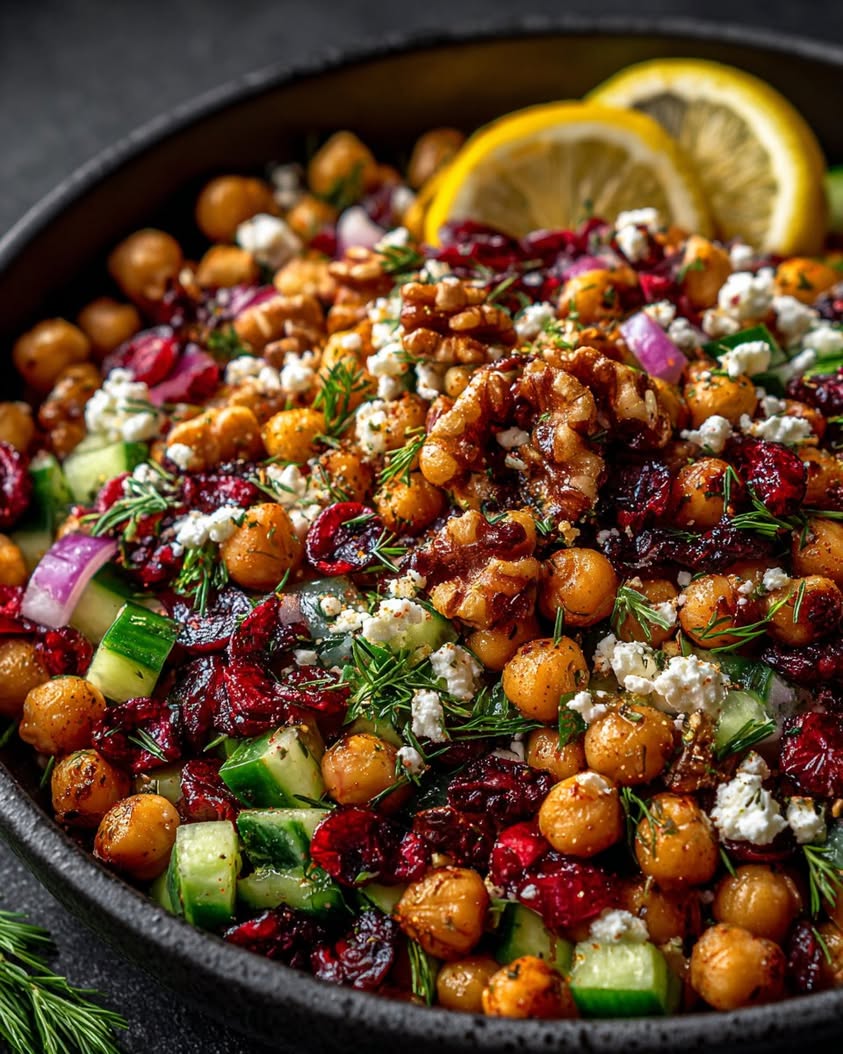
Feta and Cranberry Chickpeas with Lemon Vinaigrette: A Vibrant, Flavor-Packed Salad
This Feta and Cranberry Chickpea Lemon Salad is a true celebration of textures and tastes. Moreover, it comes together in mere minutes, making it the ultimate solution for busy weeknights or last-minute gatherings. The combination of creamy, salty feta with sweet-tart dried cranberries creates a perfect flavor balance. Meanwhile, the hearty chickpeas provide a satisfying, protein-rich base that keeps you full for hours.
Furthermore, the star of this dish is undoubtedly the bright, zesty lemon vinaigrette. This simple dressing ties all the elements together with a burst of citrusy freshness. Consequently, every bite delivers a delightful contrast between creamy, crunchy, sweet, and tangy notes. Ultimately, this salad is not just a side dish; it’s a vibrant, nutritious meal that feels both indulgent and wholesome.
Imagine a dish that is as beautiful on a holiday table as it is in your everyday lunchbox. This Feta Cranberry Chickpea Lemon Salad fits that description perfectly. Its jewel-toned ingredients create a visually stunning mosaic. Therefore, it’s a recipe you’ll turn to again and again for its reliability, flavor, and sheer simplicity.
Quick Recipe Highlights
- Flavor Profile: This salad masterfully balances salty, creamy feta with the sweet pop of dried cranberries. The lemon vinaigrette adds a necessary acidic punch that brightens the entire dish. Finally, fresh parsley or mint introduces a clean, herbal finish.
- Texture: You get a wonderful mix of creamy chickpeas, crumbly feta, and chewy cranberries. Additionally, adding ingredients like cucumber or red onion introduces a satisfying crunch. The overall mouthfeel is complex and deeply enjoyable.
- Aroma: The immediate scent is the bright, zesty fragrance of fresh lemon juice and zest. Next, the earthy aroma of chickpeas and the sharp, briny note of feta come through. Fresh herbs complete the aromatic profile with a garden-fresh scent.
- Visual Appeal: The color contrast is stunning, featuring the white feta, red cranberries, and green herbs against the golden chickpeas. This makes the Feta Cranberry Chickpea Lemon Salad a beautiful centerpiece. It looks professionally crafted with minimal effort.
- Skill Level Needed: This is a true beginner-friendly, no-cook recipe. Essentially, the only skills required are chopping, measuring, and whisking. Anyone can achieve perfect results on the first try.
- Special Equipment: You need only basic kitchen tools: a mixing bowl, a whisk or fork for the dressing, and a sharp knife. A can opener is helpful for the chickpeas. No fancy appliances are required.
Recipe Overview
- Difficulty Level: We rate this Feta Cranberry Chickpea Lemon Salad as “Easy” because it involves zero cooking. The process is purely assembly-based, requiring simple knife skills and mixing. Consequently, it’s foolproof for cooks of all levels, including complete beginners and kids helping in the kitchen.
- Category: This versatile dish fits into multiple categories: main dish salad, hearty side, or meal prep lunch. It’s perfect for plant-based meals, potlucks, and picnics. Furthermore, it works as a light dinner or a substantial side for grilled proteins.
- Cuisine: While not tied to one specific tradition, it draws inspiration from Mediterranean and Middle Eastern flavors. The use of chickpeas, lemon, and herbs is classic to those regions. However, the addition of sweet cranberries gives it a modern, fusion twist.
- Cost: This is an incredibly budget-friendly recipe, especially when using canned chickpeas. Feta and dried cranberries are pantry-stable items you can buy in bulk. Overall, you can make a large, impressive salad for just a few dollars per serving.
- Season: This Feta Cranberry Chickpea Lemon Salad is truly a year-round favorite. It’s refreshing in summer, but the hearty chickpeas make it satisfying in fall and winter. The bright flavors are especially welcome during the darker, colder months.
- Occasion: It’s ideal for casual weeknight dinners, work lunches, and elaborate holiday feasts alike. Bring it to potlucks, barbecues, or baby showers for a guaranteed crowd-pleaser. It’s also a perfect make-ahead dish for entertaining.
Why You’ll Love This Recipe
First and foremost, the taste and texture appeal is immediate and undeniable. Every forkful of this Feta Cranberry Chickpea Lemon Salad offers a symphony of contrasts. The creamy saltiness of the feta perfectly offsets the chewy sweetness of the cranberries. Meanwhile, the chickpeas provide a hearty, neutral canvas that soaks up the vibrant lemon vinaigrette. The result is a dish that is simultaneously familiar and exciting, satisfying yet light. You won’t find a more balanced and craveable combination in a simple salad.
Next, consider the sheer convenience and preparation benefits. This entire Feta Cranberry Chickpea Lemon Salad comes together in about fifteen minutes with no cooking required. You simply drain and rinse, chop, whisk, and toss. It’s the ultimate “dump and stir” recipe that delivers gourmet results. Consequently, it solves the eternal question of what to make for a quick, healthy lunch or a last-minute dinner side. The simplicity is truly its superpower, making healthy eating effortless on even the busiest days.
From a nutritional standpoint, this salad is a powerhouse. Chickpeas are loaded with plant-based protein and fiber, promoting sustained energy and digestive health. Feta provides a boost of calcium and protein, while the cranberries add antioxidants. The olive oil in the vinaigrette contributes heart-healthy monounsaturated fats. Therefore, this Feta Cranberry Chickpea Lemon Salad is a meal that nourishes your body completely. It supports weight management, stabilizes blood sugar, and delivers essential vitamins and minerals.
For social and entertaining value, this salad is a true MVP. It’s visually stunning, making it look like you spent far more time than you actually did. It travels beautifully for potlucks and holds up well at room temperature. Moreover, it’s a crowd-pleaser that accommodates various eaters; it’s vegetarian and easily adaptable for vegan or gluten-free guests. Serving this Feta Cranberry Chickpea Lemon Salad at a gathering always sparks recipe requests and compliments.
Finally, the cost-effectiveness and accessibility are unmatched. The core ingredients are pantry staples or easily found at any grocery store. You can make a large batch that feeds a family for the price of a single takeout meal. Additionally, it uses affordable, shelf-stable ingredients like canned chickpeas and dried cranberries. This Feta Cranberry Chickpea Lemon Salad proves that eating well does not require expensive or exotic components. It’s humble food elevated to something extraordinary.
Historical Background and Cultural Significance
The story of this salad begins with its individual components, each with a rich history. Chickpeas, or garbanzo beans, are one of the oldest cultivated legumes, with origins tracing back over 7,000 years to the Middle East. They were a staple in ancient Mediterranean, Middle Eastern, and Indian cuisines. Feta cheese has a protected designation of origin in Greece, with a history of production dating back to the Byzantine era. The practice of preserving cheese in brine was essential for storage. Combining these two ancient foods creates a modern dish with deep historical roots.
Culturally, salads combining beans, cheese, and a bright dressing are common across many regions. In Greece, a similar salad might feature chickpeas, tomatoes, cucumber, and feta. The American introduction of sweet dried cranberries is a more recent innovation, reflecting the fusion cooking trend. This Feta Cranberry Chickpea Lemon Salad represents a beautiful blend of Old World pantry and New World creativity. It honors traditional flavor pairings while embracing contemporary tastes and convenience.
The evolution of this specific recipe is a testament to modern, health-conscious, and time-pressed cooking. As home cooks sought meals that were fast, nutritious, and packed with flavor, no-cook salads like this gained immense popularity. The lemon vinaigrette is a classic French “sauce vinaigrette” adapted with Mediterranean ingredients. Over time, the addition of sweet fruit to savory salads became a mainstream technique for balancing flavors. This salad is a direct product of 21st-century culinary trends favoring plant-based proteins and global fusion.
Regional variations of this concept are endless, showcasing its adaptability. In the Middle East, sumac or pomegranate molasses might replace lemon for tanginess. A North African version could include harissa and preserved lemon for a spicy kick. Some European adaptations might use goat cheese instead of feta and apricots instead of cranberries. This Feta Cranberry Chickpea Lemon Salad serves as a fantastic base recipe from which you can explore countless global flavor profiles. It’s a culinary passport in a bowl.
Ingredient Deep Dive
Chickpeas (Garbanzo Beans): Chickpeas are nutritional powerhouses with a history spanning millennia. They are an excellent source of plant-based protein, fiber, iron, and folate. For the best texture in your Feta Cranberry Chickpea Lemon Salad, rinse canned chickpeas thoroughly to remove the starchy liquid. If you have time, gently pat them dry with a clean towel; this helps the dressing cling better. For a superior texture, you can also toss them in the oven with a little oil for 15 minutes to lightly crisp. Store dried chickpeas in a cool, dark pantry and cooked chickpeas in the refrigerator for up to four days.
Feta Cheese: Authentic Greek feta is made from at least 70% sheep’s milk, often blended with goat’s milk, giving it a tangy, salty, and crumbly character. It provides calcium, protein, and beneficial fats. For this salad, look for feta sold in blocks in brine, as it tends to be creamier and more flavorful than pre-crumbled varieties. Crumble it yourself just before adding to the salad for the best texture. Store leftover feta submerged in its brine or in a saltwater solution in the refrigerator. Vegan substitutes include crumbled tofu marinated in lemon and salt or a commercial vegan “feta” made from almonds or coconut.
Dried Cranberries: Unlike fresh cranberries, dried cranberries are sweetened, providing a chewy, sweet-tart contrast. They are a good source of antioxidants and fiber. For a less processed option, seek out unsweetened or fruit-juice-sweetened dried cranberries. If they seem too hard, you can plump them by soaking in warm water or orange juice for 10 minutes before draining. Substitute with other dried fruits like cherries, apricots, or raisins for a different flavor profile. Store in an airtight container in your pantry to maintain their chewiness.
Lemon (for Vinaigrette): The lemon is non-negotiable for the dressing, providing the essential bright, acidic backbone. Always use fresh lemon juice; bottled juice often has a metallic or stale taste. Zest the lemon before juicing it to capture the fragrant essential oils in the zest. This adds another layer of intense lemon flavor to your Feta Cranberry Chickpea Lemon Salad. For the best yield, roll the lemon firmly on the counter before cutting and juicing. In a pinch, other citrus like lime or a good-quality white wine vinegar can work, but the flavor profile will shift.
Extra Virgin Olive Oil: This is the foundation of a great vinaigrette. A fruity, high-quality extra virgin olive oil will impart delicious flavor. It’s rich in heart-healthy monounsaturated fats and antioxidants. For dressing, avoid using “light” olive oil, which is highly processed and neutral in flavor. The oil emulsifies with the lemon juice to coat every ingredient evenly. Store olive oil in a cool, dark place away from the stove to prevent it from becoming rancid. A good substitute is avocado oil, which has a similarly mild, buttery flavor.
Common Mistakes to Avoid
- Using Bottled Lemon Juice: This is the single biggest flavor killer. Bottled juice lacks the bright, fresh acidity of real lemon and can taste flat or chemical. Always squeeze fresh lemons for your vinaigrette to ensure the Feta Cranberry Chickpea Lemon Salad tastes vibrant.
- Not Rinsing the Canned Chickpeas: Skipping this step leaves a starchy, sometimes metallic-tasting liquid on the beans. This liquid can muddy the flavors of your dressing and create an unappealing texture. Always drain and rinse chickpeas thoroughly under cold water.
- Adding the Dressing Too Early: If you dress the salad hours in advance, the chickpeas can become mushy and the herbs wilt. For the best texture, add the lemon vinaigrette just 15-30 minutes before serving. This allows flavors to meld without compromising texture.
- Using Pre-Crumbled Feta: Pre-crumbled feta often contains anti-caking agents that make it dry and less flavorful. A block of feta in brine is far superior in taste and texture. Take the extra minute to crumble it yourself with your fingers for creamy, irregular chunks.
- Overlooking the Lemon Zest: The zest holds the most potent lemon oil and fragrance. Neglecting to add it to the dressing misses a huge opportunity for flavor depth. Always zest your lemon directly into the dressing bowl before you juice it.
- Skimping on Salt: Chickpeas and feta need seasoning to shine. While feta is salty, the chickpeas and cranberries are not. Taste your salad after mixing and adjust the salt carefully. Remember, you can always add more, but you can’t take it out.
- Using a Blunt Knife for Herbs: Chopping herbs with a dull knife bruises them, causing them to blacken and lose their fresh flavor. Use a sharp chef’s knife for a clean cut. This keeps your parsley or mint bright green and aromatic.
- Not Toasting Optional Nuts: If you add nuts like walnuts or almonds for crunch, toasting them is essential. Toasting unlocks their oils and deepens their flavor dramatically. Simply toss them in a dry pan over medium heat for 3-5 minutes until fragrant.
- Storing Dressed Salad for Days: This salad is best consumed within 1-2 days once dressed. The acidity in the lemon juice will continue to break down the chickpeas and herbs over time. For meal prep, store components separately and combine daily.
Essential Techniques
Making an Emulsified Vinaigrette: The key to a perfect dressing is creating a temporary emulsion. Start by whisking your acid (lemon juice), salt, and any mustard or aromatics together vigorously. Then, add the olive oil in a very slow, steady stream while whisking constantly. This technique breaks the oil into tiny droplets that suspend in the lemon juice, creating a creamy, cohesive dressing that clings to every ingredient. The common pitfall is adding the oil too quickly, which causes it to separate. A successful emulsion will look slightly thickened and uniform in color.
Properly Draining and Drying Chickpeas: This technique is crucial for flavor adhesion and texture. After draining your canned chickpeas in a colander, rinse them under cold running water for a full 30 seconds to wash away the canning liquid. Then, spread them on a clean kitchen towel or several layers of paper towels. Gently pat them dry. Removing excess water prevents the dressing from becoming diluted and allows the oil and lemon to coat the chickpeas directly. For an extra step, you can even roll them gently in the towel to loosen and remove the thin skins, resulting in a creamier texture.
Creamy Feta Crumbling: For the best texture, take your block of feta out of the brine and let it sit at room temperature for 5-10 minutes. This slight warming makes it easier to crumble. Use your fingers to break it into irregular, bite-sized chunks. Avoid using a knife to cube it, as the crumbled edges catch more dressing. The goal is rustic, creamy pieces that distribute evenly throughout the Feta Cranberry Chickpea Lemon Salad. If the feta is too cold and hard, it will shatter into dry, crumbly bits instead of soft chunks.
Pro Tips for Perfect Feta and Cranberry Chickpea Lemon Salad
Bloom Your Spices: If using dried oregano or thyme in your dressing, rub the herbs between your fingers before adding them to the lemon juice. This simple act releases their essential oils, dramatically intensifying their fragrance and flavor in the final salad.
Massage Your Greens (If Using): Planning to add spinach or kale? Lightly massage the leaves with a tiny bit of the dressing and a pinch of salt before adding the other ingredients. This breaks down tough fibers, making the greens tender and more receptive to flavor.
Add a Pinch of Sweetness: Balance is key. If your lemon is particularly sharp or your cranberries very tart, add a tiny pinch of sugar or a drizzle of honey to the vinaigrette. This rounds out the harsh edges without making the salad taste sweet.
Use the Chickpea Aquafaba: Don’t pour the canned chickpea liquid down the drain! This viscous liquid, called aquafaba, can be used as a vegan egg white substitute in other recipes like meringues or mayonnaise. Alternatively, you can add a tablespoon to your dressing to help it emulsify and cling.
Chill Your Serving Bowls: For a truly refreshing experience, especially in summer, place your serving bowl or plates in the freezer for 10-15 minutes before assembling the salad. The chilled surface keeps the salad cool and crisp longer.
Layer for Meal Prep: When packing for lunches, use the jar method. Put the dressing at the bottom, then chickpeas, then sturdier veggies, then feta and cranberries, with herbs on top. This keeps everything fresh until you shake it up to eat.
Toast Your Own Seeds: For added crunch, toast pumpkin seeds (pepitas) or sunflower seeds in a dry pan. They add a nutty flavor and are a great alternative for those with nut allergies. Sprinkle them on just before serving to maintain their crunch.
Variations and Adaptations
Regional Variations: Travel your taste buds by changing a few ingredients. For a Greek twist, add Kalamata olives, cucumber, and tomato, using oregano in the dressing. A Moroccan version could feature preserved lemon, chopped dates, toasted almonds, and a pinch of cumin and cinnamon. For a Middle Eastern flair, add sumac to the dressing and garnish with pomegranate arils and fresh mint. An Italian-inspired salad might use cannellini beans, fresh mozzarella pearls, sun-dried tomatoes, and basil.
Seasonal Adaptations: Make this salad a year-round staple by swapping ingredients with the seasons. In spring, add fresh peas and asparagus tips. Summer calls for diced heirloom tomatoes and fresh corn. For fall, incorporate roasted cubed butternut squash and swap cranberries for dried apples. In winter, add roasted Brussels sprout halves and use walnuts for a heartier texture.
Dietary Modifications: This recipe is wonderfully adaptable. For a vegan Feta Cranberry Chickpea Lemon Salad, use a commercial vegan feta or make your own from crumbled, marinated tofu or soaked cashews. To make it gluten-free, simply ensure all packaged ingredients like dried cranberries are certified GF. For a lower-fat version, reduce the olive oil slightly and use a reduced-fat feta, though flavor may be impacted.
Flavor Variations: Experiment with the dressing base. Substitute lemon with lime and add a minced jalapeño for a Tex-Mex vibe. Use orange juice and zest with a dash of smoked paprika for a Spanish-inspired flavor. For an herbal punch, blend fresh basil or dill into the vinaigrette. A teaspoon of Dijon or whole-grain mustard adds complexity and helps with emulsification.
Texture Modifications: Love crunch? Add diced celery, jicama, or radishes. For creaminess, include diced avocado (add just before serving) or a spoonful of plain Greek yogurt whisked into the dressing. To make it more substantial, mix in cooked quinoa, farro, or couscous to transform it into a grain bowl.
Presentation Alternatives: Serve it in a hollowed-out bell pepper or tomato for individual portions. Layer it in a trifle dish with baby spinach for a stunning parfait effect. For appetizers, spoon it onto endive leaves or cucumber rounds. Skewer the components on toothpicks for a fun, bite-sized party snack.
Serving and Presentation Guide
Plating Techniques: For a family-style presentation, use a wide, shallow bowl or platter to showcase the colorful ingredients. Avoid piling the salad high in a deep bowl, as this buries the beautiful components. Instead, spread it out so every element is visible. For individual servings, use a ring mold to create a neat, cylindrical tower in the center of the plate. Gently lift the mold to reveal a perfectly stacked portion of your Feta Cranberry Chickpea Lemon Salad.
Garnishing Ideas: The final garnish elevates the visual appeal. A final sprinkle of fresh, whole herb leaves (parsley, mint, or dill) adds a pop of green. A light dusting of paprika or cracked black pepper provides color contrast. For a festive touch, add edible flowers like nasturtiums or pansies. A final drizzle of high-quality olive oil around the perimeter of the plate looks professional and adds flavor.
Traditional Accompaniments: This salad pairs classically with grilled or roasted meats like chicken souvlaki, lamb chops, or salmon. It’s also fantastic alongside other Mediterranean mezze such as hummus, baba ganoush, dolmas, and warm pita bread. For a vegetarian feast, serve it with stuffed grape leaves, spanakopita, and a grain pilaf.
Modern Serving Suggestions: Transform it into a main dish by serving it over a bed of peppery arugula or massaged kale. Stuff it into a pita pocket or wrap with fresh lettuce for a portable lunch. Top a baked sweet potato or a bowl of greens with a generous scoop for a hearty meal. Use it as a vibrant, flavorful topping for bruschetta or flatbread.
Temperature Considerations: This salad is best served cool or at room temperature. If refrigerated, let it sit out for about 15 minutes before serving to allow the olive oil in the dressing to loosen up. The flavors are most pronounced when not ice-cold. Never serve it warm, as the feta will become oily and the herbs will wilt quickly.
Portion Control Tips: As a main dish, plan for about 1.5 to 2 cups per person. As a side dish, ¾ to 1 cup is sufficient. Remember that the chickpeas and feta are filling, so a little goes a long way. If adding high-calorie extras like nuts or avocado, adjust your portion size accordingly to keep the meal balanced.
Wine and Beverage Pairing
Wine Pairings: The bright acidity and salty notes of this salad call for wines with good acidity and crispness. A Sauvignon Blanc, with its citrus and herbal notes, is a classic and perfect match. A dry Rosé from Provence, offering strawberry and mineral flavors, complements the fruit and salt beautifully. For a red option, choose a light-bodied, low-tannin wine like a Pinot Noir or a chilled Beaujolais, which won’t overpower the delicate flavors of the Feta Cranberry Chickpea Lemon Salad.
Non-Alcoholic Alternatives: Sparkling water with a squeeze of lemon or lime and a few fresh mint leaves is endlessly refreshing. A tart cherry or pomegranate juice spritzer (half juice, half soda water) mirrors the fruity notes in the salad. For a creamy option, a glass of chilled buttermilk or a savory lassi (yogurt drink with salt and cumin) provides a lovely contrast.
Coffee/Tea Pairings: While not a typical pairing for salad, if serving this for a lunch, a lightly brewed iced green tea with a hint of lemon is excellent. The clean, slightly bitter notes of the tea cut through the richness of the feta. A mild, citrusy herbal tea like lemongrass or verbena served iced would also complement the lemon vinaigrette beautifully.
Temperature Considerations: Always serve white and rosé wines well-chilled, between 45-55°F. Red wines should be served slightly cooler than room temperature, around 55-60°F, especially if light-bodied. Non-alcoholic beverages should be served very cold to provide a refreshing counterpoint to the salad.
Serving Suggestions: Pour wine into appropriate glassware to enhance the experience—a standard white wine glass for Sauvignon Blanc, a tulip glass for Rosé. For non-alcoholic drinks, use tall glasses with plenty of ice. Always offer water alongside any beverage to cleanse the palate between bites of the flavorful Feta Cranberry Chickpea Lemon Salad.
Storage and Shelf Life
Storage Methods: Store any leftover Feta Cranberry Chickpea Lemon Salad in an airtight container in the refrigerator. Glass containers are ideal as they don’t absorb odors. If possible, store the dressing separately from the dry ingredients to maximize shelf life and texture. For a pre-mixed salad, press a piece of plastic wrap directly onto the surface before sealing the lid to limit air exposure.
Temperature Requirements: This salad must be kept refrigerated at 40°F or below at all times. Do not leave it out at room temperature for more than 2 hours (or 1 hour if the ambient temperature is above 90°F). The dairy (feta) and moist environment make it susceptible to bacterial growth if not kept cold.
Container Recommendations: Use shallow containers rather than deep ones. This allows the salad to cool quickly and evenly, which is critical for food safety. It also prevents the bottom layer from becoming crushed and soggy under the weight of the top layer.
Signs of Spoilage: Discard the salad if you notice an off or sour smell that wasn’t present before. Visible mold, especially on the feta or herbs, is a definite sign it has gone bad. A slimy texture on the chickpeas or vegetables indicates bacterial growth. When in doubt, throw it out.
Reheating Instructions: This salad is meant to be served cold and should not be reheated. Reheating will melt the feta, wilt the herbs, and create an unappetizing, warm mush. If you want to serve it slightly less cold, simply take it out of the refrigerator 15-20 minutes before serving.
Freezing Guidelines: Freezing is not recommended for this Feta Cranberry Chickpea Lemon Salad. The high water content in the chickpeas, cucumbers (if added), and dressing will cause ice crystals to form, destroying the texture. The herbs will turn black and slimy upon thawing. The salad components do not freeze well.
Make Ahead Strategies
Prep Timeline: You can prep nearly every component 1-2 days in advance. Drain and rinse the chickpeas, pat them dry, and store them in a container. Crumble the feta and keep it wrapped in the fridge. Make the lemon vinaigrette and store it in a jar. Chop any sturdy vegetables like red onion. Wait to chop fresh herbs until the day of assembly for maximum brightness.
Storage Between Steps: Keep all components separate in their own airtight containers in the refrigerator. This prevents the chickpeas from absorbing all the dressing flavor and becoming too soft, and keeps the feta from drying out. The vinaigrette may solidify slightly when cold; simply let it sit at room temperature for a few minutes and shake vigorously before using.
Quality Impact Assessment: Prepping the chickpeas and dressing ahead actually improves the dish, as the chickpeas have time to fully dry and the dressing flavors meld. Pre-crumbling feta may cause it to dry out slightly at the edges, but this is minimal. The only significant quality loss comes from pre-chopping delicate herbs, which will wilt and darken.
Assembly Tips: On the day of serving, chop your fresh herbs. In your serving bowl, combine the chickpeas, cranberries, and any pre-chopped veggies. Give the dressing a good shake and pour about three-quarters of it over the mixture. Toss gently. Add the crumbled feta and fresh herbs, then toss once more very lightly to distribute without breaking the feta too much. Taste and add more dressing or seasoning as needed.
Reheating Guidelines: As a cold salad, no reheating is involved. If the salad is too cold from the fridge, the olive oil in the dressing may congeal. Let the assembled salad sit at room temperature for 10-15 minutes before serving to allow the oil to return to its liquid state and the flavors to wake up.
Fresh Element Additions: For the best texture and visual appeal, add any last-minute elements right before serving. This includes delicate herbs, toasted nuts or seeds, and creamy additions like avocado. This ensures these components retain their distinct texture and vibrant color in the final Feta Cranberry Chickpea Lemon Salad.
Scaling Instructions
Halving the Recipe: Halving is straightforward for a smaller batch. Use one 15-ounce can of chickpeas (or half of a larger can), 2 ounces of feta, and ¼ cup of cranberries. For the dressing, halve all ingredients: 1.5 tablespoons lemon juice, 3 tablespoons oil, etc. Mixing in a smaller bowl is easier. The prep time remains the same, but you’ll have fewer servings, perfect for a couple’s dinner or lunch for one with leftovers.
Doubling or Tripling: For a crowd, simply multiply all ingredients by your desired factor. Use a very large bowl or mix directly in a clean, food-safe storage container. When making the dressing in large quantities, consider using a blender or a jar with a tight lid for easy emulsification. Taste carefully after mixing, as seasoning needs may not scale linearly; you may need slightly less salt per serving when making a huge batch.
Equipment Adjustments: Scaling up requires larger equipment. Ensure you have a bowl big enough to toss everything without spilling. A salad spinner is helpful for drying large quantities of rinsed chickpeas or any fresh greens. For very large batches, mix the salad in stages: combine chickpeas and dressing first, then fold in the more delicate feta and cranberries.
Timing Modifications: The active prep time increases slightly when scaling up, mainly due to the volume of chopping and mixing. However, it is not a linear increase. Doubling the recipe might only add 5-10 extra minutes of hands-on time. The “no-cook” aspect means there’s no additional oven or stovetop time to consider.
Storage Considerations: A large batch of Feta Cranberry Chickpea Lemon Salad will take longer to cool in the refrigerator. Divide it into several smaller, shallow containers for faster, safer cooling. This prevents the center of a large mass from staying in the “danger zone” temperature range for too long. Label containers with the date if preparing for an event more than a day away.
Nutritional Deep Dive
Macro Breakdown: A typical serving of this salad is rich in complex carbohydrates and healthy fats with a moderate amount of protein. The chickpeas provide the majority of the carbs and fiber, along with a significant plant-based protein contribution. The feta cheese and olive oil are the primary sources of fat, predominantly monounsaturated and saturated fats. This macro profile provides sustained energy release, promotes satiety, and supports cellular function.
Micronutrient Analysis: This dish is a micronutrient treasure trove. Chickpeas offer iron, folate, and magnesium. Feta is an excellent source of calcium, phosphorus, and vitamin B12. Lemon juice provides a burst of vitamin C, which can enhance iron absorption from the chickpeas. The olive oil contributes vitamin E, a potent antioxidant. Together, they support bone health, immune function, and overall cellular protection.
Health Benefits: Regularly consuming meals like this Feta Cranberry Chickpea Lemon Salad is linked to numerous health benefits. The high fiber content aids digestion and helps maintain healthy cholesterol levels. The plant-based protein and healthy fats support muscle maintenance and heart health. The antioxidants from the cranberries, olive oil, and lemon combat oxidative stress. This type of dietary pattern is associated with reduced risk of chronic diseases like heart disease and type 2 diabetes.
Dietary Considerations: This salad is naturally vegetarian and gluten-free (ensure your cranberries are certified GF). It can be adapted to be vegan with a cheese substitute. It is not suitable for a strict low-carb or keto diet due to the chickpeas and cranberries. Those on a low-sodium diet should be mindful of the feta and can reduce the amount or use a lower-sodium variety.
Portion Analysis: A standard serving (about 1.5 cups) is satisfying enough to be a main dish for most people due to its protein and fiber content. As a side, a ¾ cup portion{“success”:true,”message”:”Recipe created successfully”,”post_id”:9358,”tasty_recipe_id”:9358,”shortcode”:”“}

I’m Billy, a classically trained culinary school graduate from The Culinary Institute of America with over 12 years in the restaurant industry and over 19 years of cooking experience.