
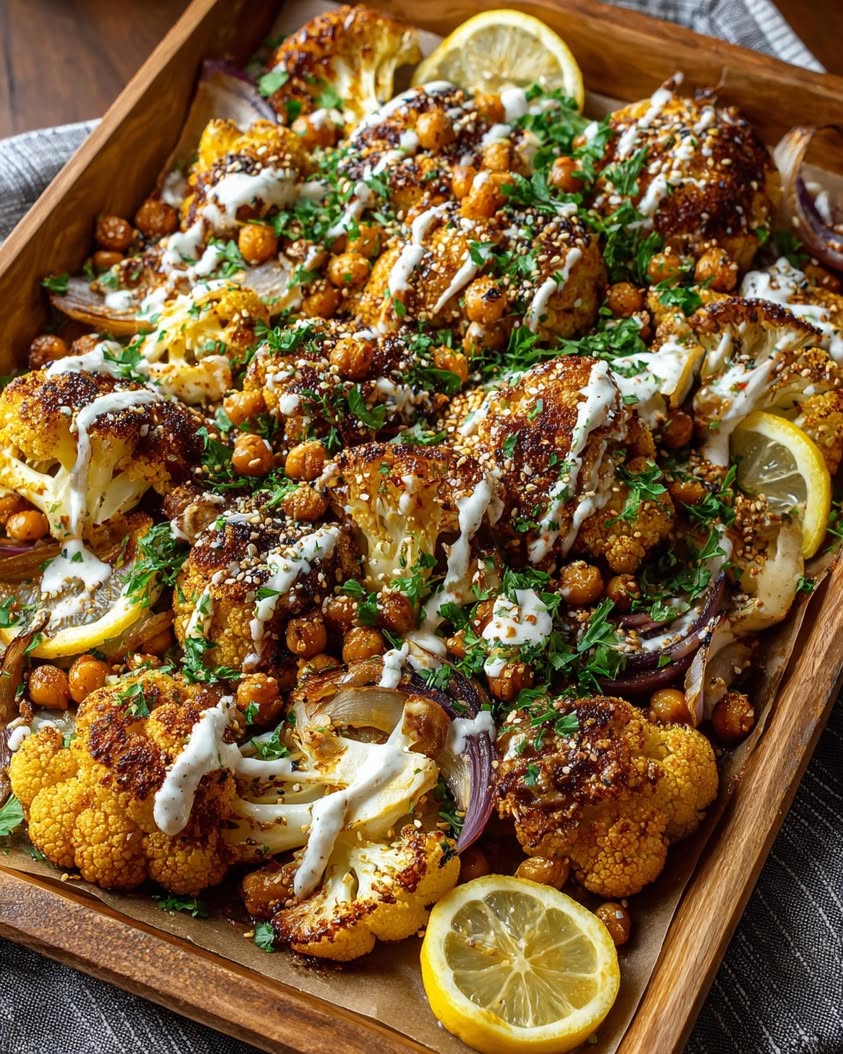
Crispy Chickpea Cauliflower Sheet Pan Dinner: A Flavor-Packed Vegan Feast
Imagine a dinner that delivers maximum flavor with minimal cleanup. This crispy chickpea cauliflower sheet pan dinner does exactly that. It transforms humble vegetables and pantry staples into a stunning, satisfying meal. The magic happens in your oven, where chickpeas and cauliflower florets roast together until deeply golden and irresistibly crunchy. Ultimately, a creamy tahini-honey drizzle ties everything together with its nutty, sweet, and tangy notes.
This recipe celebrates the beauty of simple ingredients. You likely have most of them in your kitchen already. The process is wonderfully straightforward. Consequently, you can focus on other things while your oven works its magic. The result is a vibrant, nutrient-dense dish that pleases both the eyes and the palate. Whether you need a quick weeknight solution or a show-stopping side for guests, this sheet pan dinner delivers every time.
Furthermore, the versatility of this crispy chickpea cauliflower sheet pan dinner is truly remarkable. It shines as a hearty vegan main course. Alternatively, it pairs beautifully with grilled chicken or fish. The combination of textures from the crispy chickpeas and tender cauliflower creates a delightful eating experience. Each bite offers a perfect balance of savory spices and the rich, smooth sauce. This dish proves that healthy eating does not require compromise on taste or satisfaction.
Quick Recipe Highlights
- Flavor Profile: This dish features a robust savory base from smoked paprika and cumin, perfectly balanced by a bright, lemony tahini-honey drizzle. The natural sweetness of the roasted cauliflower and the earthy depth of the chickpeas create a complex, well-rounded taste that is both comforting and exciting.
- Texture: You get a fantastic contrast between the crispy, almost crunchy roasted chickpeas and the tender, caramelized edges of the cauliflower florets. The creamy, velvety drizzle adds a luxurious, smooth element that coats each bite beautifully, preventing any dryness.
- Aroma: As it roasts, your kitchen will fill with the warm, inviting scents of toasted cumin and smoked paprika. These are complemented by the nutty fragrance of roasting chickpeas and the subtle sweetness of cooking cauliflower, creating an olfactory promise of a delicious meal.
- Visual Appeal: The final plate is a feast for the eyes, featuring golden-brown chickpeas, lightly charred cauliflower florets, and vibrant green parsley. The creamy beige drizzle artfully swirled over the top adds a professional, finished look that is incredibly Instagram-worthy.
- Skill Level Needed: This is a beginner-friendly recipe that requires only basic knife skills for chopping cauliflower and the ability to toss ingredients on a pan. There is no fancy technique involved, making it an excellent recipe for building kitchen confidence.
- Special Equipment: You need just one essential tool: a large, rimmed baking sheet. Parchment paper or a silicone baking mat is highly recommended for easy cleanup and to prevent sticking. A small bowl for whisking the sauce is the only other requirement.
Recipe Overview
- Difficulty Level: We rate this crispy chickpea cauliflower sheet pan dinner as easy. The steps are sequential and simple: chop, toss, roast, and drizzle. There is no intricate timing or advanced culinary skills required. The oven does the majority of the work, making it foolproof for cooks of all levels.
- Category: This dish fits perfectly into multiple categories. It serves as a complete vegan and vegetarian main course. Additionally, it works wonderfully as a substantial side dish alongside proteins like chicken or fish. It is also ideal for meal prep, as the components reheat well.
- Cuisine: While not strictly traditional to one region, this recipe draws inspiration from Eastern Mediterranean and Middle Eastern culinary traditions. The use of chickpeas, cumin, and tahini is classic to those areas. However, the sheet pan method and specific spice blend give it a modern, fusion-style appeal.
- Cost: This is an exceptionally budget-friendly meal. A head of cauliflower and a can of chickpeas are very inexpensive. The spices and tahini are pantry staples that, once purchased, last for many recipes. Overall, you can create this impressive dinner for just a few dollars per serving.
- Season: This crispy chickpea cauliflower sheet pan dinner is truly a year-round recipe. It feels hearty and comforting in the fall and winter. Conversely, it feels light and vegetable-forward in the spring and summer. You can use it as a seasonal bridge, especially with fresh herbs.
- Occasion: It is perfect for busy weeknights due to its hands-off cooking time. Simultaneously, it is elegant enough for casual weekend entertaining or potlucks. The colorful presentation makes it a great choice for holiday tables, particularly as a vibrant vegan option.
Why You’ll Love This Recipe
First, the taste and texture appeal is immediate and undeniable. The crispy chickpeas provide a satisfying, popcorn-like crunch, while the cauliflower becomes meltingly tender with sweet, caramelized edges. The tahini-honey drizzle adds a layer of creamy, tangy, and slightly sweet flavor that brings all the elements into harmony. Each forkful delivers a complex symphony of sensations that makes you forget you are eating a vegetable-forward dish. Ultimately, it is crave-worthy comfort food that also happens to be incredibly good for you.
Next, consider the sheer convenience and preparation benefits. This entire crispy chickpea cauliflower sheet pan dinner comes together on a single pan. That means minimal active cooking time and almost no dishes to wash afterward. You simply chop the cauliflower, drain the chickpeas, toss everything with oil and spices, and let the oven work its magic. This streamlined process is a lifesaver on evenings when time and energy are in short supply. Consequently, you get a wholesome, home-cooked meal without the typical kitchen chaos.
Moreover, the nutritional advantages are substantial. Chickpeas are a fantastic source of plant-based protein and fiber, which promote satiety and stable energy. Cauliflower is rich in vitamins C and K, along with various antioxidants. Using olive oil provides heart-healthy fats. This combination makes the dish not only delicious but also deeply nourishing. It supports digestive health, provides sustained energy, and contributes to overall wellness. You can feel great about serving this to your family.
Additionally, the social and entertaining value of this dish is high. Its vibrant, colorful presentation makes it look like you spent far more effort than you actually did. It is an excellent conversation starter at potlucks or dinner parties, especially when guests learn it is vegan. The recipe is easily doubled or tripled to feed a crowd without complicating the cooking process. It accommodates various dietary preferences effortlessly, making it a stress-free choice for hosting. Everyone can enjoy it together.
Finally, the cost-effectiveness and accessibility are unbeatable. The core ingredients are pantry staples and affordable produce. You do not need any expensive or hard-to-find items. This makes the crispy chickpea cauliflower sheet pan dinner a sustainable choice for regular meal rotation. It demonstrates how to eat well on a budget without sacrificing flavor or quality. Teaching this principle is incredibly valuable for home cooks of all experience levels.
Historical Background and Cultural Significance
The story of this dish begins with its individual components, each with a deep history. Chickpeas, or garbanzo beans, are one of the earliest cultivated legumes, with origins tracing back over 7,000 years to the Middle East. They have been a dietary staple across Mediterranean, Middle Eastern, and Indian cuisines for millennia, prized for their versatility, nutrition, and long shelf life. Cauliflower’s history is more recent, with cultivated forms developing in the Mediterranean region around 600 B.C. It gained widespread popularity in Europe and later across the globe.
Cultural importance shines through the use of tahini and spices. Tahini, a paste made from ground sesame seeds, is a cornerstone of Levantine cuisine, central to dishes like hummus and baba ganoush. Its inclusion connects this modern sheet pan dinner to ancient food traditions where sesame was a valuable oilseed. Similarly, spices like cumin and paprika have traveled the world via ancient trade routes. Their use here is a nod to the complex flavor profiles characteristic of North African and Eastern Mediterranean cooking, where spice blending is an art form.
The evolution of this specific recipe is a testament to modern cooking trends. The sheet pan dinner method is a relatively recent innovation, born from the desire for efficiency, minimal cleanup, and whole-food focus in home kitchens. It represents a fusion approach: taking traditional, flavor-packed ingredients from various cultures and applying a contemporary, streamlined cooking technique. This evolution makes ancient, nourishing foods accessible and practical for today’s fast-paced lifestyles. It is a beautiful example of culinary adaptation.
Regional variations of this concept are endless. In the Eastern Mediterranean, one might find roasted vegetables with chickpeas served alongside flatbreads. In parts of India, the spices might shift to turmeric, coriander, and garam masala for a different profile. The crispy chickpea cauliflower sheet pan dinner, as presented, is a Westernized fusion that prioritizes ease and broad appeal. However, its soul is deeply rooted in the timeless, global practice of combining legumes, vegetables, and flavorful sauces into a cohesive, satisfying meal.
Ingredient Deep Dive
Chickpeas are the protein powerhouse of this dish. Historically, they sustained civilizations across the ancient world. Nutritionally, they are packed with plant-based protein, fiber, folate, and iron. For the best result in your crispy chickpea cauliflower sheet pan dinner, use canned chickpeas for convenience, but ensure you rinse and drain them thoroughly. Pat them dry with a clean kitchen towel; this step is crucial for achieving maximum crispiness. Store unused canned chickpeas in a covered container in the fridge for up to four days. For a substitution, try canned white beans or lentils, though the texture will be different.
Cauliflower acts as the hearty, vegetable base. This versatile cruciferous vegetable has gained superfood status in recent years. It is an excellent source of vitamins C and K, and contains compounds with potential anti-inflammatory benefits. Select a head that feels heavy for its size with tightly packed, creamy-white florets and vibrant green leaves. Avoid any with brown spots. Store it whole in the refrigerator’s crisper drawer. Broccoli or cubed sweet potato make good seasonal substitutions, but will alter cooking times and final flavor.
Tahini is the soul of the drizzle. This sesame seed paste is a staple in Middle Eastern pantries. It provides healthy fats, calcium, and a distinct, nutty richness. When choosing tahini, look for a brand with a smooth, pourable consistency and a list containing only sesame seeds. Stir it well before using, as natural separation occurs. Store opened tahini in the refrigerator. If you need a substitute, smooth almond butter or cashew butter can work in a pinch, though the flavor will be distinctly different.
Smoked Paprika and Cumin are the flavor architects. Smoked paprika, or pimentón, adds a deep, woodsy sweetness and a beautiful red hue. Cumin offers an earthy, warm, and slightly citrusy note that is fundamental to many global cuisines. Together, they create the signature savory depth of the crispy chickpea cauliflower sheet pan dinner. For the best flavor, ensure your spices are fresh, ideally purchased within the last six months. Store them in a cool, dark place. You can substitute regular paprika, but you will lose the smoky dimension.
Common Mistakes to Avoid
- Not Drying the Chickpeas: This is the most critical error. Canned chickpeas hold moisture. If you do not rinse, drain, and pat them thoroughly dry, they will steam instead of roast. Consequently, you will get soft, not crispy, chickpeas. Take the extra minute for a proper dry.
- Crowding the Sheet Pan: If you pile all the cauliflower and chickpeas onto a small pan, they will steam in their own moisture. You need space for hot air to circulate. Always use a large, rimmed baking sheet and spread the ingredients in a single, even layer for perfect roasting.
- Using Old, Clumpy Tahini: Tahini separates and can harden in the jar. If you do not stir it vigorously before measuring, your drizzle will be lumpy and uneven. Always stir the tahini from the bottom of the jar until it is completely smooth and uniform in consistency.
- Neglecting the Lemon Juice in the Drizzle: The acidity of fresh lemon juice is non-negotiable. It cuts through the richness of the tahini and balances the sweetness of the honey. Do not use bottled juice; the fresh flavor makes a significant difference in the final sauce.
- Underseasoning the Vegetables: The spices need to coat every piece evenly. Do not be shy with the salt, pepper, cumin, and paprika. Toss everything thoroughly in the bowl with oil to ensure each chickpea and floret is well-seasoned. Taste a raw floret to check the seasoning level.
- Skipping the Preheating Step: Always preheat your oven fully. Putting a sheet pan into a cold oven changes the cooking dynamics dramatically. The vegetables will start to steam and become soggy before browning begins. A hot oven is essential for that instant sizzle and crisp exterior.
- Forgetting to Rotate the Pan: Ovens have hot spots. About halfway through cooking, rotate your sheet pan 180 degrees. This simple action ensures everything browns evenly, preventing some pieces from burning while others remain pale. It is a small step with a big impact.
- Adding the Drizzle Too Early: The tahini-honey sauce should always be added just before serving. If you drizzle it before roasting or halfway through, it will burn and become bitter. If you add it after roasting but before serving, it can make the crispy components soggy. Keep it separate until the final moment.
Essential Techniques
The technique of high-heat roasting is fundamental to this crispy chickpea cauliflower sheet pan dinner. Roasting at 425°F (220°C) causes the natural sugars in the cauliflower to caramelize, creating deep, sweet flavors and a tender interior with crispy edges. The high heat also rapidly evaporates surface moisture on the chickpeas, leading to their signature crunch. To master this, always preheat your oven fully and use the middle rack. A common pitfall is roasting at too low a temperature, which results in steamed, rather than roasted, vegetables. Visual cues for success are golden-brown florets and chickpeas that are lightly browned and dry to the touch.
Properly drying the chickpeas is a non-negotiable technique for texture. After rinsing, spread them on a clean kitchen towel or several layers of paper towels and gently pat them dry. This removes the starchy liquid from the can, which acts as a barrier to crisping. Some cooks even recommend peeling the thin skins off each chickpea for ultimate crispiness, though this is optional. The key is ensuring no excess water remains. If you skip this step, the chickpeas will pop and steam in the oven, never achieving the desired crunchy texture. Success looks like chickpeas that rattle loosely on the pan when shaken.
Emulsifying the tahini drizzle is a simple but important skill. Start by whisking the tahini and lemon juice together first. The acid will cause the tahini to seize and thicken initially—this is normal. Then, slowly whisk in the water until the sauce thins to a smooth, pourable consistency. Finally, whisk in the honey, salt, and pepper. This sequential method ensures a creamy, lump-free sauce. A common mistake is adding all the liquids at once, which can lead to a grainy or separated sauce. The perfect drizzle should coat the back of a spoon and flow off in a steady ribbon.
Pro Tips for Perfect Crispy Chickpea Cauliflower Sheet Pan Dinner
For the crispiest chickpeas, let them air-dry on the towel for 10-15 minutes after patting them. This extra time allows more surface moisture to evaporate before they hit the hot oven.
Cut your cauliflower florets into uniform, bite-sized pieces. Consistent size ensures everything cooks at the same rate, so you do not end up with some pieces burnt and others undercooked.
Use a large, stainless steel mixing bowl to toss the cauliflower and chickpeas with oil and spices. The high sides prevent mess and allow you to toss everything vigorously for an even coat.
Line your sheet pan with parchment paper for effortless cleanup. A silicone baking mat also works well and promotes even browning without any sticking.
Do not discard the tender cauliflower leaves if they are attached. Toss them in oil and spices too, and roast them on the pan. They become delicious, crispy chips.
If your drizzle is too thick, add warm water, one teaspoon at a time, while whisking. If it is too thin, add a bit more tahini to thicken it back up.
Finish the plated dish with a final flourish of flaky sea salt, like Maldon, and a squeeze of fresh lemon juice. This brightens all the flavors just before eating.
Let the sheet pan components cool for a minute or two before adding the drizzle. This keeps the crispy textures intact for a bit longer as you serve.
Variations and Adaptations
For regional variations, take inspiration from global pantries. A Moroccan twist could include ras el hanout spice blend and a drizzle of harissa yogurt. An Indian-inspired version might use curry powder, turmeric, and a cilantro-mint chutney. For a Mediterranean vibe, add halved cherry tomatoes and kalamata olives to the pan in the last 10 minutes of roasting, and finish with crumbled feta cheese.
Seasonal adaptations are simple and rewarding. In spring, add asparagus spears. During summer, incorporate zucchini or yellow squash cubes. For fall, swap half the cauliflower for cubed butternut squash or Brussels sprout halves. In winter, hearty root vegetables like parsnips or carrots work beautifully. Adjust roasting times slightly for denser vegetables.
Dietary modifications are straightforward. For a vegan crispy chickpea cauliflower sheet pan dinner, replace the honey in the drizzle with maple syrup or agave nectar. To make it nut-free, ensure your tahini is processed in a dedicated facility, as cross-contamination can occur. For a lower-carb option, increase the cauliflower and slightly reduce the portion of chickpeas.
Experiment with flavor variations by changing the spice profile. Try za’atar for an herbal note, chili powder for heat, or garam masala for warmth. Add grated garlic or ginger to the oil mixture for an aromatic punch. Incorporate a tablespoon of tomato paste or miso paste into the oil for umami depth before tossing with the vegetables.
Texture modifications can cater to different preferences. For extra crunch, add raw sunflower seeds or slivered almonds to the pan for the last 5 minutes of roasting. For a softer, stew-like dish, add a splash of vegetable broth to the pan halfway through cooking and cover with foil for the remainder of the time.
Presentation alternatives can elevate the dish. Serve it over a bed of fluffy quinoa or couscous to make it more substantial. Spoon it into warm pita pockets with shredded lettuce. Alternatively, present it in a wide, shallow bowl with a swirl of the tahini sauce at the bottom and the roasted components piled on top.
Serving and Presentation Guide
Plating techniques matter for visual appeal. For a family-style presentation, pile the roasted crispy chickpea cauliflower sheet pan dinner directly onto a large, rustic platter. Drizzle the tahini sauce in zig-zags or swirls over the top. For individual plates, use a ring mold or simply create a neat mound in the center of each plate before adding the sauce.
Garnishing adds the final touch of freshness and color. A generous handful of chopped fresh parsley or cilantro is classic. Thinly sliced scallions, a sprinkle of sesame seeds, or a dusting of extra paprika also work well. For a touch of luxury, add a few pomegranate arils for bursts of sweet-tart flavor and vibrant red color.
Traditional accompaniments include warm, fluffy pita bread or naan for scooping. A simple side salad of chopped cucumber, tomato, and red onion with a lemon vinaigrette provides a refreshing contrast. A bowl of creamy hummus or tzatziki on the side allows guests to add even more flavor as they wish.
Modern serving suggestions lean into making it a complete bowl meal. Place a base of leafy greens, grains like farro or brown rice, or cauliflower rice in a bowl. Top with the hot roasted mixture and drizzle. This adds different textures and temperatures, making the meal more complex and satisfying.
Temperature considerations are key. This dish is best served immediately after roasting, while the chickpeas are still crisp and the cauliflower is hot. The tahini sauce should be at room temperature so it flows easily. If you must hold the roasted components, keep them in a single layer on the sheet pan in a warm oven, but note they will lose some crispness.
Portion control is easy with this nutritious dish. As a main course, aim for about one-quarter of the sheet pan per person. As a side dish, one-eighth of the pan is sufficient. Because it is so vegetable-forward and fiber-rich, it is very filling, so people often eat less than they might of a starch-heavy meal.
Wine and Beverage Pairing
Wine pairings should complement the earthy, smoky, and slightly sweet notes. A crisp, unoaked white wine like a Sauvignon Blanc or Pinot Grigio works beautifully, as their acidity cuts through the richness of the tahini. For a red option, choose a light-bodied, low-tannin wine such as a Gamay or a Grenache. These will not overpower the vegetables. An orange wine, with its oxidative, nutty characteristics, can be a fascinating and perfect match for the tahini’s flavor profile.
Non-alcoholic alternatives are abundant. A sparkling lemonade or limeade mirrors the citrus in the drizzle. For something more complex, try a chilled ginger beer, which pairs spice with spice. Iced herbal teas, like mint or lemongrass, offer a refreshing counterpoint. Even a simple glass of club soda with a squeeze of lemon can cleanse the palate between bites.
While not typical coffee pairings, if serving this for brunch or lunch, a medium-roast coffee with low acidity could work. The roasted notes in the coffee can echo the roasted vegetables. For tea, consider a green tea like sencha for its vegetal notes, or a smoky tea like Lapsang Souchong to complement the paprika.
Always consider serving temperatures. White wines and non-alcoholic sparklers should be well-chilled. Red wines should be served slightly cooler than room temperature. Iced beverages should be cold but not diluted; use large ice cubes to prevent watering them down too quickly during the meal.
Presentation of beverages matters too. Serve wine in appropriate glassware to enhance aroma. For non-alcoholic options, use tall glasses with garnishes like a citrus wedge or a sprig of mint. This attention to detail makes the entire meal feel special and thoughtfully composed.
Storage and Shelf Life
Storage methods are straightforward but important for quality. Store leftover crispy chickpea cauliflower sheet pan dinner in an airtight container in the refrigerator. Crucially, store the roasted components and the tahini drizzle separately. If combined, the sauce will make the crispy chickpeas and cauliflower soggy within hours. They will keep for up to 3-4 days when stored properly.
Temperature requirements are standard refrigerator temperatures, at or below 40°F (4°C). Do not leave the leftovers at room temperature for more than two hours after cooking, as this can allow bacterial growth. Always cool the roasted vegetables to room temperature before sealing them in a container and placing them in the fridge.
Container recommendations include glass containers with tight-fitting lids, which are best for preventing odor transfer and maintaining freshness. If you must use plastic, ensure it is BPA-free and designed for food storage. For the drizzle, a small glass jar with a lid is ideal, as you can shake it to recombine if it separates.
Signs of spoilage include an off or sour smell, visible mold (often fuzzy spots), or a significant change in texture to an unpleasantly slimy feel. If the tahini sauce develops a fermented smell or bubbles, discard it immediately. When in doubt, it is always safer to throw it out.
Reheating instructions aim to restore crispiness. Reheat the roasted components in a single layer on a sheet pan in a 400°F (200°C) oven for 5-10 minutes, or in an air fryer for 3-4 minutes. Avoid the microwave, as it will steam them and make them soggy. Gently stir the tahini sauce and bring it to room temperature or warm it slightly before serving.
Freezing guidelines are not generally recommended for this dish. The cauliflower will become mushy and watery upon thawing, and the chickpeas will lose their delightful texture. The tahini sauce may separate and become grainy after freezing. This crispy chickpea cauliflower sheet pan dinner is best enjoyed fresh or refrigerated for a few days.
Make Ahead Strategies
A prep timeline can streamline your week. The day before, you can wash and cut the cauliflower into florets. Store them in a sealed container or zip-top bag with a paper towel to absorb moisture in the refrigerator. You can also rinse and drain the chickpeas, pat them dry, and store them separately in the fridge. Measure out your spices into a small bowl.
Storage between steps is simple. Keep the prepped vegetables and chickpeas chilled until you are ready to cook. Have the oil and spice mix ready to go. This “mise en place” reduces active prep time on cooking day to just a few minutes of tossing and pan-spreading.
Assess the quality impact carefully. Pre-cutting the cauliflower one day ahead has minimal impact. However, do not toss the vegetables with oil and spices until just before roasting, as the salt will draw out moisture and make them soggy. The chickpeas are best dried immediately before roasting for maximum crispness.
Assembly tips for make-ahead are about sequencing. On cooking day, simply take your prepped ingredients from the fridge, toss them with oil and the pre-measured spices, spread on the pan, and roast. The tahini sauce can be made up to 3 days in advance and stored in the refrigerator. Let it come to room temperature and whisk in a splash of water if it has thickened too much.
Reheating guidelines for make-ahead components are the same as for leftovers. Re-crisp the roasted vegetables in a hot oven or air fryer. Do not reheat the tahini sauce; simply bring it to room temperature. This ensures the final dish has the best possible texture and flavor, even when components are prepared in advance.
Fresh element additions are the final touch. Always chop fresh herbs like parsley just before serving. If using a garnish like pomegranate seeds or scallions, prepare those at the last minute as well. This maintains their vibrant color, crisp texture, and fresh flavor, elevating the entire make-ahead meal.
Scaling Instructions
Halving the recipe is simple for smaller households. Use half a head of cauliflower and one 15-ounce can of chickpeas. Halve all other ingredient amounts accordingly. You can use a standard-sized sheet pan, but ensure the vegetables are still in a single layer. The cooking time may be reduced by 5-7 minutes, so start checking for doneness early.
Doubling or tripling the recipe for a crowd requires planning. You will need multiple large sheet pans. Do not overcrowd any single pan. Roast the pans on different racks in the oven and swap their positions top-to-bottom and front-to-back halfway through cooking to ensure even browning. You may need to add 5-10 minutes to the total roasting time. Mix the tahini sauce in a larger bowl or directly in a blender for ease.
Equipment adjustments are necessary when scaling. For a double batch, two sheet pans are ideal. If you only have one very large commercial-sized sheet pan, it might work, but crowding is a risk. For a triple batch, three pans are best. Ensure your oven can accommodate multiple pans with enough space for air circulation between them.
Timing modifications are minimal when scaling up. The prep time will increase linearly as you chop more cauliflower. The active cook time remains the same, as everything roasts simultaneously. However, the time needed to toss the larger batches of vegetables and to spread them on multiple pans will add a few minutes to your prep.
Storage considerations for large batches are important. If you are not serving all the food immediately, store the components separately as advised. Having multiple containers ready will help you portion and store the leftovers efficiently, preventing a large mass of food from cooling too slowly in a single container, which is a food safety risk.
Nutritional Deep Dive
The macro breakdown of this crispy chickpea cauliflower sheet pan dinner is well-balanced. A serving provides a substantial amount of complex carbohydrates and fiber from the cauliflower and chickpeas, offering sustained energy release. The chickpeas contribute a meaningful amount of plant-based protein, essential for muscle repair and satiety. Healthy fats come primarily from the olive oil and tahini, which support nutrient absorption and hormone health. This combination makes it a complete and satisfying meal.
Micronutrient analysis reveals a wealth of vitamins and minerals. Cauliflower is rich in vitamin C, vitamin K, and folate. Chickpeas provide iron, magnesium, and B vitamins. Tahini adds a significant amount of calcium, copper, and manganese. The spices, particularly paprika, contain antioxidants like carotenoids. Together, they contribute to immune function, bone health, and reducing oxidative stress in the body.
Health benefits are numerous due to the whole-food, plant-forward nature of the dish. The high fiber content promotes digestive health and helps maintain healthy cholesterol levels. The anti-inflammatory compounds in cauliflower and spices may help reduce chronic inflammation. The healthy fats support brain health and cardiovascular function. This meal is a powerful example of how delicious food can also be functional medicine for the body.
Dietary considerations are largely positive. The dish is naturally gluten-free, dairy-free, and vegan (with a honey substitute). It is suitable for vegetarian and plant-based diets. For those on specific plans like Weight Watchers, the points are relatively low due to the focus on vegetables and legumes. It aligns with Mediterranean diet principles perfectly.
Portion analysis shows that a standard serving is volumetrically large but not calorie-dense. The plate is filled with low-calorie, high-nutrient vegetables and fiber-rich legumes. This promotes a feeling of fullness without excessive caloric intake, which is beneficial for weight management. The presence of protein and fat further enhances satiety, helping to prevent overeating later.
Weight management tips include using this as a core recipe. Its high volume and nutrient density mean you can eat a satisfying portion while managing caloric intake. To make it even lighter, you can slightly reduce the amount of olive oil used for roasting or use an oil spray. Remember, the fats included are healthy and necessary, so do not eliminate them entirely.
Dietary Adaptations
For a gluten-free version, this crispy chickpea cauliflower sheet pan dinner is already compliant. Ensure that any pre-made spice blends you use are certified gluten-free, as cross-contamination can sometimes occur in processing facilities. Serve it with naturally gluten-free sides like quinoa or rice.
For a dairy-free version, the recipe as written contains no dairy. The creamy element comes from tahini, which is made from sesame seeds. This makes it an excellent choice for those with lactose intolerance or a dairy allergy. Always double-check labels on pre-packaged ingredients to be safe.
For a vegan version, the only potential animal product is the honey in the drizzle. Simply replace it with an equal amount of maple syrup, agave nectar, or even date syrup. All other ingredients are plant-based. This simple swap makes the entire dish suitable for a vegan diet without compromising flavor or texture.
For a low-carb or keto adaptation, significantly reduce the amount of chickpeas, as they are higher in carbohydrates. Increase the cauliflower proportion. You could also add low-carb vegetables like broccoli or zucchini. Replace the honey in the drizzle with a keto-friendly sweetener like monk fruit or erythritol, though the sauce may be less viscous.
For a Paleo version, omit the chickpeas entirely, as legumes are not Paleo-compliant. Replace them with additional cauliflower or add another Paleo-friendly vegetable like cubed sweet potato (in moderation) or Brussels sprouts. Ensure the tahini is made from 100% sesame seeds with no additives. Use raw honey for the drizzle.
For a Low-FODMAP adaptation, this recipe requires careful modification. Chickpeas are high in FODMAPs. Use a small, Monash University-approved portion (like 1/4 cup per serving) or omit them. Cauliflower is only low-FODMAP in servings of 3/4 cup or less per meal, so control your portion size. Use garlic-infused oil instead of fresh garlic if your recipe includes it, and omit the honey, using maple syrup instead.
Troubleshooting Guide
If your chickpeas are not crispy, the issue is almost always moisture. Next time, dry them more thoroughly. You can also try adding a half teaspoon of cornstarch or arrowroot powder to the oil and spice mixture before tossing; this creates a drier coating that enhances crispiness. For salvaging a soft batch, spread them on a pan and pop them back in a 400°F oven for 5-10 minutes to re-crisp.
If the cauliflower is soggy, you likely overcrowded the pan or the oven temperature was too low. Ensure pieces are in a single layer with space between them. Always preheat your oven. If your cauliflower releases a lot of water, you might have added salt too early before roasting, which draws out moisture. Salt right before it goes in the oven or immediately after tossing.
If the tahini sauce is too thick and pasty, you likely added the water too quickly or not enough. Remember, tahini seizes when it first contacts acid. Whisk the lemon juice and tahini together first, then slowly drizzle in the water while whisking constantly. It will thin out. Add warm water a teaspoon at{“success”:true,”message”:”Recipe created successfully”,”post_id”:9385,”tasty_recipe_id”:9385,”shortcode”:”“}

I’m Billy, a classically trained culinary school graduate from The Culinary Institute of America with over 12 years in the restaurant industry and over 19 years of cooking experience.