
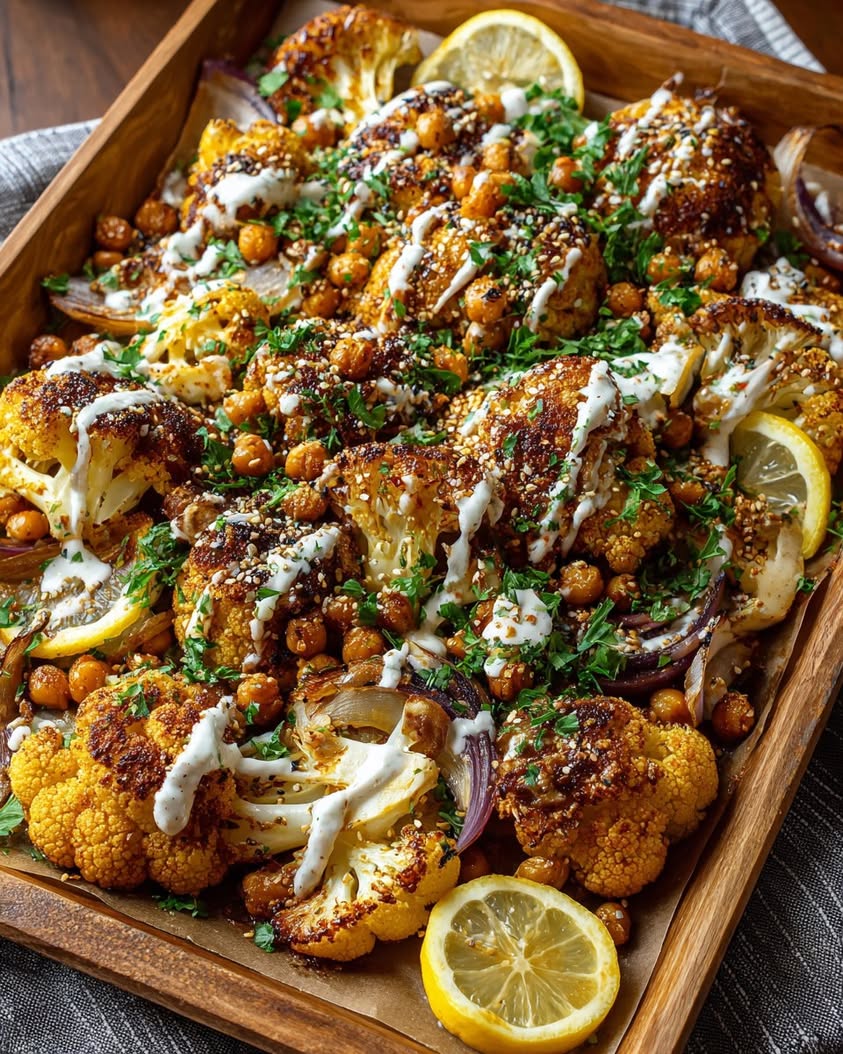
Crispy Chickpea & Cauliflower Sheet Pan with Tahini-Honey Drizzle: A Flavor-Packed Weeknight Wonder
Imagine a single pan, pulled from a hot oven, brimming with caramelized cauliflower florets and impossibly crispy chickpeas. Now picture a creamy, nutty drizzle weaving it all together with a hint of sweetness. This Crispy Chickpea & Cauliflower Sheet Pan recipe delivers exactly that magical combination. It transforms humble, affordable ingredients into a stunning and satisfying meal with minimal effort and maximum flavor.
Furthermore, this dish is a true testament to the power of simple, whole-food cooking. The high-heat roasting process coaxes out incredible natural sweetness from the cauliflower while transforming the chickpeas into little crunchy flavor bombs. Meanwhile, the accompanying tahini-honey sauce adds a luxurious, velvety finish that balances the savory spices perfectly. Ultimately, you get a meal that feels indulgent yet is packed with nutrition.
Consequently, this recipe has become a staple in countless kitchens for good reason. It checks every box for a perfect weeknight dinner: it is fast, healthy, delicious, and easy to clean up. Whether you are a seasoned cook or just starting out, this Crispy Chickpea & Cauliflower Sheet Pan promises a reliably fantastic result every single time.
Quick Recipe Highlights
- Flavor Profile: This dish boasts a complex layering of tastes. You get savory, smoky notes from the roasted spices, a deep umami from the chickpeas, and a natural sweetness from the caramelized cauliflower. The tahini-honey drizzle introduces a creamy, nutty, and subtly sweet element that ties everything together beautifully.
- Texture: Texture is the star here. The cauliflower becomes tender with beautifully crisp, browned edges. The chickpeas achieve a satisfying, crunchy exterior while staying slightly soft inside. The smooth, drizzle-able sauce provides a wonderful contrast, coating each bite with a silky richness.
- Aroma: As it roasts, your kitchen will fill with an irresistible fragrance. Expect warm, toasty notes from the cumin and paprika, the earthy scent of roasting cauliflower, and the nutty aroma of tahini. It is a scent that promises a deeply comforting meal.
- Visual Appeal: The presentation is vibrant and rustic. Golden-brown cauliflower and deep bronze chickpeas create a beautiful mosaic on the pan. The creamy white tahini drizzle artfully streaked over the top adds a final touch of elegance, making it worthy of any dinner table.
- Skill Level Needed: This recipe is perfect for beginners. It requires no advanced knife skills or complicated techniques. Essentially, you just need to chop, toss, and roast. The simple sauce comes together in minutes with a whisk. It is an ideal recipe to build kitchen confidence.
- Special Equipment: You truly only need one key piece of equipment: a large, rimmed baking sheet. A good quality sheet pan ensures even cooking and proper crisping. Additionally, a mixing bowl and a small whisk or fork for the sauce are helpful. That is it.
Recipe Overview
- Difficulty Level: We rate this recipe as “Easy” for several clear reasons. The steps are sequential and simple: prep vegetables, mix with oil and spices, then roast. There is no fussy timing or complex layering. Moreover, the sauce uses a straightforward mixing method. Even a first-time cook can achieve impressive, restaurant-quality results with this straightforward approach.
- Category: This versatile dish fits multiple meal categories perfectly. It shines as a hearty vegetarian main course, especially when served over a grain like quinoa or farro. Alternatively, it makes a fantastic, shareable side dish for grilled meats or fish. You can even enjoy the leftovers cold in a salad for lunch the next day.
- Cuisine: While not tied to one specific tradition, this recipe draws inspiration from Mediterranean and Middle Eastern culinary roots. The use of chickpeas, cumin, and tahini are hallmarks of these regions. However, the sheet-pan cooking method is a modern, Western convenience technique, making this a wonderful fusion of timeless flavors and contemporary ease.
- Cost: This is an exceptionally budget-friendly meal. Cauliflower and canned chickpeas are inexpensive pantry staples. The spices and olive oil are common kitchen items. Tahini and honey are the only potential splurges, but a jar of each lasts for many recipes. Overall, you can feed four people a nutritious, satisfying meal for just a few dollars.
- Season: This Crispy Chickpea & Cauliflower Sheet Pan is truly a year-round winner. In cooler months, its warm, roasted flavors provide comforting nourishment. During spring and summer, it is a lighter alternative to heavy casseroles and pairs wonderfully with fresh salads. Cauliflower is typically readily available in grocery stores throughout every season.
- Occasion: This dish is incredibly versatile for different events. It is a flawless, low-stress weeknight family dinner. Simultaneously, it is impressive enough for casual weekend entertaining with friends. You can easily double the recipe for a crowd. It is also an excellent potluck or picnic contribution, as it tastes great warm or at room temperature.
Why You’ll Love This Recipe
First and foremost, the taste and texture combination is utterly addictive. Each forkful delivers a symphony of contrasts: the sweet, tender bite of cauliflower against the salty, crunchy pop of a chickpea, all smoothed over by the rich, nutty sauce. The spices toast in the oven’s heat, deepening their flavor and creating a savory crust on the vegetables. Consequently, every bite is more interesting than the last, preventing the dreaded “vegetable fatigue” and making you eager for more.
Secondly, the convenience factor is unbeatable. This recipe embodies the “set it and forget it” philosophy of sheet pan cooking. After a quick 15-minute prep, the oven does the majority of the work. This hands-off time allows you to set the table, prepare a simple side salad, or simply relax. Furthermore, you only dirty one mixing bowl and the sheet pan itself, making cleanup an absolute breeze compared to multi-pot meals.
From a nutritional standpoint, this dish is a powerhouse. Chickpeas are loaded with plant-based protein and fiber, promoting satiety and digestive health. Cauliflower is rich in vitamins C and K, along with beneficial antioxidants. Tahini provides healthy fats and minerals like calcium and iron. Together, they create a balanced meal that fuels your body without weighing you down. It is the definition of eating well without compromise.
For social and entertaining value, this Crispy Chickpea & Cauliflower Sheet Pan is a true gem. It is naturally vegetarian and can be easily adapted for vegan and gluten-free guests, making it an inclusive centerpiece for any gathering. The dramatic, rustic presentation always elicits compliments. Moreover, because it is so simple to prepare, you can spend more time with your guests and less time stressed in the kitchen, which is the ultimate goal of any host.
Finally, its cost-effectiveness and accessibility are major wins. You do not need to hunt for exotic or expensive ingredients. Everything required is available at any standard grocery store. This recipe demonstrates how to turn economical staples into something extraordinary. It is a fantastic way to eat deliciously while sticking to a food budget, proving that great food does not have to come with a high price tag.
Historical Background and Cultural Significance
The individual components of this dish have deep and ancient roots, though their combination on a sheet pan is a modern innovation. Chickpeas, one of the world’s oldest cultivated legumes, have been a dietary staple in the Middle East and Mediterranean for over 7,000 years. Historically, they provided essential protein and sustenance in regions where meat was less abundant. Dishes like hummus and falafel showcase their enduring cultural importance, symbolizing hospitality and shared community meals.
Cauliflower’s history is more recent but equally fascinating. Believed to have originated in Asia Minor, it was selectively bred from wild cabbage. By the Roman era, it was being cultivated and appreciated. However, its popularity soared in the Ottoman Empire before spreading across Europe. Its versatility allowed it to be adopted into countless regional cuisines, often taking on the flavors of the spices and cooking methods it was paired with, much like it does in this recipe.
Tahini, the soul of the drizzle, is a paste made from toasted sesame seeds. Its use dates back centuries in Armenian, Turkish, and Levantine cooking. It was a valuable source of fat and nutrition. Furthermore, tahini was often combined with honey or citrus in ancient recipes, creating balances of fat, sweet, and acid that are still celebrated today. This classic pairing forms the foundation of our modern drizzle, connecting us directly to those ancient culinary traditions.
The evolution to the sheet pan method is a direct result of contemporary cooking trends prioritizing ease and health. The “sheet pan supper” phenomenon took off in recent decades as home cooks sought ways to get nutritious, flavorful dinners on the table with minimal cleanup. This recipe represents a beautiful fusion: it marries these ancient, flavor-packed ingredients with a modern, efficient cooking technique. It is a testament to how timeless flavors can adapt to fit our current lifestyles perfectly.
Ingredient Deep Dive
Chickpeas (Garbanzo Beans): These humble legumes are nutritional champions. They are packed with plant-based protein, fiber, and key minerals like iron and folate. Historically, they sustained entire civilizations across the Mediterranean and Middle East. For the crispiest result, always drain and rinse canned chickpeas thoroughly, then pat them completely dry with a clean kitchen towel. This removes the starchy aquafaba liquid that steams them instead of letting them roast. You can substitute with other sturdy beans like cannellini, but chickpeas offer the best texture for crunch.
Cauliflower: This versatile cruciferous vegetable is low in calories but high in vitamins C and K, and contains beneficial compounds called glucosinolates. When selecting a head, look for tight, creamy-white florets with bright green, perky leaves. Avoid any with brown spots or a loose structure. To store, keep it unwashed in a perforated bag in the refrigerator’s crisper drawer. For this recipe, cutting the florets into uniform, bite-sized pieces ensures even cooking and optimal caramelization.
Tahini: This sesame seed paste is the heart of the sauce. A good tahini should be made from 100% hulled sesame seeds and have a pourable, creamy consistency, not a dry, crumbly one. Always stir the jar well before using, as the oil naturally separates. It provides healthy fats, calcium, and a distinct nutty flavor. If you need a substitute in a pinch, a smooth, unsweetened almond butter or cashew butter can work, though the flavor profile will shift.
Spices (Cumin & Paprika): Cumin adds an earthy, warm, and slightly smoky note that is foundational to many global cuisines. Paprika, especially smoked paprika, contributes a sweet pepper flavor and a beautiful red hue. Using whole spices and toasting them before grinding yields the most potent flavor, but high-quality pre-ground spices work perfectly here. Their oils activate when mixed with the olive oil and heat, creating a flavorful crust on the vegetables.
Olive Oil: Use a good-quality extra-virgin olive oil for its fruity flavor and health benefits. It coats the vegetables, conducts heat evenly, and helps the spices adhere. It also encourages the Maillard reaction, which is responsible for the delicious browning and complex flavors. For the sauce, its richness helps emulsify and smooth out the tahini. Do not substitute with a low-smoke-point oil like butter, which would burn in the hot oven.
Common Mistakes to Avoid
- Not Drying the Chickpeas: This is the number one reason for soggy, not crispy, chickpeas. The residual liquid from the can steams them. Always drain, rinse, and then pat them vigorously with a clean kitchen towel or paper towels until they are completely dry to the touch.
- Crowding the Pan: If you pile the cauliflower and chickpeas on top of each other, they will steam instead of roast. Spread them in a single, even layer with a little space between pieces. This allows hot air to circulate and creates that essential crispy texture.
- Using Old, Stale Spices: Ground spices lose their potency over time. If your cumin or paprika smells faint or dusty, it will not impart much flavor. For the best results, try to use spices that are less than a year old for maximum aromatic impact.
- Neglecting to Preheat the Oven: Starting with a fully preheated oven is non-negotiable. A hot oven immediately begins the crisping process. Putting the pan into a cooler oven will cause the vegetables to release moisture first, leading to a soggy outcome.
- Stirring Too Frequently: Resist the urge to stir the pan every few minutes. Let the ingredients sit in contact with the hot pan to develop a caramelized, crispy crust. A single stir halfway through the cooking time is perfectly sufficient.
- Overcomplicating the Sauce: The tahini sauce should be smooth and drizzle-able. A common mistake is adding too much liquid at once, which can cause it to seize or become too thin. Always add water or lemon juice gradually, whisking continuously until you achieve the perfect consistency.
- Cutting Cauliflower Florets Unevenly: Large pieces will be undercooked while small pieces burn. Aim for uniform, bite-sized florets, about 1 to 1.5 inches in size. This ensures everything finishes cooking and browning at the same time.
- Skipping the Final Broil: The last few minutes under the broiler are crucial for achieving next-level crispiness. It gives an extra boost of high, direct heat that perfectly finishes the chickpeas and cauliflower edges. Watch it closely to prevent burning.
Essential Techniques
Proper Drying for Crispiness: Thoroughly drying the chickpeas after rinsing is the most critical technique for success. Moisture is the enemy of crispiness in oven roasting. By using a clean kitchen towel to rub and pat the chickpeas dry, you remove the thin layer of starchy liquid that would otherwise steam them. You should hear a faint squeaking sound as they rub against the towel, a good sign they are dry. This simple step transforms them from soft to crunchy.
Uniform Vegetable Cutting: Cutting the cauliflower into even-sized pieces is not just for aesthetics; it is for even cooking. Pieces that are too large will remain hard in the center while smaller pieces burn. Aim for florets that are roughly the same size, about the size of a large grape. This guarantees that every piece spends the same amount of time in the oven’s heat, resulting in a consistent texture throughout the entire pan.
The High-Heat Roast: Roasting at a high temperature (425°F) is essential for caramelization, not just cooking. This heat quickly evaporates surface moisture and encourages the Maillard reaction—a chemical process that creates complex, savory flavors and that beautiful golden-brown color. The technique requires patience; let the pan sit undisturbed to allow this reaction to occur. You will know it is working when you smell a deep, toasty aroma.
Emulsifying the Tahini Sauce: Tahini can be tricky; it often seizes up and becomes thick and pasty when you first add liquid. The key technique is to start by whisking the tahini with the acid (lemon juice) and a fat (olive oil) vigorously. This begins the emulsification. Then, add water very slowly, just a tablespoon at a time, whisking constantly until the sauce smooths out and becomes creamy and pourable. This gradual incorporation prevents clumping.
Pro Tips for Perfect Crispy Chickpea & Cauliflower Sheet Pan
- For extra crispy chickpeas, you can optionally remove the thin skins that slip off after rinsing. Simply rub the dried chickpeas in the towel; many skins will come off on their own. This step is not necessary but can enhance the final crunch.
- Preheat your sheet pan in the oven while it comes to temperature. Adding the vegetables to a hot pan gives an instant sear, jumpstarting the crisping process and preventing sticking.
- Use your hands to toss the cauliflower and chickpeas with the oil and spices. This ensures every nook and cranny gets coated evenly, leading to better flavor distribution and browning.
- If your tahini sauce is too thick, add more warm water, one teaspoon at a time. If it is too thin, whisk in a little more tahini. The goal is a consistency similar to heavy cream or runny honey.
- Do not discard the cauliflower leaves and core if they are fresh! Chop the tender inner leaves and the core into small pieces and roast them alongside the florets. They become deliciously crispy and reduce waste.
- Let the sheet pan rest for 5 minutes after pulling it from the oven. This allows the vegetables to set slightly and makes them easier to handle. Then, drizzle with the tahini sauce just before serving to maintain its fresh flavor and creamy texture.
- For a flavor boost, add a pinch of sumac or za’atar to the spice mix, or sprinkle it over the finished dish before drizzling. These Middle Eastern spices complement the existing flavors beautifully.
Variations and Adaptations
Regional Variations: Travel the world from your kitchen with simple swaps. For a Moroccan twist, add ras el hanout to the spice blend and stir in some chopped dried apricots and toasted almonds after roasting. For an Indian-inspired version, use garam masala and turmeric, and serve with a mint-cilantro chutney instead of tahini. A Mediterranean take might include kalamata olives and crumbled feta cheese added after baking.
Seasonal Adaptations: While cauliflower is a year-round star, you can adapt the vegetable base seasonally. In spring, try asparagus spears and baby carrots. Summer calls for zucchini and bell peppers. In fall, swap in cubed sweet potatoes or Brussels sprouts, adjusting the roasting time as needed for denser vegetables. The chickpeas and sauce remain a delicious constant.
Dietary Modifications: This recipe is naturally vegetarian and gluten-free. For a vegan version, simply replace the honey in the drizzle with maple syrup or agave nectar. To make it nut-free, ensure your tahini is sourced from a dedicated facility (sesame is a seed, but cross-contamination can occur). For a higher-protein meal, add a can of drained white beans or lentils to the mix.
Flavor Variations: Experiment with the spice profile. Chipotle powder adds a smoky heat. Curry powder creates a warm, aromatic dish. Italian seasoning with garlic powder makes it more herbaceous. You can also change the sauce: try a lemon-herb yogurt sauce, a spicy sriracha mayo, or a simple balsamic glaze for a different finishing touch.
Serving and Presentation Guide
Plating this dish is part of the fun. For a family-style presentation, serve everything directly from the sheet pan for a rustic, inviting look. For individual plates, start with a base of fluffy quinoa, couscous, or farro. Use a large spoon to arrange the crispy chickpea and cauliflower mixture over the grain, allowing some to tumble down the sides. This creates height and visual interest.
Garnishing adds the final flourish. A generous drizzle of the tahini-honey sauce is essential—use a spoon or a squeeze bottle for artistic streaks. Then, sprinkle with fresh, chopped herbs like parsley, cilantro, or dill for a pop of color and freshness. Toasted sesame seeds, pine nuts, or a sprinkle of paprika also make beautiful and tasty garnishes that enhance both texture and appearance.
Consider traditional and modern accompaniments. A simple side salad of chopped tomatoes, cucumber, and red onion with a lemon vinaigrette cuts through the richness. Warm pita bread or naan is perfect for scooping up every last bit. For a more substantial meal, serve alongside grilled chicken skewers or a piece of pan-seared salmon. The key is to choose sides that complement without competing with the main flavors.
Wine and Beverage Pairing
The earthy, nutty, and slightly sweet flavors of this dish pair wonderfully with a variety of wines. A crisp, unoaked white wine like a Sauvignon Blanc or Pinot Grigio complements the dish’s brightness and cuts through the richness of the tahini. Alternatively, a light-bodied, fruity red with low tannins, such as a Beaujolais or a Pinot Noir, can work beautifully with the smoky, roasted notes.
For non-alcoholic alternatives, consider beverages that offer contrast or complement. A sparkling lemonade or ginger beer provides a refreshing, effervescent counterpoint. Iced mint tea or a cucumber-infused water cleanse the palate between bites. A creamy, lightly sweetened turmeric latte or chai tea would also harmonize with the warm spices in the meal.
If serving this for brunch or lunch, coffee and tea pairings are excellent. A medium-roast coffee with nutty or chocolatey notes will echo the tahini’s flavor. A cup of green tea or a citrusy herbal tea like lemon verbena can provide a clean, palate-cleansing finish to the meal. Always serve beverages at their proper temperature—chilled for cold drinks and hot for teas and coffee—to maximize the dining experience.
Storage and Shelf Life
Store any leftovers in an airtight container in the refrigerator for up to 3-4 days. It is best to store the crispy chickpea and cauliflower mixture separately from the tahini drizzle to maintain the vegetables’ texture. The sauce can be kept in its own sealed jar or container for up to a week. Note that the chickpeas and cauliflower will soften in the fridge but will still be delicious.
Reheating is key to restoring some crispiness. Avoid the microwave, as it will make everything soggy. Instead, spread the leftovers on a sheet pan and reheat in a 375°F oven for 10-15 minutes, or until warmed through and re-crisped. You can also use an air fryer for a few minutes for a quick and effective reheat. Add a fresh drizzle of sauce after reheating.
This dish does not freeze well due to the high water content of the cauliflower and the texture of the chickpeas. Freezing and thawing will result in a very mushy, watery consistency. It is best enjoyed fresh or refrigerated for a few days. For meal prep, you can pre-cut the cauliflower and mix the dry spices ahead of time, but roast the components just before eating for optimal quality.
Make Ahead Strategies
You can significantly speed up your weeknight cooking with smart prep. Up to two days in advance, wash and cut the cauliflower into florets. Store them in a sealed container or zip-top bag with a dry paper towel to absorb excess moisture. Also, drain, rinse, and thoroughly dry the chickpeas ahead of time, storing them separately in the fridge. Mix your spice blend in a small jar so it is ready to go.
For the sauce, it often tastes even better when made ahead because the flavors have time to meld. Prepare the tahini-honey drizzle up to 5 days in advance and store it in a sealed jar in the refrigerator. It will thicken when cold, so let it sit at room temperature for 30 minutes before using, or whisk in a teaspoon of warm water to loosen it to a drizzling consistency.
On cooking day, simply toss your pre-prepped cauliflower and chickpeas with oil and the pre-mixed spices, then roast. This reduces active prep time to just 5 minutes. Always add fresh garnishes like herbs just before serving. This make-ahead approach allows you to enjoy a seemingly elaborate, from-scratch meal on even the busiest of evenings with minimal effort.
Scaling Instructions
This recipe scales up or down very easily. For a single serving, simply quarter the ingredients and use a quarter sheet pan or a small baking dish. The cooking time may reduce slightly, so start checking for doneness around the 20-minute mark. For two people, halve the recipe on a standard sheet pan, ensuring you still spread the vegetables in a single layer.
Doubling or tripling the recipe for a crowd is straightforward. Use multiple sheet pans and rotate their positions in the oven (top to bottom, front to back) halfway through cooking to ensure even browning. You may need to add 5-10 minutes to the total cook time. Do not overcrowd the pans by piling the ingredients higher; it is better to use more pans than to compromise on crispiness.
When scaling, keep the ratio of oil and spices proportional to the vegetables. A common mistake when doubling is under-seasoning. Be sure to double the spice mix as well. For the sauce, it is easier to make a single, larger batch than multiple small ones. Simply whisk the scaled-up ingredients in a larger bowl or measuring cup.
Nutritional Deep Dive
This meal offers an excellent balance of macronutrients. The chickpeas provide a substantial amount of plant-based protein and dietary fiber, which promotes satiety and stable blood sugar levels. The cauliflower is very low in calories and carbohydrates but high in volume and nutrients. The olive oil and tahini contribute healthy monounsaturated and polyunsaturated fats, which are essential for nutrient absorption and heart health. Together, they create a satisfying meal that fuels the body efficiently.
From a micronutrient perspective, this dish is a powerhouse. Cauliflower is rich in vitamin C, vitamin K, and folate. Chickpeas are a great source of iron, magnesium, and B vitamins. Tahini adds a significant amount of calcium, copper, and manganese. The spices, particularly cumin, contain antioxidants and have been linked to anti-inflammatory benefits. This combination supports immune function, bone health, and overall cellular repair.
For those managing their diet, this Crispy Chickpea & Cauliflower Sheet Pan is a fantastic choice. It is naturally gluten-free and can be adapted for vegan diets. The fiber content aids digestion, and the low glycemic index of the ingredients makes it suitable for those monitoring blood sugar. For weight management, it is high in volume and nutrients but relatively moderate in calories, helping you feel full and satisfied without overconsumption.
Dietary Adaptations
Vegan: This adaptation is incredibly simple. Replace the honey in the tahini drizzle with an equal amount of maple syrup, agave nectar, or even date syrup. Ensure all other ingredients are plant-based. This switch maintains the sweet balance in the sauce while making the entire dish compliant with a vegan lifestyle.
Gluten-Free: The recipe is naturally gluten-free as written. Always double-check your spice blends for any hidden gluten-containing additives, though pure spices are typically safe. Serve with certified gluten-free grains like quinoa or rice if desired. This makes it a safe and delicious option for those with celiac disease or gluten sensitivity.
Low-Carb/Keto: For a lower-carb version, focus on increasing the cauliflower and reducing or omitting the chickpeas, as they are higher in carbohydrates. You could add more low-carb vegetables like broccoli or zucchini. For the sauce, replace the honey with a keto-friendly sweetener like monk fruit or erythritol, and use it sparingly.
Nut-Free: While tahini is made from sesame seeds, it is often processed in facilities that handle tree nuts. To ensure the dish is nut-free, source a tahini from a dedicated nut-free facility or substitute it with a seed butter like sunflower seed butter. The flavor will be different but still delicious and safe for those with allergies.
Troubleshooting Guide
Soggy Chickpeas or Cauliflower: If your vegetables are steaming instead of roasting, the issue is likely moisture or overcrowding. Next time, be militant about drying the chickpeas and ensure the cauliflower is completely dry after washing. Also, verify your oven temperature with an independent thermometer—it may be running low. Always use a large enough pan to hold everything in one layer without touching.
Bland Flavor: If the dish tastes underwhelming, you probably need more salt or your spices are old. Season aggressively before roasting, as vegetables need a fair amount of salt. Toast your spices in a dry pan for 30 seconds before mixing with the oil to wake up their volatile oils. Finally, finish the plated dish with a flaky sea salt like Maldon for a burst of flavor.
Burnt Edges Before Cooked Through: This happens when the oven temperature is too high or the pieces are cut too small. Ensure your oven is calibrated correctly. Cut vegetables into uniform, slightly larger pieces. If you notice excessive browning early on, tent the pan loosely with aluminum foil for the remainder of the cooking time to protect the tops while the insakes cook.
Tahini Sauce is Too Thick or Grainy: A seized, pasty sauce means the liquid was added too quickly. Fix it by transferring the thick paste to a wider bowl. Add warm water just one teaspoon at a time, whisking vigorously and continuously after each addition. It will eventually smooth out into a creamy emulsion. Patience is the key technique here.
Recipe Success Stories
This Crispy Chickpea & Cauliflower Sheet Pan recipe has garnered enthusiastic feedback from our community. Many readers report it has become their “most requested” weeknight meal, even from picky eaters and dedicated meat-lovers. One home cook shared how doubling the recipe saved her during a hectic holiday potluck, earning her countless recipe requests. Another found that adding a sprinkle of chili flakes became a favorite family variation that now appears on their weekly menu without fail.
Photography tips from successful makers emphasize natural light. They suggest pulling a golden-brown chickpea to the forefront of the shot for texture, and drizzling the sauce in a zig-zag pattern for visual dynamism. Many have found success serving it on a colorful, contrasting plate or a dark slate board to make the white cauliflower and golden chickpeas truly pop. The beauty of this dish is that it photographs as wonderfully as it tastes.
Frequently Asked Questions
Can I use frozen cauliflower? Yes, but do not thaw it first. Toss the frozen florets directly with the oil and spices. You will need to add 5-10 minutes to the roasting time, and the texture will be slightly softer than with fresh cauliflower, but it will still be delicious.
My tahini sauce is bitter. What happened? Some tahini brands, particularly those made from unhulled sesame seeds, can have a naturally bitter edge. Counteract this by adding a touch more sweetener (honey or maple syrup) and a pinch of salt. The acid from the lemon juice also helps balance bitterness.
Can I make this in an air fryer? Absolutely. Cook in batches at 400°F for about 15-20 minutes, shaking the basket halfway through. The air fryer yields an exceptionally crispy result. Be sure not to overcrowd the basket to allow for proper air circulation.
What can I use instead of tahini? For a similar creamy, nutty flavor, try unsweetened almond butter or cashew butter. For a dairy-based option, a thinned-out Greek yogurt sauce with lemon and garlic works well, though the flavor profile will change.
How do I know when the cauliflower is done? The cauliflower is perfectly cooked when it is tender enough to easily pierce with a fork and has deep golden-brown spots on the edges. The stems should not be hard or crunchy in the center.
Is this recipe kid-friendly? Many kids love the crispy, finger-food nature of the chickpeas and cauliflower. You can serve the sauce on the side for dipping. For hesitant eaters, try calling them “crunchy nuggets” or “golden bites.”
Can I add other vegetables to the pan? Definitely. Dense vegetables like broccoli, cubed sweet potato, or carrots work well. Just be mindful of cutting them to a similar size as the cauliflower so they cook evenly. More watery veggies like zucchini should be added in the last 10 minutes of roasting.
Why are my spices burning on the pan? This can happen if the spices are applied directly to the dry pan or if the oven is too hot. Always mix spices with the oil and vegetables first. If you see smoke, your oven temperature may be inaccurate; try reducing it by 25°F next time.
Additional Resources
If you loved the flavors in this dish, explore other recipes that use tahini, such as classic hummus, baba ganoush, or tahini cookies. For more sheet-pan inspiration, try a Mediterranean salmon and vegetable bake or a harissa-roasted carrot and potato dish. These recipes follow the same convenient, one-pan philosophy, making your dinner rotation endlessly versatile and stress-free.
To deepen your understanding of key techniques, look for guides on “how to roast vegetables perfectly” or “mastering emulsion sauces.” Learning the science behind crisping and emulsifying will make you a more confident and adaptable cook. Additionally, researching the health benefits of cruciferous vegetables and legumes can provide great motivation for incorporating these nutritious ingredients into your diet regularly.
{“success”:true,”message”:”Recipe created successfully”,”post_id”:9391,”tasty_recipe_id”:9391,”shortcode”:”“}

I’m Billy, a classically trained culinary school graduate from The Culinary Institute of America with over 12 years in the restaurant industry and over 19 years of cooking experience.