
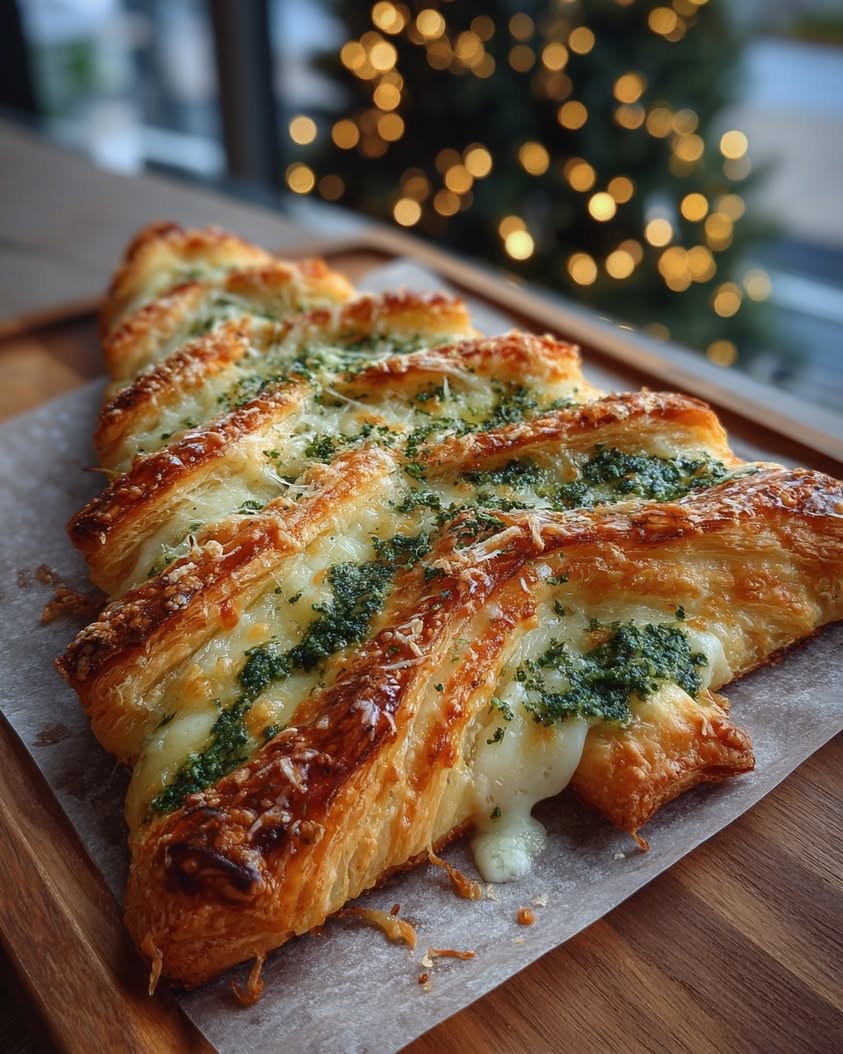
Festive Basil Pesto Christmas Tree Appetizer with Puff Pastry: The Ultimate Holiday Showstopper
Imagine the scene: a holiday party buzzing with laughter, and you present a stunning, golden-brown puff pastry Christmas tree, its branches glistening with melted cheese and vibrant green pesto. This Festive Basil Pesto Christmas Tree Appetizer with Puff Pastry is not just food; it’s a centerpiece, a conversation starter, and a guaranteed crowd-pleaser. Moreover, it combines the buttery, flaky perfection of puff pastry with the aromatic, fresh punch of homemade basil pesto. Consequently, every pull-apart piece delivers a satisfying crunch followed by a gooey, cheesy, herbaceous bite.
This recipe is your secret weapon for effortless holiday entertaining. Surprisingly, it requires just a handful of ingredients and minimal hands-on time. The magic lies in the assembly, transforming simple sheets of store-bought puff pastry into an edible work of art. Ultimately, your guests will marvel at your culinary skills, never guessing how straightforward this impressive appetizer truly is. This Festive Basil Pesto Christmas Tree Appetizer with Puff Pastry is the perfect blend of elegance and ease, making your holiday hosting stress-free and memorable.
Quick Recipe Highlights
- Flavor Profile: This appetizer delivers a harmonious balance of rich, buttery pastry, the sharp, salty tang of Parmesan cheese, and the bright, garlicky freshness of basil pesto. Each flavor component shines through distinctly, creating a sophisticated yet comforting taste.
- Texture: Expect a delightful contrast between the shatteringly crisp, multi-layered exterior of the baked puff pastry and the soft, molten interior where the cheese and pesto meld together. The texture is irresistibly flaky and satisfying.
- Aroma: As it bakes, your kitchen will fill with the warm, comforting scent of baking pastry, toasted garlic, and nutty Parmesan, underscored by the sweet, herbal notes of fresh basil. It’s an aroma that instantly signals celebration.
- Visual Appeal: The golden-brown tree shape, adorned with cherry tomato “ornaments” and a Parmesan “star,” is visually stunning. Its festive presentation makes it the undeniable star of any holiday appetizer spread.
- Skill Level Needed: This recipe is beginner-friendly. It uses pre-made puff pastry, so no advanced dough skills are required. The main techniques are simple rolling, cutting, and assembling, making it accessible to all home cooks.
- Special Equipment: You only need basic kitchen tools: a baking sheet, parchment paper, a sharp knife or pizza cutter, a rolling pin, and a small bowl for the egg wash. No fancy gadgets are necessary for this showstopper.
Recipe Overview
- Difficulty Level: We rate this recipe as “Easy” because it utilizes the convenience of store-bought puff pastry, which handles all the complex layering work for you. The steps involve simple spreading, stacking, cutting, and twisting—techniques that are easy to master on the first try. There is no yeast proofing or complicated dough handling, making it a foolproof project for novice bakers and busy hosts alike.
- Category: This dish falls squarely into the appetizer or party snack category. It is designed for sharing and grazing, perfect for cocktail hours, holiday open houses, or pre-dinner nibbles. Additionally, it can serve as a fun and interactive centerpiece for a casual gathering.
- Cuisine: While puff pastry has French origins and pesto hails from Italy, this recipe is a modern fusion creation popular in contemporary American holiday entertaining. It represents a global-inspired approach to party food, combining classic European elements into a new, visually festive format.
- Cost: This is a very cost-effective appetizer. A box of frozen puff pastry, a block of Parmesan, and ingredients for a simple pesto (or a quality store-bought jar) are relatively inexpensive. The cherry tomatoes and egg are pantry staples. You can create an impressive dish that serves many for a fraction of the cost of pre-made party platters.
- Season: This recipe is quintessentially a winter holiday dish, perfectly suited for Christmas, New Year’s Eve, and festive parties from November through December. The warm, baked nature of the dish is comforting in colder weather, and its tree shape directly celebrates the season.
- Occasion: Ideal for Christmas Eve gatherings, holiday potlucks, office parties, and family get-togethers. It’s also excellent for any festive occasion where a visually impressive, shareable finger food is desired, such as a winter birthday party or a festive game-day spread.
Why You’ll Love This Recipe
First and foremost, the taste and texture are utterly addictive. The flaky, buttery layers of puff pastry provide a perfect canvas for the robust flavors of basil pesto and Parmesan. Each bite offers a symphony of crunch and melt-in-your-mouth creaminess. The garlic and pine nuts in the pesto add depth, while the cheese offers a savory, salty finish. This combination is universally appealing, satisfying both simple and sophisticated palates. Furthermore, the visual “wow” factor translates directly to a delicious eating experience.
From a convenience standpoint, this recipe is a host’s dream. You can prepare the entire tree in about 15 minutes before popping it in the oven. Using pre-rolled puff pastry sheets eliminates the most time-consuming part of pastry work. Additionally, you can even assemble the tree ahead of time and refrigerate it before baking. This means you can spend less time in the kitchen and more time enjoying your guests. The simplicity is truly liberating during the busy holiday season.
While it’s a treat, this appetizer offers some nutritional advantages compared to other heavy holiday fare. Basil pesto is packed with antioxidants from fresh herbs and healthy fats from olive oil and pine nuts. Using a high-quality Parmesan cheese means a little goes a long way in terms of flavor, allowing you to control sodium and fat content. You are also incorporating a vegetable element through the pesto and tomato garnish. Choosing whole-wheat puff pastry is a great option for adding fiber.
The social and entertaining value of this dish is immense. It encourages interaction, as guests love to pull apart the “branches” of the tree themselves. This interactive serving style breaks the ice and creates a fun, communal dining experience. It serves as a beautiful centerpiece that sparks conversation and admiration. Presenting such a thoughtful, handmade creation shows your guests you care, elevating the entire atmosphere of your event. It’s a recipe that creates lasting memories.
Finally, this Festive Basil Pesto Christmas Tree Appetizer with Puff Pastry is incredibly cost-effective and accessible. The ingredients are easy to find at any standard grocery store. You don’t need expensive equipment or rare items. Compared to ordering catering or buying pre-made gourmet appetizers, making this yourself saves a significant amount of money while yielding a far superior product. It democratizes gourmet entertaining, proving that stunning food can be both simple and affordable.
Historical Background and Cultural Significance
The concept of edible Christmas trees made from pastry is a relatively modern innovation in holiday cooking, likely emerging in the late 20th century alongside the popularity of quick, visually impressive party foods. It represents a fusion of traditional baking techniques with the contemporary desire for Instagram-worthy dishes. This trend mirrors a larger movement in home entertaining where presentation and shareability became as important as flavor. The use of puff pastry, a staple with centuries-old European roots, grounds this playful creation in classic culinary tradition.
Culturally, the Christmas tree itself is a central symbol of holiday celebration in many Western cultures. Translating that symbol into food is a way of extending the festive spirit to the dining table. It embodies the joy, generosity, and communal focus of the season. Foods shaped like holiday icons, from gingerbread men to Yule logs, have long been part of culinary tradition. This puff pastry tree is a natural evolution—a savory counterpart to the sweet treats that typically dominate the season’s baking.
The recipe has evolved rapidly with the sharing of ideas on food blogs and social media platforms like Pinterest and Instagram. Original versions may have used simpler fillings like pesto or cheese alone. Today, you see countless variations incorporating sun-dried tomatoes, different cheeses, prosciutto, or caramelized onions. The basic technique remains constant, but the fillings reflect global flavors and personal creativity. This evolution highlights how home cooks actively participate in shaping modern food trends, adapting a great idea to local tastes and available ingredients.
Regional variations are endless. In the Mediterranean, you might find a version with za’atar and feta cheese. A French-inspired adaptation could use brie and fig jam. In the American South, a pimento cheese filling would be a natural fit. Some cooks make miniature individual trees, while others create a giant centerpiece tree. The common thread is the celebration of the season through creative, shareable food. This adaptability is what secures the recipe’s place in the modern holiday canon, allowing every family to make it their own.
Ingredient Deep Dive
Puff Pastry: Puff pastry, or pâte feuilletée, is a laminated dough with origins in France. Its creation involves repeatedly folding butter into dough to create hundreds of thin layers that steam apart during baking, resulting in a dramatic rise and flaky texture. For this recipe, using a high-quality all-butter frozen puff pastry (like Dufour) will yield the best flavor and most consistent flakiness. Thaw it slowly in the refrigerator overnight for best results. Avoid rolling it too thin, as you need enough structure to hold the filling and puff properly. As a substitute, you could use crescent roll dough in a pinch, though the texture will be softer and less layered.
Basil Pesto: Originating in Genoa, Italy, pesto is a vibrant sauce traditionally made with basil, garlic, pine nuts, Parmesan cheese, and olive oil crushed in a mortar and pestle. Its name comes from the Italian verb “pestare,” meaning to crush or pound. Fresh basil provides antioxidants like vitamins A and K, along with anti-inflammatory properties. For the brightest flavor, use fresh basil leaves and toast the pine nuts lightly to enhance their nuttiness. A high-quality extra-virgin olive oil is crucial. You can store homemade pesto in the fridge with a layer of oil on top for up to a week, or freeze it for months.
Parmesan Cheese: Parmigiano-Reggiano, the true king of Parmesan, is a hard, granular cheese from Italy with a history dating back nearly 1,000 years. It is rich in protein, calcium, and vitamins like B12 and phosphorus. Always buy a block and grate it yourself for superior melt and flavor; pre-grated cheese contains anti-caking agents that can make it grainy. The sharp, salty, umami-rich flavor of Parmesan is irreplaceable in this recipe. If necessary, you can substitute with another hard, aged cheese like Pecorino Romano (which is saltier) or Asiago. Avoid soft cheeses that will leak too much oil.
Egg Wash: The egg wash (a beaten egg, often with a splash of water or milk) is a simple but critical component. It acts as an edible glue to seal the pastry layers together, ensuring the tree holds its shape during baking. More importantly, it provides a beautiful, glossy, deep golden-brown finish to the baked pastry. The proteins and fats in the egg promote browning through the Maillard reaction. For a vegan version, you can use plant-based milk or a mixture of maple syrup and non-dairy milk to encourage browning, though the shine will be less pronounced.
Common Mistakes to Avoid
- Using Puff Pastry That Is Too Warm: If the pastry becomes soft and sticky, it will be difficult to work with and may not puff properly. Always work with it cold, just pliable enough to roll. If it gets too warm, return it to the fridge for 10 minutes.
- Overfilling the Pastry: Applying too much pesto or cheese can cause the filling to ooze out during baking, creating a mess on your baking sheet and potentially causing the layers to stick together instead of puffing. Use a thin, even layer for best results.
- Not Sealing the Edges Properly: After placing the second sheet of pastry on top, press down firmly around the edges and especially along the center “trunk” line. A missed seal can allow filling to escape and the layers to separate in the wrong places.
- Cutting All the Way Through the Center: When cutting your branches, you must stop about 1/2 inch to 1 inch from the center trunk line. Cutting all the way through will result in separate strips instead of a connected tree.
- Twisting the Branches Too Tightly: A gentle twist of 2-3 times is sufficient. Over-twisting can stretch the dough thin, causing it to tear or bake unevenly. It can also make the branches too dense.
- Skipping the Egg Wash: The egg wash is not optional for appearance. Without it, the pastry will bake up pale and dull instead of having that professional, glossy, golden-brown finish that makes it so inviting.
- Baking on an Unlined Pan: Puff pastry contains a lot of butter, which can drip and burn on a bare baking sheet. Always use parchment paper or a silicone baking mat for easy release and clean-up.
- Underbaking: Puff pastry needs to be baked until it is deeply golden brown all over. If you remove it too early, the layers in the center may be damp and doughy. The color is your best indicator of doneness.
Essential Techniques
Rolling and Sizing the Pastry: Rolling the thawed pastry sheets to an even rectangle ensures uniform thickness, which is critical for even baking and puffing. Use light pressure with a rolling pin on a lightly floured surface. The goal is to smooth out any creases from packaging and achieve the specified dimensions. Rolling too hard can compress the layers, inhibiting the rise. If the dough starts to resist or shrink back, it’s getting warm; chill it briefly. A uniform sheet guarantees your tree has consistent branches from top to bottom.
Creating the Tree Shape and Cutting Branches: This technique transforms flat pastry into a recognizable tree. After stacking and filling, you cut a simple triangle. The key is using a sharp knife or pizza cutter for clean cuts that don’t drag and seal the layers. When cutting the branches, make sure your cuts are evenly spaced for a symmetrical look. Leaving the central trunk intact is the most crucial step; it holds the entire structure together. Think of it as cutting slits in a skirt, not cutting it into pieces.
The Twisting Motion: Twisting each branch is what gives the tree its beautiful, textured, bakery-quality appearance. Hold the end of a strip and twist it away from you 2-3 times. The motion should be firm but gentle. Each twist exposes the layered interior of the pastry, which will become extra crisp. Ensure all twists go in the same direction (e.g., all clockwise) for a uniform look. This technique also helps seal the edges of each branch slightly, containing the filling.
Applying the Egg Wash: Using a pastry brush, apply a thin, even coat of beaten egg over all visible pastry surfaces. Avoid letting pools of egg wash collect in the crevices, as this can cause uneven browning. A thin coat will dry and set during baking into a shiny shell. Be careful not to brush egg wash on the cut edges where the filling is exposed, as it can glue the layers shut. This simple step is the difference between a homemade look and a professional one.
Pro Tips for Perfect Festive Basil Pesto Christmas Tree Appetizer with Puff Pastry
Chill the assembled tree on the baking sheet for 15 minutes before baking. This re-solidifies the butter in the pastry, which leads to a higher, flakier rise in the oven.
For extra flavor and color, sprinkle everything bagel seasoning, sesame seeds, or flaky sea salt over the egg-washed tree before baking.
Use a pizza cutter instead of a knife for cutting the branches. It glides through the pastry without dragging, giving you cleaner lines and easier cuts.
If your pesto is very oily, drain it slightly or spread it with a spoon rather than a brush to control the amount. Too much oil can make the pastry soggy.
Place the baking sheet on the middle oven rack. If placed too low, the bottom may burn before the top is golden; too high, and the top may brown too quickly.
Let the baked tree rest for 5 minutes after removing it from the oven. This allows the cheese to set slightly, making it easier to transfer to a serving board without collapsing.
For a guaranteed crisp bottom, consider preheating your baking sheet in the oven before placing the parchment-lined tree on it. The immediate heat shock boosts puff.
Add the cherry tomato “ornaments” halfway through baking. This prevents them from bursting and shriveling, keeping them plump and vibrant for presentation.
Variations and Adaptations
Regional Variations: Embrace global flavors by changing the filling. For a Greek twist, use spinach, feta, and dill. A French-inspired version could feature brie and apricot jam. For a Spanish flair, try manchego cheese and chorizo. An Indian-inspired adaptation might use cilantro-mint chutney and paneer. These variations keep the concept fresh and allow you to tailor the appetizer to the theme of your party or your guests’ preferences.
Seasonal Adaptations: While perfect for Christmas, this tree shape can be adapted for any season. For autumn, use a pumpkin-shaped cookie cutter and fill with butternut squash puree and sage. For Valentine’s Day, create heart shapes with a sun-dried tomato and goat cheese filling. A spring “tree” could use pea pesto and lemon zest. The technique is versatile, allowing you to celebrate holidays year-round with a savory pastry centerpiece.
Dietary Modifications: For a gluten-free tree, use a certified gluten-free puff pastry brand. To make it dairy-free, use vegan pesto (nutritional yeast instead of cheese) and a plant-based cheese that melts well. For a vegan version, combine the dairy-free modifications with a plant-based egg wash. For a nut-free pesto, substitute sunflower seeds or pepitas for pine nuts. Always check your puff pastry ingredients, as some brands use lard or dairy.
Flavor Variations: Beyond basil pesto, consider roasted red pepper pesto, sun-dried tomato pesto, or a kale and walnut pesto. You can also do a non-pesto base: try a layer of fig jam with goat cheese, caramelized onions with gruyere, or a tapenade with mozzarella. Combining two fillings in stripes can create a stunning visual effect, like one half pesto and one half tomato paste.
Texture Modifications: For extra crunch, sprinkle chopped walnuts or pine nuts over the pesto before adding the second pastry layer. For a creamier interior, add small dollops of ricotta or cream cheese alongside the shredded Parmesan. To incorporate a meaty texture, add very finely chopped cooked bacon, prosciutto, or ham between the layers.
Presentation Alternatives: Make mini trees using smaller triangle cutters for individual servings. Create a “wreath” shape by forming your stacked pastry into a circle before cutting and twisting. Instead of a tree, cut the stacked pastry into simple twists or pinwheels for a faster, though less dramatic, presentation. The basic method is a canvas for your creativity.
Serving and Presentation Guide
Plating is everything with this showstopper. Transfer the baked tree to a large wooden cutting board, slate slab, or festive platter. The rustic background makes the golden pastry pop. Place a small bowl of extra pesto or marinara sauce for dipping in the space where the tree’s “pot” would be, at the wide end of the triangle. This utilizes space cleverly and offers a flavor boost. Alternatively, you can drizzle a balsamic glaze in a zig-zag pattern over the tree for a gourmet touch just before serving.
Garnishing elevates the visual appeal from great to spectacular. Immediately after baking, add your Parmesan “star” and cherry tomato “ornaments.” You can also sprinkle with fresh, finely chopped basil or parsley for a burst of green. For a festive sparkle, a light dusting of edible gold dust looks magical. If serving during the day, fresh herb sprigs like rosemary look like tiny evergreen branches. Remember, garnishes should be edible and complement the flavors.
Traditional accompaniments are simple. This appetizer pairs beautifully with a crisp, light salad to balance its richness, such as an arugula salad with lemon vinaigrette. For a fuller spread, offer other finger foods like olives, cured meats, and marinated vegetables. It’s rich, so light, acidic, or fresh sides provide a perfect counterpoint. Consider the tree the centerpiece of a curated appetizer table.
Modern serving suggestions include pairing it with a signature holiday cocktail or mocktail. Serve it as part of a brunch spread alongside quiche and fruit. For a kids’ party, serve with small cups of warm marinara for dipping. You can also deconstruct it for easier serving at a buffet by pre-cutting a few branches before presenting it. This encourages guests to start without feeling like they’re ruining the art.
Temperature considerations are key. This appetizer is best served warm, when the cheese is still soft and the pastry is at its crispiest. If it sits too long, the steam will soften the pastry. To keep it warm for a party, you can hold it in a turned-off oven with the door slightly ajar for up to 30 minutes. If you must make it ahead, re-crisp it in a 350°F oven for 5-8 minutes before serving.
Portion control is intuitive with this dish. Guests simply pull off a branch. One standard tree yields about 12-16 branches, perfect for 6-8 people as part of a larger spread. If it’s the main appetizer, plan for 2-3 branches per person. The beauty is that people can take as much or as little as they want, making it ideal for groups with varying appetites.
Wine and Beverage Pairing
Wine pairings should complement the rich, buttery pastry and the herbal, garlicky pesto. A crisp, high-acid white wine like Sauvignon Blanc or Pinot Grigio cuts through the fat beautifully. The herbal notes in a Sauvignon Blanc often mirror those in the basil. For red wine lovers, a light-bodied, low-tannin red like Pinot Noir or Beaujolais works well; heavy tannins can clash with the garlic. A dry sparkling wine or Prosecco is always a festive choice, with bubbles that cleanse the palate between bites.
Non-alcoholic alternatives are just as important. A sparkling water with a twist of lemon or lime provides refreshing effervescence. For a more crafted option, a basil-infused lemonade or a cucumber-mint spa water echoes the herbal elements of the dish. A tart cranberry spritzer balances the richness. Iced herbal teas, like rosemary or lemon verbena, can also be sophisticated and pairing-friendly.
Coffee and tea pairings work well if serving this at a holiday brunch. A medium-roast coffee with low acidity won’t overpower the flavors. A black tea like Earl Grey, with its citrusy bergamot notes, can be a lovely complement. For an after-dinner serving with coffee, the savory notes make a nice transition from sweet desserts. Avoid overly bitter or smoky beverages that might dominate the delicate pastry flavors.
Temperature considerations for beverages are straightforward. Serve white wines and sparkling options well-chilled. Red wines should be served slightly cooler than room temperature. Non-alcoholic sparklers should be ice-cold. The contrast between a cool, crisp drink and the warm, rich appetizer is part of the pleasure. Always have plenty of chilled water available, as the saltiness of the cheese will make guests thirsty.
Serving suggestions include setting up a dedicated drink station near the appetizer table. Offer a signature cocktail or mocktail in a pitcher alongside the wine options. Labeling bottles or pitchers helps guests serve themselves easily. Providing both stemmed and stemless glassware accommodates reds, whites, and sparklers, allowing guests to choose their preferred pairing without needing multiple glasses.
Storage and Shelf Life
Storage methods for leftovers are simple but time-sensitive. Once completely cooled to room temperature, transfer any leftover tree or branches to an airtight container. You can also wrap it tightly in aluminum foil. Do not store it while still warm, as condensation will make the pastry soggy. The refrigerator is the best place for short-term storage, but be aware that the pastry will lose its crispness.
Temperature requirements are strict for maintaining quality. At room temperature, the tree is safe to sit out for serving for up to 2 hours. After that, any leftovers must be refrigerated. Do not leave dairy-based products like cheese and pesto at room temperature for extended periods. The ideal serving window is within 30 minutes of baking for peak texture and flavor.
Container recommendations include shallow airtight containers that won’t crush the flaky layers. You can place parchment paper between layers if stacking branches. For the whole tree, a large cake carrier or a container with a domed lid works well. The goal is to minimize air exposure, which speeds staling, and to prevent anything from pressing down on the delicate pastry.
Signs of spoilage are typical for dairy and baked goods. Look for any off smells, a significant change in texture (excessive sogginess or an unusual chewiness), or visible mold. Because of the cheese and pesto, it will not last as long as plain baked goods. When in doubt, it’s best to discard leftovers after 2 days in the fridge.
Reheating instructions are crucial for restoring texture. To recrisp, preheat your oven or toaster oven to 350°F. Place leftovers on a parchment-lined sheet and heat for 5-8 minutes, until warm and crisp. Avoid the microwave, as it will turn the pastry rubbery and soft. The oven method won’t make it “fresh-baked” perfect, but it will be vastly superior to eating it cold.
Freezing guidelines apply to the unbaked, assembled tree. After assembling and twisting, place the entire baking sheet in the freezer until the tree is solid. Then, wrap it tightly in several layers of plastic wrap and foil. It can be frozen for up to 2 months. Bake directly from frozen, adding 5-10 minutes to the baking time. Do not freeze after baking, as the texture will suffer greatly upon thawing and reheating.
Make Ahead Strategies
Your prep timeline can be stretched over two days for maximum convenience. Day 1: Make your pesto from scratch and grate your cheese. Store them separately in airtight containers in the fridge. Day 2 (party day): Thaw your pastry overnight in the fridge. Assemble the tree up to 4 hours before baking. Cover it loosely with plastic wrap and refrigerate until you’re ready to bake. This staged approach breaks the work into manageable chunks.
Storage between steps is straightforward. Keep your prepared components cold. The pesto and cheese can live in the fridge. The assembled, unbaked tree must be kept refrigerated, not at room temperature, to prevent the butter in the pastry from softening too much and to keep the filling food-safe. If refrigerating for more than an hour, cover it loosely to prevent the surface from drying out.
Quality impact assessment shows that make-ahead strategies have minimal negative effect. Pre-made pesto often tastes better as the flavors meld. A chilled, assembled tree may actually bake up slightly higher because the butter is very cold. The only potential downside is if the pastry dries out on the surface in the fridge; covering it prevents this. Overall, making ahead enhances ease without sacrificing quality.
Assembly tips for make-ahead include working quickly on a cold surface to keep the pastry cool. If you see it getting soft, pause and chill the baking sheet for 5 minutes. After twisting the branches, you can freeze the entire tree as mentioned, which is the ultimate make-ahead move. For same-day prep, assembling in the morning for an evening party is perfectly fine.
Reheating guidelines don’t apply to a make-ahead unbaked tree, as you’ll be baking it fresh. However, if you pre-bake it (not recommended), follow the reheating instructions in the storage section. The key advantage of the make-ahead unbaked method is you get a fresh-baked product with no reheating necessary, preserving the perfect texture.
Fresh element additions should be done post-bake. Add any delicate garnishes like fresh herbs, the Parmesan star, or tomato ornaments after the tree comes out of the oven. If you added them before a long chill, they could wilt or release moisture. This final touch takes seconds but makes the presentation look freshly and carefully completed.
Scaling Instructions
Halving the recipe is simple if you’re hosting a smaller gathering. Use one sheet of puff pastry. Cut it in half crosswise to create two squares. Stack them with filling in between, then cut a smaller triangle from the stacked squares. Adjust baking time slightly, checking for doneness a few minutes early, as a smaller tree will bake faster. All other ingredient quantities can be halved intuitively.
Doubling or tripling is easy for a crowd. You will need multiple baking sheets. Assemble each tree on its own parchment-lined sheet. Bake them one sheet at a time on the middle oven rack for even heat circulation. If your oven fits two sheets on different racks, rotate them top-to-bottom and front-to-back halfway through baking. Ensure there’s space for air to circulate around each sheet.
Equipment adjustments are minimal. For multiple trees, you obviously need multiple baking sheets. You may also need a larger workspace for assembly. A pizza cutter becomes even more valuable for quickly and cleanly cutting multiple trees. Make sure you have enough cooling racks or space to hold the baked trees before serving.
Timing modifications are crucial when scaling. A single tree bakes in about 20 minutes. Two trees baked separately will take about 40 minutes total, plus cooling time. Factor this into your party schedule. You can stagger baking so the second tree goes in as the first one is being served, ensuring a constant supply of warm appetizers.
Storage considerations change when scaling up. If making multiple trees ahead and freezing, ensure they are wrapped individually and labeled. You may need significant freezer space. When baking multiple trees for a party, have a warm holding area (like a turned-off oven) ready to keep the first tree warm while others bake. Plan your serving platters in advance.
Nutritional Deep Dive
The macro breakdown of this appetizer reflects its indulgent nature. A single branch provides a balance of carbohydrates from the pastry, fats from the butter, olive oil, cheese, and nuts, and protein from the cheese and egg. It is energy-dense, making it a satisfying treat. The exact numbers vary based on specific brands and portion size, but it’s wise to consider this a rich component of a meal rather than a light snack.
A micronutrient analysis reveals some benefits amidst the indulgence. Basil pesto contributes vitamins A, C, and K, along with manganese from the basil and pine nuts. Parmesan cheese is an excellent source of calcium and phosphorus, crucial for bone health. The olive oil provides heart-healthy monounsaturated fats. While not a health food, it does offer more nutritional complexity than a plain cheese pastry.
Health benefits are linked primarily to the quality ingredients. The monounsaturated fats in olive oil can support heart health. The antioxidants in fresh basil have anti-inflammatory properties. Calcium from the cheese supports bone density. When enjoyed in moderation as part of a balanced diet, this appetizer can fit into a healthy lifestyle, especially during celebrations.
Dietary considerations are important for those with restrictions. This standard recipe contains gluten (pastry), dairy (cheese), eggs (wash), and tree nuts (pine nuts in pesto). However, as outlined in the adaptations section, it is highly modifiable for gluten-free, dairy-free, vegan, and nut-free diets. Always check labels on pre-made components like pastry and pesto.
Portion analysis is your friend. One tree yields 12-16 branches. Enjoying one or two branches allows you to savor the flavor without overindulging. Pair it with a large salad or vegetable crudités to create a more balanced plate. Being mindful of portion size lets you enjoy festive foods while maintaining your dietary goals.
Weight management tips include being strategic. If this is a special occasion treat, enjoy it mindfully and adjust other meals that day to be lighter. You can also use a lighter hand with the cheese or choose a reduced-fat puff pastry. Remember, one day of celebration will not derail progress. The key is to savor the experience, not to overconsume out of habit.
Dietary Adaptations
Gluten-Free: Successfully adapting this recipe to be gluten-free hinges entirely on finding a good gluten-free puff pastry. Brands like Schär and GeeFree offer frozen options. Ensure all other ingredients, especially pre-made pesto, are certified gluten-free, as cross-contamination is possible. The assembly and baking process remains identical. The texture may be slightly different but can still be deliciously flaky.
Dairy-Free: To make this dairy-free, use a vegan pesto made without Parmesan cheese (nutritional yeast adds a cheesy flavor). Select a high-quality vegan cheese shreds that melt well, such as those from Violife or Miyoko’s. Be sure your puff pastry brand doesn’t contain butter (many use oil). The egg wash can be replaced with plant-based milk or aquafaba for browning.
Vegan: A vegan adaptation combines the dairy-free changes with an egg-free wash. Use a butter-free puff pastry (check for lard as well), vegan pesto, and vegan cheese. For the wash, mix a tablespoon of plant-based milk with a teaspoon of maple syrup to promote browning{“success”:true,”message”:”Recipe created successfully”,”post_id”:7887,”tasty_recipe_id”:7887,”shortcode”:” Print
Basil Pesto Cheesy Puff Pastry Christmas Tree
Description
A festive and savory puff pastry tree filled with basil pesto and cheese, perfect for holiday appetizers.
Ingredients
For the Crust:
- 1 sheet puff pastry, thawed
- 1/2 cup basil pesto
- 1 cup shredded mozzarella cheese
- 1/4 cup grated Parmesan cheese
- 1 egg, beaten (for egg wash)
- Salt and black pepper to taste
- Cherry tomatoes or red pepper strips for garnish (optional)
Instructions
1. Prepare the Crust:
- Preheat oven to 400°F (200°C) and line a baking sheet with parchment paper.
- Roll out puff pastry on a lightly floured surface into a large rectangle. Spread basil pesto evenly over the pastry, leaving a 1-inch border around edges.
- Sprinkle mozzarella and Parmesan cheeses over the pesto, then season with salt and pepper.
- Starting from the long side, tightly roll the pastry into a log. Place seam-side down and chill in freezer for 10 minutes to firm.
- Cut the log in half lengthwise, then arrange the two halves side by side, cut sides up, to form a tree shape on the baking sheet. Twist and braid strands slightly for texture.
- Brush with egg wash and bake for 20-25 minutes until golden brown and puffed. Garnish with cherry tomatoes or pepper strips if desired before serving.
Notes
You can customize the seasonings to taste.

I’m Billy, a classically trained culinary school graduate from The Culinary Institute of America with over 12 years in the restaurant industry and over 19 years of cooking experience.