
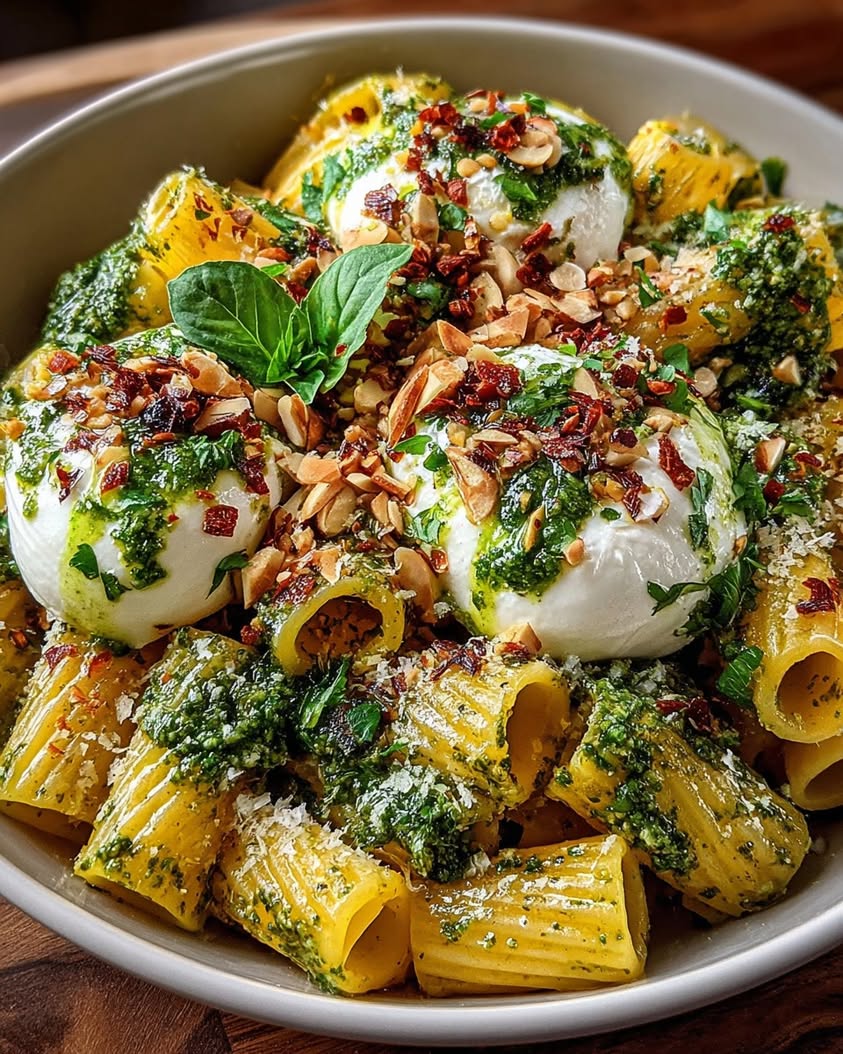
Creamy Burrata Pesto Rigatoni Perfection: A Luxurious Weeknight Feast
Imagine a dish that feels like a special occasion but comes together in minutes. This Creamy Burrata Pesto Rigatoni Perfection is exactly that. It transforms simple, fresh ingredients into a luxurious meal. The vibrant, homemade basil pesto clings to every nook of the rigatoni. Meanwhile, the toasted almonds add a delightful crunch. Ultimately, the star is the creamy burrata, melting into a luscious sauce that ties everything together.
This recipe is a celebration of texture and flavor. It is perfect for a date night at home or for impressing guests without stress. The aroma of fresh basil and garlic toasting in olive oil will fill your kitchen. Consequently, it promises a restaurant-quality experience. Every bite offers a harmonious blend of herby, nutty, and creamy notes. This Creamy Burrata Pesto Rigatoni Perfection is more than just pasta; it is a comforting, elegant bowl of joy.
Quick Recipe Highlights
- Flavor Profile: This dish delivers a bold, fresh basil flavor from the pesto, balanced by the rich, milky sweetness of burrata and the savory depth of Parmesan. The toasted almonds introduce a subtle, nutty complexity that elevates the entire plate.
- Texture: You experience a wonderful contrast: the satisfying chew of al dente rigatoni, the creamy, molten center of the burrata, and the irresistible crunch of toasted almonds. The pesto itself is luxuriously smooth yet clings perfectly to the pasta.
- Aroma: The scent of fresh basil and garlic is immediate and intoxicating. As you toast the almonds, a warm, nutty fragrance joins it, creating an aroma that is both herbaceous and comforting, signaling a truly homemade meal.
- Visual Appeal: The presentation is stunning with vibrant green pesto coating the pasta, snowy white burrata nestled on top, and golden-brown almond pieces scattered throughout. A final drizzle of olive oil adds a beautiful sheen.
- Skill Level Needed: This is an accessible recipe for cooks of all levels. The techniques are straightforward: boiling pasta, toasting nuts, and blending a simple sauce. Therefore, it requires no advanced culinary skills, just attention to timing and quality ingredients.
- Special Equipment: A food processor or blender is essential for creating a smooth, emulsified pesto. Other than that, you only need basic kitchen tools: a large pot, a skillet for toasting nuts, and a colander.
Recipe Overview
- Difficulty Level: We rate this recipe as easy because it involves fundamental cooking steps most home cooks perform regularly. The pesto comes together quickly in a processor, and the rest is simple assembly. Importantly, there is no tricky sauce reduction or complex techniques, making it very approachable.
- Category: This dish fits beautifully into several categories: a luxurious main course, a impressive vegetarian dinner, or a sophisticated pasta dish for entertaining. It is substantial enough to stand alone but can also be part of a larger Italian-inspired feast.
- Cuisine: The recipe is rooted in Italian cuisine, drawing directly from the Ligurian tradition of pesto alla Genovese. The addition of burrata, a modern Italian cheese, provides a contemporary twist on the classic, blending regional heritage with current culinary trends.
- Cost: Using high-quality ingredients like fresh basil, good olive oil, and real Parmigiano-Reggiano impacts the cost. However, this recipe is cost-effective for a special meal compared to dining out. Strategically, you can often find burrata on sale, and the dish yields four generous portions.
- Season: This Creamy Burrata Pesto Rigatoni Perfection is ideal for late spring through summer when basil is at its peak, fragrant, and abundant. Conversely, it also brings a taste of summer sunshine to the table during colder months, offering a bright, herbaceous escape.
- Occasion: It is perfect for romantic dinners, small dinner parties, or a treat-yourself weeknight meal. The dish feels celebratory and special. Moreover, it is an excellent choice for a meatless Monday that doesn’t compromise on satisfaction or flavor.
Why You’ll Love This Recipe
First, the taste and texture are utterly irresistible. Each forkful is a journey through creamy, cheesy, herby, and crunchy elements. The fresh pesto provides a bright, garlicky punch that is mellowed by the decadent burrata. The toasted almonds ensure you never get a monotonous bite. This Creamy Burrata Pesto Rigatoni Perfection masterfully balances richness with freshness, preventing the dish from feeling too heavy. Ultimately, it is deeply satisfying yet surprisingly light.
Second, the convenience is a major win. You can achieve this luxurious dish in about thirty minutes with minimal active cooking time. The steps are simple and logical: start the pasta water, toast the almonds, make the pesto, and assemble. Consequently, it is an ideal solution for busy weeknights when you crave something special. The recipe also scales easily for a crowd, making it a stress-free option for entertaining. Cleanup is relatively simple, especially if you use the food processor bowl to toss the pasta.
Nutritionally, this dish offers several advantages. Basil is rich in antioxidants and vitamin K. Olive oil provides heart-healthy monounsaturated fats. Almonds add protein, fiber, and vitamin E. While it is a indulgent pasta dish, using whole ingredients means you avoid processed sauces packed with preservatives. You control the quality of oil, cheese, and nuts. For a more balanced meal, you can easily add a side of roasted vegetables or a simple green salad.
The social and entertaining value of this recipe is incredibly high. Presenting a beautiful platter of this pasta with the burrata centerpiece is always met with delight. It feels restaurant-worthy and shows care and effort. The dish is a fantastic conversation starter, especially for those unfamiliar with the magic of burrata. It is universally appealing to both adventurous and traditional eaters, making it a safe yet impressive choice for any gathering.
Finally, it is cost-effective and accessible. Compared to ordering a similar dish at an Italian restaurant, making it at home saves significant money. The ingredients are now widely available in most well-stocked supermarkets. If you cannot find burrata, a high-quality fresh mozzarella is a fine substitute. This flexibility ensures you can create a version of this Creamy Burrata Pesto Rigatoni Perfection no matter where you shop, bringing gourmet flavor to your everyday kitchen.
Historical Background and Cultural Significance
The story of this dish begins with pesto alla Genovese, a sauce with ancient roots in the Liguria region of Italy. Historically, the word “pesto” comes from the Genoese verb “pestâ,” meaning to crush or pound. Traditionally, it was made with a marble mortar and wooden pestle, slowly grinding basil, garlic, pine nuts, Parmesan, and olive oil into a sublime emulsion. This method was crucial for releasing the basil’s oils without bruising the leaves, preventing bitterness. The sauce was a celebration of summer’s bounty, specifically the unique basil grown around Genoa.
Culturally, pesto represents the ingenuity of Italian cucina povera, or “poor kitchen,” transforming humble, local ingredients into something extraordinary. It was a way to preserve the flavor of fresh basil. The addition of pasta, typically trofie or trenette, made it a complete, nourishing meal. Over time, pesto became a symbol of Ligurian identity and a beloved export of Italian cuisine worldwide. Its vibrant green color and fresh taste captured the essence of the Mediterranean coast.
The evolution of this recipe showcases modern culinary fusion. While traditional pesto uses pine nuts, many contemporary versions, including this one, experiment with other nuts like almonds for a different flavor profile and often lower cost. The real game-changer, however, is the addition of burrata. Burrata is a relatively modern Italian cheese, invented in the early 20th century in Puglia. Its combination of a solid mozzarella shell and a creamy, stracciatella-filled center adds a luxurious, decadent element that transforms a simple pesto pasta into a show-stopping main course.
Regional variations of pesto pasta are abundant. In Sicily, they might add tomatoes or almonds. In France’s neighboring region, pistou is a similar sauce without nuts. Our Creamy Burrata Pesto Rigatoni Perfection is a delicious contemporary interpretation that respects its heritage while embracing global accessibility. It uses rigatoni, a tube pasta excellent for holding chunky sauces, which is more common in central and southern Italy. This recipe is a beautiful example of how classic dishes can evolve while staying true to their soul.
Ingredient Deep Dive
Fresh Basil is the undisputed star of the pesto and the entire dish. Culturally, the specific basil used in Genoa, “Basilico Genovese,” is renowned for its sweet, delicate flavor without minty notes. Nutritionally, basil is an excellent source of vitamin K, essential for blood clotting, and contains antioxidants like flavonoids. For selection, choose bunches with vibrant green leaves, no black spots or wilting. Store basil like a bouquet: trim the stems and place in a glass of water on the counter, loosely covered with a bag. If you must substitute, in a pinch, you can use a high-quality store-bought pesto, but the fresh flavor will be diminished.
Burrata Cheese is the luxurious finish. Meaning “buttered” in Italian, burrata originated in Puglia as a clever way to use mozzarella scraps. It consists of a mozzarella pouch filled with soft stracciatella curds and cream. Nutritionally, it is rich in calcium and protein but also high in saturated fat, so enjoy it in moderation as part of this special dish. Select burrata that feels heavy for its size and is swimming in fresh whey or water in its container. It is highly perishable; use it within a day or two of purchase. For a substitution, fresh mozzarella (mozzarella di bufala is ideal) can be used, though you will miss the creamy center.
Rigatoni Pasta is the perfect vehicle for this sauce. Its large, tube-shaped structure with ridges (rigate) captures and holds the pesto and creamy cheese beautifully. Made from durum wheat semolina, it provides a satisfying chew and is a good source of complex carbohydrates. Always look for bronze-die extruded pasta; it has a rougher surface that sauces adhere to better. Cook it in abundantly salted water until al dente—it should have a firm bite. You can substitute other short, sturdy pasta shapes like penne, fusilli, or even trofie for authenticity.
Toasted Almonds provide the essential crunch and nutty depth. While pine nuts are traditional, almonds offer a more robust, earthy flavor and are often more affordable and readily available. They are a nutritional powerhouse, packed with vitamin E, magnesium, and healthy fats. Toasting is non-negotiable; it unlocks their oils and intensifies their flavor. For selection, use raw, whole almonds and toast them yourself for the freshest taste. Store nuts in the freezer to prevent their oils from going rancid. For substitutions, pine nuts, walnuts, or even pistachios would work beautifully, each offering a unique twist on the Creamy Burrata Pesto Rigatoni Perfection.
Common Mistakes to Avoid
- Overcooking the Pasta: Cooking the rigatoni to a soft, mushy texture is a critical error. You must cook it only until al dente, as it will continue to cook slightly when tossed with the warm pesto. Al dente pasta provides the necessary texture contrast against the creamy burrata.
- Using Stale or Pre-Grated Parmesan: The flavor of freshly grated Parmigiano-Reggiano or Grana Padano is incomparable to the pre-grated powder that often contains anti-caking agents. These agents can prevent the cheese from melting smoothly into the pesto, affecting the sauce’s texture and taste.
- Skipping the Toasting of Nuts: Adding raw almonds to the pesto results in a bland, flat flavor. Toasting them in a dry skillet until fragrant and lightly golden is a simple step that exponentially increases the nutty, rich depth of your entire dish.
- Bruising the Basil in the Blender: Over-processing the pesto in a blender or food processor can heat the basil and cause it to oxidize, turning it dark and bitter. Pulse the ingredients just until combined; a slightly coarse texture is preferable to a perfectly smooth, overworked paste.
- Not Reserving Pasta Water: The starchy, salty pasta water is liquid gold for sauce-making. Forgetting to save a cup before draining the pasta means you lose your best tool for thinning the pesto to a silky, clinging consistency without making it watery.
- Adding Cold Burrata Directly from the Fridge: Serving ice-cold burrata on hot pasta can shock the cheese and dull its creamy texture. Let the burrata sit at room temperature for 20-30 minutes before serving so it becomes luxuriously soft and spreadable.
- Over-salting the Pesto Before Tasting: Remember that both the Parmesan cheese and the pasta water are salty. Always season your pesto conservatively, then adjust the final seasoning after you have tossed it with the pasta and pasta water.
- Draining the Pasta and Letting It Sit: Never drain your pasta and leave it in the colander while you finish the sauce. It will start to stick together. Time it so the pesto is ready, then immediately drain the pasta and toss it in the sauce bowl.
Essential Techniques
Toasting Nuts Properly is fundamental for flavor development. Spread raw almonds in a single layer in a dry skillet over medium heat. Cook, shaking the pan frequently, for 3-5 minutes until they become fragrant and develop light golden spots. Why is this important? Heat activates the nuts’ natural oils, intensifying their taste and aroma. The common pitfall is walking away; they can burn in seconds. The visual cue for success is a warm, nutty smell and a slightly darker color. Immediately transfer them to a plate to stop the cooking process.
Creating an Emulsified Pesto is the core technique. In your food processor, pulse the garlic and toasted nuts first into a coarse meal. Next, add the basil and pulse until finely chopped. With the machine running, slowly drizzle in the olive oil. Finally, pulse in the grated cheese. This method ensures a stable emulsion where the oil is suspended throughout the other ingredients, creating a cohesive sauce. Rushing the oil or over-processing are the main pitfalls. Success looks like a vibrant, slightly coarse paste that holds together when scooped.
Cooking Pasta Al Dente is crucial for texture. Use a large pot of generously salted water—it should taste like the sea. Add the rigatoni and cook according to package directions, but start tasting a minute or two before the suggested time. Al dente means “to the tooth”; the pasta should be tender but offer a slight resistance when bitten. This texture is vital because it stands up to the sauce and provides a pleasing chew. The mistake is blindly trusting the package. The success cue is a firm, not crunchy, center.
Pro Tips for Perfect Creamy Burrata Pesto Rigatoni Perfection
- For the most vibrant green pesto, blanch your basil leaves for 5 seconds in boiling water, then immediately shock them in ice water. Pat dry thoroughly before using. This quick step halts enzyme activity that causes browning.
- Warm your serving bowl before assembling the dish. Simply fill it with hot water while you cook, then dry it. A warm bowl keeps the pasta hot longer, allowing the burrata to melt perfectly.
- Break the burrata open over the pasta at the table for dramatic effect. Use a spoon and fork to tear the delicate outer shell, letting the creamy interior spill over the rigatoni.
- If your pesto seems too thick when tossing with the pasta, add the reserved pasta water one tablespoon at a time. The starch in the water will help the sauce coat each piece smoothly without becoming greasy or separated.
- For an extra layer of flavor, use the oil from your sun-dried tomato jar or a high-quality flavored olive oil (like lemon or chili) for the final drizzle on top of the plated dish.
- Toast a few extra almonds. Crush them slightly more coarsely and keep them separate to use as a final garnish. This ensures maximum crunchy texture in every bite.
- If you must make pesto ahead of time, press plastic wrap directly onto its surface before sealing the container. This minimizes air exposure, which is the main cause of discoloration.
Variations and Adaptations
For regional variations, embrace the classic by using pine nuts and trofie pasta for a true Ligurian experience. Alternatively, for a Sicilian twist, add a handful of sun-dried tomatoes or a sprinkle of saffron to the pesto. A French Provençal version would omit the nuts entirely for a pistou and maybe include a spoonful of tomato paste.
Seasonal adaptations are easy. In summer, fold in halved cherry tomatoes or grilled zucchini ribbons. For autumn, add roasted cubes of butternut squash or sautéed wild mushrooms. In winter, a topping of crispy breadcrumbs fried in olive oil adds warmth. Spring calls for fresh peas or asparagus tips blanched and tossed in at the end.
Dietary modifications are straightforward. For a vegan Creamy Burrata Pesto Rigatoni, use nutritional yeast instead of Parmesan and a vegan mozzarella or cashew-based “burrata.” For gluten-free, use your favorite gluten-free rigatoni. To make it nut-free, substitute toasted sunflower seeds or pumpkin seeds for the almonds.
Flavor variations can take this dish in new directions. Add a teaspoon of lemon zest to the pesto for brightness. For spice, include a pinch of red pepper flakes in the food processor. For an herbaceous boost, mix in some fresh parsley or arugula with the basil. A tablespoon of capers can add a briny punch.
Serving and Presentation Guide
Plating techniques matter. For a family-style presentation, toss most of the pesto with the pasta in a large, warm serving bowl. Create a well in the center and place the whole burrata ball there. Drizzle the remaining pesto over the burrata and pasta. For individual plates, twirl the pasta into the center of each bowl and place a quarter of the burrata on top or beside it.
Garnishing ideas go beyond the toasted almonds. Add a few whole basil leaves for freshness. A final grating of Parmesan over the top adds visual texture. A swirl of high-quality extra virgin olive oil adds a beautiful sheen. For color, add edible flowers or a sprinkle of microgreens.
Traditional accompaniments include a simple green salad with a lemon vinaigrette to cut the richness. A side of grilled or roasted vegetables, like peppers and eggplant, complements the Mediterranean flavors. A crusty loaf of Italian bread is essential for scooping up every last bit of sauce and cheese.
Wine and Beverage Pairing
Wine pairings should complement the herbaceous pesto and rich cheese. A crisp, dry white wine like Vermentino from Liguria itself is a perfect regional match. Alternatively, a Pinot Grigio or Sauvignon Blanc with high acidity will cut through the creaminess beautifully. For red wine lovers, a light-bodied, low-tannin red like a Bardolino or a young Chianti can work if served slightly chilled.
Non-alcoholic alternatives are just as important. A sparkling water with a squeeze of lemon or lime cleanses the palate. For a more crafted option, a basil-infused lemonade or an iced herbal tea (like mint or verbena) echoes the herbal notes in the dish. A non-alcoholic Italian bitter soda can also provide a refreshing, complex counterpoint.
Storage and Shelf Life
Storage methods for leftovers are specific. Store the pasta and pesto mixture separately from any unused burrata. Place the pasta in an airtight container in the refrigerator for up to 3 days. Store the burrata in its original liquid or fresh water in a sealed container for 1-2 days. The pesto sauce alone can be stored with a layer of olive oil on top in the fridge for up to a week.
Reheating instructions are crucial to maintain quality. Reheat the pasta gently in a skillet with a splash of water or broth over low heat, stirring frequently. Avoid the microwave, as it can make the pasta rubbery and the sauce separate. Always add the fresh, room-temperature burrata to individual portions after reheating, not before.
Make Ahead Strategies
You can prepare the pesto up to 2 days in advance. Store it in an airtight container with a thin layer of olive oil pressed directly on the surface to prevent oxidation (browning). The almonds can be toasted and stored at room temperature in a sealed bag. The burrata should be purchased fresh and kept in its packaging until the day of serving.
On the day of serving, simply cook the pasta, toss with the pre-made pesto (thinned with pasta water as needed), and assemble with the burrata and almonds. This strategy makes this Creamy Burrata Pesto Rigatoni Perfection an excellent choice for stress-free dinner parties.
Scaling Instructions
Halving the recipe is simple for a meal for two. Use a smaller pot for pasta and a small food processor for the pesto. All cooking times remain the same. You may need to purchase a small ball of burrata, as they often come in standard sizes.
Doubling or tripling for a crowd requires a large stockpot for pasta and you may need to make the pesto in batches in your food processor. Toast the almonds in batches to avoid steaming. Consider presenting the dish on a large platter with multiple burrata balls scattered throughout for easy serving.
Nutritional Deep Dive
This dish provides a balance of macronutrients: carbohydrates from the pasta, healthy fats from the olive oil, nuts, and cheese, and protein from the cheese, nuts, and pasta. It is energy-dense, making it a satisfying meal. The basil and almonds contribute valuable micronutrients like Vitamin K, Vitamin E, and magnesium.
For portion control, one serving is about 1.5 to 2 cups of the pasta mixture with a quarter of a burrata ball. Pairing it with a large side salad increases volume and fiber, promoting satiety. While indulgent, using whole, unprocessed ingredients makes it a better choice than many creamy restaurant pasta dishes.
Dietary Adaptations
For a gluten-free version, use certified gluten-free rigatoni. Many brands made from corn, rice, or quinoa flour work well. Ensure all other ingredients, like pre-grated cheese, are certified gluten-free if cross-contamination is a concern.
For a vegan adaptation, replace the Parmesan with 3-4 tablespoons of nutritional yeast and a pinch of salt. Use a vegan burrata alternative (often made from cashews) or simply omit it and add creamy white beans or roasted cauliflower for substance. Ensure the pasta is egg-free.
For a dairy-free version, omit the Parmesan and burrata. Boost flavor with extra toasted nuts, a tablespoon of white miso paste for umami, and a squeeze of lemon. The pesto will still be delicious on the pasta, just less creamy.
Troubleshooting Guide
If your pesto is too bitter, you likely over-processed the basil or used older basil with thick stems. Next time, blanch the basil first and pulse gently. To salvage this batch, try balancing it with a pinch of sugar or a squeeze of lemon juice, and more Parmesan cheese.
If your sauce is too thick and clumpy when tossing with pasta, you did not use enough pasta water. Immediately add hot pasta water, one tablespoon at a time, while tossing vigorously over low heat. The starch will help create a silky, emulsified sauce that coats each piece.
If your burrata is too cold and firm, you did not let it come to room temperature. You can gently place the sealed ball in a bowl of warm (not hot) water for 5-10 minutes to soften it slightly. Do not microwave it, as it may burst.
Recipe Success Stories
Readers often report that this Creamy Burrata Pesto Rigatoni Perfection has become their go-to “impress” dish. One home cook shared that she made it for a first dinner with her now-in-laws and received rave reviews. Another found that adding grilled chicken made it a hit with her protein-loving family while keeping the vegetarian base for herself.
Many have successfully adapted it for dietary needs. A reader with a pine nut allergy used walnuts and loved the deeper flavor. Another, cooking for vegans, used the nutritional yeast and white bean suggestion and said it was a unanimous success at her potluck.
Frequently Asked Questions
Can I use store-bought pesto? Yes, in a pinch. Choose a high-quality refrigerated brand for the best flavor. However, the fresh, vibrant taste of homemade pesto is a key part of this dish’s magic and is worth the extra few minutes.
What can I use instead of burrata? Fresh mozzarella (especially mozzarella di bufala) is the best substitute. It will not have the creamy center, so you might drizzle a little extra olive oil or cream over the pasta to compensate for the missing richness.
Can I freeze the pesto? Yes, you can freeze pesto for up to 3 months. Leave out the cheese, freeze it in an ice cube tray, then transfer the cubes to a bag. Thaw and stir in freshly grated cheese before using.
Why did my pesto turn brown? Basil oxidizes when exposed to air. Pressing plastic wrap directly on the surface before sealing the container helps. Blanching the basil first also prevents browning. It is still safe to eat but less vibrant.
How do I know when the almonds are toasted enough? They will become fragrant and develop light golden-brown spots. They continue to cook from residual heat after being removed from the pan, so err on the side of under-toasting.
Is this dish served hot or cold? It is served warm. The pasta is hot, which slightly melts the room-temperature burrata. It is not meant to be a cold pasta salad.
Can I add protein like chicken or shrimp? Absolutely. Grilled chicken breast, sautéed shrimp, or even cannellini beans are excellent additions. Cook the protein separately and place it on top or toss it in at the end.
My pesto is too oily. What happened? You likely added the olive oil too quickly without allowing it to emulsify. Next time, drizzle it in a slow, steady stream while the processor is running. For now, you can try adding a few more basil leaves or nuts and pulsing again.
How do I prevent the pasta from sticking together after draining? Toss it immediately with the pesto sauce. The oil and sauce will coat it. Never drain pasta and let it sit without sauce or a bit of olive oil if you are not ready to use it.
What’s the best way to grate Parmesan for pesto? Use the fine holes on a box grater or a Microplane. Pre-grated cheese lacks freshness and may not melt as seamlessly into the sauce, affecting texture and flavor.
Additional Resources
If you loved this Creamy Burrata Pesto Rigatoni Perfection, explore other classic pasta dishes like Cacio e Pepe or a simple Aglio e Olio. Mastering these foundational recipes builds confidence in the kitchen. For more pesto inspiration, try a sun-dried tomato pesto or a kale and walnut pesto for a seasonal twist.
For technique guides, look up videos on “how to achieve al dente pasta” or “the mortar and pestle method for authentic pesto.” Understanding these fundamentals will improve all your cooking. Investing in a good quality extra virgin olive oil and a block of real Parmesan will elevate not just this dish, but countless others in your repertoire.
{“success”:true,”message”:”Recipe created successfully”,”post_id”:9382,”tasty_recipe_id”:9382,”shortcode”:”“}

I’m Billy, a classically trained culinary school graduate from The Culinary Institute of America with over 12 years in the restaurant industry and over 19 years of cooking experience.