
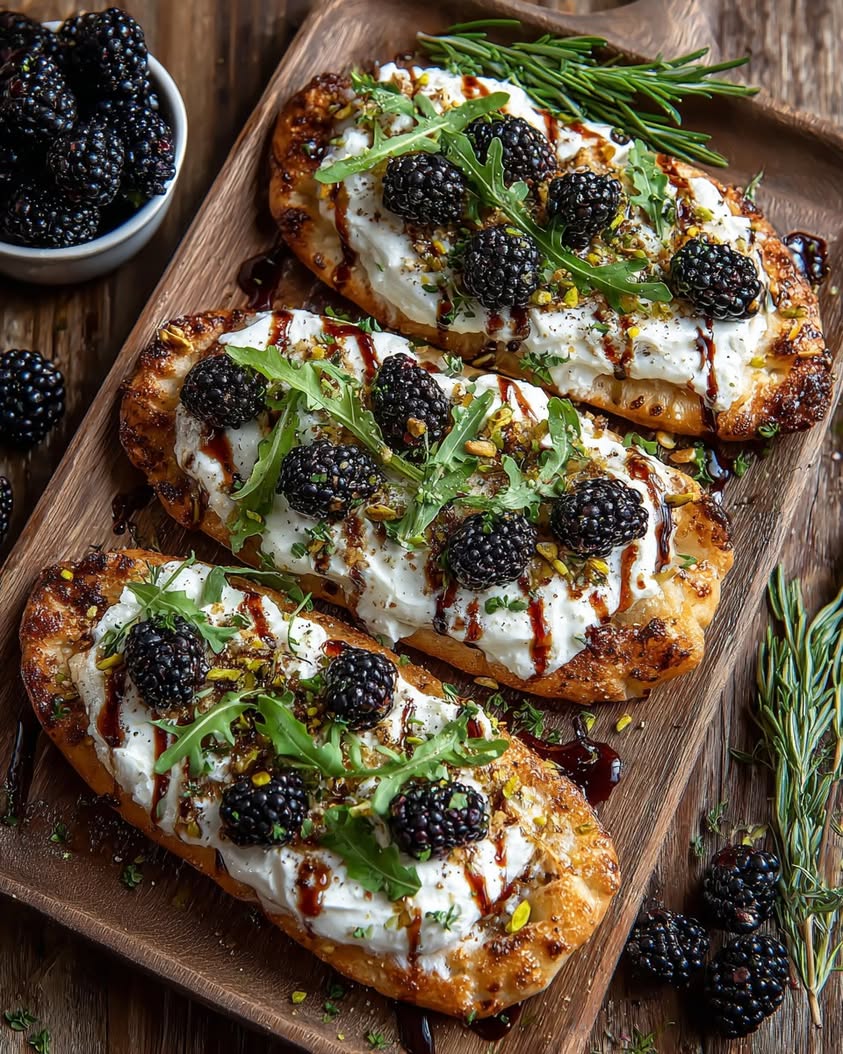
Blackberry & Whipped Feta Flatbread with Fresh Thyme & Balsamic Glaze: A Sweet and Savory Masterpiece
Imagine a dish that perfectly balances creamy, salty, sweet, and tangy notes in every single bite. That is exactly what you get with this stunning Blackberry Feta Flatbread with Thyme. This recipe transforms simple ingredients into an elegant appetizer or light meal that will impress any guest. Moreover, it comes together in under thirty minutes, making it perfect for busy weeknights or last-minute entertaining.
The magic of this Blackberry & Whipped Feta Flatbread lies in its unexpected yet harmonious flavor combinations. Juicy, tart blackberries burst against a cloud of creamy, tangy whipped feta. Meanwhile, fresh thyme adds an earthy, aromatic note that grounds the dish. Finally, a drizzle of sweet-tart balsamic glaze ties everything together, creating a symphony of taste on a crispy flatbread canvas. Consequently, each element plays a crucial role in building a complex and satisfying flavor profile.
Visually, this flatbread is a showstopper. The deep purple of the berries, the snowy white cheese, and the dark balsamic glaze create a beautiful contrast. Ultimately, this Blackberry Feta Flatbread with Thyme is more than just food; it is an experience for the senses. It challenges the traditional savory flatbread while remaining utterly approachable and delicious.
Quick Recipe Highlights
- Flavor Profile: This Blackberry Feta Flatbread with Thyme masterfully combines sweet and savory. The tangy whipped feta cheese balances the natural sweetness of ripe blackberries. Additionally, the aromatic fresh thyme and rich balsamic glaze add layers of earthy and acidic complexity.
- Texture: You will enjoy a fantastic contrast of textures. The flatbread base bakes up delightfully crispy and chewy. Meanwhile, the whipped feta is luxuriously smooth and creamy. Finally, the fresh blackberries provide juicy bursts, creating a satisfying mouthfeel.
- Aroma: As it bakes, the kitchen fills with the warm, toasty scent of baking flatbread. The fresh thyme releases its distinctive, piney fragrance. Furthermore, the reduced balsamic glaze adds a sweet, caramel-like aroma that is simply irresistible.
- Visual Appeal: This dish is a feast for the eyes with its stunning color palette. The vibrant purple-black berries pop against the bright white whipped feta. Consequently, the dark balsamic drizzle and green thyme sprigs make for a restaurant-quality presentation.
- Skill Level Needed: This is an ideal recipe for cooks of all levels, especially beginners. The techniques are straightforward, involving simple mixing, spreading, and baking. Therefore, you do not need any specialized culinary skills to achieve fantastic results.
- Special Equipment: You only need very basic kitchen tools. A food processor or blender is helpful for whipping the feta to perfect smoothness. Otherwise, a baking sheet, a mixing bowl, and a spoon are all you require to make this gourmet flatbread.
Recipe Overview
- Difficulty Level: We rate this Blackberry Feta Flatbread with Thyme as easy. The steps are simple and sequential, with no complicated techniques. Essentially, you whip, spread, top, and bake. For this reason, it is a fantastic confidence-builder for novice cooks and a quick, satisfying project for experts.
- Category: This versatile recipe fits multiple categories beautifully. It works perfectly as a shareable appetizer or a sophisticated snack. Alternatively, pair it with a simple green salad for a complete and elegant light lunch or dinner.
- Cuisine: This flatbread draws inspiration from modern Mediterranean and contemporary American fusion cuisine. It uses classic ingredients like feta and olive oil in a new, inventive way. Thus, it celebrates fresh, high-quality components while encouraging culinary creativity.
- Cost: This is a relatively affordable gourmet dish. The main costs are the feta cheese and fresh blackberries, which are often reasonably priced, especially in season. Importantly, a small amount of high-quality balsamic glaze goes a long way, making this a cost-effective impressive meal.
- Season: Summer is the prime season for this Blackberry Feta Flatbread with Thyme when blackberries are at their peak sweetness and lowest price. However, you can absolutely make it year-round using reliable grocery store berries. Thyme is also a hardy herb available in all seasons.
- Occasion: This flatbread is incredibly versatile for entertaining. It is perfect for summer picnics, garden parties, or elegant cocktail gatherings. Furthermore, it makes a romantic and easy date-night meal or a special treat for a quiet evening at home.
Why You’ll Love This Recipe
First and foremost, the taste of this Blackberry Feta Flatbread with Thyme is unforgettable. The initial creamy saltiness of the feta gives way to the juicy sweetness of the berry. Then, the aromatic thyme and the tangy-sweet balsamic glaze finish the flavor journey. Every bite is a perfect balance, making it impossible to stop at just one piece. This combination is surprisingly addictive and will have everyone asking for the recipe.
From a practical standpoint, the convenience of this recipe is a major win. You can prepare the entire dish from start to finish in about twenty-five minutes. The active hands-on time is even less, meaning you spend more time enjoying your meal and less time slaving in the kitchen. Additionally, the ingredients are simple and often already in a well-stocked pantry, making spontaneous gourmet cooking a real possibility.
Nutritionally, this flatbread offers some great benefits. Blackberries are packed with antioxidants, vitamin C, and fiber. Feta cheese provides a good source of calcium and protein. Using a whole-grain or cauliflower flatbread can boost the fiber content even further. Therefore, you can feel good about serving this as a flavorful part of a balanced diet.
For social gatherings, this Blackberry Feta Flatbread with Thyme is a guaranteed conversation starter. Its unique appearance and sophisticated flavor profile make it stand out on any buffet table. It pairs wonderfully with a variety of wines and other appetizers. Hosting becomes stress-free because you can prepare it quickly and know it will be a crowd-pleaser.
Finally, this recipe is wonderfully accessible and cost-effective. You do not need expensive equipment or rare ingredients. The flatbread itself is a blank canvas, allowing for endless personalization based on what you have available. Ultimately, it demonstrates how a few quality ingredients, combined thoughtfully, can create a dish that feels luxurious without the luxury price tag.
Historical Background and Cultural Significance
The concept of flatbread is ancient, with roots stretching back thousands of years across countless cultures. From the naan of India to the piadina of Italy, flatbreads served as a versatile and portable staple. The modern “flatbread” as a gourmet appetizer, however, is a relatively recent evolution in Western cuisine. It emerged from the pizza and focaccia traditions, becoming a popular vehicle for creative, often fusion-inspired toppings in upscale casual dining.
Feta cheese, a key player in this Blackberry Feta Flatbread with Thyme, carries deep cultural significance. It is a brined curd cheese with a protected designation of origin (PDO) in the European Union, meaning true feta must come from specific regions in Greece. Traditionally made from sheep’s milk or a sheep-goat blend, it has been a cornerstone of Greek diets for centuries. Its salty, tangy flavor and crumbly texture have made it a beloved export worldwide.
The use of fruit and cheese together is a timeless pairing found in many culinary traditions. The classic cheese plate with grapes or figs is a prime example. Combining fruit directly on a savory baked item, like this flatbread, represents a modern twist on this classic duo. It reflects a contemporary culinary trend that embraces contrast and complexity, moving beyond traditional savory-only applications.
Finally, the balsamic glaze adds a touch of Italian culinary artistry. Traditional balsamic vinegar, or Aceto Balsamico Tradizionale, is a centuries-old product from Modena and Reggio Emilia, aged like fine wine. While the glaze used here is a more accessible, reduced version, it connects the dish to a rich history of valuing aged, concentrated flavors. This Blackberry & Whipped Feta Flatbread is a beautiful example of how global ingredients can come together to create something new and exciting.
Ingredient Deep Dive
Let us start with the star: blackberries. These aggregate fruits are native to Europe but now grow widely. They are a nutritional powerhouse, exceptionally high in vitamin C, vitamin K, and dietary fiber. Their deep color comes from anthocyanins, potent antioxidants. When selecting blackberries, look for plump, deeply colored berries without any mushy spots. Store them unwashed in a single layer in the refrigerator and wash just before using. If fresh are unavailable, frozen blackberries, thawed and patted very dry, can work in a pinch.
Feta cheese is the savory heart of the dish. Authentic Greek feta is made from at least 70% sheep’s milk, contributing to its distinctive tang. It is rich in calcium, phosphorus, and beneficial bacteria due to its brining process. For the whipped texture, a block feta in brine is superior to pre-crumbled varieties, which often contain anti-caking agents. Look for a firm, moist block. Store leftover feta submerged in its brine in the refrigerator. For a dairy-free version, a firm, tangy almond or tofu-based “feta” can be blended with olive oil.
Fresh thyme is the aromatic backbone. This hardy Mediterranean herb has been used since ancient times for both culinary and medicinal purposes. It contains thymol, a compound with antioxidant properties. Fresh thyme offers a brighter, more nuanced flavor than dried. Look for vibrant green sprigs without black spots. To store, wrap stems in a damp paper towel and place in a plastic bag in the fridge. If you must substitute, use about one-third the amount of dried thyme, but fresh is highly recommended for its fragrance.
The balsamic glaze provides the essential sweet-tart finish. True traditional balsamic vinegar is aged for years, resulting in a complex, syrupy consistency. For cooking, a good-quality “balsamic glaze” or “balsamic reduction” is perfect—it’s already thickened and sweetened. You can make your own by simmering balsamic vinegar with a touch of honey until reduced by half. Store commercial glaze at room temperature. A potential substitute is a reduction of pomegranate molasses or a high-quality aged sherry vinegar with a drizzle of honey.
Finally, the flatbread base itself. Naan, pita, or pre-made pizza crusts are excellent convenient choices. For a homemade touch, simple doughs with flour, water, yeast, and olive oil come together quickly. Opt for whole wheat or multigrain versions for added fiber and nuttiness. Cauliflower crusts are a fantastic low-carb alternative. The key is to choose a base that will crisp up nicely in the oven without becoming soggy under the toppings. Pre-baking the base for a few minutes before adding toppings can ensure ultimate crispiness.
Common Mistakes to Avoid
- Using Soggy Berries: Adding wet blackberries is a primary cause of a soggy flatbread. Always wash berries gently and pat them thoroughly dry with paper towels. If using frozen, thaw completely and drain all liquid before drying. This step is crucial for maintaining a crisp crust.
- Overloading the Flatbread: While it is tempting to add more toppings, restraint is key. A too-thick layer of whipped feta will prevent the base from crisping. Similarly, overcrowding with berries creates steam. Use a moderate, even layer of each component for the best texture and even cooking.
- Skipping the Pre-Bake: Placing toppings on a cold, doughy base often leads to a gummy middle. For a reliably crisp crust, always pre-bake your flatbread base for 3-5 minutes before adding toppings. This step creates a protective barrier against moisture.
- Whipping with Cold Feta: Taking feta straight from the fridge makes it difficult to blend smoothly. Let the feta sit at room temperature for 15-20 minutes before whipping. This allows it to soften slightly, resulting in a creamier, lump-free spread.
- Using Low-Quality Balsamic: A harsh, overly acidic balsamic vinegar can ruin the flavor balance. Invest in a decent-quality balsamic glaze or reduction specifically meant for drizzling. The flavor should be rich, sweet, and complex, not just sour.
- Adding Fresh Thyme Before Baking: Delicate fresh thyme can burn and become bitter in the high oven heat. For the best flavor, add most of the thyme after baking as a fresh garnish. You can sprinkle a small amount before baking for infused aroma, but save the majority for the end.
- Neglecting the Olive Oil Brush: Brushing the flatbread edges with olive oil before baking is not just for show. This simple step promotes beautiful golden-brown browning and adds flavor. Do not skip this easy trick for a professional finish.
- Cutting Immediately After Baking: Let the flatbread rest for 2-3 minutes after removing it from the oven. This allows the cheeses to set slightly and makes for cleaner cuts. Cutting too soon can cause the toppings to slide off the hot base.
Essential Techniques
Whipping the feta is the transformative technique for this recipe. This process turns crumbly cheese into a luxurious, spreadable cloud. The key is to use a food processor or high-powered blender. Combine room-temperature feta with cream cheese, olive oil, and a splash of milk or cream. Process until completely smooth, scraping down the sides as needed. The result should be light, airy, and hold its shape. Avoid over-processing, as it can become too warm and loose. A perfectly whipped feta is the flavorful foundation of your Blackberry Feta Flatbread with Thyme.
Achieving a crisp flatbread base is non-negotiable. Start by preheating your baking sheet in the oven. This method gives the dough instant heat from below, kickstarting the crisping process. Alternatively, you can pre-bake the naked flatbread for a few minutes. Another crucial tip is to avoid a thick layer of sauce or spread right to the edges; leave a small border. This allows the crust to puff and crisp without being weighed down by moisture. Watch for visual cues: the edges should be deep golden brown, and the bottom should sound hollow when tapped.
Reducing balsamic vinegar into a glaze is a simple but impactful technique. Pour balsamic vinegar into a small saucepan. Add a teaspoon of honey or maple syrup if you prefer a sweeter glaze. Simmer over medium-low heat, stirring occasionally, until it reduces by about half and coats the back of a spoon. It will thicken further as it cools. The key is low and slow patience; high heat can cause it to burn and become bitter. A proper reduction should be syrupy, glossy, and intensely flavorful, perfect for drizzling over your finished flatbread.
Balancing sweet and savory flavors is the core philosophy of this dish. Taste your whipped feta for saltiness before spreading. Sample a blackberry for sweetness. The goal is harmony, not dominance. The salty feta should complement the berry, not overpower it. The thyme adds an earthy bridge, and the balsamic provides the sweet-tart finish that ties the room together. Adjust as you go: if your berries are very tart, you might add a tiny pinch of sugar to the whipped feta. If your feta is very salty, balance it with a sweeter balsamic glaze. Trust your palate.
Pro Tips for Perfect Blackberry & Whipped Feta Flatbread
For an extra flavor boost, mix a teaspoon of lemon zest into your whipped feta. The citrus brightens the cheese and complements the berries beautifully. Additionally, a tiny pinch of black pepper in the feta adds a subtle, sophisticated warmth that enhances all the other flavors.
Preheat your baking sheet or pizza stone in the oven. Placing your assembled flatbread directly onto a hot surface ensures the bottom crust starts cooking immediately. This technique is the secret to avoiding a soggy middle and achieving a perfectly crisp, blistered base every single time.
Create a flavor-infused oil for brushing the crust. Warm your olive oil gently with a sprig of thyme and a cracked garlic clove for five minutes. Let it cool slightly, then strain. Brush this aromatic oil on the flatbread edges before baking for an incredibly fragrant and professional touch.
If your blackberries are very large, consider slicing them in half. This prevents them from rolling off the flatbread when slicing and serving. It also allows their juices to mingle more readily with the cheese during baking, creating little pockets of intense berry flavor.
Do not add the balsamic glaze before baking. The high heat can cause the sugars to burn, creating a bitter flavor. Always add the glaze as a final drizzle after the flatbread comes out of the oven. The residual heat will warm it slightly, making it perfectly pourable.
For a stunning presentation, finish with both fresh thyme leaves and whole tiny sprigs. The leaves distribute flavor, while the small sprigs add height and visual interest. A final, light flake of sea salt over the whole flatbread just before serving makes the flavors pop.
Let the whipped feta come to room temperature before serving if you make it ahead. Cold cheese can mute flavors. Allowing it to warm up slightly ensures the full tangy, creamy taste comes through in every bite of your Blackberry Feta Flatbread with Thyme.
Use a pizza cutter or a large, sharp chef’s knife to slice the flatbread. A dull knife will drag the toppings and tear the delicate crust. A quick, confident cut yields clean slices that showcase all the beautiful layers you have created.
Variations and Adaptations
Explore regional variations by swapping the cheese and fruit. For a French twist, use whipped goat cheese (chèvre) with sliced figs and rosemary. A Spanish-inspired version could feature manchego cheese, quince paste (membrillo), and Marcona almonds. An Italian variation might use ricotta mixed with lemon, topped with peaches and prosciutto. These adaptations keep the sweet-savory spirit while traveling the globe from your kitchen.
Embrace seasonal adaptations throughout the year. In spring, use whipped feta with strawberries and fresh mint. For autumn, try roasted squash or pear slices with whipped feta, walnuts, and a honey drizzle. Winter calls for cranberry sauce or pomegranate arils with goat cheese and rosemary. This Blackberry Feta Flatbread with Thyme blueprint is wonderfully flexible, allowing you to celebrate the best produce each season offers.
Dietary modifications are straightforward. For gluten-free, use a certified gluten-free flatbread, naan, or cauliflower crust. To make it dairy-free, whip a firm tofu or almond-based feta alternative with nutritional yeast and lemon juice. For a vegan version, combine the dairy-free cheese with maple-balsamic glaze. A nut-free version simply avoids nut-based cheese substitutes, sticking with soy or seed-based options.
Experiment with flavor variations by adding layers. Spread a thin layer of basil pesto under the whipped feta. Add thinly sliced red onion or shallot for bite. Incorporate toasted pine nuts or chopped pistachios for crunch. A sprinkle of chili flakes or a drizzle of hot honey can introduce a welcome spicy element. Do not be afraid to personalize your flatbread creation.
Consider texture modifications for different experiences. For extra creaminess, add small dollops of fresh ricotta among the blackberries. For crunch, sprinkle the baked flatbread with toasted breadcrumbs or chopped walnuts. For a melty element, add a light scattering of mozzarella or gouda under the berries before baking, though this will make it richer.
Presentation alternatives can change the dish’s feel. Instead of one large flatbread, make mini versions on small pitas or naan for perfect individual appetizers. Cut the baked flatbread into small squares for bite-sized party food. Alternatively, bake the toppings on a sheet pan with torn pieces of flatbread for a deconstructed, shareable “flatbread bake” or dip situation.
Serving and Presentation Guide
Master simple plating techniques for maximum impact. Transfer the baked flatbread to a large wooden cutting board or a clean, neutral-colored platter. This rustic presentation feels inviting and shareable. Use a pizza wheel to cut it into slices or squares directly on the board, leaving them in place. This encourages guests to help themselves and showcases the beautiful cross-sections of your Blackberry Feta Flatbread with Thyme.
Garnishing is the final flourish. After drizzling with balsamic glaze, scatter the fresh thyme leaves generously. Add a few whole blackberries artfully around the board for decoration and extra snacking. A light sprinkle of flaky sea salt, such as Maldon, adds a final pop of flavor and a delicate crunch. A microplane can be used to add a whisper of lemon zest over the top for brightness.
Consider traditional accompaniments to round out the meal. A simple arugula salad dressed with lemon vinaigrette is a classic pairing, its peppery bite cutting through the richness. For a heartier meal, serve alongside a bowl of tomato basil soup for dipping. Charcuterie boards also pair wonderfully, allowing guests to create their own perfect bites with cured meats and olives.
Modern serving suggestions embrace flexibility. Serve it as the centerpiece of a brunch spread alongside fruit salad and mimosas. Offer it as a sophisticated snack during a wine tasting evening. Package cooled slices for a gourmet picnic. Its versatility makes it suitable for virtually any casual to semi-formal gathering where delicious food is the priority.
Temperature considerations are important. This flatbread is best served warm, not piping hot, straight from the oven. Allowing it to rest for 2-3 minutes lets the cheese set slightly, making it easier to eat. If it cools completely, it is still tasty, but you can briefly reheat slices in a toaster oven or air fryer to restore the crispness of the crust.
Practice portion control by pre-slicing. A standard large naan or flatbread typically yields 6-8 appetizer-sized slices or 4 larger meal-sized wedges. When serving as part of a larger spread with other dishes, people will likely take one or two slices. If it is the main event with a salad, two to three slices per person is a satisfying serving.
Wine and Beverage Pairing
Selecting wine pairings for this dish is delightful due to its balance of flavors. A dry Rosé is a phenomenal choice, as its berry notes and acidity mirror the blackberries while cutting through the creamy cheese. A crisp, unoaked Sauvignon Blanc with its citrus and herbal qualities complements the thyme and tangy feta beautifully. For red wine lovers, a light-bodied Pinot Noir with low tannins and red fruit flavors will not overpower the delicate flatbread.
Non-alcoholic alternatives can be just as sophisticated. A sparkling water infused with muddled blackberries and a sprig of thyme makes a refreshing, thematic choice. For a richer option, a virgin blackberry mojito mocktail with mint, lime, and soda water echoes the sweet-tart profile. Iced herbal tea, like a peach or berry blend, served slightly sweetened, is another excellent companion.
While not a classic coffee dish, certain coffee and tea pairings work if serving for brunch. A light roast coffee with fruity or floral notes can be pleasant. For tea, consider a white tea or a fruity herbal infusion like berry hibiscus. These should be served after the meal or on the side, as their strong flavors might compete if sipped simultaneously with each bite.
Always consider temperature for beverages. White wines, Rosés, and sparkling waters should be served well-chilled. Red wines should be slightly cooler than room temperature. Non-alcoholic mocktails and iced teas are best served cold. The contrast between a cool, crisp drink and the warm, savory-sweet flatbread is a key part of the enjoyable experience.
Final serving suggestions include setting up a small pairing station. Offer a bottle of Rosé and a pitcher of blackberry-thyme sparkling water. Provide clear glassware to show off the colors of the drinks. This thoughtful touch elevates the entire meal and shows guests you have considered how every element, from food to drink, works in harmony.
Storage and Shelf Life
Proper storage methods are essential for maintaining quality. Store any leftover Blackberry Feta Flatbread with Thyme in an airtight container in the refrigerator. Place parchment paper between slices if stacking to prevent sticking. The flatbread is best consumed within 24 hours, as the crust will soften from the moisture of the toppings over time.
Pay attention to temperature requirements. Never leave the flatbread at room temperature for more than two hours due to the dairy content. Always refrigerate promptly. When ready to enjoy leftovers, reheating is recommended to restore texture, though it can be eaten cold straight from the fridge if desired.
Container recommendations include shallow glass or plastic containers with tight-fitting lids. A large resealable bag can work for a single slice. Avoid storing in a loose wrap like aluminum foil or plastic wrap in the fridge, as this can lead to sogginess and absorb odors from other foods.
Recognize signs of spoilage. Discard the flatbread if you notice any off smells, such as sourness beyond the tang of the feta. Visible mold, especially on the berries or cheese, is an absolute discard signal. If the crust becomes unpleasantly soggy or slimy, it is past its prime and should not be consumed.
Reheating instructions are crucial for reviving leftovers. The oven or toaster oven is king. Preheat to 350°F and place slices directly on the rack or a baking sheet for 5-7 minutes until the crust re-crisps and the cheese is warm. Avoid the microwave, as it will make the crust very chewy and soggy. An air fryer at 350°F for 3-4 minutes also works excellently.
Freezing is not generally recommended for this assembled flatbread. The high water content in the blackberries and whipped feta leads to ice crystals that ruin the texture upon thawing, creating a mushy base and separated cheese. It is a dish best enjoyed fresh or with next-day refrigeration.
Make Ahead Strategies
Establishing a prep timeline reduces day-of stress. You can whip the feta cheese up to two days in advance. Store it in an airtight container in the refrigerator. The balsamic glaze can be reduced and stored at room temperature for weeks. Wash and thoroughly dry the blackberries the day before and store them in a single layer on a paper towel-lined container in the fridge.
Understand storage between steps. Keep the whipped feta, berries, and prepared thyme in separate containers. Do not assemble the flatbread until just before you are ready to bake it. Assembling too far in advance will result in a soggy base as the berries release their juices and the moisture from the cheese seeps into the dough.
Assess the quality impact of make-ahead steps. Whipped feta may firm up in the fridge; let it sit at room temperature for 15-20 minutes before spreading to regain spreadability. The flavor often improves as the ingredients meld. Berries remain perfectly fresh if dried well. The overall final quality when using these make-ahead steps is nearly identical to a fully fresh preparation.
Final assembly tips for efficiency: Have your pre-baked or store-bought flatbreads ready. Let the whipped feta soften. Keep your berries, thyme, and glaze within reach. Brush the base with oil, spread the cheese, scatter berries, and bake. This streamlined process takes mere minutes when your components are prepped, making entertaining effortless.
Reheating guidelines apply only if you bake ahead. A fully baked flatbread can be reheated in a 350°F oven for 5-8 minutes. However, for optimal texture, it is better to bake it fresh. If you must bake early, under-bake it slightly by 1-2 minutes, then finish reheating just before serving to avoid over-drying.
Remember to add fresh elements after reheating. If you reheat a fully assembled flatbread, the fresh thyme will wilt and the balsamic glaze may sink in. For the best presentation and flavor, add a final sprinkle of fresh thyme and a new drizzle of balsamic glaze after the reheating process is complete.
Scaling Instructions
Halving the recipe is simple for a smaller yield. Use one flatbread, half the amount of all topping ingredients, and a standard baking sheet. The bake time may reduce by 1-2 minutes, so watch closely for browning edges. This is perfect for a cozy meal for one or two people without excessive leftovers.
Doubling or tripling the recipe is easy for a crowd. You will need multiple baking sheets. Bake them one sheet at a time on the middle oven rack for even heat circulation, or use convection bake if your oven has it. Alternatively, use the oven’s upper and lower racks, but rotate the sheets halfway through baking. The prep work scales linearly—just multiply all ingredients.
Consider equipment adjustments when scaling up. Ensure your food processor is large enough to whip a double batch of feta; you may need to do it in batches. Have enough cooling racks ready for multiple flatbreads. For very large batches, consider par-baking the flatbread bases ahead of time to speed up final assembly and baking.
Timing modifications are minimal when scaling. The bake time per batch remains roughly the same (8-10 minutes). The main increase is in the assembly time for multiple flatbreads. To serve everything hot, you can stagger assembly and baking, keeping finished flatbreads warm in a 200°F oven on a wire rack until all are ready.
Storage considerations change with volume. Leftovers from a large batch should be cooled completely and stored in multiple shallow containers to prevent condensation and sogginess. Label containers with the date. Remember, the quality is best within 24 hours, so scale according to your expected consumption.
Nutritional Deep Dive
A macro breakdown for one serving (1/4 of a large flatbread) provides a balanced profile. You can expect a good amount of protein from the feta cheese, along with healthy fats from the olive oil and cheese. Carbohydrates come primarily from the flatbread base and the natural sugars in the blackberries. The exact numbers depend on your specific brand of flatbread and cheese, but it generally offers sustained energy without being overly heavy.
The micronutrient analysis reveals hidden benefits. Blackberries contribute significant vitamin C, vitamin K, and manganese. Feta cheese is an excellent source of calcium, phosphorus, and riboflavin (vitamin B2). Olive oil provides vitamin E and beneficial monounsaturated fats. Using a whole-grain flatbread base adds B vitamins and additional fiber to the mix, enhancing the overall nutritional value of the dish.
Several health benefits are associated with the key ingredients. The antioxidants in blackberries help combat oxidative stress. The calcium in feta supports bone health. The monounsaturated fats in olive oil are heart-healthy. The fiber from berries and whole grains aids digestion. Together, they make this flatbread a more nutrient-dense choice compared to many traditional, cheese-heavy appetizers.
Consider dietary considerations when evaluating this meal. It contains dairy (feta) and gluten (unless using a GF base). It is vegetarian-friendly. The sodium content can be moderate due to the feta, so those monitoring sodium intake can look for lower-sodium feta or use it more sparingly. The natural sugars are from fruit, not added refined sugar, especially if you control the sweetness of the balsamic glaze.
A portion analysis shows this dish is satisfying but not overly caloric when consumed in the suggested serving size. As an appetizer shared among several people, it is a light start to a meal. As a main course with a side salad, it provides a complete and balanced plate. Mindful eating involves enjoying one or two slices slowly, savoring the complex flavors.
For weight management, this Blackberry Feta Flatbread with Thyme can fit into a balanced plan. Its protein and fiber promote satiety. To make it lighter, use a low-carb flatbread alternative like cauliflower crust, increase the ratio of berries to cheese slightly, and use a modest drizzle of glaze. Pairing it with a large volume of non-starchy vegetables, like a big salad, creates a very satisfying and portion-controlled meal.
Dietary Adaptations
For a gluten-free version, simply choose a certified gluten-free flatbread, naan, or pizza crust. Many excellent store-bought options exist, or you can make your own with GF flour blends. Ensure all other ingredients, like the balsamic glaze, are certified gluten-free, as some vinegars may have trace gluten. The method remains identical, resulting in a safe and delicious dish for those with celiac disease or gluten sensitivity.
Creating a dairy-free adaptation involves replacing the feta. The best options are a store-bought vegan feta block or a homemade version using firm tofu or almonds. To make whipped “feta,” blend soaked almonds or pressed tofu with nutritional yeast, lemon juice, salt, and olive oil until smooth. The texture and tang can be remarkably similar, allowing everyone to enjoy the core flavor combination.
A fully vegan Blackberry & Whipped Feta Flatbread requires the dairy-free cheese adaptation above. Also, verify that your balsamic glaze does not contain honey; opt for one sweetened with sugar or make your own with maple syrup. Use a vegan flatbread base (check for dairy or honey in the ingredients). The fresh thyme and berries are naturally vegan, making this a vibrant and inclusive plant-based appetizer.
Low-carb and keto adaptations focus on the base. Replace the traditional flatbread with a fathead dough (made from mozzarella, cream cheese, and almond flour) or a simple chicken-based crust. Ensure the blackberries are used sparingly due to their natural carb content, and count them within your daily macros. The whipped feta is perfectly keto-friendly. Use a sugar-free balsamic glaze or skip it and drizzle with a little high-quality olive oil instead.
For a Paleo approach, avoid grains{“success”:true,”message”:”Recipe created successfully”,”post_id”:9210,”tasty_recipe_id”:9210,”shortcode”:”“}

I’m Billy, a classically trained culinary school graduate from The Culinary Institute of America with over 12 years in the restaurant industry and over 19 years of cooking experience.