
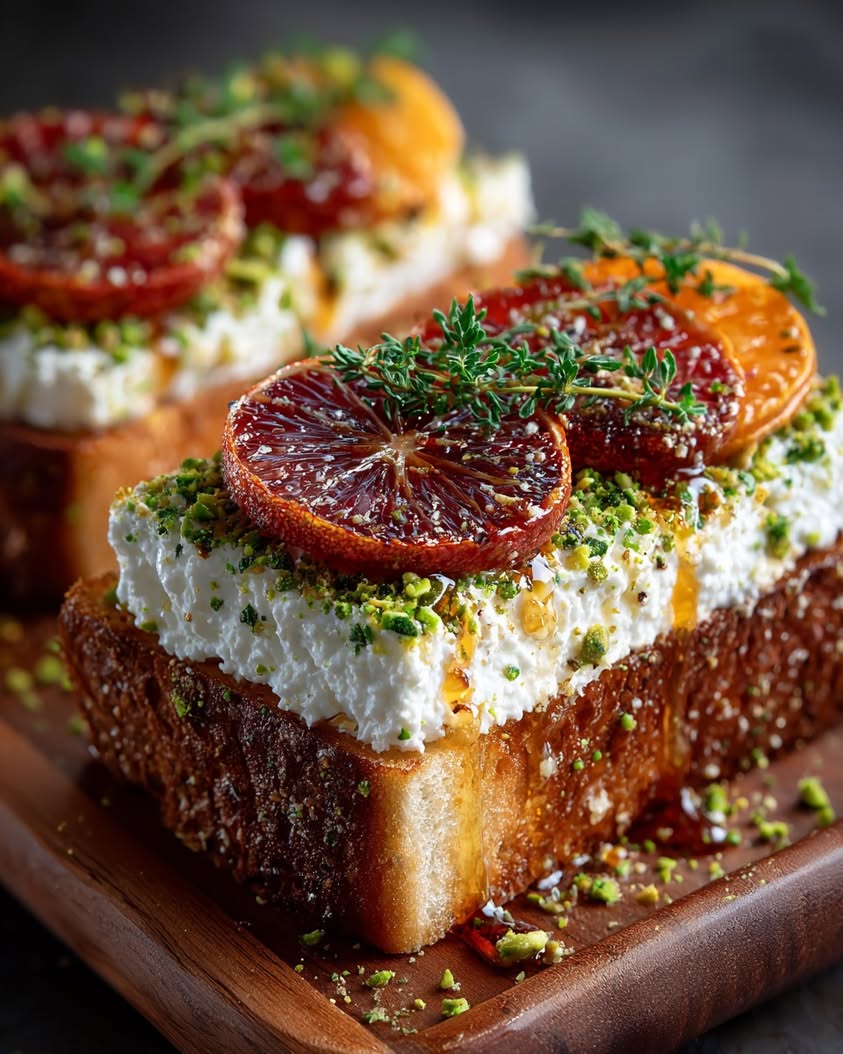
Blood Orange & Whipped Feta Toast with Hot Honey & Thyme: A Vibrant Breakfast Masterpiece
Imagine a breakfast that feels like a burst of sunshine on a plate. This Blood Orange & Whipped Feta Toast with Hot Honey & Thyme is exactly that. It transforms simple ingredients into a restaurant-worthy dish right in your own kitchen. Moreover, it combines sweet, savory, tangy, and spicy elements in one perfect bite. Consequently, this recipe is a fantastic way to elevate your morning routine or create a stunning brunch centerpiece.
This Blood Orange Whipped Feta Toast Recipe is a celebration of seasonal produce and bold flavors. The creamy, tangy whipped feta provides a luxurious base. Then, the juicy, vibrant blood orange slices add a refreshing citrus note. Finally, the drizzle of spicy hot honey and fragrant fresh thyme ties everything together beautifully. Ultimately, it is a visually stunning and incredibly delicious dish that is surprisingly simple to make.
This toast is more than just food. It is an experience. The process of whipping the feta into a cloud-like spread is deeply satisfying. Meanwhile, arranging the jewel-toned blood oranges feels artistic. Furthermore, the final drizzle of honey creates a glossy, irresistible finish. This recipe proves that with a few quality ingredients and minimal effort, you can create something truly extraordinary for any meal.
Quick Recipe Highlights
- Flavor Profile: This toast masterfully balances tangy whipped feta with sweet blood orange and spicy hot honey. The fresh thyme adds an earthy, aromatic note that complements the citrus perfectly. Every bite is a complex symphony of contrasting yet harmonious tastes.
- Texture: You get a wonderful contrast of creamy, smooth feta spread against the crisp, toasted bread. The juicy, slightly firm blood orange segments provide a refreshing burst. Additionally, the sticky honey adds a lovely viscous quality that coats everything beautifully.
- Aroma: As you prepare this, the scent of toasting bread and fresh thyme will fill your kitchen. The blood oranges release a bright, sweet citrus fragrance. Meanwhile, the hot honey contributes a warm, spicy scent that is incredibly inviting.
- Visual Appeal: This dish is a feast for the eyes with its stunning color palette. The creamy white feta, vibrant ruby-red blood oranges, and golden honey create a masterpiece. It is the kind of dish you immediately want to photograph before taking a bite.
- Skill Level Needed: This is a beginner-friendly recipe requiring no advanced techniques. You only need basic skills like toasting bread and using a food processor. Therefore, it is perfect for novice cooks wanting to impress or experienced cooks seeking a quick, elegant option.
- Special Equipment: A food processor or high-speed blender is essential for achieving perfectly smooth whipped feta. A microplane for zesting and a sharp knife for segmenting the citrus are also helpful. Otherwise, you just need a toaster or oven for the bread.
Recipe Overview
- Difficulty Level: This recipe is classified as easy because it involves straightforward assembly and simple techniques. The most complex step is segmenting the blood orange, which is a basic knife skill. All other tasks, like whipping cheese and toasting bread, are fundamental kitchen activities anyone can master quickly.
- Category: This dish fits perfectly into breakfast, brunch, or even a light lunch category. It can also serve as a sophisticated appetizer or snack. Its versatility makes it suitable for multiple meal occasions throughout the day.
- Cuisine: While not tied to one specific tradition, it draws inspiration from Mediterranean and Middle Eastern flavors. The use of feta cheese and honey is classic in Greek cuisine. The modern, vibrant presentation gives it a contemporary, California-style twist.
- Cost: This is a moderately priced recipe depending on ingredient sourcing. Blood oranges are seasonal, so their price can vary. High-quality feta and artisan bread will increase the cost, but the dish remains affordable for a special treat.
- Season: This Blood Orange Whipped Feta Toast Recipe is ideal for late winter and early spring. This is peak blood orange season, ensuring the best flavor and color. The bright, sunny flavors also help combat the grayness of colder months beautifully.
- Occasion: It is perfect for a leisurely weekend brunch, a Valentine’s Day breakfast in bed, or a Mother’s Day treat. Additionally, it makes an impressive yet easy dish for entertaining guests. It is also a wonderful way to brighten up an ordinary weekday morning.
Why You’ll Love This Recipe
First, the taste and texture are utterly irresistible. The creamy, salty feta spread is the perfect counterpoint to the sweet, tart blood orange. Then, the hot honey introduces a gentle warmth that lingers pleasantly on the palate. The fresh thyme adds a layer of sophisticated fragrance that makes each bite interesting. Ultimately, this combination is far greater than the sum of its parts, creating a memorable flavor experience you will crave again and again.
Second, the convenience and preparation benefits are significant. This entire Blood Orange Whipped Feta Toast Recipe comes together in about twenty minutes. Furthermore, you can prepare the whipped feta spread a day or two in advance. Consequently, on busy mornings, you can simply toast your bread, assemble, and enjoy a gourmet meal in minutes. It is the perfect solution for when you want something special without spending hours in the kitchen.
Third, let us discuss the nutritional advantages. This toast offers a good balance of macronutrients. The whole-grain bread provides complex carbohydrates and fiber for sustained energy. Meanwhile, the feta cheese offers protein and calcium. Blood oranges are packed with vitamin C and antioxidants. Using a high-quality honey in moderation adds natural sweetness without refined sugar. Therefore, it is a satisfying and relatively wholesome choice.
Fourth, the social and entertaining value of this dish is high. It is incredibly shareable and visually stunning, guaranteed to draw compliments from guests. You can easily double or triple the recipe to feed a crowd for brunch. Additionally, because the components are assembled individually, you can create a beautiful toast bar. Guests can then customize their own creations, which makes for a fun and interactive meal.
Finally, this recipe is cost-effective and accessible. While it looks luxurious, it uses a short list of whole ingredients. You can often find blood oranges at most well-stocked grocery stores during their season. If not, regular oranges or other citrus make a fine substitute. The recipe is flexible, allowing you to use different breads or honeys based on your budget. This accessibility ensures anyone can recreate this beautiful dish at home.
Historical Background and Cultural Significance
The concept of adorned toast is ancient, but its modern iteration is relatively new. Historically, people have topped bread with cheese, fruit, and honey for centuries across various cultures. The ancient Greeks combined honey with cheese as a common food pairing. Similarly, Mediterranean cultures have long enjoyed fresh citrus with savory elements. This Blood Orange Whipped Feta Toast Recipe is a direct descendant of these timeless, flavor-forward traditions.
Culturally, toast has evolved from simple sustenance to a canvas for culinary creativity. The rise of food photography on social media platforms like Instagram propelled artistic toast into the spotlight. Cafes began offering elaborate, photogenic toasts as a premium menu item. Consequently, home cooks sought to replicate these beautiful, restaurant-style dishes. This recipe fits perfectly into that modern movement of making everyday meals visually appealing and ingredient-driven.
The evolution of this specific recipe hinges on the availability of specialty ingredients. Blood oranges, once a rare find, have become more common in supermarkets. Their dramatic color and complex flavor make them a favorite among chefs and food enthusiasts. The technique of whipping feta into a spreadable cream also gained popularity recently. By combining these trendy elements with classic pairings, this recipe represents a fusion of old and new culinary ideas.
Regional variations of this concept are endless. In the Middle East, you might find a similar dish with labneh, za’atar, and pomegranate. In Italy, it could feature ricotta, figs, and chestnut honey. The use of hot honey is a particularly American twist, adding a touch of spice popular in contemporary cuisine. This global inspiration makes the Blood Orange Whipped Feta Toast Recipe a truly modern, cosmopolitan dish that celebrates flavors from around the world.
Ingredient Deep Dive
Blood oranges are the star of this show. Originally from the Mediterranean, they are a natural mutation of the sweet orange. Their stunning crimson flesh comes from anthocyanins, powerful antioxidants also found in berries. When selecting blood oranges, look for fruits that feel heavy for their size with smooth, brightly colored skin. Store them at room temperature for short-term use or in the refrigerator for up to two weeks. If unavailable, Cara Cara oranges, naval oranges, or even grapefruit make excellent substitutes.
Feta cheese brings the essential creamy and tangy element. Traditionally a Greek cheese made from sheep’s milk or a blend with goat’s milk, it has a crumbly texture and salty bite. For the best whipped feta, use a block of feta in brine, not pre-crumbled cheese, as it is creamier and less dry. Feta is a good source of calcium and protein. Store leftover feta tightly covered in its brine in the refrigerator. For a different flavor, you could substitute with ricotta salata, goat cheese, or a dairy-free almond-based feta.
Hot honey is the magical finishing touch that ties everything together. It is simply honey infused with chili peppers, creating a sweet-heat sensation. You can buy prepared hot honey or easily make your own by warming honey with dried chili flakes. Honey has natural preservative qualities and an indefinite shelf life when stored properly. For a substitute, warm regular honey and mix in a pinch of cayenne pepper or chili crisp. The spicy element cuts through the richness of the cheese and brightens the entire dish.
Fresh thyme provides an aromatic, earthy note. This hardy herb is a staple in Mediterranean cooking and pairs wonderfully with both citrus and cheese. Always choose fresh thyme over dried for this recipe, as the delicate flavor is superior. Look for bright green, perky sprigs without black spots. To store, wrap thyme in a damp paper towel and place it in a sealed bag in the refrigerator. If you must substitute, fresh oregano or a tiny amount of fresh rosemary can work, but use them sparingly.
The bread choice is the foundational element. A sturdy, artisanal sourdough or a thick-cut whole grain bread works best. It needs to be substantial enough to hold the creamy spread and juicy toppings without becoming soggy. Toasting the bread properly is crucial for texture contrast. For a gluten-free version, use your favorite certified gluten-free bread. The bread acts as the canvas, so choosing a high-quality, flavorful loaf will significantly elevate your final Blood Orange Whipped Feta Toast.
Common Mistakes to Avoid
- Using pre-crumbled feta cheese is a common error. Pre-crumbled feta often contains anti-caking agents that make it drier and less creamy when whipped. Always opt for a solid block of feta stored in brine for the smoothest, most luxurious texture.
- Over-toasting or under-toasting the bread can ruin the texture. Over-toasted bread becomes too hard and sharp. Under-toasted bread will quickly turn soggy under the weight of the toppings. Aim for a deep golden brown with a crisp exterior that still has a slight chew inside.
- Skipping the olive oil in the whipped feta is a mistake. The olive oil is not just for flavor; it is crucial for creating a smooth, spreadable consistency. Without it, the feta may remain grainy and thick. A good quality extra virgin olive oil makes a noticeable difference.
- Not segmenting the blood orange properly can lead to a messy eating experience. Leaving the bitter white pith on the segments will add unpleasant bitterness. Take the extra minute to cleanly cut between the membranes to release perfect, pith-free citrus supremes.
- Applying the whipped feta to warm toast will cause it to melt and become greasy. Always let your toasted bread cool for a minute or two before spreading. This ensures the feta stays fluffy and cool against the warm, crisp bread for the best contrast.
- Drizzling the hot honey in one thick glob is less effective. Instead, drizzle it in a thin, zigzag pattern across the toast. This distributes the spicy sweetness more evenly, ensuring every bite has a hint of heat and honey.
- Using dried thyme instead of fresh will not provide the same bright, aromatic quality. Dried thyme is much more potent and earthy, and it can taste dusty. The delicate leaves of fresh thyme are essential for the recipe’s fresh, herbal note.
- Forgetting to zest the orange before juicing it wastes a great opportunity. The zest contains intense citrus oils that add fantastic fragrance. Always zest your citrus first, then juice it, to capture every bit of flavor.
Essential Techniques
Whipping the feta is the core technique for this recipe. It is important because it transforms a crumbly cheese into a smooth, spreadable, cloud-like consistency. To master it, ensure your feta and cream cheese are at room temperature for easier blending. Process them in the food processor with olive oil and lemon juice until completely smooth, scraping down the sides as needed. A common pitfall is under-processing, which leaves the feta grainy. The visual cue for success is a homogeneous, creamy spread with no visible lumps.
Segmenting citrus, or making supremes, is a key skill for a beautiful presentation. This technique is important because it removes the bitter pith and membrane, leaving only the tender, juicy fruit flesh. First, slice off the top and bottom of the orange. Then, using a sharp knife, cut away the peel and pith in a downward motion, following the fruit’s curve. Finally, hold the peeled orange over a bowl and carefully cut between the membranes to release each segment. The pitfall is cutting too much of the fruit away with the pith. Success yields clean, jewel-like segments without any white membrane.
Properly toasting the bread is fundamental for structural integrity and texture. It is important because it creates a sturdy base that resists sogginess and adds a crucial crunchy element. For mastery, use a toaster, toaster oven, or a grill pan for attractive char marks. Do not butter or oil the bread before toasting for this application. The common mistake is toasting the bread too early, allowing it to cool and become tough. The visual cue is a uniformly golden-brown color across the surface with slightly darker edges.
Pro Tips for Perfect Blood Orange & Whipped Feta Toast
Make the whipped feta spread ahead of time. It stores beautifully in the refrigerator for up to three days. This allows the flavors to meld and develop more complexity. Simply give it a quick stir before using.
Use a microplane to zest the orange directly over the assembled toast. This captures the fragrant citrus oils that would otherwise be lost on a cutting board. The fresh zest adds a powerful aroma burst.
If your hot honey is too thick to drizzle, gently warm it for a few seconds. Place the honey jar in a bowl of warm water or microwave it in a heatproof container for five to ten seconds. This will make it perfectly pourable.
Season each layer lightly. Add a tiny pinch of flaky sea salt over the blood orange segments after placing them. This small step enhances the natural sweetness of the fruit and balances the flavors.
For an extra textural element, sprinkle some chopped toasted pistachios or walnuts on top. The nutty crunch provides a wonderful contrast to the creamy and juicy components of the toast.
If you cannot find blood oranges, do not abandon the recipe. Cara Cara oranges have a pink hue and sweet flavor. Alternatively, a combination of regular orange slices and a few pomegranate arils will give a similar color and flavor profile.
Use the best quality extra virgin olive oil you have for the whipped feta. Since it is a primary flavor component, a fruity, peppery oil will shine through and elevate the entire dish significantly.
Let everyone assemble their own toast if serving a group. Place the toasted bread, bowl of whipped feta, plate of orange segments, honey, and thyme on the table. This keeps the bread crisp and makes for a fun, interactive meal.
Variations and Adaptations
For regional variations, consider a Greek-inspired version. Substitute the thyme with fresh oregano and add a sprinkle of dried oregano on top. Add some Kalamata olives on the side and use Greek thyme honey. This variation leans fully into the Mediterranean roots of the core ingredients.
Seasonal adaptations are easy with this flexible recipe. In summer, use ripe peaches or nectarines instead of blood oranges. In autumn, try roasted figs or persimmon slices. For a winter holiday version, use pomegranate arils and a sprinkle of chopped rosemary. Spring could feature strawberries and basil.
Dietary modifications are straightforward. For a vegan version, use a firm tofu-based vegan feta and agave syrup mixed with chili. A gluten-free adaptation simply requires your favorite gluten-free bread. For a lower-carb option, serve the whipped feta and blood orange mixture in a bowl or over a slice of roasted sweet potato.
Flavor variations can take this toast in new directions. Add a smear of basil or mint pesto under the whipped feta. Incorporate a layer of mashed avocado for extra creaminess. Swap the hot honey for a balsamic glaze or a pomegranate molasses for a different sweet-tart profile.
Texture modifications can cater to personal preference. Add a layer of crispy prosciutto or bacon on the toast before the feta for a salty crunch. Sprinkle with toasted sesame seeds or everything bagel seasoning. For a richer experience, use a brioche or challah bread instead of sourdough.
Presentation alternatives can make the dish feel new. Instead of toast, use the whipped feta as a dip for blood orange segments and crackers. Alternatively, assemble the components on a crispy flatbread or a puff pastry rectangle. You can also serve it deconstructed in a bowl for a more casual presentation.
Serving and Presentation Guide
Plating techniques start with the toast itself. Slice your bread on a slight diagonal for a larger, more elegant surface area. Place the toast slightly off-center on a simple, neutral-colored plate to create visual interest. Use a spoon to swoosh the whipped feta, creating gentle peaks and valleys for the toppings to nestle into.
Garnishing ideas go beyond just thyme. A final flourish of edible flowers like pansies or nasturtiums adds incredible beauty. A light dusting of sumac or smoked paprika over the oranges adds color and a subtle flavor twist. A few tiny mint leaves scattered alongside the thyme can brighten the herbal notes.
Traditional accompaniments might include a simple side salad of bitter greens like arugula or endive. A drizzle of good olive oil and a squeeze of lemon on the salad would complement the toast perfectly. A small bowl of mixed olives or marinated artichoke hearts also makes a great side that stays within the Mediterranean theme.
Modern serving suggestions could involve turning it into a shareable board. Arrange multiple toasts on a large wooden board with small bowls of extra toppings like nuts, seeds, and different honeys. For a brunch party, pair it with a sparkling citrus mimosa or a pot of herbal tea.
Temperature considerations are key. The toast should be warm, not hot. The whipped feta should be cool, straight from the refrigerator. The blood oranges are best at room temperature to maximize their juiciness and flavor. This contrast in temperatures makes each component distinct and enjoyable.
Portion control tips are simple. One substantial slice of artisanal bread per person is usually sufficient for a satisfying meal. If serving as part of a larger brunch spread, consider cutting each toast in half diagonally. This creates smaller, more manageable pieces that guests can easily sample alongside other dishes.
Wine and Beverage Pairing
Wine pairings should complement the dish’s bright acidity and creamy texture. A dry Riesling or a Sauvignon Blanc with its crisp citrus notes mirrors the blood orange beautifully. For a sparkling option, a dry Prosecco or Cava cuts through the richness of the feta. If you prefer rosé, choose a Provençal style that is dry and mineral-driven. Avoid heavily oaked or overly sweet wines, as they will clash with the toast’s vibrant flavors.
Non-alcoholic alternatives can be just as sophisticated. A sparkling blood orange or grapefruit soda provides a festive, flavor-matched option. A chilled herbal iced tea, like lemon verbena or mint, is refreshing and cleansing. For a creamy contrast, a glass of cold almond milk or oat milk latte works wonderfully, especially for a morning meal.
Coffee and tea pairings are excellent for breakfast or brunch. A light roast coffee with citrusy notes will highlight the orange in the toast. A black tea like Earl Grey, which contains bergamot oil, pairs elegantly with the citrus and thyme. For an herbal option, a lemongrass or ginger tea complements the spicy honey note perfectly.
Temperature considerations for beverages are straightforward. Iced or chilled drinks are best if serving the toast for a late morning or lunch. Hot coffee or tea is ideal for a cozy, cool-weather breakfast. Always serve sparkling wines and sodas well-chilled to provide a refreshing counterpoint to the rich toast.
Serving suggestions include offering a choice. When entertaining, set up a small beverage station with a carafe of fresh orange juice, a pot of coffee, and a bottle of chilled sparkling water. This allows guests to mix their own drinks or choose according to their preference, ensuring everyone finds a perfect pairing.
Storage and Shelf Life
Storage methods for the components are separate. Store any unused whipped feta spread in an airtight container in the refrigerator for up to three days. Keep leftover blood orange segments in a separate sealed container, also refrigerated, for one to two days. The assembled toast, however, is best enjoyed immediately and does not store well, as the bread will become soggy.
Temperature requirements are critical for food safety. The whipped feta, containing dairy, must always be kept refrigerated at or below 40°F. The oranges can be stored at cool room temperature for a day but last longer in the fridge. Never leave assembled toast at room temperature for more than two hours.
Container recommendations include glass jars with lids for the whipped feta, as they are non-porous and easy to clean. For citrus segments, a shallow container lined with a paper towel helps absorb excess moisture and prevents them from sitting in juice, which can make them mushy.
Signs of spoilage for the whipped feta include an off smell, visible mold, or an excessively sour taste. The orange segments will become slimy, discolored, or develop an alcoholic smell when they are past their prime. Always inspect ingredients before using leftovers.
Reheating instructions only apply to the bread component. If you have leftover toasted bread, re-crisp it in a toaster or a 350°F oven for a few minutes. Do not attempt to reheat the assembled toast or the whipped feta spread, as the cheese will separate and become oily.
Freezing guidelines are not recommended for this recipe. The whipped feta’s texture will become grainy and separate upon thawing. The citrus segments will turn to mush. The only component you could freeze is the bread itself, but it is best to start with fresh bread for optimal texture.
Make Ahead Strategies
Prep timeline can streamline your morning. The night before, prepare the whipped feta spread and store it in the fridge. Segment the blood oranges and store them in a container. In the morning, simply toast the bread and assemble. This turns a 20-minute recipe into a 5-minute assembly job.
Storage between steps is simple. Keep the whipped feta in its sealed container until ready to use. Place the orange segments on a paper towel in a container to absorb juice. Leave the honey and thyme at room temperature. This keeps each component at its ideal state until the final moment.
Quality impact assessment shows that make-ahead is beneficial. The whipped feta’s flavors actually improve after a few hours in the refrigerator, allowing the lemon and olive oil to meld with the cheese. The oranges are best used within 24 hours of segmenting to maintain their texture and prevent drying.
Assembly tips for make-ahead involve timing. Toast the bread just before you are ready to eat. Let it cool for one minute, then spread the cold feta directly from the fridge. The contrast between the cool, creamy spread and the warm toast is part of the magic.
Reheating guidelines are not needed for the components, but you can bring the feta to near room temperature for easier spreading if it is very cold. Let it sit on the counter for 10-15 minutes before you plan to assemble. Do not microwave it, as this can break the emulsion.
Fresh element additions are key even when prepping ahead. Always add the fresh thyme garnish at the very last second to preserve its vibrant color and aroma. Drizzle the honey just before serving to maintain its glossy appearance. These final touches ensure the toast looks and tastes freshly made.
Scaling Instructions
Halving the recipe is easy for a single serving. Use half a block of feta and adjust other ingredients proportionally. One blood orange will still be enough for two halves of toast. The whipped feta process works the same in a small food processor. Just be mindful that a small processor may require more stopping and scraping to blend a small quantity evenly.
Doubling or tripling the recipe for a crowd is straightforward. Use a standard 8-ounce block of feta per four servings as your guide. You may need to whip the feta in batches if your food processor is small. Segment the oranges in advance and keep them on a large platter. Set up an assembly line for toasting bread to keep up with demand.
Equipment adjustments may be necessary when scaling. For a large batch, a full-size food processor is essential. If toasting many slices of bread, use your oven’s broiler setting on a sheet pan instead of a toaster. This allows you to toast multiple slices evenly and simultaneously.
Timing modifications are important for group serving. If serving more than four people, toast the bread in batches and keep the finished toasts warm in a single layer on a baking sheet in a low oven (200°F) while you finish the rest. Assemble just before serving to prevent sogginess.
Storage considerations for scaled recipes focus on leftovers. Any extra whipped feta will keep for days and can be used on crackers, in sandwiches, or as a vegetable dip. Extra segmented oranges can be used in salads, yogurt, or eaten as a snack. Plan your scaling based on accurate guest counts to minimize waste.
Nutritional Deep Dive
Macro breakdown for one serving typically includes a balance of carbohydrates from the bread and orange, protein and fat from the feta cheese and olive oil. The exact numbers depend on your specific bread and cheese choices. Using whole-grain bread increases fiber. The feta provides satiating fat and protein, which helps keep you full longer. The honey adds simple sugars, but in a moderate amount used as a garnish.
Micronutrient analysis highlights the benefits of the blood orange. It is an excellent source of Vitamin C, providing over 100% of the daily value in one orange. It also contains anthocyanins, vitamin A, and potassium. Feta cheese contributes calcium, phosphorus, and B vitamins. The olive oil provides heart-healthy monounsaturated fats and vitamin E.
Health benefits of this meal are multifaceted. The vitamin C supports immune function and collagen production. The calcium from the feta promotes bone health. The antioxidants in the blood orange and olive oil combat oxidative stress. The fiber from whole-grain bread aids digestion. Together, they make for a nutrient-dense meal option.
Dietary considerations include the presence of dairy (feta) and gluten (from most breads). The dish is naturally vegetarian. It can be modified to be lower in sodium by seeking out a lower-sodium feta cheese. For those watching sugar intake, the amount of honey can be reduced or omitted, relying on the natural sweetness of the orange.
Portion analysis shows that one substantial toast can be a complete meal. It is more filling than it appears due to the protein and fat in the cheese. If serving as part of a larger brunch, it acts as a hearty centerpiece. Being mindful of the bread slice size and the amount of olive oil in the spread helps control overall calorie intake.
Weight management tips include choosing a dense, whole-grain bread that is more satisfying per slice. You can reduce the olive oil in the whipped feta by a teaspoon without sacrificing too much texture. Increasing the proportion of blood orange segments adds volume and fiber with minimal calories. Enjoying this as a occasional treat within a balanced diet is a perfectly sound approach.
Dietary Adaptations
For a gluten-free version, simply substitute the bread with your favorite certified gluten-free artisanal loaf. Many gluten-free breads toast well and provide a sturdy base. Check that your feta cheese is gluten-free, as some brands may use anti-caking agents containing gluten. All other ingredients are naturally gluten-free.
A dairy-free adaptation requires a vegan feta alternative. Several brands make almond, tofu, or coconut-based feta-style cheeses that can be whipped. Use a plain, unsweetened vegan cream cheese alternative in the whipping process. Ensure the olive oil and other components remain the same. The result will be different but still deliciously creamy and tangy.
Creating a vegan version combines the dairy-free cheese substitution with a honey alternative. Use maple syrup or agave nectar warmed with chili flakes to mimic the hot honey. Check that your bread is vegan (no dairy or honey in the ingredients). The blood oranges and thyme are naturally vegan. This creates a plant-based toast that captures the original’s spirit.
For a low-carb or keto adaptation, replace the bread with a thick slice of roasted eggplant or a portobello mushroom cap. The whipped feta is already keto-friendly. Use a sugar-free maple syrup mixed with chili powder for the “hot honey” element. Blood oranges are higher in carbs, so use just a few small segments or substitute with raspberries or blackberries in moderation.
A Paleo adaptation avoids grains, dairy, and processed sugars. Use a grain-free bread made from almond or coconut flour. Substitute the feta with a whipped mixture of soaked cashews, lemon juice, and nutritional yeast for a cheesy flavor. Use raw honey for the drizzle. This requires more significant modification but can yield a tasty, Paleo-compliant dish.
For a Low-FODMAP version, the primary concerns are the honey and potentially the bread. Use maple syrup instead of honey. Choose a sourdough bread made with a long fermentation, which reduces FODMAPs, or a certified low-FODMAP bread. Feta cheese is typically low in lactose and is allowed in moderate amounts on the diet. Limit the orange segments to a small serving.
Troubleshooting Guide
If your whipped feta is grainy, the issue is likely under-processing or cold ingredients. Solution: Ensure your feta and cream cheese are at room temperature. Process for a full two to three minutes, scraping down the sides frequently. If it is still grainy, add another teaspoon of olive oil or a splash of water while the processor is running to help emulsify it into a smoother paste.
If the flavors seem flat or unbalanced, you may need more acidity or seasoning. Solution: Add an extra squeeze of lemon juice to the whipped feta or directly over the assembled toast. A tiny pinch of flaky sea salt on the oranges can make their sweetness pop. A crack of black pepper over the top can also add a surprising depth that enhances the other flavors.
If the bread becomes soggy immediately, the toast was either not crisp enough or the toppings were too wet. Solution: Toast the bread until it is deeply golden and fully crisp throughout. Let the toast cool completely before spreading the feta. Pat the blood orange segments dry with a paper towel after segmenting to remove excess juice before placing them on the toast.
If your hot honey is not spicy enough, it needs more infusion time or a different chili. Solution: For store-bought honey, you can stir in a pinch of cayenne pepper or a few drops of hot sauce. For homemade, gently warm the honey with more chili flakes or a sliced fresh chili pepper, let it steep off heat for 30 minutes, then strain.
If you lack a food processor, you can still make whipped feta. Solution: Use a sturdy fork to mash the room-temperature feta and cream cheese together in a bowl until as smooth as possible. Then, vigorously whisk in the olive oil and lemon juice. It will not be as perfectly smooth, but it will still be creamy and delicious.
If blood oranges are out of season and you cannot find a good substitute, rethink the fruit. Solution: Use a combination of regular orange segments and a handful of fresh raspberries or pomegranate arils for color and a tart-sweet flavor. Roasted beets sliced thinly also offer a vibrant color and earthy sweetness that pairs wonderfully with the feta and honey.
Recipe Success Stories
Community feedback on this Blood Orange Whipped Feta Toast Recipe has been overwhelmingly positive. Many home cooks report that it has become their go-to impressive breakfast for guests. One reader mentioned serving it at a baby shower brunch, where it was the first platter to empty. Another said their children, who typically avoid “fancy” food, loved the sweet and spicy combination. These stories highlight its broad appeal across different ages and occasions.
Variation successes from readers are inspiring. One person used the whipped feta as a base for a grilled vegetable tart, proving its versatility. Another added thinly sliced red onion quick-pickled in the blood orange juice for an extra layer of flavor. A creative cook used the components to fill mini phyllo cups for a passed appetizer. These adaptations show how the core concept can be stretched into many different dishes.
Adaptation stories for dietary needs have been particularly rewarding. A vegan reader successfully used a cashew-based feta and was thrilled with the result. Someone following a gluten-free diet found a perfect seed-based bread that held up beautifully. These stories prove that{“success”:true,”message”:”Recipe created successfully”,”post_id”:9177,”tasty_recipe_id”:9177,”shortcode”:”“}

I’m Billy, a classically trained culinary school graduate from The Culinary Institute of America with over 12 years in the restaurant industry and over 19 years of cooking experience.