
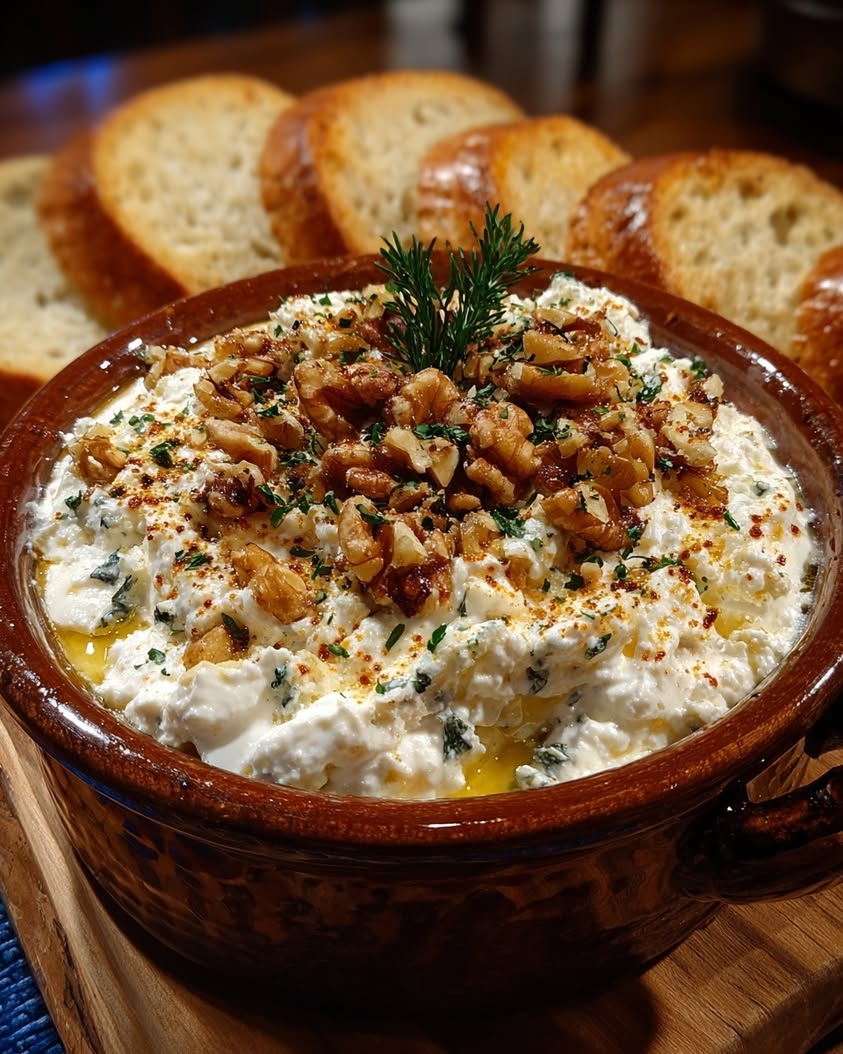
Blue Cheese Cream Dip with Maple & Walnut Topping: The Ultimate Crowd-Pleasing Appetizer
Imagine a dip that perfectly balances bold, tangy flavor with a touch of sweet, nutty crunch. This Blue Cheese Cream Dip with Maple & Walnut Topping delivers exactly that experience. Consequently, it transforms simple ingredients into an unforgettable centerpiece for your next gathering. The creamy base, rich with the distinctive punch of blue cheese, provides a luxurious texture. Meanwhile, the maple-glazed walnut topping adds a contrasting sweetness and satisfying bite. Ultimately, this recipe elevates the classic cheese dip into a sophisticated yet approachable appetizer.
Furthermore, this Blue Cheese Maple Walnut Dip Recipe is incredibly versatile. For instance, you can serve it with crisp apple slices, sturdy crackers, or fresh vegetable crudités. The combination of flavors and textures creates a sensory journey with every scoop. Moreover, the preparation is straightforward, requiring minimal cooking and simple assembly. This makes it an ideal choice for both busy weeknights and elegant dinner parties. The dip’s complex taste profile belies its simple preparation, guaranteeing impressive results every time.
Additionally, the visual appeal of this dip is undeniable. The creamy white base, speckled with blue cheese, looks stunning under a glossy blanket of golden maple walnuts. This presentation immediately signals a dish crafted with care. Therefore, it’s guaranteed to be the first platter emptied at any party. Whether you’re a blue cheese aficionado or simply seeking a new crowd-pleaser, this recipe is a must-try. It masterfully combines savory, sweet, and crunchy elements into one harmonious bite.
Quick Recipe Highlights
- Flavor Profile: This dip features a bold, tangy blue cheese foundation perfectly complemented by a sweet and savory maple walnut topping. The sharpness of the cheese is beautifully mellowed by the cream base, while the maple syrup introduces a warm, caramel-like sweetness. Finally, a hint of black pepper adds a subtle, balancing spice.
- Texture: Expect an ultra-smooth and lusciously creamy dip base that spreads effortlessly. The topping provides a crucial textural contrast with its sticky, glossy coating and satisfyingly crunchy walnut pieces. This interplay between creamy and crunchy makes each bite incredibly dynamic and engaging.
- Aroma: As you prepare the topping, the kitchen fills with the warm, comforting scent of toasting walnuts and caramelizing maple syrup. Meanwhile, the blue cheese contributes a distinct, pleasantly pungent aroma that promises a rich, savory experience. These aromas combine to create an irresistible invitation to taste.
- Visual Appeal: The dip presents beautifully with its stark white canvas dotted with blue cheese veins, all crowned by a glistening, amber-hued walnut topping. A final sprinkle of fresh chives adds a vibrant green accent, making the dish look professionally crafted and incredibly appetizing.
- Skill Level Needed: This is a beginner-friendly recipe requiring no advanced techniques. Essential skills include simple stirring, gentle toasting, and basic assembly. Consequently, even novice cooks can achieve restaurant-quality results with confidence and ease.
- Special Equipment: You need only standard kitchen tools: a mixing bowl, a skillet for toasting nuts, and a spatula. A hand mixer can make the base extra fluffy but is optional. Therefore, you can likely prepare this with equipment already in your cupboard.
Recipe Overview
- Difficulty Level: This Blue Cheese Cream Dip recipe is rated easy because it involves no complex cooking methods. The steps are sequential and simple: mix the base, toast the topping, and combine. There is no finicky temperature control or precise baking required, making it foolproof for cooks of all levels.
- Category: This dish falls squarely into the appetizer and snack category. It is perfect for parties, game days, or as a starter before a meal. Additionally, it can function as a luxurious spread for sandwiches or a sophisticated topping for baked potatoes.
- Cuisine: While blue cheese has strong European roots, particularly French and Italian, the addition of maple syrup is a distinctly North American twist. This recipe represents a modern fusion approach, blending Old World cheese-making traditions with New World ingredients to create something uniquely delicious.
- Cost: The cost is moderate, primarily driven by the quality of blue cheese and maple syrup. Using a good, flavorful blue cheese is the most important investment. Walnuts, cream cheese, and sour cream are typically affordable, making the overall cost reasonable for a special appetizer.
- Season: This dip is wonderfully versatile across seasons. It feels cozy and rich during fall and winter gatherings. Conversely, served chilled with fresh spring vegetables, it becomes a refreshing warm-weather option. The maple note particularly resonates with autumn flavors.
- Occasion: It is ideal for festive occasions like holiday parties, Thanksgiving appetizers, or sophisticated game-day spreads. Moreover, it’s perfect for potlucks because it travels well and appeals to a wide range of palates. It also makes an elegant offering for book clubs or dinner parties.
Why You’ll Love This Recipe
First and foremost, the taste and texture of this Blue Cheese Maple Walnut Dip Recipe are extraordinary. The initial creamy, tangy hit from the blue cheese base is immediately followed by the sweet, buttery crunch of the maple walnuts. This contrast is not just delicious but also keeps your palate interested. Every component plays a specific role, creating a balanced and complex flavor profile that is far greater than the sum of its parts. You will find yourself going back for just one more scoop, again and again, because the combination is simply addictive.
Next, consider the sheer convenience and preparation benefits. This dip comes together in about twenty minutes with minimal active cooking time. You can prepare the base and the topping simultaneously to maximize efficiency. Furthermore, it can be made several hours ahead, allowing the flavors to meld beautifully in the refrigerator. This make-ahead quality is a lifesaver for hosts, reducing last-minute kitchen stress. You can focus on your guests knowing your standout appetizer is already chilling and ready to impress.
From a nutritional perspective, this Blue Cheese Cream Dip offers some advantages when enjoyed in moderation. Blue cheese provides a good source of calcium and protein. Walnuts are renowned for their heart-healthy omega-3 fatty acids and antioxidants. Using real maple syrup instead of refined sugar adds minerals like manganese and zinc. While it is a rich dish, pairing it with fresh vegetable dippers like celery, bell peppers, and apple slices adds fiber and vitamins. This creates a more balanced snacking experience that feels indulgent yet thoughtful.
The social and entertaining value of this recipe cannot be overstated. It serves as a fantastic conversation starter due to its unique flavor combination and beautiful presentation. It encourages sharing and interaction as guests gather around the dip platter. This communal aspect makes it perfect for breaking the ice at parties. Because it appeals to both adventurous and traditional eaters, it ensures everyone finds something to enjoy. Consequently, it builds your reputation as a host who serves memorable, delicious food without appearing to have labored for days.
Finally, this recipe is cost-effective and accessible. The ingredients are easy to find at any standard grocery store. You can adjust the cost based on your selections; a domestic blue cheese works wonderfully, and pure maple syrup can be used judiciously. The yield is generous, serving a crowd for the price of a few specialty items. Compared to purchasing a similar artisanal dip from a gourmet shop, making it at home saves significant money. Therefore, you get a luxurious, restaurant-quality appetizer for a fraction of the cost, which is always a winning proposition.
Historical Background and Cultural Significance
The story of blue cheese begins centuries ago, likely by accident in the caves of Europe where cheeses were aged. Naturally occurring penicillium mold created the distinctive blue veins, and rather than discard it, cheesemakers embraced the bold, pungent flavor. Regions like Roquefort in France, Gorgonzola in Italy, and Stilton in England became famous for their specific blue cheese varieties. These cheeses were often considered food for the wealthy or for special occasions due to their complex production. The tradition of serving cheese as a centerpiece for social gatherings laid the groundwork for modern cheese-based dips.
Culturally, cheese dips and spreads hold a significant place in American entertaining, particularly from the mid-20th century onward. The rise of casual hosting and potluck culture created a demand for easy, shareable appetizers that could be made ahead. Combining a prized, flavorful cheese like blue cheese with creamy, stabilizing ingredients like cream cheese was a natural evolution. This transformed a specialty cheese into a more approachable, spreadable format for a wider audience. The dip format democratized strong flavors, making them party-friendly and communal.
The evolution of this specific recipe, a Blue Cheese Cream Dip with a sweet topping, reflects modern fusion cuisine. Historically, blue cheese was often paired with fruits like pears or figs and nuts like walnuts. The classic combination of cheese, fruit, and nuts is a timeless trio across many culinary traditions. This recipe innovates by integrating those elements directly into the dip itself. The maple syrup, a North American staple, replaces honey or dried fruit, adding a unique regional twist. Therefore, it represents a contemporary take on a very classic flavor partnership.
Regarding regional variations, you can see the blueprint of this recipe in many forms. In the American South, a similar dip might use pecans instead of walnuts. In Europe, one might find a blue cheese mousse topped with a port wine reduction. The core concept of tempering blue cheese’s sharpness with sweetness and crunch is universal. This particular Blue Cheese Maple Walnut Dip Recipe sits at a delicious crossroads, borrowing from tradition while utilizing accessible ingredients. It is a testament to how global food ideas merge and adapt to create new family favorites.
Ingredient Deep Dive
Blue Cheese is the star of this show. Culturally, it is one of the oldest known cheeses, with legends suggesting it was discovered when a shepherd left his lunch in a cave. Nutritionally, it is a good source of calcium, protein, and vitamins like B12. When selecting, look for a cheese that is moist but not leaking, with even blue veining and a pleasant, sharp aroma. For storage, wrap it tightly in parchment paper then plastic wrap and keep it in the coldest part of your refrigerator. If you need a substitution, a strong gorgonzola dolce will work, or for a milder flavor, try a creamy feta.
Cream Cheese provides the luxurious, spreadable base for the dip. Originally developed in New York in the late 1800s, it became a cornerstone of American dips and desserts. It offers a good amount of vitamin A and contributes to the dip’s rich mouthfeel. Always use full-fat, brick-style cream cheese for the best texture and flavor; low-fat varieties can make the dip watery. Let it soften completely at room temperature before mixing to avoid lumps. For storage, keep it sealed in its original packaging in the fridge. As a dairy-free alternative, several high-quality plant-based cream cheeses can work, though the flavor will differ.
Pure Maple Syrup is the key to the sweet, complex topping. It is a natural sweetener made by boiling the sap of maple trees, a process pioneered by Indigenous peoples of North America. It contains antioxidants and minerals like manganese and zinc, unlike refined sugar. Always choose “pure maple syrup” over “pancake syrup,” which is primarily corn syrup and artificial flavor. The darker grades (like Grade A Dark or Robust) provide a more intense maple flavor perfect for this recipe. Store it in the pantry after opening. For a substitution, honey is the best alternative, though it will impart a different floral note.
Walnuts add the essential crunch and nutty depth. They are one of the oldest tree foods, cultivated for thousands of years around the Mediterranean and Asia. They are exceptionally high in omega-3 fatty acids, which support heart and brain health. For the best flavor, always buy raw walnuts and toast them yourself; pre-toasted nuts can be stale. Look for plump, light-colored pieces and avoid any that look dark or shriveled. Store them in an airtight container in the freezer to prevent their oils from turning rancid. If you need a substitute, pecans are an excellent alternative with a similarly buttery profile.
Common Mistakes to Avoid
- Using Cold Cream Cheese: Attempting to mix cold, hard cream cheese will result in a lumpy, uneven dip base. Always plan ahead and let the cream cheese and sour cream sit on the counter for at least 30 minutes to soften fully. This ensures a silky-smooth, homogenous texture when blended with the other ingredients.
- Over-Toasting the Walnuts: Walnuts can go from perfectly toasted to burnt very quickly due to their high oil content. Toast them over medium-low heat and stir constantly. They are done when they become fragrant and take on a slightly deeper color, usually within 3-5 minutes. Immediately remove them from the hot pan to stop the cooking process.
- Adding the Topping Too Early: If you assemble the warm maple walnut topping directly onto the cold dip, it can cause condensation and make the topping soggy. Always let the walnut mixture cool for a few minutes after cooking. This allows the maple syrup to thicken slightly and adhere to the nuts without compromising the dip’s temperature.
- Choosing the Wrong Blue Cheese: Using a bland or low-quality blue cheese will result in a lackluster dip. Avoid pre-crumbled varieties, which are often coated in anti-caking powder and lack freshness. Instead, buy a wedge of a reputable brand and crumble it yourself for the most potent, creamy flavor.
- Overmixing the Dip Base: Once the blue cheese is added, mix just until combined. Overmixing, especially with an electric mixer, can break down the cheese too much and create a thin, greasy texture instead of a thick, creamy one. A few visible chunks of cheese are perfectly fine and desirable.
- Using Imitation Maple Syrup: “Pancake syrup” or table syrup is made with high-fructose corn syrup and artificial flavorings. It will not provide the deep, caramelized, complex sweetness that pure maple syrup offers. The flavor difference is dramatic, so this is one ingredient where it’s worth using the real thing.
- Skipping the Seasoning: Forgetting the black pepper and pinch of salt in the base is a common oversight. The black pepper is not just for heat; it provides a subtle, balancing spice that cuts through the richness. Always taste and adjust the seasoning after mixing to ensure all the flavors pop.
- Not Letting it Chill: Serving the dip immediately after mixing is a mistake. The flavors need time to marry and develop. A minimum of one hour in the refrigerator allows the dip to firm up to the perfect scoopable consistency and lets the blue cheese flavor permeate the entire base.
Essential Techniques
Properly Toasting Nuts is a fundamental technique for unlocking maximum flavor. Toasting walnuts deepens their nutty taste, adds a satisfying crunch, and removes any raw, bitter undertones. To master it, use a dry skillet over medium-low heat. Add the nuts in a single layer and stir them almost constantly. They are done when they become fragrant and turn a shade darker, which happens quickly. A common pitfall is walking away, as they can burn in seconds. The visual cue for success is a light golden-brown color and a rich, toasted aroma filling your kitchen.
Creaming Softened Dairy is crucial for achieving a luxuriously smooth dip base. This technique involves beating room-temperature cream cheese and sour cream together until they are completely homogenous and slightly aerated. It is important because it prevents unpleasant lumps and creates a light, spreadable texture. To master it, ensure your dairy is truly soft—it should indent easily when pressed. Use a sturdy spoon or a hand mixer on low speed. The pitfall is using cold ingredients, which will never fully incorporate smoothly. Success is visually confirmed by a uniform, creamy, lump-free mixture.
Creating a Simple Maple Glaze for the topping requires careful heat management. The goal is to warm the maple syrup just enough to thin it slightly and allow it to coat the walnuts, not to cook it into a hard candy. In a warm skillet off the heat, stir the maple syrup into the toasted walnuts. The residual heat from the pan is usually sufficient. If needed, return the pan to very low heat for just 15-20 seconds while stirring. The pitfall is boiling the syrup, which can make the topping sticky and hard when cooled. Success yields glossy, well-coated nuts that are sticky but not rock-hard.
Pro Tips for Perfect Blue Cheese Cream Dip
For the creamiest texture, press your room-temperature cream cheese through a fine-mesh sieve with a spatula before mixing. This extra step eliminates any potential tiny lumps and guarantees an impeccably smooth base for your Blue Cheese Maple Walnut Dip Recipe.
Toast your walnuts in the oven instead of the stovetop for more even browning. Spread them on a baking sheet and toast at 350°F for 8-10 minutes, shaking the pan once halfway through. This method gives you more control and prevents burning.
Add a teaspoon of fresh lemon juice to the dip base. The bright acidity doesn’t make it taste lemony; instead, it heightens all the other flavors, especially the tang of the blue cheese and sour cream, making the overall taste more vibrant and balanced.
If your blue cheese is very dry or crumbly, mash about one-third of it with a fork into a paste before adding it to the cream cheese mixture. This helps distribute the potent blue cheese flavor more evenly throughout the entire dip.
For a more complex savory note, add a tiny pinch of smoked paprika or a few drops of Worcestershire sauce to the base. These ingredients add depth and umami that complement the blue cheese beautifully without overpowering the maple topping.
Let the assembled dip sit at cool room temperature for 15 minutes before serving if it has been chilled for hours. This takes the extreme chill off, allowing the full spectrum of flavors to be tasted and improving the dip’s spreadable texture on crackers.
Double the maple walnut topping recipe and store half in an airtight container. You can use it as a fantastic salad topping, yogurt mix-in, or ice cream garnish, maximizing your prep effort and reducing food waste.
Variations and Adaptations
For regional variations, consider Southern-inspired adaptations. Replace the walnuts with toasted pecans, a staple in Southern cuisine. You could also add a tablespoon of bourbon to the maple syrup as you warm it for the topping, creating a decadent Bourbon Maple Pecan version. In a Midwest twist, use crispy fried onions or bacon bits mixed into the topping for added savory crunch. A Mediterranean variation might substitute the maple syrup with a honey and thyme infusion and use toasted pine nuts instead of walnuts.
Seasonal adaptations are simple and effective. In the fall, fold a quarter cup of finely chopped dried cranberries or figs into the base for a festive touch. For a winter holiday version, add a teaspoon of finely chopped fresh rosemary to the maple walnut topping. During spring, serve the dip in a hollowed-out bread round and garnish with edible flowers like nasturtiums. In summer, make a lighter version by using Greek yogurt in place of half the sour cream and serve with a platter of chilled, crisp seasonal vegetables.
Dietary modifications can make this dip accessible to more guests. For a gluten-free option, simply ensure you serve it with gluten-free crackers, vegetable chips, or fresh produce. To make it vegetarian, confirm your blue cheese is made with microbial rennet, as some traditional blue cheeses use animal rennet. For a lower-carb or keto adaptation, use a sugar-free maple-flavored syrup and increase the walnut portion slightly. Be mindful that the texture of the topping will be less sticky with sugar-free syrup.
Flavor variations can take this blueprint in exciting new directions. Try using a smoked blue cheese for a campfire-inspired depth. For an herbaceous note, mix two tablespoons of finely chopped fresh chives or dill directly into the cream cheese base. A spicy version can include a teaspoon of sriracha or a few dashes of hot sauce in the base, or add a pinch of cayenne pepper to the maple walnut topping. For a more elegant, complex cheese flavor, use a combination of blue cheese and a small amount of finely grated aged white cheddar.
Serving and Presentation Guide
Plating techniques can elevate this humble dip into a centerpiece. Consider serving it in a shallow, wide bowl or a rustic wooden cheese board to allow easy access from all sides. For a dramatic effect, create a well in the center of the dip after transferring it to your serving dish and pour the cooled maple walnut topping into the well, letting it spill over the edges. Alternatively, layer it in a clear glass trifle dish to showcase the beautiful strata of white dip and amber topping.
Garnishing adds the final professional touch. Beyond the classic chives, try a light drizzle of high-quality extra virgin olive oil over the top for sheen. A few whole, untoasted walnut halves placed strategically on top signal what’s inside. A light dusting of sweet paprika or smoked sea salt around the rim of the serving plate adds color and a hint of additional flavor. In autumn, a few small, fresh sage leaves make a beautiful and aromatic garnish.
Traditional accompaniments focus on vehicles that can hold the thick dip. Sturgy crackers like water crackers, rye crisps, or seeded flatbreads are classic. Sliced baguette, either plain or lightly toasted, is always a winner. For a fresher approach, apple slices (brushed with lemon juice to prevent browning), pear slices, and endive leaves are perfect for scooping. Blanched asparagus spears or thick-cut cucumber rounds also provide a refreshing, crunchy contrast to the rich dip.
Modern serving suggestions think outside the cracker box. Use the Blue Cheese Cream Dip as a gourmet spread for sliders or burgers. Spoon it over a grilled steak as a rich, cold sauce. Thin it slightly with buttermilk to make a decadent salad dressing for a wedge salad. For a brunch item, offer it as a topping for baked potatoes or sweet potato fries. You can even pipe it into mini phyllo cups for elegant, single-bite passed appetizers.
Wine and Beverage Pairing
Wine pairings for this bold dip need to balance its richness, tang, and sweetness. A classic choice is a sweet Riesling or Gewürztraminer; their fruity sweetness and slight acidity cut through the fat and complement the maple notes beautifully. For red wine lovers, a fruit-forward Pinot Noir with low tannins works well, as it won’t clash with the blue cheese. The ultimate pairing is a fortified wine like Port or Sauternes; their intense sweetness creates a magical contrast with the salty, pungent cheese. Always serve white wines well-chilled and reds slightly below room temperature.
Non-alcoholic alternatives should offer a similar balancing act. Sparkling apple cider provides effervescence and apple flavor that pairs naturally with cheese and nuts. A tart cherry juice or pomegranate spritzer can stand up to the strong flavors. For a creamy option, a chai tea latte offers spices that complement the maple and walnuts. Simply serving sparkling water with a twist of orange or lemon peel helps cleanse the palate between rich bites, making the dip taste fresh each time.
Coffee and tea pairings are excellent for brunch or afternoon gatherings. A medium-roast coffee with notes of caramel or nut will echo the flavors in the maple walnut topping. Avoid bitter, dark roasts that could amplify the blue cheese’s pungency. For tea, a smoky Lapsang Souchong creates an intriguing contrast, while a classic Earl Grey with its bergamot citrus notes can brighten the rich dip. Serve coffee hot or as a cold brew, and offer tea both hot and iced to cater to all preferences.
Storage and Shelf Life
Proper storage methods are key to maintaining quality. Store the fully assembled dip in an airtight container in the refrigerator. If possible, keep the topping separate in a small container and add it just before serving to preserve its crunch. The ideal temperature is 40°F or below. Never leave the dip at room temperature for more than two hours, as the dairy base is perishable. For longer storage, press a piece of plastic wrap directly onto the surface of the dip before sealing the container to prevent it from drying out or absorbing other fridge odors.
Container recommendations include glass snap-lock containers or bowls tightly covered with plastic wrap. Avoid storing in reactive metal containers. The shelf life of the base dip (without topping) is 3-4 days in the refrigerator. Once topped with the maple walnuts, aim to consume it within 2 days for the best texture, as the nuts will slowly soften from the moisture of the dip. Signs of spoilage include an off or sour smell, significant liquid separation (more than a little whey), or any visible mold growth. If in doubt, it is safest to discard it.
Reheating instructions are generally not needed, as this is a cold dip. However, if you have stored the base and topping separately and wish to serve it slightly less chilled, let the base sit on the counter for 15-20 minutes before serving to take the harsh chill off. Do not microwave it, as this can break the emulsion and make it greasy. The maple walnut topping does not need reheating. Freezing is not recommended for the complete dip, as the dairy base will separate and become grainy upon thawing, and the walnuts will lose all crunch.
Make Ahead Strategies
Creating a prep timeline reduces day-of stress. You can prepare the blue cheese cream base up to two days in advance. Simply mix it, transfer it to your serving dish, cover the surface directly with plastic wrap, and refrigerate. The maple walnut topping can be made 1-2 days ahead as well; store it in a separate airtight container at room temperature. On the day of serving, let the dip base sit out for 15 minutes to soften slightly, give it a quick stir, then spoon the topping over it. This strategy ensures maximum flavor development and perfect texture.
Storage between steps is straightforward. The base dip must always be refrigerated. The walnut topping, once completely cooled, is fine at cool room temperature in a sealed container; refrigeration can cause it to become sticky and clump together. If you must assemble the entire dish a day ahead, understand that the walnuts will soften considerably, becoming more chewy than crunchy. The flavor will still be excellent, but the textural contrast will be diminished. For the best experience, the final assembly should be done within a few hours of serving.
Fresh element additions are a great way to revive a make-ahead dip. If you prepared the base a day or two prior, the flavors will have melded beautifully. Just before serving, stir in a tablespoon of freshly chopped herbs like chives or parsley to add a bright, fresh note. You can also add a final sprinkle of flaky sea salt over the assembled dip to enhance flavors. A quick drizzle of maple syrup over the top just before presenting it can make the dish look freshly made and glistening.
Scaling Instructions
Halving the recipe is simple for smaller gatherings. Precisely divide all ingredients by two. Use a smaller skillet for toasting the walnuts, as they need a concentrated heat source to toast properly even in a smaller quantity. The prep and cook times will remain roughly the same. The yield will be about 1.5 cups, perfect for 4 people. Storage considerations are the same, but the smaller quantity may be consumed more quickly, extending its effective freshness.
Doubling or tripling the recipe is ideal for large parties. Multiply all ingredients consistently. For the base, mix in a very large bowl or in batches to ensure even incorporation. For the topping, toast the walnuts in batches to avoid steaming; overcrowding the pan prevents even browning. You may need to slightly increase the cook time for the maple syrup mixture to reduce and thicken when working with larger volumes. Equipment adjustments might include using a stand mixer for the base and a large, wide sauté pan for the topping.
Timing modifications are minimal when scaling. The active prep time for the base will increase slightly with larger volumes, but not proportionally. The walnut toasting time may increase if you are doing multiple batches. The most important timing factor is the chilling time; a large, deep bowl of dip will take longer to chill through in the center. Plan for at least 2 hours of refrigeration for a doubled recipe, or spread the dip into a shallower serving dish to speed up chilling.
Nutritional Deep Dive
A typical serving of this Blue Cheese Maple Walnut Dip provides a balance of macronutrients centered on fats from the dairy and nuts, with moderate protein and low carbohydrates. The primary source of calories comes from the healthy monounsaturated and polyunsaturated fats in the walnuts and the saturated fats in the cheese. The protein comes from the dairy products and walnuts, aiding in satiety. Carbohydrates are present in small amounts from the maple syrup and any naturally occurring sugars in the dairy. This macro profile makes it a satisfying, energy-dense food best enjoyed in moderation as part of a varied diet.
The micronutrient analysis reveals several beneficial components. Blue cheese is an excellent source of calcium, crucial for bone health, and vitamin B12, important for nerve function. Walnuts contribute a significant amount of copper, manganese, and magnesium, as well as antioxidants like polyphenols. Maple syrup provides small amounts of zinc and manganese. The dish also contains vitamin A from the cream cheese and sour cream. While it is not a low-calorie food, it offers more nutritional complexity than many other creamy dips, providing essential minerals alongside its indulgent flavor.
Dietary Adaptations
For a gluten-free adaptation, this Blue Cheese Cream Dip recipe is naturally gluten-free as written. The critical step is ensuring all serving accompaniments are gluten-free, such as certified gluten-free crackers, vegetable chips, or fresh produce. Always check the label on pre-crumbled blue cheese, as some brands use wheat-based anti-caking agents. Crumbling from a wedge eliminates this risk. This simple vigilance makes the dish safe and enjoyable for those with celiac disease or gluten sensitivity.
Creating a dairy-free or vegan version requires thoughtful substitutions. Replace the cream cheese and sour cream with high-quality, plain, unsweetened vegan alternatives made from cashews or soy. For the blue cheese, seek out a vegan blue cheese substitute, or create a tangy element by mixing miso paste and nutritional yeast into the base. The maple walnut topping remains vegan as is. Be aware that the flavor and texture will differ from the original but can still be delicious. This adaptation allows those avoiding dairy to enjoy a similar flavor experience.
For a low-carb or keto adaptation, the main adjustment is the sweetener. Replace the pure maple syrup with a keto-friendly maple-flavored syrup or a blend of sugar-free brown sugar substitute and a few drops of maple extract. Ensure the syrup you choose does not contain maltitol, which can spike blood sugar. The rest of the ingredients are already keto-friendly. Calculate the net carbs based on your specific syrup substitute. This version allows those following a strict low-carb lifestyle to indulge in a dip that fits their macros.
Troubleshooting Guide
If your dip base is too thin or runny, the likely cause is using low-fat dairy products or the sour cream was particularly watery. To fix it, you can gently fold in a few additional tablespoons of finely crumbled blue cheese or a spoonful of softened cream cheese to thicken it. Another solution is to drain the dip in a fine-mesh sieve lined with cheesecloth in the refrigerator for an hour to remove excess liquid. To prevent this, always use full-fat dairy products and ensure your sour cream is well-drained if it appears watery.
If the flavor is too mild or bland, you probably used a blue cheese that wasn’t pungent enough or didn’t use enough of it. To fix a finished dip, you can mix in additional finely crumbled blue cheese and a pinch more salt and black pepper. Let it chill for another 30 minutes to allow the new cheese to incorporate. For prevention, taste your blue cheese before adding it; it should have a strong, sharp flavor on its own. Don’t be shy with the amount called for in the recipe.
If the maple walnut topping is too hard or sticky, you likely cooked the maple syrup too long, causing it to candy. To fix it, you can break up the clumped nuts and gently warm the entire topping in a skillet with a teaspoon of water to dissolve the hardened syrup slightly. To prevent this, remember you are just warming the syrup to coat, not boiling it. Remove the toasted nuts from heat, add the syrup and butter, and stir off the heat—the residual pan warmth is usually sufficient.
Frequently Asked Questions
Can I make this dip ahead of time? Absolutely. You can prepare both the base and the topping up to two days in advance. Store them separately in airtight containers—the base in the fridge and the topping at room temperature. Assemble just before serving for the best texture, specifically to keep the walnuts crunchy.
What’s the best blue cheese to use? For a balanced, flavorful dip, choose a creamy, medium-strength blue cheese like Danish Blue, Maytag Blue, or a domestic Gorgonzola Dolce. Avoid extremely dry or crumbly varieties, and always buy a wedge and crumble it yourself for the freshest taste and best texture.
My dip turned out too salty. What happened? Some blue cheeses are saltier than others. If your cheese was particularly salty, it can overwhelm the dip. To fix it, try mixing in more plain cream cheese or a dollop of plain Greek yogurt to{“success”:true,”message”:”Recipe created successfully”,”post_id”:8835,”tasty_recipe_id”:8835,”shortcode”:” Print
Blue Cheese Cream Dip with Maple & Walnut Topping
Description
A rich and tangy blue cheese dip topped with sweet maple syrup and crunchy walnuts, perfect for entertaining or as a savory snack.
Ingredients
For the Crust:
- 8 oz cream cheese, softened
- 1/2 cup sour cream
- 1/2 cup crumbled blue cheese
- 1/4 cup mayonnaise
- 1 clove garlic, minced
- 1 tbsp fresh chives, chopped
- 1/4 cup walnuts, chopped and toasted
- 2 tbsp pure maple syrup
- Salt and black pepper to taste
Instructions
1. Prepare the Crust:
- In a mixing bowl, combine cream cheese, sour cream, blue cheese, mayonnaise, minced garlic, and chives. Mix until smooth and well blended.
- Season the mixture with salt and black pepper to taste. Transfer the dip to a serving bowl and smooth the top.
- In a small bowl, mix the toasted walnuts with maple syrup. Spoon the walnut-maple topping over the dip just before serving.
Notes
You can customize the seasonings to taste.

I’m Billy, a classically trained culinary school graduate from The Culinary Institute of America with over 12 years in the restaurant industry and over 19 years of cooking experience.