
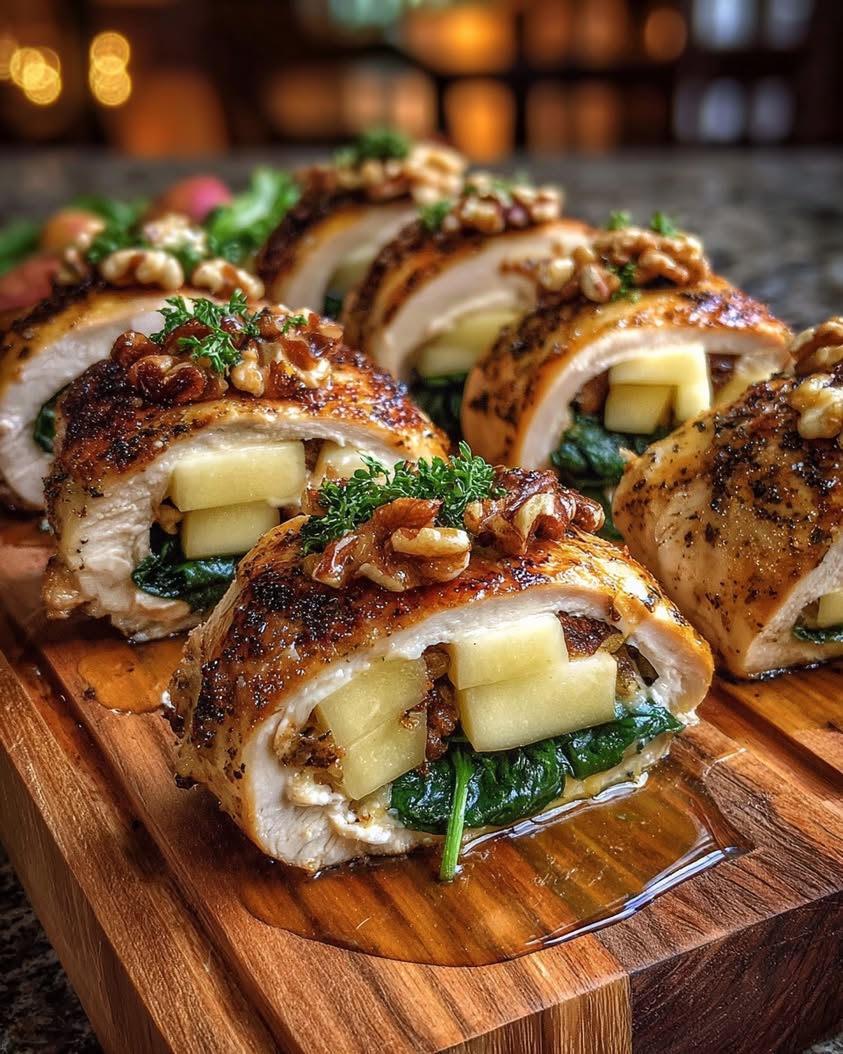
Brie and Apple-Stuffed Chicken Roulade: An Elegant Dinner with Sweet and Savory Flair
Imagine cutting into a perfectly golden chicken breast to reveal a molten, creamy center of brie and sweet, tender apples. This Brie and Apple-Stuffed Chicken Roulade is exactly that kind of show-stopping dish. It transforms simple weeknight ingredients into a restaurant-quality meal that feels incredibly special. Moreover, the combination of savory, juicy chicken with the rich cheese and fruity apple creates a symphony of flavors in every single bite.
Surprisingly, this elegant stuffed chicken recipe is far less complicated than it appears. With a few key techniques, you can master the art of the roulade and impress any dinner guest. The process is a delightful kitchen project that yields delicious rewards. Ultimately, this dish proves that you do not need a professional chef’s training to create something beautiful and memorable at home.
The magic of this Brie and Apple-Stuffed Chicken Roulade lies in its beautiful balance. The saltiness of the prosciutto and the earthy thyme perfectly complement the sweet apples and decadent brie. Consequently, each component plays a crucial role, resulting in a harmonious and satisfying main course. Whether for a date night, a holiday gathering, or simply to elevate a Tuesday dinner, this recipe is a guaranteed winner.
Quick Recipe Highlights
- Flavor Profile: This dish masterfully blends savory, salty, sweet, and creamy notes. The rich, melted brie pairs with the crisp sweetness of apple, all wrapped in seasoned chicken and salty prosciutto.
- Texture: Expect a wonderful contrast between the juicy, tender chicken exterior and the soft, gooey filling. The apples retain a slight bite, adding a pleasant textural counterpoint to the creamy cheese.
- Aroma: While baking, your kitchen will fill with the savory scent of roasting chicken and herbs, mingled with the sweet, caramelizing notes of apple and onion.
- Visual Appeal: When sliced, the roulade reveals a stunning spiral of white chicken, pink prosciutto, golden apple, and oozing brie, making for a beautiful plate presentation.
- Skill Level Needed: This recipe requires basic knife skills for butterflying chicken and dicing, plus the patience to roll and tie the roulades. It is an excellent project for cooks looking to build their technique.
- Special Equipment: You will need kitchen twine for tying the roulades and a reliable meat thermometer to ensure perfect doneness without overcooking.
Recipe Overview
- Difficulty Level: We rate this Brie and Apple-Stuffed Chicken Roulade as intermediate. The process of butterflying, stuffing, rolling, and tying the chicken requires a bit of practice and patience. However, the steps are straightforward and well worth the effort for the impressive result.
- Category: This is a main course protein, perfect for a special dinner. It falls squarely into the category of elegant comfort food, offering both sophistication and hearty satisfaction.
- Cuisine: While not strictly traditional to one region, the recipe draws inspiration from French bistro cuisine (the use of brie and roulade technique) and American fall flavors (apple and thyme). It is a modern fusion dish.
- Cost: Using chicken breasts, a small apple, a few slices of prosciutto, and a wedge of brie makes this a reasonably affordable gourmet meal. The cost is moderate, primarily influenced by the quality of cheese and prosciutto you choose.
- Season: This dish shines in the autumn when apples are at their peak. Nevertheless, its comforting nature makes it suitable for cozy winter dinners as well.
- Occasion: Ideal for romantic dinners, small dinner parties, holiday meals like Thanksgiving or Christmas, or any time you want to celebrate without going to a restaurant.
Why You’ll Love This Recipe
First and foremost, the taste of this Brie and Apple-Stuffed Chicken Roulade is simply unforgettable. The first bite delivers a cascade of contrasting flavors that work in perfect harmony. You get the savory umami from the chicken and prosciutto, immediately followed by the sweet, slightly tart apple and the luxurious, creamy brie. Furthermore, the fresh thyme adds an aromatic, earthy layer that ties everything together. This is not a one-note meal; it is a complex flavor experience that will have everyone asking for seconds.
From a convenience standpoint, this recipe is a fantastic make-ahead option. You can prepare the roulades entirely, tie them, and refrigerate them for several hours before baking. This feature is a game-changer for entertaining, as it removes the last-minute stress. Additionally, while the technique seems fancy, the ingredient list is short and accessible. You likely have many of the seasonings on hand, and the core components are easy to find at any grocery store.
Nutritionally, this Brie and Apple-Stuffed Chicken Roulade offers a good balance of macronutrients. Chicken breast is an excellent source of lean protein, which is essential for muscle repair and satiety. Apples contribute dietary fiber and vitamin C, while the brie provides calcium and fat for flavor and satisfaction. By controlling the portion size and pairing it with healthy sides like roasted vegetables or a green salad, you can enjoy a decadent-tasting meal that still fits into a balanced diet.
The social and entertaining value of this dish cannot be overstated. Presenting a whole, golden roulade and then slicing it at the table to reveal the beautiful swirl inside is pure dinner theater. It creates a memorable moment and shows your guests you cared enough to prepare something special. Conversely, it is also intimate enough for a quiet dinner for two, turning an ordinary evening into a celebration.
Finally, consider the cost-effectiveness. To recreate a dish of this caliber at a restaurant, you would pay a significant premium. By preparing this Brie and Apple-Stuffed Chicken Roulade at home, you gain restaurant-quality elegance at a fraction of the cost. You also have complete control over the quality of ingredients, from organic chicken to a beautifully ripe brie. This accessibility allows you to enjoy gourmet cooking regularly, not just on rare occasions.
Historical Background and Cultural Significance
The technique of roulade, from the French word “rouler” meaning “to roll,” has roots in European culinary traditions, particularly in France and Germany. Historically, cooks sought methods to tenderize and add flavor to leaner cuts of meat. By pounding meat thin, adding a filling, and rolling it, they created a self-basting parcel that stayed moist during cooking. While traditional roulades often featured pickles, mustard, and bacon, the concept beautifully adapts to modern flavor combinations like brie and apple.
Culturally, stuffing meat is a nearly universal practice, symbolizing abundance and celebration. From Italian braciole to Jewish rouladen, the act of enclosing a flavorful filling inside meat transforms a simple protein into a centerpiece. This Brie and Apple-Stuffed Chicken Roulade fits into that celebratory tradition. It uses a contemporary, upscale filling to achieve the same goal: creating a special, shareable dish that feels like an occasion.
The evolution of this specific recipe reflects broader food trends. The pairing of fruit and cheese with meat is classic, seen in dishes like pork with apples or figs with prosciutto. The innovation here is incorporating those elements directly into a chicken roulade, creating a complete flavor package in every slice. This evolution speaks to the modern home cook’s desire for dishes that are visually impressive, flavorful, and efficient to serve.
Regional variations of the stuffed chicken concept are endless. In the American South, you might find a roulade stuffed with cornbread and andouille. In the Mediterranean, a filling of sun-dried tomatoes, spinach, and feta would be common. Our Brie and Apple-Stuffed Chicken Roulade offers a nod to the Pacific Northwest or New England with its use of apples, while the brie lends a French-inspired touch. This adaptability is the recipe’s greatest strength, inviting cooks to make it their own.
Ingredient Deep Dive
Chicken Breasts: Opt for large, plump boneless, skinless chicken breasts. Their uniform thickness is crucial for easy butterflying and rolling. From a nutritional standpoint, chicken breast is a powerhouse of lean protein and essential B vitamins like niacin and B6. To prepare, place the breast on a cutting board, cover with plastic wrap, and pound gently from the center outward to an even 1/4-inch thickness. This tenderizes the meat and ensures it cooks evenly around the filling.
Brie Cheese: A soft-ripened French cheese, brie is known for its edible white rind and creamy, buttery interior. For cooking, a ripe but not runny brie works best. It should yield slightly to pressure. Nutritionally, brie provides calcium, protein, and fat, which carries flavor and creates the luxurious sauce inside the roulade. Remove the rind if you prefer a smoother melt, though it is perfectly edible. For a stronger flavor, try a triple-creme brie.
Apple: Choose a firm, sweet-tart apple variety that holds its shape when cooked, such as Honeycrisp, Pink Lady, or Granny Smith for more tang. Apples add necessary sweetness, fiber, and a touch of acidity to cut through the richness. They are a good source of vitamin C and antioxidants. Dice the apple finely so it integrates well into the filling and cooks quickly. A quick sauté softens it slightly and enhances its natural sweetness.
Prosciutto: This Italian dry-cured ham adds a vital layer of salty, savory depth and helps keep the filling contained. Its thin slices wrap easily around the filling. Prosciutto is typically lower in fat than many other cured meats. Look for prosciutto di Parma for the best quality. The saltiness it provides is key to balancing the sweet apple and rich cheese, making the flavor profile of your Brie and Apple-Stuffed Chicken Roulade complete.
Common Mistakes to Avoid
- Not Pounding the Chicken Evenly: If the chicken breast has thick and thin areas, it will cook unevenly. The thin parts will overcook and dry out before the thick parts are done. Always pound to a consistent 1/4-inch thickness.
- Overstuffing the Roulade: Using too much filling will cause it to spill out during rolling and baking. It can also prevent the chicken from cooking through properly. Use a moderate amount, about 1/3 cup per breast.
- Skipping the Kitchen Twine: Toothpicks are not secure enough for a roulade of this size. Proper tying with kitchen twine at 1-inch intervals is essential to maintain the shape and keep the filling sealed inside during cooking.
- Not Searing Before Baking: Searing in an oven-safe skillet creates a beautiful golden-brown crust (the Maillard reaction) that adds tremendous flavor. Baking without searing results in a pale, less flavorful exterior.
- Using an Oven That Isn’t Preheated: A properly preheated oven is critical for immediate cooking action. Putting the roulades into a cold oven will cause them to steam and release juices, leading to a tough texture.
- Guessing Doneness: Relying on time or appearance alone is unreliable. The only way to guarantee perfectly cooked, juicy chicken is to use a meat thermometer. Insert it into the thickest part of the chicken, avoiding the filling, and cook to 165°F.
- Slicing Immediately After Baking: Let the Brie and Apple-Stuffed Chicken Roulade rest for 5-10 minutes after removing it from the oven. This allows the juices to redistribute throughout the meat. Slicing too soon will cause all the flavorful juices to run out onto the cutting board.
- Choosing the Wrong Apple: A very soft apple like a Red Delicious will turn to mush in the filling. Always select a firm, crisp variety that can withstand the heat of cooking without disintegrating.
Essential Techniques
Butterflying and Pounding Chicken: This technique creates a flat, even canvas for your filling. Place the chicken breast on a stable surface. Holding your knife parallel to the board, slice horizontally through the thickest part, stopping about 1/2 inch from the opposite edge so it opens like a book. Then, cover with plastic wrap and pound with a meat mallet or rolling pin from the center outward. The goal is uniform thickness, not to pulverize the meat. This ensures even cooking and easy rolling.
Rolling and Tying a Roulade: After placing your filling on the pounded chicken, start rolling from the shorter end, tucking in the filling as you go. Keep the roll tight. Use kitchen twine to tie the roulade at regular intervals, about every inch. Do not tie it too tightly, or you will squeeze out the filling; just snug enough to hold its shape. This technique is vital for creating the signature spiral presentation and keeping everything contained during the cooking process.
The Sear-Then-Bake Method: This two-step cooking process is key for a perfect Brie and Apple-Stuffed Chicken Roulade. First, sear the tied roulades in a hot, oven-safe skillet with oil. This creates a flavorful, caramelized crust through the Maillard reaction. Then, transfer the entire skillet to a preheated oven to finish cooking gently and evenly. This method ensures a juicy interior and a beautifully browned exterior without overcooking the outside.
Pro Tips for Perfect Brie and Apple-Stuffed Chicken Roulade
Chill the stuffed and tied roulades for 15 minutes before searing. This helps them hold their shape better in the hot pan and prevents the cheese from immediately leaking out.
Use a digital instant-read meat thermometer. It is the single most reliable tool to achieve juicy, safe chicken without any guesswork. Target 165°F in the thickest part of the meat.
Let the roulades rest before slicing. Allowing them to sit for 5-10 minutes after baking lets the juices settle and the cheese filling firm up slightly, resulting in cleaner slices.
Sauté the apples and onions until just softened. You want them to retain some texture so they do not become lost in the melted cheese during baking.
Season every layer. Do not forget to season the pounded chicken, the apple filling, and the outside of the tied roulade. This builds depth of flavor throughout the dish.
Use high-quality, ripe brie. The flavor of the cheese is central to the dish. A good, flavorful brie will make a significant difference in the final result.
Deglaze the skillet after searing. Add a splash of white wine or chicken broth to the hot pan after removing the roulades, scrape up the browned bits, and reduce for a simple, delicious pan sauce to serve over the top.
Variations and Adaptations
For regional twists, consider a Mediterranean version with spinach, sun-dried tomatoes, and feta cheese. Alternatively, a Southern-inspired take could use pecans, sharp cheddar, and a touch of bourbon in the apple sauté. The basic roulade technique is wonderfully adaptable to local flavors and ingredients you love.
Seasonal adaptations are easy. In summer, try stuffing with fresh peaches, basil, and goat cheese. For winter, use roasted squash, sage, and fontina. The Brie and Apple-Stuffed Chicken Roulade is perfect for fall, but the concept works year-round with appropriate seasonal produce.
Dietary modifications are straightforward. For a gluten-free version, ensure all packaged ingredients like broth are certified GF. To make it dairy-free, substitute the brie with a high-quality vegan melty cheese. For a lower-carb option, increase the prosciutto and cheese slightly and reduce the apple quantity.
Flavor variations can explore different cheese and fruit pairings. Try camembert with pear, goat cheese with fig jam, or gouda with caramelized onions. Adding a tablespoon of grainy mustard or chopped fresh herbs like rosemary or sage to the filling can also create new flavor dimensions.
Serving and Presentation Guide
Plating is key for a dish this beautiful. Transfer the rested roulade to a cutting board and slice it into 1-inch thick medallions using a sharp chef’s knife. Wipe the knife clean between slices for a neat appearance. Fan the slices slightly on individual plates or a large platter to showcase the stunning interior spiral.
For garnishing, a simple sprinkle of flaky sea salt and fresh thyme leaves adds color and a final flavor boost. A drizzle of the reduced pan sauce or a balsamic glaze around the plate adds elegance and moisture. A few extra apple slices, quickly sautéed, make a lovely and thematic garnish.
Traditional accompaniments include creamy mashed potatoes, roasted root vegetables like carrots and parsnips, or a simple wild rice pilaf. These sides soak up the delicious juices and complement the autumnal flavors of the Brie and Apple-Stuffed Chicken Roulade perfectly.
Wine and Beverage Pairing
Wine pairings should complement the rich cheese, sweet apple, and savory chicken. A medium-bodied white wine like Chardonnay with a hint of oak works beautifully, as its buttery notes mirror the brie. Alternatively, a light Pinot Noir with its red fruit flavors can stand up to the dish without overpowering it. The key is balance.
For non-alcoholic alternatives, consider sparkling apple cider to echo the apple in the dish, or a rich, non-alcoholic ginger beer which cuts through the richness with its spice. A warm apple cider with a cinnamon stick also makes a cozy and thematic pairing for this fall-inspired meal.
Storage and Shelf Life
Store leftover Brie and Apple-Stuffed Chicken Roulade in an airtight container in the refrigerator for up to 3 days. The chicken and filling will keep, though the presentation is best fresh. Reheat gently in a covered oven-safe dish at 325°F until warmed through, or in the microwave at a reduced power to prevent the cheese from separating.
Freezing is possible but not ideal for the best texture. If you must freeze, wrap the whole, cooled roulade tightly in plastic wrap and then foil. Thaw overnight in the refrigerator before reheating. Note that the cheese may become slightly grainy upon thawing, but the flavor will still be good.
Make Ahead Strategies
You can fully prepare the Brie and Apple-Stuffed Chicken Roulade up to 24 hours in advance. Simply follow all steps through tying the roulades with twine. Place them on a plate, cover tightly with plastic wrap, and refrigerate. When ready to cook, let them sit at room temperature for 20 minutes, then sear and bake as directed. This make-ahead strategy is perfect for stress-free entertaining.
You can also prep components separately. The apple and onion filling can be sautéed a day ahead and stored in the fridge. The chicken can be pounded and stored between layers of parchment in the fridge. Then, assembly before cooking takes just minutes.
Scaling Instructions
This recipe scales beautifully for a crowd. To double or triple, use a larger skillet for searing in batches, or use two skillets simultaneously. Do not overcrowd the pan during the searing step, as this will steam the chicken instead of browning it. You may need to adjust the baking time slightly if the oven is very full; just rely on your meat thermometer for doneness.
For halving the recipe, simply use two chicken breasts and halve all other ingredients. The cooking times will remain roughly the same, as the size of each individual roulade does not change.
Nutritional Deep Dive
One serving of this Brie and Apple-Stuffed Chicken Roulade provides a substantial amount of high-quality protein from the chicken, essential for muscle maintenance and satiety. The brie contributes calcium for bone health and fats that aid in the absorption of fat-soluble vitamins. The apple adds dietary fiber and vitamin C. While this is a rich dish, it is balanced when served with vegetable sides. The prosciutto adds sodium, so those monitoring salt intake can use a lighter hand or choose a lower-sodium variety.
Dietary Adaptations
For a gluten-free version, this recipe is naturally compliant if you ensure your chicken broth and any other packaged ingredients are certified gluten-free. No flour or breadcrumbs are used in the standard preparation.
For a dairy-free adaptation, replace the brie with a high-quality vegan cheese that melts well, such as those made from cashews or coconut oil. Many brands now offer soft, spreadable vegan cheeses that can mimic the creamy texture of brie.
For a lower-carb or keto adaptation, increase the amount of prosciutto and cheese in the filling while significantly reducing or omitting the apple and onion. You could replace them with sautéed mushrooms or chopped spinach for bulk and flavor without the carbs.
Troubleshooting Guide
If your cheese leaks out during baking, it likely means the roulade was not tied tightly enough, it was overstuffed, or the cheese was too runny before baking. Next time, chill the stuffed roulades before cooking, ensure your ties are snug, and use a brie that is ripe but still firm to the touch.
If the chicken is dry, it was probably overcooked. Always use a meat thermometer and pull the roulades from the oven the moment they hit 165°F. Remember that carryover cooking will add a few more degrees as they rest. Also, ensure you pounded the chicken to an even thickness for uniform cooking.
If the roulade falls apart when slicing, it may not have rested long enough after baking. Let it sit for a full 10 minutes to allow the proteins to relax and reabsorb juices. Also, use a very sharp knife and a gentle sawing motion to slice cleanly through.
Recipe Success Stories
Home cooks love sharing their triumphs with this Brie and Apple-Stuffed Chicken Roulade. Many report that it has become their go-to “impress the in-laws” dish, with several noting that even picky eaters devour it. One reader successfully adapted it for a gluten-free Thanksgiving, while another used pear instead of apple for a lovely variation. The consistent feedback highlights that while the dish looks professional, the steps are completely manageable for a home cook with clear instructions.
Frequently Asked Questions
Q: Can I use chicken thighs instead of breasts?
A: Yes, but boneless, skinless thighs are smaller and may be trickier to roll. You will likely need to use two thighs per serving and overlap them slightly to create a sheet to stuff and roll. The cooking time may be slightly shorter.
Q: What can I use if I don’t have kitchen twine?
A: While twine is best, in a pinch you can use silicone bands designed for cooking or secure the roulade with several toothpicks placed close together. However, toothpicks are less secure and can make turning the roulade in the pan more difficult.
Q: Can I make this without prosciutto?
A> Absolutely. The prosciutto adds saltiness and helps contain the filling, but you can omit it. Consider seasoning the chicken a bit more generously and perhaps adding a pinch of smoked paprika to the filling for depth.
Q: How do I know when the roulade is done cooking?
A: The only sure way is with an instant-read meat thermometer. Insert it into the thickest part of the chicken (avoiding the filling if possible) and cook until it reads 165°F. The outside should be golden brown.
Q: Can I prepare the filling ahead of time?
A: Yes, you can sauté the apple and onion mixture up to two days in advance. Let it cool completely before storing it in an airtight container in the refrigerator. This makes weeknight assembly very quick.
Q: What are the best sides to serve with this?
A> Roasted Brussels sprouts, asparagus, or green beans are excellent vegetable sides. For starch, consider garlic mashed potatoes, wild rice, or a simple orzo pilaf. A fresh arugula salad with a light vinaigrette also pairs wonderfully.
Q: My brie exploded out everywhere. What went wrong?
A: This usually means the roulade was overstuffed or the cheese was too warm and runny before baking. Next time, use less filling and ensure your brie is cool and firm when you dice it. Chilling the assembled roulades before searing also helps.
Q: Is it necessary to sear before baking?
A: While you can bake it entirely in the oven, searing first creates a flavorful crust and improves texture. It is a highly recommended step for the best possible Brie and Apple-Stuffed Chicken Roulade.
Additional Resources
If you enjoyed mastering the roulade technique, consider trying a Beef Braciole or a Pork Tenderloin Roulade with different stuffings. For more elegant chicken dinners, explore recipes for Chicken Saltimbocca or Chicken Cordon Bleu. To improve your kitchen skills further, look for guides on proper knife sharpening, how to use a meat thermometer correctly, and the science behind the Maillard reaction for better browning on all your proteins.
{“success”:true,”message”:”Recipe created successfully”,”post_id”:9090,”tasty_recipe_id”:9090,”shortcode”:”“}

I’m Billy, a classically trained culinary school graduate from The Culinary Institute of America with over 12 years in the restaurant industry and over 19 years of cooking experience.