
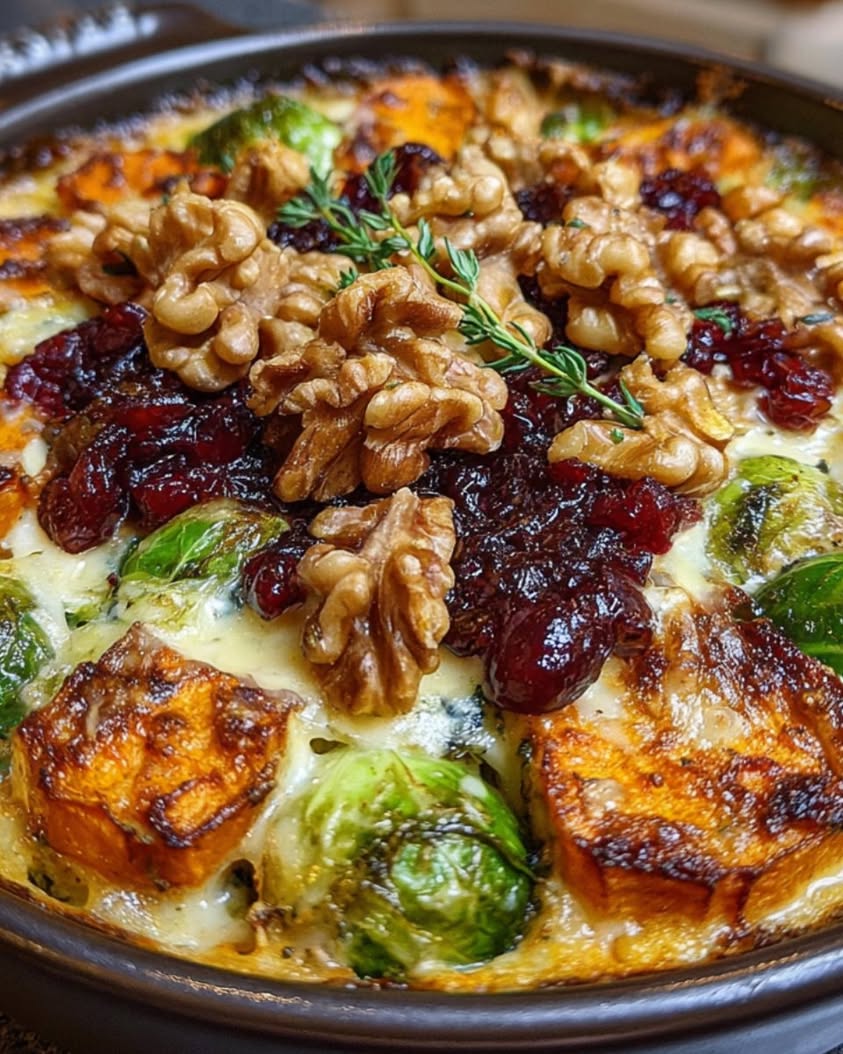
Brussels Sprout & Sweet Potato Gratin with Brie, Walnuts & Cranberry Drizzle: The Ultimate Holiday Side Dish
Imagine a dish that captures the entire spirit of the holiday season in one glorious, bubbling pan. This Brussels Sprout & Sweet Potato Gratin with Brie, Walnuts & Cranberry Drizzle does exactly that. Moreover, it transforms humble vegetables into a show-stopping centerpiece. The combination of earthy Brussels sprouts and sweet potatoes creates a perfect base. Then, creamy Brie cheese melts into every nook, creating a luxurious sauce. Finally, a tangy cranberry drizzle and crunchy walnuts add festive pops of flavor and texture. Ultimately, this recipe is a celebration on a plate.
This Brussels Sprout Sweet Potato Gratin with Brie and Cranberry Drizzle is far more than a simple side dish. For instance, it balances sweet, savory, creamy, and crunchy elements in every single bite. The roasted vegetables become tender and caramelized, while the Brie forms a golden, cheesy crust. Meanwhile, the vibrant cranberry drizzle cuts through the richness beautifully. Consequently, it appeals to both vegetable lovers and comfort food enthusiasts alike. This dish is guaranteed to earn a permanent spot on your holiday menu.
Preparing this gratin is surprisingly straightforward. Essentially, you layer pre-roasted vegetables with cheese and bake until bubbly. The active hands-on time is minimal, allowing you to focus on other meal preparations. Furthermore, the components can be made ahead, streamlining your holiday cooking schedule. Whether you serve it for Thanksgiving, Christmas, or a cozy winter dinner, it promises to impress. This Brussels Sprout & Sweet Potato Gratin is the ultimate make-ahead holiday side dish that tastes as incredible as it looks.
Quick Recipe Highlights
- Flavor Profile: This dish masterfully combines earthy sweetness from the roasted vegetables with the rich, funky creaminess of melted Brie. The tart and sweet cranberry drizzle introduces a necessary acidic contrast, while toasted walnuts contribute a nutty, buttery crunch that ties everything together.
- Texture: You experience a wonderful textural journey. Expect tender, almost caramelized sweet potatoes and Brussels sprouts layered beneath a stretchy, golden cheese pull. The crispy walnut topping and the glossy drizzle add delightful contrasting bites that keep each mouthful interesting.
- Aroma: As it bakes, your kitchen will fill with the comforting scent of roasting garlic and onions, mingled with the nuttiness of toasting walnuts. The final aroma is a complex bouquet of savory herbs, melted dairy, and the faint, festive tartness of cranberries.
- Visual Appeal: This gratin is a feast for the eyes with its vibrant color palette. Deep green Brussels sprouts and orange sweet potatoes create a beautiful mosaic, topped with golden-brown cheese, red cranberry drizzle, and the rustic brown of walnuts. It looks professionally crafted yet warmly homemade.
- Skill Level Needed: This is an accessible recipe for most home cooks. The techniques involve basic knife skills for chopping, simple roasting, and layering. No advanced culinary skills are required, making it a perfect project for cooks looking to create something special without stress.
- Special Equipment: You only need a few standard kitchen tools: a sharp knife, cutting board, two large baking sheets for roasting, and a 9×13 inch baking dish. A small saucepan is helpful for reducing the cranberry drizzle. A mandoline can speed up slicing but is not essential.
Recipe Overview
- Difficulty Level: We rate this Brussels Sprout Sweet Potato Gratin with Brie and Cranberry Drizzle as “Easy.” The steps are sequential and simple: chop, roast, layer, and bake. There’s no tricky sauce-making or complex techniques. The most important task is ensuring the vegetables are roasted evenly, which is easily managed with occasional stirring.
- Category: This recipe firmly sits in the “Side Dish” category, specifically a vegetable casserole or gratin. It is substantial enough to be a vegetarian main course for a lighter meal. It also fits beautifully into holiday feasts, potlucks, and special occasion dinners where a standout vegetable dish is required.
- Cuisine: While gratins have French origins, this dish is a modern American fusion. It takes the classic European technique of baking layered ingredients with a topping and incorporates distinctly New World ingredients like sweet potatoes and cranberries. The result is a contemporary holiday classic.
- Cost: This is a moderately priced dish. Brussels sprouts and sweet potatoes are affordable, especially in season. Brie cheese and fresh cranberries are the premium components. Toasted walnuts add cost but also significant value in flavor and texture. Overall, it delivers restaurant-quality presentation at a fraction of the price.
- Season: This gratin is perfect for fall and winter. Brussels sprouts and sweet potatoes are at their peak during these cooler months. Cranberries are a quintessential autumn fruit. The warm, baking process and rich flavors are ideally suited for cold-weather gatherings and holiday celebrations from October through December.
- Occasion: It is the star side dish for Thanksgiving and Christmas dinners. It also excels at festive potlucks, Friendsgiving celebrations, and cozy Sunday supper clubs. Because it can be prepared ahead, it’s a brilliant choice for any entertaining scenario where you want to minimize day-of stress.
Why You’ll Love This Recipe
First and foremost, the taste and texture are utterly irresistible. Each forkful delivers a harmonious blend of sweet, savory, creamy, and crunchy. The roasted sweet potatoes become almost jam-like, while the Brussels sprouts retain a slight bite. Melty Brie cheese binds it all together with luxurious richness. Then, the bright cranberry drizzle cuts through that richness, preventing the dish from feeling too heavy. Finally, the walnuts offer a satisfying crunch that completes the sensory experience. This Brussels Sprout Sweet Potato Gratin with Brie and Cranberry Drizzle is a symphony of flavors designed to delight.
Secondly, the convenience factor is a major win. You can roast the vegetables and prepare the cranberry drizzle a full day in advance. On the day of serving, simply layer everything in your dish and bake. This make-ahead strategy is a game-changer for holiday cooking. Furthermore, the recipe uses simple, whole ingredients without any canned soups or processed sauces. The “sauce” comes naturally from the melting Brie and the vegetables’ own juices. It’s an elegant dish that doesn’t require you to be a slave to the stove.
Nutritionally, this gratin packs a powerful punch. Brussels sprouts and sweet potatoes are nutritional powerhouses, loaded with vitamins A, C, and K, fiber, and antioxidants. Using a moderate amount of a flavorful cheese like Brie means you get maximum taste without needing cups of a milder cheese. The walnuts add healthy fats and protein. Compared to traditional potato gratins drowned in cream, this version offers more vitamins, more fiber, and a broader spectrum of nutrients, making indulgence feel a bit more virtuous.
For entertaining, this dish is a social superstar. It looks spectacular on a buffet table and serves a crowd easily. The unique combination of ingredients often sparks conversation. It’s a fantastic option for mixed-diet gatherings, as it can easily be made vegetarian and is a satisfying centerpiece for non-meat eaters. Guests will remember this Brussels Sprout & Sweet Potato Gratin long after the meal is over. It demonstrates care and creativity, elevating any dinner party or family meal into a special event.
Finally, it is cost-effective and accessible. The base vegetables are inexpensive, especially in season. You can often find Brie on sale during the holidays. While walnuts and fresh cranberries are investment items, a little goes a long way in terms of impact. You can also adapt based on what’s available. For example, use pecans instead of walnuts or a different creamy cheese. This flexibility makes the recipe accessible year-round, allowing you to enjoy a taste of the holidays whenever the craving strikes.
Historical Background and Cultural Significance
The gratin, as a culinary technique, hails from French cuisine. The term “gratin” derives from the French verb “gratter,” meaning “to scrape” or “to grate,” originally referring to the scrapings of breadcrumbs and cheese left in the pan. Traditionally, a gratin involves a creamy sauce and a browned topping, often of cheese or breadcrumbs. This Brussels Sprout Sweet Potato Gratin with Brie and Cranberry Drizzle is a modern, vegetable-forward interpretation. It honors the technique while departing from the classic béchamel base, allowing the natural flavors of the produce to shine.
Brussels sprouts and sweet potatoes each have their own rich histories. Brussels sprouts are believed to have been cultivated in ancient Rome, but they gained their name from their popularity in Brussels, Belgium, in the 16th century. Sweet potatoes are native to Central and South America and have been a staple food for thousands of years. Combining these two ingredients in a single dish is a relatively new, North American innovation. It reflects our contemporary desire to create vegetable-centric dishes with global influences.
The inclusion of cranberries firmly roots this recipe in American holiday tradition. Native Americans used cranberries for food, dye, and medicine long before European settlers arrived. Cranberry sauce became a staple on Thanksgiving tables in the 19th century. Using a reduced cranberry drizzle as a finishing element is a clever, modern twist on that tradition. It moves the cranberry from a standalone condiment to an integral component of the dish’s flavor architecture. This evolution shows how classic flavors can be reimagined in new formats.
Ultimately, this dish represents the fusion nature of modern American cooking. It takes a French technique, combines a European vegetable with a New World tuber, and accents it with a fruit native to North America. The use of Brie, a French cheese, ties it back to the gratin’s origins. This cultural blending is a hallmark of holiday meals, where traditions old and new come together at the table. This gratin is a delicious symbol of that culinary convergence, making history edible one delicious bite at a time.
Ingredient Deep Dive
Brussels Sprouts: These miniature cabbages are members of the Brassica family, packed with nutrients like vitamin K, vitamin C, and folate. When selecting sprouts, choose firm, bright green heads that feel heavy for their size. Avoid those with yellowing leaves or a strong odor. To prepare, trim the stem end and remove any loose outer leaves. Cutting them in half ensures even roasting and allows the edges to caramelize beautifully, which is key for developing deep, nutty flavors that balance their inherent slight bitterness.
Sweet Potatoes: Technically a root vegetable from the morning glory family, sweet potatoes are rich in beta-carotene (which converts to vitamin A), fiber, and complex carbohydrates. Look for firm potatoes with smooth, unbruised skin. Both orange and white-fleshed varieties work, but orange adds vibrant color. Peeling is optional; the skin is edible and adds fiber. Cutting them into half-moons of even thickness is crucial for consistent roasting. Their natural sugars caramelize in the oven, providing the foundational sweetness that contrasts so well with the savory elements.
Brie Cheese: This soft, creamy French cheese is made from cow’s milk and has a distinctive edible white rind. For cooking, a ripe but not oozy Brie is ideal. You can remove the rind if you prefer, but leaving it on adds flavor and helps it hold its shape slightly when baked. Brie melts into a luxurious, velvety pool that coats the vegetables. As a substitute, Camembert works perfectly. For a stronger flavor, try a double-creme or triple-creme Brie. Remember, a little goes a long way due to its rich, concentrated flavor.
Fresh Cranberries: These tart, red berries are a seasonal treasure available from October through December. They are packed with vitamin C and unique antioxidants called proanthocyanidins. For the drizzle, fresh berries are essential as they provide the right balance of tartness and pectin for thickening. Frozen cranberries can be used in a pinch; thaw and drain them first. Simmering them with maple syrup and orange juice creates a glossy, jammy sauce that can be made days ahead. The drizzle’s bright acidity is the secret weapon that lifts the entire dish.
Walnuts: Walnuts are one of the best plant sources of omega-3 fatty acids. Toasting them is a non-negotiable step; it deepens their flavor and improves their crunch. Simply toast in a dry skillet over medium heat for 3-5 minutes, stirring constantly, until fragrant. Watch them closely, as they burn easily. For a different flavor profile, pecans or hazelnuts make excellent substitutes. The walnuts provide necessary textural contrast and a rich, buttery note that complements both the sweet potatoes and the Brie beautifully.
Common Mistakes to Avoid
- Overcrowding the Baking Sheets: Roasting the vegetables on crowded trays leads to steaming instead of browning. Consequently, you’ll miss the crucial caramelized flavors. Always use two large sheets and spread the veggies in a single layer with space between them. This ensures proper air circulation and even cooking.
- Skipping the Vegetable Roasting Step: Attempting to bake raw vegetables layered in the dish will result in uneven cooking. The sweet potatoes may remain hard while the top burns. Pre-roasting is essential to develop flavor and ensure everything is tender before the final bake. It’s the most important step for perfect texture.
- Using Cold Brie Straight from the Fridge: Very cold Brie is difficult to slice thinly and evenly. Let it sit at room temperature for 15-20 minutes before slicing. This allows for clean cuts and more even distribution throughout the gratin, ensuring every bite gets its share of melty cheese.
- Neglecting to Toast the Walnuts: Raw walnuts can taste somewhat bitter and lack the deep, nutty aroma that toasted walnuts provide. Taking the extra five minutes to toast them in a dry pan dramatically elevates the final dish. It’s a small effort with a massive payoff in flavor complexity.
- Overcooking the Cranberry Drizzle: Simmer the drizzle just until the cranberries pop and the sauce thickens slightly. Over-reducing it will make it too thick and jam-like, making it difficult to drizzle elegantly. Remember, it will continue to thicken as it cools. Aim for a syrup consistency.
- Using a Baking Dish That’s Too Small: Packing the roasted vegetables into a tight dish prevents the cheese from weaving through the layers and can make the final result mushy. A 9×13 inch dish provides the ideal space for proper layering and beautiful, distinct vegetable presentation.
- Not Seasoning the Vegetables Before Roasting: Salt and pepper are not afterthoughts; they are essential flavor builders. Season the Brussels sprouts and sweet potatoes generously with salt, pepper, and olive oil before they go into the oven. This foundational seasoning permeates the vegetables as they roast.
- Covering the Gratin While Baking: You want the top to become golden brown and bubbly. Covering the dish with foil will trap steam and prevent browning, resulting in a pale, soggy top. Bake it uncovered for the entire time to achieve that perfect, appetizing crust.
Essential Techniques
Even Vegetable Sizing: Cutting your Brussels sprouts and sweet potatoes into uniform pieces is the single most important technique for success. Consistent size ensures everything roasts at the same rate. For Brussels sprouts, halve them from stem to top. For sweet potatoes, slice them into half-moons about 1/4-inch thick. Using a sharp chef’s knife or a mandoline for the potatoes guarantees precision. Uneven pieces lead to some being burnt and others undercooked, ruining the texture of your Brussels Sprout Sweet Potato Gratin.
High-Heat Roasting: Roasting at 425°F (220°C) is intentional. This high heat encourages the Maillard reaction—the chemical process that creates browning and deep, complex flavors. It also quickly evaporates surface moisture on the vegetables, promoting caramelization instead of steaming. Don’t be afraid of a little char on the edges of the Brussels sprouts; it adds wonderful bitterness. Stir the vegetables once during roasting to expose all sides to the heat. Proper roasting transforms simple veggies into the flavor foundation of the dish.
Layering for Flavor Distribution: How you build the gratin matters. Start with a base layer of the roasted vegetable mix. Then, add half of the sliced Brie, tucking pieces between the veggies. Repeat with another layer of vegetables and the remaining Brie. This sandwiching technique ensures cheesy pockets throughout, rather than just a topping on top. The heat of the vegetables begins to melt the cheese immediately, creating an instant sauce. This method guarantees every scoop includes the perfect ratio of vegetable to cheese.
Reducing a Fruit Drizzle: The cranberry drizzle is a simple fruit compote reduction. The key is to simmer gently until the cranberries pop and the liquid reduces by about half. The natural pectin in the cranberries will thicken the sauce as it cools. Stir occasionally to prevent sticking. For a smoother drizzle, you can press it through a fine-mesh sieve after cooking, but leaving the berry skins adds texture and visual appeal. This technique can be used with other fruits like cherries or blueberries for different variations.
Pro Tips for Perfect Brussels Sprout & Sweet Potato Gratin
First, toss your chopped vegetables with olive oil, salt, and pepper in a large bowl before spreading them on the baking sheets. This ensures every piece is evenly coated and seasoned, leading to superior flavor in every bite. Furthermore, add a sprinkle of dried thyme or rosemary to the oil for an extra layer of aromatic depth.
For the creamiest texture, let the roasted vegetables cool for about 10 minutes before layering them with the Brie. Layering piping hot vegetables can cause the cheese to melt too quickly and become greasy. Slightly cooler veggies allow the cheese to melt slowly and evenly in the oven, creating a luscious, cohesive sauce.
Use a vegetable peeler to remove the rind from the Brie if you or your guests are sensitive to its texture. Simply run the peeler along the flat sides of the wheel. The rind is edible and flavorful, but removing it results in an even creamier, more uniform melt throughout the gratin.
Toast your walnuts in the oven while the vegetables roast for efficiency. Spread them on a small, separate piece of foil on the oven rack during the last 5-7 minutes of the vegetable roasting time. Watch them closely, as they can burn quickly. This saves time and washes only one pan.
Make the cranberry drizzle up to three days in advance. Store it in a sealed jar in the refrigerator. Gently reheat it with a splash of water or orange juice to return it to a drizzling consistency before serving. This advance prep is a major time-saver on the day you plan to bake and serve the gratin.
For a stunning presentation, reserve a handful of the prettiest roasted vegetable pieces and a few walnut halves. After baking, scatter these reserved items artfully over the top of the gratin along with the drizzle. This adds height, visual interest, and signals the fresh, high-quality ingredients inside.
If your gratin is browning too quickly on top but the center isn’t hot, simply tent the dish loosely with aluminum foil. Continue baking until it’s bubbly around the edges. The foil will protect the cheese from burning while allowing the heat to penetrate to the center of the dish.
Always let the baked gratin rest for 10-15 minutes before serving. This allows the molten cheese to set slightly, making it easier to cut and serve neat portions. The flavors also have a chance to meld together during this brief resting period, improving the overall taste experience.
Variations and Adaptations
Regional Variations: For a Southern twist, substitute pecans for walnuts and add a pinch of cayenne pepper to the vegetable seasoning. A French-inspired version might use Gruyère cheese instead of Brie and add a splash of white wine to the cranberry drizzle. For a Mediterranean flair, use olive oil-packed sun-dried tomatoes chopped finely and mixed with the vegetables, and swap the walnuts for pine nuts.
Seasonal Adaptations: In spring, use asparagus and new potatoes with a goat cheese and lemon thyme drizzle. For summer, try zucchini, eggplant, and cherry tomatoes with a basil pesto swirl instead of cranberry. In deep winter, incorporate roasted parsnips or turnips for added earthiness. The core technique remains the same; simply swap the vegetables and the accent sauce to match what’s fresh and abundant.
Dietary Modifications: For a vegan version, omit the Brie and use a creamy vegan cheese sauce made from cashews or a store-bought vegan mozzarella. Top with vegan parmesan. For a gluten-free diet, this recipe is naturally compliant as written. To make it nut-free, simply omit the walnuts or replace them with toasted pumpkin seeds (pepitas) for crunch.
Flavor Variations: Introduce different cheese profiles: try sharp white cheddar for more bite, Gouda for smokiness, or Fontina for exceptional meltability. Infuse the olive oil with garlic or herbs before tossing the vegetables. Add a tablespoon of balsamic vinegar to the cranberry drizzle for extra tang and complexity. A sprinkle of crispy fried shallots or onions on top adds another incredible layer of flavor and texture.
Texture Modifications: For a creamier interior, pour 1/2 cup of heavy cream or full-fat coconut milk over the layers before baking. For extra crunch, mix panko breadcrumbs with the toasted walnuts for the topping. If you prefer softer walnuts, stir them into the gratin layers instead of reserving them for the top, allowing them to soften in the cheesy sauce.
Presentation Alternatives: Bake individual portions in ramekins or small cast-iron skillets for a personalized touch. Layer the ingredients in a cast-iron pan and bring it straight from the oven to the table for a rustic presentation. For a free-form look, pile the roasted vegetables and cheese on a large platter, drizzle, and scatter walnuts, skipping the structured baking dish entirely.
Serving and Presentation Guide
Plating Techniques: Use a wide, shallow spoon or a pie server to lift out full, beautiful sections of the gratin. Wipe the edge of the serving spoon clean between scoops for a neat presentation on each plate. If serving family-style, garnish the entire baking dish dramatically, then place it on a trivet in the center of the table. Allow guests to serve themselves, showcasing the gorgeous layered interior.
Garnishing Ideas: Beyond the cranberry drizzle and walnuts, consider fresh herb sprigs like rosemary or thyme. A light dusting of flaky sea salt (like Maldon) over the top just before serving enhances all the flavors. Microgreens or arugula add a fresh, peppery note and a pop of green. For a festive touch, add a few whole fresh cranberries or pomegranate arils to the garnish mix.
Traditional Accompaniments: This gratin is a natural partner for roasted turkey, ham, or prime rib. It also pairs wonderfully with other holiday classics like stuffing, mashed potatoes, and green bean casserole. For a vegetarian feast, serve it alongside a wild rice pilaf, a large kale salad, and crusty bread to soak up any delicious cheesy remnants.
Modern Serving Suggestions: Serve a square of the gratin atop a pool of herbed yogurt or tahini sauce for a restaurant-style plate. Crumble leftover gratin into a frittata or breakfast hash the next morning. For a hearty lunch, serve a smaller portion alongside a simple soup like butternut squash or lentil. It’s versatile enough to transition from a formal dinner to casual next-day leftovers seamlessly.
Temperature Considerations: This dish is best served warm, when the cheese is still soft and gooey. However, it is also delicious at room temperature, making it excellent for buffets where it might sit out for a while. If it cools completely, reheat individual portions in the microwave or the whole dish covered in a 350°F oven until warmed through.
Portion Control Tips: A 9×13 dish typically yields 6 generous side-dish portions or 8 more modest ones. If this is a main course for vegetarians, plan on it serving 4. Use a sharp knife to score the top into portions before baking; this creates guide lines that make serving cleaner and easier once it’s out of the oven and beautifully set.
Wine and Beverage Pairing
Wine Pairings: The sweet, earthy, and creamy elements of this gratin call for wines with good acidity to cut through the richness. A dry Riesling or Gewürztraminer complements the sweetness and handles the cranberry’s tartness beautifully. For red wine lovers, a light-bodied Pinot Noir with its red fruit notes and low tannins is an impeccable match. An oaked Chardonnay can also work if it has enough acidity to balance the Brie’s creaminess.
Non-Alcoholic Alternatives: Sparkling apple cider is a classic and festive pairing, its bubbles and sweetness mirroring the dish’s profile. A tart cranberry spritzer (cranberry juice mixed with club soda and a squeeze of lime) echoes the drizzle’s flavor. For a warmer option, a ginger-lemon tea or a lightly sweetened hibiscus tea provides a pleasant, cleansing contrast to the rich gratin.
Coffee and Tea Pairings: After the meal, a medium-roast coffee with notes of nut or berry can be a delightful finish. Alternatively, a cup of Earl Grey tea, with its bergamot citrus notes, cleanses the palate elegantly. Avoid overly bitter or dark roasts, as they might clash with the dish’s subtle sweetness and creamy texture.
Temperature Considerations: Serve white wines well-chilled (45-50°F) and red wines slightly cool (55-60°F). Chilled beverages provide a refreshing counterpoint to the warm, baked dish. For non-alcoholic options, consider serving sparkling drinks in chilled glasses to maintain their effervescence and cooling effect throughout the meal.
Serving Suggestions: Offer a variety of pairing options to cater to different guest preferences. You might set up a small beverage station with a bottle of Pinot Noir, a dry Riesling, and a carafe of sparkling cider. Provide tasting notes or a simple verbal suggestion when serving to enhance the dining experience and highlight how the flavors interact.
Storage and Shelf Life
Storage Methods: Cool the gratin completely before covering. Transfer leftovers to an airtight container, or cover the baking dish tightly with plastic wrap or aluminum foil. You can store it in the refrigerator for up to 4 days. For longer storage, freezing is an option, though the texture of the Brussels sprouts may become slightly softer upon reheating.
Temperature Requirements: Always refrigerate leftovers within two hours of cooking to prevent bacterial growth. The ideal refrigerator temperature is 40°F or below. Do not leave the gratin at room temperature for extended periods, as the dairy and vegetable composition makes it perishable. When reheating, ensure the internal temperature reaches 165°F for food safety.
Container Recommendations: Glass or BPA-free plastic containers with tight-fitting lids are best. If storing in the original baking dish, use a silicone lid or a double layer of plastic wrap pressed directly onto the surface of the food to minimize air exposure, which can dry it out and lead to off-flavors.
Signs of Spoilage: Discard the gratin if you notice an off or sour smell, significant mold growth (often fuzzy and green, white, or black), or a slimy texture on the vegetables or cheese. If it has been stored for more than 4 days, it’s safest to err on the side of caution and dispose of it.
Reheating Instructions: For best results, reheat individual portions in the microwave on medium power in 60-second intervals, stirring in between, until hot. To reheat a larger amount, cover the dish with foil and bake in a 350°F oven for 20-30 minutes, or until heated through. Adding a tablespoon of water or broth to the dish before reheating in the oven can help prevent drying out.
Freezing Guidelines: Freeze portions in airtight, freezer-safe containers for up to 2 months. Thaw overnight in the refrigerator before reheating. Note that the texture of the walnuts may soften, and the cranberry drizzle may bleed slightly. For optimal quality, consider adding fresh walnuts and a new drizzle after reheating frozen portions.
Make Ahead Strategies
Prep Timeline: You can fully prepare this dish 1-2 days in advance. Roast the vegetables and let them cool. Make the cranberry drizzle and store it separately. Slice the Brie. On the day of serving, layer the cold roasted vegetables and Brie in the baking dish. Because you’re starting with cold ingredients, add 10-15 minutes to the covered baking time to ensure the center gets hot.
Storage Between Steps: Store the cooled, roasted vegetables in a sealed container in the refrigerator. Keep the sliced Brie wrapped in parchment paper in the fridge. The cranberry drizzle can stay in a jar in the fridge. The walnuts are best toasted the day of serving to preserve their crunch, but they can be done a day ahead and stored at room temperature in an airtight container.
Quality Impact Assessment: Making the components ahead has minimal negative impact and can even improve the dish. The flavors of the roasted vegetables and cranberry drizzle have time to meld and deepen. The only element that suffers from advance prep is the walnut’s crunch if they are toasted too far in advance and exposed to moisture.
Assembly Tips: When assembling a cold gratin for later baking, layer as directed. You can cover the assembled, unbaked dish tightly and refrigerate it overnight. Let it sit at room temperature for 30 minutes before baking to take the chill off, which promotes more even cooking. You may need to add a few extra minutes to the bake time.
Reheating Guidelines: If reheating a fully baked gratin, cover it with foil and warm in a 325°F oven until bubbly, about 20-30 minutes. To restore a crisp top, remove the foil for the last 5-10 minutes. Microwaving is faster but can make the texture slightly less appealing. For single servings, the microwave is perfectly acceptable.
Fresh Element Additions: For the absolute best presentation and texture, add the final garnishes fresh. Toast the walnuts on the day of serving. Re-warm the cranberry drizzle to a drizzling consistency. Add any fresh herbs or a final sprinkle of flaky salt just before the dish hits the table. These last-minute touches make the dish taste and look freshly made.
Scaling Instructions
Halving the Recipe: To serve 3-4, simply divide all ingredient quantities by two. Use an 8×8 inch or 9×9 inch baking dish. Roasting times for the vegetables will remain roughly the same, as surface area on the pan is more important than volume. The final bake time may be reduced by 5-10 minutes, so start checking for doneness early when the top is golden and the edges are bubbly.
Doubling or Tripling: For a large crowd, double or triple the ingredients. You will need to roast the vegetables in batches to avoid overcrowding; do not try to roast triple the amount on the same number of trays. Use multiple 9×13 dishes or a very large lasagna pan. Increase the final bake time by 10-20 minutes for a doubled recipe, checking for that golden-brown top and a hot center.
Equipment Adjustments: Scaling up requires planning for oven space and baking dishes. Ensure you have enough large sheet pans for roasting. If baking multiple gratins, rotate their positions in the oven halfway through baking to ensure even browning. For a single, very large batch, a disposable aluminum half-sheet pan (about 12×17 inches) can be used as both a roasting pan and the final baking vessel.
Timing Modifications: When scaling, the prep time increases linearly, but the roasting and baking times do not. Roasting time is dependent on pan surface area, not volume. Baking time is dependent on the depth of the ingredients in the dish. A deeper dish (from doubling in the same pan) will require a longer bake, likely covered with foil for the first half to prevent over-browning.
Storage Considerations: A larger batch means more leftovers. Plan your storage containers in advance. Consider dividing the baked gratin into smaller portions before refrigerating or freezing for easier reheating later. Label containers with the date, especially if freezing. A large batch is perfect for potlucks or for preparing meals for future busy weeks.
Nutritional Deep Dive
Macro Breakdown: A serving of this gratin provides a balanced mix of macronutrients. The sweet potatoes and Brussels sprouts offer complex carbohydrates and fiber for sustained energy. The Brie and olive oil contribute healthy fats, crucial for nutrient absorption and satiety. Walnuts add additional healthy fats and a modest amount of plant-based protein. This combination helps balance blood sugar and keeps you feeling full and satisfied after your meal.
Micronutrient Analysis: This dish is a micronutrient powerhouse. Sweet potatoes are exceptionally high in vitamin A (as beta-carotene), vital for vision and immune function. Brussels sprouts deliver a huge dose of vitamin K for bone health and blood clotting, plus vitamin C for immunity. Together, they provide manganese, potassium, and B vitamins. The walnuts add important minerals like copper and magnesium.
Health Benefits: The diverse ingredients contribute to overall health. The fiber promotes digestive health and{“success”:true,”message”:”Recipe created successfully”,”post_id”:7959,”tasty_recipe_id”:7959,”shortcode”:” Print
Brussels Sprout & Sweet Potato Gratin with Brie, Walnuts & Cranberry Drizzle
Description
A rich and festive gratin featuring roasted Brussels sprouts and sweet potatoes, topped with creamy Brie, crunchy walnuts, and a sweet-tart cranberry drizzle.
Ingredients
For the Crust:
- 1 lb Brussels sprouts, trimmed and halved
- 1 large sweet potato, peeled and cubed
- 2 tbsp olive oil
- 1 tsp salt
- 1/2 tsp black pepper
- 1/2 tsp garlic powder
- 8 oz Brie cheese, rind removed and sliced
- 1/2 cup walnuts, roughly chopped
- 1/2 cup fresh cranberries
- 1/4 cup maple syrup
- 1 tbsp balsamic vinegar
- 1/4 cup heavy cream
Instructions
1. Prepare the Crust:
- Preheat oven to 400°F (200°C). Toss Brussels sprouts and sweet potato with olive oil, salt, pepper, and garlic powder. Spread on a baking sheet and roast for 20-25 minutes until tender and slightly caramelized.
- Transfer roasted vegetables to a greased baking dish. Pour heavy cream evenly over the top. Arrange Brie slices over the vegetables and sprinkle with walnuts.
- Bake for 10-15 minutes until cheese is melted and bubbly.
- While baking, combine cranberries, maple syrup, and balsamic vinegar in a small saucepan. Simmer over medium heat for 5-7 minutes until cranberries burst and sauce thickens slightly. Drizzle over the gratin before serving.
Notes
You can customize the seasonings to taste.

I’m Billy, a classically trained culinary school graduate from The Culinary Institute of America with over 12 years in the restaurant industry and over 19 years of cooking experience.