
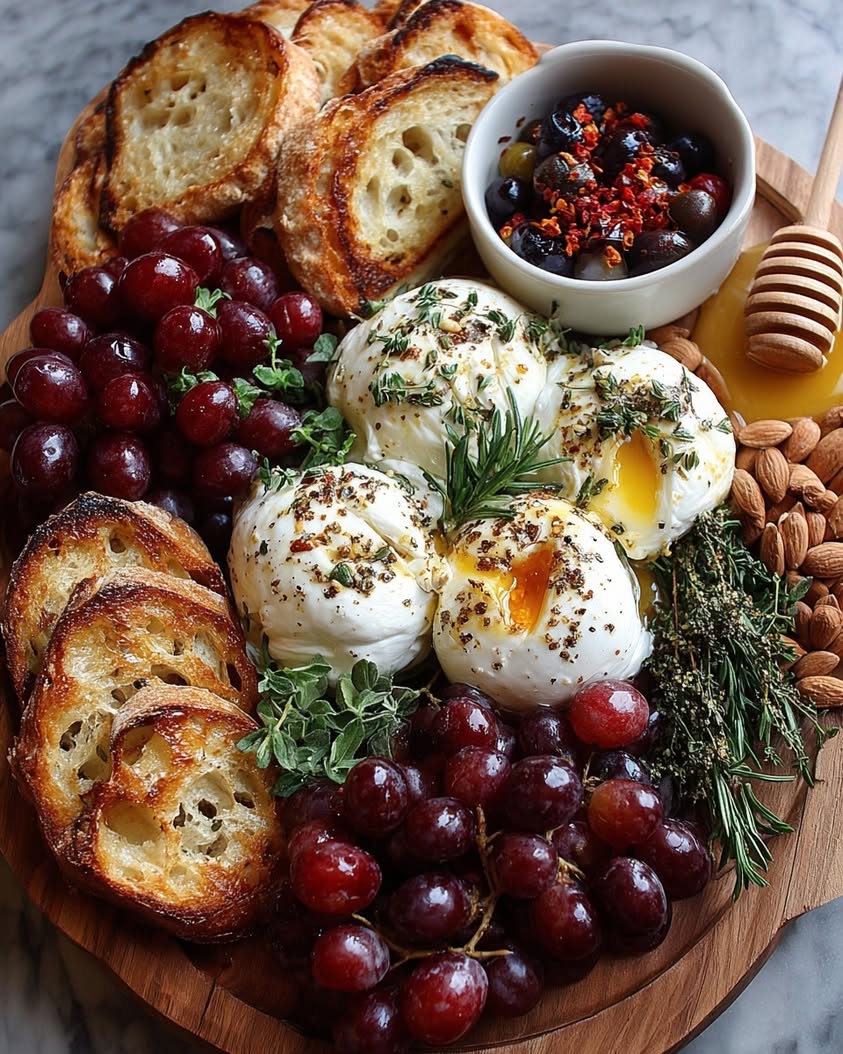
Burrata & Roasted Grape Winter Hosting Board: The Ultimate Crowd-Pleasing Appetizer
Creating a stunning and delicious winter hosting board can feel like a challenge. However, this Burrata and Roasted Grape Winter Hosting Board solves that problem beautifully. It combines creamy, luxurious cheese with sweet, caramelized fruit for a truly show-stopping appetizer. Moreover, it feels festive and special without requiring hours of complicated kitchen work. This board is your secret weapon for effortless entertaining.
The magic of this board lies in its perfect balance of flavors and textures. You get the cool, rich creaminess of burrata cheese paired with warm, jammy roasted grapes. Additionally, salty cured meats, crunchy nuts, and crisp crackers create a full sensory experience. Consequently, every bite is a little different and completely satisfying. This Burrata and Roasted Grape Winter Hosting Board is not just food; it’s a centerpiece that sparks conversation.
Imagine presenting this to your guests. The deep purple grapes glisten next to the snowy white burrata. Furthermore, vibrant herbs and an array of accompaniments fill the board with color and life. It’s a recipe that looks as incredible as it tastes. Ultimately, this board is designed to make you look like a hosting pro with minimal stress. Let’s dive into how to build your own unforgettable winter charcuterie masterpiece.
Quick Recipe Highlights
- Flavor Profile: This board delivers a sophisticated sweet and savory dance. The roasted grapes become intensely sweet and slightly tart, which perfectly cuts through the rich, milky fat of the burrata. Salty prosciutto and sharp cheeses add depth, while a drizzle of honey and balsamic glaze ties all the elements together harmoniously.
- Texture: Experience a wonderful contrast in every bite. You encounter the sublime creaminess of the burrata’s center, the pop of roasted grape skin, the satisfying crunch of toasted bread and nuts, and the delicate chew of cured meats. This variety keeps your palate engaged and makes the board endlessly interesting to eat.
- Aroma: As the grapes roast, your kitchen fills with a warm, fruity, and caramelized scent that is utterly inviting. When combined with the earthy aroma of fresh rosemary, the nutty smell of toasted bread, and the mild lactic fragrance of the cheese, it creates an olfactory preview of the deliciousness to come.
- Visual Appeal: This board is a feast for the eyes before you even take a bite. The contrast between the white burrata, deep purple grapes, rosy prosciutto, and green herbs is stunning. Arranging the components with intention creates a lush, abundant, and artful presentation that impresses guests instantly.
- Skill Level Needed: This is an accessible recipe for all skill levels. Essentially, the most technical task is roasting grapes, which simply involves tossing them in oil and seasoning. The rest is about artful arrangement. Therefore, even a beginner cook can achieve spectacular, professional-looking results with this guide.
- Special Equipment: You need very little special gear. A baking sheet, parchment paper, a good chef’s knife, and a large wooden board or platter are the core tools. A small saucepan for warming honey or reducing balsamic is helpful but optional. Ultimately, the focus is on quality ingredients, not complicated equipment.
Recipe Overview
- Difficulty Level: We rate this Burrata and Roasted Grape Winter Hosting Board as “Easy” for several compelling reasons. First, there is no intricate cooking technique involved beyond basic roasting. Second, assembly is intuitive and forgiving; there is no wrong way to arrange delicious food. Finally, most components require minimal to no preparation, allowing you to focus on presentation.
- Category: This recipe falls squarely into the appetizer and entertaining category. It is designed for sharing and grazing, making it ideal for parties, holiday gatherings, or a special night in. Furthermore, it can easily serve as a light meal or a luxurious snack with a glass of wine. Its versatility is a key part of its appeal.
- Cuisine: This board draws inspiration from Italian and Mediterranean culinary traditions, known for their celebration of simple, high-quality ingredients. Burrata hails from Italy, and the use of cured meats, olives, and good olive oil is classic to the region. However, the concept of a abundant, composed board is a modern, global entertaining trend.
- Cost: Creating this board is a moderate investment that delivers high perceived value. The burrata and quality cured meats are the primary cost drivers. Fortunately, you can balance this with affordable items like nuts, grapes, and crackers. Strategically, a little of the expensive ingredients goes a long way visually and flavor-wise.
- Season: This is the quintessential winter hosting board. Hearty nuts, rich cheese, and roasted fruit embody cozy, cold-weather flavors. Grapes are at their peak sweetness in late fall and winter. Additionally, the board’s warm colors and comforting elements make it perfect for holiday parties, New Year’s Eve, or any festive winter gathering.
- Occasion: This board is incredibly versatile for occasions. It is perfect for holiday cocktail parties, as an elegant starter before a dinner party, or for a romantic at-home date night. It also works wonderfully for a girls’ night in or as the centerpiece for a wine tasting. Essentially, it elevates any gathering.
Why You’ll Love This Recipe
You will adore the taste and texture appeal of this Burrata and Roasted Grape Winter Hosting Board. Each component is carefully chosen to create a harmonious bite. The burst of sweet, warm grape against the cool, creamy cheese is a revelation. Meanwhile, salty, savory elements like prosciutto and olives reset your palate. Consequently, you experience a delightful rollercoaster of flavors that never becomes monotonous. The variety ensures that every guest finds their favorite combination, making the board universally appealing.
The convenience and preparation benefits are enormous. You can roast the grapes ahead of time, and most other items come ready to arrange. Therefore, your active work time is minimal, freeing you to enjoy your own party. Assembly is creative and stress-free; there’s no perfection required. This approach makes entertaining feel less like a chore and more like a fun, artistic project. Ultimately, you get a stunning result without kitchen burnout.
Consider the nutritional advantages as well. This board offers a better balance than many traditional appetizers. Grapes provide antioxidants and vitamins. Nuts contribute healthy fats and protein. Cheese offers calcium and protein. By including fruits, nuts, and high-quality proteins, you provide sustained energy. Guests can enjoy indulgent flavors while also making nourishing choices. It’s a win-win for both taste and well-being.
The social and entertaining value of this board cannot be overstated. It acts as a beautiful centerpiece that encourages conversation and interaction. People naturally gather around it, creating a relaxed and communal atmosphere. It accommodates various dietary preferences easily; guests can avoid items they don’t like. This inclusive aspect makes everyone feel considered. A great hosting board is more than food; it’s an experience that brings people together.
Finally, this Burrata and Roasted Grape Winter Hosting Board is cost-effective and accessible. You control the budget by selecting where to splurge and where to save. For instance, use one excellent cheese and complement it with more affordable crackers. Seasonal grapes are inexpensive, and their transformation through roasting feels luxurious. The recipe uses readily available ingredients from any well-stocked grocery store. You create restaurant-worthy elegance without the restaurant price tag.
Historical Background and Cultural Significance
The concept of shared platters has ancient roots across many cultures. From Mediterranean mezze to Spanish tapas, the idea of eating communally from a central dish is a timeless tradition. The modern “charcuterie board” or “hosting board” evolved from these practices, particularly influenced by French and Italian culinary customs. These boards traditionally focused on preserved meats, hence the name “charcuterie.” However, contemporary interpretations have expanded dramatically to include cheeses, fruits, nuts, and various accompaniments, reflecting a more global and inclusive palate.
Burrata cheese itself has a rich, though relatively recent, history. It originated in the Puglia region of Italy in the early 20th century as a clever way to use up the scraps of mozzarella production. Cheesemakers would create a pouch from fresh mozzarella and fill it with soft, creamy stracciatella and cream. The name “burrata” literally means “buttered” in Italian, a nod to its rich, buttery texture. Initially a local secret, burrata gained international fame in the latter part of the 20th century and is now a beloved staple in gourmet markets and restaurants worldwide.
The practice of roasting grapes is a technique that amplifies their natural sweetness and complexity. While grapes have been cultivated for millennia, roasting them as a preparation method speaks to modern culinary trends that seek to deepen flavor through simple techniques. This process caramelizes the sugars in the grapes, creating a jammy, intense condiment that pairs wonderfully with fatty cheeses and meats. It represents a bridge between ancient fruit cultivation and contemporary, flavor-forward cooking methods.
Combining these elements on a winter hosting board is a celebration of seasonal abundance and communal dining. The board format honors the historical tradition of sharing while allowing for personal customization. It reflects a desire for authentic, ingredient-driven food that doesn’t sacrifice elegance or convenience. This Burrata and Roasted Grape Winter Hosting Board is a perfect example of how old-world ingredients and new-world presentation can come together to create something truly special for modern gatherings.
Ingredient Deep Dive
Let’s start with the star: Burrata Cheese. Burrata is a fresh Italian cheese made from mozzarella and cream. The outer shell is solid mozzarella, while the inside contains stracciatella and cream, giving it an irresistibly creamy, rich center. Culturally, it’s a testament to Italian cheesemaking ingenuity, transforming simple ingredients into luxury. Nutritionally, it provides protein, calcium, and fats. For the best selection, choose burrata that is stored in water and feels heavy for its size; it should be consumed within a day or two of purchase for peak freshness. If unavailable, a high-quality fresh mozzarella or even a creamy goat cheese can stand in, though the texture will differ.
Red Grapes are the other hero. We recommend using seedless varieties like Red Flame or Crimson for ease. Roasting them concentrates their sugars, creating a warm, jammy texture that contrasts beautifully with the cheese. Grapes have a long history of cultivation dating back thousands of years and are symbols of abundance in many cultures. They are a good source of vitamins C and K, and antioxidants like resveratrol. Select bunches that are firm, plump, and firmly attached to their stems. Store them unwashed in the refrigerator until ready to use. While red grapes are ideal, black grapes or even small heirloom tomatoes can be roasted for a similar effect.
Prosciutto is our recommended cured meat. This dry-cured Italian ham is sliced paper-thin and offers a delicate, salty, savory flavor that complements the sweet grapes and rich cheese. Its production is an art form, often taking over a year. It provides protein and is typically gluten-free. Look for Prosciutto di Parma or San Daniele for quality. For substitutions, try other cured meats like Spanish jamón serrano, soppressata, or even a high-quality salami. Arrange it in loose ribbons or folds to add visual height and make it easy to pick up.
Marcona Almonds are a premium choice for this board. These Spanish almonds are shorter, rounder, sweeter, and often fried in olive oil and salted. They add a crucial crunchy, salty, buttery element. Their history is tied to the Mediterranean region. They offer healthy monounsaturated fats, vitamin E, and magnesium. If you cannot find Marcona almonds, regular toasted almonds, walnuts, or pecans are excellent alternatives. Toasting any nut yourself in a dry pan will exponentially increase their flavor.
The supporting cast is equally important. A high-quality Extra Virgin Olive Oil for drizzling should be fruity and peppery. A thick, syrupy Balsamic Glaze adds a sweet-tart punch. Fresh Rosemary, either used in roasting or as a garnish, provides an aromatic, piney note. Finally, a variety of Crackers and Breads, like crostini, water crackers, or seeded crisps, offer a neutral base for all the toppings. Choose a mix of textures and shapes for visual and culinary interest.
Common Mistakes to Avoid
- Using Room Temperature Burrata Straight from the Fridge: Serving burrata ice-cold numbs its delicate flavor and hardens its creamy texture. Always allow it to sit at room temperature for at least 30 minutes before serving. This simple step allows the cheese to soften and its full, milky sweetness to shine through.
- Overcrowding the Roasting Pan with Grapes: If you pile grapes on top of each other, they will steam instead of roast. You want caramelization, not mush. Spread them in a single layer on the baking sheet with a little space between clusters. This ensures even heat circulation and perfect, blistered skins.
- Skipping the Seasoning on the Grapes: Tossing grapes with just oil is a missed opportunity. Always add salt and pepper. A pinch of salt enhances their natural sweetness, while black pepper adds a subtle, sophisticated warmth. You can also add fresh rosemary sprigs to the pan for infused aroma.
- Arranging the Board Too Early: If you assemble the entire board hours ahead, the crackers can become stale from proximity to moist ingredients, and the prosciutto can dry out. Prepare components separately, then artfully assemble everything just before your guests arrive for the freshest presentation.
- Cutting the Burrata Too Soon: The magic of burrata is the dramatic, creamy spill when you cut into it. Do this at the last possible moment, right on the board in front of your guests if you can. Pre-cutting it causes the lovely center to leak out and lose its visual impact.
- Forgetting Texture Variety: A board with only soft ingredients (cheese, grapes) feels monotonous. Ensure you include multiple crunchy elements: toasted bread, crisp crackers, whole nuts. This contrast is key to an engaging eating experience and elevates your board from good to exceptional.
- Using a Dull Knife for Slicing: A dull knife will mash delicate burrata and tear prosciutto instead of slicing it cleanly. Use a very sharp chef’s knife or a serrated bread knife for clean cuts through the cheese and a sharp paring knife for any other prep. It makes a noticeable difference.
- Neglecting the “Drizzle” Elements: The olive oil and balsamic glaze are not mere garnishes; they are essential flavor components that tie the board together. Drizzle them generously over the burrata and grapes just before serving. Their acidity and fat balance the richness of the cheese and meat perfectly.
Essential Techniques
Roasting Grapes is the core cooking technique here. Why is it important? Roasting transforms firm, juicy grapes into tender, concentrated flavor bombs with caramelized edges. To master it, toss stem-on grape clusters lightly in olive oil, salt, and pepper. Spread them in a single layer on a parchment-lined sheet. Roast at 400°F until the skins are slightly blistered and wrinkled, and juices begin to pool. The common pitfall is overcrowding, which leads to steaming. Visual cues for success are puckered skins and a fragrant, jammy aroma filling your kitchen.
Arranging the Board is an artful technique that impacts both presentation and functionality. It’s important because we eat with our eyes first. To master it, start by placing your largest items (burrata bowl, small dishes for olives) as anchors. Then, build outwards, grouping similar items together for visual appeal. Create height with folded meats and fill gaps with nuts and herbs. A common pitfall is placing wet items directly on crackers, making them soggy. Visual success looks abundant, colorful, and inviting, with clear pathways for guests to easily access each component.
Tempering Cheese is a simple but crucial technique for flavor. Serving cheese straight from the fridge suppresses its aroma and hardens its texture. Therefore, allowing burrata to come to room temperature is essential. To do it, remove the cheese from its packaging and water, place it on a plate, and let it sit out for 30-60 minutes before serving. The pitfall is leaving it out too long, especially in a warm room, which can cause it to over-soften. The perfect visual cue is a cheese that yields gently to the touch but still holds its shape.
Pro Tips for Perfect Burrata & Roasted Grape Winter Hosting Board
Warm your honey slightly before drizzling. Gently heat honey in a microwave or saucepan for 10-15 seconds until it becomes fluid. This makes it easier to drizzle in elegant threads over the cheese and fruit, and the subtle warmth enhances the other components.
Make your own crostini for superior flavor and texture. Slice a baguette, brush with olive oil, and toast in the oven until golden. Homemade crostini is sturdier and more flavorful than many store-bought crackers, providing a perfect base for the creamy burrata.
Add a fresh, bright element to cut the richness. Scatter some microgreens, arugula, or fresh basil leaves over the board just before serving. This adds a pop of color and a peppery, fresh note that balances the salty, sweet, and creamy elements beautifully.
Use small bowls or ramekins strategically. Place messy or small items like olives, nuts, or jam in small containers. This keeps the board tidy, prevents flavors from mingling too much, and adds visual depth and structure to your arrangement.
Consider a flavored salt for finishing. A pinch of flaky sea salt or a smoked salt over the burrata and roasted grapes just before serving can elevate the entire board with a final layer of complex seasoning.
Don’t forget a cheese knife or spreader. Place an appropriate knife directly on the board next to the burrata. This small detail makes it easy and elegant for guests to serve themselves without struggling.
Balance colors and shapes intentionally. Alternate clusters of dark grapes with white cheese and pink meat. Use round nuts next to linear crackers. Thoughtful placement creates a board that is photographically stunning and inviting.
Prepare a backup of key items. If you’re serving a crowd, have a small reserve of roasted grapes, crackers, and nuts ready to refill the board as it gets eaten. This keeps the presentation looking abundant throughout the event.
Variations and Adaptations
Explore regional variations to tailor your board. For a French twist, replace burrata with a ripe Camembert or Brie and use figs instead of grapes. A Spanish-inspired board could feature Manchego cheese, Marcona almonds, and quince paste alongside the roasted grapes. For a Middle Eastern flair, add dips like hummus or baba ganoush, along with pita bread and za’atar-spiced olives. These adaptations let you travel the world through your charcuterie board while keeping the core concept intact.
Seasonal adaptations keep your board relevant year-round. In spring, swap roasted grapes for roasted asparagus spears and fresh strawberries. A summer board might feature fresh peaches, heirloom tomatoes, and a light goat cheese. For autumn, roasted figs, pears, and a sharp cheddar with apple slices would be perfect. The winter version, with its roasted grapes and rich cheese, is ideal for the holidays. Always lean on what is fresh and at its peak for the best flavor.
Dietary modifications are straightforward. For a gluten-free board, ensure all crackers and breads are certified gluten-free. For a dairy-free or vegan version, omit the burrata and use a high-quality vegan cashew cheese or a flavorful olive tapenade as the centerpiece. Increase the variety of roasted vegetables, nuts, and fruits. For nut allergies, use seeds like pumpkin or sunflower seeds for crunch. Always label components if serving guests with allergies.
Experiment with flavor variations by changing your seasonings and accompaniments. Add a sprinkle of chili flakes or a drizzle of hot honey over the roasted grapes for a spicy kick. Incorporate different herbs like thyme or sage during roasting. Include a small dish of grainy mustard, fig jam, or onion confit for guests to add as they wish. A board is a canvas for your creativity, so don’t be afraid to mix and match based on your personal preferences.
Serving and Presentation Guide
Mastering plating techniques turns food into art. Start with a large, beautiful wooden board, slate, or marble platter as your canvas. Place your anchor items first: the bowl of burrata and any small dishes for dips or olives. Build outwards from these points, creating little “neighborhoods” of ingredients. Group all the meats together, cluster the grapes, and pile the crackers in a few spots. This organized chaos looks abundant but intentional, making it easy for guests to navigate.
Garnishing ideas add the final touch of polish. Fresh rosemary or thyme sprigs are classic and aromatic. Edible flowers provide a stunning pop of color. A final drizzle of high-quality olive oil and balsamic glaze over the burrata and grapes just before serving makes everything glisten. A sprinkle of flaky sea salt or cracked black pepper adds texture and highlights the ingredients. Remember, garnishes should be edible and enhance the overall flavor profile.
Consider traditional and modern accompaniments. Traditional pairings include crusty bread, cornichons, and whole-grain mustard. Modern twists might include dark chocolate chunks, spiced nuts, or unique fruit pastes. Offer a variety of bread and cracker textures—some crispy, some chewy, some seeded. This ensures there’s a perfect vehicle for every topping combination. The goal is to provide a journey of tastes and textures that delights and surprises.
Wine and Beverage Pairing
Selecting wine pairings can enhance the experience. A light, sparkling Prosecco or Champagne is a fantastic choice; its acidity and bubbles cut through the richness of the cheese and cleanse the palate. A medium-bodied Pinot Noir with its red fruit notes complements the roasted grapes and doesn’t overpower the burrata. For white wine lovers, a crisp Sauvignon Blanc or a slightly oaky Chardonnay pairs beautifully with the creamy cheese and salty meats. Ultimately, choose wines you enjoy, as the board’s variety can handle many different profiles.
Non-alcoholic alternatives are just as important. Offer a sparkling water with a twist of citrus or a few fresh berries. A tart pomegranate spritzer or a ginger-based mocktail can stand up to the bold flavors. For a warm option, a mulled cider or spiced tea aligns perfectly with the winter theme. Providing thoughtful non-alcoholic options ensures all guests feel included and can enjoy a special beverage with their food.
Consider temperature and serving suggestions. Serve white and sparkling wines well-chilled. Red wines should be served slightly below room temperature. For non-alcoholic beverages, have both chilled and room temperature options available. Place drinks nearby but not on the food board to avoid spills. Encourage guests to try different pairings and discover their own favorite combinations, as the interactive nature of the board extends to the drinks.
Storage and Shelf Life
Understanding storage methods is key to food safety and avoiding waste. Any leftover roasted grapes can be stored in an airtight container in the refrigerator for up to 4 days. They are delicious cold on salads or yogurt. Leftover burrata, however, does not store well once opened; it’s best consumed immediately. Any unused, unopened burrata should stay in its water in the refrigerator and be used by the date on the package. Cured meats can be rewrapped tightly in plastic and refrigerated for 2-3 days.
Recognize signs of spoilage. Burrata that smells sour or ammonia-like, or has a slimy texture, should be discarded. Mold on cheeses (unless it’s a blue cheese) is a sign to throw it away. Grapes that become excessively mushy or develop an off odor are past their prime. When in doubt, follow the golden rule: if you’re unsure, it’s safer to throw it out. Proper storage from the start maximizes freshness and shelf life.
Reheating is generally not needed, but you can briefly warm leftover roasted grapes in a microwave or oven if desired. Do not attempt to reheat or refreeze the cured meats or cheese. The board components are best enjoyed fresh, which is why planning your quantities carefully is part of successful hosting. Any extra crackers or nuts can be stored at room temperature in sealed containers to maintain their crunch.
Make Ahead Strategies
A smart prep timeline reduces day-of stress. The day before your event, wash and dry your grape clusters. You can also roast the grapes a day ahead; let them cool completely, then store them covered in the fridge. Bring them to room temperature or warm slightly before serving. Toast any crostini or baguette slices and store them in an airtight container at room temperature. Gather all your serving platters, bowls, and utensils. This advance work makes assembly a quick and enjoyable final step.
Understand the quality impact of prepping ahead. Roasted grapes hold up very well and may even develop deeper flavor overnight. Toasted bread will stay crisp in a sealed container. The items you should always do fresh are: cutting the burrata, arranging the cured meats (to prevent drying), and placing crackers (to prevent sogginess). By separating the tasks, you preserve the ideal texture and presentation of each component without last-minute rushing.
Final assembly tips ensure peak freshness. About 30 minutes before guests arrive, take the burrata out of the fridge to temper. Arrange all your dry and room-temperature components on the board. At the very last minute, add the burrata, fold the prosciutto onto the board, and tuck in the crackers. Finally, drizzle with oil and glaze, and add any fresh herb garnishes. This staged approach guarantees your Burrata and Roasted Grape Winter Hosting Board looks and tastes impeccable.
Scaling Instructions
Halving the recipe is simple for a smaller gathering. Use one ball of burrata, one small bunch of grapes, and reduce other components proportionally. You can use a smaller board or even a large plate. The roasting time for the grapes may be slightly less, so keep an eye on them. This is perfect for an intimate dinner for two or a small family treat.
Doubling or tripling for a crowd requires some adjustments. Use multiple baking sheets to roast the grapes in batches, ensuring they aren’t overcrowded. Consider using two or three smaller boards instead of one enormous one to create multiple serving stations and prevent congestion. Buy burrata balls individually packaged so you can place them on different boards. For very large parties, you might transition to a more cost-effective cheese as a base and use burrata as a premium accent.
Consider equipment and timing modifications. When scaling up, your oven space and baking sheets become limiting factors. Plan your grape roasting in batches. You may need to purchase or borrow additional serving boards and utensils. The assembly time will increase, so enlist help to make the process fun and efficient. The core principles of balance, variety, and presentation remain the same, no matter the size.
Nutritional Deep Dive
This board offers a diverse macro breakdown. The burrata and nuts provide healthy fats and protein, which promote satiety. The grapes and any accompanying jams or honey contribute carbohydrates for energy. The cured meats add more protein and fat. Because it’s a grazing meal, the exact macros per serving vary based on what each person chooses. However, the combination provides a more balanced profile than many carbohydrate-heavy appetizer spreads.
Examine the micronutrient analysis. Grapes and any fresh herbs provide vitamins C and K, along with antioxidants. Nuts are excellent sources of vitamin E, magnesium, and fiber. Cheese offers calcium and phosphorus for bone health. Olives contribute iron and vitamin E. While some components are high in sodium (cured meats, some cheeses), the overall variety encourages moderation and provides a range of beneficial nutrients from whole foods.
Consider the board’s role in weight management. The key is mindful eating. The protein and fat from cheese and nuts help you feel full faster, potentially preventing overeating. Because you assemble each bite, you naturally eat more slowly, allowing your brain to register fullness. To make it more weight-conscious, increase the proportion of grapes and other fresh fruits/vegetables, choose leaner cured meats, and opt for whole-grain crackers. Portion control is inherent in the shared, small-bite nature of the board itself.
Dietary Adaptations
For a gluten-free board, this recipe is easily adaptable. Simply ensure all bread, crackers, and crostini are certified gluten-free. Many stores carry excellent gluten-free baguettes for toasting or a variety of crispbreads. Double-check that any cured meats are gluten-free, as some may contain fillers. All other core ingredients—burrata, grapes, nuts, olives—are naturally gluten-free, making this a safe and delicious option for those with celiac disease or gluten sensitivity.
Creating a dairy-free or vegan version is very achievable. Omit the burrata and use a creamy vegan cheese made from cashews or almonds as the centerpiece. Alternatively, a flavorful white bean dip, hummus, or olive tapenade can serve as the rich, savory anchor. Ensure any crackers are vegan (no butter or honey). Load up on roasted vegetables, marinated artichoke hearts, and a variety of nuts and fruits. The roasted grapes remain a perfect sweet component for this adaptation.
For low-carb or keto diets, focus on the high-fat, low-carb components. The burrata, cheeses, and cured meats are excellent. Increase the variety of cheeses and meats. Include olives and other low-carb vegetables like cucumber slices, bell pepper strips, and radishes. Replace the grapes with lower-carb berries like blackberries or raspberries in moderation, or omit the fruit entirely. Skip the crackers and offer cheese crisps or simply enjoy the toppings with a fork.
Troubleshooting Guide
If your board has texture issues, identify the culprit. Soggy crackers mean a wet ingredient was placed directly on them; always use small bowls for jams and olives. Limp prosciutto means it was arranged too far in advance; fold it on just before serving. If the burrata seems rubbery, it was likely served too cold; remember to temper it. If grapes are mushy instead of blistered, they were overcrowded on the pan. Each texture problem has a simple prevention strategy for next time.
Addressing flavor balance is subjective but important. If the board tastes too rich or heavy, you likely need more acidic or fresh elements. Add a dish of cornichons, a squeeze of lemon over the burrata, or more fresh herbs. If it tastes bland, check your seasoning; the roasted grapes and burrata both need a good pinch of salt. A drizzle of aged balsamic can also add needed sweetness and acidity. Taste components as you arrange them to ensure each one is flavorful on its own.
Solving equipment challenges often involves improvisation. No wooden board? Use a large platter, a clean cutting board, or even arrange components directly on a marble countertop section. No ramekins for olives? Use small glass cups or even hollowed-out lemon halves. If you lack a sharp knife for the burrata, use dental floss or fishing line for a clean cut. The spirit of a hosting board is rustic abundance, so don’t let a lack of “perfect” tools stop you from creating something beautiful.
Recipe Success Stories
Community feedback on this Burrata and Roasted Grape Winter Hosting Board has been overwhelmingly positive. Many home cooks report that it has become their go-to party trick, earning compliments and requests for the “recipe.” A common theme is how it impresses guests with its elegance while being deceptively simple to execute. Several readers have mentioned that it helped them overcome entertaining anxiety, as the flexible format is forgiving and always yields a beautiful result.
Variation successes from readers are inspiring. One person used it for a Thanksgiving appetizer, adding roasted cranberries to the mix. Another made a summer version with roasted cherries and peaches. A reader hosting a book club used mini individual boards for each guest, which was a huge hit. These adaptations show the recipe’s fantastic versatility. The core concept of a creamy cheese paired with roasted fruit is a template that can be adapted endlessly to suit any season or theme.
Photography tips from those who have made it emphasize natural light. Photograph your board near a window to capture the glisten on the grapes and the creamy white of the burrata. Shoot from directly above to show the full, abundant layout, and also take a close-up side angle to highlight the textures. A simple, neutral background lets the food’s colors pop. Many find that this board is so visually stunning it practically photographs itself, making it a favorite for social media sharing.
Frequently Asked Questions
Can I make any part of this board ahead of time? Absolutely. You can roast the grapes up to a day in advance and store them covered in the fridge. Toast any bread or crostini ahead and store at room temperature. Wash and prep any fruits or vegetables. Assemble the full board just before serving to keep crackers crisp and meats fresh.
What can I use instead of burrata? If you can’t find burrata, a ball of fresh mozzarella is the closest substitute. For a different flavor profile, try a creamy goat cheese log, a small wheel of baked Brie, or even a rich blue cheese like Gorgonzola Dolce. The key is choosing a cheese with a soft, spreadable texture.
How do I keep the crackers from getting soggy? The best strategy is to place crackers in a few separate piles on the board, away from directly touching wet ingredients like grapes or cheese. You can also add them to the board in stages, replenishing as needed, or serve them in a basket on the side.
Is it okay to serve the burrata cold? It’s not ideal. Burrata served straight from the fridge has muted flavor and a firmer, less luscious texture. Always let it sit out at room temperature for 30-60 minutes before serving. This “{“success”:true,”message”:”Recipe created successfully”,”post_id”:8928,”tasty_recipe_id”:8928,”shortcode”:” Print
Burrata & Roasted Grape Winter Hosting Board
Description
A stunning and elegant winter appetizer board featuring creamy burrata, sweet roasted grapes, and an array of seasonal accompaniments perfect for hosting guests.
Ingredients
For the Crust:
- 1 large burrata cheese (8 oz)
- 2 cups red seedless grapes
- 1 tbsp olive oil
- 1 tsp fresh thyme leaves
- 1/4 tsp sea salt
- 1/4 tsp black pepper
- 1 baguette, sliced and toasted
- 1/2 cup walnuts, toasted
- 1/4 cup honey
- 2 tbsp balsamic glaze
- Fresh rosemary sprigs for garnish
Instructions
1. Prepare the Crust:
- Preheat oven to 400°F (200°C). Toss grapes with olive oil, thyme, salt, and pepper on a baking sheet. Roast for 15-20 minutes until grapes are slightly shriveled and juicy.
- While grapes roast, slice baguette and toast until golden. Toast walnuts in a dry skillet over medium heat for 3-5 minutes, stirring frequently.
- Arrange toasted baguette slices on a large board or platter. Place burrata in the center, gently tearing it open to expose the creamy interior.
- Scatter roasted grapes and toasted walnuts around the burrata. Drizzle honey and balsamic glaze over the board.
- Garnish with fresh rosemary sprigs. Serve immediately, allowing guests to assemble bites with bread, burrata, grapes, and toppings.
Notes
You can customize the seasonings to taste.

I’m Billy, a classically trained culinary school graduate from The Culinary Institute of America with over 12 years in the restaurant industry and over 19 years of cooking experience.