
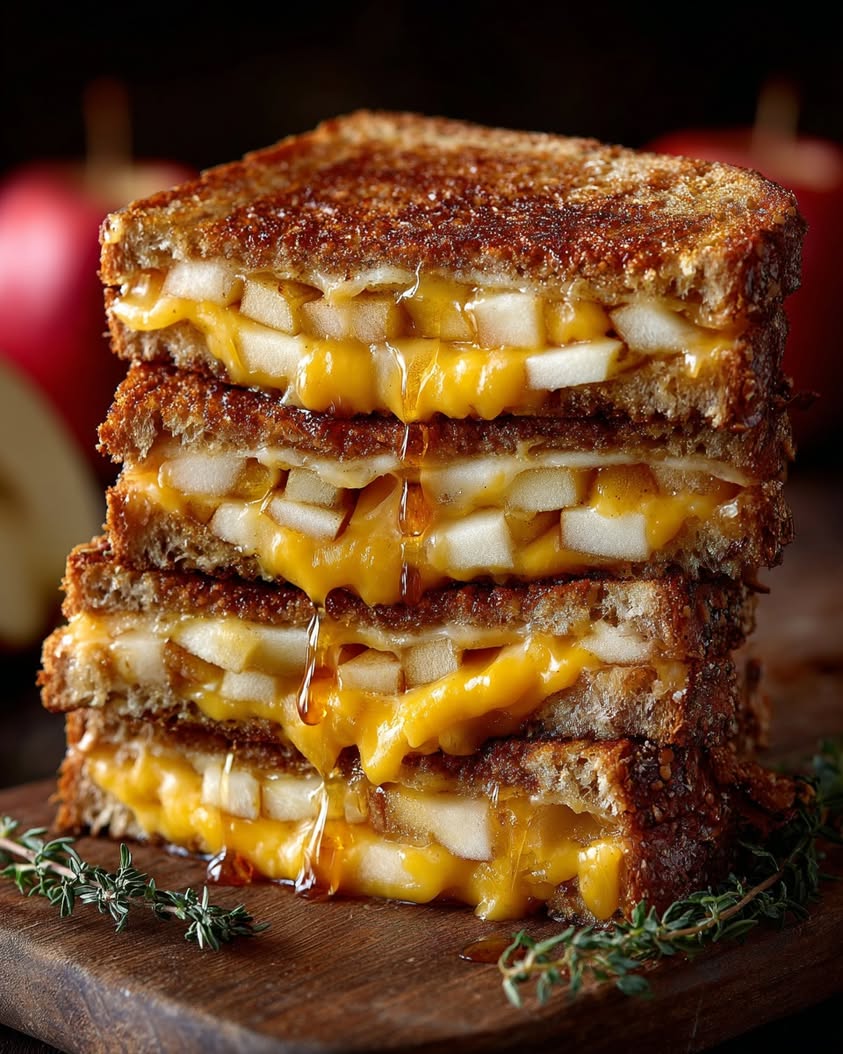
Caramelized Apple & Cheddar Grilled Cheese with Honey Mustard: The Ultimate Sweet and Savory Sandwich
Imagine biting into a classic comfort food and discovering a world of complex flavor. This Caramelized Apple Cheddar Grilled Cheese is not your average sandwich. It transforms a simple lunch staple into a gourmet experience. The secret lies in the perfect balance of sweet, savory, tangy, and creamy elements. Each component works in harmony to create a truly unforgettable meal.
This recipe elevates the humble grilled cheese sandwich to new heights. You start with crisp, tart apples cooked in butter until they become golden and tender. Then you layer them with sharp cheddar cheese on hearty bread. Finally, you add a swipe of honey mustard for a tangy kick. The result is a symphony of textures and tastes that will delight your palate. This Caramelized Apple Cheddar Grilled Cheese is perfect for a quick yet impressive lunch, a cozy dinner, or even a sophisticated appetizer.
Furthermore, this dish showcases how simple ingredients can create extraordinary results. The process is straightforward and requires no special skills. Consequently, even novice cooks can achieve restaurant-quality food at home. The aroma of cooking apples and toasting bread will fill your kitchen with an irresistible scent. Ultimately, this Caramelized Apple Cheddar Grilled Cheese promises a comforting and delicious experience in every bite.
Quick Recipe Highlights
- Flavor Profile: This Caramelized Apple Cheddar Grilled Cheese offers a masterful blend. You get the sweet depth of caramelized apples against the sharp, salty punch of aged cheddar. Meanwhile, the honey mustard introduces a bright, tangy note that cuts through the richness perfectly.
- Texture: Experience a delightful contrast in every bite. Expect a crispy, golden-brown exterior from the perfectly grilled bread. Inside, you will find the soft, yielding melt of the cheese and the tender, slightly firm bite of the warm apples.
- Aroma: The cooking process releases an incredible fragrance. First, you will smell the sweet, buttery scent of apples caramelizing. Then, the nutty aroma of toasting bread and melting cheese takes over, creating a truly mouthwatering atmosphere.
- Visual Appeal: This sandwich is a feast for the eyes. The cross-section reveals beautiful layers: golden bread, oozy orange cheddar, and soft, golden-brown apples. It looks rustic, hearty, and incredibly inviting.
- Skill Level Needed: This is an accessible recipe for all cooks. You only need basic skills like slicing, sautéing, and grilling a sandwich. Therefore, it is perfect for beginners looking to impress or experienced cooks seeking a quick, satisfying meal.
- Special Equipment: No fancy tools are required. A good non-stick skillet or griddle is essential for even cooking and caramelization. Additionally, a sturdy spatula will help you flip the sandwich without losing the delicious filling.
Recipe Overview
- Difficulty Level: We rate this Caramelized Apple Cheddar Grilled Cheese as easy. The steps are simple and sequential. You caramelize the apples first, then assemble and grill the sandwich. There are no complicated techniques, but attention to heat control ensures perfect results.
- Category: This recipe fits multiple categories beautifully. It is primarily a lunch or light dinner option. Moreover, it works wonderfully as a hearty snack or a featured item on a soup and sandwich menu. It blurs the line between everyday food and something special.
- Cuisine: This dish is a modern American fusion creation. It takes the classic American grilled cheese sandwich and incorporates fruit and condiment elements popular in contemporary gastropub cuisine. It reflects a trend towards balancing sweet and savory flavors.
- Cost: This is a very cost-effective meal. The ingredients are basic and often already in your kitchen. Apples, bread, cheese, butter, and mustard are inexpensive staples. You can make a gourmet-tasting meal for a fraction of the cost of eating out.
- Season: This Caramelized Apple Cheddar Grilled Cheese shines in the fall. That is when apples are at their peak freshness and flavor. However, it is truly a year-round comfort food. Use stored apples or different varieties to enjoy it any season.
- Occasion: This sandwich is versatile for many occasions. It is perfect for a quick weeknight dinner. It also makes a fantastic lunch for guests or a cozy weekend treat. Serve it alongside soup for a complete, comforting meal.
Why You’ll Love This Recipe
First, the taste and texture are utterly captivating. This Caramelized Apple Cheddar Grilled Cheese delivers a complex flavor profile that keeps you coming back for more. The initial sweetness of the apple mellows into a deep, rich caramel note. Then the sharp cheddar cheese provides a savory, salty counterpoint that is incredibly satisfying. The honey mustard adds a necessary spark of acidity that brightens the entire sandwich. Every bite offers a perfect harmony, making it far more interesting than any standard grilled cheese.
Next, consider the convenience and preparation benefits. This recipe comes together in about twenty-five minutes from start to finish. You likely have most ingredients already in your refrigerator and pantry. The process is simple and therapeutic: slicing apples, watching them caramelize, and assembling the sandwich. It is a cooking project that feels rewarding without being stressful. Consequently, it is an ideal choice for busy days when you want something delicious without a huge time investment.
Additionally, this Caramelized Apple Cheddar Grilled Cheese offers some nutritional advantages. Apples provide dietary fiber and vitamin C. Using a whole-grain or sourdough bread adds more fiber and complex carbohydrates. Cheese offers protein and calcium. When you use real butter and quality ingredients, you create a satisfying meal that can curb cravings. It is a more balanced option than a plain cheese sandwich because you incorporate fruit directly into the main component.
Furthermore, the social and entertaining value is high. This sandwich looks and tastes impressive. Serving it to friends or family feels special. You can easily double or triple the recipe to feed a crowd. Pair it with a simple salad or soup for a complete lunch spread. It is a guaranteed conversation starter because people are often delighted by the apple and cheese combination. It shows thoughtfulness and a little culinary flair.
Finally, the cost-effectiveness and accessibility are major wins. You do not need expensive or hard-to-find ingredients. A block of cheddar, a couple of apples, and a loaf of good bread are affordable. This recipe teaches you how to elevate inexpensive staples into something extraordinary. It is a fantastic way to cook delicious food on a budget. Everyone can enjoy this gourmet sandwich experience without a gourmet price tag.
Historical Background and Cultural Significance
The story of the Caramelized Apple Cheddar Grilled Cheese is a modern tale of culinary innovation. It does not have centuries of history like its components. Instead, it represents a contemporary trend in American comfort food. The classic grilled cheese sandwich gained mass popularity in the United States during the Great Depression. It was an affordable, filling meal made with government-provided cheese and bread. Meanwhile, the combination of apples and cheddar cheese is an old tradition, particularly in the Northeastern United States and England, where it was common to serve apple pie with a slice of cheddar.
Culturally, this recipe signifies a shift in how we view simple foods. It takes two humble, iconic items—the grilled cheese and the apple-with-cheddar pairing—and merges them. This reflects a broader food movement that values elevating everyday meals with thoughtful ingredients and techniques. The Caramelized Apple Cheddar Grilled Cheese is a product of the gastropub era, where chefs began reimagining classic dishes with gourmet twists for a casual setting. It celebrates rustic, hearty flavors in an accessible format.
The evolution of this recipe is ongoing. The basic concept of fruit and cheese in a sandwich is not new. However, the specific technique of caramelizing the apples first adds a layer of depth that defines the modern version. This step transforms the raw fruit into a rich, jam-like component that integrates seamlessly with the melted cheese. Different cooks add their own spins, using various apple types, cheese blends, or artisan breads. The core idea remains constant: a perfect balance of sweet and savory in a warm, crispy package.
Regional variations are already emerging. In areas known for apple production, like Washington State or New York, local heirloom varieties might be used. In Vermont, a sharp aged cheddar would be the obvious choice. Some versions might include a layer of ham or turkey, turning it into a fuller meal. Others might use a different condiment, like fig jam or onion marmalade, instead of honey mustard. This adaptability is a testament to the recipe’s solid foundation. The Caramelized Apple Cheddar Grilled Cheese is a canvas for regional tastes and personal preference.
Ingredient Deep Dive
Apples: The apple is a central character in this Caramelized Apple Cheddar Grilled Cheese. Culturally, apples symbolize knowledge, health, and harvest across many societies. Nutritionally, they are a great source of fiber, particularly pectin, and vitamin C. For this recipe, choose a firm, tart variety that holds its shape when cooked. Granny Smith is the classic choice for its bright acidity. However, Honeycrisp or Pink Lady also work beautifully, offering a balance of sweet and tart. Store apples in the refrigerator to maintain crispness. If you must substitute, a firm pear can work in a pinch, though the flavor profile will change.
Cheddar Cheese: Cheddar cheese originated in the English village of Cheddar in the 12th century. It is now one of the world’s most popular cheeses. Its sharp, tangy flavor is crucial for cutting through the sweetness in this sandwich. Nutritionally, cheddar provides high-quality protein, calcium, and phosphorus. For the best melt and flavor, buy a block of aged, sharp cheddar and grate it yourself. Pre-shredded cheese contains anti-caking agents that can hinder melting. Store cheese wrapped tightly in the refrigerator. For substitutions, Gruyère offers a fantastic melt and nutty flavor, while Gouda provides a milder, creamier option.
Bread: Bread is the foundation, providing structure and texture. A sturdy, thick-sliced bread is non-negotiable for a Caramelized Apple Cheddar Grilled Cheese. Sourdough brings a pleasant tang and holds up well to the filling. A hearty country white or a seeded whole grain also works excellently. Avoid thin, soft sandwich bread, as it will become soggy and tear. The bread should be substantial enough to contain the juicy apples and melted cheese without falling apart. For storage, keep bread at room temperature in a bread box or freeze slices for longer freshness. Always toast from frozen for best results.
Honey Mustard: Honey mustard acts as the flavor bridge in this recipe. It combines the sweetness of honey with the pungent heat of mustard seeds, creating a condiment that ties the sweet apples and savory cheese together. Making your own is simple: mix equal parts Dijon mustard and honey. This allows you to control the sweetness and tang. Store-bought varieties are perfectly fine. The mustard adds moisture and a vital acidic component that prevents the sandwich from being too cloying. For a different twist, try whole grain mustard for texture or a spicy brown mustard for more heat.
Butter: Butter is the workhorse ingredient for both caramelizing and grilling. It provides rich flavor and promotes even, golden browning. Using unsalted butter lets you control the salt level in the dish. For caramelizing the apples, butter helps conduct heat and encourages the Maillard reaction, creating those deep, complex flavors. For grilling the sandwich, a generous coat on the outside of the bread ensures a crisp, flavorful crust. For a dairy-free version, a high-quality plant-based butter or even mayonnaise can be used for grilling the exterior, though the flavor will differ slightly.
Common Mistakes to Avoid
- Using the Wrong Apple Variety: Choosing a soft, mealy apple like a Red Delicious is a common error. These apples turn to mush when cooked. Instead, always select a firm, tart apple such as Granny Smith. It will soften but maintain some texture and provide necessary acidity.
- Overcrowding the Pan When Caramelizing: Do not dump all the apple slices into a small pan. This causes them to steam instead of caramelize. Cook them in a single layer with space between. This allows moisture to evaporate and promotes proper browning for the best flavor.
- Using Pre-Shredded Cheese: Pre-shredded cheese contains cellulose or other anti-caking agents. These additives prevent the cheese from melting into a smooth, creamy pool. For the ultimate melt in your Caramelized Apple Cheddar Grilled Cheese, always grate your cheese from a block just before using.
- Applying Heat Too High: Cranking the burner to high will burn the butter and bread before the cheese melts. Use medium-low to medium heat. This allows time for the heat to penetrate the sandwich, warming the apples and melting the cheese thoroughly without scorching the exterior.
- Neglecting the Condiment Layer: Skipping the honey mustard is a missed opportunity. This layer is not just for flavor; it also adds moisture. Without it, the sandwich can taste dry. The mustard’s acidity is essential for balancing the rich cheese and sweet apples.
- Pressing Down Too Hard: While a gentle press can be good, mashing the sandwich flattens it and can squeeze out the precious filling. Use a spatula to apply light, even pressure. The goal is contact for even browning, not to compress the sandwich into a dense disk.
- Not Letting the Sandwich Rest: Cutting into the Caramelized Apple Cheddar Grilled Cheese immediately sends molten cheese and hot apple filling everywhere. Let it rest on a cutting board for 1-2 minutes after cooking. This allows the cheese to set slightly, making for a cleaner, safer cut.
- Using Soggy or Thin Bread: Bread that is too thin or soft cannot support the hearty filling. It will become soggy and may tear. Always opt for a thick slice of a sturdy bread like sourdough. This ensures a satisfying crunch that contrasts with the soft interior.
Essential Techniques
Caramelizing Apples: This technique is foundational for building deep flavor. Caramelization is the process of cooking sugars until they brown, creating complex, nutty, and sweet notes. Start by melting butter in a pan over medium heat. Add uniformly sliced apples in a single layer. Do not stir constantly; let them sit to develop color. After a few minutes, toss them. They are done when golden brown and tender but not mushy. The key is patience and avoiding overcrowding, which leads to steaming.
Building the Sandwich for Optimal Melt: Proper assembly ensures every bite is perfect. First, spread honey mustard on the inside of both bread slices. This creates a barrier against sogginess. Next, place a layer of grated cheese on one slice. Then, add the warm caramelized apples, spreading them evenly. Top the apples with another layer of cheese. The cheese on both sides acts as glue, melting into the bread and apples to hold everything together securely.
Grilling to Golden Perfection: This technique delivers the signature crispy exterior. Butter the outside of the assembled sandwich generously. Preheat your skillet or griddle over medium-low heat. Place the sandwich in the pan and cook, uncovered, until the first side is golden brown, usually 3-4 minutes. Press gently with a spatula. Then flip carefully and cook the second side until equally golden and the cheese is fully melted. The low-and-slow approach is crucial for thorough melting without burning.
Pro Tips for Perfect Caramelized Apple Cheddar Grilled Cheese
First, let your caramelized apples cool slightly before assembling the sandwich. Hot apples can make the bread soggy upon contact. A brief cooling period prevents this while still allowing the cheese to melt beautifully from the residual heat.
Second, experiment with cheese blends. While sharp cheddar is classic, try mixing in a little Gruyère for nuttiness or Monterey Jack for extra creaminess. A blend can create a more complex and interesting melted cheese experience.
Third, consider using mayonnaise instead of butter on the bread’s exterior. Mayonnaise has a higher smoke point and contains oil and eggs, which can create an incredibly crisp, evenly browned crust that rivals any diner-style grilled cheese.
Fourth, add a pinch of salt to your apple slices while they caramelize. Salt is a flavor enhancer that will make the natural sweetness of the apples pop, creating a more balanced and pronounced caramelized flavor.
Fifth, if you have a panini press or a sandwich grill, use it. These devices apply even top and bottom heat, ensuring a perfectly melted interior and crispy exterior without the need to flip. It streamlines the process beautifully.
Sixth, for an extra flavor dimension, sprinkle a few fresh thyme leaves over the apples as they caramelize, or add a very thin layer of caramelized onions beneath the apple layer. These small additions introduce herbal or savory notes that complement the main flavors.
Seventh, always grate your own cheese. The difference in melting quality between pre-shredded and freshly grated cheese is dramatic. Freshly grated cheese melts smoothly and cohesively, creating the ideal oozy texture.
Eighth, serve immediately. A Caramelized Apple Cheddar Grilled Cheese is at its peak within minutes of leaving the pan. The contrast between the crispy crust and the molten, creamy interior is part of the magic that diminishes as it sits.
Variations and Adaptations
Regional Variations: Across different locales, this sandwich adapts to local tastes. In the American South, you might find a version with pimento cheese instead of plain cheddar. In France, a brie and apple sandwich is common, which could be adapted by using brie and adding a caramelizing step. A British twist might involve a strong Stilton cheese for a more pungent flavor profile paired with a chutney instead of mustard.
Seasonal Adaptations: While apples are a fall favorite, this recipe is adaptable year-round. In spring, try using thin slices of pear or a handful of fresh strawberries. In summer, grilled peaches or nectarines make a fantastic sweet substitute. For winter, dried figs rehydrated in a little apple cider can provide a deep, chewy sweetness.
Dietary Modifications: For a gluten-free Caramelized Apple Cheddar Grilled Cheese, use your favorite certified gluten-free bread. Ensure it is a sturdy variety. For dairy-free, use a high-quality vegan cheddar-style cheese and plant-based butter. The caramelized apples and honey mustard remain naturally dairy-free, making adaptation straightforward.
Flavor Variations: The flavor canvas is broad. Add a few slices of crispy bacon or ham for a saltier, heartier sandwich. Incorporate a spread of fig jam or onion marmalade alongside the mustard. A sprinkle of chopped walnuts or pecans inside the sandwich adds a delightful crunch and nutty flavor that pairs perfectly with the apples and cheese.
Texture Modifications: To alter texture, consider using a different bread. A rye bread introduces a denser, earthier base. A brioche bun makes it richer and softer. For extra crunch inside, add a handful of arugula or spinach after grilling, letting the residual heat just wilt the greens.
Presentation Alternatives: Think beyond the whole sandwich. For a party, make mini versions using slider buns or small slices of baguette. You can also deconstruct it into an appetizer: serve crostini topped with caramelized apples, a slice of melted cheddar, and a drizzle of honey mustard.
Serving and Presentation Guide
Plating Techniques: Presentation elevates this humble sandwich. Slice the Caramelized Apple Cheddar Grilled Cheese diagonally to showcase the beautiful layers of filling. Place the halves slightly overlapping on the plate. This creates visual interest and makes it easier to eat. Use a simple, neutral-colored plate to let the golden-brown sandwich be the star.
Garnishing Ideas: A light garnish adds a professional touch without complicating things. A small sprinkle of flaky sea salt over the top enhances all the flavors. A few microgreens or a single arugula leaf adds a pop of color and freshness. A light drizzle of honey or balsamic glaze around the plate can be elegant for a dinner presentation.
Traditional Accompaniments: This sandwich pairs classically with soup. A creamy tomato soup is the timeless partner, but also consider a roasted butternut squash soup or a simple broth-based chicken noodle. The sandwich is hearty enough to stand alone but becomes a complete, comforting meal with soup.
Modern Serving Suggestions: For a modern lunch, serve it with a bright, acidic side salad. A simple mix of bitter greens with a lemon vinaigrette cuts through the richness perfectly. Sweet potato fries or crispy kale chips also make fun and flavorful contemporary sides.
Temperature Considerations: Serve the sandwich immediately after cooking. The cheese should be molten and the bread crisp. If serving with soup, ensure the soup is piping hot. A cold side salad provides a refreshing temperature contrast that is very pleasing to the palate.
Portion Control Tips: This recipe makes two generous sandwiches. For a lighter meal, use slightly less cheese and apple filling and pair it with a large salad. You can also use smaller bread slices, like from a demi-baguette, to create a more snack-sized portion perfect for an appetizer or part of a larger spread.
Wine and Beverage Pairing
Wine Pairings: The sweet and savory profile of the Caramelized Apple Cheddar Grilled Cheese calls for versatile wines. A dry Riesling is an excellent choice. Its acidity matches the mustard and cuts the fat, while its stone fruit notes complement the apple. Alternatively, a light-bodied Pinot Noir with its red fruit flavors and low tannins won’t overpower the sandwich. For a richer option, a chilled hard cider is a thematic and delicious pairing, echoing the apple flavor in beverage form.
Non-Alcoholic Alternatives: Sparkling apple cider or a crisp ginger beer are fantastic non-alcoholic pairings. Both provide effervescence that cleanses the palate. A tart lemonade or freshly brewed iced tea with a hint of honey also works wonderfully, balancing the sandwich’s richness with their refreshing qualities.
Coffee/Tea Pairings: For a brunch or lunch setting, coffee and tea are great. A medium-roast coffee with low acidity won’t clash with the sandwich’s flavors. A black tea like English Breakfast or Earl Grey pairs nicely, especially with a touch of milk. The tannins in the tea contrast well with the creamy cheese.
Temperature Considerations: Serve white wines, ciders, and non-alcoholic sparklers well chilled. Red wines should be served slightly below room temperature. Iced beverages should be cold but not watered down; use large ice cubes to prevent dilution. Hot coffee and tea should be served piping hot to provide a comforting contrast.
Serving Suggestions: Always serve beverages in appropriate glassware to enhance the experience. A wine glass for Riesling, a pint glass for cider, or a tall glass for iced tea. Presentation of the drink contributes to the overall enjoyment of the meal, making a simple lunch feel more special.
Storage and Shelf Life
Storage Methods: The Caramelized Apple Cheddar Grilled Cheese is best enjoyed immediately. If you must store it, let it cool completely to room temperature first. Then, wrap it tightly in aluminum foil or place it in an airtight container. This prevents the bread from becoming excessively soggy from trapped steam.
Temperature Requirements: Store the wrapped sandwich in the refrigerator. Do not leave it at room temperature for more than two hours due to the dairy content. The cool environment of the fridge will preserve it for a short time, though the texture will suffer.
Container Recommendations: An airtight container is superior to plastic wrap alone, as it provides structure and prevents the sandwich from being crushed. If using foil, you can reheat it directly in that wrapper. For the caramelized apples alone, store them in a separate sealed container in the fridge for up to 4 days.
Signs of Spoilage: Discard the sandwich if you notice any off odors, especially a sour smell. Visible mold on the bread or cheese is an absolute sign it must be thrown away. If the apples develop an excessively slimy texture, they have spoiled and should not be consumed.
Reheating Instructions: Reheating is possible but will not restore the original perfect crispness. The best method is in a toaster oven or conventional oven at 350°F for about 10 minutes, or until heated through. This will re-crisp the exterior somewhat. Avoid the microwave, as it will make the bread very soggy and chewy.
Freezing Guidelines: Freezing is not recommended for the assembled, cooked sandwich. The bread and apples will become mushy upon thawing. However, you can freeze the caramelized apple component separately in a freezer bag for up to 2 months. Thaw in the refrigerator before using to assemble a fresh sandwich.
Make Ahead Strategies
Prep Timeline: You can prepare components up to two days in advance. Caramelize the apples and let them cool. Store them in a sealed container in the refrigerator. Grate your cheese and keep it in a separate container. Having these elements ready streamlines the assembly process dramatically when you are ready to eat.
Storage Between Steps: Keep the pre-cooked apples and grated cheese refrigerated until assembly. Do not pre-assemble the sandwiches and refrigerate them, as the bread will absorb moisture from the filling and become unpleasantly soggy. The key is to keep the components separate until just before cooking.
Quality Impact Assessment: Making the apples ahead has minimal impact on flavor; in fact, it can deepen as the flavors meld. The texture may soften slightly, but this is not detrimental in a melted sandwich. Freshly grated cheese is always best, but cheese grated a day ahead is perfectly acceptable if kept cold.
Assembly Tips: When ready to cook, take the apples and cheese from the fridge. Let the apples come closer to room temperature for 10-15 minutes; this prevents the cold filling from slowing the cheese melt. Assemble the sandwiches just before they go into the hot pan for the best textural results.
Reheating Guidelines: If you have pre-cooked apples, you can warm them slightly in a microwave or pan before adding them to the sandwich. This helps the sandwich heat through more evenly. However, do not use piping hot apples, as noted before, to avoid sogginess.
Fresh Element Additions: If prepping ahead, consider adding a fresh element at the end. A handful of crisp arugula added after grilling, or a fresh drizzle of honey mustard on the plate, can introduce a bright, fresh component that contrasts with the pre-made elements.
Scaling Instructions
Halving the Recipe: Halving this Caramelized Apple Cheddar Grilled Cheese recipe is simple. Use one apple, one and a half to two slices of bread (depending on size), and proportionally less cheese, butter, and mustard. The cooking process remains identical. This is perfect for a solo lunch. Just ensure your pan is the right size so the single sandwich has good contact with the cooking surface.
Doubling or Tripling: For a crowd, double or triple all ingredients linearly. The challenge is cooking multiple sandwiches at once. Use a large griddle or two large skillets. Cook in batches, keeping finished sandwiches warm on a baking sheet in a 200°F oven. Do not overcrowd the pans, as this lowers the temperature and leads to steaming instead of grilling.
Equipment Adjustments: Scaling up requires planning. For more than two sandwiches, a electric griddle or panini press becomes very useful. A large baking sheet is essential for keeping batches warm in the oven. Have multiple spatulas ready for efficient flipping. Ensure you have a large enough bowl for scaling up the apple caramelization step.
Timing Modifications: When cooking multiple sandwiches, the first one might be done before the last one is started. The keep-warm oven method is crucial here. Caramelizing apples in a very large batch may take slightly longer, as you may need to do it in two batches to avoid steaming. Factor this extra time into your prep.
Storage Considerations: If you have leftover components from scaling up, store caramelized apples and grated cheese separately in the fridge for future use. It is better to have a little extra than to run short when cooking for guests. These components can be used in other meals, like omelets or salads.
Nutritional Deep Dive
Macro Breakdown: A typical Caramelized Apple Cheddar Grilled Cheese provides a balance of macronutrients. The bread and apples contribute carbohydrates for energy. The cheese and butter provide fat and protein, which promote satiety. The honey mustard adds minimal sugars. This combination creates a satisfying meal that can keep you full for several hours, especially when made with whole-grain bread.
Micronutrient Analysis: This sandwich offers valuable micronutrients. Cheddar cheese is an excellent source of calcium and phosphorus for bone health, and vitamin B12. Apples provide vitamin C and dietary fiber, particularly pectin, which supports digestive health. Using whole-grain bread adds B vitamins, iron, and additional fiber.
Health Benefits: When prepared with mindful ingredients, this sandwich has benefits. The fiber from apples and whole grains supports digestion and heart health. The protein and fat from cheese help stabilize blood sugar levels after eating. The combination is more nutritionally complete than a plain cheese sandwich, incorporating fruit directly into the main dish.
Dietary Considerations: This is not a low-calorie or low-fat dish. It is a hearty comfort food. Individuals monitoring sodium intake should be mindful of the cheese and mustard. Those with lactose intolerance may need to choose lactose-free cheese. The recipe is naturally nut-free, making it a safe option for many with allergies.
Portion Analysis: One sandwich is a substantial single serving. For a lighter meal, consider sharing one sandwich and pairing it with a large salad. You can also adjust the cheese quantity slightly or use a lighter bread to modify the calorie density while maintaining the core flavors.
Weight Management Tips: To fit this into a balanced diet, focus on the quality of ingredients and portion control. Use a measured amount of cheese (about 1.5 ounces per sandwich). Choose a high-fiber bread. Serve with a large side of non-starchy vegetables, like a green salad or roasted broccoli, to increase volume and nutrients without excessive calories.
Dietary Adaptations
Gluten-Free: For a gluten-free Caramelized Apple Cheddar Grilled Cheese, the only change is the bread. Select a sturdy, certified gluten-free bread. Many artisanal GF breads or even GF sourdough options work well. Ensure all other ingredients, like mustard, are certified gluten-free, as some may contain hidden gluten.
Dairy-Free: Creating a dairy-free version is straightforward. Use a high-quality vegan cheddar-style cheese that melts well. For the butter, use a plant-based alternative for both caramelizing the apples and grilling the sandwich. Popular brands have improved dramatically in flavor and melting properties. The apples and mustard are naturally dairy-free.
Vegan: Follow the dairy-free guidelines above. Additionally, ensure your bread is vegan (no honey, milk, or eggs). Check that your honey mustard is made with an alternative sweetener like agave or maple syrup, or simply mix Dijon mustard with agave nectar to create your own vegan “honey” mustard.
Low-Carb/Keto: For a keto-friendly version, replace the bread with two large, sturdy portobello mushroom caps or use a commercially available keto bread. Use full-fat cheese and butter. Be mindful of the apple’s carb count; use a very small amount of a tart apple, or substitute with a few slices of low-carb fruit like blackberries in moderation.
Paleo: A strict Paleo adaptation is challenging due to the cheese and bread. One option is to treat it as a deconstructed bowl: serve the caramelized apples over a bed of greens with sliced grilled chicken and a mustard vinaigrette, omitting the cheese and bread entirely. For a sandwich-like experience, use grain-free bread alternatives.
Low-FODMAP: For a Low-FODMAP version, use a lactose-free cheddar cheese. Replace the apple with a FODMAP-friendly fruit like a small amount of orange segments or kiwi, though they won’t caramelize the same way. Use a gluten-free bread if sensitive to wheat fructans. Garlic-infused oil can be used for caramelizing if desired, but omit any onion.
Troubleshooting Guide
Texture Issues (Soggy Bread): Soggy bread usually results from apples that are too hot or juicy when assembled, or from undercooking. Solution: Let caramelized apples cool for 5 minutes. Use a slotted spoon to add them, leaving excess juice behind. Also, ensure your pan is hot enough before adding the sandwich to quickly sear the bread’s exterior, creating a barrier.
Flavor Balance (Too Sweet or Too Bland): If your Caramelized Apple Cheddar Grilled Cheese is too sweet, you may have used a very sweet apple{“success”:true,”message”:”Recipe created successfully”,”post_id”:9036,”tasty_recipe_id”:9036,”shortcode”:” Print
Caramelized Apple & Cheddar Grilled Cheese with Honey Mustard
Description
A gourmet twist on a classic grilled cheese, featuring sweet caramelized apples, sharp cheddar, and a tangy honey mustard spread, all grilled to golden perfection.
Ingredients
For the Crust:
- 4 slices of sourdough bread
- 2 tablespoons unsalted butter, divided
- 1 large apple (such as Granny Smith or Honeycrisp), thinly sliced
- 1 tablespoon brown sugar
- 1 cup shredded sharp cheddar cheese
- 2 tablespoons mayonnaise
- 1 tablespoon Dijon mustard
- 1 tablespoon honey
Instructions
1. Prepare the Crust:
- In a skillet over medium heat, melt 1 tablespoon of butter. Add apple slices and brown sugar, cooking for 5-7 minutes until softened and caramelized. Remove from heat and set aside.
- In a small bowl, mix mayonnaise, Dijon mustard, and honey to create the honey mustard spread. Spread evenly on one side of each bread slice.
- On the unspread side of two bread slices, layer half the cheddar cheese, the caramelized apples, and the remaining cheddar. Top with the other bread slices, spread side out.
- Melt the remaining 1 tablespoon of butter in the skillet over medium-low heat. Add sandwiches and cook for 3-4 minutes per side, until bread is golden brown and cheese is melted. Serve warm.
Notes
You can customize the seasonings to taste.

I’m Billy, a classically trained culinary school graduate from The Culinary Institute of America with over 12 years in the restaurant industry and over 19 years of cooking experience.