
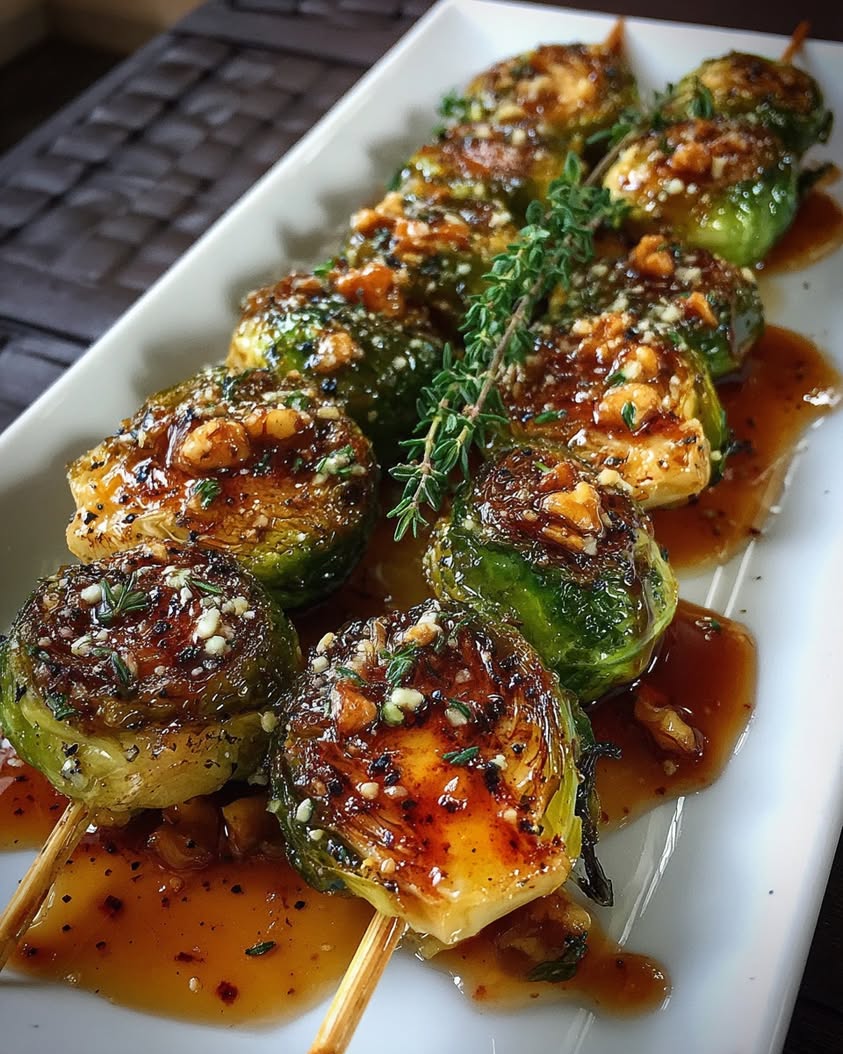
Caramelized Brussels Sprouts Christmas Skewers with Walnut Honey Glaze: Your New Holiday Showstopper
Imagine a holiday appetizer that looks as festive as it tastes. These Caramelized Brussels Sprouts Christmas Skewers with Walnut Honey Glaze are exactly that. Consequently, they transform the humble Brussels sprout into a stunning, shareable centerpiece. Each skewer features perfectly charred and caramelized sprouts, sweet-tart cranberries, and crunchy walnuts, all finished with a glossy, savory-sweet glaze. Ultimately, they are a guaranteed conversation starter at any festive gathering.
The magic of this recipe lies in its beautiful balance. Firstly, the high-heat roasting brings out a deep, nutty sweetness from the Brussels sprouts. Meanwhile, the honey glaze, infused with toasted walnuts, adds a rich, aromatic stickiness that clings to every bite. Finally, the fresh cranberries provide little bursts of bright acidity, cutting through the richness. This dish is a masterclass in combining textures and flavors for a memorable holiday side dish or appetizer.
Moreover, these skewers are surprisingly simple to assemble. They offer a fun, hands-on cooking project that even kids can help with. The presentation on wooden skewers makes them incredibly easy to serve and eat, perfect for a standing cocktail party or a seated dinner. If you are looking for a unique vegetable recipe to elevate your Christmas table, these caramelized Brussels sprouts skewers are your answer.
Quick Recipe Highlights
- Flavor Profile: These skewers deliver a sophisticated sweet and savory experience. The caramelized Brussels sprouts offer a deep, almost nutty flavor, beautifully complemented by the rich Walnut Honey Glaze. Additionally, the pop of fresh cranberry adds a necessary tart contrast, preventing the dish from becoming too cloying.
- Texture: You will enjoy a fantastic textural journey. Expect crispy, slightly charred edges on the sprouts against their tender centers. The toasted walnuts provide a satisfying crunch, while the sticky glaze creates a lovely mouth-coating richness that makes every bite interesting.
- Aroma: As these skewers roast, your kitchen will fill with an irresistible fragrance. The scent of caramelizing vegetables blends with the sweet, nutty aroma of the honey and toasting walnuts. It is a warm, comforting smell that instantly signals a special holiday meal is underway.
- Visual Appeal: These skewers are a feast for the eyes. The vibrant green of the sprouts, deep red of the cranberries, and golden-brown of the walnuts create a classic Christmas color palette. Drizzled with the glossy glaze, they look elegant and professionally crafted on any platter.
- Skill Level Needed: This is an accessible recipe for most home cooks. The techniques involve simple chopping, skewering, and roasting. Importantly, the key to success is monitoring the oven to achieve perfect caramelization without burning, a skill easily mastered on the first try.
- Special Equipment: You only need a few basic tools. Wooden or metal skewers are essential for assembly. Furthermore, a sturdy baking sheet and parchment paper ensure easy cleanup. A small saucepan is needed for the simple two-ingredient glaze.
Recipe Overview
- Difficulty Level: We rate this recipe as easy. The steps are straightforward: prep vegetables, thread onto skewers, roast, and glaze. There is no complex knife work or finicky techniques. However, paying attention to the roasting time is crucial for achieving the signature caramelization on the Brussels sprouts without overcooking the other components.
- Category: This dish brilliantly straddles multiple categories. It functions perfectly as a passed appetizer or a stationary starter on a buffet. Alternatively, it can be served as a standout vegetable side dish alongside your main holiday roast. Its versatility is a major strength.
- Cuisine: While not tied to a specific traditional cuisine, these skewers draw inspiration from modern American holiday cooking. They utilize classic festive ingredients like cranberries and walnuts in an innovative, globally-inspired format. The technique of skewering and glazing has roots in various international grilling traditions, adapted here for the oven.
- Cost: This is a very cost-effective holiday dish. Brussels sprouts and cranberries are typically affordable in season. Walnuts and honey are pantry staples for many. Overall, you can create an impressive platter for a fraction of the cost of store-bought hors d’oeuvres, making it a smart choice for entertaining.
- Season: This recipe is ideal for the late fall and winter holiday season. That is when Brussels sprouts are at their peak sweetness after a frost. Fresh cranberries are also readily available. The warm, roasted flavors are perfectly suited to cold-weather gatherings and comfort food menus.
- Occasion: Obviously, these skewers are a natural fit for Christmas Eve, Christmas dinner, or holiday parties. However, they also work wonderfully for Thanksgiving, New Year’s Eve, or any festive winter potluck. Their elegant presentation makes them suitable for both casual and formal events.
Why You’ll Love This Recipe
First and foremost, the taste and texture are utterly captivating. Each bite of these Caramelized Brussels Sprouts Christmas Skewers with Walnut Honey Glaze delivers a complex symphony. You get the savory, deeply caramelized flavor of the sprouts, the earthy crunch of walnuts, the bright zing of cranberry, and the sweet, sticky finish of the glaze. Consequently, it satisfies multiple cravings at once, moving beyond a simple vegetable side into a truly special culinary experience. Even Brussels sprout skeptics are often converted by this delicious preparation.
From a convenience standpoint, this recipe is a host’s dream. The prep can be done in advance; you can wash, trim, and halve the sprouts hours ahead. Similarly, the skewers can be fully assembled and held on a tray in the refrigerator until ready to roast. When guests arrive, you simply pop them in the oven. The hands-off cooking time allows you to focus on other dishes or socializing. Furthermore, the skewer format eliminates the need for serving utensils at a party—guests can simply grab and go.
Nutritionally, this dish packs a powerful punch. Brussels sprouts are a superfood, loaded with vitamins C and K, fiber, and antioxidants. Walnuts contribute healthy omega-3 fatty acids and protein. Using honey as a natural sweetener is a better choice than refined sugars. Therefore, you are serving a festive dish that is also genuinely good for you. It is a way to indulge in holiday flavors without completely abandoning healthy eating principles, a balance many appreciate during the indulgent season.
The social and entertaining value cannot be overstated. These skewers are interactive and visually stunning, guaranteed to draw compliments. They encourage sharing and conversation as guests admire the presentation. Because they are easy to eat while holding a drink, they are perfect for cocktail-style parties. Serving a beautiful, homemade appetizer like this shows thoughtfulness and effort, making your guests feel specially cared for. It is a simple way to elevate the entire feel of your gathering.
Finally, this recipe is remarkably cost-effective and accessible. Compared to expensive cheeses, smoked fish, or prepared meats often used for holiday starters, the ingredients here are humble and affordable. You likely already have olive oil, salt, and pepper. The skewers are reusable if you use metal, or very inexpensive if using wood. This means you can create a showstopping dish that feeds a crowd without straining your holiday budget. Accessibility is key; the ingredients are found in any standard grocery store, requiring no special trips.
Historical Background and Cultural Significance
The story of the Brussels sprout itself is fascinating. This miniature cabbage is believed to have been cultivated in ancient Rome, but it gets its name from Brussels, Belgium, where it became popular in the 16th century. For centuries, it was a staple of Northern European winter cuisine, valued for its hardiness in cold weather. However, its reputation in America suffered for decades due to widespread overcooking, leading to bitter, sulfurous flavors. The modern renaissance of the Brussels sprout, particularly through roasting and caramelization, is a relatively recent culinary trend that has transformed it into a beloved vegetable.
Skewering food for cooking and serving is a practice with ancient, global roots. From Middle Eastern kebabs to Japanese kushiyaki, the technique is universal. Using skewers for festive presentation, especially during holidays, taps into this long tradition of communal, shareable food. The “Christmas skewer” concept applies this timeless format to seasonal ingredients, creating a bridge between ancient cooking methods and contemporary holiday tables. It represents a fun, modern twist on serving vegetables, moving them from a piled side dish to an intentional, elegant presentation.
The evolution of this specific recipe reflects broader food trends. The shift towards roasting vegetables at high heat to caramelize their natural sugars became mainstream in the late 1990s and early 2000s. Combining sweet and savory elements, like honey with vegetables, is a hallmark of modern “New American” cuisine. The use of fresh cranberries and walnuts immediately signals a holiday dish, as these are iconic ingredients of North American Thanksgiving and Christmas celebrations. Therefore, this recipe is a fusion of technique, trend, and tradition.
Regional variations of this concept are easy to imagine. In the Mediterranean, one might use olive oil, lemon, and pine nuts. An Asian-inspired version could feature a glaze of soy sauce, ginger, and sesame seeds. The basic formula—caramelized vegetable + nut + sweet-tart fruit + glaze on a stick—is incredibly adaptable. This particular version with walnut and honey leans into classic North American holiday flavors, making it a perfect fit for a traditional Christmas meal while still feeling fresh and innovative.
Ingredient Deep Dive
Brussels Sprouts are the star. Historically, they are a cultivar of the same species as cabbage, broccoli, and kale. They grow on a long stalk and are named for the Belgian capital where they gained fame. Nutritionally, they are powerhouse, offering high levels of Vitamin K for bone health, Vitamin C for immunity, and fiber for digestion. When selecting, choose firm, bright green sprouts with tightly packed leaves; avoid any that are yellowing or soft. Store them unwashed in a plastic bag in the refrigerator’s crisper drawer. For a substitution, broccoli florets or cauliflower cut into large chunks can work, though the cooking time may vary slightly.
Fresh Cranberries provide the essential tart contrast. Native to North America, they were used by Indigenous peoples for food, dye, and medicine long before the first Thanksgiving. They are packed with proanthocyanidins, compounds that help prevent urinary tract infections and offer antioxidant benefits. Choose berries that are firm, shiny, and deep red in color; they should bounce when dropped. Refrigerate them in their original bag or a sealed container. Do not substitute with dried cranberries here, as they will burn. If necessary, halved red grapes or pomegranate arils can offer a similar pop of sweetness and color, though the flavor profile will change.
Walnuts are one of the oldest tree foods, cultivated for thousands of years. They are particularly rich in alpha-linolenic acid, a plant-based omega-3 fat, and antioxidants that support brain health. For the best flavor, always buy raw walnuts and toast them yourself. Toasting unlocks their oils and intensifies their nutty taste. Look for plump, light-colored kernels and avoid any that look shriveled or smell rancid. Store walnuts in an airtight container in the refrigerator or freezer to prevent their oils from going rancid. Pecans or hazelnuts would be excellent substitutes, each bringing a different but complementary flavor.
The Walnut Honey Glaze is deceptively simple. Honey, one of humanity’s first sweeteners, has antibacterial properties and contains trace amounts of minerals. Using a good-quality, raw honey will provide the best flavor. The glaze works by thinning the honey slightly and infusing it with the toasted, earthy flavor of the walnuts. The fat from the walnuts helps the glaze cling to the vegetables and creates a beautiful sheen. For a vegan adaptation, maple syrup or agave nectar can replace the honey. The key is to use a liquid sweetener that will thicken and caramelize slightly when brushed on the hot skewers.
Common Mistakes to Avoid
- Using Wooden Skewers Without Soaking: If you use wooden skewers, you must soak them in water for at least 30 minutes before assembly. Otherwise, the exposed ends in the oven will char and potentially burn, creating a bitter smell and risking a fire hazard. Soaking ensures they stay intact during roasting.
- Crowding the Baking Sheet: Placing the skewers too close together on the pan will cause them to steam instead of roast. Steaming prevents the crucial caramelization on the Brussels sprouts, leaving them soggy and less flavorful. Always ensure there is space between each skewer for hot air to circulate.
- Overcooking the Cranberries: Fresh cranberries can burst and become too mushy if roasted for the full time alongside the sprouts. The recipe timing adds them partway through to ensure they just soften and release a little juice without disintegrating. Adding them at the beginning is a common error.
- Neglecting to Halve the Brussels Sprouts: Leaving the sprouts whole means the insides will be undercooked by the time the outside is nicely browned. Halving them creates a flat surface that makes direct contact with the hot pan, leading to perfect caramelization and ensuring even cooking throughout.
- Skipping the Walnut Toasting Step: Using raw, untoasted walnuts will result in a less flavorful glaze and a softer nut texture on the skewers. Toasting is a quick step that exponentially increases the nutty aroma and crunch, deeply enhancing the overall flavor profile of the dish.
- Applying the Glaze Too Early: Brushing the honey glaze on at the beginning of cooking will cause it to burn in the high heat of the oven. The sugar in honey caramelizes quickly and can turn acrid. Always apply the glaze in the final few minutes of cooking or immediately after removing the skewers from the oven.
- Underseasoning the Vegetables: Brussels sprouts need ample seasoning. Relying solely on the sweet glaze for flavor will leave the sprouts themselves tasting bland. Be generous with salt and pepper on the oiled sprouts before roasting to build layers of flavor from the inside out.
- Using Old or Rancid Walnuts: Nuts contain oils that can spoil. Using walnuts that have been stored too long at room temperature can impart a bitter, off-flavor to the entire dish, ruining the delicate balance of the glaze. Always taste a nut before using it in the recipe.
Essential Techniques
Properly Trimming and Halving Brussels Sprouts is fundamental. First, cut off the dry, woody stem end. Then, peel away any loose or discolored outer leaves. Finally, slice the sprout in half from top to bottom, through the stem. This creates a flat plane that will sear beautifully against the hot baking sheet, maximizing caramelization. The halving also ensures the dense core cooks through at the same rate as the leaves. A common pitfall is cutting them unevenly, leading to some pieces burning while others remain hard. Aim for halves that are roughly the same size for consistent roasting.
Mastering the Dry-Toast for Walnuts is a quick but vital step. Place raw walnut pieces in a dry skillet over medium heat. Shake the pan frequently for 3-5 minutes until they become fragrant and take on a slightly darker color. The goal is to release their aromatic oils, not to burn them. Visual and olfactory cues are key: you will smell a rich, nutty aroma, and see a light golden-brown hue. The moment you smell them, they are done. Immediately transfer them to a plate to stop the cooking. Over-toasting leads to bitterness that will permeate your glaze.
Creating the Infused Walnut Honey Glaze is simple but technique-sensitive. After toasting the walnuts, you immediately add the honey to the still-warm pan. The residual heat gently warms the honey, making it more fluid and allowing it to absorb the toasted walnut flavor. You do not need to boil or cook the honey vigorously; just stir until the mixture is warm and combined. If the pan is too hot, it can scorch the honey. The perfect glaze should be pourable but still thick, coating the back of a spoon. This infusion process is what elevates the glaze from plain honey to a complex, nutty sauce.
Achieving Oven Caramelization requires attention to heat and space. Preheat your oven fully; a lukewarm oven will steam the vegetables. Toss the halved sprouts in enough oil to coat them lightly but thoroughly—this conducts heat and promotes browning. Arrange them cut-side down on the parchment-lined sheet with space between. This direct contact with the hot surface is what creates the delicious, browned crust. Do not move them for the first 10-12 minutes of roasting. Peeking and stirring too early prevents the Maillard reaction (caramelization) from occurring. Patience here yields the best flavor.
Pro Tips for Perfect Caramelized Brussels Sprouts Christmas Skewers
For extra-crispy sprouts, ensure they are completely dry after washing. Any residual water will create steam, hindering the caramelization process. Pat them thoroughly with a clean kitchen towel or salad spinner before tossing with oil.
Consider par-cooking very large Brussels sprouts. If your sprouts are bigger than a walnut, you can blanch them in boiling salted water for 2-3 minutes before shocking in ice water, drying, and halving. This guarantees a tender interior.
Add a flavor boost to the oil. Infuse your olive oil with a smashed garlic clove or a sprig of rosemary for 30 minutes before tossing with the sprouts. Remove the solids before using to avoid burning.
Use the convection setting if your oven has it. The circulating air promotes even browning and can help achieve a more consistent caramelization on all sides of the skewered ingredients.
Make a double batch of the Walnut Honey Glaze. Serve the extra on the side for dipping. Guests love having a little extra sauce, and it ensures every bite is perfectly coated.
For a smoky dimension, add a tiny drop of liquid smoke to the olive oil before tossing the sprouts, or use smoked sea salt as a finishing garnish after glazing.
If your cranberries are very tart, toss them with a teaspoon of maple syrup or honey before adding them to the skewers. This will balance their acidity without making them overly sweet.
Let the skewers rest for 5 minutes after glazing and before serving. This allows the glaze to set slightly so it is sticky and gorgeous, not runny.
Variations and Adaptations
For regional variations, explore different flavor profiles. A Mediterranean twist could feature olives, cherry tomatoes, and cubes of halloumi cheese with a lemon-oregano glaze. An Asian-inspired version might include shiitake mushrooms and water chestnuts with a soy-ginger-sesame glaze. A French take could use pearl onions and lardons with a thyme-infused honey. The basic method is a canvas for global flavors, allowing you to tailor the skewers to the theme of your meal or your personal taste preferences.
Seasonal adaptations are simple and encouraged. In spring, use asparagus tips and fresh peas with a minted honey glaze. For summer, try zucchini, bell peppers, and cherry tomatoes with a basil oil finish. In autumn, swap in cubed butternut squash and apples with a sage-brown butter glaze. The Christmas version with cranberries and walnuts is perfect for winter, but the skewer concept works year-round with whatever produce is at its peak.
Dietary modifications are straightforward. For a vegan dish, replace the honey with maple syrup or agave nectar. To make it nut-free, omit the walnuts from the glaze and use toasted pumpkin seeds (pepitas) on the skewers for crunch. For a lower-sugar option, reduce the honey glaze by half and rely more on the natural caramelization of the vegetables for sweetness.
Flavor variations can come from the glaze or the seasoning. Add a pinch of chili flakes or a dash of hot sauce to the glaze for a sweet-heat combination. Stir a tablespoon of balsamic vinegar or pomegranate molasses into the honey for depth. Season the sprouts with smoked paprika, curry powder, or za’atar before roasting to completely change the flavor direction while keeping the beautiful presentation.
Serving and Presentation Guide
Plating techniques can elevate your skewers from simple to stunning. Arrange them in a sunburst pattern on a large circular platter, with the skewer handles pointing outward. Alternatively, line them up neatly on a long rectangular serving dish. For height, place a small bowl of extra dipping glaze in the center and lean the skewers against it. Use a bed of fresh kale leaves, rosemary sprigs, or pomegranate seeds to cover the platter and add color before laying down the skewers. This creates a professional, restaurant-worthy presentation.
Garnishing adds the final touch of freshness and color. A light sprinkle of flaky sea salt (like Maldon) over the glazed skewers just before serving enhances flavor and adds texture. Freshly chopped parsley, chives, or microgreens provide a green contrast. A few extra toasted walnut pieces or pomegranate arils scattered around the platter tie the elements together. For a festive touch, add a few edible gold flakes or a dusting of powdered sugar (though sparingly) for a “snowy” effect.
Traditional accompaniments for these skewers lean into the holiday theme. They pair beautifully with a creamy dip on the side, such as a whipped goat cheese, a lemon-herb yogurt, or a garlic aioli. For a full appetizer spread, serve them alongside a cheese board featuring sharp cheddar and brie, sliced cured meats, and crusty bread. As a side dish, they complement rich mains like roast turkey, honey-glazed ham, or beef tenderloin perfectly, cutting through the richness with their bright acidity.
Wine and Beverage Pairing
Wine pairings should consider the sweet, savory, and slightly bitter elements of the dish. A dry Riesling is an excellent choice, as its acidity matches the cranberries and its slight sweetness complements the honey glaze. Alternatively, a Pinot Noir with its red fruit notes and low tannins won’t clash with the vegetables. For a richer option, an oaked Chardonnay can stand up to the caramelized flavors and nutty notes. The key is to avoid wines that are overly tannic or too sweet, which can fight the balance of the skewers.
Non-alcoholic alternatives can be just as sophisticated. A sparkling apple cider mirrors the festive feel and offers a sweet-tart profile that pairs well. A ginger beer, especially one with a spicy kick, complements the warmth of the dish. For a more refined option, create a mocktail with cranberry juice, soda water, and a rosemary sprig. Iced herbal tea, like hibiscus or peach, can also provide a pleasant, fruity counterpoint without overwhelming the food.
Coffee and tea pairings work wonderfully after the meal or for a daytime gathering. A medium-roast coffee with nutty or chocolatey notes will echo the flavors of the walnuts and caramelization. For tea, consider a spiced chai to complement the holiday spices, or a smoky Lapsang Souchong to match the charred edges of the sprouts. Serve these warm beverages after the appetizer course to cleanse the palate, especially if the skewers are part of a larger holiday brunch or lunch.
Storage and Shelf Life
Storage methods for leftovers are simple but important. First, carefully slide the components off the skewers into an airtight container. This saves space and prevents the wooden skewers from imparting any flavor during storage. You can store the glazed vegetables and nuts together. They will keep in the refrigerator for up to 3 days. I do not recommend storing them assembled on the skewers, as this can make them dry out faster and is less space-efficient in your fridge.
Reheating instructions are crucial for restoring texture. The oven is always best. Spread the leftover skewer components on a baking sheet and warm at 350°F for 5-10 minutes until heated through. This will re-crisp the sprouts better than a microwave. The microwave will make them soggy, though it is faster. If using a microwave, do so in short bursts and expect softer vegetables. Note that the cranberries will be very soft after reheating, and the walnuts may lose some crunch, but the flavors will still be delicious.
Freezing guidelines come with a caveat. You can freeze the unglazed, roasted Brussels sprouts successfully. After roasting and cooling, spread them on a baking sheet to flash-freeze, then transfer to a freezer bag. However, I do not recommend freezing the assembled skewers with cranberries and walnuts, as the cranberries will become mushy and the walnuts soggy upon thawing. The honey glaze also does not freeze well. For best results, freeze only the roasted sprouts and make fresh glaze, adding new cranberries and walnuts when you reheat and serve.
Make Ahead Strategies
Your prep timeline can be spread over two days. On Day 1, wash, trim, and halve all the Brussels sprouts. Store them in a sealed container or zip-top bag with a paper towel to absorb moisture. Toast the walnuts and make the glaze; store the glaze in a jar at room temperature. On the day of serving, assembly takes just 10 minutes. Then roast and glaze. This split method significantly reduces last-minute kitchen stress, allowing you to be present with your guests.
Storage between steps is easy with proper planning. The prepped Brussels sprouts can wait in the fridge for up to 24 hours. The toasted walnuts can be stored at room temperature in an airtight container. The honey glaze can sit in a jar on the counter for a day or two; if it solidifies, gently warm the jar in a bowl of hot water to reliquify. Do not assemble the skewers more than an hour before roasting, as the salt will draw moisture out of the sprouts, making them steam instead of roast.
Assembly tips for advance prep focus on organization. Lay all your skewers on a large baking sheet or tray. Place bowls of your prepped ingredients (sprouts, cranberries, walnuts) within reach. Thread the components in your desired pattern, then cover the entire tray loosely with plastic wrap and refrigerate until ready to roast. This “assembly line” method is efficient and ensures all your skewers are uniform. Just remember to take the tray out of the fridge 15-20 minutes before roasting to take the chill off the ingredients for more even cooking.
Scaling Instructions
Halving the recipe is straightforward for smaller gatherings. Simply divide all ingredient quantities by two. You can still use a full baking sheet; just keep the skewers spaced apart. The roasting time may decrease by a few minutes since there is less mass in the oven, so start checking for doneness around the 15-minute mark. The glaze can be halved easily in a small saucepan. This scaling is perfect for a romantic holiday dinner for two or a small family meal.
Doubling or tripling for a crowd requires slight adjustments. Use multiple baking sheets and rotate them from top to bottom racks halfway through cooking to ensure even browning. You may need to roast in batches if your oven cannot fit multiple sheets with proper air circulation. For the glaze, make it in a larger saucepan. When tripling, consider toasting the walnuts in batches to avoid steaming them in the pan. The key is to maintain the ingredient spacing on the pans; do not overcrowd, even if it means more batches.
Nutritional Deep Dive
The macro breakdown of these skewers is favorable. Each skewer provides a balance of complex carbohydrates from the vegetables, healthy fats from the olive oil and walnuts, and a small amount of plant-based protein from the walnuts and sprouts. The honey adds simple sugars, but because it is used as a glaze rather than a soak, the quantity per serving is moderate. This makes the dish a satisfying appetizer or side that provides sustained energy without the crash associated with more refined carbohydrate-heavy starters.
Micronutrient analysis reveals a wealth of vitamins and minerals. Brussels sprouts are exceptionally high in Vitamin K, crucial for blood clotting and bone health, and Vitamin C for immune function. They also provide folate, potassium, and manganese. Walnuts contribute significant amounts of copper and magnesium. Cranberries add Vitamin C and unique phytonutrients like proanthocyanidins. Together, this dish is a micronutrient powerhouse disguised as a festive treat, supporting overall health during the stressful holiday season.
Dietary Adaptations
For a gluten-free adaptation, this recipe is naturally compliant. All ingredients—Brussels sprouts, cranberries, walnuts, honey, olive oil—are inherently gluten-free. Always check labels on pre-packaged items like honey if you have extreme sensitivity, but generally, no modifications are needed. This makes the skewers a safe and impressive option to serve at gatherings where guests may have celiac disease or gluten intolerance.
For a vegan adaptation, replace the honey in the glaze with an equal amount of maple syrup, agave nectar, or vegan “bee-free” honey. The rest of the recipe is already plant-based. The maple syrup will offer a slightly different, warmer flavor profile but will caramelize beautifully. Ensure your sweetener is of a thick, pourable consistency to mimic the sticky glaze effect. This simple swap makes the dish entirely vegan without sacrificing any of the presentation or core flavors.
For a low-carb or keto adaptation, the main adjustment is the glaze. Replace the honey with a keto-friendly sweetener like monk fruit or erythritol that can be heated. You may need to add a teaspoon of water to help it dissolve. The Brussels sprouts and walnuts are acceptable in moderation on keto, but be mindful of portion size due to the carb content in the sprouts. Omit the cranberries, as they are higher in sugar, or replace them with a single low-carb berry like a raspberry.
Troubleshooting Guide
If your Brussels sprouts are soggy, the issue is likely moisture or overcrowding. Ensure sprouts are thoroughly dried after washing. Do not overcrowd the baking sheet; the skewers need space for moisture to evaporate. If your oven temperature runs low, invest in an oven thermometer. Next time, try roasting at a slightly higher temperature (425°F) and ensure the oven is fully preheated before the pan goes in. Sogginess can also occur if you salt the sprouts too far in advance, drawing out water.
If the glaze burns or becomes too hard, the heat was too high when applying it. Remember, glaze should be applied in the last 3-5 minutes of cooking or after removal from the oven. The residual heat from the food will melt it perfectly. If it hardens too much on contact, warm the glaze slightly before brushing. If it burned on the skewers, you can carefully scrape off the worst bits and brush with a fresh, warm batch of glaze before serving.
If the cranberries burst completely and make a mess, they were either overripe or roasted for too long. Use firm, fresh cranberries. Follow the recipe timing precisely, adding them only in the last 8-10 minutes of cooking. If they still burst, you can roast the skewers without them and simply scatter fresh or lightly roasted cranberries on the platter after glazing. This preserves their shape and bright color while still incorporating their flavor.
Frequently Asked Questions
Can I make these skewers ahead of time? Yes, you can prep components ahead. Wash, trim, and halve sprouts up to a day in advance. Toast walnuts and make the glaze ahead. Assemble the skewers up to an hour before roasting, but do not refrigerate assembled skewers for longer as they will sweat.
Can I use frozen Brussels sprouts? I do not recommend it. Frozen sprouts contain too much water and will steam instead of roast, resulting in a soggy texture without proper caramelization. Fresh sprouts are essential for this recipe’s success.
What can I use instead of wooden skewers? Metal skewers are an excellent reusable alternative. If you have neither, you can simply roast the components loose on a sheet pan in a single layer. The presentation will be different, but the flavors will be the same.
My honey glaze is too thick. How can I thin it? Warm the glaze gently in a saucepan or the microwave for a few seconds. You can also add a tiny amount of warm water or lemon juice, one teaspoon at a time, until it reaches a brushable consistency.
Can I cook these on the grill? Absolutely! Grill over medium heat, turning occasionally, for 12-15 minutes. Apply the glaze in the last few minutes of grilling to prevent burning. The grill adds a wonderful smoky flavor.
Are the walnuts necessary? They provide crucial texture and flavor in the glaze. For a nut-free version, omit walnuts from the glaze and use toasted pumpkin seeds (pepitas) on the skewers for crunch. The glaze will be simpler but still tasty.
Can I use balsamic glaze instead? Yes, a balsamic reduction would be delicious. However, it will be tangier and less sweet. You could also do a half-honey, half-balsamic glaze for a more complex flavor profile.
How do I prevent the skewers from burning? Soak wooden skewers for 30+ minutes. Ensure the oven isn’t too hot (400°F is ideal). Place a sheet of foil under the exposed skewer ends on the baking sheet if they are still darkening too quickly.
What’s the best way to serve these at a buffet? Arrange them on a platter and cover loosely with foil to retain warmth. Place a small bowl of extra glaze in the center for dipping. Provide small plates and napkins, as they can be sticky.
Can I add protein to make it a main course? Certainly. Add chunks of cooked chicken, sausage, or firm tofu to the skewers before roasting. Adjust cooking time to ensure the protein is heated through. This turns it into a complete meal.
Additional Resources
For related recipes, explore other holiday vegetable dishes that use similar high-heat roasting techniques{“success”:true,”message”:”Recipe created successfully”,”post_id”:7598,”tasty_recipe_id”:7598,”shortcode”:” Print
Caramelized Brussels Sprouts Christmas Skewers with Walnut Honey
Description
Festive skewers of caramelized Brussels sprouts glazed with a sweet and nutty walnut honey, perfect for holiday appetizers or side dishes.
Ingredients
For the Crust:
- 1 lb Brussels sprouts, trimmed and halved
- 2 tbsp olive oil
- 1/4 cup honey
- 1/3 cup chopped walnuts
- 1 tbsp balsamic vinegar
- 1/2 tsp salt
- 1/4 tsp black pepper
- Wooden skewers, soaked in water for 30 minutes
Instructions
1. Prepare the Crust:
- Preheat oven to 400°F (200°C). Toss Brussels sprouts with olive oil, salt, and pepper on a baking sheet.
- Roast for 20-25 minutes until tender and caramelized, stirring halfway through.
- In a small saucepan over low heat, warm honey and balsamic vinegar. Stir in walnuts and cook for 2-3 minutes until fragrant.
- Thread roasted Brussels sprouts onto skewers. Drizzle with walnut honey glaze before serving.
Notes
You can customize the seasonings to taste.

I’m Billy, a classically trained culinary school graduate from The Culinary Institute of America with over 12 years in the restaurant industry and over 19 years of cooking experience.