
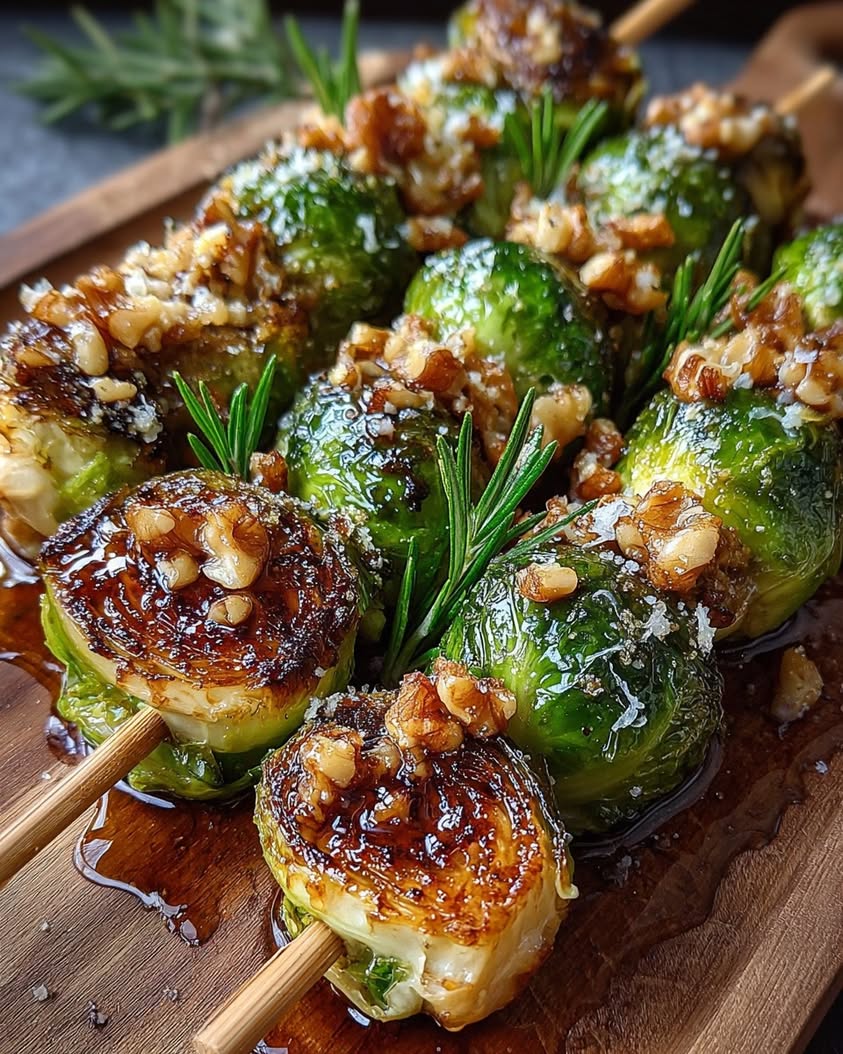
Caramelized Brussels Sprout Skewers with Walnut Honey Glaze: The Ultimate Festive Appetizer
Elevate your holiday table with these stunning Caramelized Brussels Sprout Skewers with Walnut Honey Glaze. This recipe transforms a humble vegetable into a show-stopping appetizer that will have your guests reaching for seconds. Imagine perfectly roasted Brussels sprouts, threaded onto skewers and glazed with a sweet and savory walnut honey mixture. The result is a beautiful balance of flavors and textures that feels both festive and wholesome.
Furthermore, these skewers offer a brilliant solution for serving vegetables in a fun, interactive way. The caramelization process unlocks the natural sugars in the sprouts, creating crispy, golden-brown edges. Meanwhile, the warm glaze clings to every nook and cranny, ensuring each bite is packed with flavor. Ultimately, this dish proves that holiday sides can be both incredibly delicious and visually impressive without requiring hours of complicated work.
Quick Recipe Highlights
- Flavor Profile: These skewers deliver a masterful combination of sweet, savory, and nutty notes. The caramelized sprouts offer a deep, almost buttery flavor that perfectly complements the rich walnut honey glaze. A final sprinkle of pomegranate seeds adds a bright, tart pop that cuts through the richness.
- Texture: You get a wonderful contrast in every bite. The outer leaves of the Brussels sprouts become delightfully crispy and charred, while the interiors stay tender. The chopped walnuts in the glaze add a satisfying crunch, and the juicy pomegranate arils provide a burst of freshness.
- Aroma: As these skewers roast, your kitchen will fill with the irresistible scent of roasting vegetables and toasted nuts. The honey caramelizes in the oven, releasing a warm, sweet fragrance that mingles with the earthy aroma of the sprouts and the toasty notes from the walnuts.
- Visual Appeal: These skewers are a feast for the eyes. The deep green and caramel-brown sprouts are glossy with glaze, studded with golden walnuts, and dotted with vibrant red pomegranate seeds. They look elegant and festive arranged on a platter, making them perfect for a Christmas spread.
- Skill Level Needed: This is a very approachable recipe for cooks of all levels. The techniques are straightforward: trimming vegetables, making a simple glaze, and using skewers. There’s no fancy knife work or complex cooking methods required, making it a great choice for a stress-free holiday meal prep.
- Special Equipment: You will need wooden or metal skewers. If using wooden ones, remember to soak them in water for at least 30 minutes before assembling to prevent burning in the oven. Otherwise, standard kitchen tools like a baking sheet, mixing bowls, and a whisk are all you need.
Recipe Overview
- Difficulty Level: We rate this recipe as easy because it involves simple, sequential steps. First, you prepare the Brussels sprouts. Next, you whisk together a straightforward glaze. After that, you thread the sprouts onto skewers and roast them. Finally, you brush with glaze and finish with garnishes. There are no complicated techniques or precise timings that could easily go wrong.
- Category: This dish fits beautifully into several categories. Primarily, it’s a fantastic holiday appetizer or side dish. Additionally, it can serve as a vegetarian main course option when paired with a grain like farro or quinoa. It’s also a wonderful addition to a festive buffet or finger food spread.
- Cuisine: While not tied to one specific tradition, this recipe draws inspiration from modern American holiday cooking with global influences. The use of honey and nuts is classic in many European and Middle Eastern dishes, and the skewer presentation adds a playful, approachable element common in contemporary cuisine.
- Cost: This is a reasonably affordable dish to prepare, especially during the fall and winter when Brussels sprouts are in season. The most significant cost comes from the fresh Brussels sprouts and the walnuts. Honey and pomegranate are pantry items for many, but their cost can vary. Overall, it’s a cost-effective way to create an impressive, vegetable-forward centerpiece.
- Season: This recipe is ideal for the late fall and winter months. Brussels sprouts are at their peak sweetness after a frost, making them perfect for caramelizing. Moreover, the warm, rich flavors of the walnut honey glaze pair wonderfully with cold weather. The red and green colors naturally evoke the Christmas season.
- Occasion: These skewers are tailor-made for holiday gatherings. They are perfect for Christmas Eve dinners, Thanksgiving feasts, or New Year’s Eve parties. They also work wonderfully for festive potlucks or as an elegant starter for a special dinner party. Their finger-food format makes them great for cocktail hours as well.
Why You’ll Love This Recipe
First and foremost, the taste and texture are absolutely unforgettable. These Caramelized Brussels Sprout Skewers with Walnut Honey Glaze hit every note on the palate. You get the deep, savory umami from the roasted sprouts, the sticky sweetness of the honey, the earthy crunch of walnuts, and the bright acidity from pomegranate. Consequently, each skewer is a complete flavor journey that feels indulgent yet wholesome. The caramelization process is key, transforming the sometimes-bitter vegetable into a sweet, nutty, and complex delight that will convert even the most ardent Brussels sprout skeptics.
Next, consider the sheer convenience and preparation benefits. This recipe is designed for ease, especially during the busy holiday season. You can prepare the glaze and trim the sprouts ahead of time. Then, assembly and roasting are quick. The skewer format itself is a genius hack for serving. It prevents guests from awkwardly chasing round vegetables around a plate and makes portion control simple. Furthermore, cleanup is a breeze since everything cooks on a single sheet pan. Ultimately, you get maximum impact with minimal fuss and mess.
From a nutritional standpoint, these skewers are a powerhouse. Brussels sprouts are loaded with vitamins C and K, fiber, and antioxidants. Walnuts contribute healthy omega-3 fatty acids and protein. Using honey as a natural sweetener is a better alternative to refined sugars. So, while this dish tastes like a treat, you’re serving your guests a plate full of beneficial nutrients. It’s a fantastic way to incorporate more vegetables into a holiday meal without sacrificing flavor or festivity.
The social and entertaining value of this dish is incredibly high. Food on a stick is inherently fun and interactive. These skewers become a natural conversation starter on your buffet table. They look professional and thoughtfully composed, showing your guests you went the extra mile. Because they are easy to eat while standing and mingling, they are perfect for cocktail-style parties. They also cater beautifully to vegetarian guests, providing a substantial and satisfying option that isn’t an afterthought.
Finally, this recipe is remarkably cost-effective and accessible. The ingredients are not exotic or prohibitively expensive. You can find Brussels sprouts, walnuts, honey, and pomegranate in most grocery stores year-round. The recipe is also highly adaptable; for instance, you can use maple syrup instead of honey or pecans instead of walnuts based on what you have. This flexibility means you can create an impressive dish without a special shopping trip or breaking the bank, making elegant holiday entertaining more achievable for everyone.
Historical Background and Cultural Significance
The story of the Brussels sprout itself is fascinating. This vegetable is believed to have been cultivated in ancient Rome, but it gets its name from Brussels, Belgium, where it became popular in the 16th century. For centuries, it was a staple of Northern European winter cuisine, valued for its hardiness in cold climates. Initially, it was often simply boiled, a method that unfortunately gave sprouts a bad reputation for being mushy and bitter. However, modern cooking techniques, like roasting and caramelizing, have completely revitalized its image, showcasing its true potential for sweetness and complex flavor.
Skewering food has a rich cultural history across the globe. From Turkish shish kebabs to Japanese yakitori, cooking on sticks is one of humanity’s oldest and most universal methods. It likely originated as a practical solution for cooking over open flames. Using skewers for vegetables, particularly for festive occasions, is a more recent innovation in Western cuisine. It speaks to a desire for playful, shareable, and visually appealing food. Threading Brussels sprouts onto skewers for Christmas specifically ties into the modern trend of creating “elevated” yet approachable holiday dishes that are as beautiful as they are delicious.
The combination of honey and nuts is a classic pairing found in countless culinary traditions. For example, Greek baklava and Middle Eastern pastries have celebrated this duo for millennia. Using it as a glaze for vegetables is a contemporary twist that bridges sweet and savory cooking. During the holidays, honey symbolizes sweetness and prosperity for the new year in many cultures. Meanwhile, nuts often represent fertility and bounty. Therefore, incorporating these elements into a Christmas side dish adds a layer of symbolic meaning, connecting the meal to age-old traditions of celebration and hope.
Regional variations on glazed vegetable dishes are plentiful. In American Southern cooking, you might find roasted carrots with a pecan and brown sugar glaze. In Mediterranean cuisine, roasted eggplant with a tahini and honey drizzle is common. This recipe for Caramelized Brussels Sprout Skewers with Walnut Honey Glaze sits at a delicious crossroads. It takes a European vegetable, employs a globally beloved sweet-and-nutty glaze, and presents it with a modern, party-friendly sensibility. Its evolution reflects our current food culture: one that values bold flavors, vegetable-centric meals, and beautiful, shareable plates for gathering and celebration.
Ingredient Deep Dive
Brussels Sprouts are the star of this show. These miniature cabbages are packed with nutrients, including vitamins C and K, folate, and fiber. Their flavor becomes wonderfully sweet and nutty when caramelized. When selecting sprouts, look for firm, bright green heads that are similar in size for even cooking. Avoid any with yellowing leaves or a strong odor. Store them unwashed in a plastic bag in your refrigerator’s crisper drawer. For a variation, you could substitute with large cauliflower florets or chunks of sweet potato, though cooking times may need adjustment.
Walnuts bring essential crunch and earthy depth. They are one of the best plant sources of omega-3 fatty acids, which are great for heart health. Toasting them, as this recipe requires, intensifies their flavor dramatically. Always buy walnuts in small quantities from a store with high turnover, as their high oil content makes them prone to rancidity. Store them in an airtight container in the freezer for longest shelf life. For a different twist, try using pecans, which are sweeter, or hazelnuts, which have a more robust, toasty flavor.
Honey is the magical ingredient that creates the glossy, sticky glaze. As a natural sweetener, it contains trace enzymes and antioxidants. The flavor of honey can vary greatly depending on the flowers the bees visited; a mild clover or wildflower honey works perfectly here. For a vegan adaptation, pure maple syrup is an excellent substitute, offering a similar viscosity and caramelizing quality. Agave nectar can also work, though it is thinner. Always warm the honey slightly before mixing to help it blend smoothly with the oil and vinegar.
Pomegranate seeds provide the final flourish of color and a burst of juicy tartness. They are rich in vitamin C and powerful antioxidants called punicalagins. You can buy the seeds already extracted, which is a great time-saver, or remove them from a whole fruit yourself. To store, keep the arils in a sealed container in the fridge for up to 5 days, or freeze them on a tray before transferring to a bag. If pomegranate is out of season, a sprinkle of dried cranberries (soaked in orange juice to plump them) or a few fresh pomegranate molasses drizzles make fine alternatives.
Common Mistakes to Avoid
- Not Soaking Wooden Skewers: Forgetting to soak wooden skewers for at least 30 minutes will cause them to burn and potentially scorch your food in the oven. Always plan ahead for this simple step.
- Crowding the Pan: If you place the skewers too close together on the baking sheet, the Brussels sprouts will steam instead of roast. This prevents proper caramelization and leads to soggy texture. Ensure there is space between each skewer.
- Using Old or Large Sprouts: Old Brussels sprouts have a stronger, more bitter flavor. Very large sprouts are harder to cook evenly on a skewer. Aim for medium-sized, fresh, bright green sprouts for the best taste and presentation.
- Skipping the Trimming Step: Failing to trim the dry stem end and remove any loose or yellowed outer leaves can result in uneven cooking and unpleasant textures. Take the minute to properly prep each sprout.
- Neglecting to Toast the Walnuts: Adding raw walnuts to the glaze misses an opportunity for deeper flavor. Toasting them in the oven or a dry pan until fragrant is a quick step that makes a significant difference.
- Applying Glaze Too Early: If you brush the honey glaze on at the beginning of cooking, the sugars can burn before the sprouts are tender. Always roast the sprouts first until nearly done, then apply the glaze for the final few minutes.
- Overcooking the Sprouts: While you want caramelization, roasting the sprouts until they are completely mushy loses their appealing texture. They should be tender when pierced with a fork but still hold their shape on the skewer.
- Not Tasting the Glaze: Ingredients like honey, vinegar, and mustard can vary in potency. Always taste your glaze before using it and adjust the balance of sweet, tangy, and savory to your personal preference.
Essential Techniques
Caramelization is the most critical technique here. This is the process where natural sugars in the Brussels sprouts brown and develop complex, sweet flavors when exposed to high, dry heat. To achieve it, you must ensure the sprouts are dry before tossing them in oil. Furthermore, do not overcrowd the pan, as steam is the enemy of caramelization. A hot oven (around 400°F to 425°F) is ideal. You will know it’s working when you see deep golden-brown, almost crispy edges on the sprouts and smell a rich, nutty aroma.
Creating an Emulsified Glaze is another key skill. An emulsion is a stable mixture of two liquids that don’t normally combine, like oil and vinegar. Whisking the olive oil, honey, and vinegar together vigorously helps them bind into a smooth, cohesive glaze that will coat the sprouts evenly. If you simply drizzle the components separately, they will not adhere properly. For the best result, use room-temperature ingredients and whisk in a steady stream. The glaze should be thick enough to coat the back of a spoon.
Proper Skewering ensures even cooking and a beautiful presentation. When threading the Brussels sprouts, pierce them through their core, not just through the leaves. This keeps them secure and prevents spinning. Leave a small space between each sprout on the skewer to allow hot air to circulate, promoting all-around browning. Also, be mindful of the skewer length relative to your baking sheet; you may need to trim them so they fit without hanging over the edge, which can cause burning.
Pro Tips for Perfect Caramelized Brussels Sprout Skewers
- Cut larger sprouts in half to ensure they cook at the same rate as smaller ones. This guarantees every piece on the skewer is perfectly tender.
- Preheat your baking sheet in the oven. Placing the skewers on a hot surface gives an immediate sear, kickstarting the caramelization process for extra flavor.
- Reserve some of the chopped toasted walnuts and pomegranate seeds for garnish after baking. This adds a fresh, textural contrast to the warm, glazed skewers.
- If your glaze thickens too much while the skewers roast, simply warm it for a few seconds in the microwave or over a double boiler to make it brushable again.
- For extra flavor, toss the trimmed Brussels sprouts with the oil, salt, and pepper and let them marinate for 15-20 minutes before skewering and roasting.
- Use a pastry brush to apply the glaze. It gives you more control and uses less glaze than dipping, ensuring a thin, even coat that won’t make the skewers soggy.
- Let the skewers rest for 5 minutes after removing them from the oven. This allows the glaze to set slightly and makes them easier to handle for serving.
Variations and Adaptations
For regional twists, consider changing the nut and sweetener. A Southern version might use pecans and bourbon-infused maple syrup. A Mediterranean adaptation could feature pistachios and a drizzle of pomegranate molasses instead of seeds. For an Asian-inspired profile, swap the honey for a mix of soy sauce, sesame oil, and a touch of brown sugar, and garnish with sesame seeds.
Seasonal adaptations are simple. In spring, use asparagus spears and whole radishes with a lemon-honey glaze. For summer, try skewers with zucchini, bell peppers, and peaches with a basil-infused honey. In autumn, sweet potatoes and apples with a cinnamon-spiced walnut glaze would be magnificent. The basic method of skewering and glazing is endlessly adaptable to the produce at its peak.
Dietary modifications are straightforward. For a vegan version, use maple syrup and ensure your Dijon mustard is egg-free. To make it gluten-free, simply confirm all packaged ingredients like mustard are certified GF—it’s naturally gluten-free otherwise. For a nut-free option, substitute toasted sunflower seeds or pepitas for the walnuts. To reduce sugar, you can slightly decrease the honey and add a splash of balsamic vinegar for sweetness.
Serving and Presentation Guide
Plating is key for maximum impact. Arrange the skewers slightly fanned out on a long, rectangular platter or a large round plate. Drizzle any remaining glaze from the pan over the top. Sprinkle generously with the reserved toasted walnuts and pomegranate arils. For a festive touch, scatter some fresh rosemary sprigs or edible flowers around the platter. The red and green colors naturally evoke Christmas, so lean into that with your plate choice—a white or slate gray platter makes the colors pop beautifully.
Consider your accompaniments. These skewers pair wonderfully with a creamy dip on the side, like a whipped goat cheese or a tangy yogurt sauce. For a full meal, serve them alongside a holiday roast, like turkey or ham, or as part of a vegetarian feast with a wild rice pilaf and a crisp salad. They are perfect for a buffet because they hold their temperature well and are easy to serve. Remember, food served at room temperature often allows flavors to be more pronounced, so don’t worry if they cool slightly.
Wine and Beverage Pairing
The sweet and savory profile of these skewers calls for versatile wines. A dry Riesling is an excellent choice because its acidity cuts through the richness of the glaze and its slight stone fruit notes complement the caramelization. Alternatively, a Pinot Noir with its bright red fruit and earthy undertones can mirror the dish’s complexity beautifully. For a sparkling option, a dry Prosecco or Cava provides a refreshing contrast and makes the meal feel even more celebratory.
For non-alcoholic pairings, consider a sparkling apple cider or a ginger beer. The effervescence cleanses the palate, while the apple or ginger flavors harmonize with the autumn-inspired ingredients. A warm mulled cranberry punch or a simple glass of chilled pomegranate juice also ties directly into the dish’s flavor profile. Iced tea, especially a black tea with a hint of citrus, works well too. Ultimately, choose a beverage that offers either a crisp contrast or a harmonious flavor echo.
Storage and Shelf Life
Store leftover skewers in an airtight container in the refrigerator for up to 3 days. I recommend removing the Brussels sprouts from the skewers first to save space and ensure even cooling. The glaze will solidify when cold. To reheat, place the sprouts on a baking sheet in a 350°F oven for 10-15 minutes until warmed through. You can also reheat them in an air fryer for about 5 minutes to help recrisp the edges. Avoid microwaving, as it will make them soggy.
These skewers do not freeze well, as the texture of the Brussels sprouts becomes watery and mushy upon thawing. The walnuts will also lose their crunch. Therefore, this is best enjoyed fresh or within a few days of making. If you need to prep ahead, you can roast the unglazed skewers, let them cool, and store them refrigerated. Then, warm them in the oven and apply the fresh glaze just before serving to maintain the best texture and flavor.
Make Ahead Strategies
You can significantly streamline your holiday cooking with smart prep. Up to two days in advance, trim and halve your Brussels sprouts. Store them in a sealed bag or container in the fridge. You can also toast the walnuts and make the glaze, storing each separately in the refrigerator. The glaze may solidify; simply let it come to room temperature and whisk it smooth before using. On the day of serving, all you need to do is thread the sprouts, roast, and glaze. This makes assembling a stunning appetizer incredibly fast and stress-free.
For partial assembly, you can even thread the sprouts onto the soaked skewers, place them on a baking sheet, cover tightly with plastic wrap, and refrigerate for several hours before roasting. Just bring them to room temperature for about 20 minutes before they go in the oven to ensure even cooking. Always add the fresh pomegranate seeds as a final garnish right before serving to keep them bright, juicy, and visually appealing.
Scaling Instructions
This recipe scales up or down very easily. For a smaller gathering, simply halve all the ingredients. Use a smaller baking sheet and keep an eye on the cooking time, as it may be slightly shorter with fewer skewers in the oven. When doubling or tripling for a large party, you will need to roast in multiple batches or use two oven racks. Rotate the baking sheets halfway through cooking to ensure even browning. Importantly, do not overcrowd the pans, as this is the main cause of steaming instead of roasting.
Consider your equipment when scaling. If making a large batch, you may need more skewers and a bigger bowl for tossing. The glaze can be multiplied without issue. Just mix it in a larger vessel. Remember that the total active prep time will increase slightly with more sprouts to trim, but the oven time per batch remains consistent. Planning your batches allows you to serve hot, fresh skewers throughout your event.
Nutritional Deep Dive
This dish is a nutrient-dense choice for your holiday table. A serving provides a good balance of healthy fats from the olive oil and walnuts, complex carbohydrates and fiber from the Brussels sprouts, and natural sugars from the honey and pomegranate. Brussels sprouts are particularly high in vitamin K, essential for blood clotting and bone health, and vitamin C, a powerful antioxidant. The walnuts contribute plant-based protein and alpha-linolenic acid, a type of omega-3 fat.
While the honey adds sugar, it is used in moderation as part of a glaze shared across multiple servings. Compared to many traditional holiday sides loaded with butter and cream, this recipe offers a lighter, vegetable-forward option that doesn’t skimp on satisfaction. The fiber content helps promote satiety, which can aid in portion control during a large feast. To make it even lighter, you can reduce the oil in the glaze by a teaspoon or use a spray oil on the sprouts before roasting.
Dietary Adaptations
For a Vegan version, replace the honey with an equal amount of pure maple syrup or agave nectar. Ensure your Dijon mustard does not contain honey or white wine (some do). The recipe is naturally Dairy-Free and Gluten-Free as written, but always check labels on condiments like mustard to confirm no gluten-containing additives.
For a Low-Carb or Keto adaptation, you can reduce the amount of honey significantly or substitute it with a keto-friendly sweetener like monk fruit or erythritol that measures like sugar. Be aware that alternative sweeteners may not caramelize in the same way. The Brussels sprouts and walnuts are keto-friendly in moderation. For a Paleo version, use raw honey and ensure all ingredients are whole, unprocessed foods.
Troubleshooting Guide
If your sprouts are not caramelizing, your oven may not be hot enough, or the pan is overcrowded. Ensure the oven is fully preheated and there is space between the skewers. If they are burning, your oven temperature might be too high, or the rack is too close to the heating element. Try lowering the temperature by 25 degrees and roasting on a middle rack.
If the glaze is too thick to brush, gently warm it. If it’s too thin and runs off, you can simmer it in a small saucepan for a minute or two to reduce and thicken slightly. If the walnuts on the skewers are burning during roasting, reserve them to sprinkle on at the end instead of mixing them into the initial glaze. If your skewers are sticking to the pan, ensure you are using a good quality non-stick baking sheet or line it with parchment paper.
Recipe Success Stories
Readers love how this recipe wins over vegetable skeptics. One home cook reported that her husband, who “hated Brussels sprouts his whole life,” asked for seconds and thirds. Another found it to be the perfect dish for her office potluck, as it traveled well and was the first platter to empty. Many appreciate that it looks far more complicated than it is, earning them major hosting compliments with minimal effort.
Creative adaptations have also been a hit. A reader with a nut allergy used toasted pumpkin seeds with great success. Another made a double batch for Thanksgiving and used the leftovers chopped up in a salad with quinoa and goat cheese the next day. The skewer method has inspired people to try the same honey-walnut glaze on other roasted vegetables, like carrots and parsnips, proving the versatility of the technique.
Frequently Asked Questions
Can I use metal skewers instead of wooden? Absolutely. Metal skewers are reusable and don’t require soaking. Just be careful when handling them, as they get very hot in the oven. You may want to use an oven mitt when turning or removing them.
My honey solidified in the glaze. What do I do? This is common if your honey was cold. Simply place the bowl of glaze in a larger bowl of warm water for a few minutes, or microwave it in 10-second bursts, whisking in between, until it returns to a liquid, brushable consistency.
Can I make these without skewers? Yes, you can simply roast the halved Brussels sprouts on the baking sheet. Toss them with the glaze in the last 10 minutes of cooking. The skewers are primarily for fun presentation and easy serving.
How do I prevent the pomegranate seeds from rolling everywhere? Sprinkle them on just before serving so the sticky glaze helps them adhere. You can also gently press them into the glaze on top of the sprouts.
What can I use instead of pomegranate? Dried cranberries, chopped fresh apple, a drizzle of balsamic reduction, or even a few crumbles of tangy cheese like feta or goat cheese make excellent substitutes.
Can I prep the skewers the night before? You can thread the raw sprouts onto soaked skewers, cover the baking sheet tightly with plastic wrap, and refrigerate overnight. Let them sit at room temp for 20-30 minutes before roasting.
Are these served hot or cold? They are best served warm from the oven, but they are also delicious at room temperature, making them great for a buffet where they might sit out for a bit.
How do I get my sprouts more crispy? Ensure they are very dry before oiling, don’t crowd the pan, and roast at a high temperature (425°F). You can also broil them for the last 1-2 minutes, watching closely to prevent burning.
Is there a way to make this less sweet? Reduce the honey by half and add an extra teaspoon of Dijon mustard or a splash of vinegar to balance the flavors. The caramelization of the sprouts themselves provides natural sweetness.
Can I use frozen Brussels sprouts? I don’t recommend it. Frozen sprouts contain too much water and will steam and become mushy instead of roasting and caramelizing properly. Fresh is essential for this recipe.
Additional Resources
If you loved the flavor profile of this glaze, try it on other roasted vegetables like carrots, butternut squash, or even roasted chicken wings. For more festive appetizer ideas, explore recipes for baked brie with honey and nuts, spiced nuts, or crostini with various seasonal toppings. Mastering basic roasting techniques will serve you well for countless dishes; practice with different vegetables to learn their ideal cooking times and temperatures.
For ingredient knowledge, learn more about the different types of honey (like clover, wildflower, or manuka) and how their flavors differ. Understanding how to toast and store nuts properly will elevate many of your recipes. Finally, investing in a set of good quality, reusable metal skewers in various lengths is a great idea for anyone who enjoys making kebabs, satay, or festive appetizers like these beautiful Caramelized Brussels Sprout Skewers with Walnut Honey Glaze.
{“success”:true,”message”:”Recipe created successfully”,”post_id”:8062,”tasty_recipe_id”:8062,”shortcode”:” Print
Caramelized Brussels Sprouts Christmas Skewers with Walnut Honey
Description
Festive Brussels sprouts skewers roasted until caramelized and drizzled with a sweet walnut honey glaze, perfect for holiday gatherings.
Ingredients
For the Crust:
- 1 lb Brussels sprouts, trimmed and halved
- 2 tbsp olive oil
- 1 tsp salt
- 1/2 tsp black pepper
- 1/2 cup walnuts, chopped
- 1/4 cup honey
- 1 tbsp balsamic vinegar
- Wooden skewers, soaked in water for 30 minutes
Instructions
1. Prepare the Crust:
- Preheat oven to 400°F (200°C). Line a baking sheet with parchment paper.
- Toss Brussels sprouts with olive oil, salt, and pepper. Thread 4-5 halves onto each skewer.
- Arrange skewers on the baking sheet. Roast for 20-25 minutes until caramelized and tender.
- In a small pan over medium heat, toast walnuts for 3-4 minutes until fragrant. Stir in honey and balsamic vinegar, simmer for 2 minutes.
- Drizzle walnut honey over skewers before serving.
Notes
You can customize the seasonings to taste.

I’m Billy, a classically trained culinary school graduate from The Culinary Institute of America with over 12 years in the restaurant industry and over 19 years of cooking experience.