
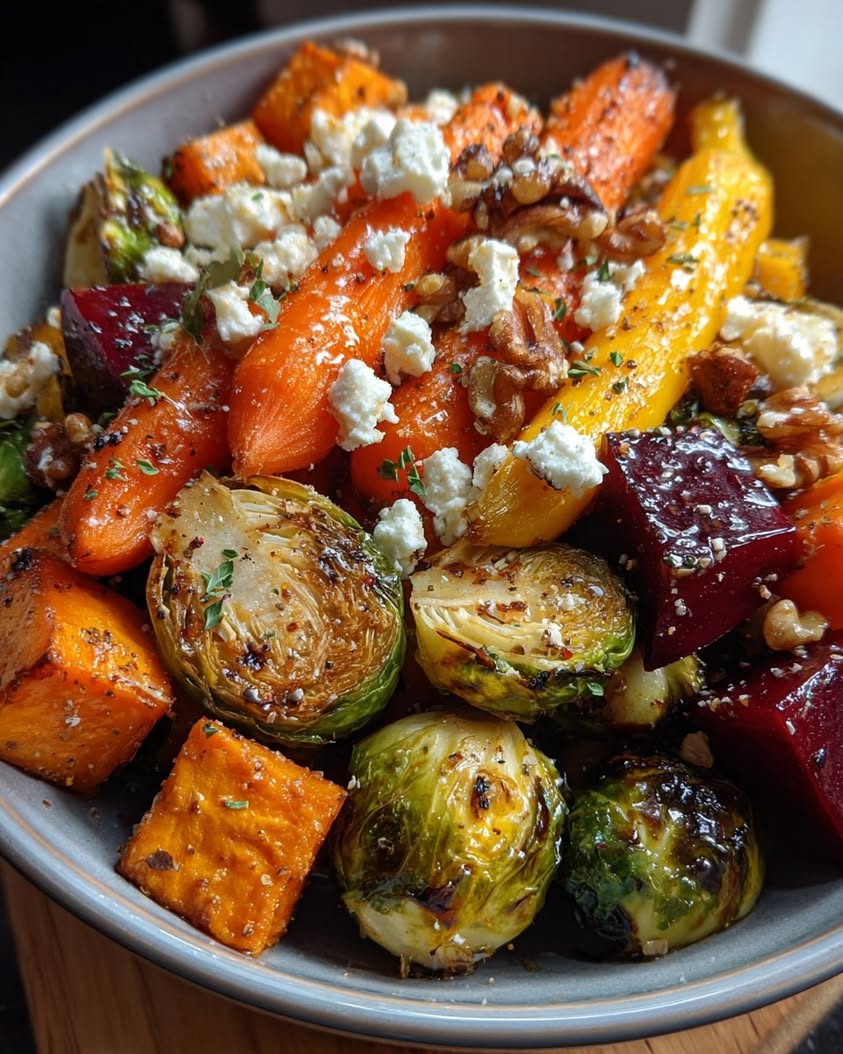
Roasted Root Vegetable Medley with Hot Honey, Feta & Walnuts: A Sweet, Savory, and Spicy Side Dish
This Roasted Root Vegetable Medley with Hot Honey, Feta & Walnuts is a complete game-changer for your side dish rotation. Moreover, it transforms humble, earthy vegetables into a stunning and flavorful masterpiece. The natural sugars in the sweet potatoes, carrots, and butternut squash caramelize beautifully in the oven. Consequently, they create a foundation of deep, sweet flavor. Meanwhile, the Brussels sprouts get wonderfully crispy and charred at the edges. Finally, a drizzle of spicy hot honey, a sprinkle of salty feta, and a handful of toasted walnuts bring everything together with incredible texture and complexity.
This dish is a celebration of fall and winter produce, but truly, it’s welcome on any table year-round. The combination of textures from tender squash to crunchy walnuts is absolutely irresistible. Furthermore, the balance of sweet, savory, spicy, and salty hits every single note on your palate. This Roasted Root Vegetable Medley is not just a side; it’s a vibrant, healthy, and deeply satisfying centerpiece for a vegetarian meal. It pairs perfectly with a simple roast chicken or a hearty grain bowl, making it incredibly versatile for any occasion.
Quick Recipe Highlights
- Flavor Profile: This dish masterfully balances sweet caramelized vegetables with savory, salty feta and a spicy kick from the hot honey. The earthy notes from the roasted beets and Brussels sprouts create a complex, deeply satisfying taste that is both rustic and sophisticated.
- Texture: Expect a fantastic contrast in every bite. You get the tender, almost creamy interior of the sweet potato and squash, the slight bite of the carrot, the crispy, charred leaves of the Brussels sprouts, the crunch of toasted walnuts, and the crumbly softness of feta cheese.
- Aroma: As it roasts, your kitchen will fill with the warm, sweet scent of caramelizing vegetables and rosemary. The finishing touch of hot honey adds a subtle, spicy fragrance that makes the dish incredibly inviting.
- Visual Appeal: The color palette is stunning. You have vibrant orange from the squash and sweet potato, deep red from the beets, green from the Brussels sprouts, and white from the feta. It’s a visually spectacular dish that looks beautiful on a holiday table or a weeknight dinner plate.
- Skill Level Needed: This is a beginner-friendly recipe. The primary skill is knife work for chopping vegetables evenly. The roasting process is largely hands-off, and the assembly is simple. It’s an excellent recipe for building confidence in the kitchen.
- Special Equipment: You need a good chef’s knife, a sturdy cutting board, and two large rimmed baking sheets. Parchment paper is highly recommended for easy cleanup. A small bowl for mixing the hot honey is also useful.
Recipe Overview
- Difficulty Level: We rate this recipe as easy. The steps are straightforward: chop, toss, roast, and assemble. There’s no intricate technique required. The key to success is cutting the vegetables to a uniform size for even cooking. Anyone with basic kitchen skills can achieve fantastic results with this Roasted Root Vegetable Medley.
- Category: This dish falls squarely into the side dish category. However, it’s substantial enough to be a main course for a light vegetarian lunch, especially when served over a bed of quinoa or farro. It’s also perfect for potlucks, holiday feasts, and meal prep.
- Cuisine: This is a modern, fusion-style dish with influences from American farm-to-table cooking and Mediterranean flavors. The use of feta cheese and olive oil nods to Greek cuisine, while the hot honey adds a contemporary, trendy twist popular in modern American restaurants.
- Cost: This is a very cost-effective recipe, especially in the fall and winter when root vegetables are in season and priced low. Feta cheese and walnuts are the only pricier components, but a little goes a long way. Overall, you can feed a crowd for a fraction of the cost of a meat-centric dish.
- Season: This Roasted Root Vegetable Medley is ideal for autumn and winter. These vegetables are at their peak of flavor and affordability during the colder months. The warm, hearty nature of the dish is perfect for comforting cold-weather meals. That said, you can find good-quality versions of these vegetables year-round.
- Occasion: It’s incredibly versatile. Serve it for a casual family dinner, a festive Thanksgiving or Christmas spread, a potluck with friends, or as part of a elegant dinner party menu. Its beautiful presentation makes it suitable for any event where you want to impress.
Why You’ll Love This Recipe
First and foremost, the taste and texture appeal of this Roasted Root Vegetable Medley is off the charts. Each component brings something unique. The caramelization process unlocks incredible natural sweetness, which is then expertly contrasted by the salty, tangy feta and the spicy-sweet hot honey. Furthermore, the walnuts add a necessary earthy crunch that completes the sensory experience. You will find yourself going back for spoonful after spoonful, discovering new flavor combinations in every bite. This dish proves that vegetables can be the star of the show, delivering satisfaction that rivals any meat-based dish.
Next, consider the convenience and preparation benefits. Once the vegetables are chopped, the oven does most of the work. This hands-off cooking time allows you to prepare the rest of your meal, set the table, or simply relax. Additionally, the recipe is forgiving. Slightly uneven chopping or a few extra minutes in the oven won’t ruin it. The assembly at the end is quick and requires no cooking skill, just a gentle toss to combine. This makes it a stress-free option for entertaining, as you can prepare it ahead of time and simply add the final toppings before serving.
From a nutritional standpoint, this dish is a powerhouse. You are consuming a wide spectrum of vitamins, minerals, and fiber from five different colorful vegetables. Sweet potatoes and carrots are rich in beta-carotene. Brussels sprouts are loaded with Vitamin C and K. Beets provide folate and beneficial nitrates. Butternut squash offers Vitamin A and potassium. Together, they support immune function, gut health, and overall vitality. The healthy fats from olive oil and walnuts promote nutrient absorption and heart health. This Roasted Root Vegetable Medley is a delicious way to eat the rainbow and nourish your body deeply.
The social and entertaining value of this recipe is immense. It’s a guaranteed crowd-pleaser that appeals to vegetarians and meat-eaters alike. Its stunning visual presentation makes it a centerpiece on any buffet table, sparking conversation and compliments. Because it’s served family-style, it encourages sharing and interaction. You can easily double or triple the recipe to feed a large group without significantly increasing your active kitchen time. Bringing this dish to a potluck ensures you’ll come home with an empty tray and requests for the recipe.
Finally, the cost-effectiveness and accessibility are major wins. Root vegetables are some of the most affordable produce items, especially in season. You can often find them at farmers’ markets or grocery stores for a very low cost per pound. The other ingredients—olive oil, basic spices, honey, and chili flakes—are common pantry staples. Even the feta and walnuts, while premium, are used as garnishes so a small amount has a big impact. This recipe allows you to create a restaurant-quality, impressive dish on a very modest budget, making gourmet, healthy eating accessible to everyone.
Historical Background and Cultural Significance
The practice of roasting root vegetables stretches back to the earliest methods of cooking over fire. Historically, root cellars were essential for survival through winter in many cultures, storing potatoes, carrots, beets, and turnips. Roasting these hard vegetables over coals or in hearths was a practical way to make them palatable and nutritious. This modern Roasted Root Vegetable Medley is a direct descendant of those ancient, rustic cooking traditions. It celebrates the humble, sustaining foods that have fed populations for centuries, now elevated with contemporary global ingredients like feta and hot honey.
Culturally, medleys of roasted vegetables appear in many culinary traditions. The French have their “ratatouille” (though technically summer vegetables) and roasted root “mirepoix.” Mediterranean cultures frequently combine roasted vegetables with olive oil and herbs. The American tradition, particularly around Thanksgiving, heavily features roasted sweet potatoes, carrots, and other autumn harvest vegetables. This recipe sits at the intersection of these traditions. It uses a classic European technique—high-heat roasting—and combines it with a New World ingredient (sweet potato) and a trendy American condiment (hot honey) to create something uniquely of this moment.
The evolution of this specific recipe mirrors broader food trends. The move towards plant-forward eating has inspired chefs and home cooks to treat vegetables with the same care and creativity as proteins. The concept of “hot honey” gained massive popularity in the 2010s, starting in pizza shops in Brooklyn and spreading nationwide as a perfect balance of sweet and heat. Applying it to roasted vegetables was a natural, innovative step. Adding cheese and nuts for texture and protein transforms the dish from a simple side to a cohesive, satisfying plate. This Roasted Root Vegetable Medley is a testament to how global fusion and modern flavor preferences can reinvent classic, wholesome ingredients.
Regional variations of this concept are endless. In the American South, you might find a similar mix roasted with bacon fat and pecans. In the Mediterranean, it could feature oregano and kalamata olives instead of rosemary and walnuts. A Nordic version might use rye crumbs and lingonberry sauce. The beauty of the formula is its adaptability. The core principle of caramelizing sturdy vegetables and adding contrasting toppings is universal. This particular version with feta and hot honey has become a modern classic in its own right, beloved for its perfect balance and crowd-pleasing nature. It represents a global pantry approach to cooking that defines contemporary home cuisine.
Ingredient Deep Dive
Brussels Sprouts: Once a maligned vegetable, Brussels sprouts have undergone a culinary renaissance thanks to the understanding that high-heat roasting (or sautéing) is key. This method caramelizes their natural sugars and creates crispy, delicious leaves, banishing the bitter, boiled memories of the past. Nutritionally, they are superstars, packed with Vitamin K for bone health, Vitamin C for immunity, and fiber. Select firm, bright green sprouts with tight leaves. Avoid yellowing or loose leaves. Store them unwashed in an open bag in the refrigerator’s crisper drawer. For this Roasted Root Vegetable Medley, halving them ensures maximum surface area for caramelization.
Sweet Potato & Butternut Squash: These orange-fleshed vegetables are New World treasures, rich in history and beta-carotene, which the body converts to Vitamin A. They provide the foundational sweetness and creamy texture in the medley. Butternut squash, with its long storage life, was a vital food for Native Americans and early colonists. Choose sweet potatoes that are firm and heavy for their size. Select butternut squash with a long, thick neck and a small bulbous seed section, as the neck contains more solid flesh. Store both in a cool, dark place. Peeling and cubing them to a similar size ensures they roast evenly alongside the other roots.
Carrot & Beet: Carrots, originally purple or white, were cultivated for their aromatic leaves and seeds before the orange root we know today was developed in the Netherlands. Beets have been used since ancient times for both food and medicine. The carrot adds a familiar sweetness and slight bite, while the beet contributes an earthy, profound depth and stunning color that can stain the other vegetables beautifully (which many find desirable). For easier peeling, try using a vegetable peeler under running water. To prevent overwhelming pinkness, you can roast the beets on a separate section of the pan or wrap them in foil.
Feta Cheese: A brined curd cheese with a history dating back to ancient Greece, feta adds a crucial salty, tangy counterpoint to the sweet vegetables. Traditionally made from sheep’s milk or a sheep/goat blend, its crumbly texture and bold flavor mean a little goes a long way. For the best quality in your Roasted Root Vegetable Medley, look for feta sold in blocks submerged in brine. It will be creamier and less salty than pre-crumbled varieties. If you’re avoiding dairy, a good substitute is a firm, salty tofu crumble or a sprinkle of nutritional yeast for a cheesy flavor.
Walnuts & Hot Honey: Walnuts are one of the oldest tree foods, revered for their brain-like shape and associated health benefits. Toasting them is non-negotiable; it unlocks their oils, deepens their flavor, and improves their crunch. Hot honey is a modern pantry staple. Simply warming honey and infusing it with red pepper flakes (or using a chili-infused honey) creates a dynamic sauce that is sweet, spicy, and viscous. It binds the elements of the dish together gloriously. For a shortcut, you can use a store-bought hot honey, but making your own allows you to control the spice level. This combination provides the final layer of texture and complex flavor that makes the dish unforgettable.
Common Mistakes to Avoid
- Crowding the Pan: This is the most common error. If the vegetables are piled on top of each other, they will steam instead of roast. You need space for moisture to evaporate so the edges can caramelize and crisp. Always use two large baking sheets if necessary.
- Uneven Chopping: Cutting vegetables into drastically different sizes leads to uneven cooking. Some pieces will be burnt while others remain hard. Aim for a uniform ¾-inch to 1-inch dice or chop. This ensures everything is perfectly tender and caramelized at the same time.
- Skipping the Preheat: Putting vegetables into a cold oven drastically changes the cooking process. A properly preheated oven (at 425°F) provides an immediate blast of heat that starts the caramelization process right away, leading to better texture and flavor.
- Underseasoning: Vegetables need a generous amount of seasoning. Don’t be shy with the salt and pepper before roasting. Seasoning early draws out a bit of moisture and ensures the flavor penetrates the vegetable, not just sits on the surface.
- Forgetting to Toss: Leaving the vegetables untouched for the entire roasting time will cause them to stick and burn on one side. Giving them a good stir or shake of the pan halfway through promotes even browning on all sides.
- Using Raw, Untoasted Walnuts: Raw walnuts can have a slightly bitter, tannic quality. Toasting them for just 5-7 minutes in a dry pan or the oven transforms them, making them fragrant, crunchy, and deeply nutty. This step adds significant depth to the final dish.
- Adding Cheese Too Early: If you add the feta before or during roasting, it will melt into a greasy, unappealing mess. The feta should always be a cold, crumbly garnish added after the vegetables come out of the oven to provide a refreshing textural and temperature contrast.
- Neglecting the Hot Honey Drizzle: The hot honey is not just a garnish; it’s a key component that ties all the flavors together. Drizzle it over the warm vegetables so it slightly thins and coats everything. Adding it to cold vegetables won’t have the same effect.
Essential Techniques
Uniform Chopping (Mise en Place): This French term means “everything in its place,” and it’s the first essential technique. Taking the time to chop all your vegetables to a consistent size is the single greatest predictor of success for this Roasted Root Vegetable Medley. Why is it important? Evenly sized pieces cook at the same rate. Consequently, you avoid a mix of mushy and undercooked vegetables. How to master it? Use a sharp chef’s knife. First, create a flat surface on round vegetables by cutting them in half. Then, slice into planks, and finally, dice into cubes. A common pitfall is rushing this step. The visual cue for success is a bowl of vegetables where all pieces look roughly the same, ensuring harmonious roasting.
High-Heat Roasting: This technique uses dry, concentrated heat to caramelize the natural sugars in vegetables, creating complex flavors and desirable textures. It’s important because it transforms the flavor profile from raw and earthy to sweet, deep, and slightly charred. How to master it? Preheat your oven fully to 425°F. Use rimmed baking sheets to contain any juices. Toss the vegetables thoroughly in oil to coat every surface; this conducts heat and promotes browning. A common pitfall is using a lower temperature, which steams the vegetables instead. The visual cues for success are golden-brown, slightly crispy edges on the vegetables and a fragrant, sweet aroma filling your kitchen.
Making Hot Honey: This simple technique of infusing honey with chili heat creates a versatile, dynamic condiment. It’s important because it adds a layered sweetness and spice that elevates the dish from simple to spectacular. How to master it? Gently warm honey in a microwave or saucepan just until it becomes fluid. Stir in crushed red pepper flakes and let it steep. The heat from the peppers infuses into the honey. A common pitfall is overheating the honey, which can destroy its delicate flavor. Another is not letting it steep long enough for the spice to permeate. The cue for success is a honey that has a visible speckling of chili flakes and a clear, spicy aroma when you smell it.
Pro Tips for Perfect Roasted Root Vegetable Medley
First, use parchment paper on your baking sheets. This prevents sticking without needing excessive oil and makes cleanup an absolute breeze. You can simply crumple it up and toss it after the vegetables cool.
Second, consider roasting the beets on a separate corner of the pan or in a small foil packet if you want to control their vibrant color. This prevents them from turning the entire dish pink, though many enjoy that rustic look.
Third, don’t discard the loose outer leaves of the Brussels sprouts. Instead, toss them in oil and salt separately and roast them on the pan. They become incredibly crispy, like vegetable chips, and make a wonderful garnish.
Fourth, let the roasted vegetables rest for 5 minutes after removing them from the oven before adding the toppings. This allows them to reabsorb some of their own steam, firming up slightly for a better texture.
Fifth, toast your walnuts in the oven during the last 5-7 minutes of the vegetables’ cooking time. Just add them to a corner of the baking sheet. This saves time and dishes, filling your kitchen with a wonderful nutty aroma.
Sixth, if your hot honey becomes too thick after cooling, gently re-warm it for a few seconds before drizzling. A warm, fluid honey will coat the vegetables more evenly than a thick, cold one.
Seventh, for an extra flavor boost, add a tablespoon of balsamic vinegar to the olive oil when tossing the vegetables. The acidity will balance the sweetness and add another layer of complexity.
Eighth, reserve a small portion of the feta and toasted walnuts to sprinkle on top after you’ve plated the dish. This adds visual height and ensures every serving gets a perfect amount of the delicious toppings.
Variations and Adaptations
Regional Variations: Give this Roasted Root Vegetable Medley a different global twist. For a Mediterranean vibe, swap rosemary for oregano and thyme, use kalamata olives instead of walnuts, and finish with lemon zest. For a Southwestern flair, use chili powder and cumin on the vegetables, swap pepitas for walnuts, and use crumbled cotija cheese instead of feta. An Asian-inspired version could include a glaze of soy sauce, ginger, and sesame oil, topped with sesame seeds and chopped cilantro.
Seasonal Adaptations: While perfect for fall, this recipe adapts beautifully year-round. In spring, use asparagus tips, radishes, and new potatoes. For summer, try zucchini, bell peppers, and cherry tomatoes (reduce roasting time). The core technique remains the same. In deep winter, incorporate parsnips, turnips, and rutabaga for even heartier, earthier flavors. Adjust roasting times slightly for softer or harder vegetables as needed.
Dietary Modifications: This dish is naturally gluten-free. For a vegan Roasted Root Vegetable Medley, omit the feta or use a vegan feta alternative. A sprinkle of nutritional yeast can add a cheesy flavor. For a dairy-free version, follow the same principle. To make it nut-free, substitute toasted sunflower seeds or pepitas for the walnuts. Ensure all other ingredients, like your hot honey, are certified gluten-free if that is a concern.
Flavor Variations: Experiment with different herb and spice profiles. Smoked paprika or ground cumin added to the oil before tossing adds warmth. Fresh thyme or sage are excellent alternatives to rosemary. For the honey, try infusing it with fresh grated ginger or a strip of orange zest instead of chili flakes for a different kind of warmth. A finishing sprinkle of sumac or za’atar can add a tangy, Middle Eastern note.
Texture Modifications: If you prefer uniformly tender vegetables, cover the baking sheet with foil for the first 20 minutes of roasting, then uncover to let them brown. For maximum crispiness on everything, increase the oven temperature to 450°F and roast for a slightly shorter time, shaking the pan frequently. Adding a tablespoon of maple syrup to the oil toss can encourage deeper, faster caramelization for a crispier exterior.
Presentation Alternatives: Instead of a family-style platter, serve individual portions in shallow bowls over a base of creamy polenta, whipped goat cheese, or a bed of hearty greens like kale or arugula. You can also stuff the roasted vegetable mixture into hollowed-out acorn squash halves for an edible, stunning presentation. For a festive touch, serve it in a large, roasted pumpkin shell.
Serving and Presentation Guide
Plating Techniques: For a family-style presentation, choose a large, shallow platter or a rustic wooden board. Pile the warm Roasted Root Vegetable Medley in the center, letting it spill naturally. This encourages guests to help themselves. For individual plating, use a bowl or a wide, rimmed plate. Place a scoop of grains like farro or quinoa first, then top with the vegetables, ensuring the colorful components are visible. Drizzle the hot honey in a zig-zag pattern over the top for a professional finish.
Garnishing Ideas: Beyond the feta and walnuts, consider fresh herb sprigs like rosemary or thyme for a fragrant touch. A final flake of sea salt (like Maldon) adds texture and highlights the flavors. Microgreens or a handful of arugula scattered over the top add a fresh, peppery note and a pop of green. For a bright, acidic finish, a light squeeze of lemon juice just before serving can cut through the richness beautifully.
Traditional Accompaniments: This medley is a classic holiday side dish. It pairs traditionally with roast turkey, glazed ham, or a standing rib roast. For a vegetarian feast, it complements savory pies, lentil loaves, or stuffed mushrooms perfectly. It also sits wonderfully alongside other classic sides like creamy mashed potatoes, green bean casserole, or a simple garden salad.
Modern Serving Suggestions: Think beyond the side dish. Use leftovers to top a kale salad for lunch the next day. Fold the cooled vegetables into scrambled eggs or an omelet. Pulse them briefly in a food processor with some broth for a chunky, rustic soup. They also make an incredible filling for a warm wrap or sandwich with some hummus and greens.
Temperature Considerations: This dish is best served warm. The vegetables are most flavorful and textured when they have just come out of the oven and have rested for 5 minutes. The contrast of the warm vegetables with the cool, crumbly feta is part of the magic. If you must make it ahead, reheat the vegetable base gently in the oven before adding the cold toppings. Avoid the microwave, as it can make the vegetables soggy.
Portion Control Tips: As a side dish, a serving is roughly 1 to 1.5 cups of the vegetable mixture. As a vegetarian main, aim for 2-2.5 cups, perhaps served over a half-cup of whole grains. The walnuts and feta, while delicious, are calorie-dense. A tablespoon of walnuts and a half-ounce of feta per serving is sufficient to provide flavor and texture without overdoing it.
Wine and Beverage Pairing
Wine Pairings: The sweet, earthy, and spicy notes of this Roasted Root Vegetable Medley call for wines with good acidity and some fruitiness to complement the dish. A dry Riesling or Gewürztraminer handles the sweetness and spice beautifully with their aromatic profiles. For red wine lovers, a light-bodied Pinot Noir with its red fruit notes and earthy undertones is an excellent match. An off-dry Rosé can also bridge the gap between the sweet vegetables and the salty feta perfectly. Avoid heavily oaked wines, as they can clash with the vegetable’s natural flavors.
Non-Alcoholic Alternatives: Sparkling water with a twist of orange or lemon provides a clean, palate-cleansing effervescence. For something more special, try a ginger beer; its spicy-sweet profile mirrors the hot honey. A tart cherry juice spritzer (mixed with seltzer) offers depth and acidity. Iced herbal tea, like a mint or hibiscus blend, can be very refreshing against the rich, roasted flavors.
Coffee/Tea Pairings: While not a typical pairing for the meal itself, a warm beverage afterwards can be lovely. A cup of chai tea, with its spices of cinnamon, cardamom, and clove, echoes the warm spices that could be used in the dish. A medium-roast coffee with nutty or chocolatey notes would complement the toasted walnuts and caramelized vegetables without overpowering them.
Temperature Considerations: Serve white and rosé wines well-chilled (45-50°F). Serve red wines slightly cooler than room temperature, around 55-60°F, to keep them refreshing. Non-alcoholic sparkling drinks should be very cold. The goal is to have your beverage provide a refreshing contrast to the warm, rich vegetables on the plate.
Serving Suggestions: Always offer water alongside any other beverage. For a dinner party, consider setting out a self-serve beverage station with a carafe of water infused with citrus and herbs, a bottle of the chosen wine, and a non-alcoholic option like sparkling cider or the ginger beer. This allows guests to choose what best suits their taste and complements the Roasted Root Vegetable Medley.
Storage and Shelf Life
Storage Methods: Store leftover Roasted Root Vegetable Medley in an airtight container in the refrigerator. For best results, store the vegetable base separately from the toppings. Keep the cooled roasted vegetables in one container. Store the feta, toasted walnuts, and hot honey in their own small containers. This prevents the walnuts from getting soggy and the feta from dissolving into the vegetables.
Temperature Requirements: All components must be refrigerated at or below 40°F. Do not leave the assembled dish at room temperature for more than two hours. The dairy (feta) and moist vegetable environment can promote bacterial growth if left out too long.
Container Recommendations: Glass containers with tight-sealing lids are ideal. They don’t absorb odors and allow you to see the contents. If storing the assembled dish, use a shallow container to promote even cooling and quicker reheating. For the walnuts, a small jar or zip-top bag works well to maintain their crunch.
Signs of Spoilage: Discard the dish if you notice an off or sour smell, significant sliminess on the vegetables, or visible mold (especially on the feta). The vegetables may soften considerably after 4-5 days, which is a textural issue rather than a safety one, but if in doubt, throw it out.
Reheating Instructions: Reheat only the vegetable portion. Spread them in a single layer on a baking sheet and warm in a 350°F oven for 10-15 minutes until heated through. This method helps restore some crispiness. The microwave can be used in a pinch but will steam them, making them softer. Always add the fresh feta, walnuts, and a new drizzle of hot honey after reheating.
Freezing Guidelines: Freezing is not recommended for this Roasted Root Vegetable Medley. The high water content of the vegetables causes them to become mushy and watery upon thawing. The texture of the feta and walnuts will be completely compromised. This is a dish best enjoyed fresh or refrigerated for a few days.
Make Ahead Strategies
Prep Timeline: You can prep this dish extensively 1-2 days in advance. Day 1: Wash, peel, and chop all vegetables. Store them in separate airtight containers or zip-top bags in the refrigerator. Make the hot honey and store it at room temperature. Toast the walnuts and store them in a pantry jar. Day of Serving: Simply toss the pre-chopped vegetables with oil and seasonings, then roast. This cuts your active prep time on the day of your event to just minutes.
Storage Between Steps: Keep pre-chopped root vegetables in the fridge. Some, like sweet potatoes and potatoes, can oxidize and turn brown. To prevent this, submerge them in a bowl of cold water, cover, and refrigerate. Drain and pat them very dry before tossing with oil. Beets are best stored separately to avoid color transfer. Pre-mixed oil and seasoning can be kept in a small jar.
Quality Impact Assessment: Pre-chopping vegetables 24 hours ahead has minimal impact on final quality, especially if stored properly in water. The texture and flavor will be nearly identical to freshly chopped. However, avoid chopping more than 2 days ahead, as the cut edges can dry out or become slimy. The hot honey’s flavor may even improve as the spice infuses overnight.
Assembly Tips: For the freshest presentation, roast the vegetables up to 2 hours before serving. Let them cool at room temperature, then gently re-warm in the oven for 5-10 minutes before your meal. Assemble the final dish—adding the feta, walnuts, and hot honey drizzle—just moments before bringing it to the table. This ensures optimal textures.
Reheating Guidelines: As noted, oven reheating is best. If the vegetables were fully cooked and refrigerated, spread them on a parchment-lined sheet and reheat at 375°F for 10-15 minutes, stirring once. You can also reheat them in a skillet over medium heat with a tiny splash of water or oil to prevent sticking and refresh the caramelization.
Fresh Element Additions: The feta, walnuts, and hot honey are the “fresh elements” that should never be added until the end. Even if you pre-crumble the feta, keep it chilled. If you pre-toast the walnuts, keep them in an airtight container at room temperature. Add these final touches to the warm vegetables to create the perfect contrast in temperature and texture that defines this Roasted Root Vegetable Medley.
Scaling Instructions
Halving the Recipe: Halving this Roasted Root Vegetable Medley is straightforward for smaller households. Simply divide all ingredient quantities by two. The key adjustment is equipment: you can likely fit all the vegetables on a single large baking sheet. The roasting time may decrease by 5-10 minutes because there is less mass in the oven, so start checking for doneness at the 25-minute mark. All other techniques remain the same. This is a perfect way to enjoy the dish without excessive leftovers.
Doubling or Tripling: To feed a crowd, doubling or tripling is easy. Multiply all ingredients accordingly. The critical adjustment here is to use multiple baking sheets. Do not overcrowd them. You may need to roast in batches, or use two oven racks and rotate the sheets top-to-bottom and front-to-back halfway through cooking. Cooking time may increase slightly due to the added moisture in the oven. Expect to add 5-10 minutes and rely on the visual cue of caramelized edges. Ensure your bowls and platters are large enough for mixing and serving the greater volume.
Equipment Adjustments: Scaling up requires planning. For a double batch, you’ll need at least three large rimmed baking sheets. For a triple batch, four or five. If your oven is small, roasting in consecutive batches is the only option. Keep the first batches warm in a 200°F oven while the others cook. Have a very large bowl for tossing the vegetables with oil, or toss them directly on the sheets. A large serving platter or even a clean baking sheet can serve as a rustic presentation board for a huge batch.
Timing Modifications: When scaling up, prep time increases linearly with the amount of chopping. Factor this in. Roasting time does not double; it increases modestly. The main time consideration is batch roasting if your oven can’t hold all the sheets at once. For a large event, you can roast the vegetables completely up to 2 hours ahead, then re-crisp them in a hot oven for 10 minutes just before serving and adding toppings.
Storage Considerations: A larger batch means more potential leftovers. Plan your storage containers in advance. It’s often better to store the roasted vegetables in several medium containers rather than one gigantic one, as they will cool faster and more evenly, which is safer. Remember that the dish is best fresh, so scale with your expected number of guests in mind to minimize waste.
Nutritional Deep Dive
Macro Breakdown: A serving of this Roasted Root Vegetable Medley is a well-balanced source of{“success”:true,”message”:”Recipe created successfully”,”post_id”:8218,”tasty_recipe_id”:8218,”shortcode”:” Print
Caramelized Brussels Sprouts, Sweet Potato, Butternut Squash, Carrot & Beet Medley with Feta, Toasted Walnuts & Hot Honey
Description
A vibrant roasted vegetable medley with caramelized edges, topped with creamy feta, crunchy walnuts, and a spicy-sweet hot honey drizzle.
Ingredients
For the Crust:
- 1 lb Brussels sprouts, trimmed and halved
- 1 medium sweet potato, peeled and cubed
- 1 small butternut squash, peeled and cubed
- 2 large carrots, peeled and sliced
- 2 medium beets, peeled and cubed
- 3 tbsp olive oil
- 1 tsp garlic powder
- 1 tsp smoked paprika
- Salt and black pepper to taste
- 1/2 cup crumbled feta cheese
- 1/2 cup walnuts, toasted
- 1/4 cup hot honey (or regular honey mixed with a pinch of chili flakes)
Instructions
1. Prepare the Crust:
- Preheat oven to 400°F (200°C). Line two baking sheets with parchment paper.
- In a large bowl, toss Brussels sprouts, sweet potato, butternut squash, carrots, and beets with olive oil, garlic powder, smoked paprika, salt, and pepper until evenly coated.
- Spread vegetables in a single layer on the baking sheets. Roast for 25-30 minutes, flipping halfway, until tender and caramelized at the edges.
- While vegetables roast, toast walnuts in a dry skillet over medium heat for 3-5 minutes until fragrant, then set aside.
- Transfer roasted vegetables to a serving platter. Top with crumbled feta and toasted walnuts.
- Drizzle with hot honey just before serving. Toss gently if desired.
Notes
You can customize the seasonings to taste.

I’m Billy, a classically trained culinary school graduate from The Culinary Institute of America with over 12 years in the restaurant industry and over 19 years of cooking experience.