
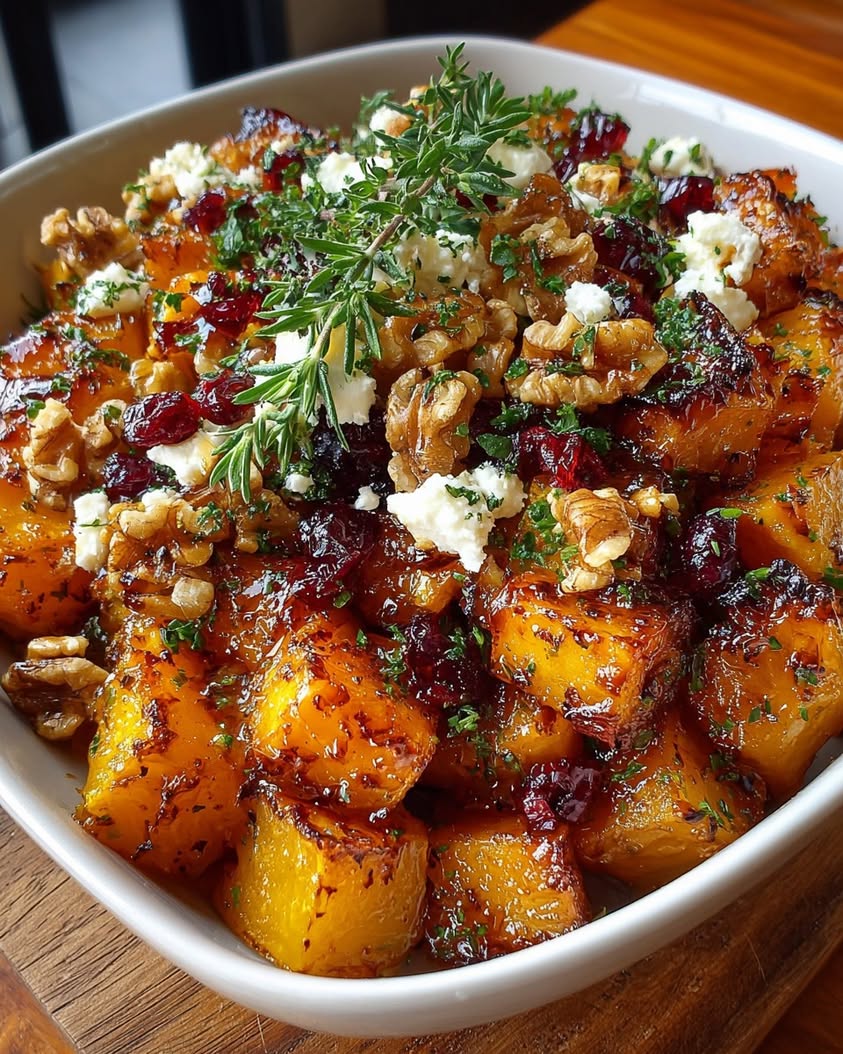
Caramelized Butternut Squash with Feta and Honey Cranberry Glaze: A Festive Fall Side Dish
Imagine a dish that captures the very essence of autumn on a single plate. This Caramelized Butternut Squash with Feta and Honey Cranberry Glaze does exactly that. It transforms humble ingredients into a stunning symphony of sweet, savory, and tangy flavors. Moreover, the process of roasting the squash brings out its natural sugars, creating those beautiful caramelized edges we all crave. Consequently, every bite delivers a perfect balance of creamy squash, salty cheese, crunchy nuts, and a glossy, vibrant glaze.
This recipe is more than just a side dish; it is a celebration of seasonal produce. The deep orange hue of the squash promises a bounty of vitamins, while the ruby red glaze adds a festive touch perfect for holiday tables. Additionally, the combination of textures from the tender squash, creamy feta, and toasted walnuts creates an incredibly satisfying mouthfeel. Ultimately, this dish is designed to impress your guests without demanding hours in the kitchen. It is an accessible showstopper that proves simple ingredients can create extraordinary results.
Furthermore, the versatility of this Caramelized Butternut Squash with Feta and Honey Cranberry Glaze makes it a year-round favorite. While it shines brightest in the fall, you can adapt it with different herbs and cheeses for any season. The recipe encourages creativity, allowing you to make it your own. Therefore, whether you are preparing a cozy family dinner or an elaborate holiday feast, this dish will undoubtedly become a cherished part of your culinary repertoire. It is a testament to the power of combining quality ingredients with thoughtful technique.
Quick Recipe Highlights
- Flavor Profile: This dish masterfully balances sweet, savory, and tangy notes. The natural sweetness of the caramelized squash meets the salty punch of feta, while the honey cranberry glaze adds a bright, fruity acidity. Consequently, each component complements the others, creating a complex and memorable taste experience.
- Texture: You will enjoy a delightful contrast of textures in every forkful. The interior of the squash becomes incredibly tender and almost creamy, while the edges crisp and caramelize. Meanwhile, the toasted walnuts provide a satisfying crunch, and the crumbled feta offers a soft, creamy counterpoint.
- Aroma: As it roasts, your kitchen will fill with the warm, comforting scent of caramelizing squash and cinnamon. Then, the final drizzle of the warm honey cranberry glaze releases a sweet and tart fragrance that is simply irresistible. This aromatic profile instantly makes any meal feel special and festive.
- Visual Appeal: This dish is a feast for the eyes with its stunning color palette. The vibrant orange squash, white feta, golden walnuts, and glossy red glaze create a beautiful mosaic on the plate. Presentation is effortless because the ingredients naturally arrange themselves in an artful, rustic way.
- Skill Level Needed: This is a beginner-friendly recipe that requires only basic kitchen skills like chopping and roasting. There are no complicated techniques, making it perfect for novice cooks looking to create something impressive. However, experienced cooks will appreciate the elegant simplicity and flavor balance.
- Special Equipment: You need only a sharp knife, a sturdy cutting board, a baking sheet, and a small saucepan. A good vegetable peeler is helpful but not mandatory. No fancy gadgets are required, making this recipe accessible to anyone with a standard home kitchen setup.
Recipe Overview
- Difficulty Level: We rate this recipe as easy because it involves straightforward techniques like peeling, cubing, and roasting. The most challenging part is safely cutting the squash, which we address with clear instructions. Furthermore, the glaze is a simple stovetop reduction that requires only occasional stirring. Overall, it is a very approachable dish for cooks of all levels.
- Category: This dish primarily functions as a spectacular side dish for autumn and winter meals. However, you can easily elevate it to a vegetarian main course by serving it over a bed of greens or grains like farro or quinoa. It also makes a fantastic addition to a holiday buffet or potluck table.
- Cuisine: While not tied to one specific tradition, this recipe draws inspiration from Mediterranean and modern American farm-to-table cooking. The use of feta and olive oil nods to Greek flavors, while the cranberry glaze is a classic North American holiday accent. This fusion creates a uniquely delicious and contemporary dish.
- Cost: This is a very cost-effective recipe, especially when butternut squash is in season. The squash itself is inexpensive and yields a large amount. Feta, walnuts, and cranberries are pantry items that can be bought in bulk. Overall, you can create this impressive dish for a fraction of the cost of a store-bought side.
- Season: This recipe is perfect for fall and winter when butternut squash is at its peak sweetness and cranberries are fresh. The warm spices and hearty nature of the dish are ideal for cooler weather. That said, you can make it year-round using stored squash and dried cranberries for the glaze.
- Occasion: It is perfect for Thanksgiving, Christmas, or any autumn dinner party. It also works wonderfully for a Meatless Monday dinner or a special weekend meal. The dish is elegant enough for formal events yet simple enough for a casual weeknight treat.
Why You’ll Love This Recipe
First and foremost, the taste and texture appeal of this Caramelized Butternut Squash with Feta and Honey Cranberry Glaze is undeniable. Each bite delivers a journey from sweet to savory, soft to crunchy. The caramelization process unlocks a deep, almost nutty flavor in the squash that pairs magically with the salty feta. Meanwhile, the glaze cuts through the richness with its bright, tangy sweetness. Consequently, your palate never gets bored, making it a side dish people will remember and request again and again.
Next, consider the convenience and preparation benefits. This recipe requires minimal hands-on time after the initial chopping. Once the squash is in the oven, you can prepare the glaze and other components. It is a fantastic make-ahead option, as you can roast the squash and make the glaze hours in advance. Simply assemble everything just before serving to maintain the perfect textures. Therefore, it reduces last-minute kitchen stress, which is a huge win during busy holiday seasons.
Additionally, the nutritional advantages are significant. Butternut squash is a powerhouse of vitamin A, vitamin C, and fiber. Walnuts contribute healthy omega-3 fats and protein, while feta offers calcium and protein. Using honey as a natural sweetener is a better alternative to refined sugars. This dish is inherently gluten-free and can be adapted for other dietary needs easily. So, you can feel good about serving something that is as nourishing as it is delicious.
Furthermore, the social and entertaining value of this dish is high. Its stunning visual presentation makes it a centerpiece on any table. It is a conversation starter that shows thought and care went into the meal. Because it appeals to a wide range of tastes and dietary preferences, it is a safe yet exciting choice for gatherings. It elevates a simple dinner into an occasion, making your guests feel truly special.
Finally, the cost-effectiveness and accessibility of the ingredients make this a practical choice. Butternut squash is one of the most affordable vegetables, especially in autumn. The other ingredients are common pantry staples or easy to find in any grocery store. You do not need any expensive or exotic items to create this restaurant-quality dish. Ultimately, it proves that eating well does not have to break the bank, and impressive cooking is within everyone’s reach.
Historical Background and Cultural Significance
The story of butternut squash begins in the Americas, where indigenous peoples cultivated various squash varieties for thousands of years. Specifically, butternut squash is a modern cultivar developed in the 1940s in Massachusetts. Breeders aimed to create a squash with a thinner neck and fewer seeds, making it easier to peel and prepare. This innovation revolutionized home cooking, turning a sometimes-daunting vegetable into a weeknight-friendly ingredient. Consequently, butternut squash became a staple in American fall cuisine, symbolizing harvest and abundance.
Meanwhile, the practice of combining squash with sweet and savory elements has deep roots. Native American cuisine often paired squash with maple syrup or honey and nuts. Mediterranean cultures have long combined vegetables like squash with briny cheeses like feta. This recipe is a beautiful fusion of these historical culinary traditions. It marries the New World ingredient of squash with Old World cheese and a modern, glossy glaze. Therefore, it represents a delicious dialogue between different food histories on a single plate.
The evolution of the recipe for Caramelized Butternut Squash with Feta and Honey Cranberry Glaze follows modern cooking trends. Recently, there has been a huge shift towards vegetable-forward dishes that are full of flavor and texture. Home cooks and chefs alike seek to elevate vegetables to center stage. This dish does exactly that by treating the squash with a technique—high-heat roasting for caramelization—that was once reserved for meats. The addition of a vibrant, quick pan sauce (the glaze) is another contemporary restaurant technique adapted for the home kitchen.
Regarding regional variations, you can find endless adaptations based on local ingredients. In the South, you might see pecans instead of walnuts and a bourbon-infused glaze. A Mediterranean version could use pistachios and a pomegranate molasses drizzle. In a dairy-free household, nutritional yeast or vegan feta might replace the cheese. The basic formula of roasted squash plus crunch plus cheese plus sweet-tart glaze is incredibly adaptable. This flexibility ensures the dish can reflect local tastes and seasonal availability, keeping it relevant and exciting across different tables.
Ingredient Deep Dive
Butternut squash is the undisputed star of this show. This winter squash, native to the Americas, has become synonymous with autumn cooking worldwide. It is packed with beta-carotene, which your body converts to vitamin A, crucial for eye and immune health. It also provides a good amount of vitamin C, potassium, and fiber. When selecting squash, look for one that feels heavy for its size with a firm, matte skin and no soft spots. Store it in a cool, dark place for up to a month, or peel, cube, and freeze it for longer storage. If you cannot find butternut, acorn or kabocha squash make excellent substitutes.
Feta cheese brings the essential salty, tangy counterpoint. Traditionally a Greek cheese made from sheep’s or goat’s milk, feta has a crumbly texture and bold flavor. It adds protein and calcium to the dish. For the best quality, look for feta packed in brine, which keeps it moist and flavorful. You can crumble it yourself from a block for superior texture. Store leftover feta submerged in its brine in the refrigerator. If you need a substitute, goat cheese offers a similar tang, while ricotta salata or cotija provide a saltier, drier crumble.
Walnuts contribute the necessary crunch and richness. These nuts have a long history, prized by ancient Romans and spread along trade routes. They are an excellent source of plant-based omega-3 fatty acids, antioxidants, and protein. Always toast walnuts before using them to unlock their full, nutty flavor and improve their texture. Store walnuts in an airtight container in the freezer to prevent their oils from turning rancid. For a different flavor profile, pecans or hazelnuts would be delicious alternatives in this Caramelized Butternut Squash with Feta and Honey Cranberry Glaze.
The honey cranberry glaze is what ties everything together. Cranberries are one of North America’s native fruits, used by Indigenous peoples for food and medicine. They are incredibly high in vitamin C and unique antioxidants called proanthocyanidins. Honey, a natural sweetener used for millennia, has antimicrobial properties and a complex flavor that varies by flower source. For this glaze, you can use fresh or frozen cranberries and any variety of honey you like. The combination cooks down into a stunning, glossy sauce that balances sweet and tart perfectly. Maple syrup can stand in for honey if needed.
Common Mistakes to Avoid
- Cutting Squash Unevenly: If your squash cubes are different sizes, they will cook unevenly. Smaller pieces will burn before larger ones caramelize. Always take time to trim your squash into uniform 1-inch cubes for consistent roasting.
- Skipping the Toasting Step for Walnuts: Raw walnuts can taste bitter and have a soft texture. Toasting them in a dry pan for a few minutes enhances their nutty flavor and provides a better crunch. Do not skip this simple but transformative step.
- Overcrowding the Baking Sheet: If you pile the squash onto the pan, it will steam instead of roast. You need space for hot air to circulate and create those caramelized edges. Use a large sheet pan or roast in two batches if necessary.
- Not Preheating the Oven: Starting with a fully preheated oven is non-negotiable for proper caramelization. A cold oven will cause the squash to cook slowly and release too much moisture, preventing browning. Always wait for the oven to reach the correct temperature.
- Stirring the Squash Too Often: Resist the urge to stir the squash constantly. Let it sit undisturbed on the hot pan to develop a golden-brown crust. Stirring too frequently prevents proper caramelization and can make the squash mushy.
- Using Cold Feta Straight from the Fridge: Cold feta does not crumble well and can be bland. Let it sit at room temperature for 15-20 minutes before crumbling. This allows its flavors to bloom and makes it easier to handle.
- Overcooking the Cranberry Glaze: The glaze should thicken slightly but remain pourable. If you reduce it too much, it will become sticky and hard when it cools. Remove it from the heat when it coats the back of a spoon.
- Assembling Too Early: If you add the feta, walnuts, and glaze too far in advance, the nuts will lose their crunch and the feta may dissolve. For the best texture, assemble the dish just before you are ready to serve it.
Essential Techniques
Properly cubing butternut squash is the first essential technique. Start by using a sharp chef’s knife to slice off the top and bottom for stability. Then, carefully peel the squash with a sturdy vegetable peeler. Cut it in half crosswise where the neck meets the bulb. Slice the neck portion into even rounds, then stack and cut into cubes. For the bulb, scoop out the seeds with a spoon, then cut it into planks and cube. Uniform cubes ensure everything roasts at the same rate, giving you a mix of tender interiors and caramelized edges in every bite.
High-heat roasting for caramelization is the core cooking method. Tossing the squash in oil and spreading it in a single layer on a preheated sheet pan is crucial. The high heat (around 425°F) causes the natural sugars in the squash to undergo the Maillard reaction. This reaction creates hundreds of new flavor compounds, resulting in that deep, complex, nutty taste and beautiful brown color. The visual cue for success is golden-brown edges and a fork-tender center. Avoid steaming by not overcrowding the pan, as moisture is the enemy of caramelization.
Creating a balanced reduction glaze is the final key technique. Combine the cranberries, honey, and water in a saucepan and bring to a simmer. As the cranberries pop and release their pectin, the liquid will naturally thicken. The goal is to cook it just long enough to break down the berries and meld the flavors without making it syrupy. The glaze should coat the back of a spoon but still be easily pourable. It will continue to thicken as it cools. This technique concentrates the sweet-tart flavor, creating a vibrant sauce that beautifully accents the rich squash and salty feta.
Pro Tips for Perfect Caramelized Butternut Squash with Feta and Honey Cranberry Glaze
For extra caramelization, toss the squash cubes with a teaspoon of maple syrup or brown sugar along with the oil. This gives the natural sugars a head start, promoting deeper browning and a more complex flavor profile without making the dish overly sweet.
Always toast your spices. If using ground cinnamon or other spices, warm them in a dry pan for 30 seconds before adding to the squash. This simple step wakes up the essential oils in the spices, making their aroma and flavor much more potent and fragrant.
Use a preheated baking sheet. Place your empty sheet pan in the oven as it preheats. Carefully add the oiled squash to the hot pan. This method gives an instant sear, jumpstarting the caramelization process and preventing sticking.
Finish with fresh herbs. Just before serving, sprinkle the assembled dish with finely chopped fresh rosemary, thyme, or sage. The bright, herbal notes cut through the richness and add another layer of fresh, seasonal flavor.
Adjust glaze tartness to your taste. After the cranberries have burst, taste the glaze. If it is too tart, add a bit more honey. If it is too sweet, a small splash of apple cider vinegar or lemon juice will balance it perfectly.
Reserve some elements for garnish. Do not mix all your feta and walnuts into the squash. Crumble a little extra feta and scatter a few whole toasted walnuts on top for a professional, finished look that highlights the ingredients.
Consider the squash skin. For an even easier prep and added fiber, you can leave the skin on certain varieties of squash like delicata. With butternut, the skin is too tough, but knowing this tip opens up other recipe possibilities.
Make a double batch of the glaze. The honey cranberry glaze is fantastic on roasted chicken, pork chops, or even spread on toast with goat cheese. Making extra takes minimal effort and provides a versatile condiment for your fridge.
Variations and Adaptations
For regional variations, imagine a Southern twist with toasted pecans and a glaze made with bourbon and sorghum. A Mediterranean version could feature toasted pine nuts, crumbled halloumi cheese, and a drizzle of pomegranate molasses. In the Southwest, try using pepitas, cotija cheese, and a glaze infused with a pinch of chipotle powder. These adaptations show how the core recipe can travel, absorbing local flavors and ingredients while maintaining its essential structure of sweet squash, crunchy element, salty cheese, and glossy glaze.
Seasonal adaptations are simple and effective. In spring, use cubed sweet potatoes and a strawberry-balsamic glaze. For summer, try zucchini or pattypan squash with a basil-infused honey and blackberry reduction. The autumn original is perfect, but in deep winter, switch to roasted parsnips or carrots with a citrus-honey glaze. This flexibility ensures you can enjoy the format of this dish all year long, using whatever produce is freshest and most affordable at the market.
Dietary modifications are straightforward. For a vegan Caramelized Butternut Squash dish, omit the feta or use a high-quality vegan feta alternative. Use maple syrup instead of honey in the glaze. For a nut-free version, substitute toasted sunflower seeds or pepitas for the walnuts. To make it Paleo or Whole30 compliant, ensure no cheese is added and use a compliant sweetener like pure maple syrup. The basic roasted squash and fruit glaze are naturally gluten-free, making it easy to accommodate most dietary needs.
Flavor variations can keep the recipe exciting. Add warm spices like smoked paprika, cumin, or garam masala to the oil before tossing the squash. Infuse the glaze with fresh ginger, orange zest, or a sprig of rosemary while it simmers. Experiment with different cheeses like sharp goat cheese, gorgonzola dolce for a stronger bite, or even shaved manchego. Swap the walnuts for almonds, hazelnuts, or pistachios. Each change creates a subtly new dish, perfect for customizing to your personal taste or the theme of your meal.
Serving and Presentation Guide
Plating techniques matter for visual impact. For individual servings, use a shallow bowl or wide plate. Place a generous scoop of the warm caramelized squash as the base. Artfully drizzle the honey cranberry glaze over and around it, letting some pool at the bottom. Then, scatter the crumbled feta and toasted walnuts on top, allowing some to tumble down the sides. This creates height and dimension. For a family-style presentation, pile the squash onto a warm platter, drizzle with glaze, and finish with the toppings in a rustic, abundant mound right in the center.
Garnishing ideas add the final touch of elegance. Beyond the feta and walnuts, consider a final flourish of microgreens, baby arugula, or flat-leaf parsley for a pop of green. A light dusting of flaky sea salt like Maldon just before serving enhances all the flavors. For a festive touch during the holidays, a few fresh whole cranberries or pomegranate arils add brilliant color and a burst of fresh tartness that complements the cooked glaze beautifully.
Traditional accompaniments for this dish include roasted turkey, glazed ham, or a simple roast chicken. It pairs wonderfully with other autumn sides like garlicky sautéed greens, wild rice pilaf, or creamy mashed potatoes. For a vegetarian feast, serve it alongside a hearty lentil loaf or stuffed mushrooms. Consider the balance of your entire menu; since this dish has sweet, savory, and rich elements, pair it with simpler, greener sides to create a well-rounded meal.
Modern serving suggestions think outside the box. Try serving the Caramelized Butternut Squash with Feta and Honey Cranberry Glaze warm over a bed of peppery arugula for a hearty salad. Stuff it into a warm pita or flatbread with a dollop of yogurt sauce for a lunch wrap. Use it as a topping for a grain bowl with quinoa and roasted chickpeas. You can even serve it slightly chilled as part of an autumn-inspired antipasto platter with cured meats and crusty bread.
Wine and Beverage Pairing
Choosing the right wine enhances this complex dish. A medium-bodied white wine with good acidity is ideal. A Viognier, with its stone fruit notes and slight floral aroma, complements the squash’s sweetness beautifully. An off-dry Riesling is another excellent choice; its sweetness matches the glaze while its acidity cuts through the richness of the cheese and nuts. For red wine lovers, opt for a lighter, low-tannin red like a Pinot Noir or a Beaujolais. Their bright red fruit flavors and subtle earthiness pair well without overwhelming the delicate squash.
Non-alcoholic alternatives can be just as sophisticated. A sparkling apple cider provides festive bubbles and autumnal flavor. For a warmer option, try a mulled cranberry juice simmered with cinnamon and orange peel. A simple honey-ginger lemonade offers a refreshing contrast to the rich, savory elements of the dish. The key is to look for beverages with some sweetness to mirror the glaze and enough acidity or spice to cleanse the palate between bites.
Coffee and tea pairings work wonderfully, especially for a brunch or lunch setting. A medium-roast coffee with notes of caramel or nut pairs naturally with the caramelized squash and walnuts. For tea, consider a spiced chai to echo the warm spices, or a fruity herbal tea like hibiscus, which will complement the cranberry glaze. Serve these warm beverages after the meal as a digestif, or alongside if you are serving the dish for a holiday breakfast or brunch.
Storage and Shelf Life
Proper storage methods are key to maintaining quality. Store leftover assembled dish in an airtight container in the refrigerator for up to 3 days. However, for best texture, consider storing components separately. Keep the roasted squash in one container, the glaze in a small jar, and the feta and walnuts in their own containers. This prevents the walnuts from getting soggy and the feta from dissolving into the squash. The squash and glaze can be refrigerated for up to 4 days, while toasted walnuts are best used within a week for maximum crunch.
Reheating instructions are simple but important. To reheat the squash, spread it on a baking sheet and warm it in a 350°F oven for 10-15 minutes until heated through. This method helps re-crisp the edges better than a microwave. Gently warm the glaze in a small saucepan over low heat or in the microwave, adding a teaspoon of water if it has thickened too much. Always add the fresh feta and walnuts after reheating the squash and just before serving to preserve their distinct textures.
Freezing guidelines apply primarily to the roasted squash and the glaze. You can freeze cooled, roasted squash cubes in a single layer on a baking sheet before transferring to a freezer bag for up to 3 months. The honey cranberry glaze also freezes well for up to 2 months. Thaw both in the refrigerator overnight before reheating. Do not freeze the assembled dish with feta and walnuts, as the cheese will become grainy and the nuts unpleasantly soft upon thawing.
Make Ahead Strategies
A smart prep timeline reduces day-of stress. You can peel and cube the squash up to two days in advance. Store the raw cubes in an airtight container or zip-top bag in the refrigerator. The honey cranberry glaze can be made up to 5 days ahead and stored in the fridge; gently reheat it before using. Toast the walnuts up to a week ahead and store them at room temperature in an airtight container. Crumble the feta the day before and keep it refrigerated. This staged approach means on the day you serve, you only need to roast the squash and assemble.
Understanding storage between steps is crucial for quality. Raw, cubed squash may release some moisture in the fridge; pat it dry with a paper towel before tossing with oil and roasting. The chilled glaze will thicken significantly; thin it with a splash of warm water or orange juice when reheating. Keep toasted nuts away from heat and light to preserve their crispness. By managing each component’s storage properly, you ensure the final assembled Caramelized Butternut Squash with Feta and Honey Cranberry Glaze tastes freshly made.
Assembly tips for make-ahead success are simple. If you must assemble the entire dish ahead, wait to add the glaze until the last moment to keep the squash from becoming soggy. You can combine the warm roasted squash with the feta and walnuts and hold it in a warm oven (200°F) for up to 30 minutes. Then, drizzle with the warm glaze right as you bring it to the table. This method preserves the ideal texture contrast and ensures a beautiful, glossy presentation that wows your guests.
Scaling Instructions
Halving the recipe is simple for smaller households. Use half of a medium butternut squash (about 1.5 lbs), and halve all other ingredients proportionally. Use a standard quarter sheet pan or a smaller baking dish for roasting to ensure the squash still has room to caramelize properly. The cook time may be slightly reduced by 5-10 minutes, so start checking for doneness early. This scaling is perfect for a romantic dinner or a side dish for two with minimal leftovers.
Doubling or tripling the recipe for a crowd requires some adjustments. You will need multiple baking sheets or very large commercial half-sheet pans. Do not stack the sheets in the oven; instead, roast them on separate racks and rotate the pans halfway through cooking to ensure even browning. You may need to increase the total roasting time by 5-10 minutes. Make the glaze in a larger saucepan, and consider toasting the walnuts in batches in the oven to save time. Scaling up works beautifully for potlucks and large holiday gatherings.
Nutritional Deep Dive
The macro breakdown of this dish is favorable. Butternut squash provides complex carbohydrates and fiber, offering sustained energy release. The olive oil and walnuts contribute healthy monounsaturated and polyunsaturated fats, including omega-3s. Feta cheese adds protein and a modest amount of saturated fat. The honey in the glaze is a simple carbohydrate, but because it is used sparingly in a reduction with fiber-rich cranberries, the glycemic impact is moderated. This balance of macros makes the dish satisfying without being overly heavy.
Micronutrient analysis reveals a wealth of vitamins and minerals. The squash is exceptionally high in Vitamin A (as beta-carotene), crucial for vision and immune function, and a good source of Vitamin C and potassium. Walnuts provide manganese, copper, and magnesium. Feta contributes calcium and phosphorus for bone health. Cranberries are famous for their Vitamin C and unique antioxidants that support urinary tract health. Together, they create a nutrient-dense side dish that supports overall wellness.
Health benefits extend beyond basic nutrition. The high fiber content from the squash and cranberries promotes digestive health and helps regulate blood sugar. The antioxidants from the squash, cranberries, and walnuts combat oxidative stress and inflammation. The healthy fats support heart health and brain function. This Caramelized Butternut Squash with Feta and Honey Cranberry Glaze is a perfect example of how delicious food can also be powerfully good for you, aligning pleasure with nourishment in every bite.
Dietary Adaptations
For a gluten-free version, this recipe is naturally compliant as written. Always double-check that your feta cheese does not contain any anti-caking agents derived from wheat, though this is very rare. All other ingredients—squash, oil, nuts, cranberries, honey—are inherently gluten-free. This makes it a safe and celebratory option for anyone with celiac disease or gluten sensitivity at your holiday table.
Creating a dairy-free or vegan adaptation is simple. Omit the feta cheese entirely, or use a store-bought vegan feta alternative made from tofu or almonds. For the glaze, substitute pure maple syrup, agave nectar, or vegan cane sugar for the honey. The rest of the recipe remains unchanged. You will still get the wonderful contrast of sweet, caramelized squash, crunchy nuts, and tangy glaze, making it inclusive for those avoiding animal products.
For a Paleo or Whole30 version, omit the cheese as dairy is not compliant. Ensure you use a compatible sweetener like pure maple syrup (for Paleo) or omit the sweetener entirely for Whole30, relying on the natural sweetness of the roasted squash and the tartness of the cranberries. Use ghee or avocado oil instead of olive oil if preferred. The dish becomes a simple, flavorful combination of roasted squash, toasted nuts, and a fruit reduction, aligning with the principles of these diets.
Troubleshooting Guide
If your squash is soggy instead of caramelized, the issue is likely moisture. You may have overcrowded the pan, used squash that was too wet, or not preheated the oven. Solution: Always pat cubed squash dry, spread in a single layer, and ensure your oven is fully hot. Next time, try the preheated sheet pan trick for an instant sear. For now, you can spread the cooked squash on a new pan and broil for a few minutes to crisp up the edges, watching carefully to prevent burning.
If your glaze is too tart or too sweet, balance is easy to fix. For a too-tart glaze, stir in an additional tablespoon of honey or maple syrup and warm gently. For a too-sweet glaze, add a squeeze of fresh lemon juice or a teaspoon of apple cider vinegar. You can also balance sweetness with a pinch of flaky sea salt. Taste as you adjust, remembering the glaze will taste less intense when drizzled over the savory squash and salty feta.
If your walnuts taste bitter, they may be rancid or burnt. Always taste a nut before adding it to the dish. Toasting nuts requires constant attention; they go from golden to burnt quickly. Solution: If they are just slightly over-toasted, you can sometimes salvage them by rinsing quickly in a strainer and re-toasting on very low heat to dry them out. If they are burnt or taste off, it is best to start over. Store nuts in the freezer to prevent rancidity.
Recipe Success Stories
Community feedback on this Caramelized Butternut Squash with Feta and Honey Cranberry Glaze has been overwhelmingly positive. Many home cooks report it becoming their new “signature” holiday side dish. One reader shared how she made it for a Friendsgiving where several guests had dietary restrictions, and it was the one dish everyone could enjoy and rave about. Another mentioned doubling the glaze recipe to use on pancakes the next morning, a testament to its versatility. These stories highlight how a reliable, flavorful recipe can become a cherished part of people’s traditions.
Variation successes from readers are inspiring. A home cook in Vermont substituted local maple syrup for honey and added crumbled cooked bacon for a sweet-salty crunch. Another used roasted Brussels sprout halves along with the squash for a more complex vegetable medley. A family with a nut allergy used toasted pumpkin seeds (pepitas) with great success. These adaptations show the recipe’s robust framework encourages creativity while still delivering fantastic results. It is a starting point for personal culinary expression.
Photography tips from successful makers often focus on natural light. The best photos of this dish are taken in daylight, showcasing the vibrant orange and red hues. Many suggest assembling the dish on a dark-colored plate or rustic wooden board to make the colors pop. A final drizzle of glaze and a sprinkle of greenery just before the photo adds life and dimension. Readers love sharing their beautiful results online, proving that this recipe is not only delicious but also incredibly photogenic, perfect for the social media age.
Frequently Asked Questions
Can I use pre-cubed butternut squash from the store? Yes, pre-cubed squash is a great time-saver. However, the pieces are often smaller and can vary in size, so watch your roasting time closely as they may cook faster. Pat them dry if they seem wet to ensure proper caramelization.
Can I make this recipe without nuts? Absolutely. For a nut-free version, simply omit the walnuts. You could add a different crunch with toasted pumpkin seeds (pepitas) or sunflower seeds, or just enjoy the contrast between the soft squash and creamy feta.
What can I use instead of feta cheese? Goat cheese (chèvre) is a fantastic substitute, offering a similar tangy creaminess. For a milder flavor, try ricotta salata or even small cubes of fresh mozzarella. For a vegan option, a crumbled almond-based “{“success”:true,”message”:”Recipe created successfully”,”post_id”:8022,”tasty_recipe_id”:8022,”shortcode”:” Print
Caramelized Butternut Squash with Feta, Walnuts, and Cranberry-Honey Glaze
Description
A sweet and savory fall dish featuring tender roasted butternut squash, tangy feta, crunchy walnuts, and a vibrant cranberry-honey glaze.
Ingredients
For the Crust:
- 1 medium butternut squash, peeled and cubed
- 2 tablespoons olive oil
- 1 teaspoon smoked paprika
- 1/2 teaspoon salt
- 1/4 teaspoon black pepper
- 1/2 cup crumbled feta cheese
- 1/3 cup chopped walnuts
- 1/4 cup dried cranberries
- 2 tablespoons honey
- 1 tablespoon balsamic vinegar
- 1 tablespoon fresh thyme leaves
Instructions
1. Prepare the Crust:
- Preheat oven to 400°F (200°C). Toss butternut squash cubes with olive oil, smoked paprika, salt, and pepper on a baking sheet.
- Roast for 25-30 minutes, stirring halfway, until squash is caramelized and tender.
- In a small saucepan, combine honey and balsamic vinegar over low heat. Stir in dried cranberries and cook for 2-3 minutes until slightly thickened.
- Arrange roasted squash on a serving platter. Drizzle with cranberry-honey glaze, then top with crumbled feta, chopped walnuts, and fresh thyme.
Notes
You can customize the seasonings to taste.

I’m Billy, a classically trained culinary school graduate from The Culinary Institute of America with over 12 years in the restaurant industry and over 19 years of cooking experience.