
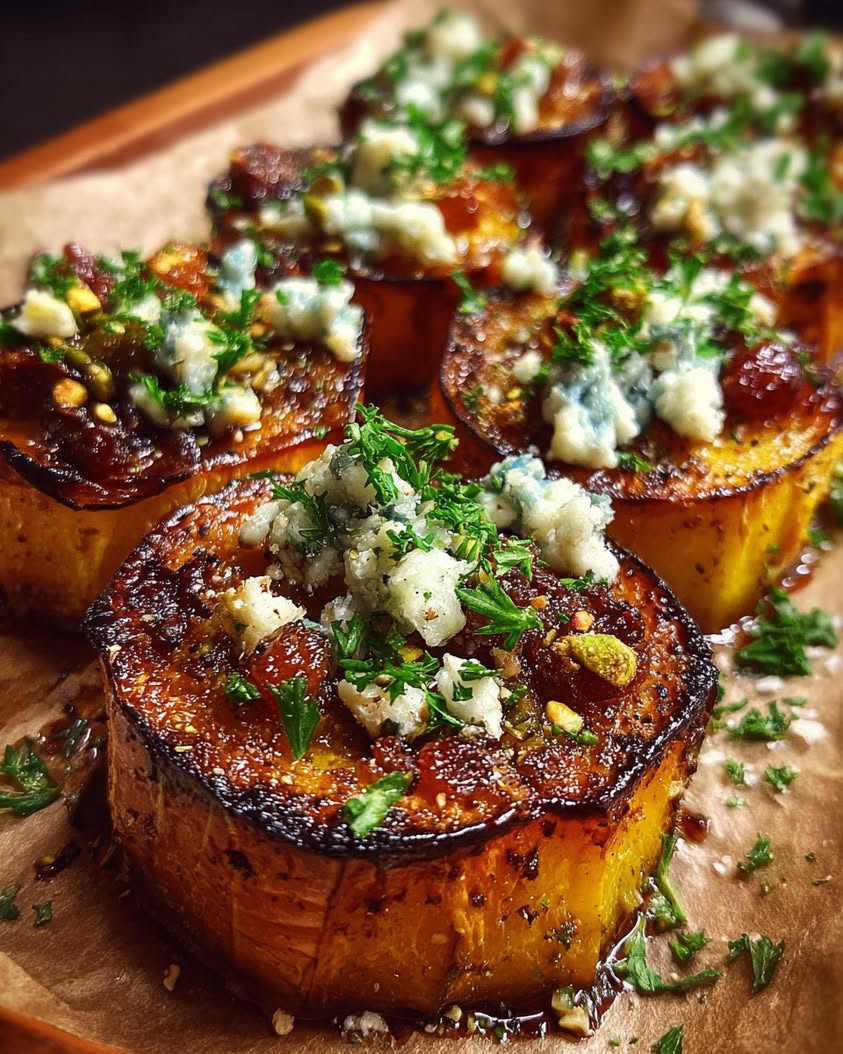
Caramelized Butternut Squash Rounds with Blue Cheese, Dried Apricots & Pistachios: A Stunning Fall Appetizer
Imagine a dish that captures the very essence of autumn on a single platter. This recipe for Caramelized Butternut Squash with Blue Cheese does exactly that. It transforms simple, wholesome ingredients into an elegant and unforgettable appetizer. Each component sings with seasonal flavor, creating a beautiful harmony on your palate. Furthermore, the stunning visual appeal makes it a centerpiece for any holiday table or cozy dinner party.
The magic of this dish lies in its perfect balance. Sweet, tender squash meets tangy, creamy cheese. Then, chewy dried fruit and crunchy nuts add delightful contrast. Ultimately, every bite is a complex and satisfying experience. This Caramelized Butternut Squash with Blue Cheese recipe is surprisingly simple to prepare. Consequently, it delivers restaurant-quality results with minimal kitchen effort. It is the ultimate way to showcase fall produce in a sophisticated and delicious manner.
Seasonal cooking brings immense joy, and this appetizer is a prime example. It utilizes the natural sweetness of butternut squash, enhanced by a simple caramelization process. The result is a versatile dish that works for both casual gatherings and formal events. Moreover, the combination of warm squash with cool, pungent cheese is simply irresistible. This Caramelized Butternut Squash with Blue Cheese will quickly become your go-to fall recipe. It impresses guests and satisfies your craving for hearty, flavorful food.
Quick Recipe Highlights
- Flavor Profile: This dish masterfully balances sweet, savory, tangy, and salty notes. The natural sugar in the squash caramelizes into a deep, rich sweetness. Meanwhile, the bold blue cheese provides a sharp, creamy counterpoint. Finally, the apricots add a bright, fruity tang that ties everything together.
- Texture: You will enjoy a wonderful play of textures in every mouthful. The squash rounds become tender and almost creamy inside with a slightly crisp, caramelized edge. The pistachios contribute a satisfying, earthy crunch. Additionally, the dried apricots offer a pleasant, chewy contrast to the other components.
- Aroma: As the squash roasts, your kitchen will fill with the warm, comforting scent of caramelizing sugars and autumn spices. The aroma of toasted pistachios adds a nutty depth. When you crumble the blue cheese over the top, its distinctive, pungent fragrance completes the sensory experience.
- Visual Appeal: This dish is a feast for the eyes with its vibrant autumn color palette. The golden-orange squash rounds create a beautiful base. Subsequently, the white and blue cheese crumbles, vibrant orange apricots, and green pistachios create a stunning mosaic. It looks artful and abundant on any serving platter.
- Skill Level Needed: This is an accessible recipe perfect for cooks of all levels. The techniques involve simple slicing, roasting, and assembling. Importantly, there is no complicated knife work or fussy procedures. Even a beginner can achieve fantastic results by following the clear instructions.
- Special Equipment: You need only basic kitchen tools. A sharp chef’s knife and a sturdy cutting board are essential for safely slicing the squash. Additionally, a good quality baking sheet is necessary for achieving even caramelization. A small bowl for mixing the oil and spices is also helpful.
Recipe Overview
- Difficulty Level: We rate this recipe as easy because it involves fundamental cooking techniques. The most challenging part is safely cutting the squash, which is manageable with a sharp knife. The oven does most of the work caramelizing the squash. Finally, assembly is simply a matter of scattering toppings, requiring no special culinary skill.
- Category: This dish fits beautifully into several meal categories. Primarily, it serves as an impressive starter or passed appetizer for gatherings. Alternatively, you can present it as a elegant side dish alongside roasted meats. It also makes a fantastic light vegetarian main course when served over a bed of greens.
- Cuisine: This recipe draws inspiration from modern American seasonal cooking. It utilizes classic fall ingredients popular in North American and European cuisine. The combination of fruit, nuts, and cheese has roots in Mediterranean and Middle Eastern flavor profiles. Ultimately, it is a contemporary fusion dish celebrating autumn harvest.
- Cost: This is a relatively economical dish, especially when butternut squash is in peak season. The squash itself is inexpensive and provides the bulk of the recipe. Blue cheese can be a pricier ingredient, but a little goes a long way. Dried apricots and pistachios are pantry staples that add big flavor for a small investment.
- Season: This recipe is perfect for fall and winter when butternut squash is at its sweetest and most abundant. The warm, roasted flavors are ideal for cooler weather. You can find the best squash from early September through late February. It is a quintessential holiday season appetizer for Thanksgiving and Christmas.
- Occasion: Serve this dish at any autumn or winter gathering. It is perfect for Thanksgiving as a starter or side. It also shines at Halloween parties, Friendsgiving dinners, and cozy weekend brunches. Furthermore, it makes an elegant offering for a dinner party or potluck where you want to impress.
Why You’ll Love This Recipe
First and foremost, the taste and texture appeal is absolutely incredible. Each bite delivers a complex symphony of flavors that dance on your tongue. The sweet, caramelized squash perfectly complements the sharp, salty cheese. Meanwhile, the chewy apricot and crunchy pistachio add surprises that keep your palate engaged. This Caramelized Butternut Squash with Blue Cheese is never boring. It is a dish that makes you pause and savor every single component.
Convenience is another major benefit of this stunning appetizer. The preparation is straightforward and mostly hands-off once the squash is in the oven. You can easily prepare the toppings while the squash roasts, maximizing your time. Consequently, you are not stuck at the stove during your own party. This recipe allows you to enjoy your guests while creating something beautiful. It is the definition of low-effort, high-reward entertaining food.
From a nutritional standpoint, this dish packs a powerful punch. Butternut squash is loaded with vitamin A, vitamin C, and fiber. Pistachios provide healthy fats, protein, and essential minerals. Even the blue cheese offers calcium and protein. You are serving a dish that is as wholesome as it is delicious. It feels indulgent but is made from real, recognizable ingredients. This balance is hard to find in many appetizer recipes.
The social and entertaining value of this recipe cannot be overstated. It creates an instant “wow” factor when you bring it to the table. Guests are always impressed by the beautiful presentation and sophisticated flavor combination. It sparks conversation and sets a tone of thoughtful, seasonal cooking. This Caramelized Butternut Squash with Blue Cheese makes you look like a culinary pro. It elevates any gathering from ordinary to memorable.
Finally, this recipe is cost-effective and accessible. Butternut squash is one of the most affordable vegetables, especially in autumn. You can often find dried apricots and pistachios in bulk sections for better value. A small amount of high-quality blue cheese goes a very long way in terms of flavor. You do not need expensive or exotic ingredients to create something special. This dish proves that elegant eating can be both simple and economical.
Historical Background and Cultural Significance
The story of this dish begins with its central ingredient: butternut squash. This particular variety is a relatively modern creation, developed in the 1940s in Massachusetts. Breeders aimed to create a squash with a thinner neck and larger bulb, making it easier to peel and prepare. Its sweet, nutty flavor and smooth texture made it an instant favorite. Consequently, it became a staple of American fall cuisine. The practice of roasting squash with sweeteners, however, has much deeper roots.
Culturally, roasting vegetables with honey or maple syrup draws from ancient preservation techniques. Early civilizations used honey to preserve fruits and enhance the natural sugars in root vegetables. The combination of fruit and nuts with cheese is a classic pairing found across many cultures. For instance, Italian cuisine often pairs pears with gorgonzola and walnuts. Similarly, this recipe follows that timeless template of sweet, savory, and crunchy elements. It is a fusion of old-world wisdom and new-world ingredients.
The recipe has evolved significantly with modern cooking trends. Initially, squash was often boiled or mashed. The shift towards high-heat roasting to achieve caramelization is a more contemporary technique. It highlights the vegetable’s natural sugars and creates deeper, more complex flavors. The use of blue cheese as a bold topping reflects today’s preference for assertive, artisanal flavors. This Caramelized Butternut Squash with Blue Cheese is a product of current culinary philosophy. It celebrates whole ingredients and bold contrasts.
Regional variations of this concept are plentiful. In the American South, you might find a similar dish with pecans and a bourbon glaze. Mediterranean versions could use feta cheese, olives, and oregano. A Middle Eastern adaptation might include pomegranate seeds and za’atar. The basic formula is incredibly adaptable to local tastes and ingredients. This versatility is a testament to the soundness of the original flavor combination. It is a template that invites creativity and personalization.
Ingredient Deep Dive
Let us start with the star: butternut squash. This winter squash is native to the Americas and has been cultivated for thousands of years. It is a fantastic source of beta-carotene, which your body converts to vitamin A. This nutrient is crucial for eye health and immune function. When selecting squash, look for one that feels heavy for its size with a firm, matte skin. Avoid any with soft spots or visible mold. Store whole squash in a cool, dark place for up to three months. For a substitution, acorn squash or sweet potato rounds would work beautifully.
Blue cheese brings the pungent, tangy element to the dish. This category of cheese has a history dating back to ancient times, often attributed to caves in Roquefort, France. The blue veins are mold cultures, which contribute to the strong flavor and creamy texture. Nutritionally, it provides calcium, protein, and beneficial bacteria. Choose a blue cheese that is crumbly yet moist, such as a Danish blue or a domestic variety. Store it tightly wrapped in the refrigerator. If blue cheese is too strong, you can substitute with goat cheese or feta for a milder tang.
Dried apricots are the sweet, chewy component. Apricots originated in China and traveled along the Silk Road to the Mediterranean. Drying fruit was an essential preservation method before refrigeration. They are rich in fiber, iron, and potassium. Look for unsulfured dried apricots for a deeper flavor and darker color, though they are less bright orange. Store them in an airtight container in a cool pantry. For a variation, try dried figs, cherries, or cranberries. Each will bring a different kind of sweetness and texture to the Caramelized Butternut Squash with Blue Cheese.
Pistachios provide the essential crunch. These nuts have been prized since ancient Persia and are one of the oldest flowering nut trees. They are a great source of healthy fats, protein, and antioxidants like lutein. Always choose unsalted pistachios for this recipe to control the seasoning. For the best flavor, buy them raw and toast them yourself. Store shelled pistachios in an airtight container in the refrigerator to prevent rancidity. Alternatively, walnuts, pecans, or hazelnuts would make excellent substitutes, offering different flavor profiles.
The supporting cast of olive oil, maple syrup, and spices are equally important. Extra virgin olive oil helps the squash caramelize and adds fruity notes. Pure maple syrup enhances the natural sugars of the squash during roasting. Spices like cinnamon and cayenne add warmth and a subtle kick. Use high-quality versions of each for the best result. These ingredients meld together to create the foundational flavor of the dish. They transform the simple squash into something truly special.
Common Mistakes to Avoid
- Cutting Squash Unevenly: Slices of different thicknesses will cook at different rates. Consequently, some pieces may burn while others remain undercooked. Always aim for consistent half-inch rounds for even roasting and caramelization.
- Overcrowding the Pan: Placing squash rounds too close together steams them instead of roasting them. This prevents proper caramelization and leads to soggy results. Ensure each piece has a little space on the baking sheet for optimal heat circulation.
- Using Old, Dull Spices: Ground cinnamon and cayenne lose their potency over time. Stale spices will not impart the intended warm, complex flavor. For the best taste, check your spice jars and replace them if they are more than a year old.
- Skipping the Parchment Paper: Roasting the squash directly on the baking sheet can lead to sticking and difficult cleanup. Lining your pan with parchment paper ensures easy release and protects your baking sheets from sticky maple syrup glaze.
- Adding Cheese Too Early: If you add the blue cheese before serving, it will melt into a messy pool. The cheese should be a cool, creamy contrast to the warm squash. Always crumble the cheese over the dish just before you present it.
- Forgetting to Toast the Nuts: Raw pistachios lack the deep, nutty flavor that toasted nuts provide. Taking two minutes to toast them in a dry pan elevates the entire dish. This simple step adds a crucial layer of flavor and aroma.
- Neglecting to Season: Butternut squash needs salt to enhance its natural sweetness. Do not rely solely on the saltiness of the blue cheese. Season the squash rounds with salt before roasting to build a balanced flavor foundation.
- Using Imitation Maple Syrup: Pancake syrup or artificial maple flavor will not deliver the same rich, complex sweetness. Invest in pure maple syrup for its depth of flavor; it makes a significant difference in the caramelization process.
Essential Techniques
Caramelization is the most important technique in this recipe. This chemical process occurs when sugars break down under high heat, creating new flavor compounds and a brown color. For perfect caramelization, your oven must be fully preheated, and the squash needs space on the pan. Do not move the squash too often; let it sit and develop that golden-brown crust. The visual cue for success is a deep golden color around the edges and a slightly blistered surface. This technique transforms the squash from simply cooked to deeply flavorful.
Proper knife skills for cutting squash ensure safety and even cooking. First, stabilize the squash by cutting a thin slice off the stem and blossom ends. Then, use a sharp chef’s knife to carefully cut through the center of the bulb to separate it from the neck. Peel each section with a vegetable peeler before slicing into rounds. A sharp knife is safer than a dull one because it requires less force. The goal is uniform half-inch discs that will roast at the same rate.
Toasting nuts is a simple but transformative technique. It intensifies the nutty flavor and improves the texture. Place shelled pistachios in a single layer in a dry skillet over medium heat. Shake the pan frequently until they become fragrant and lightly browned, about three to five minutes. Immediately transfer them to a plate to stop the cooking process. The key is constant attention, as nuts can burn in seconds. Properly toasted nuts add a professional touch to the finished Caramelized Butternut Squash with Blue Cheese.
Pro Tips for Perfect Caramelized Butternut Squash with Blue Cheese
For extra flavor, infuse your olive oil. Before brushing it on the squash, warm the oil with the cinnamon and a crack of black pepper. This allows the spices to bloom and disperse their flavor more evenly across every round.
Use a mandoline slicer for perfectly even rounds. If you have one, it guarantees uniform thickness for flawless roasting. Always use the safety guard to protect your fingers when slicing the firm squash.
Let the squash cool slightly before adding the cheese. A minute or two of rest prevents the blue cheese from melting completely. You want distinct crumbles that soften but retain their shape.
Chop the apricots and pistachios to similar sizes. This creates a more cohesive topping and ensures you get a bit of everything in each bite. A rough chop is perfect; you do not want a fine mince.
Finish with a drizzle of high-quality honey or balsamic glaze. After assembling, a light drizzle adds a final touch of sweetness or acidity that makes the flavors pop. Use a spoon or squeeze bottle for control.
If serving as a main, place the rounds over a bed of peppery arugula. The greens will wilt slightly from the warmth, creating a fantastic salad. Add a simple lemon vinaigrette to tie it all together.
Variations and Adaptations
For regional variations, consider the flavors of your locale. A Southern twist might include toasted pecans and a sprinkle of smoked paprika. A Mediterranean version could swap in feta cheese, Kalamata olives, and fresh oregano. An Asian-inspired adaptation could use a miso-honey glaze and sesame seeds. The basic structure of the recipe welcomes these creative changes. Experiment with local cheeses, nuts, and dried fruits to make it your own.
Seasonal adaptations are easy and encouraged. In winter, use hardy rosemary and pair with pomegranate arils for a festive look. For a spring version, try using delicata squash and topping with fresh mint and peas. Summer might inspire a grill variation, where you cook the squash rounds on a barbecue for a smoky flavor. This Caramelized Butternut Squash with Blue Cheese is a template for year-round enjoyment. Simply adjust the toppings to match what is fresh and available.
Dietary modifications are straightforward for many needs. For a vegan dish, use a dairy-free blue cheese alternative or a cashew-based cream. A nut-free version can substitute toasted pumpkin seeds for the pistachios. To reduce sugar, you can roast the squash with just olive oil and herbs, skipping the maple syrup. The recipe is naturally gluten-free. With a few smart swaps, almost anyone can enjoy this beautiful appetizer.
Serving and Presentation Guide
Plating techniques can elevate this dish from simple to stunning. Arrange the warm squash rounds in a circular pattern on a large, neutral-colored platter. Overlap them slightly for a sense of abundance. Crumble the blue cheese generously over the center of each round. Then, artfully scatter the apricots and pistachios in the gaps and over the top. The goal is a rustic yet intentional look where every component is visible.
Garnishing adds the final touch of freshness and color. A sprinkle of flaky sea salt just before serving enhances all the flavors. Fresh herb sprigs like thyme, rosemary, or flat-leaf parsley add a green accent. For a special occasion, edible flowers such as nasturtiums make a breathtaking garnish. A final drizzle of reduced balsamic vinegar or pomegranate molasses in a zigzag pattern looks professional. Remember, we eat with our eyes first.
Consider traditional and modern accompaniments. As an appetizer, it pairs wonderfully with a crisp white wine and simple crackers. As a side dish, serve it alongside herb-roasted chicken or pork tenderloin. For a modern, vegetarian meal, place the rounds on a smear of whipped ricotta or white bean puree. The versatility of this Caramelized Butternut Squash with Blue Cheese is one of its greatest strengths. It complements a wide range of main courses.
Wine and Beverage Pairing
Wine pairings should complement the dish’s sweet and savory balance. A slightly sweet white wine like a Riesling or Gewürztraminer mirrors the squash’s caramelized notes. The wine’s acidity cuts through the richness of the cheese. Alternatively, a light-bodied red with low tannins, such as a Pinot Noir or Beaujolais, works beautifully. The fruity notes in these reds harmonize with the dried apricots. Avoid heavy, oaky wines that could overwhelm the delicate flavors of the squash.
For non-alcoholic alternatives, consider drinks with similar balancing acts. A sparkling apple cider provides sweetness and effervescence. A ginger beer mocktail with lime offers a spicy kick that contrasts the cheese’s creaminess. Iced hibiscus tea brings a tart, floral note that cleanses the palate. Even a simple glass of chilled club water with a squeeze of lemon can be refreshing. The goal is to choose a beverage that refreshes between bites.
Storage and Shelf Life
Store leftovers properly to maintain quality. Place any assembled leftovers in an airtight container in the refrigerator. They will keep for up to two days. Note that the squash will soften, and the pistachios may lose some crunch. For best results, store the components separately. Keep the roasted squash in one container and the cheese, apricots, and nuts in another. Assemble just before serving the next day.
Reheating instructions are simple but important. To reheat the squash alone, place rounds on a baking sheet in a 350°F oven for about ten minutes. Avoid the microwave, as it will make the squash soggy. The cheese, nuts, and apricots should not be reheated. Add them to the warm squash after it comes out of the oven. This method preserves the intended textures of your Caramelized Butternut Squash with Blue Cheese.
Make Ahead Strategies
You can prep almost every component in advance. Peel and slice the squash up to a day ahead; store the rounds in cold water in the refrigerator to prevent browning. Toast the pistachios and chop the apricots, storing them at room temperature. Mix the oil and maple syrup glaze, keeping it in a jar. On the day of serving, simply drain and pat the squash dry, toss with the glaze, and roast. This strategy makes party preparation seamless and stress-free.
Scaling Instructions
Scaling this recipe up or down is simple. The ingredient ratios are forgiving. For a larger crowd, double or triple everything, but use two baking sheets. Rotate the sheets halfway through roasting for even cooking. When halving the recipe, use a smaller baking sheet to keep the squash pieces close together. Cooking times may vary slightly with scale; always rely on visual cues for doneness rather than strict timer adherence.
Nutritional Deep Dive
This dish offers a well-rounded nutritional profile. Butternut squash is low in calories but high in fiber and vitamin A. Blue cheese provides calcium and protein, though it is higher in saturated fat and sodium. Pistachios contribute heart-healthy monounsaturated fats, plant-based protein, and fiber. Dried apricots are a concentrated source of iron and potassium. Together, they create a dish rich in antioxidants, vitamins, and minerals. Enjoy it as part of a balanced diet.
Dietary Adaptations
For a vegan version, omit the blue cheese. Instead, use a crumbled vegan feta or a drizzle of tahini sauce. Ensure your maple syrup is certified vegan. For a paleo adaptation, omit the cheese and use only nuts, seeds, and fruit. A low-FODMAP version requires careful portioning of squash and omission of the apricots; use a small serving of squash with walnuts and a sprinkle of cheddar. Always check labels on processed ingredients like maple syrup for hidden additives.
Troubleshooting Guide
If your squash is not caramelizing, your oven temperature may be too low. Use an oven thermometer to verify accuracy. Also, ensure you are not overcrowding the pan. If the squash is burning before becoming tender, your slices may be too thin, or the oven rack may be too high. Move the rack to the center and check for doneness earlier. If the cheese overpowers the dish, use less next time or try a milder variety like Gorgonzola Dolce. Cooking is about adjustment.
Recipe Success Stories
Readers love the flexibility of this recipe. One home cook reported using it as a Thanksgiving side, doubling the recipe to feed fourteen people. Another substituted dried cranberries and pecans for a Christmas version. A vegetarian reader uses it as a main course over quinoa for a hearty weeknight meal. The common thread is how impressive it feels versus the actual effort required. Many note that it has become their signature fall dish for entertaining.
Frequently Asked Questions
Can I use a different type of squash? Absolutely. Acorn squash or delicata squash work very well. Delicata has the advantage of an edible skin, so no peeling is required. Adjust roasting times slightly based on the density and thickness of your squash slices.
What if I don’t like blue cheese? Goat cheese (chèvre) is a fantastic milder alternative. Feta cheese offers a salty, briny flavor. For a non-dairy option, a crumbled vegan cheese or a dollop of hummus can work in a pinch.
Can I make this recipe nut-free? Yes. Simply omit the pistachios or replace them with toasted pumpkin seeds (pepitas) or sunflower seeds. You will still get the essential crunchy texture without using tree nuts.
How do I know when the squash is done roasting? The squash is done when it is tender enough to be easily pierced with a fork and the edges are caramelized to a deep golden brown. The surface may have some blistered spots, which is a sign of good caramelization.
Can I prepare the squash rounds ahead of time? You can peel and slice the squash 1 day in advance. Store the slices submerged in cold water in the refrigerator. This prevents oxidation and keeps them fresh. Drain and pat them very dry before tossing with oil and roasting.
Is this recipe served hot or cold? It is best served warm. The contrast between the warm, soft squash and the cool, creamy cheese is part of the appeal. You can serve it at room temperature, but avoid serving it chilled from the fridge.
What’s the best way to cut a butternut squash safely? Use a sharp, heavy chef’s knife. First, microwave the whole squash for 2-3 minutes to slightly soften the skin. Cut off the stem and bottom to create flat ends. Carefully cut it in half crosswise where the bulb meets the neck, then peel and slice each section separately.
Can I grill the squash instead of roasting it? Yes, grilling adds a wonderful smoky flavor. Brush the rounds with oil and grill over medium heat for 5-7 minutes per side, until tender and marked. Then assemble with the toppings as directed.
My squash is watery. What did I do wrong? This can happen if the squash was very fresh or high in water content. Salting the slices and letting them sit for 10 minutes before roasting can draw out excess moisture. Also, ensure your oven is hot enough to encourage evaporation.
Can I use fresh apricots instead of dried? Fresh apricots are not a good substitute here as they contain too much moisture and would become mushy when roasted with the squash. The concentrated sweetness and chewy texture of dried apricots are integral to the dish.
Additional Resources
If you loved this Caramelized Butternut Squash with Blue Cheese, explore other seasonal vegetable recipes. Try roasted Brussels sprouts with bacon and balsamic, or a honey-glazed carrot and parsnip medley. For more cheese-based appetizers, a baked brie with fig jam or pear and gorgonzola crostini are excellent choices. Mastering basic roasting techniques will open up a world of simple, flavorful dishes. Visit our website for more guides on selecting, storing, and preparing autumn produce.
{“success”:true,”message”:”Recipe created successfully”,”post_id”:8943,”tasty_recipe_id”:8943,”shortcode”:” Print
Caramelized Butternut Squash Rounds with Blue Cheese, Dried Apricots & Pistachios
Description
A savory-sweet side dish featuring roasted butternut squash rounds topped with tangy blue cheese, chewy dried apricots, and crunchy pistachios.
Ingredients
For the Crust:
- 1 medium butternut squash, peeled and sliced into 1/2-inch rounds
- 2 tablespoons olive oil
- 1 tablespoon maple syrup
- 1 teaspoon smoked paprika
- Salt and black pepper to taste
- 1/2 cup crumbled blue cheese
- 1/3 cup chopped dried apricots
- 1/4 cup chopped pistachios
- Fresh thyme leaves for garnish
Instructions
1. Prepare the Crust:
- Preheat oven to 400°F (200°C). Line a baking sheet with parchment paper.
- In a bowl, toss butternut squash rounds with olive oil, maple syrup, smoked paprika, salt, and pepper. Arrange in a single layer on the baking sheet.
- Roast for 25-30 minutes, flipping halfway, until squash is tender and caramelized at the edges.
- Remove from oven and top each round with blue cheese, dried apricots, and pistachios. Return to oven for 2-3 minutes to slightly melt the cheese.
- Garnish with fresh thyme and serve warm.
Notes
You can customize the seasonings to taste.

I’m Billy, a classically trained culinary school graduate from The Culinary Institute of America with over 12 years in the restaurant industry and over 19 years of cooking experience.