
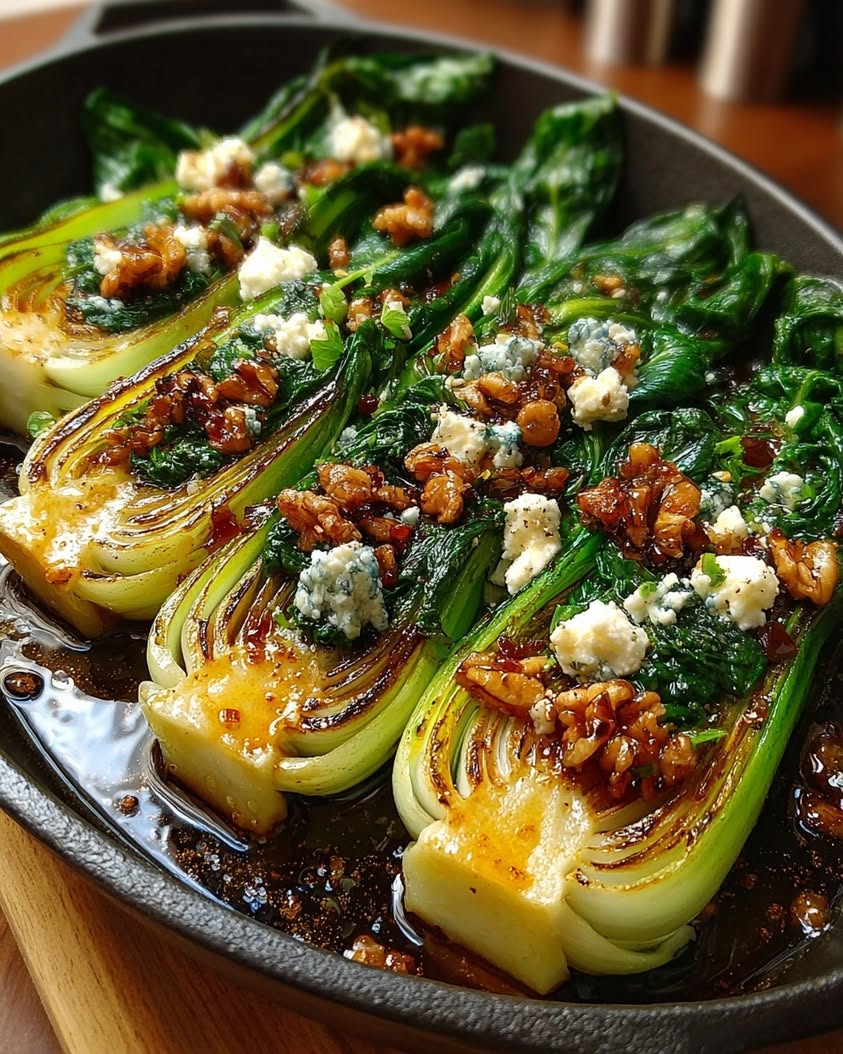
Caramelized Garlic Bok Choy with Feta, Walnuts & Hot Honey Drizzle: An Unforgettable Side Dish
Forget everything you thought you knew about simple greens. This Caramelized Garlic Bok Choy with Feta, Walnuts & Hot Honey Drizzle is a revelation. It transforms humble bok choy into a show-stopping side dish that will steal the spotlight from any main course. The magic lies in the perfect harmony of flavors and textures, creating a dish that is simultaneously savory, sweet, spicy, and crunchy. Ultimately, this recipe proves that vegetable sides can be the most exciting part of the meal.
Imagine tender, slightly charred bok choy leaves glistening with a sticky, sweet, and spicy hot honey drizzle. Then picture creamy, salty feta cheese crumbles and toasted, crunchy walnuts scattered over the top. The foundation of it all is the deeply savory, almost nutty flavor of caramelized garlic. Each bite delivers a complex symphony that will have everyone asking for the recipe. This Caramelized Garlic Bok Choy with Feta, Walnuts & Hot Honey Drizzle is not just food, it is an experience.
Furthermore, this dish is incredibly versatile. You can serve it alongside grilled chicken or salmon for a complete dinner. Alternatively, you can enjoy it as a hearty vegetarian main over a bed of rice or quinoa. The process is straightforward and quick, making it perfect for busy weeknights. However, the impressive presentation also makes it ideal for dinner parties and holiday gatherings. In short, this recipe is a must-try for anyone who loves bold, exciting flavors.
Quick Recipe Highlights
- Flavor Profile: This dish masterfully balances savory, sweet, salty, and spicy notes. The caramelized garlic provides a deep umami base, while the hot honey adds a sweet heat. Finally, the salty feta brings everything into perfect harmony.
- Texture: You get a wonderful contrast between the tender-crisp bok choy and the crunchy toasted walnuts. The creamy feta adds a soft, crumbly element that melts slightly on the warm greens.
- Aroma: As it cooks, the kitchen fills with the irresistible scent of garlic caramelizing in olive oil. This is followed by the warm, toasty aroma of walnuts and the subtle, sweet fragrance of honey and chili.
- Visual Appeal: The dish is a feast for the eyes with vibrant green bok choy, golden-brown garlic, white feta crumbles, and dark walnut pieces. The glossy honey drizzle adds a beautiful finishing sheen.
- Skill Level Needed: This is a beginner-friendly recipe. The techniques involve simple sautéing and toasting. Importantly, the key is managing heat to caramelize the garlic without burning it.
- Special Equipment: You only need basic kitchen tools: a large skillet or wok, a small bowl for mixing the honey, a knife, and a cutting board. No special appliances are required.
Recipe Overview
- Difficulty Level: This recipe is rated easy because it uses fundamental cooking techniques. The steps are sequential and simple to follow. However, paying attention to the garlic during caramelization is the only slightly tricky part. With a watchful eye, anyone can achieve perfect results.
- Category: This dish fits perfectly into several categories. Primarily, it is a spectacular vegetable side dish. Additionally, it can serve as a light vegetarian main course. It also works wonderfully as part of a shared plates or appetizer spread.
- Cuisine: The recipe is a modern fusion creation. It draws inspiration from Asian cooking techniques for the bok choy. Meanwhile, it incorporates Mediterranean ingredients like feta. The hot honey drizzle adds a contemporary American twist, creating a globally-inspired flavor profile.
- Cost: This is a very cost-effective recipe. Bok choy is an affordable green, and garlic, honey, and walnuts are pantry staples. Feta cheese is a modest splurge. Overall, you can make this impressive dish for a fraction of the cost of a restaurant equivalent.
- Season: This recipe is fantastic year-round. Bok choy is typically available in all seasons. It feels light and fresh for spring and summer meals. Conversely, the warm, caramelized flavors are also comforting during fall and winter.
- Occasion: It is incredibly versatile for different events. Serve it for a quick and healthy weeknight family dinner. Alternatively, plate it elegantly for a dinner party to impress guests. It is also a great addition to a holiday table as a vibrant, modern side.
Why You’ll Love This Recipe
First and foremost, the taste and texture appeal is off the charts. This Caramelized Garlic Bok Choy with Feta, Walnuts & Hot Honey Drizzle delivers an unforgettable eating experience. Each component plays a crucial role. The bok choy offers a mild, slightly peppery base that soaks up the other flavors. The caramelized garlic adds a profound savory depth that is almost meaty. Then, the hot honey provides a thrilling sweet-heat kick that wakes up your palate. Finally, the crunchy walnuts and creamy feta create a textural party in every single bite. You will find yourself going back for spoonfuls of the delicious sauce left on the plate.
Secondly, the convenience and preparation benefits are significant. From start to finish, this dish comes together in about twenty-five minutes. The prep work is minimal, involving mostly washing and chopping. The cooking process is active but straightforward, happening largely in one skillet. Consequently, you get a restaurant-quality side dish with very little fuss and almost no cleanup. This makes it a perfect solution for those nights when you want something special but lack the time or energy for complex cooking.
Next, consider the nutritional advantages. Bok choy is a nutritional powerhouse, packed with vitamins A, C, and K, along with calcium and folate. Garlic is renowned for its immune-boosting and anti-inflammatory properties. Walnuts provide healthy fats, protein, and omega-3s. Even the honey offers antioxidants. When you combine these elements, you create a side dish that is as good for your body as it is for your taste buds. You are serving a vegetable-centric dish that feels indulgent while being genuinely wholesome.
Moreover, the social and entertaining value of this recipe is high. This Caramelized Garlic Bok Choy with Feta, Walnuts & Hot Honey Drizzle looks incredibly impressive on the table. The colorful presentation and glossy drizzle suggest a chef-level skill. Guests will be delighted by the unique flavor combination. It serves as a fantastic conversation starter. Because it is so different from standard steamed vegetables, it shows thoughtfulness and creativity in your menu planning. It is a guaranteed crowd-pleaser that will make any meal feel more special.
Finally, the cost-effectiveness and accessibility are major wins. You do not need expensive or hard-to-find ingredients. Bok choy is widely available in most grocery stores, often for a low price. The other ingredients are common pantry items or easy to find. Therefore, you can create a gourmet-tasting dish on a very modest budget. This recipe democratizes exciting flavors, proving that you do not need rare ingredients to eat extraordinarily well. It is an accessible gateway to more adventurous home cooking.
Historical Background and Cultural Significance
To understand this dish, we must look at its core components. Bok choy, also known as pak choi, has been cultivated in China for over 1,500 years. It is a staple in East Asian cuisines, prized for its mild flavor and versatility. Traditionally, it is stir-fried, steamed, or added to soups. The technique of quickly cooking bok choy over high heat to retain its crisp-tender texture is a classic Chinese method. This recipe honors that tradition by using a hot skillet to sear the greens, creating a slight char that enhances their natural sweetness.
The use of caramelized garlic, however, takes a global turn. While garlic is fundamental to Chinese cooking, the process of slowly cooking it until golden brown and sweet is a technique celebrated in many European cuisines, particularly Italian and French. This method transforms the pungent raw bulb into a mellow, nutty, and deeply savory ingredient. By employing this technique, the recipe builds a flavor bridge between East and West, using a universal ingredient in a way that maximizes its umami potential.
The addition of feta cheese and walnuts introduces Mediterranean influences. Feta, a brined cheese from Greece, adds a salty, tangy punch. Walnuts have a long history in the Mediterranean diet and are often used in savory dishes for crunch and richness. Incorporating these elements creates a fusion profile. This is not a traditional dish from any one culture but a modern creation that celebrates global pantry staples. It reflects contemporary cooking trends where borders between culinary traditions are fluid, and flavor is the ultimate guide.
The final modern twist is the hot honey drizzle. Infusing honey with chili peppers is a relatively recent popular trend in American gastronomy. It adds a layer of sweet heat that complements both the savory garlic and the salty cheese. This component ties the entire dish together, providing a glossy finish and a burst of flavor. The evolution of this recipe is a story of culinary fusion. It takes a classic Asian vegetable, prepares it with a European technique, and accents it with Mediterranean and contemporary American flavors. The result is a truly global side dish for the modern table.
Ingredient Deep Dive
Let us start with the star: bok choy. This cruciferous vegetable is a member of the cabbage family. Culturally, it is central to Chinese cuisine and symbolizes prosperity. Nutritionally, it is a superstar, offering high levels of vitamins A, C, and K with very few calories. It also provides calcium and folate. When selecting bok choy, look for firm, crisp stalks with vibrant green leaves. Avoid any with yellowing or wilting. Store it unwashed in a plastic bag in your refrigerator’s crisper drawer for up to a week. For a substitution, you can use baby bok choy for a more tender result, or Swiss chard or kale, though cooking times will vary slightly.
Next, we have garlic, the flavor foundation. Garlic has been used for both culinary and medicinal purposes for millennia across countless cultures. It contains allicin, a compound with noted health benefits. For this recipe, fresh garlic is essential. Select firm, plump heads with tight, papery skin. Avoid any that are sprouting or feel soft. Store garlic in a cool, dark, dry place with good air circulation. Do not refrigerate whole heads. The key technique here is slicing the cloves thinly to ensure they caramelize evenly. If you must substitute, using pre-minced jarred garlic is not ideal as it often burns quickly, but in a pinch, add it later in the cooking process.
Now, consider the feta cheese. Traditionally, authentic feta is a protected designation of origin product from Greece, made from sheep’s milk or a sheep-goat blend. It provides a salty, tangy contrast that balances the sweet honey. Feta is a good source of calcium and protein. Look for feta sold in blocks in brine for the best flavor and texture. Pre-crumbled feta often contains anti-caking agents that can affect meltability. Store leftover feta submerged in its brine in the refrigerator. For a dairy-free version, a firm, salty tofu or a vegan almond feta can work. For a different cheese profile, try goat cheese or ricotta salata.
Finally, examine the supporting cast: walnuts and hot honey. Walnuts are one of the oldest tree foods, cultivated for thousands of years. They add essential crunch and healthy fats. Always toast your walnuts to unlock their full, nutty aroma. Store walnuts in an airtight container in the freezer to prevent their oils from turning rancid. The hot honey is simple to make by warming honey with red pepper flakes. Use a good-quality, raw honey for the best flavor. The heat level is easily adjustable. For a nut-free version, use toasted pumpkin seeds. For a vegan version, ensure your honey is plant-based, like agave nectar, though the flavor will differ.
Common Mistakes to Avoid
- Overcrowding the Pan: Adding all the bok choy at once will steam it instead of searing it. This leads to soggy, limp greens. Always cook in batches if your skillet is not large enough to hold the bok choy in a single layer. This ensures proper caramelization and texture.
- Burning the Garlic: Garlic slices can go from golden to burnt in seconds. Use medium heat and watch them closely, stirring frequently. The moment they turn a light golden brown, proceed to the next step. Burnt garlic will make the entire dish taste bitter.
- Using Raw, Untoasted Walnuts: Skipping the toasting step means missing out on deep, nutty flavor. Raw walnuts can be bland and slightly bitter. Always take the few minutes to toast them in a dry pan or oven until fragrant. This transforms their taste and crunch.
- Adding Cold Honey Directly: Simply drizzling thick, cold honey from the jar results in clumpy, uneven distribution. Gently warming the honey with the chili flakes thins it slightly. Consequently, it becomes a pourable, infused drizzle that coats every element beautifully.
- Neglecting to Dry the Bok Choy: Water clinging to the leaves from washing will cause oil to splatter violently. More importantly, it prevents proper browning. Always use a salad spinner or pat the bok choy thoroughly dry with clean towels before cooking.
- Oversalting Before Adding Feta: Feta cheese is inherently very salty. If you salt the bok choy during cooking as you might other greens, the final dish can become unpleasantly salty. Season lightly during cooking, then taste and adjust after adding the feta.
- Cutting the Stems and Leaves the Same Size: The white stems take longer to cook than the delicate green leaves. If you chop them uniformly, the leaves will be overcooked and wilted by the time the stems are tender. Always separate the stems, add them first, and then the leaves.
- Using Pre-Crumbled Feta: While convenient, pre-crumbled feta is often coated to prevent clumping. This coating can prevent it from melding nicely with the warm dish. For the best texture and flavor, buy a block of feta in brine and crumble it yourself.
Essential Techniques
The first essential technique is proper caramelization of garlic. This is not about browning or burning, but about slowly cooking the sliced garlic in oil until its natural sugars break down and create a sweet, complex, nutty flavor. The importance cannot be overstated, as this forms the foundational flavor of the entire dish. To master it, use a medium-low heat and plenty of oil. Stir frequently and watch for the color change from white, to pale gold, to a uniform light golden brown. The common pitfall is stepping away, leading to burnt, bitter garlic. The visual cue for success is fragrant, lightly golden slices that are tender, not crispy.
The second key technique is achieving the perfect sear on the bok choy. The goal is to create a slight char and blister on the surface while keeping the interior crisp-tender. This technique is important because it adds a layer of smoky flavor and appealing texture. To master it, ensure your pan is very hot before adding the oil and the bok choy. Do not move the pieces constantly; let them sit for a minute to develop color. The common pitfall is stirring too often, which prevents browning. The visual cue is seeing distinct caramelized spots on the white stems and edges of the leaves.
The third technique is toasting walnuts. This simple step amplifies their flavor exponentially by releasing their natural oils. Toasting is important because raw walnuts can be lackluster. To master it, use a dry skillet over medium heat. Add the walnuts and stir constantly for 3-5 minutes until they become fragrant and slightly darker. The common pitfall is walking away, as they can burn quickly. You can also toast them in a 350°F oven on a baking sheet for 8-10 minutes. The visual and aromatic cue is a rich, nutty smell and a shade darker color.
Pro Tips for Perfect Caramelized Garlic Bok Choy with Feta, Walnuts & Hot Honey Drizzle
First, separate the bok choy stems from the leaves and chop them into different sizes. Add the thicker stems to the pan first, as they need more time to become tender. Then, add the leaves just a minute or two before finishing. This ensures everything is perfectly cooked without any part being overdone.
Second, use the best extra-virgin olive oil you have for sautéing the garlic. A fruity, high-quality oil will contribute its own flavor to the caramelization process. Since the oil becomes infused with garlic, it becomes a key component of the sauce that coats the bok choy.
Third, let your hot honey infusion sit. After warming the honey with the red pepper flakes, take it off the heat and let it steep for at least 5-10 minutes. This allows the chili heat to fully permeate the honey, creating a more complex and evenly spicy drizzle.
Fourth, crumble the feta cheese with your fingers instead of using a knife or buying pre-crumbled. This gives you more control over the size of the crumbles and creates rustic, uneven pieces that look more appetizing and have varied textures in each bite.
Fifth, finish the dish with a final squeeze of fresh lemon juice or a drizzle of rice vinegar. A small hit of acidity after everything is plated will brighten all the rich, savory, and sweet flavors. It cuts through the richness and makes the dish taste even fresher.
Sixth, reserve some of the toasted walnuts and feta crumbles for garnish. After mixing most into the bok choy, sprinkle a little extra on top just before serving. This creates visual height and ensures every serving gets a generous amount of these delicious toppings.
Variations and Adaptations
For regional variations, consider adapting the toppings. For an Asian-inspired twist, replace the feta with crumbled fried tofu or a sprinkle of furikake. Swap the walnuts for candied pecans for a Southern U.S. feel. A Mediterranean version could include kalamata olives and fresh oregano alongside the feta. These changes keep the core technique while traveling the globe through flavor.
Seasonal adaptations are easy. In spring, add fresh peas or asparagus tips with the bok choy. For summer, incorporate sweet cherry tomatoes or fresh corn kernels. In autumn, use roasted squash cubes or pomegranate seeds as a garnish. Winter calls for heartier additions like roasted mushrooms or a sprinkle of crispy fried shallots. The base recipe is a fantastic canvas for seasonal produce.
Dietary modifications are straightforward. For a vegan version, use a plant-based feta alternative and maple syrup or agave instead of honey. To make it nut-free, substitute toasted sunflower or pumpkin seeds for the walnuts. For a paleo or Whole30 adaptation, omit the cheese and use a compliant hot sauce mixed with date paste instead of honey. The dish remains delicious and inclusive.
Flavor variations can personalize the dish. Add a teaspoon of grated ginger with the garlic for extra zing. Incorporate a splash of soy sauce or tamari when sautéing the bok choy for more umami. For a smoky note, use smoked paprika in the hot honey. A touch of orange zest in the final drizzle can add a wonderful citrus aroma. Do not be afraid to experiment.
Texture modifications can cater to different preferences. For extra crunch, add crispy fried onions or garlic chips on top. For a creamier element, dollop with Greek yogurt or tzatziki on the side. If you prefer softer walnuts, you can candy them in the skillet with a bit of sugar after toasting. Adjusting textures keeps the experience exciting.
Presentation alternatives can elevate the dish for different settings. For individual servings, stack the bok choy in small bowls or on appetizer plates. For a family-style feast, present it on a large platter. You can also chop the bok choy more finely and serve it as a warm salad. Consider serving the hot honey in a small pitcher on the side for guests to drizzle themselves.
Serving and Presentation Guide
Plating techniques matter for visual impact. For a family-style presentation, use a large, shallow serving bowl or platter. Arrange the bok choy with the stems facing one direction for a tidy look. Drizzle the hot honey in a zig-zag pattern across the top. This allows the glossy sheen to catch the light. For individual plates, use tongs to create a small bed of greens, then artfully scatter the toppings.
Garnishing ideas go beyond the recipe. A final sprinkle of flaky sea salt, like Maldon, adds texture and bursts of salinity. Freshly chopped herbs like cilantro, parsley, or mint provide a color contrast and fresh aroma. A light dusting of smoked paprika or chili powder adds visual warmth. A few edible flowers make the dish exceptionally elegant for special occasions.
Traditional accompaniments might include simple steamed rice or quinoa to soak up the delicious sauces. For a more substantial meal, pair it with grilled tofu, salmon, or chicken. The dish’s bold flavors stand up well to simply prepared proteins. It also works beautifully alongside other vegetable dishes like roasted carrots or a simple cucumber salad.
Modern serving suggestions embrace its versatility. Serve it as a shareable appetizer with crusty bread for scooping. Include it in a grain bowl layered with rice, a protein, and this bok choy as the flavorful vegetable component. For brunch, top it with a poached or fried egg; the runny yolk creates an incredible sauce. Its flexibility is one of its greatest strengths.
Temperature considerations are key. This dish is best served immediately while the bok choy is still crisp-tender and the feta is just beginning to soften from the warmth. If you must hold it, keep the components separate and combine just before serving. The hot honey should be warm, not hot, when drizzled to maintain its pourable consistency.
Portion control tips are helpful. As a side dish, plan for one medium head of bok choy per two people. As a main course for a light meal, one head per person is appropriate. Remember, the rich toppings are flavorful, so a little goes a long way. You can always prepare extra hot honey on the side for those who want more.
Wine and Beverage Pairing
Wine pairings should complement the dish’s sweet, salty, and spicy notes. A crisp, dry Riesling is an excellent choice. Its slight sweetness mirrors the honey, while its acidity cuts through the richness of the cheese and oil. Alternatively, a Sauvignon Blanc with its herbal and citrus notes complements the green vegetable and garlic. For red wine lovers, a light, fruity Pinot Noir with low tannins won’t overpower the bok choy and can handle the savory garlic and cheese.
Non-alcoholic alternatives can be just as sophisticated. A sparkling water with a squeeze of lime and a few mint leaves is refreshing. Ginger beer provides a spicy kick that echoes the hot honey. For a more complex option, try a chilled hibiscus or green tea, which offers tannins and floral notes that pair well with the savory and sweet elements. The goal is a drink that cleanses the palate.
Coffee and tea pairings are less common but can work. A light roast coffee with bright acidity could be interesting after the meal. For tea, consider a genmaicha (brown rice green tea). Its toasty, nutty flavor harmonizes beautifully with the caramelized garlic and walnuts. Serve these beverages after the meal rather than during, as their strong flavors might compete.
Temperature considerations for beverages are straightforward. White wines and non-alcoholic sparklers should be well-chilled. Red wine should be served slightly below room temperature. Iced teas or cold brews are perfect for warmer weather. The contrast between a cool drink and the warm, savory dish is often very pleasing to the palate.
Serving suggestions include offering a variety. For a dinner party, you might offer both a white wine and a sparkling non-alcoholic option. Always provide water on the table to cleanse palates between bites. If serving iced tea or coffee, consider offering simple syrup or cream on the side so guests can customize the sweetness to their taste alongside the bold flavors of the Caramelized Garlic Bok Choy.
Storage and Shelf Life
Storage methods depend on whether the dish is assembled. The best practice is to store components separately. Place cooled, cooked bok choy in an airtight container in the refrigerator. Store the crumbled feta, toasted walnuts, and hot honey each in their own small containers. This prevents the bok choy from becoming soggy and the walnuts from losing their crunch. Properly stored, the cooked bok choy will last for 2-3 days.
Temperature requirements are simple: refrigeration is essential for all components except the toasted walnuts, which can be stored at room temperature in a sealed container. The hot honey can also be stored at room temperature, but refrigeration will cause it to solidify. If you do refrigerate the honey, gently warm it before using to return it to a drizzle consistency.
Container recommendations are key for quality. Use glass or BPA-free plastic containers with tight-fitting lids. For the bok choy, a shallow container is better than a deep one to promote even cooling and prevent condensation from making it mushy. For the walnuts, a jar or zip-top bag works perfectly to keep them airtight and crisp.
Signs of spoilage to watch for include an off or sour smell from the bok choy, or any visible mold. The feta, if stored in brine, should smell tangy but not unpleasant. If the walnuts smell like paint or crayons, their oils have turned rancid. Discard any component that shows these signs. When in doubt, throw it out.
Reheating instructions are specific. Reheat only the bok choy component. Do so gently in a skillet over medium heat until just warmed through. Avoid the microwave, as it will make the greens limp and watery. Do not reheat the feta, walnuts, or honey. Instead, add these fresh to the reheated bok choy just before serving.
Freezing guidelines are not recommended for this dish. Bok choy has a high water content and will become extremely mushy and unappetizing upon thawing. The texture of the cooked greens does not survive freezing well. This is a recipe best enjoyed fresh or stored in the refrigerator for short-term leftovers.
Make Ahead Strategies
A prep timeline can save you stress. Up to two days ahead, you can toast the walnuts and store them at room temperature. You can also make the hot honey infusion and store it in a jar. One day ahead, wash and thoroughly dry the bok choy, then separate the stems and leaves. Store them in separate bags or containers in the refrigerator. You can also crumble the feta and keep it chilled. This leaves only the cooking and assembly for the last moment.
Storage between steps is crucial for quality. Keep pre-chopped vegetables in the crisper drawer. Keep nuts in a pantry cupboard. Keep cheese and honey in the refrigerator. Label containers with the date so you remember what was prepped when. Having everything measured and ready is a huge time-saver when it is time to cook.
Quality impact assessment is important. Pre-toasting nuts has no negative impact; it actually improves flavor. Making the hot honey ahead allows the flavors to meld, which is positive. Washing and chopping the bok choy ahead is fine if it is dried well and kept cold. However, cooking the bok choy itself should be done just before serving to preserve its ideal texture.
Assembly tips for last-minute ease: Have all your prepped components lined up near the stove. Use the same skillet for caramelizing garlic and cooking the bok choy to build flavor. After cooking the greens, transfer them to your serving platter immediately. Then, quickly scatter the cold feta and room-temperature walnuts over the hot bok choy so the cheese just begins to soften. Finally, drizzle with the honey.
Reheating guidelines only apply if you cooked the bok choy ahead, which is not ideal. If you must, reheat it gently in a pan as described earlier. The make-ahead strategy is really about prepping components, not the finished dish. This ensures the final product has the perfect contrast of temperatures and textures.
Fresh element additions are what make the dish shine. Even with everything else prepped, the final act of combining the warm bok choy with the cool feta and crunchy walnuts is essential. That contrast is part of the magic. Always add the hot honey drizzle at the very end so it remains glossy and distinct on the plate.
Scaling Instructions
Halving the recipe is simple for smaller households. Use one head of bok choy, two garlic cloves, a quarter cup of walnuts, two ounces of feta, and two tablespoons of honey with a pinch of red pepper flakes. Use a medium skillet instead of a large one. The cook time will remain roughly the same, as the pan surface area to ingredient ratio is similar. This is a perfect single-serving or couple’s meal.
Doubling or tripling the recipe for a crowd requires some adjustments. Use the largest skillet you have or cook in multiple batches to avoid steaming the bok choy. You may need to caramelize the garlic in batches as well to prevent overcrowding. Increase the heat slightly when cooking larger batches to maintain the sear, but watch the garlic even more closely. Consider mixing the cooked bok choy in a large bowl before transferring to a serving platter.
Equipment adjustments are necessary when scaling. For a double batch, a large wok or a wide Dutch oven can provide more surface area than a standard skillet. For tripling, plan to use two skillets simultaneously or cook in sequential batches. Have a large warming oven or serving platter ready to hold cooked batches while you finish the rest. Good mise en place is even more critical.
Timing modifications are minimal when scaling up. The actual cook time per batch remains constant. The total active time will increase linearly with the number of batches. Factor this in for party planning. You can hold earlier batches in a 200°F oven on a sheet pan while finishing later ones. Do not stack them, or they will steam and become soggy.
Storage considerations for leftovers change with scale. A larger batch means more potential leftovers. Remember, the assembled dish does not keep well. Therefore, with a large batch, it is even more important to store components separately if you anticipate leftovers. This way, you can quickly reheat a portion of bok choy and add fresh toppings later.
Nutritional Deep Dive
The macro breakdown of this dish is favorable. It provides a balance of healthy fats from the olive oil and walnuts, plant-based protein from the bok choy and walnuts, and complex carbohydrates from the vegetable fiber. The honey adds simple sugars, but in a modest amount per serving. The feta contributes additional protein and fat. This makes it a satiating side dish that contributes meaningfully to a balanced meal without being overly heavy.
Micronutrient analysis reveals a wealth of vitamins and minerals. Bok choy is exceptionally high in Vitamin K, crucial for bone health and blood clotting, and Vitamin A, important for vision and immunity. Garlic provides manganese, Vitamin B6, and Vitamin C. Walnuts are a top source of alpha-linolenic acid, a plant-based omega-3 fat. Feta cheese offers calcium and phosphorus. Together, they create a nutrient-dense profile.
Health benefits are numerous. The combination of ingredients supports heart health through healthy fats and antioxidants. The fiber in bok choy promotes digestive health. The compounds in garlic have been linked to supporting immune function and maintaining healthy blood pressure. The anti-inflammatory properties of walnuts and the probiotics potentially present in feta contribute to overall wellness. This is health food that tastes decadent.
Dietary considerations are mostly positive. The dish is naturally gluten-free. It is vegetarian but not vegan due to the honey and cheese. It is low in carbohydrates, making it suitable for low-carb and keto diets if the honey portion is minimized or substituted. For those monitoring sodium, the feta is the primary source, so you can reduce the amount or choose a lower-sodium variety.
Portion analysis shows that a serving as a side dish is relatively low in calories but high in volume and satisfaction due to the fiber and water content of the bok choy. As a main, it is light but filling. The fats from the oil, nuts, and cheese provide sustained energy. This makes it an excellent choice for those focusing on weight management, as it is flavorful and satisfying without excessive calories.
Weight management tips include being mindful of the amount of oil and cheese used if you are strictly counting calories. You can reduce the oil by a teaspoon or two and still achieve good caramelization. Measuring the walnuts and feta ensures you get the flavor and texture benefits without unintentionally overdoing it. The dish’s high fiber and water content promote fullness, helping to control overall calorie intake at a meal.
Dietary Adaptations
For a gluten-free adaptation, this recipe is naturally compliant. No ingredients typically contain gluten. However, always check labels on pre-packaged items like hot honey if you are using a store-bought version, as some might include additives with gluten. When serving, pair it with gluten-free grains like rice or quinoa.
For a dairy-free version, omit the feta cheese. Replace it with a dairy-free alternative like a firm, crumbly almond or cashew-based “feta.” Another option is to use nutritional yeast for a cheesy flavor, or simply increase the walnuts for crunch and rely on the other flavors. The result will be different but still delicious and satisfying.
For a vegan adaptation, combine the dairy-free modification with a honey substitute. Use maple syrup, agave nectar, or a vegan “bee-free” honey. The heat infusion works just as well. Ensure any store-bought vegan cheese or honey alternative aligns with your taste preferences, as flavors can vary widely by brand.
For a low-carb or keto adaptation, the main adjustment is the honey. Replace it with a keto-friendly sweetener like monk fruit or erythritol that can be gently warmed with the red pepper flakes and a tiny bit of water to create a syrup. Be mindful of the carb count in onions if you add them, and enjoy the bok choy, which is very low in net carbs.
For a paleo adaptation, omit the dairy (feta) and the legumes (if using any pea garnish). Replace the honey with pure maple syrup, which is pale{“success”:true,”message”:”Recipe created successfully”,”post_id”:7721,”tasty_recipe_id”:7721,”shortcode”:” Print
Caramelized Garlic Bok Choy with Feta, Walnuts & Hot Honey Drizzle
Description
A vibrant, savory-sweet side dish featuring tender bok choy, caramelized garlic, crunchy walnuts, tangy feta, and a spicy honey drizzle.
Ingredients
For the Crust:
- 4 heads baby bok choy, halved lengthwise
- 6 cloves garlic, thinly sliced
- 1/4 cup extra-virgin olive oil
- 1/4 cup walnuts, roughly chopped
- 1/4 cup crumbled feta cheese
- 2 tablespoons honey
- 1/2 teaspoon red pepper flakes
- Salt and black pepper to taste
- 1 tablespoon lemon juice
Instructions
1. Prepare the Crust:
- Heat olive oil in a large skillet over medium heat. Add garlic slices and cook, stirring frequently, until golden and caramelized, about 3-4 minutes. Remove garlic with a slotted spoon and set aside.
- Increase heat to medium-high. Place bok choy halves cut-side down in the skillet. Cook undisturbed for 3-4 minutes until lightly charred. Flip and cook for another 2-3 minutes until tender. Season with salt and pepper.
- In a small bowl, mix honey and red pepper flakes. Drizzle over the cooked bok choy. Top with caramelized garlic, walnuts, feta, and a squeeze of lemon juice. Serve immediately.
Notes
You can customize the seasonings to taste.

I’m Billy, a classically trained culinary school graduate from The Culinary Institute of America with over 12 years in the restaurant industry and over 19 years of cooking experience.