
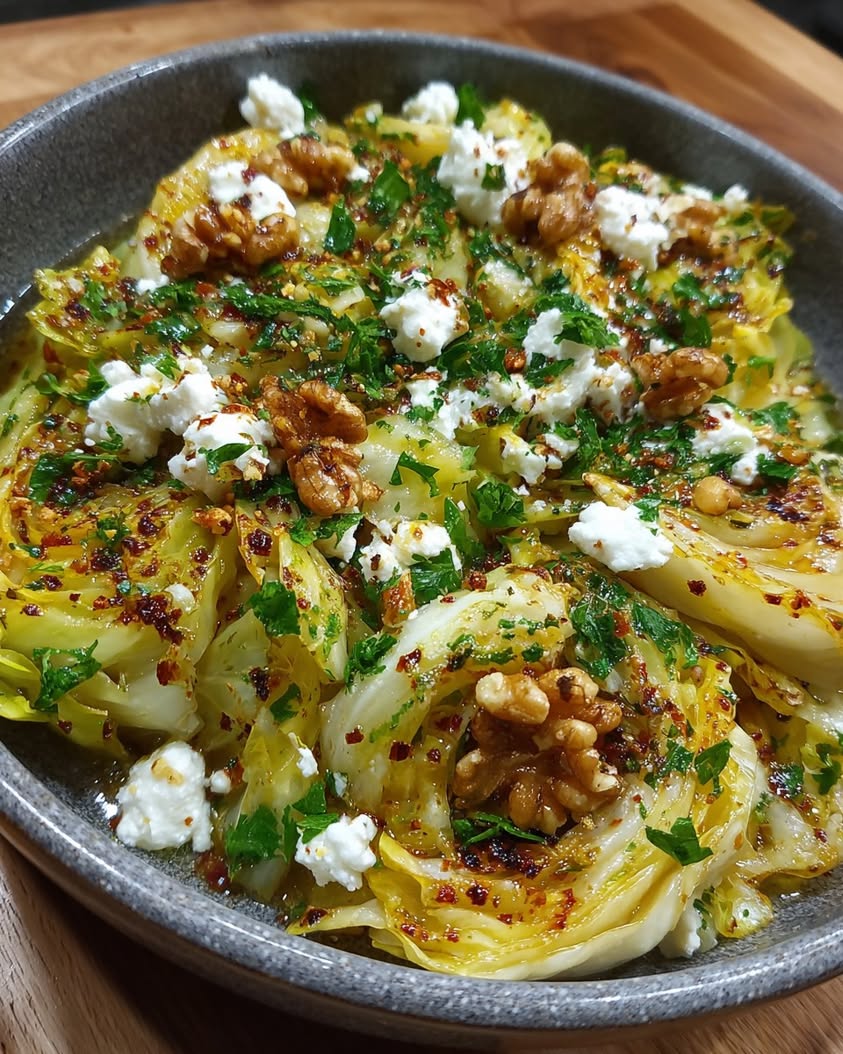
Caramelized Garlic Cabbage with Feta, Walnuts & Hot Honey Drizzle: A Sweet, Savory, and Addictive Side Dish
Let’s transform humble cabbage into a show-stopping side dish. This recipe for Caramelized Garlic Cabbage with Feta, Walnuts & Hot Honey Drizzle does exactly that. It takes a simple vegetable and elevates it with deep, complex flavors and contrasting textures. The result is a dish that will make you rethink everything you know about cabbage.
Imagine tender, sweet wedges of cabbage with deeply browned, crispy edges. Then picture them infused with the rich, mellow flavor of caramelized garlic. Finally, top it all with creamy, salty feta, crunchy toasted walnuts, and a spicy-sweet honey drizzle. This Caramelized Garlic Cabbage with Feta, Walnuts & Hot Honey Drizzle is a symphony of sweet, savory, salty, and spicy notes in every single bite. It’s the perfect side for a weeknight dinner or a stunning addition to your holiday table.
Moreover, this dish is incredibly versatile. You can serve it alongside roasted chicken, grilled steak, or flaky white fish. Alternatively, you can add a protein like chickpeas and turn it into a satisfying vegetarian main. The process is straightforward, but the payoff is enormous. You’ll create a restaurant-quality dish with minimal effort and maximum flavor.
Quick Recipe Highlights
- Flavor Profile: This Caramelized Garlic Cabbage with Feta, Walnuts & Hot Honey Drizzle delivers a perfect balance. You get the natural sweetness of the caramelized cabbage and garlic, the sharp saltiness of the feta, the earthy crunch of walnuts, and the spicy kick from the hot honey. Every element complements the others beautifully.
- Texture: The texture journey is exceptional. Expect soft, almost buttery cabbage with delightfully crispy, charred edges. The toasted walnuts add a crucial crunchy contrast, while the feta provides creamy, crumbly bites. The hot honey drizzle adds a sticky, glossy finish that ties it all together.
- Aroma: As this dish cooks, your kitchen will fill with an irresistible aroma. First, you’ll smell the sweet, nutty scent of caramelizing cabbage and garlic. Then, the toasting walnuts add a warm, earthy note. Finally, the warm honey and chili flakes create a sweet and spicy fragrance that is utterly mouthwatering.
- Visual Appeal: This dish is a feast for the eyes. The cabbage wedges turn a gorgeous golden-brown. The white feta and toasted walnuts create beautiful color contrast. Meanwhile, the glossy hot honey drizzle adds a professional, finished look that makes the plate pop.
- Skill Level Needed: This is a beginner-friendly recipe. You only need basic knife skills to cut the cabbage and garlic. The cooking technique primarily involves roasting and paying attention. Therefore, even novice cooks can achieve fantastic results with this Caramelized Garlic Cabbage recipe.
- Special Equipment: You need only a few standard kitchen tools. A sharp knife and cutting board are essential for prep. A sturdy baking sheet is necessary for roasting. Additionally, a small bowl for mixing the hot honey and a spoon for drizzling complete your equipment list.
Recipe Overview
- Difficulty Level: We rate this Caramelized Garlic Cabbage with Feta, Walnuts & Hot Honey Drizzle as “Easy.” The steps are simple and sequential. You prepare the cabbage, roast it with garlic, then assemble the toppings. There’s no complicated technique or precision required. Success relies more on timing and ingredient quality than advanced skill.
- Category: This recipe fits perfectly into the “Side Dishes” category. It’s designed to accompany a main protein. However, it’s substantial enough to be a “Vegetarian Main” with a simple addition like lentils or beans. It also works wonderfully as part of a “Holiday Spread” or “Weeknight Dinner.”
- Cuisine: This dish is a modern, fusion-style creation. It draws inspiration from Mediterranean flavors with the feta and olive oil. The hot honey adds a contemporary American twist. The technique of roasting hearty vegetables is universal, making this a globally-inspired, versatile recipe.
- Cost: This is a remarkably budget-friendly dish. Cabbage is an inexpensive vegetable year-round. Garlic, olive oil, and honey are pantry staples. Feta and walnuts are the only items with a slightly higher cost, but a little goes a long way. Overall, you can make this impressive side for just a few dollars per serving.
- Season: This Caramelized Garlic Cabbage shines in the cooler months. Cabbage is at its peak in fall and winter, offering the best flavor and texture. The warm, roasted nature of the dish is comforting when the weather turns cold. That said, you can absolutely enjoy it year-round with great results.
- Occasion: This dish is incredibly versatile for different occasions. It’s quick enough for a casual Tuesday night dinner. Conversely, it’s elegant and unique enough for Thanksgiving, Christmas, or a dinner party. It’s a guaranteed crowd-pleaser that will have guests asking for the recipe.
Why You’ll Love This Recipe
First, the taste and texture are utterly addictive. This Caramelized Garlic Cabbage with Feta, Walnuts & Hot Honey Drizzle hits every note on your palate. The sweetness from the caramelization, the umami from the garlic, the saltiness from the cheese, and the heat from the honey create a complex flavor profile. Additionally, the mix of soft, crispy, and crunchy textures keeps every bite interesting. You won’t find a more exciting way to eat your vegetables.
Second, the convenience factor is a major win. The prep work is minimal and mostly involves cutting. Once the cabbage is in the oven, your hands are free. You can prepare the rest of your meal, set the table, or simply relax. The recipe uses one baking sheet for easy cleanup. In short, you get a spectacular dish with very little active effort.
Third, let’s talk about nutritional advantages. Cabbage is a nutritional powerhouse packed with vitamins C and K, fiber, and antioxidants. Garlic boasts well-known immune-boosting properties. Walnuts provide healthy fats and protein. Olive oil is a source of heart-healthy monounsaturated fats. Therefore, this delicious side dish is also genuinely good for you.
Fourth, the social and entertaining value is high. This Caramelized Garlic Cabbage with Feta, Walnuts & Hot Honey Drizzle looks and tastes gourmet. Serving it to guests creates a “wow” moment. It’s a conversation starter because it transforms a humble ingredient into something special. People love discovering how delicious roasted cabbage can be.
Finally, the cost-effectiveness and accessibility are unbeatable. Cabbage is one of the most affordable vegetables in the produce aisle. The other ingredients are common and easy to find. You can make a large, impressive platter without straining your grocery budget. This recipe proves that eating well doesn’t require expensive or exotic ingredients.
Historical Background and Cultural Significance
Cabbage has a long and storied history as a staple food across many cultures. For centuries, people have cultivated various forms of cabbage worldwide. In many European cuisines, particularly Eastern European, cabbage is a central ingredient in dishes like sauerkraut, soups, and stuffed rolls. The technique of cooking cabbage slowly to bring out its natural sweetness is a traditional practice in many home kitchens. This recipe for Caramelized Garlic Cabbage with Feta, Walnuts & Hot Honey Drizzle modernizes that age-old wisdom with contemporary flavors.
The cultural significance of combining cabbage with fat and heat is nearly universal. From Irish colcannon to Korean kimchi, cultures have long paired this hardy vegetable with flavorful fats and seasonings to make it palatable and delicious. The addition of feta cheese connects the dish to the Eastern Mediterranean, where brined cheeses are a dietary cornerstone. Using honey as a sweetener and condiment has roots in ancient culinary traditions across the Middle East and Europe.
The evolution of this specific recipe is a testament to modern fusion cooking. The “hot honey” trend, popularized in American food culture in recent years, provides the spark. Chefs and home cooks began drizzling chili-infused honey over everything from pizza to fried chicken. Applying this concept to roasted vegetables was a natural, brilliant progression. Combining it with the Mediterranean trio of olive oil, garlic, and feta creates a globally-inspired dish that feels both familiar and novel.
Regional variations of this concept are easy to imagine. In the American South, you might find a version with pecans and a bourbon-infused honey. In Greece, you could substitute the walnuts with pine nuts and use thyme-infused honey. A Korean-inspired version might include gochujang in the honey drizzle and sesame seeds instead of walnuts. The basic formula of sweet roasted cabbage with a creamy, crunchy, and spicy topping is wonderfully adaptable to local tastes and ingredients.
Ingredient Deep Dive
Green Cabbage: Green cabbage is the sturdy foundation of this dish. Cultivated for over 4,000 years, it’s a member of the Brassica family, related to broccoli and kale. It’s incredibly rich in vitamin C, vitamin K, and fiber, and contains antioxidants with anti-inflammatory properties. When selecting a head, look for one that feels heavy for its size with crisp, tightly packed leaves and no signs of browning or wilting. Store it whole in the refrigerator’s crisper drawer for up to two weeks. For a variation, try Savoy cabbage for more tender leaves or red cabbage for a vibrant color pop, though note it may bleed.
Garlic: Garlic is essential for building the savory, aromatic base. Historically used both as food and medicine, garlic contains allicin, a compound with potent health benefits. It adds depth and umami that balances the cabbage’s sweetness. Choose firm, plump heads with tight, unbroken papery skin. Avoid heads with green sprouts or soft spots. Store in a cool, dark, dry place with good air circulation. For a milder flavor, you can roast whole cloves alongside the cabbage instead of using minced garlic.
Feta Cheese: Feta provides the crucial salty, creamy counterpoint. Traditionally a Greek cheese made from sheep’s or goat’s milk, it has a tangy, briny flavor that cuts through the richness. It’s a good source of calcium and protein. For the best taste, seek out authentic Greek feta stored in brine; it will be creamier and more flavorful than pre-crumbled varieties. Store leftover feta submerged in its brine or in lightly salted water in the refrigerator. For a dairy-free version, use a firm, salty vegan cheese or omit it for a simpler preparation.
Walnuts: Walnuts introduce earthy flavor and essential crunch. They are one of the oldest tree foods, cultivated since 7000 B.C. Nutritionally, they are an excellent source of omega-3 fatty acids, antioxidants, and minerals like manganese. Toasting them is non-negotiable, as it deepens their flavor and improves texture. Store walnuts in an airtight container in the freezer to prevent their oils from turning rancid. For substitutions, pecans or pine nuts would work beautifully, offering a slightly different but complementary taste profile.
Hot Honey: The hot honey drizzle is the modern, unifying element. This combination of sweet and spicy has become a beloved condiment. Honey itself has antimicrobial properties. To make it, you simply warm honey and infuse it with chili flakes, allowing the heat to bloom and meld with the sweetness. Use a good-quality, pure honey for the best flavor. The spice level is easily adjustable; add more chili flakes for more heat or a pinch of smoked paprika for depth. For a vegan version, use agave syrup or maple syrup infused with chili.
Common Mistakes to Avoid
- Not Drying the Cabbage Thoroughly: After washing the cabbage wedges, pat them completely dry with a kitchen towel. Any excess water will steam the cabbage on the pan instead of allowing it to caramelize and crisp. This step is crucial for achieving those beautiful browned edges.
- Overcrowding the Baking Sheet: Give each cabbage wedge plenty of space on the pan. If the wedges are touching, they will steam each other and become soggy. For optimal caramelization, the hot air needs to circulate freely around each piece. Use two sheets if necessary.
- Using Pre-Crumbled Feta: Pre-crumbled feta is often drier, chalkier, and less flavorful than a block feta stored in brine. Taking the extra minute to crumble a block yourself makes a significant difference in creaminess and taste. The quality of the feta shines in this simple dish.
- Skipping the Walnut Toasting Step: Raw walnuts can taste somewhat bitter and lack the deep, nutty aroma of toasted ones. Toasting them in a dry pan for a few minutes until fragrant wakes up their oils and transforms their flavor and crunch. Don’t skip this quick, impactful step.
- Adding the Garlic Too Early: If you add the minced garlic at the beginning with the cabbage, it will burn in the oven’s high heat and turn bitter. Instead, add it halfway through cooking when the cabbage has released some moisture and the oven temperature is more stable.
- Not Adjusting Hot Honey to Taste: The spice level of chili flakes can vary widely by brand. Always taste your hot honey drizzle before adding it. You can adjust by adding more honey for sweetness, more chili for heat, or even a squeeze of lemon for brightness.
- Serving Immediately Without Resting: Let the baked cabbage sit for 5 minutes after it comes out of the oven before adding the toppings. This allows the wedges to firm up slightly, making them easier to handle and plate without falling apart.
- Using Old, Stale Spices: Chili flakes lose their potency over time. If your flakes are more than a year old, they may contribute little heat or flavor. For the best results in your hot honey drizzle, use fresh, high-quality chili flakes or even a fresh chili pepper.
Essential Techniques
How to Cut Cabbage into Wedges: This technique ensures your wedges hold together during cooking. First, remove any loose or damaged outer leaves. Then, place the cabbage on a cutting board with the core side down. Using a sharp chef’s knife, cut the cabbage in half straight through the core. Place each half cut-side down and cut again into quarters, always cutting through the core. The core is what keeps the leaves attached. For this recipe, you will then cut each quarter in half again to make eight total wedges.
The Art of Caramelization: Caramelization is the process where sugars in food brown and develop complex flavors when exposed to heat. For cabbage, this happens best with high heat, ample oil, and enough space on the pan. The key is patience; don’t move the wedges too often. Let them sit undisturbed for at least 10-15 minutes to allow a proper crust to form. You’ll know it’s working when you see deep golden-brown spots and smell a sweet, nutty aroma.
Infusing Honey with Heat: This simple technique unlocks big flavor. Gently warm the honey in a microwave or a small saucepan over low heat just until it becomes fluid. Then, stir in the chili flakes. The warmth helps the chili’s capsaicin and essential oils dissolve into the honey, creating a more integrated and potent flavor than simply mixing them cold. Let it sit for at least 5 minutes to allow the infusion to deepen before drizzling.
Toasting Nuts to Perfection: Toasting nuts maximizes their flavor and crunch. Place raw walnut pieces in a single layer in a dry skillet over medium heat. Cook, shaking the pan or stirring frequently, for 3-5 minutes. Watch them closely, as they can burn quickly. They are done when they become fragrant and take on a slightly darker color. Immediately transfer them to a plate to stop the cooking process.
Pro Tips for Perfect Caramelized Garlic Cabbage
First, use a preheated baking sheet. Place your empty baking sheet in the oven as it preheats. When you add the oil-coated cabbage, it will immediately start sizzling, promoting better browning from the very first moment.
Second, don’t shy away from oil. Cabbage needs a generous coating of olive oil to achieve proper caramelization and prevent drying out. Ensure every nook and cranny of the wedge gets lightly coated.
Third, season aggressively. Cabbage is a large, dense vegetable that needs ample seasoning. Be generous with the salt and pepper both before and after roasting to build layers of flavor.
Fourth, check your garlic’s doneness by smell, not just sight. When you add the minced garlic to the pan, it should cook just until fragrant—about 1 minute. If it starts to brown, it’s in danger of burning and turning bitter.
Fifth, let the hot honey cool slightly before drizzling. If it’s too hot, it will melt the feta on contact. A warm, but not piping hot, drizzle will cling beautifully to the cabbage and cheese.
Sixth, add a final flourish of fresh herbs. A scattering of chopped fresh parsley, dill, or chives just before serving adds a pop of color and a bright, fresh flavor that cuts through the richness.
Seventh, use the residual heat of the pan. After transferring the cabbage to a serving platter, you can quickly toss the walnuts in the warm, flavorful oil left on the baking sheet before sprinkling them on top.
Variations and Adaptations
Regional Variations: Take this Caramelized Garlic Cabbage on a world tour. For a Middle Eastern twist, use za’atar in the oil and top with pomegranate seeds and pistachios. An Asian-inspired version could include a drizzle of soy sauce and sesame oil in the roasting stage, with toasted sesame seeds and scallions as garnish. For a Spanish flair, add smoked paprika to the oil and top with manchego cheese and Marcona almonds.
Seasonal Adaptations: Adapt the toppings to what’s fresh. In spring, add fresh peas or asparagus tips in the last few minutes of roasting. Summer calls for a garnish of fresh basil or mint. In autumn, incorporate roasted squash cubes or apples alongside the cabbage. For a winter holiday version, add dried cranberries or cherries to the hot honey for a festive touch.
Dietary Modifications: This recipe is easily adaptable. For a vegan Caramelized Garlic Cabbage, omit the feta or use a vegan alternative, and ensure your honey is replaced with agave or maple syrup. For a nut-free version, use toasted sunflower or pumpkin seeds instead of walnuts. To make it gluten-free, simply confirm all your condiments are certified GF, which they typically are.
Flavor Variations: Experiment with different infused oils or seasonings. Toss the cabbage with truffle oil for luxury. Add a spoonful of miso paste to the olive oil for umami depth. Sprinkle with everything bagel seasoning before roasting for a fun, savory crunch. A squeeze of lemon or balsamic glaze at the end can add a welcome acidic punch.
Texture Modifications: Play with the final texture. For extra crispiness, finish the cabbage under the broiler for 1-2 minutes. For a softer, more stew-like dish, add a splash of vegetable broth to the pan for the last 10 minutes of cooking and cover it with foil. You can also shred the cabbage instead of wedges for a faster-cooking, slaw-like result.
Presentation Alternatives: Change up how you serve it. Instead of a platter, serve individual wedges on each plate as a composed side. Chop the roasted cabbage and mix it with the toppings for a warm salad presentation. Alternatively, layer it in a baking dish with the feta and walnuts mixed in, then drizzle with honey for a family-style casserole.
Serving and Presentation Guide
Plating Techniques: For the most visual impact, arrange the cabbage wedges in a circular pattern on a large, shallow platter or a rustic wooden board. Overlap them slightly, showing both the flat caramelized side and the layered edge. This creates height and visual interest. Drizzle the hot honey in a zigzag pattern across the wedges rather than pooling it in one spot.
Garnishing Ideas: Beyond the feta and walnuts, consider final garnishes for color and flavor. Fresh, soft herbs like parsley, dill, or chives are classic. Microgreens or arugula add a peppery note and green vibrancy. Edible flowers make it special for a celebration. A final flake of sea salt, like Maldon, adds texture and highlights the seasoning.
Traditional Accompaniments: This Caramelized Garlic Cabbage pairs beautifully with simple proteins that don’t compete with its bold flavors. Think roasted chicken, grilled pork chops, pan-seared salmon, or seared scallops. It also works wonderfully alongside other Mediterranean dishes like lemon rice, orzo, or a simple lentil salad.
Modern Serving Suggestions: For a modern, plant-forward meal, make this the star. Place a wedge or two on a bed of creamy polenta or whipped feta. Top with a fried egg for a hearty brunch. Alternatively, chop it up and fold it into warm grain bowls with quinoa and a lemon-tahini dressing.
Temperature Considerations: This dish is best served warm. The feta should be cool, and the honey should be warm, creating a pleasant temperature contrast. If you need to hold it, keep the roasted cabbage warm (covered loosely with foil) and add the cold toppings and warm drizzle just before serving to maintain optimal textures.
Portion Control Tips: As a side dish, plan for one to two wedges per person, depending on the size of the cabbage and the rest of the meal. If serving as a vegetarian main with added protein like chickpeas, two to three wedges per person is appropriate. The rich flavors mean a little goes a long way.
Wine and Beverage Pairing
Wine Pairings: The sweet, savory, and spicy notes in this Caramelized Garlic Cabbage call for versatile wines. A crisp, unoaked white like Sauvignon Blanc or Pinot Grigio cuts through the richness and complements the garlic. A light-bodied, fruity red like Pinot Noir or Beaujolais can handle the sweetness and spice without overpowering the dish. For a real treat, try an off-dry Riesling; its sweetness mirrors the honey, and its acidity balances the fat.
Non-Alcoholic Alternatives: Sparkling water with a squeeze of lemon or lime is always a refreshing choice. For something more special, try a ginger beer; its spice plays well with the hot honey. A tart cherry or pomegranate juice spritzer (mixed with sparkling water) offers fruity notes that complement the caramelization. Iced herbal tea, like mint or chamomile, can be a soothing, flavorful partner.
Coffee/Tea Pairings: While not a typical pairing for this dish, if serving for a brunch or lunch, consider beverages like a light roast coffee or a black tea with lemon. The bitterness can be a pleasant contrast to the dish’s sweetness. Avoid overly creamy or sweetened coffee drinks, as they may clash with the savory elements.
Temperature Considerations: Serve white wines and non-alcoholic spritzers well-chilled. Red wines should be served slightly cooler than room temperature for this dish—around 60°F (15°C)—to keep them refreshing. Iced beverages should be cold but not diluted; use large ice cubes or frozen fruit to keep them cool without watering them down.
Serving Suggestions: Always offer water on the table to cleanse the palate. If serving wine, pour a small taste first to allow guests to experience how the pairing works with the food. For non-alcoholic options, consider serving them in elegant glassware to make the meal feel just as special.
Storage and Shelf Life
Storage Methods: Store leftover components separately for the best quality. Keep the plain roasted cabbage wedges in an airtight container in the refrigerator for up to 4 days. Store the crumbled feta, toasted walnuts, and hot honey each in their own small containers. This prevents the cabbage from becoming soggy and the walnuts from losing their crunch.
Temperature Requirements: All components must be refrigerated. The cabbage, feta, and hot honey (once cooled) should go in the fridge. Only the toasted walnuts can be stored at room temperature in a sealed container, but for longer freshness, refrigerate them as well.
Container Recommendations: Use shallow containers for the cabbage to allow for quick cooling and to prevent condensation from making it soggy. Glass containers are ideal as they don’t retain odors. For the hot honey, a small glass jar with a lid is perfect.
Signs of Spoilage: Discard the cabbage if it develops a sour smell, becomes slimy, or shows signs of mold. Feta will dry out and become excessively crumbly when too old but is generally safe if properly refrigerated. Honey is a natural preservative and lasts indefinitely, but if water is introduced, it could ferment.
Reheating Instructions: Reheat cabbage wedges in a 375°F (190°C) oven or toaster oven until warmed through, about 10 minutes. This method helps re-crisp the edges. Avoid the microwave, as it will make the cabbage limp and soggy. Add the cold feta, room-temperature walnuts, and rewarmed honey drizzle after reheating.
Freezing Guidelines: Freezing is not recommended for the assembled dish or the roasted cabbage wedges. The high water content in cabbage causes it to become mushy and watery upon thawing. The texture will be severely compromised. It’s best enjoyed fresh or refrigerated for a few days.
Make Ahead Strategies
Prep Timeline: You can prep almost every component 1-2 days in advance. Cut the cabbage into wedges, wash, and dry them thoroughly. Store them wrapped in paper towels inside a large zip-top bag in the fridge. Crumble the feta and store it in brine or water. Toast the walnuts and keep them at room temperature. Make the hot honey and store it in a jar.
Storage Between Steps: Keep all prepped ingredients in their separate containers as described above. The key is keeping moisture away from the cabbage and walnuts. Having everything ready means you can simply toss the cabbage with oil, roast it, and assemble the dish in under 30 minutes for a stress-free meal.
Quality Impact Assessment: Prepping ahead has minimal negative impact. The cabbage may lose a tiny bit of crispness but roasts up just fine. Toasted walnuts stay crunchy for days if stored properly. Hot honey’s flavor may even improve as the chili infuses further. The only element best added fresh is the final garnish of herbs.
Assembly Tips: On the day of serving, take the prepped cabbage out of the fridge 20 minutes before roasting to take the chill off. This helps it caramelize better. Warm the hot honey gently to return it to a drizzling consistency. Have all your toppings ready in small bowls for quick assembly straight from the oven.
Reheating Guidelines: If you must roast the cabbage ahead, let it cool completely before storing. Reheat on a baking sheet in a hot oven (400°F/200°C) for 5-8 minutes to re-crisp. The texture will be slightly softer than fresh but still delicious. Always add the cold toppings after reheating.
Scaling Instructions
Halving the Recipe: Halving this Caramelized Garlic Cabbage recipe is straightforward. Use half a small head of cabbage (cut into 4 wedges), 2 cloves of garlic, and proportionally reduce all other ingredients by half. Use a standard baking sheet; the smaller quantity will caramelize even faster, so check for doneness a few minutes early.
Doubling or Tripling: For a crowd, double or triple the ingredients. The key is to use multiple baking sheets and rotate them in the oven halfway through cooking. Do not try to cram more wedges onto one sheet, or they will steam. You may need to cook in batches if your oven can’t fit multiple sheets with proper air circulation.
Equipment Adjustments: When scaling up, ensure you have enough large, rimmed baking sheets. Consider using convection bake mode if your oven has it, as it circulates air better for even browning on multiple racks. For very large batches, a commercial sheet pan might be a worthwhile investment for home cooks who entertain often.
Timing Modifications: Cooking time does not scale linearly. A single batch may take 25 minutes, but a double batch on two sheets might take 30-35 minutes due to the increased moisture in the oven. Always rely on visual cues—golden-brown edges and tender stems—rather than strictly following the clock.
Storage Considerations: Leftovers from a large batch should be stored in several smaller, shallow containers instead of one large deep one. This allows for faster cooling and easier reheating of single servings without disturbing the rest.
Nutritional Deep Dive
Macro Breakdown: A serving of this Caramelized Garlic Cabbage provides a balanced mix of macronutrients. The olive oil and walnuts contribute healthy fats, primarily monounsaturated and polyunsaturated (including omega-3s). The cabbage offers complex carbohydrates and fiber. The feta cheese adds protein and fat. The honey contributes simple carbohydrates. It’s a side dish that provides sustained energy from its fiber and fat content.
Micronutrient Analysis: This dish is a micronutrient powerhouse. Cabbage is exceptionally high in vitamin K (crucial for blood clotting and bone health) and vitamin C (an antioxidant). Garlic provides manganese, vitamin B6, and selenium. Walnuts are a top source of biotin and copper. Feta cheese is rich in calcium and phosphorus. Together, they deliver a wide spectrum of vitamins and minerals.
Health Benefits: The combination of ingredients supports overall health. The fiber in cabbage promotes digestive health. The antioxidants in cabbage, garlic, and walnuts combat oxidative stress and inflammation. The healthy fats support heart and brain health. Garlic has been linked to immune system support and cardiovascular benefits.
Dietary Considerations: This dish is naturally gluten-free and vegetarian. It can be adapted to be vegan (swap honey and feta) and nut-free (swap walnuts for seeds). Those on a low-sodium diet can reduce the salt and use a lower-sodium feta. For low-carb or keto diets, reduce the amount of honey or use a sugar-free syrup alternative.
Portion Analysis: As a side dish, one to two wedges provide a substantial serving of vegetables without excessive calories. The toppings, while flavorful, are used in moderation. This makes it easy to fit into various dietary plans. Be mindful of the honey drizzle portion if strictly monitoring sugar intake.
Dietary Adaptations
Gluten-Free: This Caramelized Garlic Cabbage recipe is naturally gluten-free. All core ingredients—cabbage, olive oil, garlic, feta, walnuts, honey, and chili flakes—are inherently free of gluten. Always double-check labels on pre-packaged items like chili flakes for any “may contain” warnings if you have celiac disease or a severe sensitivity.
Dairy-Free: For a dairy-free version, omit the feta cheese or replace it with a dairy-free alternative. Look for a firm, crumbly vegan cheese, preferably one with a tangy, salty profile. Another excellent option is to use creamy, mashed avocado or a dollop of dairy-free yogurt for the creamy element. Nutritional yeast can add a cheesy flavor.
Vegan: To make this dish vegan, make two swaps. First, replace the honey with maple syrup, agave nectar, or vegan “bee-free” honey. Second, address the feta as described in the dairy-free adaptation above. Ensure all other ingredients are plant-based. The resulting dish will still have wonderful sweet, savory, and spicy flavors.
Low-Carb/Keto: Cabbage is relatively low in net carbs, making this dish keto-friendly with modifications. The primary concern is the honey. Replace it with a keto-approved sweetener like monk fruit or erythritol syrup infused with chili flakes. Use full-fat feta and be mindful of portion sizes to stay within your daily macros.
Paleo: For a Paleo adaptation, omit the dairy (feta cheese). Replace the honey with raw honey, which is often considered acceptable in moderation on a Paleo diet, or use pure maple syrup. Ensure all ingredients are whole, unprocessed foods. The walnuts and olive oil are perfect for the Paleo framework.
Low-FODMAP: Cabbage can be high in FODMAPs in large servings. To adapt, use a smaller portion of cabbage per serving. Replace garlic with garlic-infused olive oil (where the garlic solids are removed, leaving only the flavor). Omit the honey or use a small amount of maple syrup, which is low-FODMAP in moderation.
Troubleshooting Guide
Texture Issues (Soggy Cabbage): If your cabbage is soggy, the most common culprit is overcrowding the pan or not drying it well before roasting. For a fix, spread the wedges out and finish cooking them at a higher temperature (425°F/220°C) for the last 5-10 minutes without moving them to encourage evaporation and browning. Next time, ensure the wedges are bone-dry and{“success”:true,”message”:”Recipe created successfully”,”post_id”:7715,”tasty_recipe_id”:7715,”shortcode”:” Print
Caramelized Garlic Cabbage with Feta, Walnuts & Hot Honey Drizzle
Description
A savory-sweet side dish featuring tender cabbage caramelized with garlic, topped with creamy feta, crunchy walnuts, and a spicy honey drizzle.
Ingredients
For the Crust:
- 1 small head green cabbage, thinly sliced
- 4 cloves garlic, minced
- 2 tablespoons olive oil
- 1 tablespoon butter
- Salt and black pepper to taste
- 1/2 cup crumbled feta cheese
- 1/4 cup chopped walnuts, toasted
- 2 tablespoons honey
- 1/2 teaspoon red pepper flakes
Instructions
1. Prepare the Crust:
- Heat olive oil and butter in a large skillet over medium heat. Add garlic and sauté until fragrant, about 1 minute.
- Add sliced cabbage to the skillet, season with salt and pepper, and cook for 15-20 minutes, stirring occasionally, until cabbage is tender and caramelized.
- While cabbage cooks, combine honey and red pepper flakes in a small bowl. Microwave for 15 seconds or warm gently in a saucepan until runny.
- Transfer caramelized cabbage to a serving dish. Top with crumbled feta and toasted walnuts.
- Drizzle the hot honey mixture over the top and serve warm.
Notes
You can customize the seasonings to taste.

I’m Billy, a classically trained culinary school graduate from The Culinary Institute of America with over 12 years in the restaurant industry and over 19 years of cooking experience.