
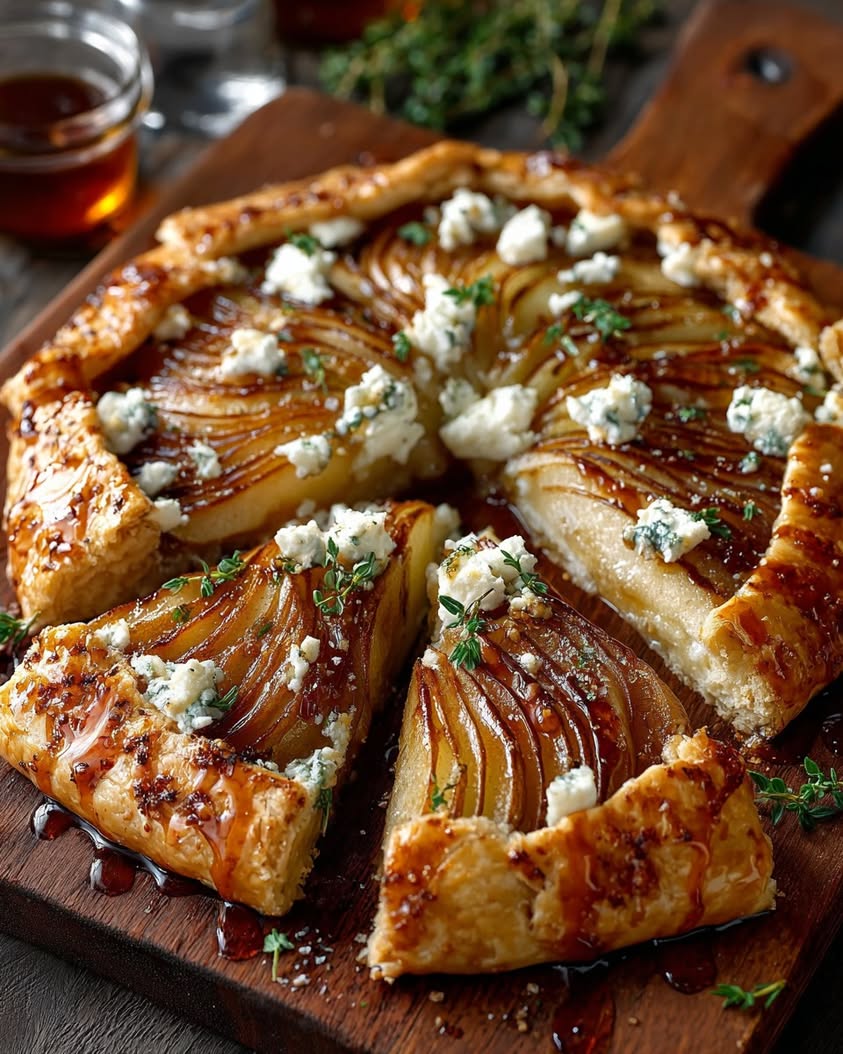
Caramelized Pear & Goat Cheese Galette with Thyme Honey Drizzle: A Rustic Masterpiece
Imagine a dessert that effortlessly bridges the gap between savory sophistication and sweet comfort. This Caramelized Pear & Goat Cheese Galette with Thyme Honey Drizzle is exactly that. It presents a stunning, free-form tart that celebrates the natural beauty of rustic baking. Moreover, it combines warm, buttery pastry with juicy pears and creamy cheese for a truly unforgettable experience.
The magic of this Caramelized Pear Goat Cheese Galette lies in its perfect balance. First, sweet pears caramelize into jammy perfection. Then, tangy goat cheese adds a luxurious creaminess that cuts through the sweetness. Finally, an aromatic thyme honey drizzle ties everything together with herbal notes. Consequently, each bite delivers a complex symphony of flavors and textures that will impress any guest.
Ultimately, this recipe is a celebration of seasonal produce and elegant simplicity. It requires no fancy tart pan, embracing a beautifully imperfect, hand-crafted shape. Whether you serve it as the grand finale to a dinner party or as a special weekend treat, this Caramelized Pear & Goat Cheese Galette promises to become a cherished favorite in your baking repertoire.
Quick Recipe Highlights
- Flavor Profile: This Caramelized Pear Goat Cheese Galette masterfully balances deep, sugary caramel notes from the pears with the bright, tangy punch of fresh goat cheese. The thyme-infused honey adds a subtle, savory-herbal layer that elevates the entire dish beyond a simple fruit tart.
- Texture: Expect a delightful contrast in every forkful. The pastry bakes up flaky and shatteringly crisp, while the pear slices become tender and almost jammy. Meanwhile, the dollops of goat cheese offer little pockets of cool, creamy richness that melt in your mouth.
- Aroma: As this galette bakes, your kitchen will fill with the comforting scents of brown butter, cinnamon, and roasting fruit. The finishing drizzle of warm thyme honey releases a final, fragrant herbal note that makes the dish as aromatic as it is delicious.
- Visual Appeal: The rustic, free-form shape is part of the charm, with golden, crimped edges cradling the glossy, caramelized pears. The white goat cheese and green thyme leaves create a beautiful, elegant presentation that looks professionally crafted yet wonderfully homemade.
- Skill Level Needed: This is an intermediate-level recipe perfect for bakers ready to move past basic pies. It involves making a simple pastry, caramelizing fruit, and mastering the art of the free-form galette fold. However, clear instructions make the process approachable and rewarding.
- Special Equipment: You need only a rolling pin, a baking sheet, and parchment paper. A mandoline helps with uniformly thin pear slices, but a sharp knife works perfectly. A pastry brush is useful for the egg wash, and a small saucepan is needed for the honey drizzle.
Recipe Overview
- Difficulty Level: We rate this Caramelized Pear & Goat Cheese Galette as intermediate. The process is straightforward, but it combines several key techniques: making a flaky pastry, properly caramelizing fruit without burning it, and carefully folding a galette to prevent leaks. Each step is manageable, yet together they create a show-stopping result worthy of a confident home cook.
- Category: This versatile dish blurs the lines between categories beautifully. It serves wonderfully as a dessert, especially when paired with vanilla ice cream. Alternatively, it makes a spectacular brunch centerpiece or even a luxurious appetizer when sliced into smaller portions. Its flexibility is a major part of its appeal.
- Cuisine: This recipe draws inspiration from French rustic baking, where the galette originates as a simple, free-form pastry. The use of goat cheese and honey nods to Mediterranean flavors, while the technique of caramelizing fruit is a universal culinary principle. The result is a modern, fusion-style bake that feels both classic and innovative.
- Cost: Creating this Caramelized Pear Goat Cheese Galette is surprisingly economical for such an impressive dish. Pears and fresh thyme are often affordable, especially in season. Goat cheese and butter are the primary splurges. Overall, you can create a dessert that rivals a high-end bakery for a fraction of the price.
- Season: This galette shines brightest in the autumn and early winter when pears are at their peak of flavor and sweetness. However, it is adaptable year-round. You can use firm, ripe pears any time, making it a perfect recipe for holiday gatherings, Thanksgiving feasts, or cozy winter nights.
- Occasion: Its elegant yet rustic appearance makes it ideal for dinner parties, holiday meals, or celebratory brunches. Because it can be prepared ahead of time, it is also a fantastic choice for stress-free entertaining. Simply put, it is a recipe that makes any meal feel special.
Why You’ll Love This Recipe
You will adore the taste and texture of this Caramelized Pear & Goat Cheese Galette. The flavor journey begins with the deep, almost toffee-like sweetness of the pears, which is immediately brightened by the tangy, creamy goat cheese. Furthermore, the flaky, buttery crust provides the perfect crunchy vehicle for the soft filling. Each component complements the others, creating a harmonious and sophisticated dessert that is far more interesting than a standard pie.
Convenience is another major benefit of this Caramelized Pear Goat Cheese Galette. Unlike a traditional pie, there is no need for a special pan or perfect lattice work. The free-form style is forgiving and intentionally rustic. Additionally, you can prepare the dough and even slice the pears ahead of time. Consequently, assembly before baking is quick and stress-free, making it perfect for busy hosts who want to impress.
From a nutritional perspective, this dessert offers more balance than many. Pears provide a good source of dietary fiber and vitamin C. Goat cheese is often easier to digest than cow’s milk cheese for some people and offers protein and calcium. While it is certainly a treat, using whole, recognizable ingredients means you know exactly what you are eating. You can enjoy a decadent slice without the artificial additives found in many store-bought pastries.
The social and entertaining value of this galette is immense. It has a dramatic, beautiful presence on the table that sparks conversation. Serving a homemade, rustic tart feels personal and thoughtful. It is a guaranteed crowd-pleaser that appeals to both sweet and savory palates. Ultimately, it is a recipe that makes you look like a culinary rockstar with a manageable amount of effort.
Finally, this Caramelized Pear & Goat Cheese Galette is cost-effective and accessible. You do not need expensive equipment or obscure ingredients. The recipe utilizes pantry staples like flour, butter, and honey, combined with a few fresh items. Compared to buying a similar artisanal tart from a bakery, making it at home saves significant money. This accessibility allows you to enjoy gourmet flavors any time the craving strikes.
Historical Background and Cultural Significance
The galette has humble origins in French country cooking. Historically, it was a practical solution for cooks without formal pie pans. Bakers would simply roll out pastry dough and fold the edges over whatever filling was available, often seasonal fruits or savory mixtures. This free-form style, known as a “galette” or “crostata” in Italy, prioritized taste and resourcefulness over perfect presentation. The Caramelized Pear Goat Cheese Galette is a direct descendant of this tradition, updating it with modern flavor combinations.
Culturally, the galette represents a connection to the land and seasons. In many European regions, families would create these tarts to celebrate the harvest, using apples, plums, or berries from their orchards. The addition of cheese to fruit tarts is also a longstanding practice in areas like Normandy, France, where apples and cream are famously paired. Our version with goat cheese and thyme honey continues this legacy of combining local dairy and produce into a cohesive, celebratory dish.
The evolution of the recipe from a simple peasant food to a bistro staple is fascinating. As rustic cuisine gained popularity in high-end restaurants, chefs began elevating the humble galette with sophisticated ingredients. Caramelizing the fruit intensifies its flavor, a technique used in many modern desserts. Meanwhile, the use of goat cheese, with its tangy complexity, adds a layer of luxury that transforms the galette from a simple snack into a centerpiece-worthy creation.
Regional variations of fruit and cheese tarts abound globally. In the American South, you might find a similar concept with biscuits and peaches. Mediterranean countries often use phyllo dough with honey and cheese. Our Caramelized Pear & Goat Cheese Galette sits comfortably within this global family of rustic pastries. It is a testament to the timeless appeal of wrapping sweet, cooked fruit in a flaky crust, a concept that transcends borders and continues to inspire bakers today.
Ingredient Deep Dive
Pears (Bartlett or Anjou): Pears have been cultivated for thousands of years, originating in Asia and beloved by ancient Greeks and Romans. For this Caramelized Pear Goat Cheese Galette, choosing ripe but firm fruit is crucial. Bartlett pears caramelize beautifully and hold their shape, while Anjou pears offer a slightly denser texture. They are a good source of fiber and vitamin C. Select pears that yield slightly at the stem and store them at room temperature to ripen. Avoid overly soft pears, as they will turn to mush during cooking.
Goat Cheese (Chèvre): Goat cheese, or chèvre, has a history dating back over 10,000 years. Its tangy, earthy flavor provides the perfect counterpoint to sweet pears in this galette. Nutritionally, it is often lower in lactose and calories than cow’s milk cheese and contains healthy fats and protein. For baking, choose a fresh, log-style goat cheese that is creamy and spreadable. You can substitute with a mild feta for a saltier punch or a rich mascarpone for a sweeter, milder creaminess if needed.
All-Purpose Flour: Flour forms the structural foundation of your galette crust. The gluten developed when mixing provides the necessary strength to hold the filling, while small pieces of solid butter create steam during baking, leading to flaky layers. For a more tender crust, do not overwork the dough. While all-purpose flour is standard, you can use a 1:1 gluten-free blend for a dietary adaptation. Always measure your flour by spooning it into the cup and leveling it off for accuracy.
Fresh Thyme: This humble herb brings an aromatic, savory depth that elevates the entire Caramelized Pear & Goat Cheese Galette. Thyme has been used since ancient times for both culinary and medicinal purposes. Its volatile oils are released best when warmed, as in the honey drizzle. To store, wrap thyme sprigs in a damp paper towel and place in a plastic bag in the refrigerator. If you only have dried thyme, use one-third the amount, but fresh is highly recommended for its bright flavor.
Honey: Honey is one of the world’s oldest sweeteners, used by humans for millennia. In this recipe, it is gently warmed with thyme to infuse it with herbal notes, creating a complex syrup that enhances every component. Honey also helps the pears glaze and caramelize. Opt for a mild, liquid honey like clover or wildflower. For a vegan adaptation, maple syrup makes an excellent substitute, though it will impart a different, warmer flavor profile.
Common Mistakes to Avoid
- Using Overly Ripe Pears: Excessively soft pears will release too much liquid during baking. This results in a soggy bottom crust and a filling that is more like mush. Always choose pears that are firm yet yield slightly to pressure for the best texture in your Caramelized Pear Goat Cheese Galette.
- Not Chilling the Dough: Skipping the chill time for your pastry dough is a critical error. Chilling solidifies the butter, which is essential for creating flaky layers. It also allows the gluten to relax, preventing a tough, chewy crust. Always chill for the full recommended time.
- Rolling the Dough Too Thin: A paper-thin crust will tear under the weight of the filling and leak juices. Aim for a consistent 1/8-inch thickness. This provides enough structure to contain the pears and cheese while still baking up crisp and golden.
- Overloading the Center: Piling all the filling in the middle creates a mound that is difficult to fold the crust over and often leads to a raw, doughy center. Spread the pears and cheese in an even layer, leaving a substantial border for folding.
- Neglecting the Egg Wash: The egg wash is not just for color; it acts as a sealant for the folded edges and helps them adhere. It also creates a beautiful, glossy, golden-brown finish that makes your galette look professionally baked.
- Under-caramelizing the Pears: If you do not cook the pears with the sugar and butter until they are deeply golden and the juices have thickened, you will miss out on the deep, rich flavor that defines this recipe. Take the time to achieve a proper caramelization.
- Skipping the Cornstarch: Cornstarch is crucial for thickening the pear juices as they bake. Without it, you risk a watery filling that soaks into the crust. Toss the caramelized pears with cornstarch thoroughly before assembling.
- Cutting the Galette While Hot: The filling needs time to set after it comes out of the oven. Slicing it immediately will cause the juicy filling to run everywhere. Let your Caramelized Pear & Goat Cheese Galette rest for at least 20 minutes before serving for clean slices.
Essential Techniques
Making a Flaky Pastry Dough: The key to a flaky crust is keeping the butter cold and in distinct pieces within the flour. When the cold butter hits the hot oven, it releases steam, creating pockets that become flaky layers. Use your fingertips or a pastry cutter to work the butter in until it resembles coarse peas. Then, add ice water just until the dough comes together. Overworking activates the gluten and leads to toughness, so handle the dough as little as possible.
Caramelizing Pears: This technique transforms the fruit’s flavor, concentrating its sweetness and adding rich, toffee-like notes. Use a wide skillet over medium heat to allow for quick evaporation of juices. Cook the pears in butter and sugar, stirring occasionally, until they turn a deep golden brown and the liquid in the pan becomes a thick syrup. The visual cue for success is a glossy coating on the pears and a reduction of loose liquid.
Folding a Galette: This rustic technique is forgiving but requires a gentle touch. After arranging your filling in the center of the rolled dough, lift the edges and fold them over the filling in sections, pleating as you go. The folds should overlap slightly to contain the juices. The goal is to create a contained, yet open-faced tart. Do not worry about perfect symmetry; the rustic, uneven look is part of its charm and ensures even cooking.
Infusing Honey: Gently warming honey with fresh thyme allows the herb’s essential oils to dissolve into the sweetener. Heat the honey and thyme sprigs over very low heat just until it becomes fluid and fragrant, about 3-5 minutes. Do not boil it, as high heat can degrade honey’s delicate flavor. The success cue is a noticeable thyme aroma when you lean over the pot. Remove the thyme sprigs before drizzling.
Pro Tips for Perfect Caramelized Pear & Goat Cheese Galette
Freeze Your Butter: For an exceptionally flaky crust, grate your frozen butter directly into the flour mixture. This distributes the cold butter quickly and evenly without overworking the dough with your hands.
Prevent a Soggy Bottom: Sprinkle a thin layer of fine breadcrumbs or ground almonds over the dough before adding the filling. This creates a barrier that absorbs excess juices and keeps the crust crisp.
Boost Flavor with Spices: Add a pinch of cardamom or a tiny bit of freshly grated nutmeg to the pears while they caramelize. These warm spices complement the pear and thyme beautifully.
Use a Baking Stone or Steel: Place your baking sheet on a preheated pizza stone or baking steel. This delivers intense bottom heat, ensuring a crisp, fully cooked crust every time.
Create a Flavorful Egg Wash: Add a teaspoon of your thyme-infused honey to the egg wash. This will give the crust an even deeper golden color and a subtle hint of sweetness and herb flavor.
Cool on a Rack: After baking, immediately transfer the galette (on the parchment) to a wire cooling rack. This allows air to circulate underneath, preventing steam from softening the bottom crust.
Garnish with Texture: Just before serving, sprinkle the galette with a few chopped, toasted walnuts or pecans. The crunch provides a wonderful textural contrast to the soft pears and cheese.
Variations and Adaptations
Regional Variations: Channel the flavors of Alsace by adding a layer of sautéed onions beneath the pears and using a stronger cheese like Munster. For an Italian twist, substitute the goat cheese for ricotta mixed with lemon zest, and use a fig balsamic reduction instead of honey.
Seasonal Adaptations: In summer, replace pears with thinly sliced peaches or nectarines and use basil instead of thyme. For a winter holiday version, use apples and cranberries with a dash of orange zest, and pair the goat cheese with a sprinkle of chopped rosemary.
Dietary Modifications: For a gluten-free Caramelized Pear Goat Cheese Galette, use a trusted 1:1 gluten-free flour blend in the crust. To make it vegan, use a plant-based butter and a vegan “goat cheese” made from cashews, and substitute the honey with maple syrup.
Flavor Variations: Add a layer of frangipane (almond cream) under the pears for a richer, nuttier galette. Infuse the honey with rosemary or lavender instead of thyme for a different aromatic profile. A sprinkle of flaky sea salt over the finished galette heightens all the flavors.
Texture Modifications: For a crunchier topping, sprinkle the crust edges with coarse sugar or chopped nuts before baking. For a smoother filling, blend half of the caramelized pears into a jam-like consistency and mix it with the goat cheese before spreading it on the dough.
Presentation Alternatives: Make mini galettes for individual servings. Divide the dough into six portions, roll into small circles, and fill individually. This is perfect for parties and allows for personalized variations in each one.
Serving and Presentation Guide
Plating Techniques: Transfer the entire cooled galette to a large, rustic wooden board or a simple white platter to let its beauty shine. Use a sharp, thin-bladed knife or a pie server for clean slices. Wipe the blade between cuts to keep the presentation neat.
Garnishing Ideas: Beyond the thyme honey drizzle, garnish with fresh thyme sprigs, edible flowers like pansies, or a light dusting of powdered sugar. A few delicate microgreens can add a fresh, modern touch and a pop of color.
Traditional Accompaniments: A scoop of high-quality vanilla bean ice cream or a dollop of lightly sweetened whipped cream is a classic and perfect pairing. The cold creaminess melts into the warm galette, creating a sublime bite.
Modern Serving Suggestions: For a brunch presentation, serve a slice alongside a small arugula salad dressed with lemon vinaigrette. For a dessert cheese course, offer small slices with a glass of dessert wine or port.
Temperature Considerations: This Caramelized Pear & Goat Cheese Galette is best served warm or at room temperature. If made ahead, gently re-warm it in a 300°F oven for about 10 minutes to refresh the crust before serving.
Portion Control Tips: While tempting, a little goes a long way with this rich dessert. A standard galette yields six generous slices. For a larger crowd or as part of a bigger dessert spread, you can easily cut it into eight or even ten smaller, more delicate portions.
Wine and Beverage Pairing
Wine Pairings: The sweet pears and tangy cheese create a versatile palate for wine. A late-harvest Riesling or Vouvray with its honeyed apple notes complements the caramelization beautifully. For red wine lovers, a lighter Pinot Noir with low tannins and red fruit flavors won’t overpower the dish. A glass of Sauternes is the ultimate luxurious pairing, as its apricot and honey flavors mirror the galette’s profile.
Non-Alcoholic Alternatives: Sparkling apple cider provides festive effervescence and echoes the fruit flavors. A warm mug of spiced chai tea pairs wonderfully with the autumn spices. For a refreshing option, try a thyme-infused lemonade, which picks up on the herbal notes in the honey drizzle.
Coffee and Tea Pairings: A medium-roast coffee with nutty or caramel notes enhances the dessert’s depth. For tea, opt for an Earl Grey, whose bergamot citrus plays nicely with the pears, or a smoky Lapsang Souchong for a dramatic contrast.
Temperature Considerations: Serve dessert wines slightly chilled and red wines at a cool room temperature. Non-alcoholic sparkling drinks should be well-chilled. Coffee and tea, of course, should be served hot to provide a comforting temperature contrast to the galette.
Storage and Shelf Life
Storage Methods: Once completely cooled, cover the galette loosely with aluminum foil or place it in a cake carrier. Do not wrap it tightly in plastic while still warm, as this will trap steam and make the crust soggy.
Temperature Requirements: Store the Caramelized Pear Goat Cheese Galette at room temperature for up to one day. For longer storage, refrigerate it for up to 3 days. The crust will soften in the fridge but can be revived.
Container Recommendations: The best method is to store it on its baking sheet, covered with a dome or inverted large bowl. If transferring, use a flat, airtight container large enough to avoid crushing the crust.
Signs of Spoilage: Discard the galette if you notice any off odors, significant mold growth (beyond a little surface crystallization on the honey), or if the dairy filling tastes sour. The pears should not become excessively watery or slimy.
Reheating Instructions: To restore crispness, reheat slices on a baking sheet in a 350°F oven for 5-8 minutes. You can also use an air fryer at 325°F for 3-4 minutes. Avoid the microwave, as it will make the crust very chewy.
Freezing Guidelines: You can freeze the baked and cooled galette whole or in slices. Wrap it tightly in plastic wrap, then in foil. Freeze for up to 2 months. Thaw in the refrigerator overnight and reheat in the oven as directed above.
Make Ahead Strategies
Prep Timeline: You can prepare the pastry dough up to 2 days in advance; wrap it tightly and keep it refrigerated. The pears can be caramelized 1 day ahead and stored covered in the fridge. Assemble the galette just before baking for the best texture.
Storage Between Steps: Keep the chilled dough disk in the fridge until you are ready to roll it out. Store the cooled caramelized pears in an airtight container in the refrigerator. Let both come to a cool room temperature for easier assembly.
Quality Impact Assessment: Making components ahead has minimal impact on flavor and actually allows the dough to relax more, potentially improving tenderness. The key is to assemble and bake the galette fresh so the crust bakes up crisp and flaky.
Assembly Tips for Make-Ahead: On the day of serving, roll out the cold dough, arrange the cold filling, fold, and brush with egg wash. You can then refrigerate the assembled, unbaked galette on the sheet pan for up to 1 hour before baking if your schedule requires it.
Reheating Guidelines: If you must bake it completely ahead, reheat the whole galette in a 325°F oven for 10-15 minutes until warmed through. Add the thyme honey drizzle after reheating so it remains fresh and aromatic.
Scaling Instructions
Halving the Recipe: To make a smaller Caramelized Pear Goat Cheese Galette, simply divide all ingredient quantities by two. Use a smaller skillet for caramelizing the pears. The baking time may reduce by 5-10 minutes; watch for golden-brown crust and bubbly filling as your guide.
Doubling or Tripling: For a crowd, you can double or triple the recipe to make multiple galettes. It is easier to manage multiple batches of dough and filling separately rather than trying to make one enormous galette. Bake them on separate sheet pans, possibly rotating racks halfway through for even browning.
Equipment Adjustments: When scaling up, ensure you have enough baking sheets and parchment paper. Your oven capacity is the main limiting factor. If baking multiple galettes at once, allow for good air circulation between sheets and consider baking in consecutive batches for best results.
Timing Modifications: The prep time will increase linearly when making more dough and caramelizing more pears. However, the bake time for each individual galette will remain roughly the same. Factor in extra chilling time if your kitchen is warm from prepping large batches.
Nutritional Deep Dive
Macro Breakdown: A typical slice of this galette provides a balance of carbohydrates from the crust and pears, fats from the butter and goat cheese, and a modest amount of protein from the cheese and flour. The honey drizzle adds simple sugars. It is an energy-dense food best enjoyed in moderation as part of a balanced diet.
Micronutrient Analysis: Pears contribute vitamin C and potassium, while the whole-wheat flour option adds B vitamins and fiber. Goat cheese provides calcium, phosphorus, and vitamin A. Using thyme adds minimal calories but contributes small amounts of vitamin K and antioxidants.
Health Benefits: The fiber from the pears and whole-grain crust supports digestive health. Goat cheese contains conjugated linoleic acid (CLA) and medium-chain fatty acids, which some studies suggest may have metabolic benefits. Using natural sweeteners like fruit and honey avoids refined sugars.
Dietary Considerations: This is a vegetarian recipe. It contains gluten (from flour), dairy (butter, cheese), and eggs (in the wash). Those with specific allergies or intolerances should refer to the detailed dietary adaptations section for modification guidance.
Portion Analysis: One-sixth of the galette is a satisfying dessert portion. To lighten the serving, consider cutting into eighths and pairing with a larger side of fresh fruit or a salad to create a more volumized, balanced plate.
Dietary Adaptations
Gluten-Free: Substitute the all-purpose flour with a 1:1 gluten-free baking blend that contains xanthan gum. Handle the dough gently, as it may be more fragile. Chilling it thoroughly before rolling is even more critical. Roll it between two sheets of parchment paper for easier transfer.
Dairy-Free: Use a high-quality vegan butter stick (not spread) for the crust. For the filling, replace goat cheese with a thick, tangy vegan cream cheese or a cashew-based “cheese” spread. Ensure the brand you choose melts and browns appropriately.
Vegan: Follow the dairy-free guidelines and replace the egg wash. Use a plant-based milk (like almond or soy) brushed on the crust for color, or make a “wash” with 1 tbsp maple syrup mixed with 1 tbsp plant-based milk. Use maple syrup instead of honey for the drizzle.
Low-Carb/Keto: This recipe is challenging to adapt authentically for strict keto due to the pears and flour. A conceptual adaptation could use a nut-based crust, a sugar substitute for caramelizing a lower-carb fruit like rhubarb or berries, and a full-fat cream cheese.
Paleo: Use an almond flour-based pastry crust. Substitute the goat cheese with a coconut milk-based “cheese” or simply omit it for a fruit-focused tart. Use raw honey and ensure all other ingredients are paleo-compliant.
Troubleshooting Guide
Soggy Bottom Crust: This is usually caused by excess moisture. Next time, ensure pears are well-drained after caramelizing and use the cornstarch. Sprinkle a barrier layer on the dough. Bake on the lower oven rack and consider using a preheated baking stone. For the current galette, reheating slices in a toaster oven can help crisp the bottom.
Filling is Too Runny: If your sliced galette leaks juice, the cornstarch may have been omitted or the pears were too watery. Let it cool completely to allow the juices to set. In the future, cook the pear filling until the juices are very thick before removing it from the stove.
Crust is Tough, Not Flaky: This indicates overworked dough. You likely added too much water or kneaded the dough until it became smooth. Remember, you want visible butter pieces and a shaggy dough that just holds together. For next time, use a lighter touch.
Goat Cheese Browned or Burned: Large dollops of cheese exposed directly to heat can over-brown. To prevent this, tuck the cheese slightly under the pear slices or add it in the last 10 minutes of baking. If it’s already browned, it’s still edible but may have a stronger, tangier flavor.
Dough Tearing During Assembly: If the dough develops a hole, don’t panic. Patch it with a small piece of reserved dough, pressing gently to seal. The egg wash will also help seal small tears. If the tear is large, you can roll the dough out slightly larger to provide more overlap.
Recipe Success Stories
Community feedback on this Caramelized Pear Goat Cheese Galette has been overwhelmingly positive. Many home bakers report it becoming their go-to impressive dessert. One reader shared, “I made this for my book club, and they thought I bought it from a fancy bakery. The thyme honey was the genius touch that made it special.” Another noted its versatility, successfully adapting it for a gluten-free guest by using a trusted flour blend.
Variation successes abound. A home cook in Oregon used marionberries with the pears for a stunning purple hue. Another added a layer of almond paste beneath the fruit, creating a marzipan-like layer that received rave reviews. One creative baker even made a savory version with caramelized onions and goat cheese, using the same dough technique, proving the recipe’s foundational strength.
Reader suggestions have also enriched the recipe. Several recommended adding a pinch of black pepper to the thyme honey for a subtle kick. Others swear by brushing the baked crust with extra honey right out of the oven for an extra-glossy finish. The tip to use frozen grated butter for the crust, which came from a reader, is now a standard pro tip included in our guide.
Frequently Asked Questions
Q: Can I use pre-made pie crust?
A: Absolutely. For a shortcut, a high-quality store-bought pie crust will work. Let it thaw if frozen, then roll it out to about 12 inches in diameter on parchment paper before assembling. The flavor and texture will be different but still delicious.
Q: My pears aren’t very sweet. What can I do?
A: No problem. You can add an extra tablespoon of sugar to the skillet when caramelizing. Additionally, ensure you cook them until the natural sugars deeply caramelize, which will enhance their sweetness significantly.
Q: Can I make this galette without goat cheese?
A: Yes. The cheese adds tangy contrast but is not mandatory. You can omit it for a pure fruit galette, or substitute it with cream cheese, mascarpone, ricotta, or even blue cheese crumbles for a stronger flavor profile.
Q: How do I know when the galette is done baking?
A: The galette is done when the crust is a deep golden brown all over, the edges are crisp, and the pear filling is visibly bubbling in the center. This usually takes 30-35 minutes in a 400°F oven.
Q: Can I prepare and freeze the galette before baking?
A: Yes. Assemble the galette completely on a parchment-lined sheet. Freeze it solid, then wrap tightly. Bake from frozen, adding 10-15 minutes to the baking time, until the crust is golden and the filling is hot and bubbling.
{“success”:true,”message”:”Recipe created successfully”,”post_id”:8958,”tasty_recipe_id”:8958,”shortcode”:” Print
Caramelized Pear & Goat Cheese Galette with Thyme Honey Drizzle
Description
A rustic, free-form tart featuring sweet caramelized pears, creamy goat cheese, and a fragrant thyme-infused honey drizzle.
Ingredients
For the Crust:
- 1 sheet store-bought puff pastry, thawed
- 2 ripe but firm pears, thinly sliced
- 2 tablespoons unsalted butter
- 2 tablespoons brown sugar
- 4 ounces goat cheese, crumbled
- 1/4 cup honey
- 2 sprigs fresh thyme
- 1 egg, beaten (for egg wash)
- Flour for dusting
Instructions
1. Prepare the Crust:
- Preheat oven to 400°F (200°C). On a floured surface, roll out puff pastry into a 12-inch circle and transfer to a parchment-lined baking sheet.
- In a skillet over medium heat, melt butter and brown sugar. Add pear slices and cook for 5-7 minutes until caramelized. Let cool slightly.
- Arrange caramelized pears in the center of the pastry, leaving a 2-inch border. Sprinkle goat cheese over the pears.
- Fold the pastry edges over the filling, pleating as you go. Brush edges with egg wash.
- Bake for 20-25 minutes until golden brown. Meanwhile, warm honey with thyme sprigs in a small saucepan over low heat for 5 minutes, then discard thyme.
- Drizzle galette with thyme honey before serving warm.
Notes
You can customize the seasonings to taste.

I’m Billy, a classically trained culinary school graduate from The Culinary Institute of America with over 12 years in the restaurant industry and over 19 years of cooking experience.