
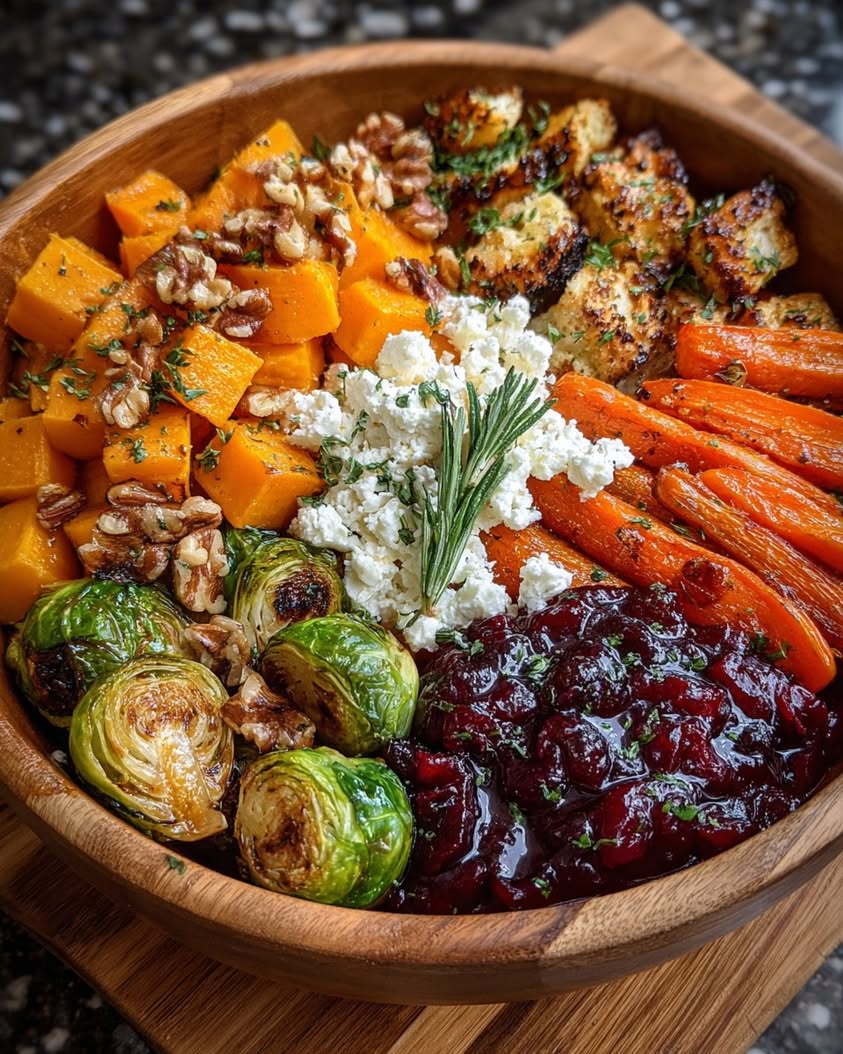
Roasted Harvest Vegetables with Feta, Walnuts, and Honey Glaze: A Perfect Fall Medley
Welcome to a celebration of autumn’s finest produce. This recipe for Roasted Harvest Vegetables with Feta, Walnuts, and Honey Glaze transforms humble root vegetables and brassicas into a stunning, flavor-packed masterpiece. Imagine the deep, caramelized sweetness of butternut squash and carrots mingling with the savory, nutty char of Brussels sprouts and sweet potato. Ultimately, this dish is a symphony of textures and tastes that feels both rustic and elegant.
Furthermore, this recipe is incredibly versatile. It can serve as a spectacular vegetarian main course, a hearty side dish for your holiday table, or even a fantastic meal prep option for healthy lunches throughout the week. The process is simple, relying on the magic of high-heat roasting to coax out natural sugars and create complex flavors. Finally, the finishing touches of tangy feta, crunchy walnuts, and a sweet-tart cranberry-honey glaze elevate it from simple roasted vegetables to a truly memorable culinary experience.
Quick Recipe Highlights
- Flavor Profile: This dish offers a beautiful balance of savory, sweet, and tangy notes. The roasted vegetables develop a deep, caramelized sweetness, which contrasts perfectly with the salty feta and the bright, tart-sweet glaze made from cranberry and honey.
- Texture: You get a wonderful contrast in every bite. The roasted vegetables become tender with crispy, caramelized edges, while the walnuts add a satisfying crunch. The feta cheese provides a creamy, crumbly element that melts slightly from the residual heat.
- Aroma: As the vegetables roast, your kitchen will fill with the warm, earthy scent of caramelizing squash and sweet potato, complemented by the nutty aroma of toasting Brussels sprouts. The final drizzle of the honey glaze adds a final note of fruity sweetness.
- Visual Appeal: This dish is a feast for the eyes with its vibrant autumn palette. You’ll see deep orange from the squash and carrots, golden brown from the sweet potato, emerald green from the Brussels sprouts, white and blue from the feta, and a glossy red sheen from the glaze.
- Skill Level Needed: This is a beginner-friendly recipe. The primary skill involved is basic vegetable chopping and understanding oven roasting. There’s no complicated technique, making it perfect for novice cooks and weeknight dinners alike.
- Special Equipment: You only need a few basic kitchen tools: a large, sturdy baking sheet, a sharp chef’s knife, a cutting board, and a small saucepan for the glaze. Parchment paper is highly recommended for easy cleanup and to prevent sticking.
Recipe Overview
- Difficulty Level: We rate this recipe as “Easy” because it involves straightforward techniques like chopping and roasting. The most important step is cutting the vegetables to a uniform size for even cooking. Otherwise, the oven does most of the work, and the assembly at the end is simple.
- Category: This dish fits beautifully into multiple categories. It is a fantastic vegetarian main course, a show-stopping holiday side dish, and a perfect component for a healthy meal prep routine. Its flexibility is one of its greatest strengths.
- Cuisine: While not tied to one specific tradition, this recipe draws inspiration from modern American and Mediterranean cuisines. The use of olive oil, feta, and honey is classically Mediterranean, while the combination of fall harvest vegetables is quintessentially American seasonal cooking.
- Cost: This is a very cost-effective recipe, especially when made in autumn when these vegetables are in peak season and most affordable. The priciest items are often the feta cheese and walnuts, but a little goes a long way in terms of flavor impact.
- Season: This recipe is perfect for fall and winter. It showcases the best of the harvest season—squash, root vegetables, and Brussels sprouts—and provides the warm, hearty, comforting flavors we crave during cooler weather.
- Occasion: It’s ideal for a cozy family dinner, a Friendsgiving potluck, Thanksgiving, Christmas, or any autumn gathering. Its vibrant colors and crowd-pleasing flavors make it a guaranteed hit at any festive table.
Why You’ll Love This Roasted Harvest Vegetables Recipe
First and foremost, the taste is absolutely unforgettable. This recipe for Roasted Harvest Vegetables with Feta, Walnuts, and Honey Glaze delivers a complex flavor profile that satisfies on every level. The natural sugars in the vegetables caramelize in the oven, creating a deep, almost nutty sweetness. Then, the salty, tangy punch of the feta cuts through that richness. Finally, the cranberry-honey glaze adds a layer of fruity acidity and shine that ties everything together. Every forkful is a perfect balance, making it impossible to stop eating.
Additionally, the convenience factor is a major win. Once you’ve prepped the vegetables, the oven does the heavy lifting. This gives you time to prepare the rest of your meal, set the table, or simply relax. The recipe is also incredibly forgiving; a few extra minutes of roasting won’t ruin it, and you can easily adjust seasoning at the end. For busy cooks, this reliable, hands-off method is a true blessing, resulting in an impressive dish with minimal active effort.
From a nutritional standpoint, this dish is a powerhouse. These Roasted Harvest Vegetables are packed with vitamins, minerals, and fiber. Butternut squash and sweet potatoes are rich in Vitamin A and antioxidants. Carrots provide beta-carotene, and Brussels sprouts are a great source of Vitamin C and K. The walnuts add healthy fats and protein, while the feta offers calcium. Consequently, you’re serving a meal that is as nourishing as it is delicious, supporting overall health and well-being.
For entertaining, this recipe is a superstar. Its visual appeal is undeniable, creating a stunning centerpiece for your table. It caters beautifully to diverse dietary needs, being naturally vegetarian and easily adaptable to be vegan or gluten-free. Guests will be impressed by the beautiful presentation and complex flavors, often assuming it required far more skill than it actually did. It’s a dish that encourages sharing and conversation, perfect for festive gatherings.
Finally, it’s remarkably cost-effective and accessible. The base ingredients are simple, seasonal vegetables that are easy to find at any grocery store or farmer’s market. You likely already have the olive oil, salt, and pepper in your pantry. The garnishes, while special, are used sparingly so one block of feta and a bag of walnuts can stretch across multiple meals. This makes the Roasted Harvest Vegetables with Feta, Walnuts, and Honey Glaze an economical way to create a restaurant-quality dish at home.
Historical Background and Cultural Significance
The practice of roasting vegetables over fire is as old as cooking itself. However, the specific combination of New World and Old World ingredients in this dish tells a more modern story. Squash, sweet potatoes, and cranberries are native to the Americas and were staple foods for Indigenous peoples long before European colonization. These ingredients were eventually incorporated into colonial and later American culinary traditions, particularly as part of autumn harvest and Thanksgiving celebrations.
Conversely, ingredients like feta cheese and walnuts have deep roots in Mediterranean and Middle Eastern cultures, where they have been cultivated and cherished for thousands of years. The technique of combining sweet and savory elements—like honey with vegetables and cheese—is also a hallmark of these ancient cuisines. This recipe, therefore, represents a beautiful fusion of culinary histories, blending the bounty of the American harvest with timeless flavors from across the globe.
The evolution of this recipe mirrors broader food trends. Roasted vegetable medleys gained immense popularity in the late 20th and early 21st centuries as home cooks and chefs moved away from boiling or steaming vegetables toward methods that intensified flavor, like roasting and caramelization. The addition of a glossy glaze and crunchy, salty toppings reflects the modern desire for complex texture and “finished” plating, even for vegetable-centric dishes. It’s a contemporary take on rustic, peasant-style cooking.
Regional variations of this concept are endless. In the American South, you might find a similar dish with pecans instead of walnuts and a bourbon-infused glaze. In the Mediterranean, it could feature halloumi instead of feta and a pomegranate molasses drizzle. The core principle—roasting hearty vegetables and topping them with contrasting textures and flavors—is a universal template that adapts to local ingredients and tastes, making the concept of Roasted Harvest Vegetables a truly global celebration of seasonal produce.
Ingredient Deep Dive
Butternut Squash: This winter squash, native to the Americas, is a culinary workhorse known for its sweet, nutty orange flesh. It’s incredibly rich in Vitamin A (as beta-carotene), Vitamin C, and fiber. When selecting, choose a squash that feels heavy for its size with a firm, matte skin and no soft spots. Store whole squash in a cool, dark place for months. For this recipe, peeling and cubing it ensures it roasts evenly and caramelizes beautifully. As a substitute, consider acorn squash or pumpkin.
Brussels Sprouts: These miniature cabbages have shed their bitter reputation thanks to modern cultivation and proper cooking methods like roasting, which brings out their natural sweetness. They are packed with vitamins K and C, folate, and antioxidants. Look for bright green, firm sprouts that are similar in size for even cooking. Trim the dry stem end and halve them to create flat surfaces for optimal browning. Shaved Brussels sprouts can be used for a different texture, but will cook much faster.
Sweet Potato: Often confused with yams, the orange-fleshed sweet potato is another New World treasure. It’s an excellent source of beta-carotene, Vitamin C, and potassium. Choose firm potatoes without wrinkles or soft spots. Unlike butternut squash, you can leave the skin on for added fiber and texture; just give them a good scrub. Cutting them into similar-sized chunks as the squash is crucial. For a lower-glycemic option, you could substitute part of the sweet potato with parsnips or turnips.
Feta Cheese: This brined curd cheese, traditionally made from sheep’s or goat’s milk, hails from Greece. Its tangy, salty flavor and crumbly texture provide a perfect counterpoint to sweet vegetables. For the best quality, look for feta sold in blocks in brine. Pre-crumbled feta often contains anti-caking agents that can affect texture. For a dairy-free version, a firm, salty tofu crumble or a vegan feta alternative works well. Remember to add it after roasting so it just softens without melting away.
Cranberry-Honey Glaze: This simple glaze is the flavor amplifier. Cranberries, native to North American bogs, provide a sharp, tart acidity that cuts through the dish’s richness. Honey, one of humanity’s oldest sweeteners, adds floral sweetness and viscosity. Simmering them together creates a glossy, complex sauce that clings to the vegetables. Use pure maple syrup as a vegan substitute for honey. For a deeper flavor, a splash of balsamic vinegar or orange juice can be added to the reduction.
Common Mistakes to Avoid
- Crowding the Pan: Overfilling your baking sheet is the top mistake. If the vegetables are piled on top of each other, they will steam instead of roast. You need space for hot air to circulate and create those desirable caramelized edges. Use two pans if necessary.
- Uneven Vegetable Sizes: Chopping your vegetables into wildly different sizes guarantees uneven cooking. Smaller pieces will burn before larger ones are tender. Take the time to cut them into uniform, bite-sized chunks, about 1-inch pieces, for consistent results.
- Skipping the Preheat: Putting vegetables into a cold oven is a recipe for soggy results. Always preheat your oven fully. A hot oven (400°F or higher) is essential for triggering the Maillard reaction, which creates that deep, flavorful browning.
- Underseasoning: Vegetables need seasoning at every stage. Don’t just rely on the salty feta at the end. Generously season the chopped vegetables with salt and pepper before they go into the oven. This draws out moisture and seasons them from the inside out.
- Not Using Enough Oil: A light, even coating of oil is non-negotiable for roasting. Oil conducts heat, promotes browning, and prevents sticking. Be sure to toss the vegetables thoroughly so every piece has a sheen. However, avoid drowning them, as excess oil can make them greasy.
- Forgetting to Stir or Flip: Setting a timer and walking away for the entire cook time means one side gets all the browning. For even color and cooking, give the vegetables a good stir or flip them with a spatula about halfway through the roasting time.
- Adding the Toppings Too Early: Adding delicate ingredients like feta, walnuts, and glaze before roasting will lead to disaster. The cheese will melt into a puddle, the nuts will burn, and the glaze will scorch. These are always finishing touches added after the vegetables come out of the oven.
- Overcooking the Glaze: When making the cranberry-honey glaze, simmer it just until the cranberries pop and the sauce thickens slightly. Over-reducing it will make it too thick and sticky, and it can burn. It will continue to thicken as it cools.
Essential Techniques
Uniform Chopping: This is the most critical prep technique for successful Roasted Harvest Vegetables. Consistent size ensures even cooking, so no piece is underdone or burnt. Use a sharp chef’s knife for safety and control. Aim for 1-inch cubes or chunks. For Brussels sprouts, simply trim the stem and halve them. Taking an extra five minutes here pays off dramatically in the final texture and presentation of the dish.
High-Heat Roasting: Roasting at 400°F or above is not arbitrary. This high heat rapidly evaporates surface moisture on the vegetables, allowing the temperature to climb high enough for caramelization. This chemical process creates hundreds of new flavor compounds, transforming simple sugars into complex, nutty, deeply savory notes. The key visual cue is the development of golden-brown, slightly crispy edges on the vegetables. If they’re just soft and pale, your oven may not be hot enough.
Creating the Glaze: A proper glaze should coat the back of a spoon. The technique involves simmering the cranberries and honey just until the cranberries burst and release their pectin, which naturally thickens the mixture. Stir frequently to prevent scorching. The glaze will be thin when hot but will thicken to a perfect, drizzle-able consistency as it cools. If it becomes too thick, simply stir in a teaspoon of warm water to loosen it.
Pro Tips for Perfect Roasted Harvest Vegetables
First, for extra crispy edges, make sure your vegetables are completely dry after washing before tossing them in oil. Any residual water will create steam. Next, consider using avocado oil for its high smoke point and neutral flavor, which allows the vegetable flavors to shine. Furthermore, roast your vegetables on the middle or lower oven rack to prevent the tops from burning before the centers are tender.
Additionally, toasting the walnuts in a dry skillet for a few minutes before adding them to the dish will maximize their nutty flavor and crunch. For a more complex savory note, toss the vegetables with a sprig of fresh rosemary or thyme before roasting. Finally, let the roasted vegetables rest for 5 minutes after coming out of the oven before adding the feta and glaze; this allows their flavors to settle and prevents the cheese from melting completely.
Variations and Adaptations
For regional variations, try a Southern twist by using pecans instead of walnuts and adding a splash of bourbon to the glaze. A Mediterranean version could feature chopped Kalamata olives and a sprinkle of dried oregano with the vegetables before roasting. For seasonal adaptations, in spring, swap in asparagus and radishes; in summer, use zucchini, bell peppers, and cherry tomatoes, adjusting roasting times downward for softer vegetables.
Regarding dietary modifications, to make this vegan, omit the feta or use a plant-based alternative and substitute the honey with maple syrup or agave nectar. For a nut-free version, replace walnuts with roasted pumpkin seeds (pepitas). For a lower-carb option, reduce the amount of sweet potato and carrot and increase the proportion of Brussels sprouts and squash. Flavor variations are endless: add a teaspoon of smoked paprika or curry powder to the oil before tossing the vegetables for a warm, spiced note.
Serving and Presentation Guide
For beautiful plating, transfer the warm Roasted Harvest Vegetables to a large, shallow serving platter or a rustic wooden board. Scatter the feta and walnuts over the top in an artful, uneven pattern, rather than dumping them in the center. Then, drizzle the cranberry-honey glaze in zig-zags or a loose spiral over everything, letting it pool slightly in the crevices. Finally, garnish with a few extra whole cranberries from the glaze and some fresh thyme sprigs for a pop of green.
Consider traditional accompaniments like a simple roast chicken, turkey, or pork tenderloin. For a vegetarian feast, serve it alongside wild rice pilaf or creamy polenta. Modern suggestions include serving it atop a bed of peppery arugula for a warm salad or stuffing it into a wrap with a garlic-herb spread. Always serve it warm, as the contrast between the hot vegetables and the cool, creamy feta is part of the experience. For portion control, a heaping cup makes a generous side, while two cups can stand as a satisfying main.
Wine and Beverage Pairing
The sweet and savory nature of these Roasted Harvest Vegetables calls for a wine with good acidity to cut through the richness and a touch of sweetness to complement the glaze. An off-dry Riesling or Gewürztraminer is a classic and excellent choice. Alternatively, a light-bodied Pinot Noir with its red fruit notes pairs beautifully with the earthier flavors of the mushrooms and squash. For a white option, a creamy Chardonnay with minimal oak can work well with the caramelized vegetables and feta.
For non-alcoholic alternatives, sparkling apple cider is a festive and perfect match for the autumn flavors. A tart cranberry spritzer (cranberry juice mixed with club soda and a lime wedge) echoes the glaze. Warm spiced apple tea or a chai latte would also be cozy complements, especially on a cool evening. Serve all beverages chilled or at the appropriate temperature to provide a refreshing contrast to the warm, hearty dish.
Storage and Shelf Life
Store leftover Roasted Harvest Vegetables in an airtight container in the refrigerator for up to 4 days. It’s best to store the components separately if possible: keep the plain roasted vegetables in one container and the feta, walnuts, and glaze in their own containers. This prevents the vegetables from getting soggy and the nuts from losing their crunch. The glaze can be refrigerated for up to a week; it will thicken when cold, so let it come to room temperature or warm it gently before using.
Signs of spoilage include an off smell, significant sliminess, or mold. To reheat, spread the vegetables on a baking sheet and warm in a 350°F oven for 10-15 minutes until heated through. This method helps restore some crispness. Avoid microwaving, as it will make them steam and become mushy. You can freeze the plain roasted vegetables (without toppings) for up to 3 months. Thaw in the refrigerator overnight and reheat in the oven. Note that the texture of the Brussels sprouts may become softer after freezing.
Make Ahead Strategies
You can significantly streamline your cooking process with smart make-ahead steps. The day before, wash, peel, and chop all the vegetables. Store them in separate airtight containers or resealable bags in the refrigerator. The cranberry-honey glaze can be made up to 3 days in advance and stored in the fridge. The walnuts can be toasted ahead and kept at room temperature. On the day of serving, simply toss the pre-chopped vegetables with oil and seasoning, then roast. This prep timeline reduces active cooking time to just the roasting period.
When storing pre-chopped vegetables, placing a dry paper towel in the container with them can help absorb excess moisture and keep them fresher. The quality impact of pre-chopping is minimal, especially for root vegetables. For assembly, always add the cold feta and room-temperature toppings to the hot vegetables straight from the oven. If you need to reheat a fully assembled dish, do so gently in the oven, covered with foil, to prevent the cheese from over-melting and the nuts from burning.
Scaling Instructions
This recipe scales beautifully for different group sizes. To halve the recipe, simply divide all ingredient quantities by two. Use a standard baking sheet; the reduced volume will help the vegetables roast even more efficiently. To double or triple the recipe for a crowd, multiply the ingredients accordingly. The key is to use multiple baking sheets and rotate them between the upper and lower oven racks halfway through cooking to ensure even browning. You may also need to add 5-10 minutes to the total roasting time due to the increased volume of food in the oven.
Equipment adjustments are crucial when scaling up. Do not try to roast a double batch on a single sheet pan; it will steam. Invest in a second heavy-duty rimmed baking sheet. Timing modifications are minimal, but always rely on visual cues (golden-brown edges, tender centers) rather than strictly the clock. For storage considerations, larger batches are fantastic for meal prep. Portion the roasted vegetables into containers for easy lunches throughout the week.
Nutritional Deep Dive
This dish is a macro-balanced powerhouse. It provides complex carbohydrates from the squash, sweet potato, and carrots for sustained energy. Healthy fats come from the olive oil and walnuts, which support heart health and satiety. The feta and walnuts contribute plant-based and dairy-based protein. Micronutrient analysis reveals a wealth of vitamins: Vitamin A from the orange vegetables for eye health, Vitamin C from Brussels sprouts for immunity, and Vitamin K for bone health. The vegetables are also high in fiber, which aids digestion and promotes gut health.
From a dietary consideration standpoint, this recipe is naturally vegetarian and gluten-free. It can be adapted to be vegan and dairy-free with simple swaps. For portion analysis, a serving provides a substantial volume of food that is nutrient-dense but not excessively high in calories, making it excellent for weight management. The fiber and protein content help you feel full and satisfied, reducing the likelihood of overeating later. It’s a perfect example of how delicious food can also be profoundly nourishing.
Dietary Adaptations
Gluten-Free: This recipe is naturally gluten-free as written. Just ensure that any pre-packaged ingredients like cranberries or pre-crumbled feta don’t contain hidden gluten from additives or processing facilities. Use pure honey or maple syrup for the glaze.
Dairy-Free/Vegan: Omit the feta cheese. For a similar salty, tangy element, make a “feta” from crumbled extra-firm tofu marinated in lemon juice, nutritional yeast, and salt. Substitute the honey in the glaze with pure maple syrup or agave nectar. The result is a completely plant-based, vegan dish that’s just as flavorful.
Low-Carb/Keto: Focus on the lowest-carb vegetables: increase the Brussels sprouts and reduce or omit the sweet potato and carrots. Substitute the honey in the glaze with a keto-friendly sweetener like monk fruit or erythritol that can be heated. Be mindful of the cranberries, as they contain natural sugars; use them sparingly or substitute with a few raspberries.
Paleo: Omit the dairy (feta) and substitute the honey in the glaze with raw honey. Ensure all other ingredients are whole, unprocessed foods. This adaptation aligns with the paleo framework of avoiding grains, legumes, and dairy.
Low-FODMAP: This requires careful modification. Butternut squash is low-FODMAP in 1/2 cup servings, so strictly control portion size. Omit the sweet potato and use only the green tops of carrots (the orange part is higher in FODMAPs). Use maple syrup instead of honey. Omit the walnuts if sensitive. Consult the Monash University FODMAP app for precise serving sizes.
Troubleshooting Guide
Vegetables are Soggy: This is almost always due to overcrowding the pan or insufficient oven temperature. Next time, use two pans and ensure your oven is fully preheated. For salvage, spread the soggy vegetables on a fresh pan and broil for 2-3 minutes to crisp up the edges, watching carefully to prevent burning.
Vegetables are Burning: If the edges are charring before the centers are soft, your oven temperature may be too high, or your pieces are too small. Check your oven calibration with a thermometer. Cut vegetables into slightly larger, uniform chunks. Also, try positioning the rack in the center of the oven, not too close to the top heating element.
Glaze is Too Thick: If your cranberry-honey glaze has cooled into a solid jam, simply warm it gently in a saucepan over low heat, adding a teaspoon of warm water or orange juice at a time until it returns to a drizzle-able consistency.
Glaze is Too Thin: If the glaze hasn’t thickened enough, return it to a simmer and cook for a few more minutes, allowing more liquid to evaporate. Remember, it will continue to thicken as it cools off the heat.
Feta Melts Into Nothing: You added the cheese while the vegetables were too hot. Crumble the feta over the vegetables after they have rested for 5 minutes out of the oven. The residual heat will soften it perfectly without causing it to disappear.
Walnuts are Soggy or Burnt: Soggy walnuts were likely tossed with the hot vegetables and steamed. Burnt walnuts were probably added before roasting. Always add toasted walnuts at the very end, just before serving, to preserve their crunch.
Recipe Success Stories
Community feedback on this Roasted Harvest Vegetables recipe has been overwhelmingly positive. Many readers report it becoming their new go-to Thanksgiving side, often stealing the show from more traditional dishes. One home cook shared how she made it for a potluck and received multiple requests for the recipe, with guests amazed that “just vegetables” could taste so incredible. Another reader with a vegetarian teenager said this dish is now a weekly request, proving that healthy food can be crave-worthy.
Variation successes abound. A reader from Texas substituted pecans and added a pinch of cayenne to the glaze for a sweet-heat twist. Another used pre-cut squash from the grocery store to save time, confirming the recipe’s flexibility. Photographers love this dish for its vibrant colors, suggesting shooting it in natural light on a dark slate platter to make the orange and red hues truly pop. The consensus is clear: this recipe is reliable, adaptable, and consistently delivers restaurant-quality results in a home kitchen.
Frequently Asked Questions
Q: Can I use frozen vegetables?
A: We don’t recommend it for this recipe. Frozen vegetables release too much water when roasting, leading to steaming instead of caramelization. The texture will be mushy, and you won’t achieve the desired crispy, caramelized edges that are key to the dish.
Q: How do I know when the vegetables are done roasting?
A: The vegetables are done when they are tender enough to be easily pierced with a fork and have developed golden-brown, slightly crispy edges on at least one side. The sweet potato and squash should be very soft inside.
Q: Can I make this recipe vegan?
A: Absolutely. Omit the feta cheese or use a plant-based alternative. For the glaze, substitute the honey with an equal amount of pure maple syrup or agave nectar. The rest of the recipe is naturally vegan.
Q: What can I use instead of walnuts?
A: Pecans, almonds, or pine nuts are excellent substitutes. For a nut-free version, try roasted pumpkin seeds (pepitas) or sunflower seeds for a similar crunchy texture.
Q: Can I prepare the vegetables ahead of time?
A: Yes, you can wash, peel, and chop all the vegetables 1-2 days in advance. Store them in airtight containers or resealable bags in the refrigerator until you’re ready to toss with oil and roast.
Q: My glaze is very tart. Is that normal?
A: The cranberry glaze should have a balanced sweet-tart flavor. If it’s too tart for your taste, simply stir in an extra tablespoon of honey or maple syrup after it has cooled slightly to adjust the sweetness.
Q: Can I add other vegetables?
A> Certainly. Red onion wedges, parsnips, or cauliflower florets would be wonderful additions. Just be mindful of cooking times; cut harder vegetables smaller and add quicker-cooking ones (like cauliflower) partway through the roasting process.
Q: How do I reheat leftovers without making them soggy?
A> The oven is your best friend. Spread leftovers on a baking sheet and reheat at 350°F for 10-15 minutes. This will help re-crisp the edges. The microwave will steam them and result in a softer texture.
Q: Is this dish served hot, warm, or at room temperature?
A> It is best served warm. The contrast of the warm vegetables with the cool, creamy feta is delightful. It can also be served at room temperature for a potluck, but avoid serving it cold from the fridge.
Q: Can I use dried cranberries in the glaze instead of fresh?
A> Fresh or frozen cranberries are ideal for creating a saucy glaze. Dried cranberries won’t break down and thicken the liquid in the same way. If you must use dried, simmer them in 1/2 cup of water or orange juice first to plump them up, then proceed with the recipe.
Additional Resources
If you loved these Roasted Harvest Vegetables, explore our related recipes for other seasonal delights. Try our Maple-Roasted Acorn Squash with Sage or our Warm Farro Salad with Roasted Root Vegetables for similar comforting flavors. For technique guides, our article “How to Roast Any Vegetable Perfectly” provides charts and tips for cooking times and temperatures for dozens of different veggies. To learn more about the ingredients, read our deep dives on “Selecting and Storing Winter Squash” and “The Health Benefits of Cruciferous Vegetables.”
For equipment, a set of heavy-duty, rimmed baking sheets is the most important investment for perfect roasting. We also recommend a good-quality chef’s knife for easy vegetable prep. As the seasons change, remember this recipe template. The method of roasting hearty vegetables and finishing with a glaze, cheese, and nuts can be adapted infinitely with spring asparagus, summer zucchini, or a winter mix of parsnips and beets. It’s a foundational skill for creating delicious, healthy, and beautiful meals all year round.
{“success”:true,”message”:”Recipe created successfully”,”post_id”:7977,”tasty_recipe_id”:7977,”shortcode”:” Print
Caramelized Butternut Squash, Carrots, Brussels Sprouts, and Sweet Potato with Feta, Walnuts, and Cranberry-Honey Glaze
Description
A vibrant roasted vegetable medley with caramelized edges, topped with tangy feta, crunchy walnuts, and a sweet-tart cranberry-honey glaze for a festive side dish.
Ingredients
For the Crust:
- 1 small butternut squash, peeled and cubed
- 2 large carrots, sliced into rounds
- 1 pound Brussels sprouts, trimmed and halved
- 1 large sweet potato, peeled and cubed
- 3 tablespoons olive oil
- 1 teaspoon salt
- 1/2 teaspoon black pepper
- 1/2 teaspoon garlic powder
- 1/2 cup crumbled feta cheese
- 1/2 cup chopped walnuts
- 1/4 cup dried cranberries
- 2 tablespoons honey
- 1 tablespoon balsamic vinegar
Instructions
1. Prepare the Crust:
- Preheat oven to 400°F (200°C). Line a large baking sheet with parchment paper.
- In a large bowl, toss butternut squash, carrots, Brussels sprouts, and sweet potato with olive oil, salt, pepper, and garlic powder until evenly coated.
- Spread vegetables in a single layer on the baking sheet. Roast for 25-30 minutes, stirring halfway, until tender and caramelized.
- While vegetables roast, toast walnuts in a dry skillet over medium heat for 3-5 minutes until fragrant, then set aside.
- In a small bowl, whisk together honey and balsamic vinegar to make the glaze.
- Transfer roasted vegetables to a serving platter. Drizzle with cranberry-honey glaze, then top with feta, toasted walnuts, and dried cranberries. Serve warm.
Notes
You can customize the seasonings to taste.

I’m Billy, a classically trained culinary school graduate from The Culinary Institute of America with over 12 years in the restaurant industry and over 19 years of cooking experience.