
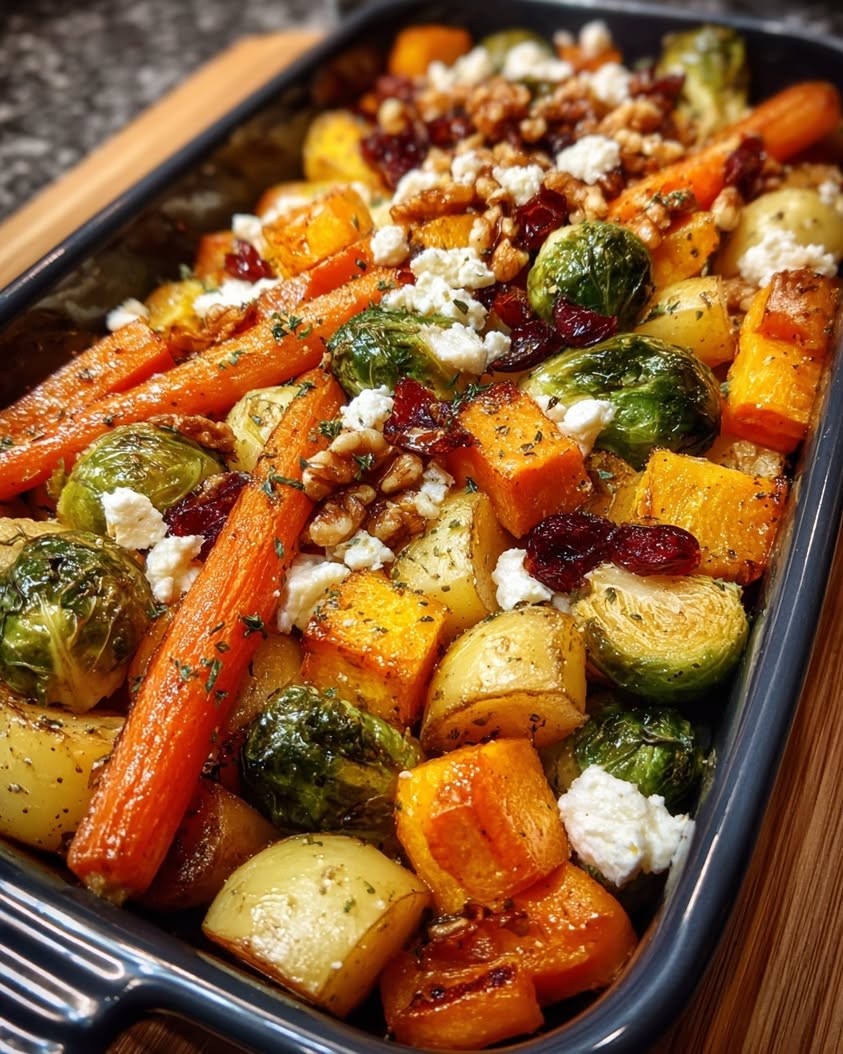
Roasted Fall Vegetables with Feta, Walnuts, and Honey Glaze: A Sweet and Savory Harvest Feast
Welcome the crisp autumn air with a dish that captures the very soul of the season. This recipe for Roasted Fall Vegetables with Feta, Walnuts, and Honey Glaze is a vibrant, flavor-packed celebration of harvest produce. Imagine sweet butternut squash and carrots caramelizing alongside earthy Brussels sprouts and creamy Yukon potatoes. Ultimately, the entire medley gets tossed in a simple yet transformative cranberry-honey glaze. Finally, a generous sprinkle of salty feta and crunchy toasted walnuts creates a perfect finish. This dish is not just a side; it’s a stunning centerpiece that brings warmth, color, and incredible taste to your table.
The magic of this roasted fall vegetables recipe lies in the harmony of contrasting elements. Sweetness from the natural sugars in the squash and the honey glaze plays against the savory depth of the roasted vegetables. Simultaneously, the salty tang of feta cheese cuts through the richness. Moreover, the toasted walnuts add a crucial textural contrast that makes every bite interesting. This recipe is incredibly versatile, acting as a fantastic vegetarian main, a show-stopping holiday side, or even a delicious component for meal prep. Importantly, it requires mostly hands-off time while the oven works its caramelizing magic.
Creating this dish is a sensory journey. As the vegetables roast, your kitchen will fill with an irresistible aroma of caramelizing sugars and herbs. Visually, the final plate is a masterpiece of autumn hues: deep orange, vibrant green, golden brown, and white from the feta. This Roasted Fall Vegetables with Feta, Walnuts, and Honey Glaze is designed to impress with minimal effort. Consequently, it’s perfect for both weeknight dinners and festive gatherings. Let’s explore how to create this unforgettable harvest meal.
Quick Recipe Highlights
- Flavor Profile: This dish masterfully balances sweet, savory, salty, and tangy notes. The natural sweetness of the roasted vegetables and honey glaze is perfectly offset by the salty feta and the earthy, slightly bitter crunch of Brussels sprouts and walnuts.
- Texture: You get a wonderful contrast of creamy softness from the squash and potatoes, tender-crisp bites from the Brussels sprouts, and a satisfying crunch from the toasted walnuts. The caramelized edges on the vegetables add a delightful chewy texture.
- Aroma: While roasting, the kitchen fills with the warm, sweet scent of caramelizing squash and carrots, mingled with the earthy fragrance of rosemary and thyme and the nutty toastiness of the walnuts.
- Visual Appeal: The final presentation is a stunning mosaic of autumn colors. Deep orange squash, bright orange carrots, emerald green Brussels sprouts, golden potatoes, white feta crumbles, and brown walnuts create a feast for the eyes.
- Skill Level Needed: This is a beginner-friendly recipe. The primary skills required are simple vegetable chopping and the patience to let the oven do the work. There’s no complicated technique, making it accessible for cooks of all levels.
- Special Equipment: You only need a few basic kitchen tools: a large baking sheet (or two), a sharp knife, a cutting board, a small bowl for mixing the glaze, and a mixing bowl for tossing the vegetables. Parchment paper is recommended for easy cleanup.
Recipe Overview
- Difficulty Level: This recipe is rated easy because it involves straightforward chopping and mixing steps. The oven handles the majority of the cooking process. There is no fussy timing or advanced culinary techniques required. Simply toss, roast, and assemble.
- Category: This dish beautifully straddles multiple categories. It functions excellently as a hearty vegetarian main course, a substantial and impressive side dish for meat-based meals, or a standout component on a holiday or potluck buffet table.
- Cuisine: While not tied to one specific tradition, this recipe draws inspiration from modern American farm-to-table cooking and Mediterranean flavors. The use of feta, olive oil, and walnuts nods to Greek cuisine, while the focus on roasted harvest vegetables is a hallmark of autumn in North America and Europe.
- Cost: This is a cost-effective recipe, especially in the fall when these vegetables are in season and plentiful. Butternut squash, carrots, and potatoes are typically inexpensive. Feta, walnuts, and fresh herbs are the primary splurges, but they go a long way in terms of flavor impact.
- Season: This recipe is quintessentially autumnal. It features vegetables that are at their peak of flavor and sweetness from late September through November. The warm, hearty nature of the dish is perfect for cooler weather.
- Occasion: It’s incredibly versatile for occasions. Serve it for a cozy family dinner, bring it to a Friendsgiving potluck, or make it the star vegetable side for Thanksgiving or Christmas dinner. It also works wonderfully for meal prep for healthy weekday lunches.
Why You’ll Love This Roasted Fall Vegetables Recipe
First and foremost, the taste and texture appeal is undeniable. Every forkful delivers a complex symphony of flavors. You experience the deep, caramelized sweetness of the squash and carrots, which is immediately balanced by the savory, almost nutty flavor of the roasted Brussels sprouts and Yukon potatoes. Then, the salty punch of the feta cheese cuts through, while the toasted walnuts provide an essential earthy crunch. The cranberry-honey glaze adds a layer of tangy-sweet stickiness that ties all the components together beautifully. This combination ensures that your palate never gets bored, making each bite as exciting as the first.
Furthermore, the convenience and preparation benefits are a major win. After the initial chopping and tossing, the recipe is largely hands-off. You can pop the sheet pan in the oven and attend to other meal components, set the table, or simply relax. The roasting process requires minimal babysitting—just a quick stir or flip halfway through. This makes it an ideal recipe for busy weeknights or stressful holiday cooking where oven space and timing are crucial. Moreover, cleanup is a breeze, especially if you use parchment paper on your baking sheets.
From a nutritional standpoint, this dish is a powerhouse. It’s packed with vitamins, minerals, and fiber from a diverse array of colorful vegetables. Butternut squash and carrots are rich in beta-carotene. Brussels sprouts offer vitamins C and K. Potatoes provide potassium and complex carbohydrates. Walnuts contribute healthy fats and omega-3s. Using olive oil as the roasting fat adds heart-healthy monounsaturated fats. Altogether, this Roasted Fall Vegetables with Feta, Walnuts, and Honey Glaze is a meal that nourishes your body as much as it delights your senses.
Additionally, the social and entertaining value of this dish is high. It presents beautifully on a platter, making it a guaranteed conversation starter at any gathering. It caters well to mixed-diet crowds, being vegetarian and easily adaptable for vegans or those with dairy restrictions. The recipe scales up effortlessly for a crowd. You can easily double or triple the ingredients to feed a large party without significantly increasing your active kitchen time. It’s a reliable, crowd-pleasing dish that looks far more sophisticated than the effort required.
Finally, its cost-effectiveness and accessibility are key advantages. The base ingredients are humble, affordable vegetables. Even the “splurge” items like feta and walnuts are used as garnishes, so a little goes a long way. You can find every ingredient in a standard grocery store year-round, with peak freshness and lower prices in the autumn months. This recipe demonstrates how to transform simple, accessible components into a restaurant-worthy dish without breaking the bank. It’s a testament to the power of good technique and flavor pairing.
Historical Background and Cultural Significance
The practice of roasting vegetables over fire is as old as cooking itself. However, the specific combination of autumn harvest vegetables on a single pan is a relatively modern concept, born from the convenience of home ovens and the “sheet pan supper” trend. This method celebrates the bounty of the late harvest, a tradition deeply rooted in agricultural societies worldwide. The act of gathering squash, root vegetables, and hardy greens like Brussels sprouts for winter storage is a ritual that this dish honors in a delicious, immediate way. It’s a direct connection to harvest festivals and the age-old need to preserve and enjoy nature’s final flourish before winter.
Culturally, the inclusion of feta and walnuts points to Mediterranean influences. Feta cheese, with its briny tang, has been a staple in Greek cuisine for centuries, traditionally made from sheep’s or goat’s milk. Walnuts are one of the oldest tree foods, cultivated for thousands of years from Persia to the Mediterranean and beyond. Combining these elements with New World vegetables like squash and potatoes (which originated in the Americas) creates a beautiful fusion. This reflects modern global cuisine, where traditional ingredients from different parts of the world are combined based on complementary flavors and textures rather than geographical origin.
The recipe has evolved significantly from simple roasted roots. The addition of a sweet-tart glaze is a contemporary twist that enhances the vegetables’ natural caramelization. Historically, honey has been used as a sweetener and preservative for millennia, while cranberries, native to North America, were used by Indigenous peoples and later incorporated into colonial cooking. Combining them into a glaze for roasted vegetables is an innovative step that bridges old and new cooking traditions. It adds a layer of complexity that elevates the dish from simple sustenance to a crafted culinary experience.
Regional variations of this concept are endless. In the American South, you might find roasted vegetables with a pecan and bourbon glaze. In Italy, a similar dish might feature rosemary, garlic, and Parmigiano-Reggiano. A Middle Eastern variation could include pomegranate molasses, za’atar, and almonds. The basic formula—roasted hearty vegetables plus a flavorful fat, a crunchy element, and a salty cheese—is a template that travels beautifully across culinary borders. This particular version with cranberry-honey glaze and feta sits comfortably within the trend of “Modern American” cooking, which often blends local produce with global pantry staples.
Ingredient Deep Dive
Butternut Squash: This winter squash is native to the Americas and has been cultivated for thousands of years. Its sweet, nutty flesh is incredibly versatile. Nutritionally, it’s a superstar, loaded with beta-carotene (which converts to Vitamin A), Vitamin C, fiber, and potassium. When selecting, choose a squash that feels heavy for its size with a firm, matte skin and no soft spots. Store whole squash in a cool, dark place for months. Once cut, wrap tightly and refrigerate for up to five days. For a substitution, sweet potato or acorn squash would work beautifully, offering a similar texture and sweetness.
Brussels Sprouts: These miniature cabbages have a long history in Europe, particularly in Belgium (hence the name). They gained popularity in the US more recently after plant breeders developed varieties with a milder, sweeter flavor, especially when roasted. They are rich in vitamins C and K, folate, and antioxidants. Look for firm, bright green sprouts that are similar in size for even cooking. Avoid yellowing leaves. Store them unwashed in a plastic bag in the refrigerator’s crisper drawer. Broccoli florets or chopped cabbage can be used as a substitute, though the cooking time may vary slightly.
Yukon Gold Potatoes: A relatively modern cultivar developed in Canada, Yukon Golds are prized for their thin, golden skin and buttery, moist yellow flesh. They hold their shape well when roasted while becoming creamy inside. They provide complex carbohydrates, vitamin B6, and potassium. Select potatoes that are firm and smooth, without sprouts or green tinges. Store in a cool, dark, well-ventilated place—not in the refrigerator. Red potatoes or fingerlings are excellent substitutes, offering a slightly waxier texture that also roasts well.
Feta Cheese: A brined curd cheese with a crumbly texture and tangy, salty flavor, traditionally made from sheep’s milk or a sheep-goat blend in Greece. Its sharpness is the perfect counterpoint to sweet vegetables. It contains calcium and protein. For the best flavor, seek out authentic Greek feta or a high-quality variety sold in blocks in brine. Pre-crumbled feta often contains anti-caking agents and can be drier. Store submerged in its brine in the refrigerator. For a dairy-free version, a firm, salty tofu crumble or a vegan feta alternative works. For a different cheese profile, goat cheese or ricotta salata are fantastic.
Walnuts: Among the oldest tree foods, walnuts are celebrated for their brain-like shape and rich, earthy flavor. They are an excellent source of plant-based omega-3 fatty acids, antioxidants, and minerals like manganese. Toasting is non-negotiable—it deepens their flavor and improves crunch. Buy walnuts in small quantities from a source with high turnover to ensure freshness, as their high fat content can lead to rancidity. Store them in an airtight container in the freezer for longest shelf life. Pecans or hazelnuts would be delicious substitutes, offering their own unique toasted flavors.
Common Mistakes to Avoid
- Overcrowding the Pan: This is the most common error. If the vegetables are piled on top of each other, they will steam instead of roast. You need space for hot air to circulate and create caramelization. Always use two pans if necessary to give the vegetables room.
- Uneven Vegetable Sizes: Chopping your vegetables into wildly different sizes guarantees that some pieces will burn while others remain undercooked. Aim for a uniform, bite-sized dice (about 1-inch pieces) so everything cooks at the same rate.
- Skipping the Toast on the Walnuts: Adding raw walnuts misses a key flavor and texture opportunity. Toasting nuts in a dry skillet or the oven for a few minutes until fragrant wakes up their oils and creates a deeper, crunchier element.
- Adding the Glaze Too Early: If you toss the vegetables in the honey glaze before roasting, the sugars can burn in the high heat of the oven. Instead, roast the vegetables until nearly done, then add the glaze for the final 5-10 minutes to let it caramelize gently.
- Using Old, Dried Herbs: Dried rosemary and thyme can work in a pinch, but their flavor is muted and can become gritty. Fresh herbs, finely chopped, provide a vibrant, aromatic quality that dried herbs simply cannot match for this fresh vegetable dish.
- Neglecting to Season in Layers: Don’t just salt at the end. Season the vegetables with salt and pepper before they go in the oven. This draws out moisture and seasons them from within. You can add a final light seasoning after adding the feta and walnuts.
- Not Preheating the Oven: A properly hot oven (425°F is ideal) is crucial for getting a good sear and caramelization on the vegetables. Putting them in a cold or under-temperature oven will lead to soggy, steamed results.
- Stirring Too Frequently: Let the vegetables sit undisturbed on the hot pan for at least 15-20 minutes before stirring. This allows the surfaces in contact with the pan to develop those delicious, caramelized, slightly crispy edges that are the hallmark of great roasted vegetables.
Essential Techniques
Uniform Chopping: This technique is critical for even cooking. Using a sharp chef’s knife, aim to cut all vegetables into similar 1-inch cubes or halves. For Brussels sprouts, halve them lengthwise. Consistent size ensures that every piece spends the same amount of time in the oven, preventing some from being mushy while others are still hard. The visual cue for success is a baking sheet filled with pieces that look like they belong together.
High-Heat Roasting: Roasting at 425°F is not arbitrary. This high temperature quickly evaporates surface moisture on the vegetables, allowing the natural sugars to caramelize instead of steam. The Maillard reaction (browning) creates complex, savory flavors. The key is a fully preheated oven and enough space on the pan for steam to escape. You’ll know it’s working when you see golden-brown, slightly crispy edges forming on the vegetables.
Making the Glaze: The cranberry-honey glaze is a simple emulsion. Whisking the honey into the warm, reduced cranberry juice (or jelly) allows them to combine smoothly. The acid from the cranberry balances the honey’s sweetness. The goal is a syrup that’s thick enough to coat the back of a spoon but still fluid enough to drizzle. If it becomes too thick, a splash of warm water will thin it perfectly.
Toasting Nuts: Toasting nuts is a dry-heat process that transforms their flavor and texture. Place walnuts in a single layer in a dry skillet over medium heat. Shake the pan frequently until they become fragrant and lightly browned, about 3-5 minutes. Immediately transfer them to a plate to stop the cooking. The visual cue is a shade darker and a rich, nutty aroma. Burnt nuts are bitter, so constant attention is key.
Pro Tips for Perfect Roasted Fall Vegetables
For extra caramelization, toss the chopped vegetables in the oil and seasonings in a large bowl before spreading them on the pan. This ensures every piece is evenly coated.
Consider roasting the vegetables on a wire rack set inside the baking sheet. This elevates them, allowing hot air to circulate on all sides for maximum crispiness.
If your vegetables are releasing a lot of water (common with some squash), don’t be afraid to roast them for an extra 5-10 minutes. The goal is tender vegetables with browned edges, not steamed.
Add hearty fresh herbs like whole rosemary sprigs or thyme branches to the pan with the vegetables. They will infuse the oil and the vegetables with flavor as they roast.
Let the roasted vegetables rest for 5 minutes after adding the glaze and before adding the feta and walnuts. This allows the glaze to set slightly so it doesn’t just run off the vegetables.
For a deeper flavor, use a combination of olive oil and a small amount of melted butter or walnut oil for tossing the vegetables before roasting.
If preparing for a party, you can roast the vegetables (without glaze) up to 2 hours ahead. Re-crisp them in a 400°F oven for 10 minutes, then add the warm glaze and garnishes just before serving.
Always taste and adjust the final seasoning after adding the salty feta. You may find you need less additional salt than you think.
Variations and Adaptations
Regional Variations: Explore global flavors by changing the seasoning profile. For a Mediterranean twist, add olives and oregano, using halloumi instead of feta. For a Moroccan feel, toss the vegetables with ras el hanout and garnish with pomegranate arils and mint. An Asian-inspired version could use a miso-sesame glaze and garnish with toasted sesame seeds and scallions.
Seasonal Adaptations: While perfect for fall, this template works year-round. In spring, use asparagus, new potatoes, and radishes with a lemon-herb glaze. For summer, try zucchini, bell peppers, and cherry tomatoes with a balsamic reduction. In deep winter, swap in parsnips, turnips, and beets for a earthier, heartier mix.
Dietary Modifications: For a vegan version, omit the feta or use a commercial vegan feta alternative. Ensure the honey is replaced with maple syrup or agave nectar. For a nut-free dish, substitute toasted pumpkin seeds (pepitas) or sunflower seeds for the walnuts. To make it gluten-free, simply verify that your cranberry jelly or juice has no hidden gluten-containing additives.
Flavor Variations: Experiment with different glazes. A balsamic-Dijon glaze, a maple-sriracha glaze, or an orange-ginger glaze can completely transform the dish. Similarly, try different cheeses: blue cheese crumbles offer a bold punch, goat cheese provides creamy tang, or shaved Parmesan adds a savory umami note.
Texture Modifications: For extra crunch, add other elements like crispy fried shallots, panko breadcrumbs toasted in olive oil, or even crumbled bacon. For a creamier component, dollop with a lemony yogurt sauce or tzatziki on the side.
Presentation Alternatives: Instead of mixing everything, present the components separately on a large board or platter. Place the roasted vegetables in the center, with small bowls of crumbled feta, toasted walnuts, and extra glaze on the side, allowing guests to build their own bites.
Serving and Presentation Guide
Plating Techniques: For a family-style presentation, pile the warm roasted vegetables onto a large, shallow platter. Drizzle any remaining glaze from the pan over the top, then artfully scatter the feta crumbles and toasted walnuts. Let some ingredients nestle into the crevices and others sit prominently on top for visual height. Alternatively, for individual plates, use a ring mold to create a neat, vertical stack of vegetables in the center of each plate.
Garnishing Ideas: Beyond feta and walnuts, consider fresh herb confetti (chopped parsley, dill, or chives), a final drizzle of high-quality extra virgin olive oil, a sprinkle of flaky sea salt like Maldon, or a few whole cranberries for a pop of color. A few small, fresh thyme sprigs placed on top add elegance.
Traditional Accompaniments: This dish pairs classically with roasted meats like herb-crusted chicken, pork tenderloin, or a simple roast turkey. It also stands beautifully alongside other Thanksgiving classics like stuffing and mashed potatoes. For a vegetarian feast, serve it with a hearty grain like farro or wild rice pilaf and a green salad.
Modern Serving Suggestions: Transform leftovers into a fantastic warm grain bowl. Spoon the vegetables over quinoa or brown rice, add a handful of baby spinach (which will wilt from the heat), and top with a fried or poached egg. It also makes a incredible filling for a savory tart or flatbread.
Temperature Considerations: This dish is best served warm. The feta will soften slightly but not melt, and the walnuts will retain their crunch. It can be served at room temperature for a buffet, but the flavors are most vibrant when warm. If it cools down, a quick 5-minute warm-up in a hot oven is better than the microwave, which can make the vegetables soggy.
Portion Control Tips: As a main course for a vegetarian meal, plan for about 1.5 to 2 cups per person. As a substantial side dish, 3/4 to 1 cup per person is sufficient. Remember, the walnuts and feta add richness and protein, making the dish more filling than a plain vegetable side.
Wine and Beverage Pairing
Wine Pairings: The sweet, savory, and salty profile of this dish calls for wines with good acidity to cut through the richness. A dry Riesling or Gewürztraminer complements the sweetness and spice beautifully. A medium-bodied Pinot Noir, with its red fruit notes and low tannins, is an excellent red wine choice. For a more robust option, a Grenache or GSM blend from the Rhône Valley can stand up to the earthy vegetables and salty feta.
Non-Alcoholic Alternatives: Sparkling apple cider is a classic and perfect pairing, mirroring the autumn theme. For something more complex, try a tart cranberry spritzer (unsweetened cranberry juice mixed with sparkling water and a squeeze of lime). A warm mug of spiced apple tea or a chai latte also complements the cozy flavors of the dish wonderfully.
Coffee/Tea Pairings: After the meal, a cup of coffee or tea can be lovely. A medium-roast coffee with nutty or caramel notes will echo the flavors on the plate. For tea, consider a smoky Lapsang Souchong to contrast the sweetness, or a soothing cup of chamomile with honey to continue the harmonious flavor theme.
Temperature Considerations: Serve white wines well-chilled (45-50°F) and red wines slightly cool (55-60°F). Non-alcoholic sparklers should be ice-cold. Warm beverages like tea or cider should be served piping hot to provide a comforting contrast to the warm, but not steaming, vegetables.
Serving Suggestions: Always offer water on the table to cleanse the palate between bites, especially given the salty feta. If serving wine, pour a taste before the meal begins to allow it to open up. For non-alcoholic options, consider serving them in elegant glassware to make the experience feel just as special.
Storage and Shelf Life
Storage Methods: Store leftover Roasted Fall Vegetables in an airtight container in the refrigerator. It’s best to store the components separately if possible: the roasted vegetables in one container, and the feta and walnuts in their own small containers. This prevents the walnuts from getting soggy and the feta from dissolving into the vegetables. The glaze can be stored in a small jar.
Temperature Requirements: All components must be refrigerated at 40°F or below. Do not leave the assembled dish at room temperature for more than two hours. The vegetables, glaze, and cheese are all perishable and can harbor bacterial growth if left in the “danger zone” (40-140°F) for too long.
Container Recommendations: Glass containers with tight-fitting lids are ideal as they don’t absorb odors and allow you to see the contents. For the walnuts, a small zip-top bag or a mason jar works perfectly to maintain crunch.
Signs of Spoilage: Discard the vegetables if you notice an off or sour smell, significant sliminess on the surface, or visible mold. Feta that has been stored in brine should be fine, but if stored dry with the vegetables and it develops an ammonia-like smell, it should be discarded.
Reheating Instructions: To maintain texture, reheat the vegetables in an oven preheated to 375°F spread on a baking sheet for 10-15 minutes, or until heated through. The microwave will steam them and make them soft. Add the cold feta and walnuts after reheating.
Freezing Guidelines: Freezing is not recommended for the fully assembled dish. The texture of the roasted vegetables, especially the potatoes and Brussels sprouts, will become mushy and watery upon thawing. The dairy and nuts also do not freeze well in this context. It’s best enjoyed fresh or refrigerated for a few days.
Make Ahead Strategies
Prep Timeline: You can prep this dish extensively in advance. Up to 24 hours ahead, chop all the vegetables. Store them in separate zip-top bags or containers in the refrigerator. Make the cranberry-honey glaze and store it in a jar in the fridge. Toast the walnuts and store them at room temperature. Crumble the feta and refrigerate it.
Storage Between Steps: Keeping the chopped vegetables dry and separate is key to preventing sogginess. Do not toss them with oil until you are ready to roast. The glaze may thicken when chilled; simply warm it gently in the microwave or in a saucepan with a splash of water to return it to a drizzle-able consistency.
Quality Impact Assessment: Pre-chopping vegetables has minimal impact on quality, especially for hardy roots and squash. The walnuts may lose a tiny bit of their peak crunch after a day but will still be good. The glaze holds perfectly. The only step that must be done just before serving is the final assembly with the feta and walnuts to preserve their distinct textures.
Assembly Tips: On the day of serving, simply toss the pre-chopped vegetables with oil and seasoning, then roast. Warm the glaze. When the vegetables are done, toss with the warm glaze on the baking sheet, then transfer to a serving platter and immediately top with the pre-crumbled feta and toasted walnuts.
Reheating Guidelines: If you must roast fully ahead, let the vegetables cool completely after the initial roast (without glaze), then store. To reheat, spread on a baking sheet in a 400°F oven for 10-15 minutes until hot and re-crisped. Then proceed with adding the glaze and garnishes.
Fresh Element Additions: If preparing everything ahead, consider adding one final fresh element just before serving to brighten the dish. A quick squeeze of lemon juice over the top, a handful of freshly chopped parsley, or a light drizzle of fresh, high-quality olive oil can make the pre-prepped dish taste freshly made.
Scaling Instructions
Halving the Recipe: Halving is straightforward for a smaller household. Simply divide all ingredient quantities by two. Use one standard baking sheet. The roasting time may be slightly less (check at 30 minutes), as there will be less mass releasing steam. All other techniques remain the same.
Doubling or Tripling: For a crowd, doubling or tripling works well. The key is to use multiple baking sheets and rotate them in the oven—top to bottom, front to back—halfway through cooking to ensure even browning. You may need to increase the roasting time by 5-10 minutes due to the increased volume of vegetables creating more steam in the oven.
Equipment Adjustments: When scaling up, ensure you have enough large mixing bowls for tossing the vegetables with oil. Use heavy-duty, rimmed baking sheets. Consider roasting in batches if oven space is limited, keeping the first batch warm in a low oven (200°F) on a platter loosely covered with foil.
Timing Modifications: The prep time will increase linearly as you chop more vegetables. The active cook time does not change much, but the oven time might extend slightly. Start checking for doneness at the original time, but be prepared to add time if needed based on the visual cues of caramelization.
Storage Considerations: Scaling up for leftovers is great, but remember the storage limitations. The assembled dish is best within 3 days. If making a very large batch for meal prep, store the components (roasted veg, glaze, toppings) separately and combine individual portions as you eat them to maintain optimal texture.
Nutritional Deep Dive
Macro Breakdown: This dish provides a balanced mix of macronutrients. The complex carbohydrates come from the squash, carrots, and potatoes, offering sustained energy. Healthy fats are supplied by the olive oil and walnuts, which include monounsaturated and omega-3 fatty acids. Protein is present in moderate amounts from the feta cheese and walnuts. The glaze adds simple sugars, but they are balanced by the fiber in the vegetables.
Micronutrient Analysis: It’s a micronutrient powerhouse. Butternut squash and carrots deliver massive amounts of Vitamin A (as beta-carotene), crucial for vision and immune health. Brussels sprouts are loaded with Vitamins C and K, folate, and antioxidants. Potatoes provide potassium and Vitamin B6. Walnuts add manganese and copper. Feta contributes calcium and phosphorus.
Health Benefits: The high fiber content promotes digestive health and satiety. The array of antioxidants from the colorful vegetables helps combat oxidative stress and inflammation. The healthy fats support heart and brain health. The dish is naturally vegetarian and can be part of an anti-inflammatory dietary pattern.
Dietary Considerations: As written, it contains dairy (feta) and tree nuts (walnuts). It is vegetarian. It can be adapted to be gluten-free, vegan, and nut-free as discussed in other sections. The sodium content is primarily from the feta, so those on sodium-restricted diets can reduce the amount used or choose a lower-sodium cheese.
Portion Analysis: A serving as a main dish (approx. 2 cups) is a substantial, satisfying meal. As a side (approx. 1 cup), it adds significant nutritional value and fiber to a plate that might otherwise be centered on protein and starch. The fat from the oil, nuts, and cheese makes the fat-soluble vitamins (like A from the squash) more bioavailable.
Weight Management Tips: This is a weight-friendly dish when portion control is observed. The high fiber and water content of the vegetables promote fullness. To reduce calories slightly, you can decrease the amount of olive oil by a tablespoon or two (though this may affect caramelization) and be mindful of the amount of glaze and feta used as toppings.
Dietary Adaptations
Gluten-Free: This recipe is naturally gluten-free. The only ingredient to double-check is the cranberry jelly or juice used in the glaze; ensure the label confirms no gluten-containing additives or thickeners. All other components—fresh vegetables, olive oil, honey, nuts, and cheese—are inherently gluten-free.
Dairy-Free/Vegan: For a dairy-free and vegan version, omit the feta cheese. A great substitute is a block of extra-firm tofu, crumbled and marinated in lemon juice, nutritional yeast, and salt to mimic a tangy, salty element. Replace the honey in the glaze with maple syrup or agave nectar. All other ingredients are plant-based.
Low-Carb/Keto: This recipe is not inherently low-carb due to the starchy vegetables. For a keto adaptation, replace the butternut squash, carrots, and potatoes with lower-carb vegetables like cauliflower florets, broccoli, bell peppers, and zucchini. The glaze would need to be made with a sugar-free sweetener and sugar-free cranberry juice. The feta and walnuts are keto-friendly in moderation.
Paleo: To make it Paleo, omit the dairy (feta) and the{“success”:true,”message”:”Recipe created successfully”,”post_id”:8179,”tasty_recipe_id”:8179,”shortcode”:” Print
Caramelized Butternut Squash, Carrots, Brussels Sprouts & Yukon Potatoes with Feta, Walnuts & Cranberry-Honey Glaze
Description
A vibrant, sweet-savory roasted vegetable medley with a tangy cranberry-honey glaze, topped with creamy feta and crunchy walnuts.
Ingredients
For the Crust:
- 1 small butternut squash, peeled and cubed
- 3 large carrots, peeled and sliced
- 1 lb Brussels sprouts, trimmed and halved
- 1 lb Yukon potatoes, cubed
- 3 tbsp olive oil
- 1 tsp dried thyme
- 1 tsp garlic powder
- Salt and black pepper to taste
- 1/2 cup walnuts, roughly chopped
- 1/2 cup crumbled feta cheese
- 1/4 cup dried cranberries
- 2 tbsp honey
- 1 tbsp balsamic vinegar
- 1 tbsp water
Instructions
1. Prepare the Crust:
- Preheat oven to 400°F (200°C). Line a large baking sheet with parchment paper.
- In a large bowl, toss butternut squash, carrots, Brussels sprouts, and potatoes with olive oil, thyme, garlic powder, salt, and pepper until evenly coated.
- Spread vegetables in a single layer on the baking sheet. Roast for 25-30 minutes, stirring halfway, until tender and caramelized.
- While vegetables roast, combine cranberries, honey, balsamic vinegar, and water in a small saucepan. Simmer over low heat for 5-7 minutes until slightly thickened, then remove from heat.
- Transfer roasted vegetables to a serving dish. Drizzle with cranberry-honey glaze, then top with feta and walnuts. Serve warm.
Notes
You can customize the seasonings to taste.

I’m Billy, a classically trained culinary school graduate from The Culinary Institute of America with over 12 years in the restaurant industry and over 19 years of cooking experience.