
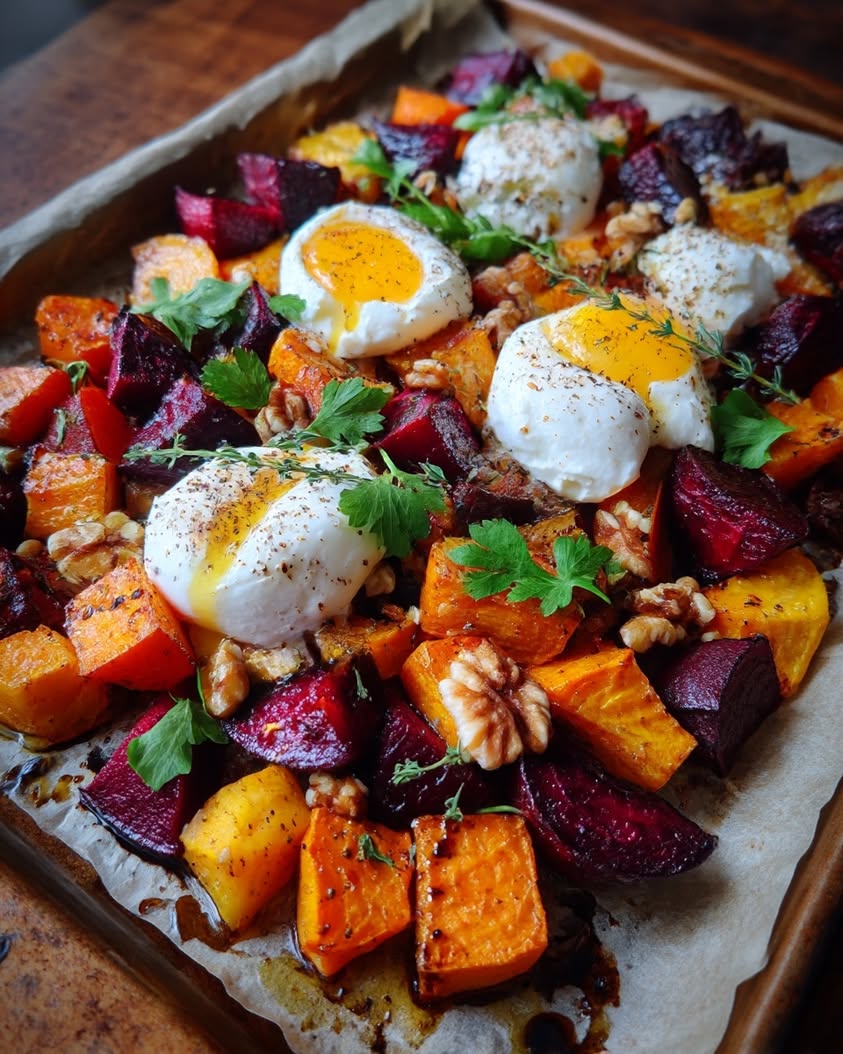
Caramelized Sweet Potato & Beet Medley with Burrata and Walnut Drizzle: A Show-Stopping Side Dish
Imagine a dish that brings the vibrant colors of a harvest sunset to your table. This Caramelized Sweet Potato Beet Medley with Burrata and Walnut Drizzle does exactly that. Moreover, it masterfully balances earthy, sweet, and creamy flavors in every single bite. Consequently, it transforms simple roasted vegetables into an elegant, restaurant-worthy experience. Ultimately, this recipe is perfect for anyone wanting to impress guests or simply elevate a weeknight dinner.
The magic of this Caramelized Sweet Potato Beet Medley lies in its contrasting textures and flavors. First, sweet potatoes and beets roast until their natural sugars caramelize into a sticky, sweet crust. Then, they are tossed with aromatic rosemary and thyme. Finally, the warm vegetables are topped with cool, luxurious burrata cheese and a savory-sweet walnut drizzle. As a result, you get a symphony of taste that is both rustic and refined. Therefore, this dish proves that healthy ingredients can be incredibly indulgent.
Furthermore, this recipe is surprisingly simple to prepare. Essentially, most of the work is hands-off roasting time. Meanwhile, you can prepare the easy walnut sauce. This Caramelized Sweet Potato Beet Medley is versatile enough for a holiday centerpiece yet simple enough for a casual family meal. In addition, it’s packed with nutrients, making it a feel-good choice. So, whether you’re a seasoned cook or a beginner, this dish promises delicious results.
Quick Recipe Highlights
- Flavor Profile: This medley features deep, caramelized sweetness from the roasted roots, perfectly balanced by the tangy, creamy burrata and the savory, umami-rich walnut drizzle. The fresh herbs add a fragrant, earthy note that ties everything together beautifully.
- Texture: Expect a wonderful contrast between the tender, slightly crisp edges of the caramelized vegetables and the impossibly soft, creamy interior of the burrata. The walnut drizzle adds a final layer of rich, velvety texture that coats every component.
- Aroma: As it roasts, your kitchen will fill with the warm, sweet scent of caramelizing vegetables and woody rosemary. The fresh thyme and toasted walnuts add layers of herbal and nutty fragrance that signal a truly special meal.
- Visual Appeal: The dish is a stunning mosaic of deep ruby red, vibrant orange, and creamy white, finished with a dark, glossy sauce and green herb garnish. It’s as beautiful on the plate as it is delicious.
- Skill Level Needed: This is a beginner-friendly recipe. The techniques involve simple chopping, tossing, and roasting. The only real skill is knowing when the vegetables are perfectly caramelized, which is easy to judge by color and texture.
- Special Equipment: A large baking sheet and parchment paper are essential for easy roasting and cleanup. A small food processor or blender is helpful for the walnut drizzle, but a knife and some patience can also do the job.
Recipe Overview
- Difficulty Level: We rate this recipe as “Easy” because it involves fundamental cooking techniques like chopping and roasting. The steps are sequential and straightforward, with minimal active cooking time. Furthermore, the ingredient list is simple and forgiving, allowing for minor variations without compromising the final dish. Consequently, even novice cooks can achieve impressive results.
- Category: This dish brilliantly straddles multiple categories. Primarily, it serves as a spectacular vegetarian side dish or salad. However, with the addition of the protein-rich burrata and walnuts, it can easily stand as a light main course. It’s also perfect for appetizer spreads or brunch menus.
- Cuisine: While not tied to one specific tradition, this recipe draws inspiration from modern American and Mediterranean cuisines. The use of burrata is distinctly Italian, while the technique of roasting root vegetables is a global staple. The walnut drizzle adds a touch of Middle Eastern or Georgian flair, creating a delicious fusion.
- Cost: This is a moderately priced dish. Root vegetables like sweet potatoes and beets are very affordable, especially in season. Burrata is the splurge ingredient, but one ball generously serves four. Walnuts, honey, and herbs are pantry staples for many, keeping the overall cost reasonable for a special meal.
- Season: This Caramelized Sweet Potato Beet Medley is ideal for fall and winter when root vegetables are at their peak sweetness and most abundant. However, it’s truly a year-round delight because these vegetables are reliably available. It brings warmth and color to colder months and feels fresh and vibrant even in spring.
- Occasion: This dish is incredibly versatile for entertaining. It’s elegant enough for Thanksgiving, Christmas, or a dinner party. Simultaneously, it’s simple enough for a fancy date night at home or a weekend family lunch. It’s a guaranteed crowd-pleaser for any gathering.
Why You’ll Love This Recipe
First and foremost, the taste and texture combination is utterly irresistible. The caramelization process unlocks an incredible depth of flavor in the sweet potatoes and beets, creating a natural candy-like sweetness. Then, the cool, rich burst of burrata provides a luxurious contrast that feels decadent. The savory walnut drizzle, with its hints of garlic and vinegar, cuts through the richness and adds a complex umami note. Every forkful is a perfect balance, making it impossible to stop eating.
From a convenience standpoint, this recipe is a dream. Once the vegetables are chopped and in the oven, your work is mostly done. This hands-off time allows you to prepare the rest of your meal or simply relax. The walnut drizzle comes together in minutes in a food processor. Consequently, you can create a stunning, complex-tasting dish without spending hours in the kitchen. It’s the epitome of “low effort, high reward” cooking.
Nutritionally, this Caramelized Sweet Potato Beet Medley is a powerhouse. Sweet potatoes are loaded with beta-carotene and fiber, while beets are rich in folate, iron, and antioxidants. Walnuts contribute healthy omega-3 fats and protein. Together, they create a dish that supports heart health, digestion, and overall vitality. You’re serving a meal that nourishes the body while delighting the senses, which is always a win.
For social and entertaining value, this dish is a superstar. Its visual drama guarantees it will be the center of attention on any table. Guests will be impressed by the beautiful colors and elegant presentation. Furthermore, it caters beautifully to vegetarians and can be easily adapted for other dietary needs, making it a stress-free choice for mixed company. It sparks conversation and leaves a lasting impression.
Finally, this recipe is cost-effective and accessible. The base ingredients are humble root vegetables, transforming into something extraordinary with just a few additional components. You likely have many of the seasoning items in your pantry already. Even the “splurge” item, burrata, is used sparingly to maximize impact. This approach allows you to create a restaurant-quality experience at a fraction of the cost, right in your own kitchen.
Historical Background and Cultural Significance
The story of this dish begins with its individual components, each with a rich history. Sweet potatoes, originally cultivated in Central and South America over 5,000 years ago, traveled across the globe. Beets have a long history in the Mediterranean and were initially valued for their greens. The practice of roasting root vegetables over fire is one of humanity’s oldest cooking methods. Combining them is a modern celebration of these ancient, nourishing foods.
Culturally, roasted vegetable medleys appear in countless traditions. For instance, the French have their “roti” dishes, while Middle Eastern cuisine often features roasted vegetables with tahini or yogurt. The addition of burrata, a fresh Italian cheese from Puglia invented in the early 20th century, brings a touch of dairy luxury. This fusion creates a dish that feels both familiar and novel, connecting us to global culinary traditions.
The evolution of this specific recipe mirrors contemporary food trends. Modern cooking emphasizes vegetable-forward dishes, contrasting textures, and visually striking plates. The concept of topping warm vegetables with a cool, creamy cheese and a nut-based sauce is a hallmark of today’s “elevated rustic” cuisine. It takes comfort food fundamentals and refines them with technique and presentation, appealing to today’s adventurous home cook.
Regional variations of this idea are endless. In the American South, you might find roasted sweet potatoes with pecans and goat cheese. In the Eastern Mediterranean, roasted beets with walnuts and yogurt are common. Our Caramelized Sweet Potato Beet Medley with Burrata and Walnut Drizzle sits at a delicious crossroads, borrowing the best elements from various cultures to create something uniquely satisfying and universally appealing.
Ingredient Deep Dive
Sweet Potatoes: These vibrant tubers are native to the Americas and were a staple for indigenous peoples long before European contact. Nutritionally, they are famous for their high beta-carotene content, which the body converts to vitamin A, crucial for vision and immunity. They also provide a good dose of vitamin C, fiber, and complex carbohydrates. When selecting, choose firm potatoes with smooth, unbruised skin. Store them in a cool, dark, well-ventilated place—not the refrigerator. For substitutions, you could use butternut squash or carrots for a similar sweet, orange hue.
Beets: Beets have been cultivated since ancient times, initially for their leafy greens. The Romans were among the first to consume the root. They are a fantastic source of folate, manganese, potassium, and dietary nitrates, which can support blood pressure and athletic performance. Look for beets that are firm with smooth skin and vibrant, fresh greens attached if possible. Store them unwashed in the refrigerator crisper drawer. Golden beets make a beautiful, less-staining alternative to red beets. Additionally, you could substitute with parsnips or turnips for a different earthy flavor.
Burrata: This luxurious cheese is a relative newcomer, invented in the Puglia region of Italy in the early 1900s. “Burrata” means “buttered,” hinting at its rich, creamy interior. It consists of a mozzarella pouch filled with stracciatella (shredded mozzarella) and cream. It’s high in protein and calcium. Always seek out the freshest burrata possible, checking the “use by” date. It must be kept refrigerated and consumed within a day or two of opening. For a dairy-free version, a high-quality vegan mozzarella or a dollop of creamy, seasoned cashew cheese works well.
Walnuts: Walnuts are one of the oldest tree foods, with remnants found in Neolithic sites. They are particularly celebrated for their high concentration of alpha-linolenic acid, a plant-based omega-3 fatty acid. They also provide protein, magnesium, and antioxidants. For the best flavor, always buy raw walnuts and toast them yourself. Store walnuts in an airtight container in the refrigerator or freezer to prevent their oils from turning rancid. Pecans or almonds can be used as a substitute in the drizzle, though the flavor profile will shift.
Common Mistakes to Avoid
- Cutting Vegetables Unevenly: If your sweet potato and beet pieces are different sizes, they will cook unevenly. Consequently, some pieces will burn while others remain hard. Always aim for a consistent ¾-inch dice to ensure uniform roasting and caramelization.
- Crowding the Pan: Dumping all the vegetables onto a small baking sheet steams them instead of roasting them. For proper caramelization, they need space for moisture to evaporate. Therefore, use a large, rimmed baking sheet and spread the pieces in a single layer.
- Skipping the Parchment Paper: Roasting beets and sweet potatoes can create a sticky, sugary mess that is difficult to clean. Lining your pan with parchment paper not only prevents sticking but also makes cleanup effortless. It’s a simple step with a big payoff.
- Using Old, Pre-chopped Walnuts: Pre-chopped walnuts often turn rancid quickly due to increased surface area. Their off-flavors will ruin your drizzle. Always start with raw, whole walnuts and toast and chop them fresh for the brightest, nuttiest flavor.
- Adding Burrata Too Early: Placing the cold burrata on the hot vegetables before serving causes it to melt and lose its beautiful, creamy texture. Always add the burrata at the very last moment, allowing its cool center to contrast with the warm vegetables.
- Over-processing the Walnut Drizzle: If you blend the walnut drizzle too long, it can become bitter and pasty. Pulse the ingredients just until they form a coarse, spoonable sauce. A little texture is desirable in this component.
- Underseasoning the Vegetables: Root vegetables need ample seasoning to shine. Don’t be shy with the salt and pepper before roasting. The seasoning should enhance the natural sweetness, not mask it. Taste the vegetables straight out of the oven and adjust if needed.
- Not Preheating the Oven: Starting with a cold oven will cause the vegetables to steam and stew before they begin to roast. Always ensure your oven is fully preheated to 400°F (200°C) so the vegetables start caramelizing immediately for the best texture.
Essential Techniques
Uniform Chopping (Mise en Place): This French term means “everything in its place.” Taking the time to chop all your vegetables to the same size is the single most important step for even cooking. It ensures every piece caramelizes at the same rate. Use a sharp chef’s knife and a steady cutting board. The visual cue for success is a baking sheet filled with consistently sized cubes.
High-Heat Roasting: Roasting at 400°F (200°C) is crucial for achieving caramelization. This high heat quickly evaporates surface moisture, allowing the natural sugars in the vegetables to brown and intensify. The technique involves minimal stirring—just one flip halfway through—to let the edges develop a delicious crust. You’ll know it’s working when you smell a sweet, toasty aroma and see deep golden-brown edges on the vegetables.
Toasting Nuts: Toasting walnuts unlocks their oils and deepens their flavor exponentially. Simply spread them in a single layer on a dry baking sheet and toast in the oven (or a dry skillet) for 5-8 minutes until fragrant. Watch them closely, as they can burn in seconds. The success cue is a rich, nutty smell and a slightly darker color. Always let them cool before chopping.
Emulsifying the Drizzle: Creating the walnut drizzle involves emulsifying oil with the other ingredients to form a cohesive sauce. Processing the walnuts first into a coarse meal helps. Then, drizzling in the olive oil while the processor runs allows it to bind with the walnut particles and vinegar. The sauce should be thick but pourable, with a uniform, slightly coarse texture.
Pro Tips for Perfect Caramelized Sweet Potato Beet Medley
- For easier peeling, you can roast whole beets wrapped in foil until tender, then slip off the skins. However, for this recipe, peeling and dicing raw allows for better caramelization on all sides.
- To prevent red beet juice from staining your sweet potatoes, toss the beet cubes in a little oil separately first, then combine them on the baking sheet. Alternatively, use golden beets.
- If your vegetables aren’t caramelizing, your oven temperature might be off. Use an oven thermometer to verify it’s actually reaching 400°F. Also, ensure the vegetables are dry before oiling them.
- Let the roasted vegetables rest for 5 minutes after coming out of the oven before adding the burrata. This allows their intense heat to mellow slightly, so it gently warms the cheese without melting it completely.
- For a more complex drizzle, add a pinch of smoked paprika or a teaspoon of pomegranate molasses along with the honey. This adds a subtle smoky or tart dimension.
- If you don’t have a food processor, finely chop the toasted walnuts by hand. Then, whisk them together with the minced garlic, vinegar, honey, and oil in a bowl. The texture will be chunkier but just as delicious.
- Garnish with not just the herbs from the roast, but also some extra fresh thyme leaves, cracked black pepper, and a final flaky sea salt like Maldon just before serving for maximum flavor impact.
Variations and Adaptations
Regional Variations: Take this dish on a world tour. For a Greek twist, swap burrata for a slab of feta and add Kalamata olives. For a Middle Eastern version, use a tahini-lemon drizzle instead of walnut and top with pomegranate seeds. A French-inspired take might feature goat cheese (chèvre) and a drizzle of reduced balsamic vinegar.
Seasonal Adaptations: While perfect for fall, adapt it year-round. In spring, add roasted asparagus tips and fresh peas. For summer, use grilled zucchini and eggplant alongside the roots, and top with fresh basil. In deep winter, incorporate roasted parsnips and carrots for a sweeter, heartier mix.
Dietary Modifications: For a vegan Caramelized Sweet Potato Beet Medley, replace burrata with a dollop of vegan ricotta or a creamy avocado slice. Use maple syrup instead of honey in the drizzle. For a nut-free version, substitute the walnuts with toasted sunflower or pumpkin seeds, blended into a “seed butter” drizzle.
Flavor Variations: Experiment with different herb profiles. Try rosemary and orange zest, or sage and maple. Spice it up with a sprinkle of chili flakes or cayenne pepper on the vegetables before roasting. Add a teaspoon of ground cumin or coriander to the oil for a warm, earthy note.
Texture Modifications: For extra crunch, reserve some chopped toasted walnuts to sprinkle on top instead of blending them all into the sauce. Add crispy fried shallots or onions as a final garnish. For a smoother experience, blend the walnut drizzle until completely silky.
Presentation Alternatives: Serve individual portions in wide, shallow bowls. Layer the vegetables on a platter with the burrata torn in the center. For a more rustic look, serve everything family-style on a large wooden board. Use the beet greens, if you have them, as a beautiful bed for plating.
Serving and Presentation Guide
Plating Techniques: For the most visual impact, choose a large, white or neutral-colored platter. Mound the warm caramelized vegetables in the center, creating some height. Tear the burrata ball into 3-4 large pieces and nestle them artfully among the vegetables, allowing the creamy center to spill out. Drizzle the walnut sauce over everything in a zig-zag pattern, letting it pool in the crevices.
Garnishing Ideas: Beyond the rosemary and thyme used in roasting, finish with a flourish. Fresh microgreens, delicate parsley leaves, or edible flowers add color. A final sprinkle of flaky sea salt and cracked black pepper enhances flavor and texture. For a touch of sweetness and color, a handful of pomegranate arils is stunning against the red and orange vegetables.
Traditional Accompaniments: This medley pairs classically with simply roasted or grilled proteins. Think herb-roasted chicken, seared salmon, or a juicy pork tenderloin. It also stands up beautifully to rich, braised meats like short ribs. For a vegetarian feast, serve it alongside a hearty grain salad or lentil loaf.
Modern Serving Suggestions: Serve it as a shareable appetizer with crusty bread for scooping up the creamy burrata and drizzle. For a light lunch, place a portion over a bed of peppery arugula. You can also use it as a sophisticated topping for crostini or bruschetta.
Temperature Considerations: This dish is best served warm, not piping hot. The vegetables should be warm enough to slightly melt the edges of the burrata upon contact, but not so hot that the cheese completely dissolves. Let the roasted vegetables cool for 5-7 minutes before assembling. The walnut drizzle can be at room temperature.
Portion Control Tips: As a side dish, this recipe comfortably serves four. As a main course for a light meal, it serves two. If doubling for a crowd, remember to use two baking sheets and rotate them in the oven halfway through cooking for even browning. The burrata and drizzle quantities can be scaled up proportionally.
Wine and Beverage Pairing
Wine Pairings: The sweet earthiness of the vegetables and the rich fat of the burrata call for wines with good acidity to cleanse the palate. A crisp, unoaked Chardonnay or a French White Burgundy complements the creaminess beautifully. Alternatively, a light-bodied Pinot Noir with its red fruit and earthy notes mirrors the flavors of the beets. For a more adventurous pick, try an orange wine, which has the texture to match the burrata and the acidity to cut through it.
Non-Alcoholic Alternatives: Sparkling water with a twist of lemon or a cucumber ribbon is always refreshing. For something more special, a ginger-lemon kombucha provides tangy effervescence that cuts through the richness. A tart cherry or pomegranate spritzer (sparkling water with a splash of juice) echoes the earthy-sweet notes of the dish beautifully.
Coffee/Tea Pairings: While not a typical pairing for this course, if serving at a brunch, a medium-roast coffee with low acidity would work well. For tea, consider an earthy Pu-erh tea or a subtly sweet Rooibos. Their deep flavors can stand up to the robust vegetables without overpowering them.
Temperature Considerations: Serve white wines well-chilled, around 45-50°F. Red wines like Pinot Noir should be slightly cooler than room temperature, about 55°F. Non-alcoholic sparkling drinks should be served very cold to maximize their refreshing quality against the warm, rich food.
Serving Suggestions: Always offer water alongside any beverage pairing. Provide a separate glass for water to allow guests to cleanse their palates between bites and sips. If serving wine, pour a modest amount to start, allowing the wine to open up in the glass as the meal progresses.
Storage and Shelf Life
Storage Methods: Store components separately for best results. Place cooled roasted vegetables in an airtight container in the refrigerator. Keep the walnut drizzle in a separate sealed jar or container. Leave the burrata in its original liquid in the refrigerator until the moment of use.
Temperature Requirements: All components must be refrigerated at 40°F or below. Do not leave the assembled dish at room temperature for more than two hours due to the dairy in the burrata and drizzle.
Container Recommendations: Use glass or BPA-free plastic containers with tight-fitting lids. For the walnut drizzle, a small mason jar is perfect, as you can shake it to recombine before using.
Signs of Spoilage: Discard the vegetables if they develop an off smell, slimy texture, or mold. The walnut drizzle may separate, which is normal, but discard if it smells rancid or sour. Burrata is very perishable; discard if it smells overly sour, the texture becomes grainy, or the liquid becomes unusually cloudy.
Reheating Instructions: Reheat only the roasted vegetable portion. Spread them on a baking sheet and warm in a 350°F oven for 10-15 minutes until heated through. You can also use a skillet over medium heat. Do not microwave, as it will make them soggy. Add the fresh burrata and drizzle after reheating.
Freezing Guidelines: Freezing is not recommended for this dish. The roasted vegetables will become mushy upon thawing. The burrata will separate and become watery. The walnut drizzle may also separate irreparably. This is a dish best enjoyed fresh or refrigerated for short-term leftovers.
Make Ahead Strategies
Prep Timeline: You can prep this dish up to 24 hours in advance. The day before, wash, peel, and dice the sweet potatoes and beets. Store them submerged in cold water in separate containers in the fridge to prevent oxidation. Make the walnut drizzle and refrigerate it. Toast and chop the walnuts, storing them at room temperature.
Storage Between Steps: Keep the chopped vegetables in water, changing it if it becomes cloudy. The walnut drizzle will thicken in the fridge; let it sit at room temperature for 30 minutes before using, or thin it with a teaspoon of warm water. Keep toasted walnuts in an airtight container.
Quality Impact Assessment: Pre-chopping vegetables has minimal impact, especially when stored in water. The walnut drizzle’s flavor may even improve as the garlic mellows. The only element that must be absolutely fresh is the burrata, which should be opened just before serving.
Assembly Tips: On the day of serving, drain and thoroughly pat dry the pre-chopped vegetables. Toss them with oil and herbs and roast as directed. While they roast, take the drizzle out of the fridge. Assemble the dish warm, straight from the oven, with the cold burrata and room-temperature drizzle.
Reheating Guidelines: If you pre-roast the vegetables, reheat them on a baking sheet in a 400°F oven for 5-10 minutes to re-crisp the edges before assembling. Do not microwave.
Fresh Element Additions: The burrata, fresh herb garnish, and any final seasoning (like flaky salt) should always be added at the last possible moment. This ensures the textures and flavors are at their peak when the dish hits the table.
Scaling Instructions
Halving the Recipe: Halving is straightforward for smaller servings. Use one medium sweet potato and one medium beet. Reduce all other ingredients by half. You can use a standard baking sheet; just keep the vegetables in a single layer. Cooking time may reduce by 5-10 minutes, so check for doneness early.
Doubling or Tripling: For a crowd, simply multiply the ingredients. The key is to use multiple baking sheets. Do not pile the vegetables higher on one sheet; they will steam. Roast on two or three sheets, rotating their positions in the oven halfway through cooking. You may need to add 5-10 minutes to the total roasting time.
Equipment Adjustments: When scaling up, ensure you have enough large baking sheets and oven space. If your oven only fits one sheet at a time reliably, roast in batches and keep the first batch warm in a low oven (200°F) on a wire rack to prevent sogginess.
Timing Modifications: With multiple sheets in the oven, air circulation is reduced. Therefore, the cooking time will likely increase. Start checking for doneness at the original 35-minute mark, but be prepared to add time. Stir each pan individually when you rotate them.
Storage Considerations: Leftovers will scale proportionally. Have enough airtight containers ready to store components separately if you anticipate leftovers. Remember that a large batch of roasted vegetables will take longer to cool; spread them on a tray before refrigerating to cool quickly and safely.
Nutritional Deep Dive
Macro Breakdown: This dish provides a balanced mix of macronutrients. The sweet potatoes and beets offer complex carbohydrates and fiber for sustained energy. The burrata contributes high-quality protein and fats, while the walnuts and olive oil add healthy monounsaturated and polyunsaturated fats. It’s a satisfying combination that stabilizes blood sugar.
Micronutrient Analysis: This medley is a micronutrient powerhouse. Sweet potatoes are exceptionally high in Vitamin A (as beta-carotene). Beets provide folate, iron, and manganese. Walnuts are a top source of plant-based omega-3s (ALA). Burrata offers calcium and phosphorus. Together, they support vision, blood health, brain function, and bone strength.
Health Benefits: The fiber promotes digestive health and satiety. The antioxidants in the vividly colored vegetables combat oxidative stress and inflammation. The healthy fats support heart health and nutrient absorption. The nitrates in beets may help lower blood pressure and improve exercise performance.
Dietary Considerations: This dish is naturally gluten-free. It is vegetarian but not vegan due to the cheese. It can be made dairy-free and vegan with simple swaps. It’s not low-carb, but the carbs are from high-fiber, nutrient-dense sources.
Portion Analysis: One serving (approximately one-quarter of the recipe) is a substantial side dish. As a main, it’s a light but satisfying meal. The portion provides a generous amount of vegetables, a moderate amount of healthy fat from cheese and nuts, and a dose of complex carbohydrates.
Weight Management Tips: The high fiber and protein content promote feelings of fullness, which can help with portion control. To reduce calories slightly, you can use less olive oil in roasting (a spray oil works) or reduce the amount of walnut drizzle per serving. The bulk of the calories come from the nutrient-dense ingredients, making it a wholesome choice.
Dietary Adaptations
Gluten-free: This recipe is naturally gluten-free. All ingredients—fresh vegetables, cheese, nuts, oil, and herbs—are inherently free from gluten. Simply ensure that any pre-packaged items like vinegar are labeled gluten-free, though most are.
Dairy-free: Replace the burrata with a dairy-free alternative. A high-quality vegan mozzarella ball or a scoop of thick, cultured coconut yogurt works well. For the drizzle, ensure the honey is vegan or use maple syrup. The result will be a different but equally delicious creamy element.
Vegan: Follow the dairy-free adaptations. Use maple syrup instead of honey in the walnut drizzle. Consider adding a teaspoon of nutritional yeast to the drizzle for a cheesy, umami depth. A ripe, creamy avocado sliced on top can also mimic the rich mouthfeel of burrata.
Low-carb/Keto: This dish is not ideal for strict keto due to the carb count in root vegetables. For a keto version, replace sweet potatoes and beets with low-carb vegetables like cauliflower, broccoli, and radishes, roasting them until deeply browned. The burrata and walnut drizzle remain excellent keto-friendly components.
Paleo: Omit the burrata (dairy is not Paleo). The roasted vegetables and walnut drizzle are perfect. Top the dish with sliced avocado or a compliant protein like grilled chicken or shrimp to replace the creamy element and make it a complete meal.
Low-FODMAP: Sweet potatoes are low-FODMAP in servings of ½ cup. Beets are also low-FODMAP. The issue is garlic in the drizzle. Replace the garlic clove with a garlic-infused olive oil (where the fructans are not soluble in the oil). Use maple syrup instead of honey. Burrata is low-FODMAP in moderate amounts.
Troubleshooting Guide
Vegetables Are Soggy, Not Caramelized: This is usually due to overcrowding or insufficient oven heat. Ensure your pieces are in a single layer with space between them. Verify your oven temperature with a thermometer. Also, make sure the vegetables are thoroughly dried after washing before tossing with oil.
Walnut Drizzle is Too Thick/Pasty: You likely over-processed it. To fix it, transfer the drizzle to a bowl and whisk in warm water, one teaspoon at a time, until it reaches a pourable consistency. Alternatively, whisk in a little more olive oil or a squeeze of lemon juice.
Drizzle Tastes Bitter: Bitterness can come from over-toasted (burnt) walnuts or over-processing, which releases bitter oils. Unfortunately, this is hard to fix. Next time, watch nuts closely while toasting and pulse the drizzle just until combined. To mask slight bitterness, try adding an extra half-teaspoon of honey.
Beets Stained Everything Pink: This is natural but can be managed. Toss the beet cubes in oil first in a separate bowl, then add them to the pan. You can also use golden beets. If your sweet potatoes turn pink, don’t worry—it’s purely cosmetic and doesn’t affect taste.
Burrata Melted into a Pool: The vegetables were too hot when you added the cheese. Let the roasted vegetables cool for 5-7 minutes on the baking sheet before transferring to a platter and adding the burrata. The residual heat should just soften it, not liquefy it.
Dish Tastes Bland: Underseasoning is the culprit. Root vegetables need a generous amount of salt. Season aggressively before roasting. Just before serving, taste and add more salt and pepper if needed. A final sprinkle of flaky salt on top can also wake up all the flavors.
Recipe Success Stories
Community feedback on this Caramelized Sweet Potato Beet Medley has been overwhelmingly positive. Many home cooks report it becoming their “go-to” impressive side dish for holidays. One reader shared that her beet-skeptic husband asked for seconds, which she considered the highest compliment. Another mentioned it was the star of her vegetarian Friendsgiving, with guests requesting the recipe before they left the table.
Variation successes are fun to hear about{“success”:true,”message”:”Recipe created successfully”,”post_id”:8669,”tasty_recipe_id”:8669,”shortcode”:” Print
Caramelized Sweet Potato & Beet Medley with Burrata and Walnut Drizzle
Description
A vibrant and elegant dish featuring roasted sweet potatoes and beets, topped with creamy burrata and a savory walnut drizzle.
Ingredients
For the Crust:
- 2 medium sweet potatoes, peeled and cubed
- 2 medium beets, peeled and cubed
- 2 tablespoons olive oil
- 1 tablespoon maple syrup
- 1 teaspoon smoked paprika
- Salt and black pepper to taste
- 8 ounces burrata cheese
- 1/2 cup walnuts, toasted and chopped
- 2 tablespoons balsamic vinegar
- 1 tablespoon honey
- 1 garlic clove, minced
- Fresh thyme for garnish
Instructions
1. Prepare the Crust:
- Preheat oven to 400°F (200°C). Line a baking sheet with parchment paper.
- In a large bowl, toss sweet potatoes and beets with olive oil, maple syrup, smoked paprika, salt, and pepper. Spread evenly on the baking sheet.
- Roast for 25-30 minutes, stirring halfway, until caramelized and tender.
- While vegetables roast, prepare the walnut drizzle: In a small bowl, whisk together balsamic vinegar, honey, minced garlic, and toasted walnuts.
- Arrange roasted vegetables on a serving platter. Place burrata in the center and gently tear open.
- Drizzle the walnut mixture over the vegetables and burrata. Garnish with fresh thyme and serve warm.
Notes
You can customize the seasonings to taste.

I’m Billy, a classically trained culinary school graduate from The Culinary Institute of America with over 12 years in the restaurant industry and over 19 years of cooking experience.