
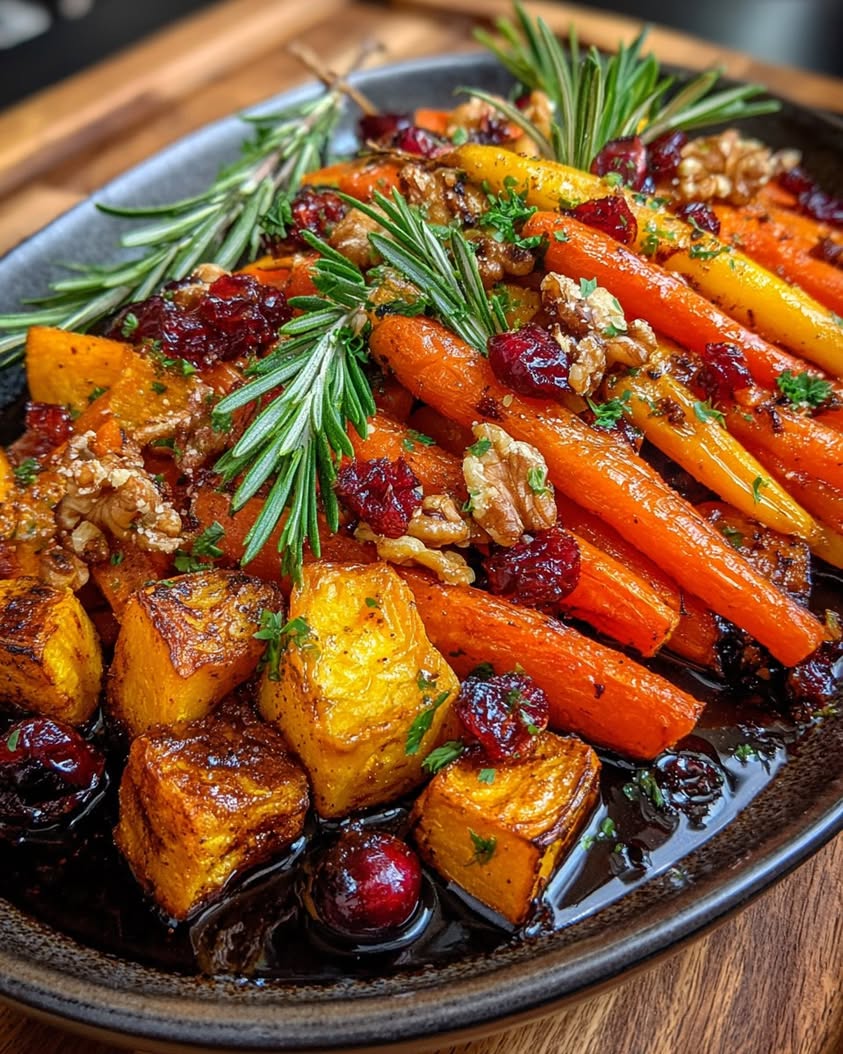
Caramelized Sweet Potato and Carrot Medley with Walnut Cranberry Glaze: A Festive Side Dish Star
Imagine a dish that captures the very essence of a cozy autumn feast. This Caramelized Sweet Potato and Carrot Medley with Walnut Cranberry Glaze is exactly that. It transforms humble root vegetables into a spectacular side dish bursting with sweet, savory, and tangy flavors. The natural sugars in the sweet potatoes and carrots caramelize beautifully in the oven, creating crispy edges and tender, melt-in-your-mouth centers. Meanwhile, a simple glaze made from cranberry sauce, maple syrup, and warm spices ties everything together with a glossy, festive finish.
This recipe is more than just a side dish. It is a celebration of seasonal produce at its peak. The vibrant orange hues of the sweet potatoes and carrots make it a visually stunning addition to any holiday table. Additionally, the toasted walnuts add a crucial crunch that contrasts the soft vegetables perfectly. Ultimately, this Caramelized Sweet Potato and Carrot Medley with Walnut Cranberry Glaze is designed to be the star of your meal, offering a complex flavor profile that will have everyone asking for seconds.
Furthermore, this dish is incredibly versatile. You can serve it alongside a classic roast turkey, a glazed ham, or even as part of a vegetarian holiday spread. The preparation is straightforward, requiring mostly hands-off oven time. Consequently, you can focus on other parts of your meal while this beautiful medley roasts to perfection. Let us dive into why this recipe deserves a permanent spot in your culinary repertoire.
Quick Recipe Highlights
- Flavor Profile: This dish masterfully balances sweet and savory notes. The natural sweetness of the roasted vegetables meets the tangy pop of the cranberry glaze. Finally, earthy rosemary and toasted walnuts ground the flavor for a perfectly harmonious bite.
- Texture: You get a wonderful contrast in every forkful. The roasted sweet potatoes and carrots become tender and creamy inside with delightfully caramelized, slightly crisp edges. The toasted walnuts then provide a satisfying, crunchy counterpoint that makes the dish exciting to eat.
- Aroma: As this medley roasts, your kitchen will fill with an irresistible fragrance. The scent of caramelizing vegetables blends with warming cinnamon and the herbal note of fresh rosemary. It is the quintessential aroma of a holiday gathering.
- Visual Appeal: The color palette is pure autumn glory. Vibrant orange sweet potatoes and carrots glisten with the deep red cranberry glaze. The finished dish is then garnished with green rosemary and the rustic brown of walnuts, creating a picture-perfect presentation.
- Skill Level Needed: This is an accessible recipe for cooks of all levels. The techniques involved are basic: chopping, tossing, and roasting. Therefore, even a beginner can achieve impressive, restaurant-quality results with minimal effort.
- Special Equipment: You only need a few standard kitchen tools. A large baking sheet, a mixing bowl, and a small saucepan for the glaze are essential. Parchment paper is also highly recommended for easy cleanup and to prevent sticking.
Recipe Overview
- Difficulty Level: We rate this recipe as easy for several reasons. The steps are simple and sequential, with no advanced techniques required. Most of the cook time is inactive oven time. Moreover, the ingredient list is composed of whole foods that are easy to find and prepare.
- Category: This dish fits perfectly into multiple categories. Primarily, it is a standout vegetable side dish for holidays and Sunday dinners. It can also serve as a hearty component in a grain bowl or a warm salad when served over greens.
- Cuisine: While not tied to one specific tradition, this medley draws inspiration from modern American holiday cooking. It uses New World ingredients like sweet potatoes and cranberries in a way that celebrates seasonal, farm-to-table ethos with a gourmet twist.
- Cost: This is a very cost-effective dish to prepare, especially in the fall and winter. Sweet potatoes, carrots, and onions are budget-friendly staples. The walnuts and cranberry sauce are the only slightly pricier components, but a little goes a long way in this recipe.
- Season: This recipe is ideal for the cooler months from late September through December. The ingredients are at their peak, and the warm, comforting flavors align perfectly with autumn and winter holidays like Thanksgiving and Christmas.
- Occasion: It is the ultimate holiday side dish for Thanksgiving, Christmas, or Easter dinners. Beyond that, it is excellent for potlucks, Sunday family meals, or any dinner party where you want to serve a colorful, impressive, and delicious vegetable dish.
Why You’ll Love This Recipe
First and foremost, the taste and texture of this Caramelized Sweet Potato and Carrot Medley are utterly irresistible. The roasting process concentrates the vegetables’ sugars, creating deep, complex flavors that are both sweet and savory. Each bite offers a creamy interior, a caramelized edge, and a crunchy nut topping. The cranberry glaze adds a necessary tangy brightness that cuts through the richness, preventing the dish from being cloying. Ultimately, it is a symphony of flavors and textures that feels both comforting and sophisticated on the palate.
From a practical standpoint, the convenience of this recipe is a major win. The prep work is minimal and can often be done ahead of time. Once the vegetables are chopped and tossed with oil, the oven does most of the heavy lifting. This frees you up to prepare the rest of your meal, entertain guests, or simply relax. Furthermore, it uses just one sheet pan for roasting, which means less mess and easier cleanup—a crucial consideration during busy holiday cooking.
Nutritionally, this dish is a powerhouse. Sweet potatoes are loaded with beta-carotene, fiber, and vitamins. Carrots add more vitamins and antioxidants. Walnuts contribute healthy fats, protein, and omega-3s. Using olive oil and maple syrup as primary fats and sweeteners keeps the ingredient list wholesome. While it is a treat, it is one made from real, nutrient-dense foods that nourish your body as well as your soul.
For entertaining, this Caramelized Sweet Potato and Carrot Medley with Walnut Cranberry Glaze is a true crowd-pleaser. Its stunning visual appeal makes it a centerpiece on the buffet table. It caters to a wide range of dietary preferences, being naturally vegetarian and easily adaptable to vegan and gluten-free needs. Serving a dish that looks beautiful and tastes incredible always earns you compliments and makes your guests feel special and well-cared-for.
Finally, this recipe is remarkably cost-effective and accessible. The base ingredients are affordable pantry and produce staples. You likely already have many of the spices and oils on hand. Even the “special” ingredients like pure maple syrup and whole cranberry sauce are becoming pantry staples. This means you can create a dish that tastes luxurious and looks expensive without breaking the bank, making it perfect for both everyday dinners and festive feasts.
Historical Background and Cultural Significance
The story of this dish begins with its core ingredients, each with a rich history. Sweet potatoes are native to Central and South America and have been cultivated for thousands of years. They traveled to Europe and Asia with explorers and later became a Southern United States staple. Carrots, with origins in Persia, were originally purple and yellow before the familiar orange variety was developed in the Netherlands. Combining these two global vegetables reflects the modern fusion approach to cooking, where ingredients from different culinary traditions come together to create something new and delicious.
Culturally, sweet potatoes and cranberries are deeply ingrained in American holiday food traditions, particularly Thanksgiving. The sweet potato casserole, often topped with marshmallows or pecans, is a classic Southern contribution to the feast. Cranberry sauce, a necessity for turkey, has roots in Native American cooking. This Caramelized Sweet Potato and Carrot Medley with Walnut Cranberry Glaze is a contemporary, refined take on those classic pairings. It honors tradition by using the iconic flavors but presents them in a more nuanced, less sugary, and visually elegant format.
The evolution of this recipe mirrors broader food trends towards vegetable-forward, seasonally inspired dishes. Gone are the days of canned vegetables swimming in butter. Modern palates and nutritional awareness demand that vegetables be the star, treated with techniques that maximize their natural flavor. Roasting, as done here, is a prime example. This method, emphasizing caramelization and fresh herbs, represents a shift towards healthier, yet deeply flavorful, holiday cooking that doesn’t sacrifice indulgence for wholesomeness.
Regional variations of roasted root vegetable dishes exist worldwide. In France, a “roti” of root vegetables might include parsnips and turnips with herbes de Provence. In the Mediterranean, similar mixes are roasted with lemon and oregano. This particular recipe, with its maple and cranberry elements, has a distinctly North American, autumnal character. The walnut addition nods to California’s agricultural bounty. Therefore, while the technique is universal, the specific flavor profile of this medley tells a story of place and season, making it a true celebration of fall in North America.
Ingredient Deep Dive
Let us start with sweet potatoes. These vibrant tubers are not just for pies. Cultivated since prehistoric times in the Americas, they were a vital crop for many indigenous cultures. Nutritionally, they are a superstar, packed with beta-carotene (which converts to Vitamin A), fiber, Vitamin C, and potassium. When selecting sweet potatoes, look for firm specimens with smooth, unbruised skin. Avoid any with soft spots or signs of sprouting. Store them in a cool, dark, well-ventilated place—not the refrigerator, as cold temperatures can alter their texture and flavor. For a substitution, you could use butternut squash, which offers a similar sweetness and creamy texture when roasted.
Carrots bring their own history and benefits. Originally cultivated for their aromatic leaves and seeds, the root we eat today was developed over centuries. They are an excellent source of beta-carotene, fiber, Vitamin K1, and antioxidants. Choose carrots that are firm, smooth, and brightly colored, with fresh, green tops if possible. Store them in the crisper drawer of your refrigerator in a plastic bag. If you need a substitute, parsnips would be an excellent choice, offering a slightly nuttier, earthier flavor that still caramelizes beautifully.
The cranberry glaze is what sets this dish apart. Cranberries are one of North America’s few native fruits, used by Native Americans for food, dye, and medicine. They are renowned for their high vitamin C and antioxidant content, particularly proanthocyanidins, which support urinary tract health. For this recipe, using whole-berry cranberry sauce (not jellied) provides the best texture and tart flavor. You can use canned or homemade. As a substitute, a good-quality fruit-sweetened raspberry or cherry jam could work in a pinch, though the flavor will be different. Maple syrup, the other glaze sweetener, is a natural product with minerals like manganese and zinc. Always opt for pure maple syrup over pancake syrup for the best flavor and quality.
Walnuts are the oldest known tree food, dating back to 7000 B.C. They are a fantastic source of plant-based omega-3 fatty acids, protein, and antioxidants like vitamin E. Toasting them is non-negotiable for this recipe, as it unlocks their oils and intensifies their flavor. Look for walnuts that are plump, light in color, and smell fresh, not rancid. Store them in an airtight container in the refrigerator or freezer to prevent their oils from spoiling. For a nut-free version, toasted pumpkin seeds (pepitas) would provide a wonderful crunch and a green color contrast.
Finally, the supporting cast of olive oil, rosemary, and cinnamon. Extra virgin olive oil, with its fruity, peppery notes, is ideal for roasting and dressing. Fresh rosemary offers a piney, aromatic quality that dried rosemary cannot match. If you must substitute, thyme would be a good alternative. Cinnamon adds a warm, sweet spice that complements the natural sugars in the vegetables. Together, these elements build layers of flavor that transform simple ingredients into an extraordinary dish.
Common Mistakes to Avoid
- Overcrowding the Pan: This is the most common error. If the vegetables are piled on top of each other, they will steam instead of roast and caramelize. Always use a large enough baking sheet and spread the pieces in a single layer with space between them. You might even need two sheets.
- Uneven Chopping: Cutting your sweet potatoes and carrots into wildly different sizes guarantees uneven cooking. Smaller pieces will burn before larger ones are tender. Aim for uniform 1-inch chunks to ensure everything finishes at the same time.
- Skipping the Toasting Step for Walnuts: Raw walnuts can taste bitter and lack the deep, nutty flavor this dish needs. Always toast your walnuts in a dry skillet or the oven until fragrant. This simple step makes a monumental difference in the final taste.
- Using Old, Dried-Out Herbs: Dried rosemary can be woody and harsh. For the best flavor, use fresh rosemary. If you only have dried, use half the amount and crush it finely between your fingers before adding it to release its oils.
- Adding the Glaze Too Early: If you pour the cranberry glaze over the vegetables at the start of roasting, the sugars will burn and create a bitter, charred mess. Always add the glaze during the last 10-15 minutes of cooking to allow it to just set and become sticky.
- Neglecting to Toss Midway: Roasting without turning or tossing the vegetables results in one-sided caramelization. For even browning and cooking, give the pan a good shake or use a spatula to flip the pieces halfway through the roasting time.
- Underseasoning: Root vegetables need ample seasoning. Do not be shy with the salt and pepper. Season well during the initial oil-tossing stage, and taste again after adding the glaze, as the sweetness may require another small pinch of salt to balance it.
- Using a Dark, Non-Stick Pan at High Heat: Dark pans can cause the bottoms of the vegetables to burn before the tops are done. A light-colored aluminum baking sheet is ideal. If using a dark pan, consider reducing the oven temperature by 25 degrees Fahrenheit.
Essential Techniques
Uniform Chopping: Mastering a consistent dice is crucial for even cooking. The goal is to create pieces with similar surface area and mass. Use a sharp chef’s knife and take your time. First, cut the vegetables into planks, then batons, and finally cubes. This technique, called the “brunoise” method for small dice, ensures every piece roasts at the same rate, preventing some from being mushy while others are still hard.
Dry Roasting for Caramelization: The secret to deep flavor is the Maillard reaction and caramelization, which require dry, high heat. Pat your chopped vegetables completely dry before tossing them with oil. Excess moisture will create steam. Furthermore, ensure your oven is fully preheated before the pan goes in. A hot oven immediately sears the exterior, locking in moisture and encouraging those delicious browned, crispy edges to form.
Toasting Nuts: Toasting nuts is a simple but transformative technique. It drives off moisture and toasts the natural oils, enhancing flavor and crunch. Use a dry skillet over medium-low heat. Stir or shake the nuts constantly for 3-5 minutes until they become fragrant and slightly darker. Immediately transfer them to a plate to stop the cooking, as they can burn quickly in the hot pan’s residual heat.
Reducing a Glaze: A good glaze should coat the back of a spoon. When simmering your cranberry sauce and maple syrup, allow it to bubble gently for a few minutes. This process evaporates excess water, thickening the mixture and concentrating the flavors. Watch it carefully and stir often to prevent scorching on the bottom of the pan. The glaze is ready when it leaves a clear trail when you drag a spoon through it.
Pro Tips for Perfect Caramelized Sweet Potato and Carrot Medley
For the ultimate caramelization, preheat your baking sheet in the oven for 5-10 minutes before adding the oiled vegetables. The hot pan gives the veggies an instant sear, promoting better browning from the very start.
Consider adding a tablespoon of balsamic vinegar to the olive oil mixture. The acidity helps balance the sweetness and adds another layer of complex flavor to the caramelized crust.
If your walnuts are already toasted, add them to the sheet pan for only the last 2-3 minutes of roasting. This warms them through and helps them adhere to the glaze without risking them burning.
For a more savory twist, sprinkle a teaspoon of smoked paprika or a pinch of cayenne pepper along with the rosemary. This adds a subtle warmth and depth that plays wonderfully against the sweet glaze.
Do not discard any leftover glaze that drips onto the pan. After removing the vegetables, scrape up those sticky, caramelized bits and drizzle them back over the top of the finished dish for an extra flavor punch.
Let the medley rest for 5 minutes after pulling it from the oven and before serving. This allows the glaze to set slightly and makes the vegetables easier to transfer to a serving platter without falling apart.
For a beautiful presentation, garnish with a few extra whole cranberries from the sauce and a small sprig of fresh rosemary just before bringing it to the table.
Variations and Adaptations
For regional variations, consider the ingredients local to your area. In the South, you might add a handful of pecans instead of walnuts. In the Pacific Northwest, hazelnuts would be a sublime substitution. A Mediterranean version could omit the cranberry glaze and instead toss the roasted vegetables with lemon zest, chopped Kalamata olives, and fresh oregano.
Seasonal adaptations are easy. In spring, use baby carrots and sweet potatoes with a lighter glaze of orange juice and honey. For summer, try a version with zucchini and bell peppers, though the cook time would be much shorter. The cranberry glaze makes this inherently a fall and winter dish, but the roasting technique is versatile year-round.
Dietary modifications are straightforward. For a vegan version, ensure your maple syrup is vegan (most are) and that your cranberry sauce doesn’t contain gelatin. To make it gluten-free, simply confirm all packaged ingredients like cranberry sauce are certified GF—this dish is naturally gluten-free otherwise. For a lower-sugar option, reduce the maple syrup in the glaze by half and lean on the natural sweetness of the roasted vegetables.
Flavor variations can take this dish in new directions. Swap the rosemary for fresh thyme or sage. Add a tablespoon of grated fresh ginger or a teaspoon of orange zest to the glaze. For a savory umami boost, add a teaspoon of white miso paste to the oil mixture before tossing the vegetables.
Texture modifications can cater to different preferences. If you love extra crunch, add toasted pumpkin seeds or sunflower seeds along with the walnuts. For a creamier component, crumble some goat cheese or feta over the warm medley just before serving, allowing it to soften slightly.
Presentation alternatives include serving the medley in a hollowed-out roasted acorn squash for individual portions. Alternatively, you can chop the vegetables smaller, mix them with cooked farro or quinoa and the glaze, and serve it as a warm fall grain salad topped with the walnuts.
Serving and Presentation Guide
Plating this dish beautifully is simple because the ingredients do most of the work. Transfer the warm medley to a wide, shallow serving bowl or a large platter. Avoid piling it high in a deep bowl, as this hides the beautiful colors. Instead, spread it out to showcase the variety of textures and the glossy glaze. Using a white or neutral-colored dish will make the vibrant orange and red hues truly pop.
Garnishing is the final touch. Beyond the toasted walnuts mixed in, sprinkle a few extra on top for visual appeal. Add a final drizzle of the reduced glaze from the pan. Fresh herb sprigs like rosemary or parsley provide a green accent. If you have them, a handful of pomegranate arils scattered over the top adds a stunning jewel-like color and a fresh, tart burst that complements the cranberry.
For traditional accompaniments, this Caramelized Sweet Potato and Carrot Medley is a classic partner for roast turkey, baked ham, or pork tenderloin. It also pairs wonderfully with other holiday sides like green bean casserole, mashed potatoes, and a simple green salad. The sweet and savory profile makes it versatile enough to stand up to rich meats.
Modern serving suggestions include using it as a topping for a harvest bowl. Spoon it over a bed of kale or arugula, add some crumbled cheese, and you have a complete meal. It also makes a fantastic filling for a savory hand pie or tart alongside some caramelized onions and Gruyère cheese.
Temperature is key. This dish is best served warm, not piping hot. Allowing it to cool slightly for 5-10 minutes after roasting lets the flavors meld and makes it easier to eat. If you need to keep it warm for a party, you can hold it in a 200°F oven for up to 30 minutes, though the walnuts may soften slightly.
For portion control, a standard serving is about one cup per person as a side dish. Because it is so flavorful and satisfying, a little goes a long way. If serving as part of a large buffet with many other dishes, you can plan for slightly smaller portions. Remember, it reheats well, so it is better to have leftovers than to run out.
Wine and Beverage Pairing
Choosing the right wine can elevate this dish. The sweet and savory nature of the Caramelized Sweet Potato and Carrot Medley pairs beautifully with off-dry white wines. A Riesling or Gewürztraminer with a hint of sweetness will complement the glaze and contrast the earthy vegetables. For red wine lovers, a lighter, fruit-forward red like a Pinot Noir or a Beaujolais works well, as its acidity and red fruit notes won’t overpower the dish. Avoid heavily oaked Chardonnays or bold, tannic reds like Cabernet Sauvignon, which can clash with the sweetness.
Non-alcoholic alternatives are just as important. A sparkling apple cider is a festive and perfect match, mirroring the autumn flavors. For a warmer option, a mulled cranberry juice or a spiced apple tea would be cozy and complementary. Even a simple club soda with a twist of orange can cleanse the palate between bites of the rich, glazed vegetables.
If considering coffee or tea pairings, opt for options that won’t compete with the dish’s subtle spices. A medium-roast coffee with low acidity or a chai tea latte would be lovely after the meal. A cinnamon-spiced herbal tea could also echo the warm spices in the glaze nicely.
Always consider serving temperature. White wines and sparkling ciders should be well-chilled. Red wines should be served slightly below room temperature, around 60-65°F. Non-alcoholic sparkling drinks are best served cold, while warm beverages like tea or mulled cider should be piping hot to provide a comforting contrast.
Presentation of the beverages matters too. Serve wines in appropriate glassware to enhance their aroma. For non-alcoholic options, consider a nice pitcher for cider or individual mugs for warm drinks garnished with a cinnamon stick or an orange slice to tie into the theme of the meal.
Storage and Shelf Life
Proper storage is essential for maintaining quality. Allow the Caramelized Sweet Potato and Carrot Medley to cool completely to room temperature before storing. Do not leave it out for more than two hours. Transfer the leftovers to an airtight container. You can store the walnuts separately in a small bag if you prefer to maintain their crunch, though mixing them in is fine.
Refrigerator storage is best. The medley will keep well in the fridge for 3-4 days. The flavors often meld and improve on the second day. Ensure your refrigerator is set at or below 40°F to prevent bacterial growth. Glass containers are ideal as they don’t absorb odors and allow you to see the contents.
Signs of spoilage are easy to spot. Look for an off or sour smell, a slimy texture on the vegetables, or any visible mold. If you see any of these signs, discard the entire dish immediately. The cranberry glaze may cause the vegetables to become slightly softer over time, but they should not become mushy or watery.
Reheating instructions are simple. The best method is to spread the leftovers on a baking sheet and warm them in a 350°F oven for 10-15 minutes until heated through. This helps re-crisp the edges. You can also reheat portions in a skillet over medium heat. Avoid using the microwave if possible, as it will make the vegetables soggy.
Freezing is possible but not ideal for optimal texture. The high water content in the vegetables means they will become quite soft upon thawing. If you must freeze, do so in a single layer on a baking sheet first, then transfer the frozen pieces to a freezer bag. Use within 2 months. Thaw in the refrigerator overnight and reheat in the oven to try and restore some texture.
Make Ahead Strategies
You can significantly ease holiday meal prep with a smart make-ahead timeline. Up to two days in advance, chop your sweet potatoes, carrots, and onion. Store them separately in airtight containers or resealable bags in the refrigerator. The vegetables may dry out slightly, but this can actually promote better caramelization.
You can also prepare the cranberry glaze 2-3 days ahead. Simply simmer the cranberry sauce and maple syrup, let it cool, and store it in a jar in the fridge. Gently reheat it on the stovetop or in the microwave before using, adding a splash of water if it has thickened too much.
Assessing the quality impact is important. Pre-chopping vegetables has minimal negative effect. Making the glaze ahead may even improve its flavor as the ingredients meld. The only step best done day-of is the actual roasting and final assembly. Toasting the walnuts can be done a day ahead; just store them at room temperature in an airtight container.
For assembly, on the day of serving, simply toss your pre-chopped, chilled vegetables with oil and seasoning. They may need an extra 5-10 minutes in the oven since they start cold from the fridge. Add the pre-made, warmed glaze during the last 10-15 minutes as directed. Toss with the pre-toasted walnuts after roasting.
If you need to reheat the entire dish after making it fully ahead, spread it on a baking sheet and warm in a 325°F oven for 15-20 minutes. This is better than microwaving. Add a tiny drizzle of fresh maple syrup or olive oil after reheating to refresh the gloss and flavor.
For the freshest elements, always add any final garnishes like extra herbs or pomegranate seeds after reheating, just before serving. This ensures they look vibrant and provide their maximum fresh flavor and texture contrast.
Scaling Instructions
Halving this recipe for a smaller family is simple. Use half of every ingredient. The key is to use a smaller baking sheet so the vegetables still crowd the pan appropriately for proper roasting. The cook time may be reduced by 5-10 minutes, so start checking for doneness early. All other steps remain the same.
Doubling or tripling for a large crowd is very doable. Multiply all ingredients accordingly. The critical rule here is to use multiple baking sheets and roast in batches or on multiple oven racks. Do not pile all the vegetables onto one sheet. Rotate the pans from top to bottom halfway through cooking for even browning. You may need to extend the total cook time by 5-10 minutes per batch.
Equipment adjustments are necessary when scaling. For a double batch, you will need two large baking sheets. Ensure your oven can accommodate both with proper air circulation. If roasting in batches, have a large bowl ready to hold the first batch while the second cooks, and keep it warm in a low oven.
Timing modifications are minimal but important. When cooking multiple sheets, the total oven time will be longer. Plan accordingly. The glaze can be made in a larger saucepan. Toasting a large batch of walnuts is best done in the oven on a sheet pan rather than in a skillet for evenness.
Storage considerations change with scale. A large batch will yield more leftovers. Have enough airtight containers ready. Consider if you have sufficient refrigerator space. Leftovers from a doubled recipe will last the same 3-4 days, so you may want to plan meals around them or share with guests.
Nutritional Deep Dive
This Caramelized Sweet Potato and Carrot Medley offers a favorable macro breakdown. A one-cup serving provides complex carbohydrates from the vegetables for sustained energy, healthy fats primarily from olive oil and walnuts, and a small amount of plant-based protein from the walnuts. The glaze adds simple sugars, but they are from natural sources like maple syrup and fruit.
The micronutrient profile is impressive. Sweet potatoes are famously rich in beta-carotene (Vitamin A), crucial for vision and immunity. Carrots contribute more Vitamin A and Vitamin K. Walnuts provide Vitamin E, an antioxidant, and minerals like manganese and copper. Olive oil adds heart-healthy monounsaturated fats. Together, they create a nutrient-dense side dish.
Specific health benefits are numerous. The high fiber content supports digestive health and promotes satiety. The antioxidants in the colorful vegetables and cranberries combat oxidative stress. The healthy fats support brain health and help absorb the fat-soluble vitamins (A, E, K) present in the dish.
For dietary considerations, this dish is naturally vegetarian and can be vegan. It is gluten-free as written. It is not low-carb due to the root vegetables and maple syrup, but the carbs are of high quality. Those monitoring sodium can adjust the added salt to their preference.
A standard one-cup portion is satisfying without being overly heavy. For weight management, this dish is a great choice because it is high in fiber and nutrients, which help you feel full. The healthy fats also contribute to satiety. Just be mindful of portion size relative to the rest of your meal, as the glaze does add calories from sugar.
Dietary Adaptations
Gluten-Free: This recipe is naturally gluten-free as it contains no flour, breadcrumbs, or wheat-based ingredients. Always double-check labels on packaged items like cranberry sauce to ensure no gluten-containing additives or cross-contamination.
Dairy-Free: The standard recipe contains no dairy. It uses olive oil for fat, making it perfectly suitable for a dairy-free or lactose-intolerant diet. No substitutions are needed.
Vegan: To ensure this dish is vegan, verify two ingredients. First, use pure maple syrup, as some commercial syrups use animal-derived fining agents. Second, check that your canned cranberry sauce does not contain gelatin, which is animal-based. Most whole-berry sauces are vegan, but jellied sauces often are not.
Low-Carb/Keto: This is not a low-carb dish due to the sweet potatoes, carrots, and maple syrup. For a keto adaptation, replace the root vegetables with lower-carb options like cauliflower, broccoli, and radishes. Use a sugar-free maple-flavored syrup and a sugar-free cranberry sauce or a few fresh cranberries with a low-carb sweetener.
Paleo: The recipe is nearly Paleo as written. Simply ensure your cranberry sauce is sweetened only with fruit juice or honey instead of refined sugar, or make your own. All other ingredients—sweet potatoes, carrots, olive oil, nuts, maple syrup—are Paleo-approved.
Low-FODMAP: For a Low-FODMAP version, you must modify it. Sweet potato is low-FODMAP in ½ cup servings, but carrots are high in larger amounts. Use only sweet potatoes, limit the maple syrup to 1 tablespoon, and omit the onion entirely. Replace walnuts with pecans, as walnuts are higher in FODMAPs. Always consult a Monash University app for current serving sizes.
Nut-Free: For a nut-free version, simply omit the walnuts. To replace the crunch, use toasted pumpkin seeds (pepitas) or sunflower seeds. Ensure any seed used is processed in a nut-free facility if you have a severe allergy.
Troubleshooting Guide
Vegetables Are Soggy, Not Caramelized: This is almost always due to overcrowding or insufficient oven heat. Next time, ensure pieces are in a single layer with space. Pat vegetables dry before oiling. Verify your oven temperature with a thermometer. Also, avoid stirring too often; let them sit undisturbed for the first 20 minutes to develop a crust.
Glaze is Too Thick or Gummy: You may have reduced it too much or added it too early. To fix a too-thick glaze on the finished dish, drizzle a little warm water or orange juice over it and toss gently. For future batches, add the glaze only in the last 10-15 minutes and watch it closely as it cooks.
Walnuts Are Burnt or Taste Bitter: Toasted nuts go from perfect to burnt in seconds. Always toast over medium-low heat and stir constantly. If they’ve burnt, you must discard them, as the bitter flavor will permeate the dish. Start with a fresh batch and watch them like a hawk.
Dish Tastes Bland: This is a seasoning issue. Root vegetables need generous salting. Season well at the oil-tossing stage. After adding the sweet glaze, the dish often needs another small pinch of salt to balance the sweetness and make all the flavors “pop.” Don’t forget black pepper for warmth.
Vegetables Cook Unevenly: Inconsistent chopping is the culprit. Take more care to cut uniform pieces. Also, rotate your baking sheet front-to-back halfway through cooking, as{“success”:true,”message”:”Recipe created successfully”,”post_id”:8222,”tasty_recipe_id”:8222,”shortcode”:” Print
Caramelized Sweet Potato & Carrot Medley with Walnuts & Cranberry Glaze
Description
A vibrant, sweet-and-savory side dish featuring roasted sweet potatoes and carrots tossed in a maple-cranberry glaze and topped with crunchy walnuts.
Ingredients
For the Crust:
- 2 large sweet potatoes, peeled and cubed
- 3 large carrots, peeled and sliced into coins
- 1/2 cup dried cranberries
- 1/2 cup walnuts, roughly chopped
- 3 tablespoons olive oil
- 2 tablespoons maple syrup
- 1 tablespoon balsamic vinegar
- 1 teaspoon ground cinnamon
- 1/2 teaspoon smoked paprika
- Salt and black pepper to taste
- Fresh parsley for garnish (optional)
Instructions
1. Prepare the Crust:
- Preheat oven to 400°F (200°C). Line a baking sheet with parchment paper.
- In a large bowl, toss sweet potatoes and carrots with olive oil, cinnamon, smoked paprika, salt, and pepper until evenly coated.
- Spread vegetables in a single layer on the baking sheet. Roast for 25-30 minutes, flipping halfway, until tender and caramelized.
- While vegetables roast, combine maple syrup and balsamic vinegar in a small saucepan over low heat. Stir in dried cranberries and simmer for 5 minutes until slightly thickened.
- Remove vegetables from oven and transfer to a serving bowl. Drizzle with cranberry glaze and toss gently to coat.
- Top with chopped walnuts and garnish with fresh parsley if desired. Serve warm.
Notes
You can customize the seasonings to taste.

I’m Billy, a classically trained culinary school graduate from The Culinary Institute of America with over 12 years in the restaurant industry and over 19 years of cooking experience.