
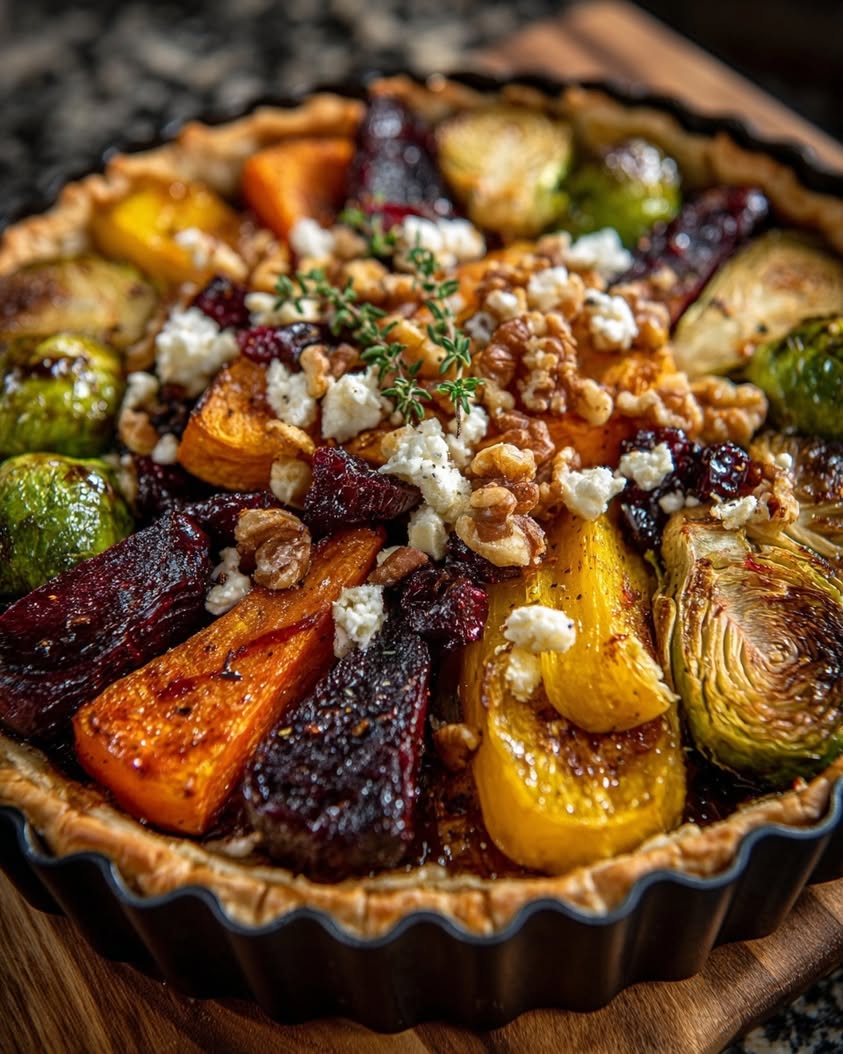
Savory Fall Vegetable Pot Pies with Feta and Walnut Crust: A Cozy Autumn Masterpiece
Imagine the ultimate comfort food, packed with the vibrant flavors of autumn. These Savory Fall Vegetable Pot Pies with Feta and Walnut Crust deliver exactly that experience. Moreover, they transform humble root vegetables and hearty greens into a stunning, gourmet meal. The process begins with caramelizing Brussels sprouts and roasting a medley of sweet potatoes, butternut squash, carrots, and beets. Consequently, each bite bursts with deep, natural sweetness and a satisfyingly tender texture.
The magic of these individual pot pies truly lies in their contrasting elements. For instance, a rich, savory filling nestles under a crumbly, nutty topping featuring tangy feta, toasted walnuts, and pops of tart cranberry. This dish celebrates the entire harvest season in one perfect package. Ultimately, it is perfect for a cozy family dinner or an impressive centerpiece for a festive gathering. You will love how these pot pies make your kitchen smell like a rustic autumn dream.
Creating these Savory Fall Vegetable Pot Pies with Feta and Walnut Crust is a rewarding culinary project. Importantly, it guides you through layering flavors and textures for a spectacular result. The recipe balances savory, sweet, tangy, and crunchy in every single spoonful. Therefore, it is a fantastic way to enjoy a bounty of seasonal produce. Finally, you end up with a beautiful, complete meal that is as nourishing as it is delicious.
Quick Recipe Highlights
- Flavor Profile: These Savory Fall Vegetable Pot Pies masterfully balance earthy roasted vegetables with sweet caramelized notes. Tangy feta and sharp cranberries cut through the richness, while herbs add a fragrant backbone.
- Texture: Expect a delightful contrast between the soft, tender vegetable filling and the crunchy, crumbly walnut and feta crust. The cranberries offer a pleasant chewy surprise in every few bites.
- Aroma: Your kitchen will fill with the warm, comforting scents of roasting root vegetables, caramelizing onions, and toasting nuts and herbs. It is the quintessential smell of fall.
- Visual Appeal: The deep jewel tones of the beet and carrot filling peek through a golden-brown, rustic crumble topping. Served in individual ramekins, they are a feast for the eyes.
- Skill Level Needed: This recipe requires intermediate skills like knife work for chopping vegetables and the patience to properly caramelize and roast. However, clear instructions make it very achievable for a confident home cook.
- Special Equipment: You will need a good baking sheet, four oven-safe ramekins or small cocottes, and a skillet. A food processor is helpful for the crust but not strictly mandatory.
Recipe Overview
- Difficulty Level: We rate this recipe as intermediate. The process involves multiple concurrent steps like roasting, caramelizing, and making a crumble topping. Timing and organization are key. However, each step is straightforward, and the final assembly is simple and forgiving.
- Category: This dish is a hearty main course. It is a complete vegetarian meal packed with protein, fiber, and complex carbohydrates. You can also position it as a luxurious side dish for a holiday table.
- Cuisine: The recipe draws inspiration from modern American farm-to-table cuisine and rustic European pot pie traditions. The use of feta nods to Mediterranean flavors, while the root vegetable medley is pure North American fall.
- Cost: The cost is moderate, largely dependent on buying seasonal vegetables. Walnuts, feta, and fresh herbs are the pricier components. Overall, it is a cost-effective way to create a restaurant-quality meal at home.
- Season: This is the ultimate autumn and winter recipe. It utilizes peak-season root vegetables and hearty greens. The warm, baking process is ideal for colder weather. You can find the ingredients at their best and most affordable from September through February.
- Occasion: Perfect for Sunday family dinners, Friendsgiving, Thanksgiving, Christmas, or any cozy weekend gathering. The individual servings make it elegant for entertaining, yet it is comforting enough for a weeknight treat.
Why You’ll Love This Recipe
First and foremost, the taste and texture appeal is off the charts. Each component of these Savory Fall Vegetable Pot Pies with Feta and Walnut Crust brings something unique. The caramelized Brussels sprouts offer a deep, almost nutty flavor, while the roasted sweet potato and squash provide creamy sweetness. Subsequently, the salty feta and tart cranberries create a perfect flavor counterpoint. The walnut topping adds a necessary crunch that makes the eating experience truly special. You get a symphony of autumn in every single bite.
Next, consider the convenience and preparation benefits. You can largely prep the components ahead of time. For example, roast the vegetable medley and caramelize the sprouts a day in advance. Then, simply assemble and bake before serving. This makes entertaining completely stress-free. Furthermore, the recipe uses one sheet pan for roasting and one skillet for caramelizing, minimizing cleanup. The straightforward steps build flavor logically, ensuring a foolproof result even for a special occasion meal.
Nutritional advantages are another huge win. This dish is a powerhouse of vitamins, minerals, and fiber. The colorful vegetable medley delivers antioxidants like beta-carotene and vitamin C. Walnuts contribute healthy omega-3 fats and plant-based protein. Additionally, using a crumble topping instead of a traditional pastry crust reduces refined carbohydrates. You enjoy a indulgent, comforting meal that also fuels your body with wholesome, seasonal ingredients. It is the definition of eating the rainbow.
The social and entertaining value is immense. Individual pot pies always feel special and personalized for guests. They present beautifully straight from the oven with minimal last-minute fuss. This recipe is a fantastic conversation starter, especially for vegetarian guests or those seeking lighter holiday options. Moreover, the process of making them can be a fun kitchen activity. You can involve others in chopping vegetables or assembling the crumble topping, turning meal prep into a shared, festive experience.
Finally, the cost-effectiveness and accessibility are major benefits. The core ingredients are humble root vegetables, which are inexpensive in season. You likely have many pantry staples like olive oil and herbs on hand. Compared to a meat-centric main course, this vegetarian pot pie is very budget-friendly. Importantly, it does not sacrifice an ounce of flavor or satisfaction. The result is a gourmet-tasting dish that celebrates affordable, accessible produce, making it a smart choice for family meals throughout the fall and winter.
Historical Background and Cultural Significance
The concept of a pot pie has deep roots in culinary history, spanning cultures globally. Essentially, it is a method of cooking a savory filling inside a pastry or crumb shell. Historically, this technique served practical purposes: it preserved moisture, extended the life of cooked meats, and created a portable, complete meal. The British meat pie and the American chicken pot pie are classic examples. Our Savory Fall Vegetable Pot Pies with Feta and Walnut Crust modernize this tradition by focusing on a bountiful vegetable filling and a non-traditional crust.
Cultural importance of such dishes often revolves around celebration and resourcefulness. In many European cultures, pies are central to harvest festivals, using up the season’s bounty. The shift towards vegetable-centric versions reflects contemporary dietary trends and a renewed focus on plant-based eating. Furthermore, the inclusion of ingredients like feta and walnuts connects the dish to Mediterranean and Middle Eastern culinary traditions, where savory pastries and stuffed vegetables are commonplace. This recipe is a beautiful fusion of these historical threads.
The evolution of the recipe from meat-heavy to vegetable-forward mirrors broader food movements. As vegetarian and flexitarian diets gained popularity, home cooks and chefs began experimenting with hearty vegetable fillings. The goal was to create dishes with the same comfort and satisfaction as traditional pot pies. The development of a crumble topping, as opposed to pastry, offers a lighter, often gluten-adaptable alternative that highlights textural contrast. This evolution makes the dish more inclusive and adaptable to various dietary needs while maintaining its soul-warming essence.
Regional variations of vegetable pot pies are endless. In the American South, you might find a version with okra and black-eyed peas. A French *tourte* could feature mushrooms and leeks in a creamy sauce. Our version is distinctly autumnal and North American, celebrating the classic fall harvest lineup. The sweet potato, butternut squash, and cranberry are iconic ingredients of Thanksgiving, embedding this dish within a specific seasonal and cultural context. It is a celebration of local, seasonal produce, which is a timeless and universal culinary principle.
Ingredient Deep Dive
Let us start with Brussels sprouts. Historically, they are believed to have been cultivated in ancient Rome, with their modern name deriving from Brussels, Belgium, where they became popular in the 16th century. Nutritionally, they are packed with vitamins C and K, fiber, and antioxidants. For the best results, select firm, bright green sprouts with tightly packed leaves. Avoid yellowing or loose leaves. Store them unwashed in a plastic bag in the refrigerator’s crisper drawer. If you need a substitute, broccolini or small broccoli florets can work, though the flavor profile will change.
Next, consider the sweet potato and butternut squash medley. These New World crops have been staples for thousands of years. Sweet potatoes are incredibly rich in beta-carotene, while butternut squash provides vitamins A, C, and E. Choose firm, heavy-for-their-size vegetables without soft spots. Store them in a cool, dark, well-ventilated place—not the refrigerator. For substitutions, you could use pumpkin, acorn squash, or even parsnips. The key is to maintain a mix of sweet, starchy vegetables that roast well and hold their shape in the filling.
Feta cheese brings a crucial tangy, salty element. This brined cheese has Protected Designation of Origin status in Greece, made traditionally from sheep’s milk or a sheep-goat blend. It offers protein and calcium with a distinctive flavor. For this Savory Fall Vegetable Pot Pies recipe, a block feta that you can crumble yourself is superior to pre-crumbled, which is often drier. If you need a dairy-free alternative, a firm, salted tofu crumbled with a bit of lemon juice or a vegan feta can work. The goal is that salty, creamy contrast.
Walnuts are one of the oldest tree foods, cultivated for millennia. They provide healthy fats, protein, and a satisfying crunch. Toasting them is non-negotiable; it deepens their flavor and improves texture. Always taste your walnuts before using them to ensure they are not rancid. Store them in an airtight container in the freezer to maintain freshness. For a nut-free version, sunflower seeds or pepitas make an excellent crunchy topping substitute. They will toast quickly, so watch them carefully in the oven or skillet.
Finally, dried cranberries add a necessary pop of sweetness and chewy texture. They are a modern commercial product, developed in the 20th century. While they contain sugars, they also offer some fiber and vitamin C. For a less processed option, try chopped dried tart cherries or even golden raisins. If using sweetened cranberries, you may want to slightly reduce any other sweet elements in the recipe. Rehydrating them in a bit of warm water or orange juice before adding can plump them up beautifully and prevent them from burning during baking.
Common Mistakes to Avoid
- Overcrowding the Pan When Roasting: This is the most common error. If the vegetables are piled on top of each other, they will steam instead of roast. You need space for hot air to circulate and create those delicious caramelized edges. Always use a large enough baking sheet and spread the vegetables in a single layer.
- Not Caramelizing the Brussels Sprouts Properly: Do not rush this step. Caramelization requires time and medium heat. If the heat is too high, the sprouts will burn before softening and developing their signature sweet, nutty flavor. Patience here builds the foundational flavor of the entire filling.
- Using Raw, Untoasted Walnuts: Toasting nuts is a simple step that transforms them from bland and sometimes bitter to fragrant and deeply flavorful. Skipping this will result in a lackluster, potentially soggy topping. Always toast your nuts for the best texture and taste.
- Forgetting to Season in Layers: Season the roasting vegetables. Season the caramelizing onions and sprouts. Season the filling mixture. Each layer needs its own attention to salt and pepper. Underseasoning at any stage leads to a bland final product.
- Making the Crumble Topping Too Fine or Too Wet: Pulse the walnut-feta mixture just until crumbly. Over-processing turns it into a paste. Also, if your feta is very wet, pat it dry. A wet topping will steam and not achieve that desirable crunchy, crumbly texture.
- Using the Wrong Baking Dish: Ensure your ramekins or dishes are truly oven-safe. Porcelain or stoneware ramekins are ideal. Using a dish not meant for high heat can lead to cracking or shattering, which is dangerous and messy.
- Under-baking the Final Pot Pies: The filling is already cooked, so you are baking to heat it through and crisp the topping. If you remove them too early, the topping may be pale and soft. Bake until the filling is bubbling vigorously at the edges and the topping is golden brown.
- Not Letting Them Rest Before Serving: The filling will be molten hot straight from the oven. Let the pot pies rest for 5-10 minutes. This allows the filling to settle slightly, making them safer and easier to eat, and gives the flavors a moment to meld perfectly.
Essential Techniques
Caramelization: This is a chemical process where sugars in food brown, creating complex, rich flavors. For Brussels sprouts, it is crucial. Start with a hot pan and oil, then cook over medium heat, allowing time for the natural sugars to emerge and brown. Do not stir constantly; let them sit to develop a sear. The visual cue is a deep golden-brown color on the cut sides and a tender interior. The common pitfall is impatience, leading to steamed or burnt sprouts instead of properly caramelized ones.
Roasting Root Vegetables: The goal is tender interiors and caramelized exteriors. The key is high heat (around 400-425°F), enough oil to coat, and ample space on the pan. Cutting vegetables to a uniform size ensures even cooking. Toss them halfway through the roasting time. Success is evident when you can easily pierce a vegetable with a fork and the edges are slightly crispy and browned. Crowding the pan is the main enemy, as it creates steam and prevents browning.
Creating a Savory Crumble Topping: Unlike a sweet streusel, this topping balances fat, crunch, and salty flavor. The technique involves pulsing cold butter, flour, nuts, and cheese just until the mixture resembles coarse crumbs. Over-mixing will create a paste. The butter must be cold to create steam during baking, which helps achieve a flaky, crumbly texture. The visual cue before baking is a loose, sandy mixture with visible pea-sized bits of butter and distinct pieces of nut and cheese.
Assembling Individual Pot Pies: This technique ensures even cooking and beautiful presentation. Divide the hot filling evenly among ramekins while it is warm for easier handling. Top generously with the crumble, but do not pack it down; a light, loose layer allows heat to penetrate and the topping to crisp evenly. Place the ramekins on a baking sheet to catch any potential bubble-overs and for easier transport in and out of the oven. This method guarantees each serving has the perfect ratio of filling to crust.
Pro Tips for Perfect Savory Fall Vegetable Pot Pies
First, prep your vegetables uniformly. Consistently sized pieces of sweet potato, squash, and carrot roast at the same rate, preventing some from being mushy while others are undercooked. A little extra time with the knife pays off in perfect texture.
Second, do not skip toasting the walnuts. Spread them on a sheet pan and toast in the oven while the vegetables roast. This maximizes oven use and deeply enhances the nutty flavor of your crumble topping.
Third, pat your feta cheese dry with a paper towel before crumbling. Excess moisture from the brine can make the topping soggy. Dry feta crumbles better and integrates perfectly into the crunchy texture.
Fourth, let the vegetable filling cool slightly before assembling the pot pies. A piping hot filling can begin to melt the crumble topping before it even hits the oven, affecting the final bake.
Fifth, for a deeper flavor, add a teaspoon of maple syrup or balsamic glaze to the Brussels sprouts as they finish caramelizing. This adds a gorgeous glaze and complements the natural sweetness of the vegetables.
Sixth, if making ahead, store the filling, crumble, and ramekins separately. Assemble just before baking to ensure the topping stays crisp and does not absorb moisture from the filling overnight.
Seventh, brush the edges of your ramekins with a little olive oil or melted butter before adding the filling. This gives the exposed ceramic a nice sheen and makes cleanup easier.
Eighth, for a golden-brown finish on the crumble, you can place the assembled, unbaked pot pies under the broiler for the final 1-2 minutes of cooking. Watch them closely to prevent burning.
Variations and Adaptations
Consider regional variations to tailor this dish. For a Southern twist, add sautéed okra and black-eyed peas to the filling, and use pecans instead of walnuts in the topping. A French-inspired version could feature a duxelles of mushrooms and shallots, with Gruyère cheese in the crumble. For a Middle Eastern flair, add warm spices like cumin and coriander to the vegetables, and use pistachios and sumac in the topping. The basic formula is wonderfully adaptable to different culinary traditions and pantry staples.
Seasonal adaptations are simple and encouraged. In spring, use asparagus, peas, and new potatoes with a lemon-herb crumble. Summer calls for zucchini, eggplant, and tomatoes with a basil and pine nut topping. The core technique remains the same; you simply swap the vegetable medley to match what is fresh and at its peak. This makes the recipe a year-round staple in your kitchen, always delivering the best flavors of the season.
Dietary modifications are straightforward. For a gluten-free Savory Fall Vegetable Pot Pie, use a certified gluten-free all-purpose flour blend or almond flour in the crumble. For a vegan version, omit the feta and use a vegan butter alternative; nutritional yeast can add a cheesy flavor to the topping. To make it nut-free, substitute the walnuts with toasted sunflower seeds or gluten-free panko breadcrumbs for crunch. The recipe is inherently vegetarian and easily adapts to many other dietary needs without sacrificing satisfaction.
Experiment with flavor variations by changing the cheese and herbs. Try blue cheese for a sharper bite, or goat cheese for tangy creaminess. Fresh rosemary or sage can replace thyme for a different aromatic profile. Add a spoonful of grainy mustard or white miso paste to the filling for an umami boost. You can also incorporate cooked lentils or quinoa into the filling for added plant-based protein and heartiness. Do not be afraid to make the recipe your own.
Serving and Presentation Guide
Plating techniques elevate this homey dish. Serve each ramekin on a small plate or charger to catch any crumbs. You can place the ramekin on a folded linen napkin for a rustic touch. If you baked the pies in a larger dish, use a large spoon to scoop out generous portions, ensuring you get plenty of the crumbly topping with each serving. The goal is to present the individual pot pie as the star of the plate, with its golden crust and vibrant filling visible.
Garnishing ideas are simple but effective. A final sprinkle of fresh, chopped parsley or thyme leaves adds a pop of color and fresh aroma. A light drizzle of high-quality extra virgin olive oil or a balsamic reduction over the top just before serving adds shine and a flavor accent. A few extra dried cranberries or walnut halves placed artfully on the plate can hint at the ingredients inside. Keep garnishes minimal to let the beautiful colors of the dish itself shine through.
Traditional accompaniments balance the meal. A simple, crisp green salad with a bright vinaigrette cuts through the richness of the pot pie. For a heartier meal, serve with crusty bread to soak up any delicious filling that remains in the dish. During the holidays, these pot pies pair wonderfully with classic sides like cranberry sauce or spiced applesauce. They are substantial enough to stand alone but play well with other autumnal flavors on a shared table.
Modern serving suggestions might include a dollop of garlic-herb yogurt or sour cream on the side. For a brunch option, top with a softly poached or fried egg, letting the yolk run into the vegetable filling. You can also deconstruct the pie for a more casual presentation: spoon the warm vegetable filling into bowls and scatter the walnut-feta crumble over the top. This approach is excellent for buffet-style serving or for those who prefer different filling-to-topping ratios.
Wine and Beverage Pairing
Wine pairings should complement the earthy, sweet, and tangy notes of the pot pie. A medium-bodied white wine like an Oregon Pinot Gris or a French Viognier has enough acidity to cut through the richness and fruit notes that mirror the sweet vegetables. For red wine lovers, a lighter, low-tannin red is ideal. A Beaujolais or a Pinot Noir offers berry flavors that pair beautifully with the beets and cranberries without overwhelming the dish. The key is to avoid heavily oaked or high-tannin wines that could clash with the vegetable-forward flavors.
Non-alcoholic alternatives can be just as sophisticated. A sparkling apple cider provides effervescence and autumnal sweetness. For a warmer option, a rosemary-infused lemonade or a ginger-turmeric tonic complements the herbal notes in the dish. Kombucha, particularly a ginger or berry flavor, offers a tangy, fermented complexity that stands up to the robust flavors. These choices ensure everyone at the table has a special beverage to enjoy with their meal.
Coffee and tea pairings work wonderfully, especially for a cozy lunch or late-autumn dinner. A medium-roast coffee with nutty or chocolatey notes echoes the toasted walnuts. For tea, a smoky Lapsang Souchong can highlight the caramelized elements, while a spiced chai tea mirrors the warm spices you might use in the filling. Serve these hot beverages after the meal as a digestif or alongside dessert to extend the cozy, comforting atmosphere.
Storage and Shelf Life
Storage methods are crucial for maintaining quality. Cool any leftovers completely before covering. For the best texture, store the filling and crumble topping separately in airtight containers in the refrigerator. If already assembled and baked, you can store the whole pot pie in its ramekin, tightly covered with plastic wrap or foil. The filling will keep for up to 4 days. The crumble topping, stored separately at room temperature in an airtight container, will stay crisp for 2-3 days.
Reheating instructions are simple but important. To restore the crisp topping, reheat assembled pot pies in a preheated 350°F oven for 15-20 minutes, or until heated through. If the topping is browning too quickly, cover loosely with foil. The microwave is a last resort, as it will make the topping soggy. If you must use a microwave, reheat the filling separately and add fresh crumble on top afterward. Proper reheating makes leftovers taste nearly as good as the first serving.
Freezing guidelines allow for longer-term storage. The vegetable filling freezes exceptionally well for up to 3 months. Cool it completely, then portion into freezer-safe bags or containers. The crumble topping can also be frozen on a sheet pan and then transferred to a bag. Do not freeze assembled pies in ceramic ramekins, as they may crack. To serve, thaw the filling overnight in the refrigerator, reheat on the stovetop with a splash of water or broth, assemble with the topping (thawed or frozen), and bake as directed.
Make Ahead Strategies
A prep timeline makes entertaining effortless. Two days ahead, you can toast the walnuts and store them at room temperature. One day ahead, chop all the vegetables (store them separately or combined in the fridge), make the entire vegetable filling, and prepare the crumble topping mixture. Store the filling and crumble in separate containers in the refrigerator. This spreads the work out and turns baking day into a simple 20-minute assembly and bake process.
Storage between steps is simple with the right containers. Use shallow containers for the cooked vegetable filling so it cools quickly and evenly before refrigeration. Store the crumble topping in a zip-top bag or a bowl with a lid. If the crumble seems damp after refrigeration, you can spread it on a baking sheet for a few minutes before using to let any condensation evaporate. Keeping components separate is the golden rule for maintaining ideal textures.
Assembly tips for make-ahead success are key. When ready to bake, if your filling is cold from the fridge, reheat it gently in a skillet or in the microwave until just warm, not hot. This prevents an excessively long bake time trying to heat a cold center. Assemble the warm filling into the ramekins, top with the crumble, and bake immediately. If the crumble has been chilled, you may need to add 2-3 extra minutes to the baking time to achieve perfect golden-brown color.
Scaling Instructions
Halving the recipe is perfect for a couple or small family. Simply divide all ingredient quantities by two. Use two standard-sized ramekins. The roasting and cooking times will remain roughly the same, but keep a close eye as smaller volumes may cook slightly faster. The crumble topping can be halved easily in a food processor, or you can make the full batch and freeze half for another quick meal later.
Doubling or tripling the recipe for a crowd is very manageable. Use multiple baking sheets for the vegetables, rotating them in the oven halfway through for even roasting. You may need to caramelize the Brussels sprouts in batches to avoid overcrowding the skillet. For the crumble topping, you can make it in batches in the food processor or use a pastry cutter or your fingers to mix a larger quantity in a big bowl. Assemble in a large casserole dish instead of individual ramekins for a family-style presentation; just increase the bake time by 10-15 minutes.
Equipment adjustments are necessary when scaling. For a double batch, ensure you have enough ramekins or a large enough baking dish. A 9×13 inch casserole dish works for a doubled recipe. When tripling, consider using two separate casserole dishes to ensure even heating. Always place baking dishes on a sturdy, rimmed baking sheet to catch any bubble-overs and for easier handling. Scaling up may also require you to roast vegetables in consecutive batches if oven space is limited, so plan your time accordingly.
Nutritional Deep Dive
The macro breakdown of these Savory Fall Vegetable Pot Pies is impressive. They provide a balanced mix of complex carbohydrates from the root vegetables, healthy fats from the olive oil and walnuts, and plant-based protein from the walnuts, feta, and vegetables themselves. The dish is high in dietary fiber, which aids digestion and promotes satiety. While the exact numbers vary, one serving is a substantial, energy-sustaining meal that avoids the heavy, overly rich feeling of traditional meat pot pies.
Micronutrient analysis reveals a vitamin and mineral powerhouse. The orange vegetables (sweet potato, squash, carrot) are loaded with beta-carotene, which converts to vitamin A for eye and skin health. Brussels sprouts and beets offer folate and vitamin K. Walnuts contribute magnesium and vitamin E. Feta provides calcium. The variety of colors ensures a broad spectrum of antioxidants, which help combat inflammation. This dish is a delicious and effective way to meet daily nutritional needs through whole foods.
Health benefits extend beyond basic nutrition. The high fiber content supports gut health and stable blood sugar levels. The monounsaturated and polyunsaturated fats from olive oil and walnuts are heart-healthy. The anti-inflammatory properties of the vegetables and spices can support overall wellness. Furthermore, eating a diet rich in plants is associated with numerous long-term health benefits. This recipe proves that comfort food can also be genuinely nourishing and supportive of a healthy lifestyle.
Dietary Adaptations
For a gluten-free version, substitute the all-purpose flour in the crumble with a 1:1 gluten-free baking blend. Almond flour or oat flour can also work, though the texture will be more delicate. Ensure all other ingredients, like broth or pre-shredded cheese, are certified gluten-free. The filling is naturally gluten-free, making this a simple and effective adaptation that does not compromise on taste or texture.
A dairy-free adaptation requires replacing the feta and butter. For the crumble, use a solid vegan butter alternative and a dairy-free “feta” made from tofu or almonds. Nutritional yeast can add a cheesy flavor. For the filling, ensure the vegetable broth is dairy-free. The result will still be flavorful and satisfying, with the tang coming from ingredients like lemon juice or capers added to the filling.
Creating a fully vegan Savory Fall Vegetable Pot Pie combines the gluten-free and dairy-free steps. Use vegan butter and cheese alternatives. To add umami depth lost from the feta, consider a tablespoon of white miso paste stirred into the filling or a sprinkle of smoked paprika. The walnuts remain a crucial source of protein and crunch. This adaptation is entirely possible and yields a delicious, plant-based comfort food classic.
For a lower-carb or keto adaptation, focus on reducing the starchy vegetables. Increase the proportion of Brussels sprouts, and use radishes or turnips in place of sweet potato and carrot. Substitute the flour in the crumble with almond flour or crushed pork rinds for binding. Be mindful that cranberries contain sugars, so you may need to omit them or use a very small amount of a low-carb sweetened berry. This creates a dish that fits within specific macronutrient goals while keeping the comforting format.
Troubleshooting Guide
If your filling is too watery, the issue is likely under-roasted vegetables or not reducing the liquid enough after combining. Solution: Simmer the combined filling mixture on the stovetop for a few extra minutes, stirring frequently, until the excess liquid evaporates and the sauce thickens. You can also add a teaspoon of cornstarch slurry (cornstarch mixed with cold water) to help thicken it quickly.
If the crumble topping is soggy, it may have been over-mixed, made with warm butter, or assembled on top of a hot, steamy filling. Solution: Ensure all components for the crumble are cold. Let the filling cool slightly before assembling. If the topping is already soggy after baking, you can carefully remove it, spread it on a baking sheet, and toast it in the oven for 5 minutes to re-crisp before placing it back on the pies.
If the vegetables are not caramelizing, your oven may not be hot enough, or the pan is overcrowded. Solution: Use an oven thermometer to verify temperature. Ensure vegetables are in a single layer with space between them. Do not stir them too often; let them sit to develop color. Patting the vegetables dry before tossing with oil can also help, as surface moisture promotes steaming.
If the pot pies are bubbling over, they are either too full or the filling is too liquid. Solution: Leave at least a half-inch of space at the top of the ramekin below the rim. Place the ramekins on a baking sheet lined with parchment paper or foil for easy cleanup. Ensuring a properly thickened filling before assembly is the best preventative measure.
Recipe Success Stories
Community feedback on this recipe has been overwhelmingly positive. Many home cooks report that it has become their go-to vegetarian showstopper for holiday meals. One reader shared that her meat-loving father requested seconds, declaring it the best part of Thanksgiving. Another found that the recipe helped her family enjoy more vegetables without complaint, thanks to the irresistible caramelization and flavorful topping. These stories highlight the recipe’s universal appeal and its power to win over even the most skeptical eaters.
Variation successes are fun to hear about. A reader from the Pacific Northwest added wild mushrooms to the filling for an extra earthy dimension. Another used leftover Thanksgiving turkey, diced and stirred into the filling, for a post-holiday twist. A family with nut allergies successfully used toasted pumpkin seeds in the crumble. These adaptations show the recipe’s fantastic flexibility and how it can serve as a template for creativity based on what is in your fridge or your dietary needs.
Reader suggestions have also improved the recipe over time. One savvy cook recommended adding a pinch of red pepper flakes to the Brussels sprouts for a subtle heat. Another suggested mixing a little grated Parmesan into the crumble for extra savoriness. A tip to drizzle the finished pies with a balsamic reduction came directly from a reader’s experimentation. This collaborative spirit is what makes sharing recipes so rewarding; everyone brings their own kitchen wisdom to the table.
Frequently Asked Questions
Q: Can I make this in one large dish instead of individual ramekins?
A: Absolutely. Use a 2-quart baking dish, like a 9-inch round or square pan. The baking time may increase by 10-15 minutes. You will know it is done when the filling is bubbling vigorously around the edges and the topping is uniformly golden brown.
Q: My beets turned everything pink. Is that okay?
A: Yes, that is completely normal and part of the charm! Golden beets will stain less if you prefer, but red beets will create a beautifully vibrant, pink-hued filling that is perfectly delicious.
Q: Can I use frozen vegetables to save time?

I’m Billy, a classically trained culinary school graduate from The Culinary Institute of America with over 12 years in the restaurant industry and over 19 years of cooking experience.