
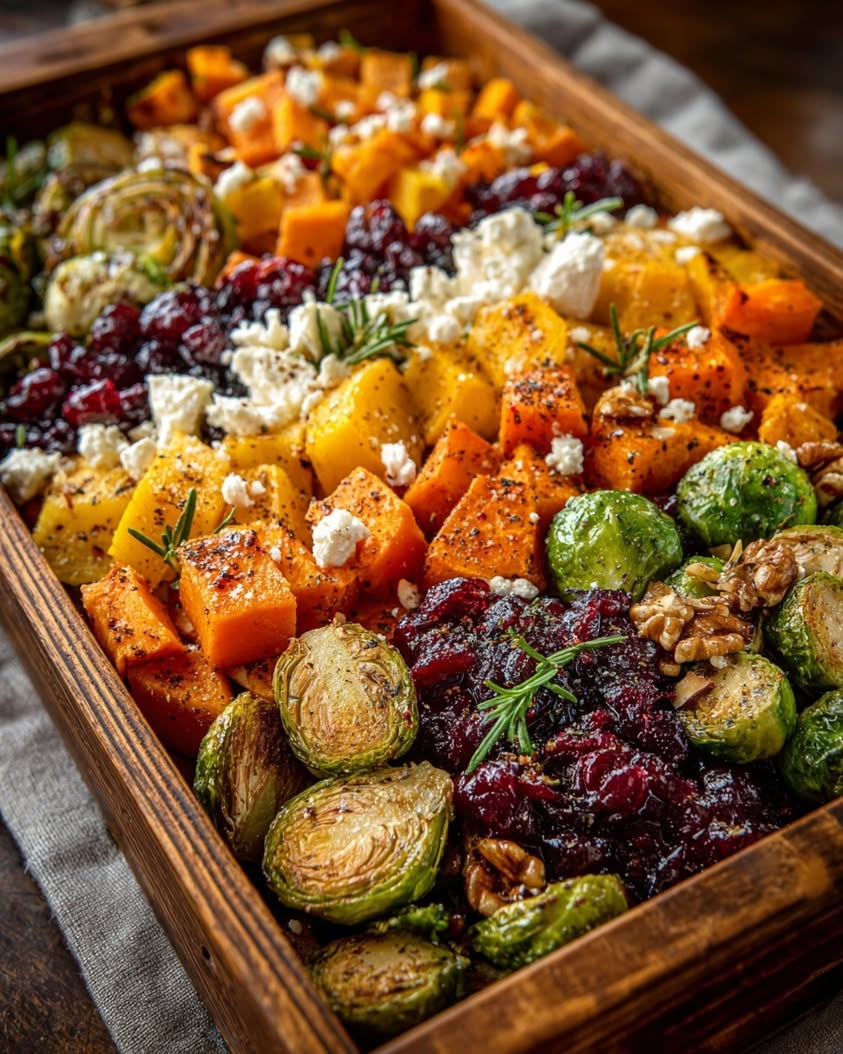
Roasted Winter Vegetables with Feta, Walnuts, and Cranberry Glaze: A Festive Holiday Side Dish
This stunning recipe for Roasted Winter Vegetables with Feta, Walnuts, and Cranberry Glaze is the ultimate celebration of the season. Imagine a sheet pan brimming with caramelized butternut squash, sweet potatoes, carrots, and Brussels sprouts, all tossed in a warm, savory spice blend. The result is a medley of vegetables that are tender on the inside and perfectly crisp at the edges. This dish truly captures the essence of a cozy winter meal.
Furthermore, the magic happens after roasting. You generously drizzle the warm vegetables with a sweet-tart cranberry-honey glaze. Then, you finish the dish with a vibrant sprinkle of salty feta cheese and crunchy toasted walnuts. Each bite delivers an incredible harmony of flavors and textures. This recipe is not just a side dish; it’s a colorful centerpiece that will steal the show at any holiday table or weeknight dinner.
Ultimately, this recipe for Roasted Winter Vegetables with Feta, Walnuts, and Cranberry Glaze is incredibly versatile and forgiving. It welcomes customization based on what you have in your pantry. Moreover, it’s a fantastic make-ahead option, allowing you to enjoy the festivities rather than being stuck in the kitchen. Let’s dive into how to create this unforgettable, healthy, and beautiful dish.
Quick Recipe Highlights
- Flavor Profile: This dish masterfully balances sweet, savory, salty, and tangy notes. The natural sugars in the vegetables caramelize during roasting, creating a deep sweetness. Subsequently, the cranberry-honey glaze adds a festive tartness, while the feta provides a creamy, salty counterpoint.
- Texture: You achieve a wonderful contrast between the soft, caramelized interior of the vegetables and their slightly crispy exteriors. The toasted walnuts add a necessary crunch, and the feta offers a delightful creamy crumble that melts slightly on the warm veggies.
- Aroma: As the vegetables roast with rosemary and garlic powder, your kitchen will fill with an incredibly comforting, savory fragrance. The scent of caramelizing squash and sweet potato is unmistakably autumnal and inviting.
- Visual Appeal: This dish is a feast for the eyes with its vibrant orange, deep green, and rich red hues from the glaze and cranberries. The white feta and brown walnuts create a beautiful, rustic finish that looks professionally plated.
- Skill Level Needed: This is a beginner-friendly recipe. The primary skill is uniform vegetable chopping to ensure even cooking. Otherwise, the process is simple: toss, roast, and assemble.
- Special Equipment: You only need a large baking sheet, parchment paper for easy cleanup, and a small saucepan for the glaze. A sharp chef’s knife and sturdy cutting board are the only other essentials.
Recipe Overview
- Difficulty Level: This recipe is rated easy because it involves straightforward chopping and simple roasting techniques. There’s no complicated sauce work or precise timing. Essentially, you combine ingredients on a pan and let the oven do the work. The glaze is a simple simmer, making the entire process accessible for cooks of all levels.
- Category: This dish fits perfectly into several categories. Primarily, it is a standout holiday side dish for Thanksgiving or Christmas. Additionally, it can serve as a hearty vegetarian main course when served over a grain like quinoa or farro. It also works wonderfully as a meal prep component for healthy lunches throughout the week.
- Cuisine: While not tied to one specific tradition, this recipe draws inspiration from modern American and Mediterranean cuisines. The use of olive oil, feta, and walnuts nods to Mediterranean flavors. Meanwhile, the combination of winter squash and cranberries is a classic North American fall and winter celebration.
- Cost: This is a cost-effective recipe, especially when root vegetables are in season. Butternut squash, carrots, and sweet potatoes are typically inexpensive. Feta, walnuts, and cranberries might be pricier, but you use them as garnishes, so a little goes a long way. Overall, it’s an affordable way to feed a crowd with premium results.
- Season: This recipe is ideal for late fall through winter. This is when butternut squash, Brussels sprouts, and sweet potatoes are at their peak of flavor and affordability. The warm, hearty nature of the dish complements cooler weather perfectly, making it a seasonal staple.
- Occasion: It is perfect for holiday feasts like Thanksgiving, Christmas, or Friendsgiving. It also makes an impressive side for a Sunday family roast dinner. Conversely, it’s simple enough for a comforting weeknight meal that feels special without requiring hours of effort.
Why You’ll Love This Recipe
First and foremost, the taste and texture appeal is undeniable. Each component of these Roasted Winter Vegetables with Feta, Walnuts, and Cranberry Glaze brings something unique to your palate. The vegetables become wonderfully sweet and tender, while the glaze introduces a bright, tangy pop that cuts through the richness. Meanwhile, the salty feta and crunchy walnuts ensure every bite is exciting. This symphony of flavors is both comforting and sophisticated, pleasing picky eaters and food enthusiasts alike.
Next, consider the convenience and preparation benefits. This is largely a hands-off recipe. After you finish chopping, you simply toss everything on a sheet pan. Consequently, you free up time to work on other parts of your meal or simply relax. The cleanup is equally easy, especially if you use parchment paper. This streamlined process makes hosting stress-free and enjoyable, which is a huge win during busy holiday seasons.
From a nutritional standpoint, this dish is a powerhouse. These roasted winter vegetables are loaded with vitamins A and C from the squash and carrots, along with fiber from all the produce. The walnuts add healthy fats and omega-3s, while the feta provides protein and calcium. You create a side dish that is as nourishing as it is delicious, allowing you to indulge in festive eating without compromising on health goals.
Furthermore, the social and entertaining value is immense. This recipe for Roasted Winter Vegetables with Feta, Walnuts, and Cranberry Glaze is visually stunning, guaranteeing compliments from your guests. It looks like you spent hours on a complicated dish, yet the reality is beautifully simple. It caters beautifully to vegetarians and can be easily adapted for other dietary needs, making it an inclusive centerpiece for any gathering.
Finally, the cost-effectiveness and accessibility are major advantages. The base of the dish uses humble, inexpensive root vegetables. You transform them into something extraordinary with just a few premium garnishes. This approach allows you to create a restaurant-quality dish on a home cook’s budget. Additionally, most ingredients are readily available at any standard grocery store year-round.
Historical Background and Cultural Significance
The tradition of roasting root vegetables stretches back centuries across many cultures. Before modern ovens, people would cook vegetables in the embers of a fire, which caramelized their natural sugars. This method of cooking was practical and enhanced the flavor of hardy storage crops that lasted through winter. Our modern recipe for Roasted Winter Vegetables with Feta, Walnuts, and Cranberry Glaze is a direct descendant of these ancient, efficient cooking techniques, updated with global ingredients.
In North America, the combination of squash, sweet potatoes, and cranberries holds deep cultural significance, particularly tied to Thanksgiving. These ingredients are native to the continent and were likely part of early harvest celebrations. Incorporating them into a single dish honors that history while using contemporary cooking methods and additions like feta cheese, which reflects today’s interconnected culinary world.
The evolution of this specific recipe mirrors broader food trends. The move towards sheet-pan dinners speaks to our desire for simplicity and efficiency in the kitchen. Adding a glossy, reduced glaze is a technique borrowed from professional plating, now accessible for home cooks. Topping with cheese and nuts for texture contrast shows an increased appreciation for complex mouthfeel in everyday meals. This dish is a perfect example of how home cooking has become more sophisticated.
Regional variations of this concept are endless. In the Mediterranean, you might find roasted vegetables with olives and lemon. In the American South, a pecan and bourbon glaze could be popular. The version with feta and walnuts leans into Mediterranean influences, while the cranberry glaze is distinctly North American. This fusion creates a unique dish that feels both familiar and novel, celebrating the best of multiple culinary traditions on one pan.
Ingredient Deep Dive
Butternut Squash: This winter squash is a New World native, cultivated for thousands of years. It is incredibly rich in vitamin A, providing over 450% of your daily needs in one cup. This nutrient is vital for eye health and immune function. When selecting, choose a squash that feels heavy for its size with a hard, matte rind. Avoid any with soft spots or a shiny skin. You can store whole squash in a cool, dark place for months. For a substitution, try acorn squash or pumpkin.
Brussels Sprouts: These mini cabbages gained popularity in Brussels, Belgium, hence their name. They are part of the nutrient-dense cruciferous vegetable family, packed with vitamins K and C, and contain compounds linked to cancer prevention. Look for firm, bright green sprouts that are similar in size for even cooking. Smaller sprouts are often sweeter and more tender. Store them unwashed in an open bag in your refrigerator’s crisper drawer. Broccoli or cauliflower florets can work as a substitute if needed.
Sweet Potato: Often confused with yams, sweet potatoes are another ancient American crop. They are an excellent source of beta-carotene, fiber, and vitamin B6. Their natural sweetness intensifies beautifully during roasting. Choose firm potatoes without wrinkles or soft ends. Store them in a cool, dark, well-ventilated place—not the refrigerator, as cold temperatures can alter their texture and taste. Garnet yams or even carrots can provide a similar sweetness and color in a pinch.
Feta Cheese: This brined cheese has a history dating back to ancient Greece. Traditionally made from sheep’s or goat’s milk, it adds a tangy, salty punch that balances sweet elements. Feta is a good source of calcium and protein. For the best flavor, buy feta blocks in brine rather than pre-crumbled varieties. Store it in its brine in the refrigerator. For a dairy-free version, try a firm, salty tofu crumble or a vegan feta alternative.
Cranberry-Honey Glaze: This glaze combines two historic ingredients. Cranberries are one of North America’s few native fruits, used by Indigenous peoples for food and medicine. Honey is one of the world’s oldest sweeteners. Together, they create a complex sweet-tart sauce. Using whole cranberries provides bursts of fresh flavor and texture. For a shortcut, you can use a high-quality cranberry sauce. Maple syrup can replace honey for a different flavor profile.
Common Mistakes to Avoid
- Chopping Vegetables Unevenly: This is the most common error. If your vegetable pieces are different sizes, the smaller ones will burn before the larger ones cook through. Always aim for a uniform, bite-sized dice. Consequently, everything will roast evenly and finish at the same time.
- Crowding the Baking Sheet: If you pile all the vegetables onto one small pan, they will steam instead of roast. You need space for hot air to circulate and create those desirable caramelized edges. Always use a large enough sheet pan and spread the veggies in a single layer. If necessary, use two pans.
- Skipping the Parchment Paper: Roasted vegetable sugars can stick and create a nightmare of cleanup. Lining your pan with parchment paper is a simple step that guarantees easy release and quick washing. Alternatively, you can use a silicone baking mat for the same non-stick effect.
- Not Preheating the Oven: Starting with a cold oven drastically changes the cooking process. The vegetables will start to steam and become mushy before browning begins. Always allow your oven to fully preheat to the specified temperature before adding your pan for the best caramelization.
- Forgetting to Season in Layers: Don’t just add salt at the end. Seasoning the vegetables with salt, pepper, and spices before roasting allows the flavors to penetrate. Then, you can adjust the final seasoning after adding the glaze and toppings for a perfectly balanced dish.
- Overcooking the Glaze: When making the cranberry-honey glaze, let it simmer until it just coats the back of a spoon. If you reduce it too much, it will become thick and sticky like candy, making it difficult to drizzle. It should be syrupy but still pourable.
- Adding Toppings Too Early: If you add the feta and walnuts before roasting, the cheese will melt into a puddle and the nuts will burn. Always add these delicate toppings after the vegetables come out of the oven. The residual heat will slightly soften the feta and warm the nuts perfectly.
- Using Old, Stale Nuts: Walnuts contain oils that can turn rancid. Always taste a nut before using it. If it tastes bitter or smells like paint, it’s gone bad. For the best flavor, buy walnuts from a store with high turnover and store them in the freezer to maintain freshness.
Essential Techniques
Uniform Chopping: This technique is crucial for even cooking. First, trim the ends from all vegetables. For butternut squash and sweet potato, peel them first. Then, slice them into consistent, half-inch thick rounds or cubes. For Brussels sprouts, trim the stem end and cut larger ones in half. Consistent size ensures that every piece spends the same amount of time in the oven, preventing some from being raw while others burn. Use a sharp knife for control and safety.
High-Heat Roasting: Roasting at 400°F (200°C) is the key to caramelization. This high heat quickly cooks the exterior of the vegetables, creating a Maillard reaction—the chemical process that creates complex, savory flavors and a beautiful brown color. It also evaporates surface moisture, leading to a crispy edge rather than a steamed texture. Resist the urge to open the oven door frequently, as this releases heat and interrupts the process.
Making a Reduction Glaze: A glaze adds shine and concentrated flavor. For the cranberry-honey glaze, you combine the ingredients and simmer. The goal is to evaporate enough water to thicken the liquid while the cranberries burst and release their pectin. The visual cue for success is when the mixture can coat the back of a spoon and leave a clear path when you run your finger through it. It will continue to thicken slightly as it cools.
Toasting Nuts: Toasting walnuts unlocks their full, nutty aroma and improves their crunch. Simply spread them in a single layer on a dry skillet over medium heat. Shake the pan frequently for 3-5 minutes until they become fragrant and slightly darker. Watch them closely, as they can burn in seconds. You can also toast them on the sheet pan in the oven for the last few minutes of vegetable roasting time.
Pro Tips for Perfect Roasted Winter Vegetables
For extra crispy edges, make sure your vegetables are completely dry after washing. Pat them thoroughly with a clean kitchen towel before tossing them with oil. Any residual water will create steam and hinder browning.
Toss the vegetables in oil and seasoning in a large bowl, not directly on the pan. This ensures every piece gets an even, light coating, which promotes uniform browning and prevents dry spots.
Give the pan a shake or stir the vegetables halfway through the roasting time. This exposes all sides to the hot pan and oven air, ensuring even caramelization and preventing sticking.
Let the roasted vegetables rest for 5 minutes after taking them out of the oven before adding the glaze and toppings. This allows their structure to set slightly, so they don’t turn to mush when tossed.
If your vegetables aren’t as caramelized as you’d like after the suggested time, switch your oven to broil for the final 1-2 minutes. Watch them constantly to prevent burning.
For a deeper flavor, add a tablespoon of balsamic vinegar to the cranberry glaze as it simmers. The acidity and sweetness of balsamic complement the fruit and honey beautifully.
Warm your serving platter before assembling the dish. This keeps the vegetables hot longer when you bring them to the table, especially important during a multi-course holiday meal.
If preparing for a crowd, roast the vegetables on two separate pans placed on different oven racks. Rotate the pans top-to-bottom and front-to-back halfway through cooking for even results.
Variations and Adaptations
For regional variations, consider a Moroccan twist by swapping the spice blend for ras el hanout and topping with pomegranate arils and mint. A Southern version could use a pecan and maple glaze. An Italian-inspired take might feature rosemary, garlic, and a balsamic reduction with shaved Parmesan instead of feta.
Seasonal adaptations are simple. In spring, use asparagus, radishes, and new potatoes. Summer calls for zucchini, bell peppers, and eggplant. The core technique remains the same; you just swap the vegetable selection to match what’s fresh and at its peak.
Dietary modifications are straightforward. For a vegan dish, omit the feta and honey. Use maple syrup in the glaze and top with vegan cheese or extra nuts. For a nut-free version, replace walnuts with toasted pumpkin seeds (pepitas). For a lower-carb option, reduce the amount of sweet potato and carrot, and increase the Brussels sprouts and squash.
Flavor variations can keep this recipe exciting all year. Try a smoky chipotle powder in the spice mix. Use orange juice and zest in the glaze instead of water. Swap feta for goat cheese for a tangier creaminess, or use blue cheese for a bold, pungent kick.
Texture modifications can cater to personal preference. If you love extra crunch, add the toasted walnuts just before serving so they retain maximum crispness. For a softer, more integrated dish, stir the walnuts into the warm vegetables so they absorb some moisture and soften slightly.
Presentation alternatives include serving the vegetables in a large, shallow bowl for a family-style feel. For individual portions, use small cast-iron skillets or rustic ceramic bowls. You can also layer the warm vegetables over a bed of greens like arugula to create a hearty roasted vegetable salad.
Serving and Presentation Guide
For beautiful plating, transfer the roasted vegetables to a large, shallow serving platter or a rustic wooden board. Use a slotted spoon if there is excess oil in the pan. Drizzle the cranberry glaze in a zig-zag pattern over the top for visual appeal. Then, sprinkle the feta and walnuts evenly, allowing some of the colorful vegetables to peek through.
Garnishing ideas go beyond the recipe. Add a final flourish with fresh herbs like chopped parsley, thyme, or rosemary sprigs. A sprinkle of flaky sea salt, such as Maldon, adds texture and a burst of salinity. For a festive touch, scatter a few extra whole fresh cranberries around the platter.
Traditional accompaniments for this dish include a simple roast turkey, baked ham, or herb-crusted pork loin. It also pairs wonderfully with other classic sides like creamy mashed potatoes, green bean casserole, or a fresh garden salad for a lighter contrast.
Modern serving suggestions position this as a main course. Serve it over a bed of creamy polenta, quinoa, or farro. Top it with a fried egg for a luxurious brunch option. Alternatively, fold the leftovers into warm tortillas with a dollop of sour cream for a next-day lunch wrap.
Temperature considerations are key. This dish is best served warm. The feta should be slightly softened from the heat of the vegetables, and the glaze should be fluid. If it sits too long, the vegetables can become soggy. If needed, you can briefly reheat the entire platter in a 300°F oven for 5-10 minutes before adding the fresh toppings.
Portion control tips are helpful for meal planning. As a side dish, plan for about 1.5 cups per person. As a vegetarian main, 2.5 to 3 cups is appropriate. Using a measuring cup to serve can help manage portions, especially if you’re balancing a plate with multiple rich holiday dishes.
Wine and Beverage Pairing
Wine pairings should complement the sweet, savory, and tangy notes. A dry Riesling or Gewürztraminer works beautifully; their slight sweetness and acidity mirror the cranberry glaze. For red wine lovers, a light-bodied Pinot Noir with its red fruit notes won’t overpower the vegetables. An off-dry rosé is also a fantastic, versatile choice that bridges the flavor gap between white and red.
Non-alcoholic alternatives can be just as sophisticated. A sparkling apple cider provides effervescence and autumnal flavor. A tart cranberry spritzer made with club soda and a dash of lime keeps the theme going. For a warm option, a mulled cranberry punch with cinnamon and orange is incredibly cozy and festive.
While not a typical coffee dish, the warm spices could pair with a mild, low-acidity coffee after a holiday meal. A spiced chai tea or a rooibos tea with vanilla would complement the dish’s warmth without competing. The key is to choose beverages without overwhelming bitterness.
Temperature considerations are straightforward. Serve white wines and sparkling beverages well-chilled. Red wines should be served slightly below room temperature. Non-alcoholic punches and ciders can be served either chilled or warm, depending on the recipe and the weather.
Serving suggestions include setting up a small beverage station near the dining table. Offer a white and a red wine option, plus a signature non-alcoholic drink in a carafe. This allows guests to help themselves and encourages pairing different sips with the complex flavors of the Roasted Winter Vegetables with Feta, Walnuts, and Cranberry Glaze.
Storage and Shelf Life
Store leftovers in an airtight container in the refrigerator. They will keep for up to 4 days. For best results, store the components separately if possible: the roasted vegetables in one container, the glaze in another, and the feta and walnuts in their own containers. This prevents the vegetables from becoming soggy and the nuts from losing their crunch.
Temperature requirements are simple: always refrigerate leftovers within two hours of cooking. Do not leave the finished dish at room temperature for an extended period, as the dairy and moist vegetables can spoil quickly.
Container recommendations include glass meal-prep containers with tight-fitting lids. For the glaze, a small mason jar works perfectly. Storing the walnuts in a zip-top bag with the air pressed out will keep them crisp.
Signs of spoilage include an off or sour smell, visible mold (especially on the cheese), or a slimy texture on the vegetables. If you see any of these signs, discard the entire dish immediately.
Reheating instructions: Spread the vegetables on a baking sheet and warm in a 350°F oven for 10-15 minutes until heated through. This method helps re-crisp them. Avoid microwaving, as it will make them soft and steamy. Reheat the glaze gently in a small saucepan or the microwave, adding a teaspoon of water if it’s too thick.
Freezing guidelines: You can freeze the plain roasted vegetables (without glaze or toppings) for up to 3 months. Spread them on a baking sheet to freeze individually, then transfer to a freezer bag. The texture will be softer upon thawing and reheating, but the flavor will remain good. Do not freeze the assembled dish with glaze, cheese, or nuts.
Make Ahead Strategies
You can prep this recipe in stages to save time on the day of serving. Up to two days ahead, wash, peel, and chop all the vegetables. Store them in separate airtight containers or zip-top bags in the refrigerator. This is the most time-consuming step, so completing it in advance is a huge win.
For storage between steps, keep the chopped vegetables chilled. You can also mix the dry spice blend (rosemary, garlic powder, salt, pepper) in a small bowl ahead of time. The cranberry glaze can be made up to 3 days in advance and stored in the fridge; simply reheat it gently before using.
The quality impact of pre-chopping is minimal. Some vegetables, like potatoes and squash, may dry out slightly at the cut edges. To prevent this, you can toss them with a tiny bit of oil before refrigerating. The flavor and roasting ability will not be significantly affected.
Assembly tips for the day of: Simply take your pre-chopped veggies from the fridge, toss them with oil and your pre-mixed spices, and roast. While they roast, gently warm the pre-made glaze and toast the walnuts. This streamlines the entire process to about 45 minutes of mostly hands-off time.
Reheating guidelines for make-ahead components are simple. Do not re-cook the vegetables; simply bring them to room temperature while the oven preheats. Then, roast as directed. The glaze may thicken in the fridge; thin it with a teaspoon of warm water or orange juice as you reheat it.
Always add the fresh elements right before serving. Crumble the feta, toast the walnuts, and chop any fresh herbs at the last minute. This ensures the textures are perfect and the cheese doesn’t melt into the dish during storage or reheating.
Scaling Instructions
Halving the recipe is easy for smaller households. Simply divide all ingredient quantities by two. Use a standard-sized baking sheet; the vegetables will have plenty of room. The cook time may be slightly shorter by 5-7 minutes, so start checking for doneness early. The glaze will also require less simmering time to reduce.
Doubling or tripling the recipe for a crowd requires planning. Use multiple baking sheets. Do not stack the sheets on top of each other in the oven; instead, use two racks and rotate the pans halfway through cooking. You may need to roast in batches if your oven can’t accommodate multiple sheets with good air circulation. For the glaze, use a wider saucepan to allow for faster, more even reduction.
Equipment adjustments are necessary when scaling up. Ensure you have enough large mixing bowls for tossing the vegetables. A very large roasting pan can work, but a sheet pan provides better surface area for caramelization. If tripling, consider using your oven’s convection setting (if available) to promote even browning and reduce cooking time.
Timing modifications are minimal when scaling. The roasting time for a single batch on one pan is about 30-40 minutes. When using multiple pans, the total time may increase by 5-10 minutes due to the oven’s heat being distributed. Always rely on visual cues—golden brown edges and tender flesh—rather than strictly on the clock.
Storage considerations change with volume. A large batch will take longer to cool. Spread the hot roasted vegetables out on a clean baking sheet or platter to cool quickly before refrigerating. This prevents condensation and sogginess. Store large batches in several smaller containers for easier reheating and to maintain quality.
Nutritional Deep Dive
This dish provides a balanced macro breakdown. The vegetables and cranberries are primarily carbohydrates, offering complex carbs and fiber for sustained energy. The olive oil and walnuts contribute healthy monounsaturated and polyunsaturated fats. The feta cheese adds protein and a small amount of saturated fat. Together, they create a satisfying dish that stabilizes blood sugar.
The micronutrient analysis is impressive. Butternut squash and sweet potatoes are loaded with beta-carotene (vitamin A), crucial for vision and immunity. Brussels sprouts provide vitamins C and K, along with folate. Carrots add more vitamin A and potassium. Walnuts offer omega-3 fatty acids and magnesium. Feta contributes calcium and riboflavin.
Health benefits are extensive. The high fiber content supports digestive health and promotes satiety. The antioxidants in the colorful vegetables and cranberries combat inflammation. The healthy fats from olive oil and walnuts support heart and brain health. This dish is a powerful example of how delicious food can also be functional medicine.
Dietary considerations are mostly positive. This recipe is naturally gluten-free. It can be adapted to be vegan and dairy-free. For those watching sodium, you can reduce the salt in the seasoning and choose a lower-sodium feta. The natural sugars are from whole food sources, not added refined sugars, making it a healthier sweet option.
Portion analysis shows that a serving (approximately 1.5 cups) is volumetrically large but not excessively high in calories, making it very filling. The combination of fiber, protein from the feta, and healthy fats creates a high-satiety meal that can prevent overeating of less nutritious options.
For weight management, this dish is an excellent choice. It allows you to eat a large, satisfying portion for a moderate calorie count. The fiber slows digestion, keeping you full longer. To make it even lighter, you can slightly reduce the amount of olive oil used for roasting and increase the proportion of non-starchy vegetables like Brussels sprouts.
Dietary Adaptations
Gluten-free: This recipe is naturally gluten-free as written. Always double-check labels on pre-packaged spices to ensure no cross-contamination if you have celiac disease or a severe sensitivity. Otherwise, no adaptations are needed.
Dairy-free/Vegan: To make this dairy-free and vegan, omit the feta cheese. For a similar salty, tangy element, use a store-bought vegan feta or make a tofu crumble. Marinate firm tofu crumbles in lemon juice, nutritional yeast, and salt. Also, replace the honey in the glaze with maple syrup or agave nectar.
Low-carb/Keto: Reduce or omit the sweet potato and carrots, as they are higher in carbs. Increase the portions of Brussels sprouts and butternut squash slightly (butternut is still moderate in carbs). Use a sugar-free sweetener like monk fruit or erythritol in place of honey in the glaze, and ensure you use unsweetened cranberries.
Paleo: Omit the feta cheese, as dairy is not Paleo. Replace the honey in the glaze with pure maple syrup (some Paleo followers allow this) or omit the sweetener entirely and rely on the natural sweetness of the roasted vegetables and cranberries. Ensure all other ingredients are whole, unprocessed foods.
Low-FODMAP: This requires careful modification. Butternut squash is low-FODMAP in 1/2 cup servings, so stick to a small portion. Omit the sweet potato and use more carrots and Brussels sprouts (green tops only). Use garlic-infused oil instead of garlic powder. Omit the honey and use maple syrup for the glaze. The walnuts and feta are low-FODMAP in normal serving sizes.
Nut-free: Simply omit the walnuts. For added crunch, substitute with toasted pumpkin seeds (pepitas) or sunflower seeds. Ensure they are toasted separately and added at the end to maintain their texture.
Troubleshooting Guide
If your vegetables are soggy and not caramelized, the oven temperature may be too low, or the pan may be overcrowded. Next time, ensure your oven is fully preheated and use a larger pan or two pans. Also, pat the vegetables completely dry before oiling them. For a quick fix on the current batch, you can spread them out and broil for 2-3 minutes, watching closely.
If the flavor is bland, you likely under-seasoned. Season generously with salt before roasting, as it brings out the natural flavors. You can also toss the warm vegetables with an extra pinch of flaky salt after roasting. A splash of lemon juice or a drizzle of balsamic vinegar at the end can brighten everything up.
If the glaze is too thick and sticky, you reduced it too much. Simply stir in a tablespoon of warm water or orange juice at a time until it returns to a syrupy, pourable consistency. If it’s too thin, return it to the saucepan and simmer for a few more minutes until it reduces further.
If the walnuts burned while toasting, you must discard them. Burnt nuts taste bitter and can ruin the dish. Always toast nuts over medium heat, shaking the pan constantly, and remove them from the heat as soon as they become fragrant. They continue to cook from residual heat.
If you don’t have fresh cranberries for the glaze, you can use 1/2 cup of high-quality, whole-berry cranberry sauce. Thin it with a little water or orange juice and warm it gently. You can also use dried cranberries; simmer 1/3 cup dried cranberries in 3/4 cup water or juice until plump and softened, then blend or mash for a textured glaze.
If the vegetables are cooking unevenly, your pieces are likely different sizes. For now, remove the smaller, cooked pieces to a plate and return the larger pieces to the oven to finish. In the future, take more care to cut everything to a uniform size for consistent roasting.
Recipe Success Stories
Community feedback on this Roasted Winter Vegetables recipe has been overwhelmingly positive. Many readers report it becoming their new mandatory Thanksgiving side dish, often outshining the turkey. One home cook shared that her vegetable-averse teenager asked for seconds, which she considered the highest compliment. Another mentioned bringing it to a potluck where three people asked for the recipe before even taking a bite, drawn in by its incredible aroma and stunning appearance.
Variation successes are fun to hear about. A reader from Oregon added diced apples and substituted hazelnuts for walnuts, creating a Pacific Northwest version. Someone else made it with a pomegranate molasses glaze and added mint for a Middle Eastern flair. These adaptations show how versatile the recipe framework is, encouraging personal creativity while maintaining the core technique of high-heat roasting and balanced toppings.
Adaptation stories for dietary needs are particularly heartening. Several vegan readers have shared their successful versions using maple syrup and a cashew-based “feta.” A cook managing diabetes used a sugar substitute in the glaze and reported it was a holiday game-changer, allowing them to enjoy a sweet side dish without worry. These stories highlight the recipe’s inclusive nature.
{“success”:true,”message”:”Recipe created successfully”,”post_id”:7767,”tasty_recipe_id”:7767,”shortcode”:” Print
Caramelized Butternut Squash, Carrots, Brussels Sprouts, and Sweet Potato with Feta, Walnuts, and Cranberry-Honey Glaze
Description
A vibrant roasted vegetable medley with caramelized edges, topped with tangy feta, crunchy walnuts, and a sweet-tart cranberry-honey glaze.
Ingredients
For the Crust:
- 1 small butternut squash, peeled and cubed
- 2 large carrots, sliced into rounds
- 1 lb Brussels sprouts, trimmed and halved
- 1 large sweet potato, peeled and cubed
- 3 tbsp olive oil
- 1 tsp salt
- 1/2 tsp black pepper
- 1 tsp dried thyme
- 1/2 cup crumbled feta cheese
- 1/2 cup chopped walnuts
- 1/4 cup dried cranberries
- 2 tbsp honey
- 1 tbsp balsamic vinegar
Instructions
1. Prepare the Crust:
- Preheat oven to 400°F (200°C). Line a large baking sheet with parchment paper.
- In a large bowl, toss butternut squash, carrots, Brussels sprouts, and sweet potato with olive oil, salt, pepper, and thyme until evenly coated.
- Spread vegetables in a single layer on the baking sheet. Roast for 25-30 minutes, stirring halfway, until tender and caramelized.
- While vegetables roast, combine honey and balsamic vinegar in a small bowl. Stir in dried cranberries and set aside.
- Remove vegetables from oven. Drizzle with cranberry-honey glaze, then top with feta and walnuts. Serve warm.
Notes
You can customize the seasonings to taste.

I’m Billy, a classically trained culinary school graduate from The Culinary Institute of America with over 12 years in the restaurant industry and over 19 years of cooking experience.