
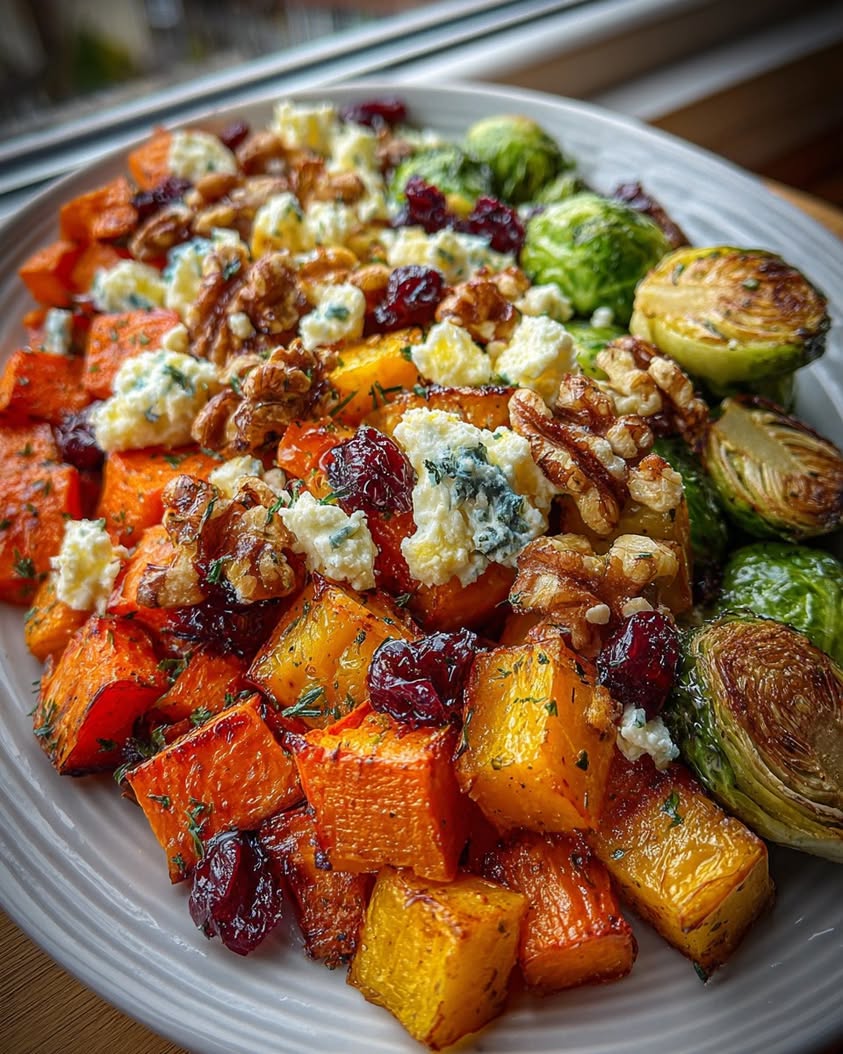
Roasted Winter Vegetables with Feta, Walnuts, and Cranberry Glaze: A Festive Harvest Medley
Imagine a sheet pan brimming with the warm, earthy colors of autumn and winter. This recipe for Roasted Winter Vegetables with Feta, Walnuts, and Cranberry Glaze transforms humble root vegetables and brassicas into a stunning, flavor-packed masterpiece. The process is beautifully simple, yet the result feels incredibly special. Consequently, you get a dish that is as perfect for a cozy weeknight dinner as it is for the centerpiece of your holiday table.
The magic happens in the oven, where high heat coaxes out the natural sugars in butternut squash, carrots, and sweet potato. Meanwhile, the Brussels sprouts develop delightful crispy edges. After roasting, the warm vegetables get tossed with a sweet-tart cranberry-honey glaze. Finally, a generous sprinkle of salty feta cheese and crunchy toasted walnuts adds the perfect finishing touch. This combination creates a symphony of textures and flavors in every single bite.
Ultimately, this dish celebrates the best of the season’s bounty. It is a vibrant, nourishing, and utterly delicious way to enjoy vegetables. Moreover, it requires minimal hands-on effort, allowing you to enjoy the cooking process and the incredible aromas filling your kitchen. Whether you are a seasoned cook or a beginner, this recipe is a guaranteed crowd-pleaser that will have everyone asking for seconds.
Quick Recipe Highlights
- Flavor Profile: This dish offers a perfect balance of savory, sweet, and tangy notes. The natural caramelized sweetness of the roasted vegetables meets the salty punch of feta and the rich, toasty crunch of walnuts. The cranberry-honey glaze ties everything together with a bright, fruity acidity that cuts through the richness.
- Texture: You will experience a wonderful contrast of textures. The roasted vegetables become tender and creamy on the inside with beautifully caramelized, slightly crisp exteriors. The walnuts provide a satisfying crunch, while the feta cheese adds a creamy, crumbly element that melts slightly on the warm veggies.
- Aroma: As the vegetables roast, your kitchen will fill with the comforting, sweet scent of caramelizing squash and sweet potato. The earthy aroma of Brussels sprouts and the warm, nutty fragrance from toasting walnuts create an irresistible olfactory experience that promises a delicious meal.
- Visual Appeal: This dish is a feast for the eyes with its stunning color palette. Think vibrant orange from the squash and carrots, deep green from the Brussels sprouts, creamy white from the feta, and rich brown from the walnuts. The glossy red glaze adds a final touch of festive brilliance.
- Skill Level Needed: This is an accessible recipe for cooks of all levels. The primary skills involved are simple vegetable chopping and tossing. The oven does most of the work, making it a fantastic recipe for beginners or anyone seeking a stress-free, impressive dish.
- Special Equipment: You need only a few basic kitchen tools. A large, sturdy baking sheet is essential for allowing the vegetables to roast in a single layer without steaming. A sharp chef’s knife and cutting board make prep work easy. A small saucepan is handy for making the simple glaze.
Recipe Overview
- Difficulty Level: We classify this recipe as “Easy” because it involves straightforward techniques like chopping and roasting. There is no complicated sauce work or precise timing required. The most important step is cutting the vegetables to a relatively uniform size for even cooking, which is a simple skill to master.
- Category: This versatile dish fits multiple categories beautifully. It serves as a spectacular vegetarian main course, a hearty and flavorful side dish for roasted meats like turkey or ham, or even a warm salad component. Its flexibility makes it a valuable addition to any meal plan.
- Cuisine: While not tied to one specific tradition, this recipe draws inspiration from modern American and Mediterranean cuisines. The use of honey, walnuts, and feta cheese nods to Mediterranean flavors, while the combination of roasted root vegetables is a staple of hearty American fall and winter cooking.
- Cost: This is a very cost-effective recipe, especially when you make it in peak season. Root vegetables like carrots, sweet potatoes, and squash are typically inexpensive. Brussels sprouts, feta, and walnuts may have a slightly higher cost, but a little goes a long way in terms of flavor and texture impact.
- Season: This is the ultimate fall and winter recipe. These vegetables are at their peak of flavor and affordability during the cooler months. The warm, hearty, and slightly sweet nature of the dish is perfectly suited to cold-weather dining and holiday celebrations.
- Occasion: It is perfect for everything from a simple family dinner to Thanksgiving, Christmas, or a festive potluck. Its make-ahead potential and stunning presentation make it a stress-free choice for entertaining. It also works wonderfully as a meal prep option for healthy weekday lunches.
Why You’ll Love This Roasted Winter Vegetables with Feta, Walnuts, and Cranberry Glaze
First and foremost, the taste and texture combination is absolutely irresistible. The roasting process intensifies the vegetables’ natural sugars, creating deep, caramelized flavors that are inherently satisfying. When you add the tangy-sweet pop of the cranberry glaze, the salty creaminess of the feta, and the earthy crunch of walnuts, you achieve a perfect bite every single time. This dish proves that vegetables can be the star of the meal, offering complexity and delight that rivals any main course.
From a practical standpoint, the convenience factor is a major win. After the initial chopping, the oven handles the bulk of the work. This hands-off time allows you to prepare other parts of your meal, set the table, or simply relax. The recipe is also incredibly forgiving; a few extra minutes of roasting won’t ruin it. Furthermore, cleanup is easy, especially if you line your baking sheet with parchment paper. This simplicity makes it a go-to recipe for busy nights when you want something healthy and delicious without a lot of fuss.
Nutritionally, this dish is a powerhouse. It is packed with vitamins, minerals, and fiber from the diverse array of colorful vegetables. Butternut squash and sweet potatoes are excellent sources of Vitamin A and antioxidants. Brussels sprouts offer Vitamin C and K, while carrots provide beta-carotene. The walnuts add healthy fats and protein, and the feta contributes calcium. Together, they create a meal that is as good for your body as it is for your taste buds.
For social gatherings, this recipe is a true superstar. Its vibrant appearance immediately draws people to the table. It caters beautifully to vegetarians and can easily be adapted for other dietary needs, which is crucial when hosting. The fact that it can be served warm or at room temperature adds to its versatility for buffets or potlucks. People will be impressed by the beautiful presentation and complex flavors, never guessing how simple it was to prepare.
Finally, it is remarkably cost-effective and accessible. The base ingredients are humble root vegetables, which are some of the most affordable produce items year-round. You can often find pre-cut butternut squash to save time. The garnishes—feta, walnuts, cranberries—are used sparingly but deliver maximum impact, making a little go a long way. This means you can create a restaurant-quality, impressive dish without straining your grocery budget.
Historical Background and Cultural Significance
The practice of roasting vegetables over fire is as old as cooking itself. However, the specific combination of New World and Old World ingredients in this dish tells a more modern story. Squash, sweet potatoes, and cranberries are native to the Americas and were staples for Indigenous peoples. European settlers adopted these ingredients, and over centuries, they became ingrained in fall and winter culinary traditions, particularly for harvest festivals and Thanksgiving.
Culturally, this medley represents a celebration of the harvest and the preservation of food through the winter. Root vegetables and hard squash have long been valued for their ability to store well in cellars. The addition of walnuts, a tree nut harvested in the autumn, and honey, a preserved summer bounty, reinforces this theme of gathering and sustaining. This dish, therefore, is a direct descendant of practical, seasonal eating habits.
The recipe has evolved significantly with global trade and modern tastes. Feta cheese brings a Mediterranean influence that was less common in traditional American cooking until recent decades. The conscious pairing of sweet and savory, and the emphasis on contrasting textures, reflects contemporary culinary trends that prioritize complexity and balance. The cranberry glaze is a modern simplification of traditional cranberry sauces, making a bold flavor accent easy to achieve.
Regional variations of roasted vegetable dishes are endless. In the American South, you might find a similar mix with pecans instead of walnuts. In parts of Europe, goat cheese might stand in for feta, and a balsamic reduction could replace the cranberry glaze. Some versions include parsnips or turnips, while others might add a sprinkle of pomegranate seeds for a different kind of tart crunch. This adaptability is a testament to the solid foundation of the technique: roasting vegetables brings out their best, and from there, creativity can flourish.
Ingredient Deep Dive
Butternut Squash: This winter squash originated in the Americas and has been cultivated for thousands of years. It is a fantastic source of beta-carotene (which converts to Vitamin A), Vitamin C, and fiber. When selecting, choose a squash that feels heavy for its size with a firm, matte skin and no soft spots. Store whole squash in a cool, dark place for months. For a quicker prep, look for pre-cut fresh squash in the produce section. As a substitute, try acorn squash or pumpkin.
Brussels Sprouts: Named after Brussels, Belgium, where they were popularized in the 16th century, these mini cabbages are part of the brassica family. They are rich in Vitamin K, Vitamin C, and contain compounds with potential cancer-fighting properties. Pick sprouts that are bright green, firm, and compact with tightly closed leaves. Avoid yellowing or loose leaves. Store them in a plastic bag in the refrigerator’s crisper drawer. For a different flavor, broccoli florets or cauliflower can be used, though cooking times may vary.
Sweet Potato: A staple food in many cultures worldwide, sweet potatoes are botanically distinct from yams. They are incredibly rich in Vitamin A (as beta-carotene), Vitamin C, and manganese. Choose firm potatoes with smooth, unbruised skin. Store them in a cool, dark, well-ventilated place—not the refrigerator, as cold temperatures can alter their texture and taste. Garnet yams can be used interchangeably, and for a lower-carb option, you could use cubed rutabaga, though the sweetness will differ.
Feta Cheese: This brined curd cheese has Protected Designation of Origin (PDO) status in Greece, meaning authentic feta is made from sheep’s milk or a sheep/goat milk blend. It provides a good source of calcium and protein with a characteristically tangy, salty flavor. For this recipe, a block of feta that you crumble yourself is superior to pre-crumbled, which is often drier. For a dairy-free version, a firm, salty tofu crumble or a vegan feta alternative works well.
Walnuts & Cranberry Glaze: Walnuts are one of the oldest tree foods, prized for their brain-healthy omega-3 fatty acids. Always toast them to unlock their full flavor and aroma. Dried cranberries, often sweetened, provide a chewy texture and intense tartness that balances the dish’s sweetness. To make the glaze, simply simmer cranberries with honey and a little water until they burst and thicken. For a refined sugar-free version, use all honey or maple syrup. You can also use pomegranate molasses for a different tart-sweet profile.
Common Mistakes to Avoid
- Crowding the Pan: This is the most common error. If the vegetables are piled on top of each other, they will steam instead of roast. Steaming makes them soggy and prevents caramelization. Always use a large enough baking sheet or roast in batches to ensure each piece has contact with the hot pan and space for air to circulate.
- Uneven Vegetable Sizes: Chopping your vegetables into wildly different sizes leads to uneven cooking. Smaller pieces will burn before larger pieces are tender. Aim for a relatively uniform dice or chop, about 1-inch pieces, so everything finishes at the same time and achieves that perfect caramelized texture.
- Skipping the Oil Toss: Do not just drizzle oil over the veggies on the pan. You must toss them thoroughly in a bowl with oil, salt, and pepper until every surface is lightly coated. This ensures even browning, prevents sticking, and helps the seasonings distribute properly for balanced flavor in every bite.
- Using a Cold Baking Sheet: Placing vegetables on a room-temperature pan can cause them to stick initially. For best results, preheat your empty baking sheet in the oven for 5-10 minutes before adding the oiled vegetables. This gives an instant sear, promoting better browning and easier release.
- Neglecting to Toast the Walnuts: Raw walnuts can taste bitter and have a soft texture. Taking a few extra minutes to toast them in a dry skillet or the oven transforms their flavor, making them deeply nutty, fragrant, and satisfyingly crisp. This step adds significant depth to the final dish.
- Adding Cheese and Nuts Too Early: If you add the feta and walnuts before roasting, the cheese will melt into a greasy mess and the nuts will burn. These are finishing elements. Always add them after the vegetables come out of the oven and have been tossed with the glaze for the best texture and presentation.
- Overcomplicating the Glaze: The glaze is meant to be a simple, vibrant accent. Do not cook it for too long, or it can become overly thick and sticky like jam. You want a pourable, glossy consistency that will lightly coat the vegetables. Remove it from the heat once the cranberries have burst and the mixture has slightly thickened.
- Not Seasoning in Layers: Seasoning only at the end results in bland vegetables. Always season the vegetables with salt and pepper before they go into the oven. Then, taste again after adding the glaze and toppings, adjusting with a final pinch of salt or a drizzle of honey if needed.
Essential Techniques
Uniform Chopping: Consistent sizing is non-negotiable for even roasting. For the butternut squash and sweet potato, peel them first, then slice into ½-inch thick rounds. Cut the rounds into 1-inch cubes. For carrots, slice on a slight diagonal to create larger surface areas for browning. Trim the Brussels sprouts by cutting off the dry stem end and halving them lengthwise. This technique ensures all pieces cook through and caramelize at the same rate, preventing some from being mushy while others are still hard.
High-Heat Roasting: Roasting at a high temperature (around 400°F to 425°F) is crucial. This high heat quickly evaporates surface moisture on the vegetables, allowing the Maillard reaction—the chemical process that creates browning and complex flavor—to occur. Do not be tempted to lower the temperature to prevent burning; instead, ensure your pieces are uniform and your pan is not overcrowded. The result should be tender interiors with beautifully browned, slightly crisp edges that concentrate the vegetables’ natural sweetness.
Making a Simple Reduction Glaze: A reduction glaze intensifies flavor by simmering a liquid until it thickens. For this recipe, combine cranberries, honey, and a splash of water in a small saucepan. Over medium heat, the cranberries will soften, burst, and release their pectin. The water will evaporate, and the honey will combine with the cranberry juice to create a syrupy, tart-sweet coating. The visual cue for success is when the cranberries have mostly popped and the liquid coats the back of a spoon. Let it cool slightly before tossing; it will thicken a bit more as it cools.
Toasting Nuts: Toasting nuts is a dry-heat technique that drives off moisture and toasts their natural oils, enhancing flavor and crunch. You can do this in a dry skillet over medium-low heat, shaking frequently, for 3-5 minutes until fragrant. Alternatively, spread them on a baking sheet and toast in a 350°F oven for 5-8 minutes. Watch them closely, as they can go from perfectly toasted to burnt in seconds. The key indicators are a deepened color and a rich, nutty aroma.
Pro Tips for Perfect Roasted Winter Vegetables with Feta, Walnuts, and Cranberry Glaze
For extra caramelization, give the vegetables space. If your baking sheet is small, use two sheets and rotate their positions in the oven halfway through cooking. This promotes even browning and prevents steaming.
Add fresh herbs for an aromatic boost. Toss a few sprigs of fresh thyme or rosemary onto the baking sheet with the vegetables. The herbs will infuse the oil and vegetables with their fragrance as they roast.
Let the roasted vegetables rest for 5 minutes after taking them out of the oven before adding the glaze. This allows them to firm up slightly so they do not turn to mush when tossed.
If preparing for a party, roast the vegetables and make the glaze ahead of time. Store them separately, then re-warm the veggies in the oven and toss with the warm glaze just before serving to maintain optimal texture.
For a deeper flavor, use a combination of oils. Toss the vegetables mostly in olive oil, but add a teaspoon of walnut oil to the mix. It will subtly reinforce the nutty flavor in the dish.
Do not discard the crispy, caramelized bits that stick to the pan. When you transfer the vegetables to your serving bowl, use a spatula to scrape up these “flavor crystals” and include them—they are packed with taste.
Season aggressively. Root vegetables can handle and need a good amount of salt to make their flavors pop. Do not be shy with the kosher salt and freshly ground black pepper during the initial toss.
For a beautiful presentation, garnish with intention. After adding the crumbled feta and walnuts, sprinkle a few extra whole dried cranberries and a final pinch of flaky sea salt over the top for visual appeal and a burst of flavor.
Variations and Adaptations
Regional Variations: Embrace local ingredients. In the South, substitute pecans for walnuts and add a dash of smoked paprika to the oil. For a Mediterranean twist, use oregano instead of thyme, add Kalamata olives with the feta, and swap the cranberry glaze for a lemon-oregano vinaigrette. A Nordic version might include cubed parsnips and beets, using lingonberry jam in the glaze and dill as a fresh herb.
Seasonal Adaptations: While perfect for fall and winter, you can adapt this for spring and summer. In spring, use asparagus, radishes, and new potatoes with a lemon-herb glaze. For summer, try zucchini, bell peppers, and cherry tomatoes with a basil-infused oil and a balsamic reduction, finishing with fresh mozzarella instead of feta.
Dietary Modifications: For a vegan version, omit the feta or use a vegan alternative, and ensure your honey substitute is plant-based (maple syrup or agave work perfectly). To make it nut-free, replace walnuts with roasted pumpkin seeds (pepitas) or sunflower seeds for a similar crunch without the allergen.
Flavor Variations: Experiment with different spice profiles. Toss the vegetables with harissa paste and oil for a North African kick. Use a blend of cumin, coriander, and cinnamon for a warm Moroccan flavor. For an Asian-inspired version, use sesame oil and soy sauce in the toss, and finish with a ginger-scallion garnish instead of feta.
Texture Modifications: If you prefer softer vegetables, cover the pan with foil for the first half of roasting, then uncover to brown. For maximum crispiness on Brussels sprouts, separate some of the leaves before roasting—they will become delightfully crispy chips. You can also add a handful of panko breadcrumbs tossed in oil to the pan for the last 5 minutes of roasting for an extra crunchy topping.
Presentation Alternatives: Serve the warm vegetable mixture over a bed of creamy polenta, quinoa, or farro for a heartier meal. Alternatively, let it cool completely and serve it as a room-temperature grain bowl component or a festive salad on a bed of bitter greens like arugula or radicchio.
Serving and Presentation Guide
Plating Techniques: For a family-style presentation, use a large, shallow serving bowl or platter. Mound the glazed vegetables in the center. This allows the vibrant colors to shine and makes it easy for guests to serve themselves. For individual plates, use a ring mold to create a neat, vertical stack of vegetables in the center of the plate, then carefully remove the mold and garnish around the base.
Garnishing Ideas: Beyond the feta and walnuts, consider final touches that add freshness and color. A scattering of microgreens or chopped flat-leaf parsley provides a green contrast. A light drizzle of high-quality extra virgin olive oil adds sheen. For a festive touch, a few pomegranate arils sprinkled over the top offer a jewel-like appearance and a juicy burst.
Traditional Accompaniments: This dish is a classic companion to holiday roasts. It pairs beautifully with roast turkey, glazed ham, or a standing rib roast. For a vegetarian feast, serve it alongside a hearty lentil loaf, stuffed acorn squash, or a rich mushroom Wellington. The sweet and savory notes complement a wide range of main courses.
Modern Serving Suggestions: Think beyond the dinner plate. Use leftovers the next day in a warm wrap with hummus and greens. Chop the vegetables smaller and fold them into scrambled eggs or a frittata. Serve them atop a crispy flatbread with a smear of goat cheese for a quick gourmet pizza.
Temperature Considerations: This dish is most flavorful served warm, when the feta is just slightly softened. However, it is also excellent at room temperature, making it ideal for buffets. If you must reheat, do so in a 350°F oven until just warmed through to avoid overcooking the vegetables. Avoid the microwave, as it can make them soggy.
Portion Control Tips: As a hearty side dish, plan for about 1 to 1.5 cups per person. As a vegetarian main, 2 to 2.5 cups is a satisfying portion. Remember that the walnuts and feta add richness and satiety, so a little goes a long way. You can easily stretch the recipe by serving it over a whole grain like farro or brown rice.
Wine and Beverage Pairing
Wine Pairings: The sweet, savory, and tangy profile of this dish calls for versatile wines. A dry Riesling is a fantastic choice; its acidity matches the cranberry glaze, and its stone fruit notes complement the roasted squash. A medium-bodied Pinot Noir works beautifully, offering red fruit flavors that won’t overpower the vegetables, with enough acidity to cut through the richness. For a richer option, try an oaked Chardonnay—its buttery notes and hints of vanilla can harmonize with the caramelized flavors.
Non-Alcoholic Alternatives: Sparkling apple cider is a classic and celebratory pairing, its effervescence and apple sweetness echoing the fall flavors. For something more sophisticated, try a tart cranberry spritzer made with unsweetened cranberry juice, sparkling water, and a squeeze of lime. A warm, spiced apple tea or a ginger-lemon kombucha also makes a delightful companion, cleansing the palate between bites.
Coffee/Tea Pairings: After a meal featuring this dish, a cup of coffee or tea can be a perfect finish. A medium-roast coffee with notes of caramel or nut pairs nicely. For tea, consider a smoky Lapsang Souchong to contrast the sweetness, or a soothing cup of chamomile with honey to complement it. The key is to choose beverages that are not overly bitter, as they may clash with the sweet elements of the glaze.
Temperature Considerations: Serve white wines and sparkling beverages well-chilled, around 45-50°F. Red wines like Pinot Noir should be served slightly cool, at about 55°F, to highlight their freshness. Non-alcoholic spritzers should be ice-cold, while teas and coffees should be served hot to provide a comforting contrast to the warm vegetables.
Serving Suggestions: When hosting, offer both a red and a white wine option to cater to different preferences. For non-drinkers, having a festive, non-alcoholic sparkler in a champagne flute makes everyone feel included. Always ensure water is plentiful on the table, as the salty feta and rich flavors will have guests reaching for their glasses.
Storage and Shelf Life
Storage Methods: Store leftover roasted vegetables in an airtight container in the refrigerator. It is best to store the components separately if possible: the plain roasted vegetables in one container, and the glaze, feta, and walnuts in their own containers. This preserves the texture of the nuts and prevents the vegetables from becoming soggy. If stored combined, the dish will still be tasty but the walnuts will soften.
Temperature Requirements: Always refrigerate leftovers within two hours of cooking. The ideal refrigerator temperature is 40°F or below. Do not leave the dish at room temperature for extended periods, as the dairy (feta) and moist vegetables can promote bacterial growth.
Container Recommendations: Use glass or BPA-free plastic containers with tight-fitting lids. For the best quality, shallow containers are better than deep ones, as they allow the vegetables to cool quickly and evenly, reducing condensation that can lead to sogginess.
Signs of Spoilage: Discard the vegetables if you notice an off or sour smell, significant sliminess on the surface, or any signs of mold. The feta may dry out but is generally safe if it was fresh when used. When in doubt, throw it out.
Reheating Instructions: To restore texture, reheat in the oven or a toaster oven. Spread the vegetables on a baking sheet and warm at 350°F for 10-15 minutes until heated through. This method will re-crisp the edges better than a microwave. If using a microwave, do so in short bursts and expect some softening.
Freezing Guidelines: Freezing is not highly recommended for the complete assembled dish, as the texture of the roasted vegetables and walnuts will suffer significantly upon thawing, becoming mushy and soft. However, you can freeze the plain roasted vegetables (without toppings or glaze) for up to 3 months. Thaw in the refrigerator overnight and re-crisp in a hot oven before adding fresh glaze and toppings.
Make Ahead Strategies
Prep Timeline: You can prep this dish up to 24 hours in advance with great success. The day before, chop all the vegetables and store them in separate airtight containers or resealable bags in the refrigerator. Make the cranberry glaze and store it in a jar in the fridge. Toast the walnuts and store them at room temperature. Crumble the feta and keep it chilled.
Storage Between Steps: Keeping the components separate is the golden rule for make-ahead success. The chopped, raw vegetables may release a little moisture overnight, so pat them dry with a paper towel before tossing with oil and roasting. The chilled glaze will thicken; simply warm it gently on the stove or in the microwave until it is pourable again before using.
Quality Impact Assessment: Pre-chopping vegetables has minimal impact on final quality. Pre-making the glaze may actually improve its flavor as the ingredients meld. The only elements that must be done day-of are toasting the walnuts (for optimal crunch) and the actual roasting step. Roasting vegetables from cold, straight from the fridge, may add 5-10 minutes to the cooking time.
Assembly Tips: On the day of serving, simply toss your pre-chopped veggies with oil, salt, and pepper, and roast as directed. While they roast, gently reheat the glaze. Once the vegetables are out of the oven, toss them with the warm glaze in your serving bowl, then immediately add the toasted walnuts and crumbled feta. This final assembly takes just minutes.
Reheating Guidelines: If you must roast the vegetables completely ahead, let them cool, then store in the fridge. Reheat them on a baking sheet in a 400°F oven for 10-15 minutes to re-crisp before adding the glaze and toppings. Do not add the feta and walnuts until after reheating.
Fresh Element Additions: For the absolute best presentation and texture, always add the walnuts and feta at the last possible moment. If transporting the dish, bring the toasted walnuts and crumbled feta in separate bags or containers and sprinkle them on top just before serving to maintain their distinct textures.
Scaling Instructions
Halving the Recipe: Halving this recipe is straightforward. Simply divide all ingredient quantities by two. Use a standard-sized baking sheet; the smaller volume of vegetables will have even more room to caramelize beautifully, potentially reducing cook time by 5-10 minutes. Keep a close eye on them, as smaller batches can cook faster. The glaze can be halved easily in a small saucepan.
Doubling or Tripling: For a crowd, doubling or tripling works well, but you must adjust your equipment and method. Do not pile all the vegetables onto one pan. Instead, use multiple baking sheets and rotate them between oven racks halfway through cooking to ensure even browning. You may need to roast in batches if your oven cannot accommodate multiple sheets at once. For the glaze, use a larger saucepan to prevent boil-overs.
Equipment Adjustments: Scaling up requires more baking sheets. If you are roasting multiple sheets at once, ensure there is at least 1-2 inches of space between the oven walls and the pans for proper air circulation. Consider using convection bake if your oven has it, as the fan helps with even cooking and browning on multiple racks. Reduce the temperature by 25°F if using convection.
Timing Modifications: When doubling, the prep time will increase linearly with the amount of chopping. The actual roasting time may increase slightly (by 5-10 minutes) if the pans are very full, even on multiple sheets, due to the increased moisture released into the oven. Start checking for doneness at the original time, but be prepared to add time if needed.
Storage Considerations: A larger batch means more leftovers. Plan your storage containers in advance. It is often better to store the roasted vegetables, glaze, and toppings separately when scaling up, as this gives you flexibility to use the components in other meals throughout the week without everything becoming soggy.
Nutritional Deep Dive
Macro Breakdown: This dish is primarily a source of complex carbohydrates and healthy fats. The vegetables provide the carbs, along with a significant amount of dietary fiber, which aids digestion and promotes satiety. The olive oil and walnuts contribute monounsaturated and polyunsaturated fats, including omega-3s from the walnuts. The feta cheese adds a modest amount of protein and fat. Overall, it is a balanced dish that provides sustained energy.
Micronutrient Analysis: The variety of vegetables makes this a micronutrient powerhouse. Butternut squash and sweet potatoes are exceptionally high in Vitamin A (as beta-carotene), crucial for vision and immune function. Brussels sprouts and carrots offer Vitamin C and K. The dish also provides potassium, manganese, and smaller amounts of B vitamins. The walnuts add minerals like copper and magnesium.
Health Benefits: Consuming a diverse array of colorful vegetables is linked to reduced risk of chronic diseases. The antioxidants (like beta-carotene and Vitamin C) combat oxidative stress. The fiber supports gut health and helps regulate blood sugar. The healthy fats from olive oil and walnuts are heart-healthy and support brain function. Together, they make a meal that is anti-inflammatory and highly nourishing.
Dietary Considerations: This dish is naturally vegetarian and gluten-free. It can be adapted to be vegan and dairy-free with simple swaps. For those on a low-carb or keto diet, the root vegetables are higher in carbs, so portion size would need to be controlled. It is generally suitable for a Mediterranean diet, which emphasizes vegetables, healthy fats, and moderate cheese.
Portion Analysis: A standard serving (about 1.5 cups) provides a substantial volume of food for a moderate calorie count, largely due to the high water and fiber content of the vegetables. This makes it an excellent choice for volume eating—feeling full and satisfied on fewer calories. The fats and protein from the toppings further enhance satiety.
Weight Management Tips: This dish is an excellent ally for weight management. Its high fiber and water content promote fullness. To make it even lighter, you can slightly reduce the amount of olive oil used for roasting (a light spray can work) and be mindful of the portion of walnuts and feta. Using it as a main course with a large portion of vegetables and a smaller portion of a whole grain is a balanced, satisfying meal.
Dietary Adaptations
Gluten-free: This recipe is naturally gluten-free as written. Simply ensure that all packaged ingredients, like dried cranberries, are certified gluten-free, as some may be processed in facilities with wheat. No other modifications are needed for a safe and delicious gluten-free dish.
Dairy-free:{“success”:true,”message”:”Recipe created successfully”,”post_id”:8047,”tasty_recipe_id”:8047,”shortcode”:” Print
Caramelized Butternut Squash, Carrots, Brussels Sprouts, and Sweet Potato with Feta, Walnuts, and Cranberry-Honey Glaze
Description
A vibrant roasted vegetable medley with sweet caramelization, tangy feta, crunchy walnuts, and a glossy cranberry-honey glaze.
Ingredients
For the Crust:
- 1 small butternut squash, peeled and cubed
- 2 large carrots, peeled and sliced into rounds
- 1 lb Brussels sprouts, trimmed and halved
- 1 large sweet potato, peeled and cubed
- 3 tbsp olive oil
- 1 tsp salt
- 1/2 tsp black pepper
- 1 tsp dried thyme
- 1/2 cup crumbled feta cheese
- 1/2 cup chopped walnuts
- 1/4 cup honey
- 1/4 cup dried cranberries
- 2 tbsp balsamic vinegar
Instructions
1. Prepare the Crust:
- Preheat oven to 400°F (200°C). Line a large baking sheet with parchment paper.
- In a large bowl, toss butternut squash, carrots, Brussels sprouts, and sweet potato with olive oil, salt, pepper, and thyme until evenly coated. Spread in a single layer on the baking sheet.
- Roast for 25-30 minutes, stirring halfway, until vegetables are tender and caramelized at the edges.
- While roasting, combine honey, dried cranberries, and balsamic vinegar in a small saucepan. Heat over low, stirring until cranberries soften and glaze thickens slightly, about 5 minutes.
- Transfer roasted vegetables to a serving dish. Drizzle with cranberry-honey glaze, then top with crumbled feta and chopped walnuts. Serve warm.
Notes
You can customize the seasonings to taste.

I’m Billy, a classically trained culinary school graduate from The Culinary Institute of America with over 12 years in the restaurant industry and over 19 years of cooking experience.