
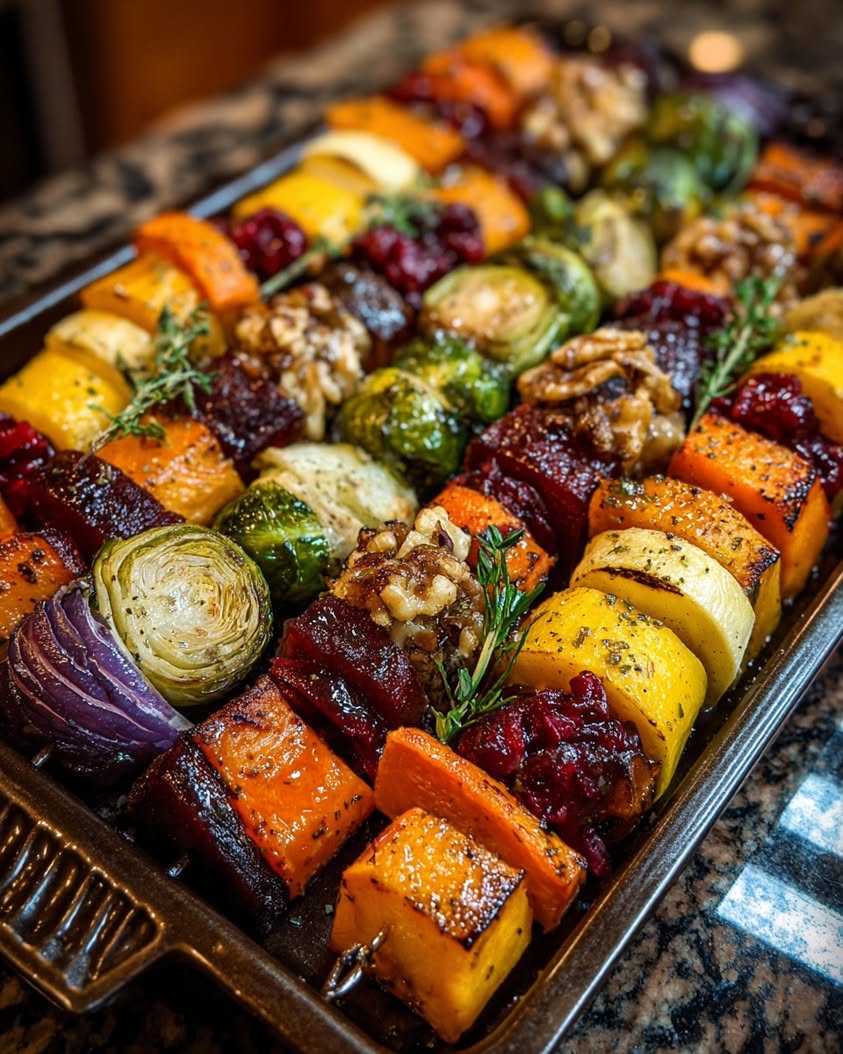
Roasted Root Vegetable Skewers with Cranberry Honey Glaze: A Festive Fall Feast
Welcome to a celebration of autumn’s bounty on a stick. These Roasted Root Vegetable Skewers with Cranberry Honey Glaze transform humble seasonal produce into an elegant, show-stopping side dish. Imagine sweet potatoes and butternut squash caramelizing to perfection alongside earthy beets and crisp-tender Brussels sprouts. Then, picture a glossy, sweet-tart glaze made from honey and cranberries brushed over the top, finished with a sprinkle of toasted walnuts for crunch. This dish is not just food; it’s a centerpiece that captures the very essence of fall in every vibrant, flavorful bite.
Furthermore, this recipe is a masterclass in balancing flavors and textures. The natural sugars in the root vegetables concentrate and caramelize during roasting, creating a deep, rich sweetness. Meanwhile, the cranberry honey glaze introduces a bright, tangy counterpoint that cuts through the richness. Ultimately, the result is a complex and satisfying dish that feels both rustic and refined. Whether you’re hosting a holiday dinner or simply craving a nutritious weeknight meal, these skewers deliver on every level.
Finally, let’s talk about versatility. These Roasted Root Vegetable Skewers are incredibly adaptable. You can easily customize them based on what’s in your pantry or tailor them to specific dietary needs. They are naturally vegan and gluten-free, making them a crowd-pleaser for any gathering. Moreover, the process of threading the vegetables is oddly therapeutic and creates a beautiful presentation that guarantees compliments. So, gather your favorite fall vegetables and get ready to make a dish that’s as fun to prepare as it is to eat.
Quick Recipe Highlights
- Flavor Profile: These skewers offer a beautiful harmony of sweet and savory. The caramelized vegetables provide a deep, earthy sweetness, while the cranberry honey glaze adds a vibrant, tangy punch. Additionally, a hint of warmth from the spices and the nutty finish from the walnuts create a truly layered taste experience.
- Texture: Expect a delightful contrast in every bite. The exterior of the vegetables becomes beautifully caramelized and slightly crisp, while the interiors turn tender and creamy. Subsequently, the toasted walnuts add a crucial element of crunch, ensuring the dish is never monotonous.
- Aroma: As these Roasted Root Vegetable Skewers cook, your kitchen will fill with an irresistible fragrance. You’ll smell the sweet, caramelizing sugars of the squash and potatoes, the earthy scent of roasting beets, and the warm, inviting aroma of cinnamon and glaze mingling together.
- Visual Appeal: This dish is a feast for the eyes with its stunning color palette. You get vibrant orange from the squash, deep purple from the beets, green from the Brussels sprouts, and a glossy red sheen from the glaze. Consequently, it adds a beautiful pop of color to any dinner table.
- Skill Level Needed: This is a beginner-friendly recipe. The techniques involved—chopping, tossing, and roasting—are fundamental. The most careful step is making the simple glaze, which essentially requires simmering a few ingredients together. Therefore, cooks of all levels can achieve fantastic results.
- Special Equipment: You will need wooden or metal skewers and a good baking sheet. If using wooden skewers, remember to soak them in water for at least 30 minutes beforehand to prevent burning. A sharp chef’s knife for prepping the vegetables is also highly recommended.
Recipe Overview
- Difficulty Level: We rate this recipe as “Easy” for several reasons. First, the preparation involves straightforward chopping and threading. Second, the cooking method is simple roasting. Third, the glaze comes together in one pan. There are no advanced techniques like tempering or braising required, making it very accessible.
- Category: This dish falls perfectly into the side dish category, ideal for holidays like Thanksgiving or Christmas. However, it’s substantial enough to be a main course for a vegetarian or vegan meal, especially when served over a bed of quinoa or farro. It’s also fantastic for meal prep.
- Cuisine: While not tied to one specific tradition, these skewers draw inspiration from modern American farm-to-table cooking and the global tradition of kebabs. The use of seasonal, roasted vegetables is a hallmark of autumn cuisine in many temperate regions, particularly in North America and Europe.
- Cost: This is a very cost-effective recipe, especially in the fall and winter when root vegetables are at their peak and most affordable. The priciest items are often the fresh cranberries and walnuts, but you can use dried cranberries in the glaze and omit the walnuts if needed to reduce cost.
- Season: This recipe is quintessentially autumnal. It features vegetables that are harvested in the fall and flavors like cranberry that are associated with the holidays. Making these Roasted Root Vegetable Skewers in season ensures the best flavor and value from your ingredients.
- Occasion: These skewers are incredibly versatile for occasions. They are elegant enough for a formal holiday feast, casual enough for a weeknight family dinner, and portable enough for a fall picnic or barbecue. They also make a stunning addition to a potluck or buffet table.
Why You’ll Love This Recipe
First and foremost, the taste and texture are utterly captivating. Each bite of these Roasted Root Vegetable Skewers delivers a symphony of flavors. The caramelized edges of the sweet potato and squash offer a deep, almost nutty sweetness. Then, the earthy beet and slightly bitter Brussels sprout balance that sweetness perfectly. The cranberry honey glaze ties everything together with its bright acidity and sticky sweetness, while the walnuts provide the final, satisfying crunch. It’s a dish that keeps your palate interested from start to finish.
Next, consider the convenience and preparation benefits. Despite their impressive appearance, these skewers are surprisingly simple to assemble. You can prep the vegetables and make the glaze ahead of time, then simply thread and roast before serving. The roasting process is mostly hands-off, freeing you up to work on other parts of your meal. Additionally, the skewer format makes for easy serving and portion control. Everyone gets a perfect mix of every vegetable, ensuring a balanced flavor profile on each plate.
From a nutritional standpoint, this dish is a powerhouse. These Roasted Root Vegetable Skewers are packed with vitamins, minerals, and fiber. Sweet potatoes and carrots are rich in beta-carotene. Brussels sprouts are loaded with Vitamin C and K. Beets contain beneficial nitrates and antioxidants. Using olive oil and walnuts adds heart-healthy fats. This is a dish that nourishes your body while delighting your taste buds, proving that healthy eating doesn’t have to be boring.
For social and entertaining value, this recipe is a true winner. The visual appeal of the colorful skewers immediately elevates your table setting. They are a fantastic conversation starter and show that you’ve put thought and care into the meal. Because they are naturally vegan and gluten-free, you can confidently serve them to guests with dietary restrictions, ensuring everyone has a delicious option to enjoy. They bring a “wow” factor without requiring chef-level skills.
Finally, this recipe is remarkably cost-effective and accessible. Root vegetables are typically some of the most affordable produce items, especially in season. You can often find them at farmers markets for great prices. The other ingredients—honey, cranberries, basic spices—are pantry staples for many. This means you can create a restaurant-quality, beautiful dish without breaking the bank. It’s a fantastic way to eat well and impress your guests on a budget.
Historical Background and Cultural Significance
The concept of cooking food on skewers is ancient and spans countless cultures, from Greek souvlaki to Japanese kushiyaki. However, the idea of specifically using seasonal, roasted root vegetables in this format is a more modern, farm-to-table innovation. It represents a contemporary culinary movement that emphasizes showcasing local, seasonal produce in simple, beautiful ways. These Roasted Root Vegetable Skewers are a direct descendant of this philosophy, turning the autumn harvest into a convenient and elegant dish.
Culturally, root vegetables themselves hold deep significance. For centuries, they were staples of the winter diet in colder climates because they could be stored for long periods. Dishes centered around carrots, potatoes, turnips, and beets are foundational to European and North American cold-weather cuisine. By combining them with a sweet-tart cranberry glaze, this recipe also nods to traditional Thanksgiving and Christmas flavors, bridging historic sustenance with modern holiday celebration.
The evolution of this specific recipe likely comes from the growing popularity of vegetable-centric eating and the desire for visually striking, shareable dishes. Chefs and home cooks began experimenting with kebabs beyond meat, threading colorful, sturdy vegetables that could hold up to high-heat roasting. The addition of a glaze, like the cranberry honey one here, adds a layer of sophistication and helps unify the flavors, transforming simple roasted veggies into a cohesive, gourmet experience.
Regional variations of this concept are endless. In the Mediterranean, you might find similar skewers with zucchini, eggplant, and bell peppers, dressed with olive oil and herbs. In Asia, the vegetables might be brushed with a miso or teriyaki glaze. The version presented here—featuring classic North American fall produce like sweet potato, squash, and cranberry—is a distinctly seasonal take that celebrates the bounty of a temperate autumn harvest. It’s a recipe that is both globally inspired and locally relevant.
Ingredient Deep Dive
Let’s start with Brussels Sprouts. Once maligned, these mini cabbages have undergone a culinary renaissance, largely due to proper cooking methods like roasting that unlock their sweetness. They are packed with vitamins C and K, fiber, and antioxidants. Look for firm, bright green sprouts with tightly packed leaves. Avoid yellowing or loose leaves. Store them unwashed in a plastic bag in your refrigerator’s crisper drawer. For a substitution, try broccolini or large cauliflower florets cut to a similar size.
Sweet Potato is a nutritional superstar and a New World native. Rich in beta-carotene (which converts to vitamin A), fiber, and complex carbohydrates, it provides sustained energy. Choose firm potatoes with smooth, unbruised skin. There’s no need to refrigerate them; store in a cool, dark place. Garnet or jewel varieties are perfect for roasting due to their moist, sweet flesh. As an alternative, you could use regular potatoes, butternut squash, or even parsnips for a different flavor profile.
Butternut Squash, with its sweet, nutty flavor, is a fall favorite. It’s an excellent source of vitamins A and C, potassium, and magnesium. Select a squash that feels heavy for its size with a hard, matte rind and a long, solid neck. Store whole squash in a cool, dark place for months. Once cut, wrap tightly and refrigerate. Pre-cut cubes from the store are a great time-saver. Acorn squash or pumpkin can be used as substitutes, though peeling may be more challenging.
Carrots add sweetness and a vibrant color. They are famously high in beta-carotene and are great for eye health. Choose firm, smooth carrots without cracks. If buying with tops, the greens should be fresh, not wilted. Store carrots in the crisper drawer, ideally in a sealed container with a bit of water to maintain crispness. Rainbow carrots can add stunning color variation. Parsnips would be the closest substitute, offering a similar texture with a slightly spicier flavor.
Beets provide an earthy depth and stunning color that bleeds beautifully. They are unique for their betalain pigments, which have antioxidant and anti-inflammatory properties. Look for beets with smooth skins and vibrant, leafy tops if attached. To store, separate the greens (which are edible) from the roots and keep both in separate plastic bags in the fridge. Golden beets are a wonderful, less-staining alternative. For a substitute, try turnips or rutabaga, though the color will be different.
The Cranberry Honey Glaze is the flavor catalyst. Cranberries, native to North America, are tart and packed with vitamin C and proanthocyanidins, known for urinary tract health. Use fresh or frozen berries. Honey, one of humanity’s oldest sweeteners, adds floral notes and helps create a glossy, sticky glaze. For a vegan version, maple syrup works perfectly. Toasted walnuts add essential crunch and healthy fats, but pecans or pepitas are excellent alternatives for those with nut allergies.
Common Mistakes to Avoid
- Not Soaking Wooden Skewers: This is a critical fire-prevention step. Dry wood will char and potentially ignite in a hot oven. Always soak your wooden skewers in water for at least 30 minutes before threading the vegetables. For a foolproof method, you can soak them overnight in the refrigerator.
- Cutting Vegetables Inconsistently: Uniform size is key to even cooking. If your sweet potato cubes are much larger than your Brussels sprouts, one will be burnt while the other is still raw. Take the time to chop all vegetables into similarly sized pieces, about 1 to 1.5 inches.
- Crowding the Pan: If the skewers are placed too close together on the baking sheet, the vegetables will steam instead of roast. You need space for hot air to circulate and create that desirable caramelization. Use two pans if necessary to avoid overcrowding.
- Skipping the Pre-Roast Toss in Oil: Tossing the chopped vegetables in oil and seasoning before threading ensures every surface is coated. If you just brush oil on the assembled skewers, you’ll miss the nooks and crannies, leading to dry spots and uneven seasoning.
- Applying Glaze Too Early: Brushing the cranberry honey glaze on at the beginning of roasting will cause it to burn due to the honey’s sugar content. Always apply the glaze during the last 10-15 minutes of cooking. This allows it to caramelize gently without turning bitter.
- Overcooking the Vegetables: Root vegetables should be tender but not mushy. They continue to cook a bit after being removed from the oven. Check for doneness by piercing a sweet potato cube with a fork; it should go in with slight resistance. Overcooked veggies will fall off the skewers.
- Using Raw Walnuts: Toasting the walnuts is non-negotiable for flavor and texture. Raw walnuts can be bitter and soft. Toasting them in a dry pan or the oven for a few minutes unlocks their nutty aroma and gives them a satisfying crunch that complements the soft vegetables.
- Neglecting to Season in Layers: Season the vegetables when you toss them in oil, and then consider a light sprinkle of flaky salt after they come out of the oven and after you apply the glaze. This builds depth of flavor rather than having seasoning just on the surface.
Essential Techniques
Uniform Chopping: This is the foundation of even cooking. Using a sharp chef’s knife, aim for pieces that are all roughly 1 to 1.5 inches in size. For round vegetables like Brussels sprouts and beets, you can halve or quarter them to achieve a similar mass to a cubed sweet potato. Consistent size ensures that every component on your Roasted Root Vegetable Skewers is perfectly cooked at the same time.
Dry Roasting for Caramelization: The goal is to roast, not steam. After tossing the veggies in oil, they should glisten but not swim in it. Excess oil will cause steaming. Spread them in a single layer on the baking sheet with space between. The oven’s dry heat will then concentrate the vegetables’ natural sugars, creating those delicious browned, caramelized edges that are key to the flavor profile.
Glaze Reduction: A good glaze should coat the back of a spoon. Simmer the cranberry, honey, and vinegar mixture until it thickens slightly. It will continue to thicken as it cools. If it becomes too thick, you can always whisk in a teaspoon of warm water. Applying this reduced glaze gives the Roasted Root Vegetable Skewers their signature sticky, glossy finish and intense flavor.
Skewer Threading Strategy: Thread vegetables with care to ensure they stay put. Pierce each piece through its center or sturdiest part. Alternate colors and types for visual appeal and to guarantee each skewer has a variety. Leave a small space between pieces to allow hot air to circulate for more even roasting. Packing them too tightly will result in uneven cooking.
Pro Tips for Perfect Roasted Root Vegetable Skewers
Pre-cook harder vegetables slightly if needed. If you’re using particularly dense vegetables like large beets or sweet potatoes, you can par-cook them by microwaving for 2-3 minutes before cubing and skewering. This ensures they finish at the same time as quicker-cooking veggies like Brussels sprouts.
Use a rimmed baking sheet lined with parchment paper. The rim prevents any rolling vegetables or glaze from dripping into your oven, and parchment paper makes cleanup incredibly easy while preventing sticking without needing excessive oil.
Get creative with your glaze. While the cranberry honey version is fantastic, you can experiment with other flavors. A maple-Dijon glaze, a balsamic reduction, or even a spicy harissa-infused honey would all be delicious variations on these Roasted Root Vegetable Skewers.
Let the skewers rest for a few minutes after roasting. This allows the vegetables to reabsorb some of their juices and firm up slightly, making them less likely to fall apart when you serve them. It also makes the glaze set nicely.
If you’re making these for a party, consider using two different colored skewers. Use one color for skewers with beets and another for skewers without, so guests who want to avoid the pink color (or the earthy flavor) can easily choose their preference.
Don’t waste the beet greens! If your beets come with fresh, vibrant tops, sauté them with garlic for a delicious, nutrient-packed side dish to accompany your skewers. It’s a zero-waste bonus.
Variations and Adaptations
For regional variations, think about local flavors. A Mediterranean version could feature zucchini, eggplant, cherry tomatoes, and red onion with an oregano and lemon glaze. An Asian-inspired take might include shiitake mushrooms, bok choy, and water chestnuts brushed with a ginger-soy glaze. The basic method of the Roasted Root Vegetable Skewers is a perfect template for global exploration.
Seasonal adaptations are simple. In summer, swap in bell peppers, zucchini, and cherry tomatoes. In spring, use asparagus, new potatoes, and radishes. The cranberry honey glaze can become a rosemary-infused honey glaze in spring or a orange-zest glaze in winter. The recipe is designed to celebrate what’s fresh.
For dietary modifications, this dish is naturally gluten-free and vegan (if you use maple syrup instead of honey). To make it nut-free, simply omit the walnuts or use toasted sunflower seeds. For a lower-carb version, reduce or omit the sweet potato and squash, and focus on Brussels sprouts, peppers, and mushrooms.
Flavor variations are endless. Add spice with a pinch of cayenne to the oil toss or some red pepper flakes to the glaze. Incorporate fresh herbs like chopped rosemary or thyme into the oil mixture. Add umami with a sprinkle of nutritional yeast or a brush of white miso paste thinned with water before roasting.
Serving and Presentation Guide
Plating is key for visual impact. Arrange the Roasted Root Vegetable Skewers neatly on a long, rectangular platter or a large round plate. You can fan them out from a central point or lay them parallel. Drizzle any remaining glaze over the top for extra sheen. Sprinkle the toasted walnuts generously over everything just before serving to maintain their crunch.
For garnishing, fresh herbs add a final touch of color and freshness. Scatter some finely chopped parsley, chives, or even a few whole cilantro leaves over the skewers. A light dusting of flaky sea salt, like Maldon, adds texture and a burst of saline flavor that enhances the sweetness of the vegetables and glaze.
Traditional accompaniments include holiday staples like roast turkey, baked ham, or a whole roasted chicken. For a vegetarian feast, serve them alongside a hearty lentil loaf, creamy polenta, or a wild rice pilaf. They also pair beautifully with a simple green salad dressed with a sharp vinaigrette to cut through the richness.
Wine and Beverage Pairing
Wine pairings should complement the sweet and earthy notes. A dry Riesling or Gewürztraminer has the acidity to cut through the glaze and the fruitiness to match the vegetables. A light-bodied Pinot Noir with its red fruit and earthy undertones is also an excellent choice. For a richer option, try an oaked Chardonnay, which can stand up to the caramelized flavors.
Non-alcoholic alternatives can be just as thoughtful. A sparkling apple cider mirrors the autumn theme perfectly. For a warmer option, a ginger-turmeric tea would complement the earthy vegetables. A tart cranberry spritzer made with club soda and a splash of cranberry juice would echo the glaze’s flavors beautifully.
Storage and Shelf Life
Store leftover Roasted Root Vegetable Skewers in an airtight container in the refrigerator for up to 3 days. It’s best to remove the vegetables from the skewers for storage to save space. The walnuts should be stored separately in a bag at room temperature to keep them crisp; add them back when reheating or serving cold.
Reheating is best done in the oven or toaster oven at 350°F for about 10 minutes, or until warmed through. This will help re-crisp the exteriors. Microwaving is quick but will make the vegetables soft. You can also enjoy them cold straight from the fridge as part of a salad or grain bowl.
Freezing is not recommended for this specific dish. The high water content in the vegetables, especially after roasting and glazing, causes them to become very mushy and watery upon thawing. It’s best enjoyed fresh or refrigerated for a few days.
Make Ahead Strategies
You can prep almost every component ahead of time. Chop all the vegetables 1-2 days in advance and store them in separate airtight containers or zipper bags in the refrigerator. Make the cranberry honey glaze up to 5 days ahead and keep it refrigerated; gently reheat it to make it brushable. Toast the walnuts up to a week ahead and store at room temperature.
On the day of serving, simply toss the pre-chopped vegetables in oil and seasoning, thread them onto soaked skewers, and roast. Brush with the warmed glaze in the final minutes. This strategy makes assembling these Roasted Root Vegetable Skewers for a holiday dinner remarkably stress-free.
Scaling Instructions
Halving or doubling this recipe is straightforward. Simply adjust all ingredient quantities proportionally. The key consideration is oven space. If doubling, you will likely need two baking sheets and may need to roast in batches or rotate the sheets halfway through cooking. The roasting time may increase slightly if the oven is very crowded.
For a very large batch (tripling or more), consider roasting the vegetables in a single layer on sheet pans without skewering them first, then threading them onto skewers after cooking for presentation. This ensures even roasting when dealing with a large volume.
Nutritional Deep Dive
This dish is a nutrient-dense choice. The Roasted Root Vegetable Skewers provide complex carbohydrates from the sweet potatoes and squash for sustained energy, along with a significant amount of dietary fiber from all the vegetables, which aids digestion. The olive oil and walnuts contribute monounsaturated and polyunsaturated fats, which are beneficial for heart health.
Micronutrient-wise, it’s a rainbow of vitamins. You get a huge dose of Vitamin A (from beta-carotene) for eye and skin health, Vitamin C from the Brussels sprouts and cranberries for immunity, and various B vitamins. Minerals like potassium (from squash and potatoes) and manganese (from walnuts) are also present. The beets contribute unique antioxidants called betalains.
Dietary Adaptations
Vegan: This recipe is easily made vegan by substituting the honey in the glaze with pure maple syrup, agave nectar, or even a vegan brown rice syrup. Ensure all other ingredients are plant-based.
Gluten-Free: This recipe is naturally gluten-free. Just confirm that any pre-made ingredients like vegetable broth (if used to thin glaze) are certified gluten-free.
Nut-Free: Omit the walnuts entirely. For added crunch, use toasted pumpkin seeds (pepitas) or sunflower seeds, ensuring they are processed in a nut-free facility if allergies are severe.
Low-Carb/Keto: This is not a low-carb recipe due to the root vegetables. For a keto version, focus on low-carb vegetables like mushrooms, bell peppers, zucchini, and cherry tomatoes, and use a sugar-free sweetener in the glaze.
Troubleshooting Guide
Vegetables are soggy, not caramelized: This usually means the pan was overcrowded, the oven temperature was too low, or the vegetables were too wet before roasting. Ensure pieces are dry, spaced out, and your oven is fully preheated. Roast on a higher rack position.
Glaze is too thick or too thin: If too thick, whisk in a teaspoon of warm water or orange juice until desired consistency is reached. If too thin, simmer it for a few more minutes to reduce further. Remember it will thicken slightly as it cools.
Some vegetables are undercooked while others are burnt: This is a sure sign of uneven chopping. Next time, aim for more consistent sizes. You can also par-cook denser veggies like beets and potatoes before skewering with quicker-cooking items.
Skewers are burning in the oven: You forgot to soak wooden skewers! For now, carefully wrap the exposed ends in foil. Next time, soak for at least 30 minutes, or use metal skewers which are reusable and don’t require soaking.
Frequently Asked Questions
Q: Can I use metal skewers instead of wooden ones?
A: Absolutely. Metal skewers are a great, reusable option. They conduct heat, which can help cook the vegetables from the inside, and they eliminate the need for soaking. Just be careful when handling them as they get very hot.
Q: Can I make these on the grill?
A: Yes, these skewers are fantastic on the grill! Preheat your grill to medium-high heat. Cook for 12-15 minutes, turning occasionally, and brush with the glaze in the last few minutes of cooking for a smoky flavor.
Q: My cranberry glaze is very tart. Did I do something wrong?
A: Not necessarily. Cranberries are naturally very tart. The honey is there to balance it. If it’s too tart for your taste after cooking, you can whisk in an extra tablespoon of honey or a pinch of sugar to tame the acidity.
Q: How do I prevent the beets from staining all the other vegetables?
A: To minimize bleeding, you can roast the beet cubes on a separate skewer. Alternatively, choose golden beets, which are milder in flavor and won’t stain. A little pink hue on the other veggies can be quite pretty, however!
Q: Can I use dried cranberries in the glaze?
A: For the glaze, fresh or frozen cranberries are best as they break down and create a sauce. If you only have dried, simmer them in a little water or orange juice until plump and softened, then blend or mash into a paste.
Q: Are these skewers good for meal prep?
A: They are excellent for meal prep. Cook a batch, let them cool, and store them (off the skewers) in containers. Reheat in the oven for best texture throughout the week. Add the walnuts fresh when you eat them.
Additional Resources
If you loved these Roasted Root Vegetable Skewers, explore other ways to use seasonal produce. A hearty Butternut Squash Soup or a Shaved Brussels Sprouts Salad with Apples would complement this dish beautifully. For another skewer idea, try Halloumi and Vegetable Skewers with a lemon-herb marinade.
To master your vegetable roasting technique, read up on the science of the Maillard reaction and caramelization. Understanding why high heat and dry surfaces create flavor will improve all your roasted vegetable dishes. Investing in a good instant-read thermometer can also help you ensure your oven is at the correct temperature.
{“success”:true,”message”:”Recipe created successfully”,”post_id”:7803,”tasty_recipe_id”:7803,”shortcode”:” Print
Caramelized Brussels Sprouts, Sweet Potato, Butternut Squash, Carrot & Beet Skewers with Walnuts & Cranberry-Honey Glaze
Description
A vibrant and flavorful vegetarian skewer dish featuring roasted vegetables caramelized to perfection, topped with crunchy walnuts and a sweet-tart cranberry-honey glaze.
Ingredients
For the Crust:
- 1 lb Brussels sprouts, trimmed and halved
- 1 large sweet potato, peeled and cubed
- 1 small butternut squash, peeled and cubed
- 2 large carrots, peeled and sliced into rounds
- 2 medium beets, peeled and cubed
- 1/2 cup walnuts, roughly chopped
- 1/4 cup olive oil
- 1 tsp salt
- 1/2 tsp black pepper
- 1/2 tsp smoked paprika
- 1/2 cup cranberry juice
- 3 tbsp honey
- 1 tbsp balsamic vinegar
- Wooden or metal skewers
Instructions
1. Prepare the Crust:
- Preheat oven to 400°F (200°C). In a large bowl, toss Brussels sprouts, sweet potato, butternut squash, carrots, and beets with olive oil, salt, pepper, and smoked paprika until evenly coated.
- Thread the vegetables onto skewers, alternating types for color and variety. Arrange skewers on a baking sheet lined with parchment paper.
- Roast in the preheated oven for 25-30 minutes, turning halfway through, until vegetables are tender and caramelized at the edges.
- While skewers roast, prepare the glaze: In a small saucepan, combine cranberry juice, honey, and balsamic vinegar. Bring to a simmer over medium heat and cook for 8-10 minutes, stirring occasionally, until slightly thickened.
- Remove skewers from oven. Drizzle with cranberry-honey glaze and sprinkle with chopped walnuts. Serve immediately.
Notes
You can customize the seasonings to taste.

I’m Billy, a classically trained culinary school graduate from The Culinary Institute of America with over 12 years in the restaurant industry and over 19 years of cooking experience.