
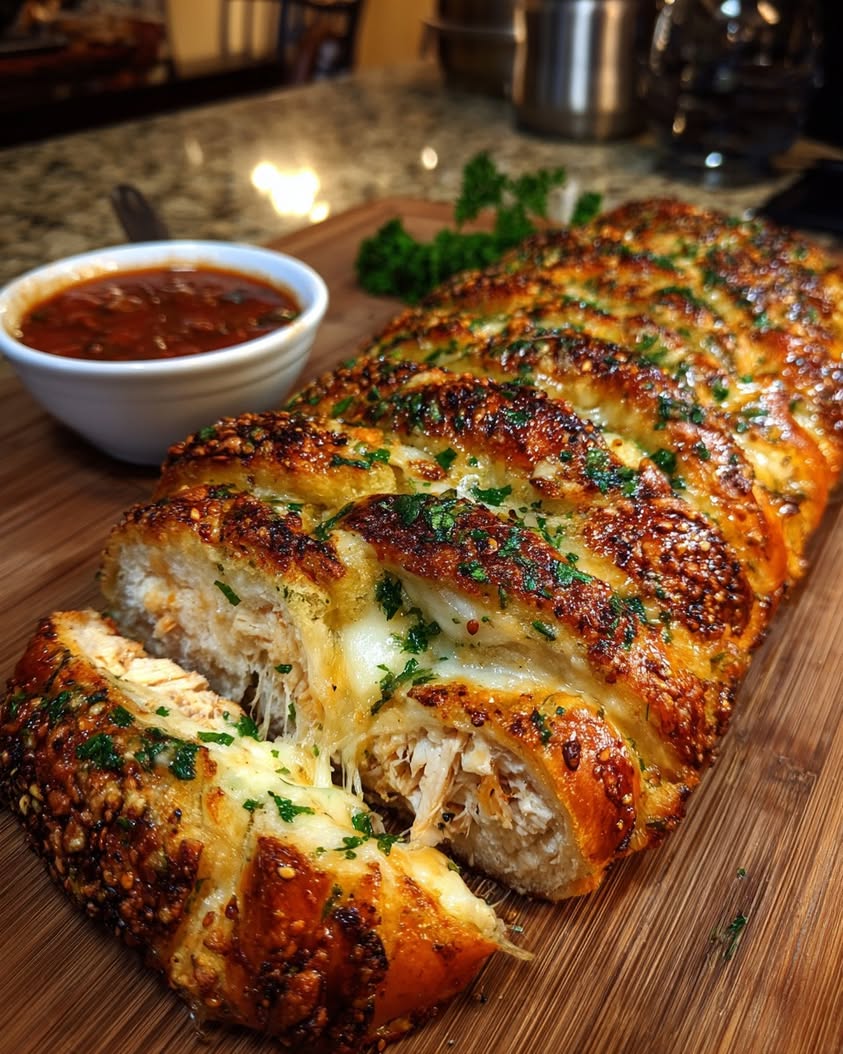
Chicken & Cheese Braided Bread: The Ultimate Savory Pull-Apart Masterpiece
Imagine pulling apart a golden, buttery loaf of bread to reveal a steaming, cheesy, and savory chicken filling. This Chicken & Cheese Braided Bread recipe delivers exactly that experience. It is a stunning centerpiece for any meal, combining the comfort of homemade bread with the heartiness of a complete meal inside. The aroma alone, as it bakes, will have everyone gathering in the kitchen. Ultimately, this dish is a guaranteed crowd-pleaser.
This recipe transforms simple ingredients into something truly spectacular. The soft, enriched dough encases a flavorful mixture of tender chicken and gooey, melted cheese. Each slice offers the perfect ratio of fluffy bread to rich filling. Moreover, the beautiful braided presentation makes it look like you spent hours in the kitchen. In reality, the process is straightforward and incredibly rewarding. This Chicken & Cheese Braided Bread is perfect for a cozy family dinner, a game-day snack, or an impressive potluck contribution.
The magic of this Chicken & Cheese Braided Bread lies in its versatility. You can customize the filling with your favorite herbs, spices, and cheeses. For instance, add some cooked bacon or sautéed vegetables for extra flavor. The braiding technique is easier than it looks and creates that professional, bakery-worthy finish. Consequently, you will feel like a master baker when you pull this gorgeous loaf from the oven. Let us dive into how to create this unforgettable savory bread.
Quick Recipe Highlights
- Flavor Profile: This Chicken & Cheese Braided Bread boasts a rich, savory flavor. The chicken filling is seasoned with herbs and garlic, while the cheese adds a creamy, tangy note. The buttery, slightly sweet dough perfectly balances the savory interior.
- Texture: You will experience a wonderful contrast in textures. The exterior bakes to a golden, slightly crisp crust. Inside, the bread remains incredibly soft and fluffy, surrounding the tender, juicy chicken and the pockets of molten, stretchy cheese.
- Aroma: As it bakes, the kitchen fills with the irresistible scent of baking bread, roasted garlic, and melting cheese. The herbal notes from the seasoning create a warm, inviting fragrance that promises a delicious meal.
- Visual Appeal: The braided design is the star of the show. The golden-brown, glossy crust, often sprinkled with seeds, looks artisan-made. When you slice or pull it apart, the reveal of the cheesy chicken filling is always met with delight.
- Skill Level Needed: This recipe is ideal for confident beginners or intermediate home cooks. You need basic kneading skills and patience with yeast dough. The braiding technique is simple to learn and creates a stunning effect with minimal effort.
- Special Equipment: You only need standard kitchen tools: a mixing bowl, a rolling pin, a baking sheet, and parchment paper. A stand mixer with a dough hook makes kneading easier but is not essential. A sharp knife or pizza cutter is needed for cutting the braid strips.
Recipe Overview
- Difficulty Level: We rate this Chicken & Cheese Braided Bread as intermediate. The steps are clear, but success depends on handling yeast dough correctly. You must knead until the dough is smooth and elastic. Additionally, the braiding requires a bit of care but follows a simple, repeatable pattern. With attention to detail, any home cook can achieve fantastic results.
- Category: This dish brilliantly straddles multiple categories. It is a savory bread, a stuffed pastry, and a complete meal all in one. You can serve it as a hearty appetizer, a satisfying main course with a side salad, or a substantial snack. Its flexibility makes it a valuable recipe for any occasion.
- Cuisine: While braided breads have roots in many cultures, this Chicken & Cheese Braided Bread is a modern, fusion-style creation. It draws inspiration from Eastern European stuffed breads and American comfort food. The use of common, accessible ingredients gives it a universal, home-style appeal that fits any table.
- Cost: This recipe is very cost-effective, especially if you use leftover cooked chicken or rotisserie chicken. The dough ingredients are pantry staples like flour, yeast, and milk. Cheese and chicken are the primary costs. Overall, you can feed a family of six for a fraction of the cost of a restaurant meal.
- Season: This comforting Chicken & Cheese Braided Bread is perfect for cooler weather. It is ideal for fall and winter when warm, hearty foods are most desired. However, its appeal is year-round for picnics or casual summer dinners. It is especially popular during holidays and football season.
- Occasion: This loaf is incredibly versatile for entertaining. It is perfect for casual gatherings, potlucks, and game-day parties. Furthermore, it makes a wonderful centerpiece for a weekend family dinner. You can even prepare it for a special brunch alongside eggs and fresh fruit.
Why You’ll Love This Recipe
First and foremost, the taste and texture of this Chicken & Cheese Braided Bread are utterly irresistible. The combination of soft, pillowy bread with a savory, cheesy chicken filling is pure comfort food magic. Each bite delivers a satisfying mix of flavors and a delightful contrast between the tender interior and the golden crust. The cheese pulls apart in long, gooey strings, making it as fun to eat as it is delicious. This sensory experience guarantees that this recipe will become a repeated favorite in your home.
From a convenience standpoint, this recipe offers significant benefits. You can use pre-cooked chicken, such as leftovers from a roast or a store-bought rotisserie chicken, to save time. The dough comes together quickly, and the assembly, while impressive-looking, is methodical and simple. Additionally, the entire dish bakes on one sheet pan, minimizing cleanup. This Chicken & Cheese Braided Bread is a complete meal in one handheld package, eliminating the need for multiple side dishes on busy nights.
Nutritionally, this dish provides a good balance of protein, carbohydrates, and fats. The chicken is an excellent source of lean protein, while the cheese adds calcium and flavor. By making the dough yourself, you control the ingredients, avoiding the preservatives and excess sodium found in many store-bought stuffed breads. You can easily boost the nutrition by adding finely chopped spinach, broccoli, or peppers to the filling.
The social and entertaining value of this loaf cannot be overstated. It is a true showstopper that encourages sharing and interaction. Placing a braided bread in the center of the table and letting everyone pull apart their piece creates a warm, communal dining experience. It is a fantastic conversation starter and always receives compliments. For parties, you can make smaller, individual braided rolls for easy serving.
Finally, this Chicken & Cheese Braided Bread is remarkably cost-effective and accessible. The ingredients are common and affordable. It stretches a small amount of chicken into a meal that feeds a crowd. Compared to ordering takeout or buying specialty bakery items, making this at home saves money while delivering superior flavor and freshness. It is a brilliant way to turn simple pantry items into a gourmet-feeling meal.
Historical Background and Cultural Significance
The concept of stuffing bread or pastry with meat and cheese is ancient and widespread. Many cultures have their own versions, from Eastern European piroshki and Czech kolaches to Middle Eastern fatayer and Indian naan breads with keema. This Chicken & Cheese Braided Bread is a modern descendant of these traditions. It specifically draws from the European technique of braiding enriched dough, often seen in holiday breads like challah or vasilopita. The innovation lies in transforming a sweet braided bread into a savory, meal-worthy centerpiece.
Braided breads themselves hold deep cultural and often religious significance. In Jewish tradition, challah is a braided bread eaten on the Sabbath and holidays. Similarly, many cultures use braiding to symbolize unity, love, or the intertwining of life’s elements. While this Chicken & Cheese Braided Bread is a secular, everyday recipe, it unconsciously taps into that rich history of bread as a communal, celebratory food. The act of braiding dough feels special and ritualistic, adding to the dish’s overall appeal.
The recipe has evolved significantly with the availability of ingredients and modern kitchen conveniences. Historically, such a dish would require laborious preparation of the chicken and hand-kneading of dough for extended periods. Today, using quick-rise yeast, a stand mixer, and pre-cooked chicken streamlines the process. The addition of popular melting cheeses like mozzarella and cheddar is a modern touch, catering to contemporary palates that love that iconic “cheese pull.” This evolution makes a traditionally time-consuming dish accessible for weeknight cooking.
Regional variations are endless, which is part of the recipe’s charm. In the American South, you might find a version with barbecue chicken and pepper jack cheese. A Mediterranean variation could include spinach, feta, and olives with the chicken. Some cooks add a layer of pesto or sun-dried tomato paste under the filling. This adaptability is a testament to the foundational soundness of the concept: a soft dough plus a savory filling always equals deliciousness. Your Chicken & Cheese Braided Bread can become a canvas for your own culinary heritage and preferences.
Ingredient Deep Dive
Bread Flour: Bread flour is the ideal choice for this Chicken & Cheese Braided Bread because of its higher protein content (12-14%). This protein, primarily gluten, forms a strong, elastic network when kneaded. Consequently, the dough can trap the gases produced by the yeast, leading to a better rise and a chewier, loftier crumb. It provides the structural integrity needed to hold the heavy chicken and cheese filling without tearing or becoming soggy. If you only have all-purpose flour, you can use it, but the bread may be slightly less robust.
Cooked Chicken: Using pre-cooked chicken is the ultimate time-saver. You can use shredded rotisserie chicken, leftover roasted or grilled chicken, or even boiled chicken breast. The key is to ensure the chicken is well-seasoned and moist. For maximum flavor, toss the shredded chicken with a bit of the seasoning mix (garlic powder, onion powder, herbs) before adding it to the filling. This step ensures every bite of your Chicken & Cheese Braided Bread is flavorful.
Mozzarella Cheese: Mozzarella is chosen for its legendary melting qualities and mild, milky flavor. It creates the iconic, stretchy “cheese pull” that makes this dish so visually appealing and fun to eat. Low-moisture, part-skim mozzarella works best as it melts beautifully without releasing too much water, which could make the dough soggy. For a more complex flavor, mix mozzarella with another melty cheese like Monterey Jack or Gouda.
Cheddar Cheese: Sharp cheddar cheese provides a punch of tangy, robust flavor that complements the mild chicken and mozzarella. Its fat content enriches the filling, and while it melts well, it also adds a bit of body. Using a block of cheddar that you grate yourself is crucial. Pre-shredded cheese contains anti-caking agents like cellulose, which can prevent smooth melting and result in a grainy texture in your Chicken & Cheese Braided Bread.
Fresh Herbs (Parsley/Dill): Fresh herbs are not just a garnish; they are a vital flavor component. Adding fresh parsley or dill to the filling introduces a bright, grassy note that cuts through the richness of the cheese and butter. Herbs added after baking, as a garnish, provide a fresh aroma and a pop of color. They transform the dish from simply hearty to restaurant-quality. Do not skip them if possible.
Common Mistakes to Avoid
- Using Cold Liquid for the Yeast: Adding milk or water that is too hot (above 110°F) will kill the yeast, preventing the dough from rising. Conversely, liquid that is too cold will not activate the yeast. Always use a thermometer to ensure the liquid is just warm to the touch, around 105-110°F.
- Not Kneading the Dough Enough: Under-kneaded dough will be slack, sticky, and difficult to roll out. It will also not have the strength to rise properly or support the filling. Knead until the dough is smooth, elastic, and passes the “windowpane test” – you can stretch a small piece thin enough to see light through it without it tearing.
- Overfilling the Bread: It is tempting to pack in as much chicken and cheese as possible. However, an overstuffed loaf is likely to burst open during baking, leaking filling onto the pan. Furthermore, it makes braiding difficult. Use the recommended amount and spread it evenly, leaving a clear border.
- Skipping the Egg Wash: The egg wash (beaten egg brushed on the dough before baking) is essential. It gives the Chicken & Cheese Braided Bread its beautiful, deep golden-brown, glossy crust. Without it, the loaf will look pale and dull. For extra color and crunch, sprinkle sesame seeds or everything bagel seasoning on the egg wash.
- Cutting the Braid Strips Too Thick or Too Thin: If the strips you cut along the sides of the dough are too thick, they will be hard to braid and may not cook through evenly. If they are too thin, they may tear or burn. Aim for strips about 1-inch wide for the best balance of structure and aesthetics.
- Not Sealing the Ends Properly: After braiding, you must firmly pinch the ends of the loaf together and tuck them under. This seals the filling inside and gives the loaf a neat, finished shape. Loose ends can unravel during baking, causing the filling to spill out.
- Baking on a Cold Pan: Placing your shaped loaf on a cold baking sheet can slow down the initial oven spring (the final rapid rise). For a better rise, you can preheat your baking sheet in the oven for a few minutes before carefully transferring the parchment paper with the loaf onto it.
- Slicing Immediately After Baking: The cheese filling will be molten lava-hot straight from the oven. Let the Chicken & Cheese Braided Bread rest for at least 15-20 minutes before slicing. This allows the cheese to set slightly, making for cleaner cuts, and prevents burns. The bread will also finish cooking from residual heat.
Essential Techniques
Kneading Yeast Dough: Proper kneading develops the gluten network, which is the skeleton of your bread. For this Chicken & Cheese Braided Bread, knead by hand for 8-10 minutes or with a stand mixer fitted with a dough hook for 5-7 minutes. The dough is ready when it transforms from shaggy and sticky to smooth, elastic, and slightly tacky. It should spring back slowly when you poke it. This technique ensures a light, airy crumb that can hold the filling.
The First Rise (Bulk Fermentation): This is when the yeast feeds on the sugars and produces gas, causing the dough to double in size. Place the kneaded dough in a lightly oiled bowl, turn to coat, and cover with plastic wrap or a damp towel. Let it rise in a warm, draft-free spot. The time can vary based on room temperature. Do not rush this step; a full rise develops flavor and texture. The dough is ready when it does not spring back after a gentle finger poke.
Rolling the Dough to an Even Rectangle: After the first rise, gently punch down the dough to release large air bubbles. On a lightly floured surface, roll it into a rectangle roughly 10×14 inches. Aim for even thickness to ensure uniform cooking. A tapered or uneven rectangle will result in some parts of the braid being doughy or overcooked. This step creates the canvas for your filling and braid.
Creating and Executing the Braid: This is the signature technique. After adding the filling down the center third of the rectangle, use a sharp knife or pizza cutter to make even, angled cuts along the sides. Fold the top and bottom flaps over the filling first. Then, alternately cross the side strips over the center, left over right, right over left, like lacing shoes. The strips will naturally stretch and cover the filling. The final result is a beautiful, woven pattern that seals in the goodness.
Pro Tips for Perfect Chicken & Cheese Braided Bread
- For an extra-flavorful dough, replace the water in the recipe with the liquid from cooking your chicken or use a light chicken broth. This adds a subtle savory depth to the bread itself.
- If your kitchen is cool, create a warm proofing environment. Place the bowl of dough in an oven with the light on (but the heat off) or on top of a preheating dryer. A consistent warm temperature is key for yeast activity.
- Chill the shaped braid on the baking sheet for 15 minutes before applying the egg wash and baking. This brief chill helps the butter in the dough firm up, leading to better oven spring and a more defined braid pattern.
- For a super-glossy, dark crust, do a double egg wash. Brush the loaf lightly with egg wash after shaping, let it sit for 10 minutes, then apply a second coat just before it goes in the oven.
- Place a small, oven-safe dish of water on the bottom rack while baking. The steam created helps keep the crust soft initially, allowing the bread to expand more before setting, resulting in a lighter loaf.
- To test for doneness beyond color, use an instant-read thermometer. Insert it into the thickest part of the bread (avoiding the filling if possible). The internal temperature should read 190-200°F, indicating the dough is fully baked.
- If the top is browning too quickly but the inside needs more time, loosely tent the loaf with aluminum foil for the last 5-10 minutes of baking. This prevents burning while the center finishes cooking.
Variations and Adaptations
Regional Variations: Take your Chicken & Cheese Braided Bread on a world tour. For a Tex-Mex twist, mix the chicken with taco seasoning, use a blend of pepper jack and cheddar, and add a layer of black beans and corn. A Greek version could feature chicken seasoned with oregano and lemon, along with spinach, kalamata olives, and feta cheese. The basic method remains the same, but the flavor profile completely transforms.
Seasonal Adaptations: Embrace seasonal produce. In spring, add asparagus tips and fresh peas to the filling with a lemon-herb chicken. For summer, use grilled chicken and add roasted red peppers and zucchini. In autumn, incorporate sautéed mushrooms and sage. These additions not only add flavor and nutrition but also make the recipe feel fresh and timely throughout the year.
Dietary Modifications: This recipe is highly adaptable. For a gluten-free Chicken & Cheese Braided Bread, use a high-quality 1:1 gluten-free flour blend and add 1 teaspoon of xanthan gum if the blend does not contain it. The dough may be more delicate to handle. For a dairy-free version, use plant-based milk and butter, and choose a melty vegan cheese alternative. The braiding technique works with all adaptations.
Flavor Variations: Experiment with different sauce bases. Spread a thin layer of pesto, sun-dried tomato paste, buffalo sauce, or barbecue sauce over the dough rectangle before adding the chicken and cheese. This adds an instant flavor bomb and moisture. You can also mix different cheeses like smoked gouda, havarti, or gruyere for more complex, adult-oriented flavors.
Texture Modifications: For a crispier crust, brush the loaf with melted butter instead of egg wash. For a softer, sandwich-style bread, bake it in a loaf pan instead of free-form on a sheet. To add crunch, sprinkle everything bagel seasoning, garlic crouton pieces, or crushed pretzels on top with the egg wash.
Presentation Alternatives: Instead of one large braid, divide the dough and filling to make two smaller loaves or even six individual braided rolls, perfect for portion control or parties. You can also shape it into a wreath by forming the filled rectangle into a circle before cutting and braiding, then pinching the ends together.
Serving and Presentation Guide
Plating Techniques: Present your Chicken & Cheese Braided Bread as the star it is. Transfer the baked and slightly cooled loaf to a large wooden cutting board or a rustic platter. Place a sharp serrated bread knife alongside it. For a family-style meal, let everyone pull apart their desired piece. For a more formal presentation, slice it into portions and arrange them slightly fanned out on the platter, showing off the beautiful cross-section.
Garnishing Ideas: A final garnish adds freshness and color. A generous sprinkle of chopped fresh parsley, chives, or dill is classic. For a touch of luxury, drizzle a little high-quality olive oil or truffle oil over the top. A light dusting of flaky sea salt or smoked paprika just before serving enhances both flavor and visual appeal.
Traditional Accompaniments: As a main course, this hearty bread pairs beautifully with lighter sides that balance its richness. A simple green salad with a vinaigrette dressing is perfect. Other great options include a chilled pasta salad, roasted vegetables like broccoli or carrots, or a bowl of tomato soup for dipping. These sides complete the meal without competing with the main attraction.
Modern Serving Suggestions: For a party, slice the braided bread into smaller, bite-sized pieces and serve them on a tiered stand with other appetizers. Offer small bowls of complementary dips on the side, such as marinara sauce, ranch dressing, or a garlic aioli. This transforms it from a meal into a sophisticated party snack.
Temperature Considerations: This bread is best served warm, when the cheese is still soft and gooey. If it has cooled completely, reheat individual slices in a toaster oven or air fryer for a few minutes to re-crisp the crust and melt the cheese. Avoid the microwave, as it will make the bread soggy.
Portion Control Tips: A standard 10-inch loaf comfortably serves 6 as a main course. If serving as an appetizer alongside other foods, it can stretch to 8-10 people. For individual rolls, plan on one per person for an appetizer or two per person for a main. The rich, filling nature of the dish means people are often satisfied with smaller portions than they might expect.
Wine and Beverage Pairing
Wine Pairings: The rich, savory, and cheesy profile of Chicken & Cheese Braided Bread calls for wines with good acidity to cut through the fat. A crisp, unoaked Chardonnay or a French Chablis works wonderfully. For red wine lovers, a medium-bodied Pinot Noir with its bright red fruit and earthy notes is an excellent match. Alternatively, a dry Rosé offers the best of both worlds, with enough body and acidity to complement every element of the dish.
Non-Alcoholic Alternatives: Sparkling water with a squeeze of lemon or lime provides a clean, palate-cleansing effervescence. For something more flavorful, try a chilled ginger beer, which has a spicy kick that contrasts the richness. Iced herbal tea, like mint or lemon verbena, is another refreshing option. These beverages enhance the meal without overpowering the delicate flavors of the bread and filling.
Coffee/Tea Pairings: This dish is also fantastic for brunch. Pair it with a robust, medium-roast coffee; the bitterness balances the savory cheese and buttery dough. A black tea like English Breakfast or Earl Grey also pairs nicely, especially if served with a slice of lemon. The tannins in the tea interact pleasantly with the protein and fat in the chicken and cheese.
Temperature Considerations: Always serve white wines and sparkling beverages well-chilled, around 45-50°F. Red wines should be served slightly cooler than room temperature, around 55-60°F, to keep the alcohol from tasting too hot against the warm bread. Non-alcoholic sparklers and iced teas should be very cold to provide a refreshing contrast.
Serving Suggestions: Offer a variety of beverages to cater to different preferences. Place a bottle of chilled white wine and a pitcher of sparkling water with citrus slices on the table. For a casual gathering, a selection of craft beers, like a pale ale or a kölsch, can also be a great pairing, as their carbonation and hop character work well with the savory flavors.
Storage and Shelf Life
Storage Methods: Once completely cooled to room temperature, store any leftover Chicken & Cheese Braided Bread in an airtight container or tightly wrapped in aluminum foil. Do not store it in plastic wrap while still warm, as this will trap steam and make the crust soggy. Properly stored, it will keep at room temperature for 1-2 days. For longer storage, refrigeration or freezing is necessary.
Temperature Requirements: For short-term storage (1-2 days), a cool, dry pantry or countertop is fine. For storage up to 4-5 days, refrigeration is required due to the dairy and meat in the filling. The cold will cause the bread to stale faster, so reheating is essential. For long-term storage, freezing is the best option to preserve texture and flavor.
Container Recommendations: Use a bread box or a large, lidded container for room-temperature storage. For the refrigerator, an airtight container is crucial to prevent the bread from absorbing other odors. For freezing, wrap the loaf or individual slices first in plastic wrap, then in aluminum foil or place them in a heavy-duty freezer bag, pressing out all the air.
Signs of Spoilage: Discard the bread if you notice any mold growth, which may appear as fuzzy spots in green, white, or black. An off or sour smell is another clear indicator of spoilage. If the filling was not fully cooked or the bread was left at room temperature for too long, bacterial growth is a risk. When in doubt, throw it out.
Reheating Instructions: To restore the fresh-baked quality, reheat slices in a toaster oven or conventional oven at 350°F for 5-10 minutes until warm and the crust re-crisps. An air fryer at 320°F for 3-4 minutes works brilliantly. Avoid the microwave, as it will make the bread tough and the cheese rubbery. Reheat only the amount you plan to eat immediately.
Freezing Guidelines: This bread freezes exceptionally well. Freeze the whole, cooled loaf or pre-sliced portions. Properly wrapped, it will keep for up to 3 months. Thaw overnight in the refrigerator. Then, reheat using the oven or toaster oven methods above. You can also reheat frozen slices directly in the oven, adding a few extra minutes to the heating time.
Make Ahead Strategies
Prep Timeline: You can break this Chicken & Cheese Braided Bread recipe into stages over two days. On Day 1, prepare the dough, let it go through its first rise, then punch it down, wrap it tightly in plastic, and refrigerate overnight. This slow, cold fermentation actually develops more flavor. Also, cook and shred your chicken, and grate your cheeses. Store the filling components separately in the fridge.
Storage Between Steps: The refrigerated dough will be firm. The next day, remove it from the fridge and let it sit at room temperature for about 30-60 minutes to take the chill off before rolling. Keep the shredded chicken and cheese in sealed containers. This staged approach turns a 55-minute active project into two shorter, more manageable sessions.
Quality Impact Assessment: Making the dough ahead does not compromise quality; it enhances it. The slow yeast activity in the fridge creates complex flavors. Assembling the bread with cold filling on cold dough can actually make it easier to handle. The final rise might take a bit longer because everything starts cold, but the end result is often superior in taste and texture.
Assembly Tips: When ready to assemble, roll out the chilled dough on a floured surface. It may be less sticky and easier to work with. Assemble the loaf with your pre-prepared filling. Because the dough is cold, you have more time to braid neatly without the dough becoming too soft or over-proofing.
Reheating Guidelines: If you fully assemble and bake the bread ahead of time, let it cool completely, then store as directed. Reheat the entire loaf, wrapped in foil, in a 325°F oven for 15-20 minutes until warmed through. For the last 5 minutes, open the foil to re-crisp the crust. This is perfect for entertaining, as the hard work is done before guests arrive.
Fresh Element Additions: If making ahead, add any delicate fresh herbs (like parsley or dill) as a garnish after reheating, not before storing. This ensures they retain their bright color and fresh flavor. You can also apply a fresh sprinkle of flaky salt after reheating to revive the seasoning.
Scaling Instructions
Halving the Recipe: To make a smaller loaf, simply divide all ingredient quantities by two. The dough will be easier to handle and will require less rising time—likely 30-45 minutes for the first rise. Roll it into a smaller rectangle, about 7×10 inches. The baking time may reduce by 5-7 minutes, so start checking for doneness early. This is perfect for a couple or a small family.
Doubling or Tripling: Doubling is straightforward for the filling. For the dough, it is best to make two separate batches rather than one enormous one, as most stand mixers cannot handle that volume effectively, and hand-kneading would be very laborious. Make the dough batches sequentially or simultaneously if you have two bowls. You can bake multiple loaves on separate baking sheets, rotating them in the oven halfway through for even baking.
Equipment Adjustments: When scaling up, ensure you have enough baking sheets and oven space. If baking multiple loaves at once, use the upper and lower racks and switch their positions midway through baking. For a single, double-sized loaf, you would need a very large baking sheet and may need to adjust braid strip lengths, but making two separate loaves is generally more reliable.
Timing Modifications: Dough rising time is not linear when scaling. A double batch of dough in one bowl may take longer to rise than two single batches in separate bowls because the mass is denser. Watch the dough, not the clock. The bake time for individual loaves remains roughly the same whether you bake one or four, as long as they are the same size and have proper oven air circulation.
Storage Considerations: If you make multiple loaves, consider freezing one or two unbaked. After shaping and the second rise, instead of baking, wrap the loaf tightly in plastic and freeze. On baking day, thaw in the refrigerator overnight, then let it come to room temperature, apply egg wash, and bake as directed, adding a few extra minutes. This gives you fresh-baked bread on demand.
Nutritional Deep Dive
Macro Breakdown: A typical serving of this Chicken & Cheese Braided Bread provides a balanced mix of macronutrients. The bread dough contributes complex carbohydrates for energy. The chicken is an excellent source of lean protein, essential for muscle repair and satiety. The cheese and butter in the dough provide fats, which aid in nutrient absorption and add flavor. This combination makes for a satisfying meal that provides sustained energy.
Micronutrient Analysis: Beyond macros, this dish offers valuable micronutrients. Chicken provides B vitamins, particularly B6 and niacin, which are crucial for energy metabolism. Cheese is rich in calcium and phosphorus for bone health, and vitamin B12. Using whole milk in the dough adds vitamin D. If you add vegetables like spinach or peppers to the filling, you significantly boost the vitamin A, C, and K content.
Health Benefits: When prepared with mindful ingredients, this can be part of a healthy diet. The protein helps keep you full, potentially preventing overeating. Homemade bread avoids the high fructose corn syrup and preservatives of store-bought versions. Using part-skim cheeses and lean chicken breast can lower the saturated fat content. The act of cooking from scratch also promotes mindfulness about food choices.
Dietary Considerations: This is not a low-calorie or low-carb dish. Individuals monitoring sodium intake should be mindful of the salt in the dough, seasoning, and cheese—using low-sodium cheese and broth can help. For those with lactose intolerance, lactose-free cheese and milk are suitable substitutes. The recipe is not inherently gluten-free, but with adaptations, it can be.
Portion Analysis: One-sixth of a standard loaf is a substantial serving. Pay attention to your hunger cues, as the rich nature of the bread can be very{“success”:true,”message”:”Recipe created successfully”,”post_id”:9063,”tasty_recipe_id”:9063,”shortcode”:”“}

I’m Billy, a classically trained culinary school graduate from The Culinary Institute of America with over 12 years in the restaurant industry and over 19 years of cooking experience.