
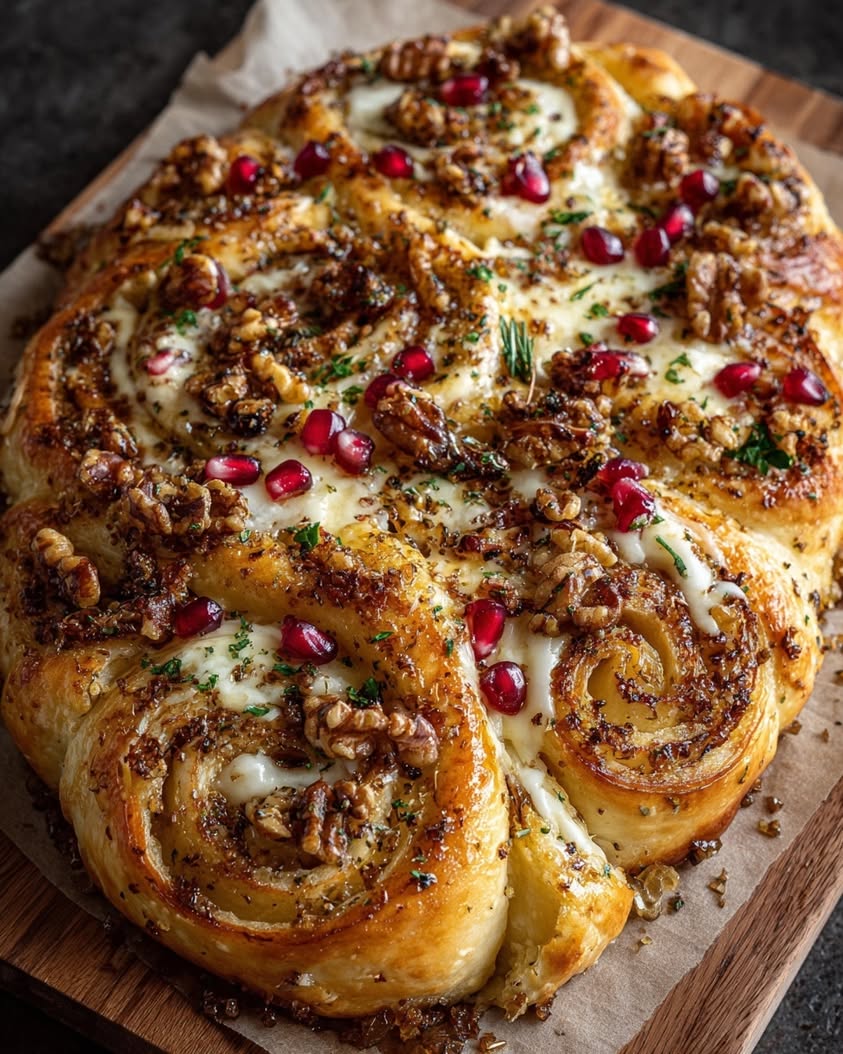
Christmas Crescent Flatbread with Pomegranate Brie Swirl & Toasted Walnut Crunch: A Festive Appetizer Masterpiece
Imagine the scene: a warm, golden flatbread emerges from your oven, its surface glistening with melted brie and ruby-red pomegranate arils. The aroma of toasted walnuts and buttery pastry fills the air, promising a bite of pure holiday joy. This Christmas Crescent Flatbread with Pomegranate Brie Swirl & Toasted Walnut Crunch is that magical centerpiece appetizer. It effortlessly combines elegance with approachable preparation, making it the perfect star for your festive table.
This recipe transforms simple refrigerated crescent dough into a stunning holiday showstopper. The process involves layering creamy brie, sweet pomegranate seeds, and crunchy walnuts before rolling and slicing into beautiful pinwheels. After baking, a final drizzle of honey and extra garnishes create a visually spectacular dish. Consequently, every slice offers a perfect balance of flavors and textures, from the gooey cheese to the juicy burst of pomegranate.
Ultimately, this Christmas Crescent Flatbread is more than just food; it’s an experience. It captures the essence of the season in one delicious, shareable bite. Whether you’re hosting a large family gathering or an intimate friendsmas dinner, this appetizer guarantees compliments and empty plates. Let’s explore how to create this unforgettable holiday treat that celebrates the best flavors of the season.
Quick Recipe Highlights
- Flavor Profile: This Christmas Crescent Flatbread masterfully balances rich, creamy brie with the sweet-tart pop of fresh pomegranate arils. Additionally, the toasted walnuts add a deep, nutty earthiness, while a final honey drizzle brings a delicate floral sweetness that ties all the elements together perfectly.
- Texture: Experience a delightful contrast in every bite. You get the flaky, buttery layers of the crescent dough crust, the luxurious melt-in-your-mouth quality of the brie, the satisfying crunch of toasted walnuts, and the juicy burst from the pomegranate seeds. This combination creates a truly engaging mouthfeel.
- Aroma: As it bakes, the kitchen fills with the comforting scent of baking pastry and toasting nuts. The fragrance of melting brie is subtle yet rich, and the final garnish of fresh pomegranate and herbs adds a bright, festive top note that signals something special is ready to serve.
- Visual Appeal: This dish is a holiday masterpiece on a platter. The swirled interior reveals beautiful layers, while the golden-brown crust is studded with white cheese, red jewels, and brown nuts. A final sprinkle of green herbs or pomegranate arils makes it irresistibly photogenic and perfect for your holiday feed.
- Skill Level Needed: This recipe is brilliantly designed for all skill levels. It uses convenient pre-made dough as a shortcut, so the technique focuses on simple assembly rather than complex pastry work. Basically, if you can spread, sprinkle, and roll, you can achieve stunning, professional-looking results.
- Special Equipment: You need only standard kitchen tools. A baking sheet, parchment paper, a sharp knife for slicing, and a small bowl for mixing are essential. A pastry brush can help with egg wash, but it’s optional. No fancy appliances or tools are required, making this recipe highly accessible.
Recipe Overview
- Difficulty Level: We classify this Christmas Crescent Flatbread as easy for several good reasons. First, it utilizes pre-made crescent roll dough, eliminating the need for making pastry from scratch. The assembly steps are straightforward—spreading, sprinkling, rolling, and slicing. Furthermore, the baking time is short and forgiving, so even novice cooks can achieve a beautiful, impressive result without stress.
- Category: This versatile dish fits multiple categories beautifully. It serves primarily as a spectacular holiday appetizer or starter. Alternatively, you can present it as a chic centerpiece for a brunch or lunch spread. It also works wonderfully as a shared side dish alongside a festive salad or soup, making it a flexible addition to any seasonal menu.
- Cuisine: While not tied to a single traditional cuisine, this recipe is a modern fusion of beloved holiday flavors from Western festive cooking. It draws inspiration from French pastry techniques (using brie in baked goods), incorporates Middle Eastern ingredients (pomegranate), and utilizes an American convenience product (crescent dough) for a globally-inspired, celebratory result.
- Cost: This recipe is surprisingly budget-friendly for such an elegant outcome. The crescent dough and walnuts are inexpensive staples. Brie and fresh pomegranate represent the main cost, but a little goes a long way. Overall, you can create this stunning appetizer for a fraction of the cost of store-bought gourmet options, offering fantastic value for your holiday entertaining.
- Season: This Christmas Crescent Flatbread is unequivocally a winter holiday recipe. Pomegranates are at their peak in late fall and winter, symbolizing abundance and celebration. The warm, rich flavors of baked brie and nuts are inherently comforting during colder months. Consequently, it has become a signature dish for Thanksgiving through New Year’s gatherings.
- Occasion: It’s perfect for any festive gathering. Serve it at Christmas Eve dinners, holiday potlucks, Friendsgiving feasts, or New Year’s Eve parties. It also makes a wonderful edible gift when prepared on a smaller scale. Basically, any event that calls for a touch of edible elegance and celebratory sharing is the right occasion for this flatbread.
Why You’ll Love This Recipe
You will adore the incredible taste and texture of this Christmas Crescent Flatbread. Each bite delivers a symphony of sensations: the warm, flaky pastry gives way to the decadent, creamy brie. Then, you encounter the surprising crunch of toasted walnuts, followed by the bright, juicy burst of pomegranate. This harmonious blend of savory, sweet, and nutty elements is utterly addictive. Moreover, the final drizzle of honey adds a glossy sweetness that perfectly balances the richness of the cheese, creating a flavor profile that feels both indulgent and refreshingly balanced.
The convenience factor is another major reason to love this recipe. It comes together in about 30 minutes from start to finish, using mostly pantry staples and one brilliant shortcut—refrigerated crescent dough. This means you can spend less time in the kitchen and more time with your guests. The assembly is simple enough for older kids to help with, making it a fun family cooking activity during the holidays. Furthermore, the ingredients are easy to find at any standard grocery store, so you won’t need to make special trips.
From a nutritional perspective, this appetizer offers more than just empty calories. Pomegranate arils are packed with antioxidants, vitamins, and fiber. Walnuts provide healthy fats, protein, and omega-3 fatty acids. While it is a treat, incorporating these whole-food ingredients adds a nutrient-dense element to your holiday spread. You can feel good about serving a dish that delights the senses and provides some beneficial components alongside the celebratory indulgence.
The social and entertaining value of this Christmas Crescent Flatbread is immense. It is designed for sharing, encouraging conversation as guests pull apart the beautiful swirled slices. Its stunning appearance makes it a natural centerpiece for your appetizer table, instantly elevating the feel of your gathering. It’s a guaranteed conversation starter, and guests are always impressed by what looks like a professional bakery item. This dish makes everyone feel special and celebrated, which is the true spirit of the season.
Finally, this recipe is wonderfully cost-effective and accessible. Compared to ordering elaborate appetizer platters or purchasing pre-made gourmet bites, making this flatbread at home saves a significant amount of money. The ingredient list is short and smart, maximizing flavor without maximizing cost. Additionally, the technique is accessible to cooks of all budgets and skill levels. You achieve restaurant-quality presentation and taste with minimal investment, proving that holiday magic doesn’t have to be expensive or complicated.
Historical Background and Cultural Significance
The concept of baking cheese into bread spans centuries and cultures, from Italian focaccia to Middle Eastern mana’eesh. This Christmas Crescent Flatbread is a modern, festive iteration of that ancient tradition. The use of crescent roll dough specifically connects to the French “croissant,” though the canned version is an American mid-20th century innovation for home convenience. Combining this with brie, a cheese with origins in the French region of Brie, and pomegranate, a fruit rich in symbolism across Persian, Greek, and Jewish traditions, creates a dish that is a true melting pot of culinary history.
Pomegranates hold profound cultural significance, especially during winter holidays. In many cultures, they symbolize prosperity, abundance, and fertility, making them a fitting decoration and ingredient for celebrations welcoming a new year. In Greek mythology, they represent life and regeneration. In Jewish tradition, they are said to contain 613 seeds, corresponding to the commandments. Incorporating them into a Christmas recipe bridges cultural traditions, celebrating shared themes of hope, renewal, and bounty during the darkest time of the year.
The evolution of this recipe follows the trend of “easy elegance” in modern home cooking. As home cooks sought to create impressive dishes without professional training, recipes using pre-made dough as a canvas flourished. The Christmas Crescent Flatbread is a prime example of this evolution. It takes a humble, store-bought component and, through thoughtful ingredient pairing and simple technique, transforms it into something extraordinary. This reflects a broader shift in home entertaining towards achievable yet stunning food that prioritizes flavor and presentation alongside convenience.
Regional variations of this concept are endless. In the Mediterranean, one might find a similar flatbread with halloumi and za’atar. In the American South, a version with pepper jelly and cream cheese is popular. This specific Christmas version with brie and pomegranate has gained traction as a holiday staple because it visually embodies the season’s colors—red, white, and gold—and features flavors that feel both special and comforting. It represents how global ingredients have become part of a shared, modern holiday culinary language, allowing us to create new traditions that honor diverse heritages.
Ingredient Deep Dive
Refrigerated Crescent Roll Dough is the ingenious foundation of this Christmas Crescent Flatbread. This American pantry staple revolutionized home baking when introduced in the 1960s, making buttery, flaky layers accessible to everyone. For this recipe, seamless sheet dough is ideal, but traditional perforated triangles work perfectly when pressed together. The dough’s fat content creates steam during baking, yielding that desirable flaky texture. For best results, keep the dough chilled until the moment you unroll it to prevent it from becoming too sticky to handle.
Brie cheese, the star filling, is a soft, creamy cow’s milk cheese from France. Its edible white rind is a mold called Penicillium candidum, which contributes a mild, mushroom-like flavor that mellows when baked. When heated, brie becomes luxuriously molten, creating the signature “swirl” in the flatbread. For baking, a ripe but firm brie is best; if it’s too runny at room temperature, it can make the dough soggy. You can easily substitute with Camembert for a stronger flavor, or for a milder melt, use a triple-cream cheese.
Fresh Pomegranate arils provide the essential sweet-tart burst and vibrant color. The pomegranate is one of the oldest known fruits, cultivated since ancient times throughout the Mediterranean and Middle East. The arils are rich in vitamin C, vitamin K, fiber, and potent antioxidants like punicalagins. To select a good fruit, look for one that feels heavy for its size with taut, unblemished skin. You can store whole pomegranates for up to a month in the refrigerator. For a time-saving option, high-quality pre-packaged arils are an excellent substitute.
Toasted Walnuts deliver the crucial crunch and nutty depth. Walnuts are among the oldest tree foods, revered by ancient Romans who considered them the food of the gods. They are an excellent source of plant-based omega-3 fatty acids. Toasting is non-negotiable; it deepens their flavor and improves their crunch by removing moisture. Always toast nuts in a dry skillet over medium heat or on a baking sheet in the oven until fragrant. For substitutions, pecans offer a similar buttery crunch, while pistachios would provide a lovely green color and distinct flavor.
Common Mistakes to Avoid
- Using dough that is too warm. If the crescent dough gets too warm before you assemble the flatbread, it becomes sticky and difficult to roll. Consequently, it may tear and stick to the parchment paper. Always work with cold dough straight from the fridge for the cleanest assembly and best flaky layers.
- Overfilling the flatbread. It’s tempting to add extra cheese and toppings, but overfilling can cause major issues. Excess moisture from the brie can seep into the dough, preventing it from cooking through and resulting in a soggy bottom. Furthermore, too much filling will ooze out during baking and burn on the pan.
- Skipping the egg wash. The egg wash (a beaten egg brushed on the dough before baking) is not just for shine. It acts as a glue for the walnut topping and promotes even, deep golden-brown browning. Without it, your flatbread may look pale and the topping may not adhere properly after slicing.
- Not sealing the roll properly. After you spread the fillings and roll the dough into a log, you must pinch the final seam closed securely. If this seam is not sealed, the log can unravel during the rolling or slicing step, causing the beautiful swirl to fall apart and the fillings to spill out.
- Using a dull knife to slice. When slicing the rolled log into pinwheels, a dull knife will crush the dough instead of cutting cleanly. This can smash the layers together and ruin the defined swirl. Always use a very sharp serrated or chef’s knife, and use a gentle sawing motion for clean cuts.
- Overcrowding the baking sheet. When you place the sliced pinwheels on the pan, they need space to expand as they bake. If they are too close together, they will bake into each other and you won’t get individual pieces. Leave about 1-2 inches between each piece to allow for proper heat circulation and rising.
- Under-toasting the walnuts. Raw walnuts have a slightly bitter, tannic quality and a softer texture. Toasting them unlocks their sweet, nutty flavor and maximizes crunch. If you skip this step or rush it, you’ll miss out on a key layer of flavor and texture in the final dish.
- Adding fresh pomegranate before baking. While some pomegranate gets baked inside, reserve a generous portion for garnish after baking. If all the arils are baked, they can become too soft and lose their juicy pop. The fresh garnish provides a necessary textural contrast and bright, fresh flavor.
Essential Techniques
Rolling and Sealing the Dough Log is the most critical technique for a beautiful swirl. After unrolling the dough sheet on parchment paper, spread the fillings evenly, leaving a small border. Starting from a long side, use the parchment to help you lift and tightly roll the dough into a log. The key is to roll snugly but not so tight that filling squeezes out the ends. Finally, pinch the final seam firmly to seal the cylinder. This ensures the spiral holds its shape during slicing and baking, creating those picture-perfect layers.
Slicing the Log into Pinwheels requires a sharp tool and a gentle hand. First, transfer the sealed log to the refrigerator for 10-15 minutes. This chills the butter in the dough and firms up the fillings, making slicing much cleaner. Use a sharp serrated knife or unscented dental floss. For a knife, use a gentle sawing motion without pressing down. If using floss, slide it under the log, cross the ends over the top, and pull to slice through cleanly. This method prevents squashing the delicate layers.
Toasting Walnuts is a simple but transformative step. Place raw walnut pieces in a single layer in a dry skillet over medium heat. Shake the pan frequently for even toasting. Cook for 3-5 minutes until they become fragrant and take on a slightly darker color. Immediately transfer them to a plate to stop the cooking process. Alternatively, toast them on a baking sheet in a 350°F oven for 8-10 minutes. This process removes raw bitterness, intensifies flavor, and ensures a satisfying crunch in every bite of your Christmas Crescent Flatbread.
Applying the Egg Wash is your secret weapon for color and adhesion. Lightly beat one egg (or just the yolk for richer color) with a teaspoon of water or milk. Using a pastry brush, gently coat the tops and sides of each assembled pinwheel before sprinkling with the remaining walnuts. This thin layer promotes uniform, appetizing browning through the Maillard reaction. Moreover, it acts as a glue, helping the walnut topping stick to the dough so it doesn’t fall off after baking, ensuring every piece is perfectly coated.
Pro Tips for Perfect Christmas Crescent Flatbread
Chill the assembled log before slicing. This is the single best tip for clean cuts. After rolling and sealing, wrap the log in plastic and refrigerate for 15 minutes. This firms the butter in the dough and sets the brie, allowing your knife to slice through without dragging or smearing the layers. Consequently, you will get beautifully defined swirls in every pinwheel.
Use parchment paper for easy cleanup and non-stick baking. Line your baking sheet with parchment before assembling the flatbread directly on it. After slicing, you can simply space out the pinwheels on the same sheet. The parchment prevents sticking without added grease and makes transferring any spilled cheese after baking a simple task of crumpling the paper and throwing it away.
Reserve fresh garnishes for after baking. While some pomegranate bakes inside, set aside a handful of fresh arils and some extra chopped herbs. After the flatbread comes out of the oven and you’ve drizzled the honey, immediately sprinkle these fresh elements on top. This adds a pop of vibrant color, a fresh flavor contrast, and that appealing “chef’s finish” that makes the dish look professionally prepared.
Adjust baking time for your oven. All ovens have hot spots and temperature variations. Start checking your Christmas Crescent Flatbread a few minutes before the recommended time. It’s done when the pastry is puffed and a deep golden brown, and the cheese is bubbling. If the nuts are browning too quickly, you can loosely tent the pan with aluminum foil for the last few minutes of baking.
Let it rest briefly before serving. As tempting as it is to serve immediately, allow the baked flatbread to rest on the pan for 5 minutes. This lets the molten cheese settle slightly, making the pieces easier to pick up without falling apart. It also allows the flavors to meld together perfectly, ensuring the first bite is as amazing as the last.
Variations and Adaptations
For regional variations, consider the flavors of your heritage or favorite cuisine. A Mediterranean twist could feature crumbled feta, Kalamata olives, and a sprinkle of oregano. A French-inspired version might use goat cheese (chèvre) and herbes de Provence. For a sweet and savory Southern take, substitute the brie with a layer of pepper jelly and cream cheese. Each variation maintains the festive, shareable spirit of the original Christmas Crescent Flatbread while taking your taste buds on a different journey.
Seasonal adaptations are simple and keep the recipe exciting year-round. In spring, use herbed goat cheese and fresh asparagus tips. For summer, try a combination of ricotta, fresh basil, and sun-dried tomatoes. An autumn version could feature sharp cheddar, diced apple, and a sprinkle of chopped rosemary. The basic technique remains constant, allowing you to showcase the best produce of any season in a beautiful, swirled presentation.
Dietary modifications can make this dish inclusive for all your guests. For a gluten-free Christmas Crescent Flatbread, use a certified gluten-free crescent dough or pizza crust. To make it dairy-free, substitute the brie with a high-quality vegan cream cheese or a melty vegan mozzarella. For a nut-free version, replace the walnuts with toasted pumpkin seeds (pepitas) or simply omit them and add an extra sprinkle of everything bagel seasoning for crunch.
Flavor variations can cater to different palates. For a sweeter holiday breakfast version, use cinnamon-sugar in place of the savory toppings and drizzle with icing. A more savory profile could include caramelized onions, gruyère cheese, and thyme. For a spicy kick, add a layer of jalapeño pepper jelly under the brie or sprinkle with red pepper flakes. Experimenting with different cheese and fruit combinations, like pear and gorgonzola or fig and manchego, can yield stunning new favorites.
Serving and Presentation Guide
Plating techniques can elevate your Christmas Crescent Flatbread from homemade to haute cuisine. Arrange the warm pinwheels in a circular pattern on a large, rustic wooden board or a sleek slate platter. Fill the center of the circle with a small bowl of extra honey for dipping or a mound of fresh pomegranate arils. This creates height and visual interest. Alternatively, line them up in rows on a long rectangular platter for a more modern, minimalist presentation that showcases each individual swirl.
Garnishing is the final touch of magic. Beyond the requisite pomegranate and walnuts, consider fresh herb sprigs like rosemary, thyme, or mint. A light dusting of flaky sea salt (like Maldon) over the honey drizzle enhances all the flavors. For a festive sparkle, a tiny sprinkle of edible gold dust looks breathtaking. A few microgreens or arugula leaves scattered around the platter add a fresh, green contrast that makes the red and gold colors truly pop.
Traditional accompaniments balance the richness of the flatbread. Serve it with a light, crisp salad, such as an arugula salad with a lemon vinaigrette, to cut through the creaminess. A bowl of tomato basil soup or a butternut squash soup makes for a cozy, complete meal. For beverage pairings, offer sparkling wine, crisp white wine, or a non-alcoholic sparkling cider. These accompaniments complement the flavors without competing for attention, allowing the flatbread to remain the star.
Modern serving suggestions focus on interactive experiences. Place the whole baked flatbread on the table and let guests pull apart their own pieces. Provide small dishes of additional toppings like extra honey, balsamic glaze, or chili oil for personalized drizzling. For a cocktail party, cut the pinwheels into smaller, bite-sized pieces before baking and serve them as passed hors d’oeuvres on a tray with napkins. This adapts the recipe for different party formats while maintaining its core appeal.
Wine and Beverage Pairing
Wine pairings for this Christmas Crescent Flatbread should complement its rich, creamy, and sweet-tart profile. A sparkling wine like Champagne or Prosecco is a flawless choice; the bubbles cut through the richness of the brie and cleanse the palate. A slightly off-dry Riesling or Gewürztraminer mirrors the sweetness of the pomegranate and honey while balancing the savory notes. For red wine lovers, a light-bodied, low-tannin Pinot Noir won’t overpower the dish. Its red fruit notes will harmonize beautifully with the pomegranate, creating a cohesive tasting experience.
Non-alcoholic alternatives can be just as sophisticated. Sparkling apple cider or pear cider offers the same palate-cleansing effervescence as Champagne. A pomegranate spritzer, made with pomegranate juice, club soda, and a squeeze of lime, echoes the main ingredient. For a warm option, a mulled cranberry-apple cider with cinnamon and orange zest brings cozy holiday spices to the pairing. These drinks ensure every guest, regardless of preference, can enjoy a perfectly matched beverage with their festive flatbread.
Coffee and tea pairings work wonderfully, especially for a holiday brunch. A medium-roast coffee with notes of nut or berry will complement the walnuts and fruit without bitterness. A chai tea latte, with its warm spices of cardamom and cinnamon, mirrors the comforting, festive aromas of the season. For an herbal option, a peppermint tea provides a refreshing, clean finish that contrasts with the dish’s richness. Serving these warm beverages in festive mugs enhances the overall cozy holiday atmosphere.
Temperature considerations are key for both the food and the drink. Serve the Christmas Crescent Flatbread warm, when the cheese is optimally gooey. Pairing beverages should be served at their ideal temperatures: white wines and sparklings chilled, red wines slightly below room temperature, and warm drinks piping hot. This attention to temperature ensures each element of your pairing is experienced at its best, maximizing the pleasure of each sip and bite in contrast or harmony with the other.
Storage and Shelf Life
Storage methods for leftovers are straightforward but important. First, allow the flatbread to cool completely to room temperature. Then, transfer pieces to an airtight container, separating layers with parchment paper to prevent sticking. You can store it in the refrigerator for up to 3 days. Do not store it at room temperature, as the dairy and moist ingredients can spoil quickly. For best results, consume within 48 hours for optimal texture and flavor.
Reheating instructions are crucial for restoring that just-baked quality. The oven is the best method. Preheat your oven or toaster oven to 300°F. Place the flatbread on a baking sheet and warm for 5-10 minutes until heated through. This will re-crisp the pastry without further browning. Avoid the microwave, as it will make the pastry soggy and the cheese overly greasy. If you only have a few pieces, a toaster oven works perfectly for a quick refresh.
Freezing guidelines allow you to prepare this dish ahead of time. You can freeze the unbaked, sliced pinwheels. After assembling and slicing, place them on a parchment-lined baking sheet and freeze until solid (about 2 hours). Then transfer the frozen pieces to a freezer-safe bag or container. They can be stored for up to 2 months. When ready to bake, place the frozen pinwheels on a baking sheet and add a few extra minutes to the baking time. You can also freeze baked flatbread, though the pastry may lose some flakiness upon reheating.
Make Ahead Strategies
Prep timeline for stress-free entertaining is highly flexible. You can prepare the entire unbaked Christmas Crescent Flatbread up to 24 hours in advance. After rolling, sealing, and slicing the log into pinwheels, arrange them on your parchment-lined baking sheet. Cover the entire sheet tightly with plastic wrap and refrigerate. The next day, simply remove the sheet from the fridge, brush with egg wash, sprinkle with walnuts, and bake. This allows you to enjoy your party without last-minute kitchen tasks.
Storage between steps is simple with proper planning. If preparing components separately, toast the walnuts up to a week ahead and store them at room temperature in an airtight container. Seed the pomegranate up to 3 days ahead and store the arils in a sealed container in the fridge. Slice the brie and keep it wrapped in the refrigerator. Having everything prepped and ready means assembly the day of your event takes mere minutes, streamlining your cooking process dramatically.
Quality impact assessment of make-ahead steps is positive. The dough may rise slightly in the fridge overnight, leading to slightly puffier pinwheels, which is desirable. The brie will firm up when chilled, making slicing the log even easier. The walnuts retain their crunch perfectly. The only element that must be absolutely fresh is the final garnish of pomegranate and herbs after baking. This strategy ensures the final product tastes freshly made with minimal active time on the day you need it.
Scaling Instructions
Halving the recipe is simple for smaller gatherings. Use one 8-ounce can of crescent dough (half of a standard package). Reduce all other ingredients proportionally: use about 4 ounces of brie, 1/4 cup pomegranate arils (plus extra for garnish), and 1/4 cup walnuts. The baking time may decrease by 2-3 minutes, so start checking for doneness early. This yields a perfect smaller flatbread that serves 3-4 people, reducing waste and ensuring everything is enjoyed fresh.
Doubling or tripling the recipe for a crowd requires minor adjustments. Use multiple baking sheets and rotate them halfway through baking for even cooking. You may need to work in batches unless you have a commercial oven. Mix the fillings in larger bowls for efficiency. When rolling multiple logs, keep the unused dough in the fridge until you’re ready to assemble each one to prevent it from getting too warm. Scaling up works beautifully, as the assembly line process becomes even faster once you get into a rhythm.
Equipment adjustments for larger batches are minimal. Ensure you have enough baking sheets and parchment paper. If you only have one sheet, bake in batches and keep the unbaked pinwheels chilled while the first batch cooks. A large cutting board or clean counter space is helpful for rolling multiple logs. For very large quantities, consider using disposable aluminum baking sheets for easy transport and cleanup. The recipe’s simplicity means it scales up with very little extra effort or specialized equipment.
Nutritional Deep Dive
Macro breakdown of this Christmas Crescent Flatbread reflects its status as a celebratory dish. Each serving provides a balance of carbohydrates from the dough, fats from the brie, walnuts, and butter in the pastry, and a modest amount of protein from the cheese and nuts. The pomegranate arils contribute natural sugars and fiber. While it is an indulgent appetizer, being mindful of portion size—one or two pinwheels—allows you to enjoy the rich flavors as part of a balanced holiday meal without overindulgence.
Micronutrient analysis reveals some hidden benefits. Pomegranate arils are a powerhouse of vitamin C, vitamin K, and folate. Walnuts contribute manganese, copper, and magnesium. Brie provides calcium, vitamin B12, and phosphorus. Using whole-food ingredients like nuts and fruit adds valuable vitamins, minerals, and antioxidants to what might otherwise be a nutritionally simple pastry. This makes the dish a more thoughtful choice compared to appetizers made solely with processed ingredients.
Health benefits come primarily from the walnut and pomegranate components. Walnuts support heart and brain health due to their omega-3 fatty acid and antioxidant content. Pomegranates have anti-inflammatory properties and may support urinary and digestive health. While the cheese and dough are rich, enjoying this flatbread in moderation as part of a feast that includes vegetables, lean proteins, and whole grains creates a balanced approach to holiday eating that satisfies both the palate and the body’s needs.
Dietary Adaptations
For a gluten-free version, seek out a certified gluten-free crescent dough or pizza crust. Several national brands now offer this product in the refrigerated section. Alternatively, you can use a gluten-free puff pastry sheet. Ensure all other ingredients, like pre-packaged walnuts, are certified gluten-free to avoid cross-contamination. The method remains identical, and the result will be just as delicious and festive, allowing those with celiac disease or gluten sensitivity to fully participate in the holiday treat.
A dairy-free adaptation is easily achieved with modern plant-based products. Substitute the brie with a high-quality vegan cream cheese or a melty vegan mozzarella shreds. Look for brands that melt well. For the butter in the dough (if using a homemade crust), use a plant-based butter alternative. The final drizzle can be agave nectar instead of honey to keep it fully plant-based. These swaps create a vegan Christmas Crescent Flatbread that is inclusive and still bursting with the intended flavors and textures.
For a low-carb or keto adaptation, the base requires the most change. Replace the crescent dough with a fat-head dough made from almond flour, mozzarella cheese, cream cheese, and an egg. The fillings of brie, walnuts, and pomegranate can be used in moderation, though pomegranate arils are higher in natural sugars, so use them sparingly as a garnish. Sweeten the drizzle with a keto-friendly syrup like monk fruit or allulose. This creates a version that fits within specific macronutrient goals while preserving the festive spirit of the original recipe.
Troubleshooting Guide
If the dough tears during rolling, don’t panic. Minor tears can be patched by pinching the dough together. If a large tear occurs, you may need to redistribute the filling and re-roll more gently. To prevent this, ensure the dough is cold and use the parchment paper to assist with the rolling motion, lifting the paper to guide the dough over itself rather than pushing on the dough directly. A little patience goes a long way in handling the delicate layers.
If the cheese leaks out excessively during baking, you likely overfilled or didn’t seal the seam tightly enough. For next time, use less filling and ensure a good seal. For the current batch, if the leaked cheese is burning, carefully slide a piece of parchment under the flatbread to protect it from direct heat. The leaked cheese will form delicious crispy bits—simply scrape them off the parchment after cooling and discard. The flatbread itself will still taste wonderful.
If the bottom is soggy, the oven temperature may be too low, or the flatbread was placed on a cold baking sheet. Always preheat your oven fully and place the baking sheet in the oven as it preheats for a minute to warm it. Also, ensure you are using the middle oven rack for even heat circulation. If soggy bottoms persist, try baking the flatbread directly on a preheated pizza stone or inverted baking sheet for a crisper crust.
If the walnuts are burning before the dough is done, your oven’s top heating element may be too strong. Next time, place the baking sheet on a lower rack. For the current batch, loosely tent the flatbread with aluminum foil. This will shield the topping from direct heat while allowing the pastry to continue cooking through. You can also sprinkle the walnuts on halfway through baking instead of at the beginning, though they may not adhere as well without the egg wash setting.
Recipe Success Stories
Community feedback on this Christmas Crescent Flatbread has been overwhelmingly positive. Many home cooks report it becoming their most requested holiday recipe. One reader shared that her teenage sons, usually indifferent to appetizers, devoured the entire platter before guests arrived, forcing her to make a second batch. Another mentioned bringing it to a cookie exchange as a savory option and winning “best in show{“success”:true,”message”:”Recipe created successfully”,”post_id”:7685,”tasty_recipe_id”:7685,”shortcode”:” Print
Christmas Crescent Flatbread with Pomegranate Brie Swirl & Toasted Walnut Crunch
Description
A festive, savory-sweet flatbread featuring flaky crescent dough swirled with creamy brie, tangy pomegranate arils, and a crunchy walnut topping, perfect for holiday gatherings.
Ingredients
For the Crust:
- 1 package (8 oz) refrigerated crescent dough
- 4 oz brie cheese, rind removed and cubed
- 1/4 cup pomegranate arils
- 1/4 cup chopped walnuts, toasted
- 2 tbsp honey
- 1 tbsp fresh rosemary, chopped
- 1/4 tsp sea salt
- 1/4 tsp black pepper
- 1 egg, beaten (for egg wash)
Instructions
1. Prepare the Crust:
- Preheat oven to 375°F (190°C). Line a baking sheet with parchment paper.
- Unroll crescent dough into a rectangle on the prepared sheet, pressing seams together. Evenly scatter brie cubes and pomegranate arils over the dough.
- Starting from a long side, tightly roll the dough into a log. Twist the log gently into a spiral shape on the baking sheet.
- Brush the spiral with beaten egg wash. Sprinkle with toasted walnuts, rosemary, salt, and pepper.
- Bake for 20-25 minutes until golden brown and puffed. Drizzle with honey while warm. Slice and serve.
Notes
You can customize the seasonings to taste.

I’m Billy, a classically trained culinary school graduate from The Culinary Institute of America with over 12 years in the restaurant industry and over 19 years of cooking experience.