
Christmas Roasted Brussels Sprouts, Sweet Potato, Butternut Squash, Carrot & Beet Medley with Maple-Feta Crumble, Walnut: Your New Festive Side Dish Star
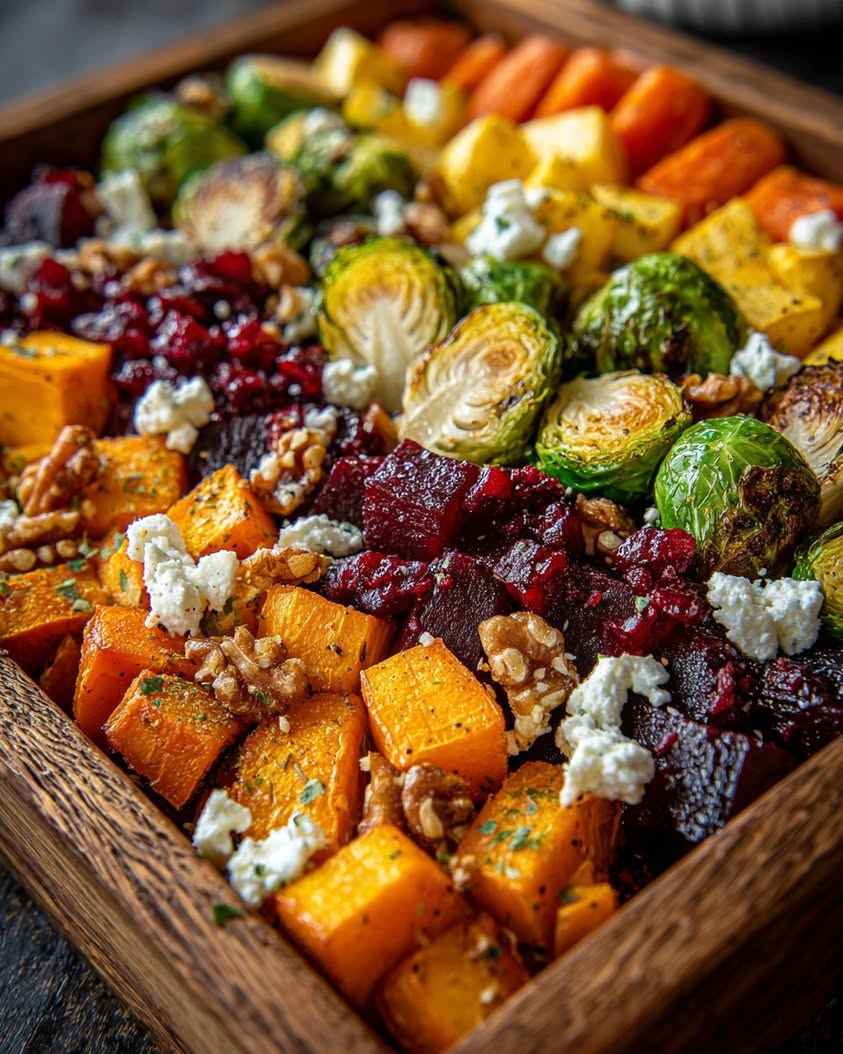
This Christmas Roasted Brussels Sprouts, Sweet Potato, Butternut Squash, Carrot & Beet Medley with Maple-Feta Crumble, Walnut is the ultimate holiday side dish. It transforms your entire table with a stunning mosaic of jewel-toned vegetables. Moreover, the sweet, savory, and tangy flavors create a symphony in every bite. Consequently, this dish will steal the spotlight from even the most perfectly cooked turkey or ham.
Imagine a sheet pan filled with caramelized, crispy-edged vegetables. Each forkful offers a delightful contrast of textures and tastes. The natural sugars in the sweet potato, carrot, and beet intensify during roasting. Meanwhile, the Brussels sprouts develop a wonderful nuttiness. Finally, a generous sprinkle of the irresistible maple-feta crumble adds a creamy, salty, and sweet finish that ties everything together beautifully.
This festive roasted winter vegetable medley with maple-feta crumble is more than just a recipe. It is a celebration of the season’s best produce. It is designed for busy hosts who want maximum flavor with minimal fuss. Ultimately, it delivers a healthy, vibrant, and absolutely delicious centerpiece for your holiday feast.
Quick Recipe Highlights
- Flavor Profile: This dish masterfully balances earthy roasted vegetables with a sweet and savory maple glaze. The tangy feta cheese and rich, toasty walnuts in the crumble provide a perfect counterpoint, creating a complex and satisfying taste experience.
- Texture: You get a fantastic mix of creamy sweet potato and butternut squash, tender-crisp carrots and Brussels sprouts, and soft, sweet beets. The walnut and feta crumble adds a crucial element of crunchy, crumbly texture on top.
- Aroma: As it roasts, your kitchen fills with the warm, comforting scents of caramelizing vegetables, fragrant rosemary, and sweet maple syrup. The aroma is unmistakably festive and utterly inviting.
- Visual Appeal: The medley boasts a stunning array of colors: deep green Brussels sprouts, orange sweet potatoes, golden butternut squash, bright orange carrots, and vibrant red beets. It is a visually spectacular addition to any holiday table.
- Skill Level Needed: This is a beginner-friendly recipe. The primary skills are simple vegetable chopping and tossing. There is no complicated technique, making it perfect for cooks of all levels during the busy holiday season.
- Special Equipment: You only need a few basic tools: a large cutting board, a sharp chef’s knife, two large rimmed baking sheets, and some mixing bowls. A good vegetable peeler is also helpful for the butternut squash and carrots.
Recipe Overview
- Difficulty Level: We rate this festive roasted winter vegetable medley as “Easy.” The steps are straightforward: chop, toss, roast, and assemble. There is no finicky timing or advanced culinary techniques required. The oven does most of the work for you. Consequently, even novice cooks can achieve impressive, restaurant-quality results.
- Category: This recipe falls squarely into the side dish category, specifically designed for holidays and special occasions. It can also serve as a hearty main course for a vegetarian holiday meal when paired with a protein like lentils or quinoa.
- Cuisine: The dish draws inspiration from modern American farm-to-table cuisine, emphasizing seasonal, roasted vegetables. The use of maple syrup nods to North American traditions, while the feta cheese adds a Mediterranean touch. It is a beautiful fusion that celebrates global flavors.
- Cost: This is a very cost-effective dish, especially when root vegetables are in season during the fall and winter. The most expensive items are often the feta cheese and walnuts. Overall, you can feed a crowd for a fraction of the cost of other elaborate holiday sides.
- Season: This recipe is perfect for late fall through winter. This is when Brussels sprouts, sweet potatoes, squash, carrots, and beets are at their peak of flavor and affordability. The warm, roasted nature of the dish is ideal for colder weather.
- Occasion: It is tailor-made for Christmas dinner, Thanksgiving, and any winter holiday gathering. It also works wonderfully for festive potlucks, Sunday family dinners, or as a special weekend meal prep option.
Why You’ll Love This Recipe
First and foremost, the taste and texture appeal is off the charts. Each vegetable contributes its unique flavor and mouthfeel, creating a party in your mouth. The caramelized edges offer a slight bitterness that perfectly balances the natural sweetness. Then, the salty, creamy feta and crunchy walnuts in the maple-feta crumble deliver the final, unforgettable flourish. Every single bite is a delightful adventure.
Furthermore, the convenience and preparation benefits are a major win for holiday cooks. You do most of the work upfront with simple chopping. After that, the oven takes over, freeing you to focus on other dishes or guests. Using two sheet pans ensures everything roasts evenly without steaming. This one-pan method also means less cleanup, which is always a blessing.
From a health perspective, the nutritional advantages are significant. This festive roasted winter vegetable medley is packed with vitamins, minerals, and fiber. Brussels sprouts and beets are nutritional powerhouses. Sweet potatoes and carrots are rich in beta-carotene. Butternut squash provides vitamin C. You are serving a side dish that is as nourishing as it is delicious.
Additionally, the social and entertaining value is immense. This dish is a true showstopper. Its vibrant colors and beautiful presentation make it the centerpiece of the table. It appeals to both vegetarians and meat-eaters alike, ensuring everyone has a spectacular side to enjoy. It sparks conversation and compliments, guaranteed.
Finally, the cost-effectiveness and accessibility make it a smart choice. Root vegetables are typically inexpensive, especially in season. You can often find pre-cut butternut squash to save time. The recipe is also very forgiving; you can adjust vegetable quantities based on what you have or what’s on sale. It is a luxurious-tasting dish that doesn’t require a luxurious budget.
Historical Background and Cultural Significance
The tradition of roasting root vegetables stretches back centuries across many cultures. Before modern refrigeration, these hardy vegetables were staples during the winter months because they stored well in cellars. Families would roast them with whatever fats and herbs were available, creating hearty, sustaining meals. Our modern festive roasted winter vegetable medley is a direct descendant of these practical, flavorful traditions.
In terms of cultural importance, the combination of specific vegetables often reflects local harvests. For instance, the inclusion of maple syrup is deeply rooted in North American, particularly Canadian, tradition. Indigenous peoples first harvested and used maple sap. European settlers later refined the process into syrup. Using it in a savory dish like this maple-feta crumble is a celebration of that regional ingredient.
The recipe has evolved significantly with global trade and modern culinary trends. Feta cheese, from Greece, and walnuts, cultivated worldwide, are now readily available. Their incorporation into a classic roasted vegetable dish shows how cuisine becomes fusion. Today’s home cook has the luxury of blending flavors from across the globe to create something new and exciting for holiday tables.
Regional variations of this concept are endless. In the Mediterranean, you might find roasted vegetables with olive oil, lemon, and oregano. In Northern Europe, they might use parsnips and turnips with caraway seeds. Our version, with its sweet maple and salty feta, is a distinctly New World take. It embraces the bounty of a North American winter harvest and adds contemporary, gourmet touches.
Ingredient Deep Dive
Let’s start with Brussels Sprouts. These miniature cabbages have a long history, believed to have been cultivated in ancient Rome but popularized in Brussels, Belgium, hence the name. They are packed with vitamins C and K, fiber, and antioxidants. Look for firm, bright green sprouts with tightly packed leaves. Store them unwashed in a plastic bag in the refrigerator’s crisper drawer. For a variation, you can substitute with broccolini or cauliflower florets.
Next, Sweet Potatoes are a New World native, central to diets in Central and South America for millennia. They are an excellent source of beta-carotene (which converts to vitamin A), vitamin C, and manganese. Choose firm potatoes without soft spots or wrinkles. Store them in a cool, dark, well-ventilated place—not the refrigerator. Yams or regular potatoes can work as a substitute, though the flavor and color will differ.
Butternut Squash, another American native, is known for its sweet, nutty flavor and creamy texture. It is rich in vitamins A and C, potassium, and fiber. Select squash that feels heavy for its size with a hard, matte rind and a long, solid neck. Store whole squash in a cool, dark place for months. Pre-cut squash from the store is a great time-saver. Acorn or delicata squash make good alternatives.
Carrots have been cultivated for thousands of years, originally for their aromatic leaves and seeds rather than their roots. They are famously high in beta-carotene and vitamin K1. For the best flavor, choose firm, smooth carrots with vibrant color, preferably with their greens still attached (a sign of freshness). Store them in the refrigerator in a plastic bag. Parsnips would be a classic, slightly sweeter substitute.
Beets have a deep history, with evidence of cultivation dating back to the ancient Egyptians. They are unique for their betalain pigments, which provide antioxidant and anti-inflammatory benefits. They also are a good source of folate and potassium. Look for beets with smooth, firm skins and vibrant greens. Store the roots and greens separately in the refrigerator. Golden beets can be used for a less messy, equally sweet option.
The Maple-Feta Crumble stars two key ingredients. Pure maple syrup is the boiled sap of the sugar maple tree, a process perfected by Indigenous peoples of northeastern North America. It contains minerals like manganese and zinc. Always opt for “pure maple syrup,” not pancake syrup. Feta cheese is a brined curd cheese from Greece, traditionally made from sheep’s or goat’s milk. It adds a tangy, salty punch. For a different twist, try goat cheese or a dairy-free feta alternative.
Common Mistakes to Avoid
- Overcrowding the Pan: This is the most common error. If the vegetables are piled on top of each other, they will steam instead of roast. You will miss out on the essential caramelization and crispy edges. Always use two large baking sheets if necessary.
- Uneven Vegetable Sizes: Chopping your vegetables into wildly different sizes guarantees uneven cooking. Smaller pieces will burn before larger ones are tender. Aim for a consistent, bite-sized dice or chop for everything except the Brussels sprouts, which can be halved.
- Using Old, Wilted Vegetables: The flavor of this dish depends on the quality of the produce. Limp carrots, sprouting potatoes, or yellowing Brussels sprouts will not roast well and can taste bitter. Always start with the freshest vegetables you can find.
- Skipping the Preheating Step: Putting vegetables into a cold oven drastically changes the cooking process. A properly preheated oven ensures immediate searing and caramelization. This step is non-negotiable for perfect results.
- Not Drying Vegetables Thoroughly: Any excess water on your washed vegetables will create steam in the oven. This prevents browning. Always pat your chopped vegetables very dry with clean kitchen towels or paper towels before tossing them with oil.
- Neglecting to Season in Layers: Only salting at the end results in bland vegetables. Season the vegetables generously with salt and pepper before roasting. Then, season the feta crumble mixture separately. This builds depth of flavor.
- Forgetting to Toss Halfway Through: The edges exposed to the hot air and pan brown the most. Tossing the vegetables halfway through the cook time ensures even browning and cooking on all sides. Set a timer so you don’t forget.
- Adding the Crumble Too Early: If you sprinkle the walnut and feta mixture on at the beginning, the nuts will burn and the cheese will melt into nothing. The crumble should only go on for the last 10-15 minutes to warm through and toast lightly.
Essential Techniques
Uniform Chopping: This technique is crucial for even cooking. The goal is to cut all the dense root vegetables (sweet potato, squash, carrot, beet) into pieces of similar size and shape, about 3/4-inch cubes. This ensures they all reach perfect tenderness at the same time. Use a sharp chef’s knife and a stable cutting board. A common pitfall is rushing and making pieces too large, which then remain hard in the center. Visual cue for success: all your prepped vegetables should look like they belong together in a mosaic.
High-Heat Roasting: Roasting at a high temperature (400°F or above) is what creates the Maillard reaction—the chemical process that gives food its delicious browned, complex flavor. This technique transforms the natural sugars in the vegetables, making them taste sweeter and more intense. The key is ensuring your oven is fully preheated and your baking sheets are not overcrowded. A visual cue for success is seeing deep golden-brown, slightly crispy edges on your vegetables, not just a pale, soft cook.
Creating the Crumble: The maple-feta crumble is not a cooked sauce but a textured topping. The technique involves gently combining crumbled feta, chopped walnuts, maple syrup, and oil so that the feta remains in distinct, crumbly pieces. Over-mixing will cause the feta to become a paste. The goal is a cohesive but chunky mixture that will toast slightly in the oven. The visual cue is a mixture that holds together when pinched but easily breaks apart.
Pro Tips for Perfect Christmas Roasted Vegetable Medley
First, line your baking sheets with parchment paper. This not only prevents sticking but also makes cleanup an absolute breeze, especially with the sticky maple glaze from the crumble.
For extra flavor, toss your vegetables with a tablespoon of fresh chopped rosemary or thyme along with the oil, salt, and pepper. The herbs will toast and become fragrant in the oven.
If you’re prepping ahead, you can chop all the vegetables (except the beets) a day in advance. Store them in separate airtight containers in the fridge. Toss the beets separately to prevent them from staining everything else.
To prevent the beet juice from staining your hands and cutting board, peel and chop the beets last. You can also wear disposable gloves or work on a dedicated board.
For the crispiest Brussels sprouts, make sure they are completely dry after washing and try placing them cut-side down on the hot baking sheet. This maximizes contact for browning.
If your walnuts are not already toasted, you can quickly toast them in a dry skillet over medium heat for 3-5 minutes before adding them to the feta crumble. This deepens their flavor immensely.
Let the roasted vegetables rest for 5 minutes after coming out of the oven before adding the final crumble topping. This allows their flavors to settle and makes them easier to handle.
For a beautiful presentation, transfer the roasted vegetables to a large, warm serving platter before sprinkling with the crumble. This looks more elegant than serving straight from the sheet pan.
Variations and Adaptations
For regional variations, consider a Mediterranean twist by swapping the maple syrup for honey and adding olives and lemon zest to the crumble. A Nordic version could use parsnips and rutabaga with a dill and caraway seed seasoning.
Seasonal adaptations are simple. In spring, try asparagus tips, radishes, and new potatoes. In summer, swap in zucchini, bell peppers, and cherry tomatoes, reducing the roasting time slightly.
Dietary modifications are easy. For a vegan festive roasted winter vegetable medley, use a vegan feta alternative and ensure your maple syrup is vegan-certified. Agave syrup can also work in a pinch.
Flavor variations can change the profile entirely. Add warmth with a sprinkle of smoked paprika or cayenne pepper on the vegetables before roasting. For an umami boost, toss the veggies with a teaspoon of white miso paste thinned with the oil.
Texture modifications could include adding pomegranate arils or dried cranberries to the crumble for a chewy, tart element. For extra crunch, use pecans or pepitas instead of walnuts.
Presentation alternatives include serving individual portions in small cast iron skillets or on bed of creamy polenta. You can also layer the warm vegetables over a base of hearty greens like kale or arugula, which will wilt slightly.
Serving and Presentation Guide
For plating, choose a large, shallow serving bowl or a beautiful rustic wooden board. This gives the colorful medley room to shine. Avoid deep bowls where the vegetables will pile on top of each other and hide the crumble topping.
Garnishing ideas include a final drizzle of high-quality extra virgin olive oil or balsamic glaze over the top. A sprinkle of fresh, finely chopped parsley or chives adds a pop of green freshness that brightens the entire dish.
Traditional accompaniments for this festive side are a classic holiday roast turkey, glazed ham, or prime rib. It also pairs wonderfully with other sides like creamy mashed potatoes, stuffing, or cranberry sauce.
Modern serving suggestions include using it as a topping for a grain bowl with farro or quinoa for a post-holiday lunch. You can also fold leftovers into scrambled eggs or an omelet for a fantastic breakfast.
Temperature considerations are key. This dish is best served warm, straight from the oven. However, it is also delicious at room temperature, making it excellent for buffets where it may sit out for a short while.
Portion control tips: As a side dish, plan for about 1 to 1.5 cups per person. Because the vegetables are nutrient-dense and satisfying, people often eat less than they would of starchier sides, so a little goes a long way.
Wine and Beverage Pairing
Wine pairings should complement the sweet and savory notes. A dry Riesling or Gewürztraminer has the acidity to cut through the richness and a hint of sweetness to match the maple and vegetables. A light-bodied Pinot Noir with its red fruit and earthy notes is also a fantastic match, especially if you’re serving meat alongside.
Non-alcoholic alternatives can be just as thoughtful. Sparkling apple cider mirrors the autumnal flavors beautifully. A ginger beer or craft ginger ale provides a spicy kick that cleanses the palate between bites of the rich vegetables and cheese.
For coffee or tea pairings, a medium-roast coffee with notes of caramel or nut would be lovely after the meal. A cup of spiced chai tea also echoes the warm, comforting spices that are often associated with the holiday season.
Temperature considerations are standard: serve white wines chilled but not ice-cold, and red wines slightly below room temperature. Non-alcoholic sparklers should be well-chilled to be refreshing.
Serving suggestions include setting up a small beverage station near the dining area with the chosen wine and non-alcoholic options in ice buckets or chillers, allowing guests to help themselves.
Storage and Shelf Life
Storage methods are straightforward. Allow the leftover festive roasted winter vegetable medley to cool completely to room temperature. Then, transfer it to an airtight container. It is best to store the vegetables and any remaining crumble topping separately if possible to maintain the walnut’s crunch.
Temperature requirements are simple: the refrigerator. Store the leftovers in the main body of your fridge, not in the door, where temperatures fluctuate more. Properly stored, they will keep for 3 to 4 days.
Container recommendations include glass containers with tight-fitting lids, which won’t absorb odors or stains from the beets. If storing together, place a piece of parchment paper directly on the surface of the vegetables before sealing to minimize moisture buildup.
Signs of spoilage include an off or sour smell, visible mold (especially on the cheese component), or a slimy texture on the vegetables. When in doubt, throw it out.
Reheating instructions: For best results, reheat in a 350°F oven on a baking sheet for 10-15 minutes until warmed through. This helps re-crisp the vegetables. The microwave will work in a pinch but will make them soft.
Freezing guidelines: You can freeze the roasted vegetables (without the feta crumble) for up to 2 months. Spread them on a baking sheet to freeze solid first, then transfer to a freezer bag. Thaw in the fridge overnight and reheat in the oven. The texture of the Brussels sprouts may become softer.
Make Ahead Strategies
Your prep timeline can start up to two days before serving. Day 1: Wash and thoroughly dry all vegetables. Peel and chop the sweet potato, butternut squash, carrots, and beets. Store each type in its own airtight container or zip-top bag in the refrigerator. Halve the Brussels sprouts and store them separately.
Storage between steps is simple with proper containers. Keeping the vegetables separate prevents flavor transfer and moisture issues. The beets, in particular, should be kept alone to avoid staining other ingredients.
Quality impact assessment: Pre-chopping root vegetables 1-2 days ahead has minimal impact on final quality, especially if they are kept cold and dry. The Brussels sprouts may dry out slightly at the cut edges, but this can actually promote better browning.
Assembly tips: On the day of serving, simply take your pre-chopped vegetables from the fridge, toss them with oil and seasoning on the baking sheets, and roast. The crumble mixture can also be prepared earlier in the day and kept covered at room temperature.
Reheating guidelines are not typically needed for make-ahead, as you are doing the final roast on serving day. However, if you fully cook it ahead, follow the oven reheating instructions above.
Fresh element additions: If you prepared the crumble ahead, give it a quick stir before sprinkling it on. You might also add a final garnish of fresh herbs after reheating to brighten up the dish.
Scaling Instructions
Halving the recipe is easy for smaller gatherings. Simply divide all ingredient quantities by two. You will likely only need one baking sheet. Keep an eye on the cooking time, as it may reduce by 5-10 minutes since there is less volume in the oven.
Doubling or tripling for a large crowd works well. Use multiple baking sheets and rotate their positions (top rack to bottom rack) halfway through cooking to ensure even browning. You may need to roast in batches depending on your oven size.
Equipment adjustments when scaling up are crucial. Ensure you have enough large, rimmed baking sheets. Do not try to fit triple the amount on the same number of sheets; overcrowding is the enemy of good roasting.
Timing modifications when doubling: The total roasting time may increase slightly, by about 5-10 minutes, because the oven is more full. Start checking for doneness at the original time, but be prepared to add a few extra minutes.
Storage considerations for large batches: If you have massive leftovers, divide them into smaller, meal-sized portions before refrigerating. This makes reheating easier and prevents you from having to reheat the entire batch multiple times.
Nutritional Deep Dive
The macro breakdown of this festive roasted winter vegetable medley is favorable. It is primarily a carbohydrate-rich dish from the vegetables, but these are complex carbs with high fiber content. The olive oil and walnuts contribute healthy fats. The feta cheese adds a modest amount of protein and fat. It is a balanced side dish that provides sustained energy.
A micronutrient analysis reveals a powerhouse of vitamins and minerals. You get vitamin A from the sweet potatoes and carrots, vitamin C from the Brussels sprouts and squash, vitamin K from the Brussels sprouts and beets, and potassium from the squash and beets. The walnuts add magnesium and omega-3 fatty acids.
Health benefits are numerous due to the high antioxidant and anti-inflammatory content of the colorful vegetables. The fiber supports digestive health and helps regulate blood sugar spikes. The healthy fats aid in the absorption of the fat-soluble vitamins (A, K) present in the dish.
Dietary considerations: This dish is naturally gluten-free. It is vegetarian. With modifications (vegan feta), it can be made dairy-free and vegan. It is not low-carb or keto due to the root vegetables and maple syrup.
Portion analysis for a standard serving (about 1.5 cups) provides a significant volume of food that is filling without being overly caloric, making it a satisfying choice that can help with overall calorie control during a large holiday meal.
Weight management tips include loading half your plate with this vegetable medley. Its high fiber and water content will promote satiety, potentially helping you eat smaller portions of heavier, more calorie-dense foods on the table.
Dietary Adaptations
Gluten-free: This recipe is naturally gluten-free as written. Just double-check that your maple syrup and any pre-packaged ingredients don’t contain hidden gluten, which is very rare for these items.
Dairy-free: To make this dairy-free, omit the feta cheese. You can create a crumble using just toasted walnuts, maple syrup, oil, and a pinch of salt. For a cheesy flavor, add 2 tablespoons of nutritional yeast to the crumble mixture.
Vegan: Follow the dairy-free instructions above. Also, ensure your maple syrup is vegan (most are, but some processing methods may use animal-derived filters). Your festive roasted winter vegetable medley will still be packed with flavor.
Low-carb/Keto: This dish is not suitable for strict keto due to the high carb count in root vegetables. For a keto version, use only above-ground vegetables like Brussels sprouts, broccoli, and cauliflower, and replace the maple syrup in the crumble with a keto-friendly syrup.
Paleo: Omit the feta cheese. The rest of the ingredients—vegetables, olive oil, walnuts, maple syrup—are paleo-friendly. Use coconut oil instead of olive oil if preferred.
Low-FODMAP: This is tricky due to the garlic (if used), sweet potato, and butternut squash. For a low-FODMAP version, use only carrots, beet greens (instead of beets), and the green parts of leeks for flavor. Omit the garlic and use maple syrup sparingly.
Troubleshooting Guide
Texture issues: If your vegetables are soggy, you likely overcrowded the pan or didn’t pat them dry. Solution: Next time, use more baking sheets and ensure vegetables are bone-dry before oiling. If they are burnt on the edges but raw inside, your oven temperature is too high or pieces are too large. Solution: Cut pieces uniformly smaller and verify oven temp with a thermometer.
Flavor balance: If the dish tastes bland, you under-seasoned. Solution: Season aggressively at every stage—on the raw veggies, and in the crumble. Finish with flaky sea salt before serving. If it’s too sweet, the maple syrup in the crumble may dominate. Solution: Balance with a squeeze of fresh lemon juice over the finished dish or add more black pepper.
Temperature problems: If the vegetables aren’t browning, your oven isn’t hot enough or the rack is too low. Solution: Preheat thoroughly and roast on a center or upper-middle rack. Use convection mode if your oven has it. If the crumble burns, you added it too soon. Solution: Only add the crumble for the final 10-15 minutes of cooking.
Equipment challenges: If you only have one baking sheet, you must roast in batches. Solution: Roast the denser root vegetables (sweet potato, squash, beet, carrot) first for 20 minutes, then add the Brussels sprouts and roast together for the remaining time. Keep the first batch warm in a low oven.
Ingredient substitutions: Out of walnuts? Solution: Pecans, almonds, or pepitas work well. Out of fresh rosemary? Solution: Use 1/3 the amount of dried rosemary, or try dried thyme or oregano. Don’t like beets? Solution: Substitute with more carrots or add parsnips.
Timing concerns: If you’re running behind schedule, you can increase the oven temperature to 425°F to shorten roasting time by 5-10 minutes. Just watch carefully to prevent burning. Conversely, if things are cooking too fast, lower the temp to 375°F and extend the time.
Recipe Success Stories
Community feedback on this festive roasted winter vegetable medley has been overwhelmingly positive. Many readers report it becoming a non-negotiable part of their holiday tradition. One home cook said it was the first vegetable dish her kids ever fought over, thanks to the sweet maple-feta crumble.
Variation successes are fun to hear. A reader from Vermont used local maple syrup and added crumbled cooked bacon to the topping for a “next-level” savory twist. Another used pre-cut vegetable mixes from the store to save time and said it was still a huge hit.
Adaptation stories from those with dietary needs are inspiring. Several vegan readers have shared their versions using almond-based feta and said it received rave reviews from omnivore guests, proving the core recipe is incredibly adaptable.
Reader suggestions have included adding a dash of cayenne pepper to the oil for a sweet-heat element, or tossing the finished dish with a handful of arugula for a peppery, fresh contrast. These are now favorite variations we recommend.
Photography tips from successful makers: shoot the dish in natural light, preferably near a window. The jewel tones of the vegetables look most vibrant against a neutral or dark plate. Sprinkle a few extra crumble pieces and fresh herbs on top just for the photo.
Frequently Asked Questions
Q: Can I use frozen vegetables?
A: We do not recommend frozen vegetables for this recipe. They release too much water when roasting, which will prevent caramelization and lead to a steamed, soggy texture. Fresh vegetables are essential for the best results.
Q: Can I make this ahead of time and reheat it?
A: You can fully prepare it, let it cool, and refrigerate it for up to 2 days. Reheat in a 350°F oven on a baking sheet for 10-15 minutes to restore some crispness. The texture is best fresh, but leftovers are still delicious.
Q: My beets stained all the other vegetables pink. Is that okay?
A: Absolutely! It is completely normal and harmless. The beet juices caramelize and coat other vegetables, giving them a beautiful pink hue and a slight sweetness. If you want to avoid this, roast the beets on a separate section of the pan or on their own sheet.
Q: What can I use instead of feta cheese?
A: Goat cheese (chèvre) is an excellent substitute and will give a similar tangy creaminess. For a dairy-free option, a firm vegan feta works well, or you can simply omit it and boost the walnuts and herbs.
Q: Is it necessary to peel the sweet potatoes and butternut squash?
A> For the best texture and appearance, yes, we recommend peeling them. The skins can be tough and don’t always crisp up appealingly. However, if you thoroughly scrub them, leaving the skin on is a personal choice that adds more fiber.
Q: How do I prevent the walnuts in the crumble from burning?
A> The key is to add the crumble topping only during the last 10-15 minutes of roasting. This gives the walnuts just enough time to toast and warm the feta without burning. Keep a close eye on the oven during this final stage.
Q: Can I use a different type of oil?
A> Yes. Olive oil is recommended for its flavor, but avocado oil or melted coconut oil also work well due to their high smoke points. Avoid delicate oils like flaxseed or walnut oil for roasting.
Q: My family doesn’t like Brussels sprouts. What can I use instead?
A> Broccoli florets or cauliflower florets are perfect substitutes. Cut them into bite-sized pieces and follow the same roasting instructions. They will add a different but equally delicious flavor and texture.
Q: How can I tell when the vegetables are done roasting?
A> The vegetables should be tender enough to easily pierce with a fork, and the edges should be caramelized and slightly crispy. The sweet potatoes and squash will be very soft, while the Brussels sprouts should be tender but not mushy.
Q: Can I add protein to make this a main dish?
A> Certainly. Toss in some chickpeas (drained and patted dry) with the vegetables before roasting. You can also serve the medley over a bed of cooked lentils or quinoa, or top it with grilled chicken or salmon for a complete meal.
Additional Resources
For related recipes, consider exploring other festive side dishes like a pear and gorgonzola salad, creamy garlic mashed potatoes, or a wild rice and mushroom stuffing. These would all complement this roasted vegetable medley beautifully on a holiday table.
Technique guides that would be helpful include our detailed article on “How to Perfectly Roast Any Vegetable,” which covers oil choices, temperature guides,{“success”:true,”message”:”Recipe created successfully”,”post_id”:8140,”tasty_recipe_id”:8140,”shortcode”:” Print
Christmas Roasted Brussels Sprouts, Sweet Potato, Butternut Squash, Carrot & Beet Medley with Maple-Feta Crumble, Walnut
Description
A festive, colorful medley of roasted winter vegetables topped with a sweet-savory maple-feta crumble and crunchy walnuts, perfect for holiday gatherings.
Ingredients
For the Crust:
- 1 lb Brussels sprouts, trimmed and halved
- 1 large sweet potato, peeled and cubed
- 1 small butternut squash, peeled and cubed
- 2 large carrots, peeled and sliced
- 2 medium beets, peeled and cubed
- 3 tbsp olive oil
- 1 tsp salt
- 1/2 tsp black pepper
- 1 tsp dried thyme
- 1/2 cup crumbled feta cheese
- 1/4 cup chopped walnuts
- 2 tbsp maple syrup
- 1 tbsp chopped fresh parsley for garnish
Instructions
1. Prepare the Crust:
- Preheat oven to 400°F (200°C). Line a large baking sheet with parchment paper.
- In a large bowl, toss Brussels sprouts, sweet potato, butternut squash, carrots, and beets with olive oil, salt, pepper, and thyme until evenly coated.
- Spread vegetables in a single layer on the baking sheet. Roast for 25-30 minutes, stirring halfway, until tender and lightly browned.
- While vegetables roast, combine feta, walnuts, and maple syrup in a small bowl to make the crumble.
- Remove vegetables from oven, transfer to a serving dish, and sprinkle the maple-feta crumble over the top. Garnish with fresh parsley before serving.
Notes
You can customize the seasonings to taste.

I’m Billy, a classically trained culinary school graduate from The Culinary Institute of America with over 12 years in the restaurant industry and over 19 years of cooking experience.