
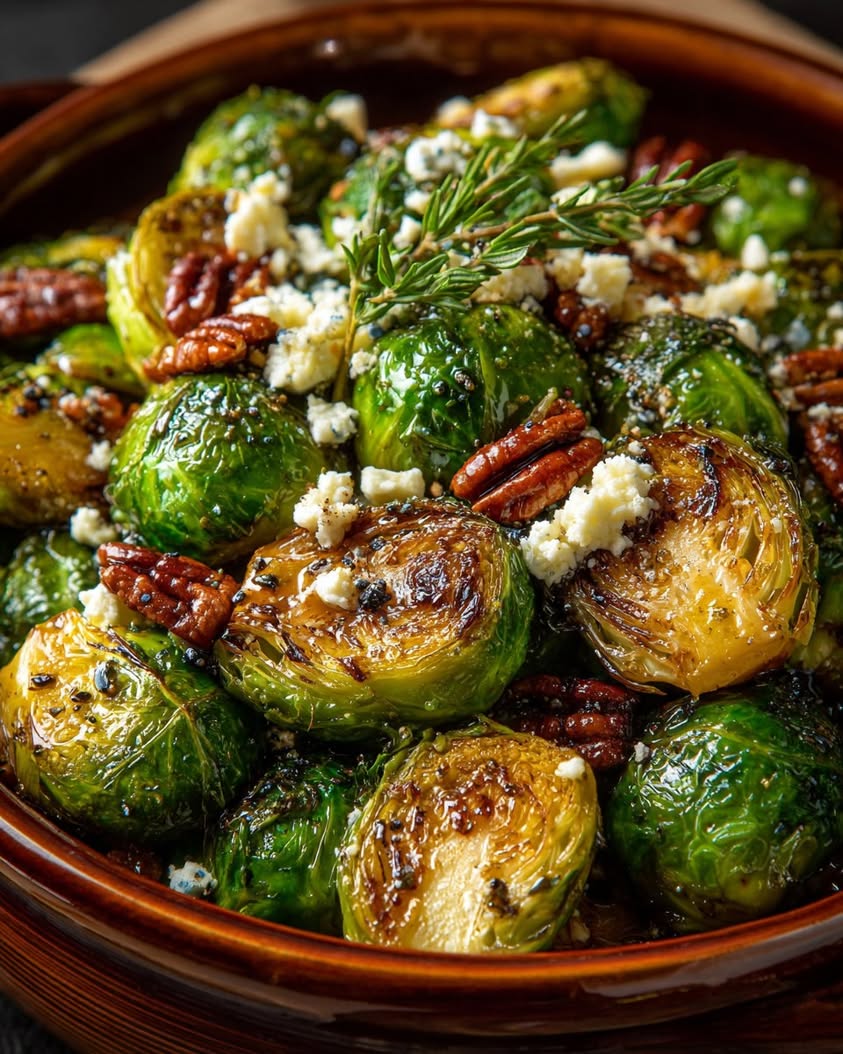
Cider Roasted Brussels Sprouts Recipe: A Sweet & Savory Side Dish Sensation
This Cider Roasted Brussels Sprouts Recipe transforms the humble vegetable into a show-stopping side dish. Imagine tender, caramelized sprouts infused with the sweet tang of apple cider. Then, picture them tossed with crunchy, maple-candied pecans and finished with creamy, salty crumbles of feta cheese. The result is a symphony of flavors and textures that will make even the most ardent sprout skeptic ask for seconds. This dish is not just a recipe; it is a celebration of fall produce and a guaranteed way to elevate any meal.
Furthermore, this recipe strikes a perfect balance between sweet, savory, and tangy notes. The roasting process deepens the natural nuttiness of the Brussels sprouts, while the cider glaze adds a glossy, flavorful coating. Consequently, each bite offers a delightful contrast: the soft, almost buttery interior of the sprout, the crisp snap of the candied pecans, and the cool, briny pop of feta. This Cider Roasted Brussels Sprouts Recipe is your new secret weapon for holiday dinners, weeknight upgrades, and impressive potluck contributions.
Quick Recipe Highlights
- Flavor Profile: This Cider Roasted Brussels Sprouts Recipe delivers a masterful blend of sweet, savory, and tangy. The apple cider reduction creates a caramel-like glaze, while the feta cheese adds a necessary salty counterpoint. Ultimately, the maple syrup in the pecans ties all the elements together harmoniously.
- Texture: You will experience a wonderful medley of textures in every forkful. Expect tender, slightly charred sprouts, delightfully crunchy candied nuts, and soft, crumbly cheese. This combination ensures the dish is never monotonous and always exciting to eat.
- Aroma: As the sprouts roast, your kitchen will fill with an irresistible fragrance. The scent of caramelizing vegetables mingles with sweet apple cider and toasty pecans. This aromatic promise builds anticipation for the delicious meal to come.
- Visual Appeal: The dish boasts beautiful autumn colors. You see deep green and golden-brown sprouts, amber-hued pecans, and bright white feta crumbles. This colorful presentation makes it a stunning centerpiece for any table setting.
- Skill Level Needed: This is an accessible recipe for cooks of all levels. Basic knife skills for halving sprouts and simple stovetop candying are the primary techniques. Therefore, even a beginner can achieve impressive, restaurant-quality results with ease.
- Special Equipment: You only need a large sheet pan, parchment paper for easy cleanup, and a medium skillet. A good chef’s knife is helpful but not strictly specialized. Essentially, standard kitchen tools are perfectly sufficient for this recipe.
Recipe Overview
- Difficulty Level: We rate this Cider Roasted Brussels Sprouts Recipe as “Easy.” The steps are straightforward and sequential. You simply prepare the sprouts, make the candied pecans, and then combine everything after roasting. There is no complex timing or advanced culinary technique required for success.
- Category: This dish fits perfectly into the “Side Dish” category, but it is robust enough to be a light vegetarian main. It complements roasted meats like chicken, turkey, or pork exceptionally well. Additionally, it can anchor a bowl meal with grains like farro or quinoa.
- Cuisine: The recipe draws inspiration from modern American farm-to-table cuisine. It utilizes classic autumn ingredients—Brussels sprouts, apple cider, maple syrup—in a contemporary, flavor-forward way. While not tied to a specific tradition, it reflects a love for seasonal, elevated comfort food.
- Cost: This is a cost-effective dish, especially when Brussels sprouts are in season. The most expensive components are often the pecans and the cheese. However, because a little goes a long way, you create a luxurious-tasting side without a luxurious price tag.
- Season: This Cider Roasted Brussels Sprouts Recipe is quintessential fall and winter fare. Brussels sprouts peak in cool weather, and apple cider is a harvest-time staple. The warm, roasted flavors are particularly comforting during the colder months.
- Occasion: It is ideal for Thanksgiving, Christmas, or Friendsgiving dinners. Meanwhile, it is also simple enough for a fancy weeknight meal. You can easily scale it up for a crowd or down for an intimate dinner for two.
Why You’ll Love This Recipe
First and foremost, the taste and texture are utterly irresistible. This Cider Roasted Brussels Sprouts Recipe banishes memories of bland, boiled vegetables forever. Each component plays a crucial role: the sprouts offer earthy depth, the cider adds fruity sweetness, the pecans provide buttery crunch, and the feta brings a creamy, salty finish. Consequently, your palate experiences a delightful journey with every single bite. The harmony of flavors is complex enough to feel gourmet, yet the ingredients are familiar and comforting.
Next, consider the sheer convenience and simplicity of preparation. Unlike many elaborate side dishes, this recipe requires minimal active hands-on time. You spend about 15 minutes prepping, then the oven does most of the work. The candied pecans come together in one skillet in just five minutes. This efficient process means you can focus on other parts of your meal or simply relax. Therefore, you achieve a spectacular result without spending hours in the kitchen.
Moreover, this dish packs a significant nutritional punch. Brussels sprouts are a powerhouse of vitamins C and K, fiber, and antioxidants. Pecans contribute healthy fats, protein, and minerals like manganese. Using maple syrup as a sweetener offers a more natural option compared to refined sugars. When you choose this Cider Roasted Brussels Sprouts Recipe, you are serving a side dish that is as wholesome as it is delicious. It is a choice that satisfies both your taste buds and your body’s needs.
From a social perspective, this recipe has incredible entertaining value. It consistently earns rave reviews and prompts recipe requests. The beautiful presentation makes it look like you fussed for hours, while the robust flavors please a wide range of palates. It is a versatile dish that pairs well with almost any main course. Serving this Cider Roasted Brussels Sprouts Recipe guarantees you will impress your guests and become known as the host with the most memorable sides.
Finally, it is remarkably cost-effective and accessible. The core ingredients are affordable, especially in season. You likely already have olive oil, salt, and pepper in your pantry. While you can seek out artisanal cider or fancy cheese, the recipe works wonderfully with standard grocery store finds. This accessibility means you can enjoy a restaurant-quality dish any night of the week without breaking the bank. Ultimately, it delivers maximum flavor and wow factor for a minimal investment.
Historical Background and Cultural Significance
The story of Brussels sprouts begins in ancient Rome, but the vegetable as we know it was cultivated extensively in Belgium during the 16th century, specifically near its capital city—hence the name. For centuries, people prepared them simply, often boiled. Unfortunately, this method frequently led to overcooking, which released sulfurous compounds and gave sprouts their notorious bitter reputation. Consequently, many people grew up disliking them, a culinary prejudice that lasted for generations.
In modern American cuisine, however, the Brussels sprout has undergone a dramatic renaissance. This revival started in the late 20th and early 21st centuries, largely thanks to the popularization of roasting. Chefs discovered that high-heat roasting caramelizes the natural sugars in the sprouts, transforming their flavor from bitter to sweet and nutty. This Cider Roasted Brussels Sprouts Recipe is a direct product of that culinary revolution. It represents a break from the past and an embrace of techniques that highlight the vegetable’s true potential.
The use of apple cider and maple syrup taps into deep North American culinary traditions. Native Americans first used maple sap, and European settlers adopted and refined the sugaring process. Apple cider, a staple of colonial autumn harvests, symbolizes abundance and preservation. By incorporating these elements, the recipe connects a European vegetable to iconic New World flavors. This fusion creates a dish that feels both timeless and contemporary, rooted in history but perfect for today’s table.
Today, dishes like this one signify a broader cultural shift towards vegetable-centric eating and seasonal cooking. The recipe reflects a desire to make healthy ingredients exciting and crave-worthy. It is a staple on modern holiday tables and in trendy restaurants alike, symbolizing how far our collective palate has evolved. This Cider Roasted Brussels Sprouts Recipe is more than just a way to cook a vegetable; it is a testament to culinary innovation and the rediscovery of simple, honest ingredients.
Ingredient Deep Dive
Brussels Sprouts: Select firm, bright green sprouts with tightly packed leaves; avoid any that are yellowing or feel soft. Smaller sprouts (about 1-inch in diameter) tend to be sweeter and more tender than larger ones. To prepare, trim the dry stem end and remove any loose or damaged outer leaves. For even cooking and maximum caramelization, always cut them in half from stem to top. This creates a flat surface that browns beautifully in the oven.
Apple Cider: Seek out fresh, unfiltered apple cider for the best flavor; it should be cloudy and taste like pure apples. Avoid clear apple juice, which is often filtered and pasteurized, resulting in a less complex taste. The cider reduces in the oven to form a sticky, concentrated glaze that clings to the sprouts. For a non-alcoholic substitution, you could use a mixture of apple juice and a teaspoon of apple cider vinegar to mimic the tang.
Pecans: Pecans are native to North America and are rich in monounsaturated fats, making them heart-healthy. For this recipe, use raw pecan halves or pieces. Toast them in a skillet with a bit of maple syrup and salt to create the candied coating. This process not only sweetens them but also deepens their nutty flavor and adds crucial crunch. Store unused pecans in the freezer to prevent their oils from turning rancid.
Feta Cheese: Opt for a block of feta in brine rather than pre-crumbled cheese; it is creamier, less dry, and has a superior flavor. The salty, tangy profile of feta is essential for cutting through the sweetness of the cider and maple. For a different twist, you could substitute with goat cheese (chèvre) for a similar tangy creaminess or shaved Parmesan for a sharper, saltier note. Always add the cheese after roasting to prevent it from melting away.
Maple Syrup: Use pure maple syrup, not pancake syrup which contains corn syrup and artificial flavors. The syrup’s rich, caramel-like notes complement the cider and enhance the roasting process. Grade A Amber or Dark Color syrup works wonderfully here. Along with the olive oil, it helps the spices adhere to the sprouts and promotes even browning. Maple syrup also contains antioxidants and minerals like manganese and zinc.
Common Mistakes to Avoid
- Crowding the Pan: Do not overcrowd your baking sheet. If the sprouts are piled on top of each other, they will steam instead of roast. You need space for hot air to circulate. Always use a large enough pan and spread the sprouts in a single layer for perfect caramelization.
- Using Old or Large Sprouts: Avoid old, yellowed, or very large Brussels sprouts. They often have a stronger, more bitter flavor. Instead, choose small to medium, vibrant green sprouts. Fresher, younger sprouts yield a sweeter, more tender result in this Cider Roasted Brussels Sprouts Recipe.
- Skipping the Halving Step: Never roast whole Brussels sprouts. Cutting them in half is non-negotiable. The flat surface makes direct contact with the hot pan, creating that delicious browned, crispy exterior. It also allows the cider glaze to penetrate more effectively.
- Neglecting to Dry the Sprouts: After washing your sprouts, always pat them thoroughly dry with a kitchen towel. Excess water will create steam on the pan, which hinders the roasting process. Dry sprouts ensure you get crispy edges instead of soggy ones.
- Burning the Candied Pecans: Watch the pecans closely as they cook in the skillet. The maple syrup can burn quickly over high heat. Use medium heat and stir constantly for just 2-3 minutes until the syrup coats the nuts and they smell fragrant. Then, immediately transfer them to parchment paper to cool.
- Adding Feta Before Roasting: Do not add the feta cheese before the sprouts go into the oven. The high heat will cause it to melt completely and become greasy. You should always crumble the cold feta over the hot sprouts just before serving so it retains its shape and cool, creamy texture.
- Underseasoning: Remember to season adequately with salt and pepper at multiple stages. Salt the sprouts before roasting, and season the candied pecans lightly. Taste after combining everything and adjust the seasoning if needed. Proper seasoning makes all the flavors pop.
- Using a Dark Pan Without Adjustment: If you only have a dark-colored baking sheet, be aware it conducts heat more aggressively. Consequently, you may need to reduce the oven temperature by 25°F or check the sprouts a few minutes earlier to prevent the bottoms from burning.
Essential Techniques
High-Heat Roasting: This technique is the cornerstone of the recipe. Roasting at 400°F (200°C) causes the natural sugars in the Brussels sprouts to caramelize, creating a sweet, nutty flavor and a crispy exterior. The key is ensuring your oven is fully preheated and the sprouts are in a single layer. Do not stir them too often; let them sit undisturbed for the first 15-20 minutes to develop a good sear. You will know it is working when you see deep golden-brown spots on the flat sides.
Reducing the Cider Glaze: Pouring the apple cider over the sprouts before roasting serves a dual purpose. First, it adds immediate flavor. Second, as the dish cooks, the liquid reduces and thickens in the hot oven, creating a sticky glaze that coats each sprout. This process concentrates the apple flavor without needing a separate reduction step on the stovetop. The result is a glossy, flavorful coating that makes the dish special.
Candying Nuts on the Stovetop: Candying pecans is a simple but essential skill. You combine pecans, maple syrup, and a pinch of salt in a skillet over medium heat. The goal is to cook just until the syrup bubbles and thickens enough to coat the nuts, which takes about 3 minutes. Constant stirring is crucial to prevent hot spots and burning. Once coated, you immediately spread them on parchment paper to cool and harden. This technique adds professional-level texture and sweetness.
Pro Tips for Perfect Cider Roasted Brussels Sprouts
First, for extra crispy sprouts, place your empty baking sheet in the oven during the preheat phase. Adding the sprouts to a hot pan gives them an instant sear, mimicking the effect of a restaurant skillet. This simple trick maximizes browning and prevents sticking.
Second, if your sprouts are significantly different in size, cut the larger ones into quarters and the smaller ones just in half. This ensures everything cooks evenly and finishes at the same time, preventing some pieces from being burnt while others are still hard.
Third, add a teaspoon of whole grain mustard to the olive oil and maple syrup mixture before tossing with the sprouts. This introduces a subtle, sophisticated tang that complements the cider and cheese beautifully, adding another layer of flavor complexity.
Fourth, reserve a small handful of the candied pecans and a few feta crumbles for garnish after plating. Sprinkling these on top just before serving keeps them extra crunchy and visually distinct, enhancing the final presentation of your dish.
Fifth, if you prefer a more pronounced caramelized flavor, sprinkle a light dusting of brown sugar over the sprouts along with the salt and pepper before roasting. The sugar will melt and combine with the cider to create an even deeper, more complex glaze.
Finally, for a warm spice note, add a pinch of smoked paprika or a dash of cayenne pepper to the seasoning mix. This provides a gentle heat that plays wonderfully against the sweetness of the cider and maple, balancing the overall flavor profile.
Variations and Adaptations
Regional Variations: For a Southern twist, use candied pecans made with a touch of bourbon in the glaze. A Mediterranean version could replace the feta with crumbled halloumi (seared separately) and add chopped sun-dried tomatoes and Kalamata olives after roasting. An Italian-inspired adaptation might use balsamic glaze instead of cider and finish with shaved Parmigiano-Reggiano and toasted pine nuts.
Seasonal Adaptations: In spring, substitute asparagus spears or halved baby carrots for the Brussels sprouts. For summer, try using zucchini or yellow squash chunks, reducing the roasting time slightly. In deep winter, incorporate cubed sweet potatoes or parsnips for a heartier, root vegetable-based dish that still uses the same glorious cider-pecan-feta combination.
Dietary Modifications: For a vegan version, omit the feta and use a vegan cheese alternative or a sprinkle of nutritional yeast for a cheesy flavor. To make it dairy-free, simply leave out the cheese or use a plant-based feta. For a nut-free dish, substitute the pecans with roasted pumpkin seeds (pepitas) candied in the same maple syrup method.
Flavor Variations: Experiment with different glazes: a pomegranate molasses glaze offers a tart, fruity depth, while a honey-sriracha glaze adds sweet heat. You can also change the cheese profile; try creamy goat cheese, sharp blue cheese crumbles, or even grated aged gouda for a completely different but equally delicious experience.
Serving and Presentation Guide
For beautiful plating, use a wide, shallow bowl or a large platter. Mound the warm Cider Roasted Brussels Sprouts in the center, allowing them to spill naturally. Generously scatter the candied pecans and feta crumbles over the top, letting some tumble down the sides. Finally, garnish with a final flourish of fresh, chopped herbs like parsley, chives, or thyme for a pop of green color and fresh aroma.
Consider your serving vessel temperature. Serving the dish on a warmed platter helps maintain its ideal eating temperature for longer, especially important during a multi-course holiday meal. Alternatively, for a rustic family-style presentation, you can serve them directly from the baking sheet lined with parchment paper, which also makes cleanup effortless.
Traditional accompaniments include roast turkey, baked ham, or pork tenderloin. For a modern, complete meal, serve it alongside a grain like wild rice pilaf or creamy polenta and a simple green salad. The sprouts also make a fantastic topping for a bowl of creamy soup, adding texture and heft to a lighter meal.
Wine and Beverage Pairing
The sweet and savory nature of this dish calls for wines with good acidity to cut through the richness. A dry Riesling or Gewürztraminer is an excellent choice, as their slight sweetness and floral notes mirror the apple cider. For red wine lovers, a lighter Pinot Noir with its red fruit flavors and low tannins complements without overpowering. A crisp hard cider itself is also a playful and thematic pairing that echoes the recipe’s core ingredient.
For non-alcoholic options, consider a sparkling apple cider or a ginger beer. The effervescence cleanses the palate between bites. A tart cherry juice spritzer or a lemon-thyme infused sparkling water also works wonderfully. The key is to choose a beverage with some acidity or bubbles to balance the dish’s sweet, rich, and salty components.
Storage and Shelf Life
Store leftover Cider Roasted Brussels Sprouts in an airtight container in the refrigerator for up to 3 days. Note that the candied pecans will lose some crunch over time as they absorb moisture from the sprouts. For best results, store any leftover pecans separately in a sealed bag at room temperature. The feta will soften but remains edible.
Reheat leftovers in a 350°F oven on a sheet pan for about 10 minutes, or until warmed through. This method helps re-crisp the sprouts better than microwaving. You can also reheat them in a skillet over medium heat with a tiny splash of water or broth to prevent drying out. Add fresh feta and reserved pecans after reheating.
This dish does not freeze well. The texture of the Brussels sprouts becomes mushy and watery upon thawing, and the dairy component (feta) will not maintain its integrity. It is always best enjoyed fresh or within a few days of preparation.
Make Ahead Strategies
You can significantly streamline your day-of preparation with smart make-ahead steps. Up to two days in advance, wash, trim, and halve the Brussels sprouts. Dry them thoroughly, then store them in a sealed zip-top bag or container with a paper towel to absorb moisture in the refrigerator. This saves valuable time when you are ready to cook.
The candied pecans can be made up to a week ahead. Once cooled completely, store them in an airtight container at room temperature. Their crunch holds up perfectly. You can also crumble the feta cheese ahead of time and keep it refrigerated. When ready to serve, simply roast the pre-prepped sprouts, then toss everything together. This strategy makes assembling this impressive side dish incredibly fast and stress-free.
Scaling Instructions
This Cider Roasted Brussels Sprouts Recipe scales beautifully. To double or triple it for a crowd, use two large sheet pans and rotate their positions in the oven halfway through cooking to ensure even browning. You may need to add a few extra minutes to the roasting time. Mix the sprouts with the oil and seasonings in a very large bowl before dividing between pans.
When halving the recipe for a smaller group, use a standard quarter sheet pan or simply keep the sprouts to one side of a larger pan. The cook time may decrease by 5-7 minutes, so start checking for doneness early. For the candied pecans, use a small skillet when halving to ensure the maple syrup properly coats the smaller quantity of nuts.
Nutritional Deep Dive
This dish is a nutrient-dense choice. Brussels sprouts are exceptionally high in Vitamin K, crucial for bone health and blood clotting, and Vitamin C, a powerful antioxidant. They also provide a good amount of fiber, which aids digestion and promotes satiety. The monounsaturated fats from the olive oil and pecans are heart-healthy. Meanwhile, the maple syrup offers a natural sweetener with a lower glycemic index than refined sugar, and it contains minerals like manganese and zinc.
A single serving provides a balanced mix of complex carbohydrates from the vegetables, healthy fats from the oil and nuts, and a modest amount of protein from the pecans and feta. While the feta adds sodium, it also contributes calcium. To make the dish even lighter, you can reduce the amount of maple syrup or olive oil slightly, though this may affect the caramelization and final texture.
Dietary Adaptations
Gluten-Free: This recipe is naturally gluten-free. Just ensure all packaged ingredients, like the apple cider, are certified gluten-free if you have celiac disease or a severe sensitivity, as cross-contamination can sometimes occur in processing facilities.
Dairy-Free/Vegan: Omit the feta cheese. For a creamy, tangy element, sprinkle the finished dish with nutritional yeast or use a store-bought vegan feta alternative. Check that your maple syrup is vegan (most are, but some processing methods may use animal-derived filters).
Low-Carb/Keto: Reduce or omit the maple syrup in both the sprout coating and the pecans. Use a sugar-free maple-flavored syrup or a keto-friendly sweetener like monk fruit or erythritol that measures like sugar. Be mindful that the cider contains natural sugars, so you may want to reduce the amount used or replace it with a splash of chicken or vegetable broth.
Paleo: Omit the dairy (feta cheese). Use ghee or avocado oil instead of olive oil if preferred. Ensure your apple cider and maple syrup are 100% pure with no additives. This adaptation makes the dish compliant with paleo dietary guidelines.
Troubleshooting Guide
Sprouts Are Soggy: This is usually due to overcrowding the pan or not drying the sprouts adequately before roasting. For a quick fix, spread the soggy sprouts back on a hot sheet pan and broil for 2-3 minutes, watching closely to avoid burning. This can help crisp them up. Next time, ensure more space between each piece.
Sprouts Are Burnt on Bottom but Raw Inside: Your oven temperature is likely too high, or the rack is positioned too close to the heating element. Move the pan to a middle rack and tent it loosely with foil if the tops are browning too fast while the insides cook through. Using parchment paper can also provide a slight buffer against a too-hot pan.
Glaze Didn’t Thicken/Caramelize: You may have used too much cider, or the sprouts released a lot of water. Next time, reduce the cider amount slightly or pat the sprouts even drier. You can also transfer the cooked sprouts and all pan juices to a skillet after roasting and simmer on the stovetop for a few minutes to reduce the liquid into a proper glaze.
Candied Pecans Are Sticky or Chewy: They were not cooked long enough for the syrup to reach the “hard crack” stage, or they were not spread out to cool properly. To salvage, you can re-toast them in a dry skillet over low heat to re-crisp, but watch carefully. For next time, cook the syrup mixture until it stops looking watery and immediately spread the nuts in a single layer.
Frequently Asked Questions
Q: Can I use frozen Brussels sprouts?
A: We do not recommend frozen sprouts for this Cider Roasted Brussels Sprouts Recipe. They contain too much water and will steam and become mushy instead of roasting up crisp and caramelized. Fresh sprouts are essential for the proper texture and flavor development.
Q: What can I use instead of apple cider?
A: If you cannot find apple cider, you can substitute with an equal amount of apple juice. For better flavor, add a tablespoon of apple cider vinegar to the juice to mimic the tang of fresh cider. Alternatively, a good quality balsamic vinegar glaze can create a different but delicious sweet-tart profile.
Q: Can I make the candied pecans with a different nut?
A: Absolutely. Walnuts or almonds would be excellent substitutes. For a nut-free version, try the same candying process with raw pumpkin seeds (pepitas) or sunflower seeds. Adjust the stovetop cooking time slightly as smaller seeds can burn faster.
Q: How do I prevent the feta from melting when I add it?
A: The key is to let the roasted sprouts cool for just 2-3 minutes after coming out of the oven before adding the feta. Also, ensure you are using a cold, firm block of feta crumbled into decent-sized pieces, not a finely grated or room-temperature product.
Q: Is this dish served hot, warm, or at room temperature?
A: It is best served warm. The contrast between the warm, tender sprouts and the cool, creamy feta is part of the magic. You can serve it immediately after assembling, or let it sit for 5-10 minutes so the flavors meld. It is still tasty at room temperature, making it good for buffets.
Q: Can I prepare the entire dish ahead of time and reheat it?
A: You can roast the sprouts ahead and store them. However, for the best texture, add the candied pecans and feta cheese just before serving after reheating the sprouts. Reheating the assembled dish will make the pecans soggy and the feta will melt away.
Q: My family doesn’t like blue cheese. Is feta similar?
A: Feta is much milder and less pungent than most blue cheeses. It is salty and tangy but lacks the strong, earthy “blue” mold flavor. If they are wary, start with a small amount crumbled on top so they can try it. Goat cheese is another mild, tangy alternative.
Q: Why are my Brussels sprouts bitter?
A> Bitterness often comes from overcooking or using old, large sprouts. Roasting at a high heat caramelizes sugars, which counteracts bitterness. Ensure you are using fresh, smaller sprouts and roasting them until they are tender and well-browned, not steamed or boiled.
Additional Resources
If you loved this Cider Roasted Brussels Sprouts Recipe, explore other seasonal vegetable sides on our site. Try our Maple Glazed Roasted Carrots with Thyme or our Harvest Salad with Roasted Butternut Squash and Pomegranate. For more Brussels sprout inspiration, our recipe archive includes a fantastic Shaved Brussels Sprout Salad with Lemon Vinaigrette and a hearty Brussels Sprouts and Bacon Pasta.
To master the roasting technique further, read our comprehensive guide “How to Roast Any Vegetable Perfectly,” which covers optimal temperatures, oil choices, and seasoning strategies. For information on selecting and storing fresh produce, check out our “Farmers Market Guide to Fall Vegetables.” These resources will help you build confidence and creativity in the kitchen all season long.
{“success”:true,”message”:”Recipe created successfully”,”post_id”:9280,”tasty_recipe_id”:9280,”shortcode”:”“}

I’m Billy, a classically trained culinary school graduate from The Culinary Institute of America with over 12 years in the restaurant industry and over 19 years of cooking experience.