
Authentic Greek Horiatiki Salad Recipe with Tomatoes and Feta: A Taste of the Mediterranean
Imagine a sun-drenched table on a Greek island, the air salty and warm. A simple, rustic bowl arrives, brimming with the vibrant colors and honest flavors of the Mediterranean. This is the authentic Greek Horiatiki Salad recipe with tomatoes and feta, a dish that captures the very soul of Greek summer cooking. Unlike typical salads, this classic preparation, known as a Greek village salad, celebrates each ingredient in its purest form. Consequently, every bite tells a story of sun-ripened produce, briny olives, and creamy, tangy cheese.
This iconic salad is a masterpiece of simplicity. Fundamentally, it relies on the highest quality ingredients you can find. Ripe, juicy tomatoes form the sweet, acidic base. Meanwhile, crisp cucumber and sharp red onion add refreshing crunch and bite. The crowning glory is a generous slab of briny feta cheese, drizzled with golden Greek extra virgin olive oil. Ultimately, this authentic Greek Horiatiki Salad recipe with tomatoes and feta is not just a side dish. It is a refreshing, satisfying meal that transports your senses straight to the Aegean coast.
Quick Recipe Highlights
- Flavor Profile: This authentic Greek Horiatiki Salad recipe with tomatoes and feta delivers a perfect harmony of bright, acidic tomatoes, salty feta, and briny Kalamata olives. The dressing is simply high-quality olive oil and a touch of dried oregano, which allows the fresh ingredients to shine without overpowering vinegar.
- Texture: You experience a wonderful contrast of textures. Juicy, soft tomatoes meet the crisp crunch of cucumber and bell pepper. Additionally, the creamy yet firm slab of feta cheese provides a rich, crumbly mouthfeel that is utterly satisfying.
- Aroma: The moment you prepare this salad, the air fills with the grassy, peppery scent of fresh extra virgin olive oil. Then, the earthy, fragrant notes of dried oregano mingle with the sweet aroma of ripe tomatoes and the sharp scent of red onion.
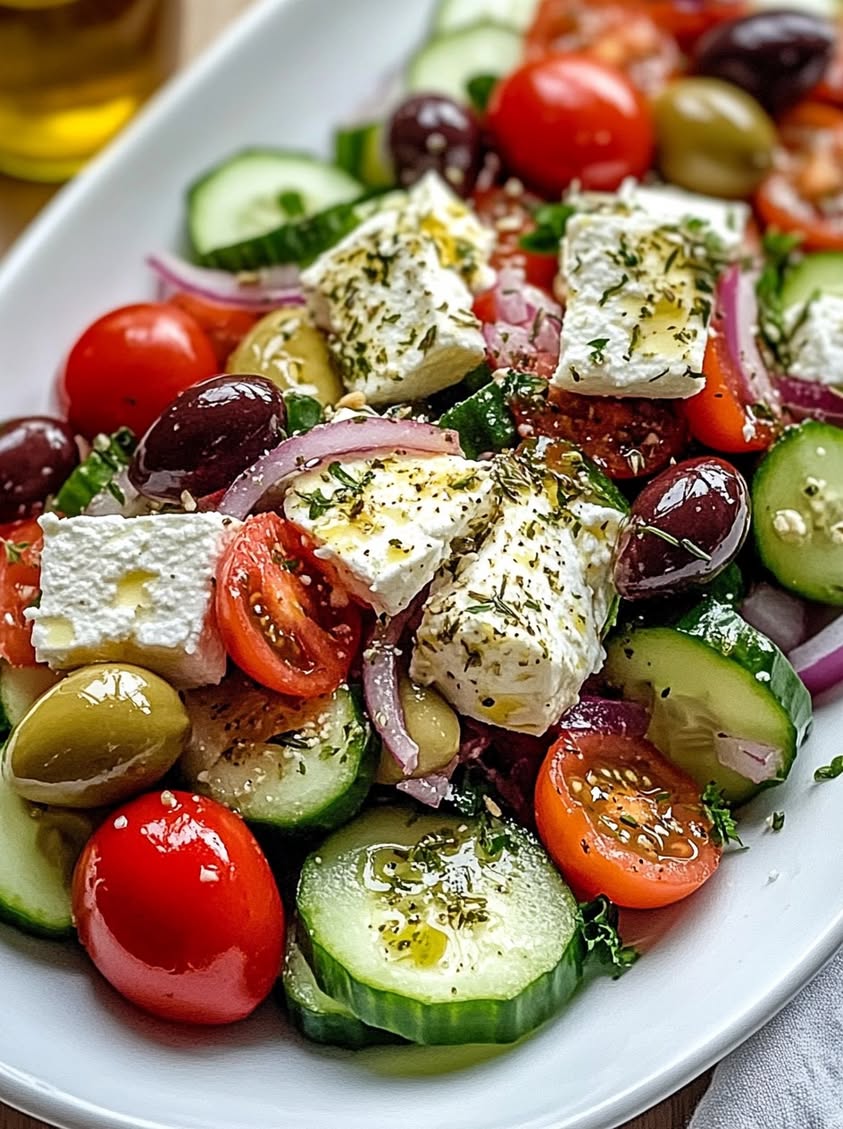
- Visual Appeal: The presentation is a vibrant mosaic of colors. Deep red tomatoes, green cucumber, purple onion, and black olives create a stunning contrast against the stark white feta slab. This visual feast is as beautiful as it is delicious.
- Skill Level Needed: Absolutely anyone can master this recipe. It requires no cooking, only simple knife skills for chopping vegetables. The technique lies in selecting perfect ingredients and assembling them with care, not in complex culinary methods.
- Special Equipment: You need only a sharp chef’s knife, a sturdy cutting board, and a large serving bowl. A vegetable peeler for the cucumber is optional but helpful. No fancy gadgets or appliances are required for this timeless dish.
Recipe Overview
- Difficulty Level: We rate this authentic Greek Horiatiki Salad recipe with tomatoes and feta as “Easy” for clear reasons. There is zero cooking involved, and the steps are purely assembly-based. The primary challenge is sourcing excellent ingredients, not executing difficult techniques. Even a complete beginner in the kitchen can achieve spectacular results by following the simple guidance.
- Category: This dish perfectly fits into multiple categories. It is a stellar side salad for grilled meats like lamb or chicken. Simultaneously, when served with crusty bread to soak up the juices, it becomes a light yet complete vegetarian main course. It also excels as part of a mezze platter for sharing.
- Cuisine: This is the quintessential dish of Greek cuisine, specifically from the “taverna” tradition. Horiatiki means “villager’s” salad, reflecting its rustic, peasant-food origins. It embodies the Mediterranean diet principles of fresh vegetables, healthy fats, and simple preparation.
- Cost: The cost is moderate and depends entirely on ingredient quality. Investing in authentic Greek feta, high-end olive oil, and ripe, in-season tomatoes will increase the price but is essential for flavor. Overall, it remains a cost-effective way to create a restaurant-quality dish at home.
- Season: This salad is truly a celebration of high summer. It is best made when tomatoes are at their peak of ripeness and flavor, typically from late June through September. Making it with winter greenhouse tomatoes simply will not yield the same magical result.
- Occasion: It is incredibly versatile for any occasion. Serve it at a casual weeknight dinner, a festive backyard barbecue, or an elegant dinner party. Its bright, clean flavors pair with almost everything and always feel special.
Why You’ll Love This Authentic Greek Horiatiki Salad Recipe with Tomatoes and Feta
First and foremost, the taste is an unforgettable burst of Mediterranean sunshine. Each component contributes a distinct note that harmonizes beautifully. The sweet acidity of the tomatoes balances the salty punch of the feta. Meanwhile, the briny olives add depth, and the olive oil ties everything together with its fruity richness. You will love how these bold, clean flavors refresh your palate. Furthermore, unlike salads drowned in dressing, this one celebrates the ingredients themselves, resulting in a more sophisticated and satisfying eating experience.
From a practical standpoint, the convenience is unbeatable. This authentic Greek Horiatiki Salad recipe with tomatoes and feta requires no cooking, which means no heating up the kitchen. You can assemble it in about fifteen minutes, making it perfect for busy weeknights or last-minute guests. Additionally, the ingredient list is short and simple, with no hard-to-find items. Essentially, you can walk into any well-stocked grocery store and gather everything you need. The simplicity of preparation allows you to focus on quality, which is the real secret to its success.
Nutritionally, this salad is a powerhouse. It is packed with vitamins from the fresh vegetables, healthy monounsaturated fats from the olive oil, and protein and calcium from the feta cheese. Following the principles of the renowned Mediterranean diet, it supports heart health and overall wellness. Importantly, it is naturally low in carbohydrates if you avoid eating the bread served alongside. You can feel great about serving this dish to your family, knowing it is as nourishing as it is delicious.
For entertaining, this salad is a guaranteed crowd-pleaser. Its stunning visual presentation creates an immediate “wow” factor on any table. Moreover, it caters to various dietary preferences, being vegetarian and easily adaptable for gluten-free guests. Serving this authentic Greek Horiatiki Salad recipe with tomatoes and feta sparks conversation about travel, food, and culture. It transforms a simple meal into a shared experience, inviting everyone to dig in and enjoy the communal, rustic spirit of Greek dining.
Finally, it is remarkably cost-effective. While premium ingredients have a price, you are creating a restaurant-quality dish for a fraction of the cost. A single order of Horiatiki at a Greek restaurant can easily cost twelve dollars or more. Conversely, you can make a large, family-style portion at home for a similar price. This accessibility allows you to enjoy a taste of luxury regularly. Ultimately, mastering this recipe means you can bring a piece of your favorite vacation or a dream destination to your dinner table anytime.
Historical Background and Cultural Significance
The origins of the authentic Greek Horiatiki Salad recipe with tomatoes and feta are deeply rooted in rural Greek life. “Horiatiki” directly translates to “villager’s” or “peasant’s” salad. Historically, it was a practical meal for farmers and workers in the fields. They used what was readily available from their gardens and local producers: sun-ripened tomatoes, cucumbers, onions, and olives, preserved in salt. The feta cheese, made from sheep or goat milk, provided sustaining protein and fat. This salad was not a delicate starter but a substantial, nourishing dish meant to fuel a day of hard labor.
Culturally, this salad is a national icon of Greece. It represents the essence of the Mediterranean diet and the Greek philosophy of “philoxenia,” or love for strangers. You will find it on the menu of every taverna across the country, from tiny island villages to bustling Athens neighborhoods. It is a dish of sharing and community, typically brought to the table in a large bowl for everyone to serve themselves. Eating Horiatiki is more than a meal; it is a connection to Greek identity, simplicity, and the celebration of seasonal, local bounty.
The recipe’s evolution is interesting, particularly regarding the addition of tomatoes. Tomatoes are not native to Greece; they were introduced from the Americas. However, they found an ideal home in the Mediterranean climate and became a staple by the 19th century. The classic combination we know today solidified in the mid-20th century as Greek cuisine became more standardized. Interestingly, the authentic version never includes lettuce, a common addition in “Greek salads” outside of Greece. This distinction is a key marker of the traditional recipe versus its international adaptations.
Regional variations within Greece do exist, showcasing local specialties. For instance, on the island of Crete, you might find barley rusks (dakos) underneath the salad ingredients. In some regions, capers are added for an extra briny kick. Some tavernas include a green bell pepper, while others stick to just cucumber and tomato. The type of oregano can also vary, with wild Greek oregano being the most prized. Despite these slight tweaks, the core philosophy remains unchanged: showcase a few incredible ingredients with minimal interference. This respect for the raw materials is what has kept the authentic Greek Horiatiki Salad recipe with tomatoes and feta beloved for generations.
Ingredient Deep Dive
Tomatoes: The tomato is the non-negotiable foundation of this salad. In Greece, they use large, beefsteak-style tomatoes that are incredibly ripe, juicy, and flavorful. The tomatoes provide the essential sweet acidity and much of the “dressing” in the form of their delicious juices. Nutritionally, they are rich in lycopene, vitamin C, and potassium. For the best results, seek out vine-ripened tomatoes at your farmers’ market in the summer. Avoid refrigerating them, as cold temperatures destroy their texture and flavor. If you must substitute, the best option is the ripest Roma or heirloom tomatoes you can find.
Feta Cheese: Authentic Greek feta is a Protected Designation of Origin (PDO) product, meaning it must be made in Greece from at least 70% sheep’s milk, often blended with goat’s milk. This gives it a tangy, salty, and slightly creamy character that is irreplaceable. It is stored in brine, which keeps it moist. For the authentic Greek Horiatiki Salad recipe with tomatoes and feta, you must buy a block and slab it, never crumble it. The nutritional profile includes protein, calcium, and probiotics. Always look for “Made in Greece” on the label. Store leftover feta in its brine in the refrigerator.
Kalamata Olives: These iconic, almond-shaped olives are also a PDO product from the Messinia region of Greece. They are dark purple, meaty, and have a rich, winey flavor. Their briny depth is crucial for balancing the salad’s sweetness. They are a good source of healthy monounsaturated fats and antioxidants. Purchase them with pits for better flavor and texture; pitting them is simple. Avoid using canned black olives, as they lack the necessary complexity. Store opened olives in their liquid in the fridge. For a substitute, seek out other Greek olive varieties like Throumba or Halkidiki.
Cucumber: The cucumber adds essential crunch and a cooling, fresh element. English or Persian cucumbers are ideal because they have fewer seeds and thinner, less bitter skin. If using a standard cucumber, you may want to peel it and scoop out the watery seed core. Cucumbers are hydrating and provide vitamins K and B. For the best texture, prepare the cucumber just before assembling the salad to prevent sogginess. There is no real substitute for its refreshing quality, but in a pinch, crisp celery could add a different kind of crunch.
Extra Virgin Olive Oil: This is the only “dressing” and should be the best you can afford. Authentic Greek olive oil is typically fruity and grassy with a peppery finish. It coats the vegetables, carries the flavor of the oregano, and enriches the entire dish. Its health benefits for heart and brain health are well-documented. Look for cold-pressed, unfiltered oil in a dark glass bottle. Store it in a cool, dark place. Never substitute with neutral oils like canola or vegetable oil; the flavor of good EVOO is fundamental to the salad’s success.
Common Mistakes to Avoid
- Using Unripe Tomatoes: This is the single biggest error. Pale, hard, refrigerated tomatoes lack sweetness and juice. Your salad will be bland and dry. Always wait for tomatoes to be deeply colored, fragrant, and slightly soft to the touch.
- Crumbling the Feta: In an authentic Greek Horiatiki Salad recipe with tomatoes and feta, the cheese is always placed as a solid slab on top. Crumbling it is an Americanized shortcut. The slab allows you to get a perfect bite of creamy feta with the vegetables.
- Adding Lettuce: Traditional Horiatiki never contains lettuce. It is a vegetable salad, not a green salad. Adding lettuce waters down the flavors and is a clear sign of a non-authentic version.
- Using Vinegar or Lemon in the Dressing: The classic dressing is only extra virgin olive oil, oregano, and salt. The acidity comes naturally from the ripe tomatoes. Adding vinegar or lemon juice overpowers the delicate balance.
- Dicing Vegetables Too Small: The vegetables should be cut into hearty, rustic chunks. Tiny dice makes the salad mushy and compromises the satisfying texture. Aim for large, bite-sized pieces.
- Using Pre-Pitted Olives: Olives lose flavor and become mushy once pitted. Always buy Kalamata olives with the pits in and remove them yourself just before serving for the best texture and taste.
- Adding the Salt Too Early: If you salt the tomatoes and cucumbers long before serving, they will release all their water and become soggy. Salt the salad just before you are ready to eat it.
- Skimping on the Olive Oil: Be generous! The olive oil is a main component, not just a light coating. It should pool deliciously at the bottom of the bowl, ready to be soaked up with bread.
- Using Dried, Dusty Oregano: Old oregano loses its fragrance. Use a high-quality dried Greek oregano, and rub it between your palms as you sprinkle it to release its essential oils.
- Over-mixing the Salad: Gently combine the vegetables. Do not aggressively stir or toss, as this will bruise the tomatoes and make the salad watery. The goal is a composed, not mushy, dish.
Essential Techniques
Choosing and Cutting Tomatoes: This technique is paramount. Select tomatoes that are heavy for their size and yield slightly to gentle pressure. To cut them, core the stem end and slice them into irregular wedges, about 1-inch thick at the widest part. Cutting them this way exposes more flesh and allows their juices to flow freely into the bowl. Avoid uniform, neat slices. The rustic, varied shapes are part of the salad’s charm and ensure a good mix of textures in every forkful.
Preparing the Feta Slab: Do not remove the feta from its brine until the last moment. Using a sharp knife, cut a thick slice from the block, about 1/2 to 3/4 inch thick. The size should be substantial enough to be a centerpiece. Place it gently on top of the assembled vegetables. Do not break it apart. The technique allows each person to take a piece of the feta with their serving, ensuring the perfect ratio of cheese to vegetable in every bite.
Seasoning Layering: The order in which you season matters. First, season the tomato and cucumber chunks lightly with sea salt in the bowl. Then, add the other vegetables. Finally, place the feta slab on top and season it lightly as well. Drizzle the olive oil over everything, aiming to coat the feta directly. Sprinkle the dried oregano last, focusing on the feta and tomatoes. This layering ensures even distribution without over-salting any one ingredient.
Pro Tips for Perfect Authentic Greek Horiatiki Salad
Chill your serving plates or bowl. A cool surface keeps the salad refreshing, especially on a hot day. However, do not refrigerate the assembled salad itself, as the cold will dull the flavors.
Let the salad sit for 5-10 minutes after assembling. This brief rest allows the salt to draw out a little of the tomato juices, which then mingles with the olive oil to create a sublime, natural dressing at the bottom of the bowl.
Use your hands to tear the bell pepper, if using, into pieces. This rustic method exposes more of the pepper’s flesh to the seasoning and creates a more interesting texture than perfectly cut strips.
Invest in a bottle of high-quality Greek sea salt. Its clean, mineral flavor enhances the vegetables without any bitter aftertaste that some table salts can impart.
Serve with a crusty, dense bread like a rustic sourdough or traditional Greek barley rusks (paximadi). The bread is essential for “lapping up” the incredible tomato-olive oil juices left in the bowl, which Greeks call “papara.”
If you must prepare components ahead, chop the cucumber, onion, and pepper and keep them separate in containers. Wash and cut the tomatoes, and slice the feta only at the last possible moment before serving.
Variations and Adaptations
Regional Variations: In Crete, they serve this salad over a dry barley rusk called a “dakos,” which softens deliciously from the juices. In the Cyclades islands, you might find capers added for extra salinity. Some mainland versions include a green bell pepper for additional crunch and a slight bitterness.
Seasonal Adaptations: While summer is prime time, in cooler months you can use the ripest greenhouse cherry tomatoes and add roasted vegetables like red peppers or zucchini for depth. However, the classic summer version remains unbeatable.
Dietary Modifications: For a vegan version, substitute the feta with a firm, salty vegan cheese alternative or use large, marinated slabs of extra-firm tofu. Ensure your bread is vegan as well. For a lower-fat version, simply reduce the amount of olive oil, though this will impact authenticity.
Flavor Variations: While purists avoid it, a light drizzle of aged balsamic glaze can add a sweet note for those who prefer it. Adding a few fresh mint leaves at the end provides a surprising and refreshing twist. For a spicy kick, add a pinch of crushed red pepper flakes with the oregano.
Serving and Presentation Guide
Always use a wide, shallow serving bowl rather than a deep one. This allows the beautiful ingredients to be displayed in a single layer, making them easily accessible. Arrange the tomato and cucumber chunks first. Then, scatter the onion rings and olives around them. Place the slab of feta prominently in the center or slightly off-center on top. Drizzle the olive oil in a circular motion over the entire salad, ensuring the feta gets well-coated. Finally, sprinkle the oregano over everything, letting some rest on the white feta for visual contrast.
For individual plating, use the same principle. Create a mound of the vegetable mixture on a plate and lean a slab of feta against it. Garnish with a few whole olives and a sprig of fresh oregano for a restaurant-quality look. Remember, the salad should look abundant and generous, not sparse or overly arranged. The temperature should be cool, not cold. Serve immediately after the final seasoning to preserve the perfect texture of every component.
Wine and Beverage Pairing
The salty feta and briny olives in this authentic Greek Horiatiki Salad recipe with tomatoes and feta pair beautifully with crisp, high-acid white wines. A classic Greek Assyrtiko from Santorini is the ultimate match, with its citrus notes and mineral backbone that cuts through the richness. Alternatively, a Sauvignon Blanc or a dry Rosé also works wonderfully. The key is to avoid oaky or buttery whites, as they will clash with the salad’s freshness.
For non-alcoholic options, sparkling water with a squeeze of lemon or lime is always refreshing. A chilled glass of mint-infused iced tea complements the herbal notes. Traditional Greek options include fresh lemonade or a sour cherry soda called “vissinada.” The goal is to choose a beverage that cleanses the palate between bites of the flavorful, salty salad.
Storage and Shelf Life
This salad is best enjoyed immediately. However, if you have leftovers, store them with care. Remove any uneaten feta and store it separately in its brine. The vegetable mixture can be kept in an airtight container in the refrigerator for up to 24 hours, though it will become watery. The texture of the cucumber and tomato will soften significantly. Do not freeze this salad, as freezing will completely destroy the texture of all the fresh vegetables and turn them to mush. Signs of spoilage include a sour smell, slimy texture on the vegetables, or mold.
Make Ahead Strategies
You can execute significant prep ahead of time to streamline assembly. Wash and dry all vegetables. Chop the cucumber, bell pepper, and onion, storing them separately in airtight containers in the refrigerator for up to a day. Keep the feta in its brine. The critical rule: do not cut the tomatoes or season anything until you are ready to serve. About 15 minutes before eating, cut the tomatoes, combine all the pre-chopped vegetables, and proceed with the seasoning and assembly. This strategy maintains optimal freshness and texture.
Scaling Instructions
This recipe scales very easily. To halve it, simply use half of each ingredient. Use a smaller serving bowl. To double or triple for a crowd, use a very large, wide platter or multiple bowls to prevent overcrowding. The prep time will increase linearly with the amount of chopping. When scaling up, consider preparing the vegetables in batches to keep everything fresh. The one ingredient to be cautious with is salt; season incrementally and taste as you go when making a large batch to avoid over-salting.
Nutritional Deep Dive
This salad is a nutrient-dense component of the Mediterranean diet. The tomatoes and cucumbers provide hydration, fiber, vitamin C, and potassium. The Kalamata olives contribute healthy monounsaturated fats and antioxidants like vitamin E. The feta cheese offers a good source of protein, calcium for bone health, and beneficial probiotics. The extra virgin olive oil is rich in heart-healthy fats and anti-inflammatory compounds. As a whole, this dish supports cardiovascular health, provides sustained energy, and is rich in vitamins and minerals. For weight management, be mindful of the portion of feta and olive oil, though these fats are satiating and help control appetite.
Dietary Adaptations
Gluten-free: This salad is naturally gluten-free. Simply ensure that any bread served alongside is a certified gluten-free variety.
Dairy-free/Vegan: Omit the feta cheese. For a similar salty, creamy element, use thick slices of marinated tofu or a store-bought vegan feta alternative. Check that the olives are packed without dairy-based preservatives.
Low-Carb/Keto: This salad is excellent for low-carb diets. The primary carbohydrates come from the tomatoes and onion. To reduce further, you can slightly decrease the amount of these two ingredients. Enjoy it without the accompanying bread.
Paleo: Omit the feta cheese, as dairy is not Paleo. The rest of the salad is fully compliant. Use a high-quality olive oil and ensure your olives are free of non-Paleo additives.
Troubleshooting Guide
Salad is Too Watery: This happens if the tomatoes are overripe or salted too early. To fix, use a slotted spoon to serve the vegetables, leaving the excess juice in the bowl. Next time, salt just before serving and use firmer tomatoes.
Salad is Bland: The culprit is almost always under-ripe tomatoes or low-quality olive oil. There is no fix after assembly. For future attempts, prioritize ingredient quality above all else. A pinch more sea salt can sometimes help brighten flavors.
Feta is Too Salty: If your feta block is exceptionally salty, you can soak it in cold water or milk for 10-15 minutes before using. Pat it dry thoroughly before adding it to the salad. This will draw out some excess salt.
Onion is Overpowering: If your red onion is too sharp, slice it and soak the slices in a bowl of ice water for 10 minutes. This process mellows the pungent flavor and makes the onion crisper. Drain and pat dry before adding to the salad.
Recipe Success Stories
Readers who try this authentic Greek Horiatiki Salad recipe with tomatoes and feta often report it becomes a staple in their summer rotation. Many share that after visiting Greece, they struggled to recreate the magic at home until focusing on the slab-of-feta technique and eliminating vinegar. One home cook wrote that serving this at a dinner party prompted guests to ask for the recipe immediately, and it sparked wonderful conversations about travel. Others have successfully adapted it for large potlucks by bringing components separately and assembling on-site, to rave reviews.
Frequently Asked Questions
Q: Can I use cherry tomatoes instead?
A: Yes, but for authenticity, use the largest, ripest cherry or grape tomatoes you can find, and halve them. They should be very sweet and juicy. The classic version uses large tomatoes for their substantial texture and abundant juices.
Q: Is there a substitute for Kalamata olives?
A: The best substitutes are other Greek olives like Throumba or Halkidiki. In a pinch, another high-quality, oil-cured black olive can work. Avoid canned black olives, as they lack the necessary flavor and texture.
Q: Why no lettuce in a real Greek salad?
A: Horiatiki is a “village” salad made from what farmers had on hand: garden vegetables, olives, and cheese. Lettuce was not a typical crop for this purpose. The salad is designed to be substantial and juicy on its own.
Q: Can I make this salad ahead of time?
A: You can prep components ahead (chop cucumber, onion, pepper), but do not combine, salt, or add tomatoes and feta until just before serving to prevent sogginess.
Q: What’s the best bread to serve with it?
A: A crusty, rustic sourdough or a traditional Greek bread like “horiatiko psomi” is perfect. Barley rusks (paximadi) are the authentic Cretan accompaniment and are delicious when softened by the salad juices.
Q: Is this salad healthy?
A: Absolutely. It is packed with fresh vegetables, healthy fats from olive oil and olives, and protein from feta. It is a cornerstone of the heart-healthy Mediterranean diet.
Q: What type of oregano should I use?
A: Dried Greek oregano is ideal. It has a more robust flavor than other varieties. If you have access to fresh oregano, you can use a small amount, but dried is traditional.
Q: My feta is very dry and crumbly. What did I do wrong?
A: You likely purchased a pre-crumbled feta or a block that wasn’t stored in brine. Always buy a block of feta in brine and keep it submerged until use for a creamy, moist texture.
Additional Resources
To dive deeper into Greek cuisine, explore other classic dishes like Tzatziki, Spanakopita, or Souvlaki. Understanding the technique of working with phyllo dough or marinating meats for the grill can expand your Mediterranean cooking repertoire. For ingredient sourcing, seek out specialty Mediterranean or Greek markets for authentic feta, olives, and olive oil. Invest in a good quality olive oil cruet for easy drizzling. Finally, to experience the full seasonal cycle, learn how to preserve summer flavors through techniques like oven-drying tomatoes or making your own herb-infused olive oils to enjoy a taste of this salad year-round.
{“success”:true,”message”:”Recipe created successfully”,”post_id”:8282,”tasty_recipe_id”:8282,”shortcode”:” Print
Classic Horiatiki Salad
Description
A traditional Greek salad featuring ripe tomatoes, crisp cucumbers, red onion, Kalamata olives, and slabs of feta cheese, all dressed simply with olive oil and oregano.
Ingredients
For the Crust:
- 4 large ripe tomatoes, cut into wedges
- 1 English cucumber, sliced into half-moons
- 1 red onion, thinly sliced
- 1 green bell pepper, sliced
- 200g slab of feta cheese
- 1/2 cup Kalamata olives
- 2 tbsp extra virgin olive oil
- 1 tsp dried oregano
- Salt and freshly ground black pepper to taste
Instructions
1. Prepare the Crust:
- In a large bowl, combine the tomato wedges, cucumber slices, red onion slices, and bell pepper slices.
- Place the slab of feta cheese on top of the vegetables and scatter the Kalamata olives around it.
- Drizzle the extra virgin olive oil over the salad and sprinkle with dried oregano, salt, and black pepper.
- Gently toss the salad just before serving to combine the ingredients while keeping the feta slab mostly intact.
Notes
You can customize the seasonings to taste.

I’m Billy, a classically trained culinary school graduate from The Culinary Institute of America with over 12 years in the restaurant industry and over 19 years of cooking experience.