
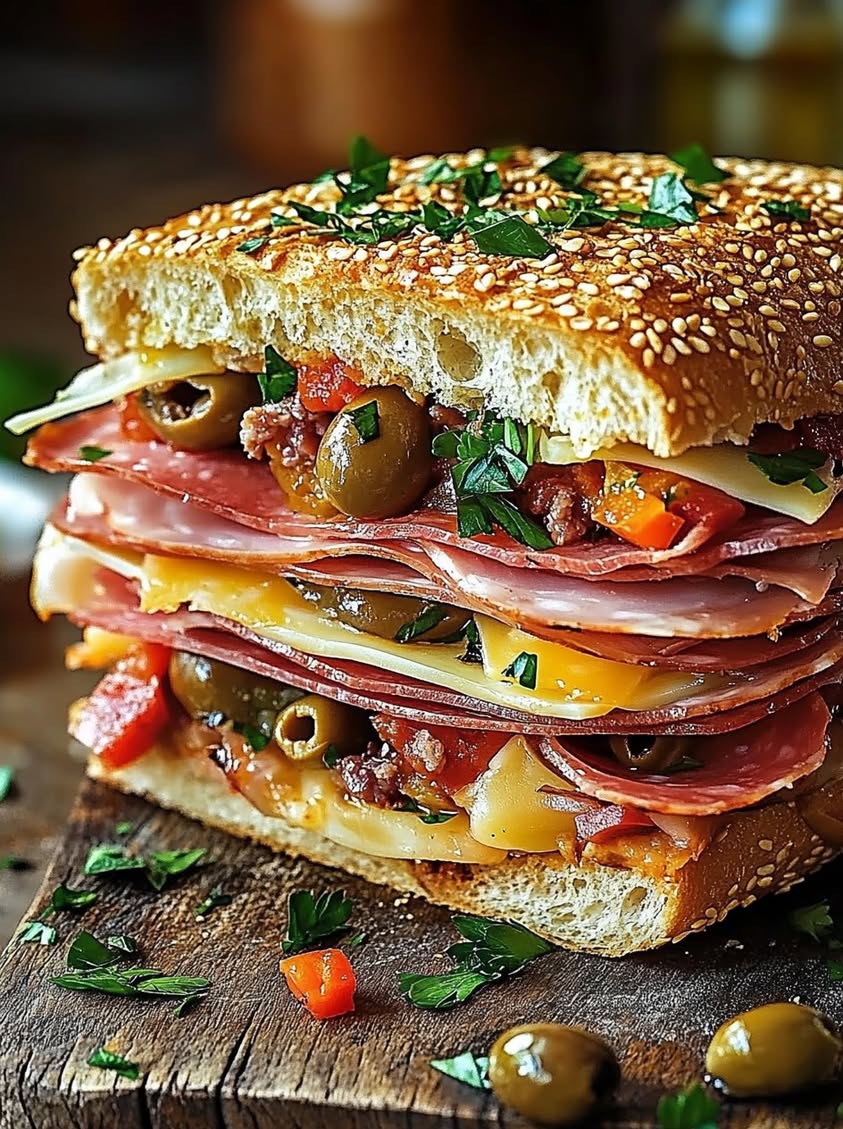
Classic New Orleans–Style Muffuletta Sandwich: A Taste of the French Quarter at Home
Imagine biting into a sandwich so iconic that it transports you straight to the bustling streets of the French Quarter. The Classic New Orleans–Style Muffuletta Sandwich is exactly that kind of culinary masterpiece. Furthermore, this isn’t just any sandwich; it’s a layered work of art built on a sturdy, sesame-studded round loaf. Consequently, every component, from the tangy olive salad to the generous stack of Italian cold cuts, works in perfect harmony. Ultimately, the result is a handheld feast bursting with briny, savory, and spicy flavors that define Creole-Italian cuisine.
Creating this legendary sandwich at home is surprisingly simple. In fact, the magic lies not in complex cooking but in the quality of ingredients and the patient layering of flavors. The heart of the dish is the olive salad, a vibrant, marinated mix that soaks into the bread. This process, often called “letting the sandwich rest,” is the secret to an authentic texture and taste. Therefore, while assembly is quick, a little planning yields the most spectacular results. You will be amazed at how easily you can recreate this New Orleans staple for your next gathering.
The beauty of the Muffuletta is its versatility and crowd-pleasing nature. It’s the ultimate centerpiece for game day, picnics, or a satisfying family lunch. Moreover, its bold flavors improve over time, making it a fantastic make-ahead option. As you slice into the packed loaf, revealing the colorful layers within, you’ll understand why this sandwich has been a beloved tradition for over a century. Get ready to bring the spirit of New Orleans into your kitchen with this definitive guide to the perfect Classic New Orleans–Style Muffuletta Sandwich.
Quick Recipe Highlights
- Flavor Profile: This sandwich delivers a powerful punch of salty, tangy, and savory notes. The olive salad provides a bright, briny acidity that cuts through the rich meats and cheese. Additionally, garlic and herbs add aromatic depth to every single bite.
- Texture: You experience a wonderful contrast between the slightly chewy, dense bread and the tender layers of meat and cheese. The olive salad adds a delightful crunch from the vegetables. Ultimately, the entire sandwich holds together beautifully without becoming soggy when prepared correctly.
- Aroma: As soon as you open the sandwich, the scent of garlic, oregano, and high-quality olive oil fills the air. The aroma of the marinated olive salad is particularly distinctive and inviting. It’s a fragrant preview of the complex flavors to come.
- Visual Appeal: A whole Muffuletta is a impressive, round loaf begging to be sliced. When cut, it reveals a stunning cross-section of pink ham, red salami, white cheese, and green olive salad. This colorful presentation is always a showstopper on any table.
- Skill Level Needed: This is a beginner-friendly recipe requiring no actual cooking. The primary skills are simple knife work for chopping and a careful hand for layering. Anyone can achieve fantastic results by following a few key techniques.
- Special Equipment: You need a good chef’s knife and cutting board for the olive salad. A large, round loaf of bread is non-negotiable. Otherwise, no special tools are required, making this recipe highly accessible.
Recipe Overview
- Difficulty Level: We rate this recipe as easy because it involves assembly, not cooking. The most challenging part is patiently chopping the ingredients for the olive salad. Following that, the process is simply about layering flavors and allowing time for them to meld together perfectly.
- Category: This sandwich falls squarely into the lunch and dinner categories. It is also a premier choice for party food and hearty picnics. Given its size and richness, it easily serves as a complete meal all by itself.
- Cuisine: The Muffuletta is a cornerstone of New Orleans Creole-Italian cuisine. It represents a beautiful fusion of Sicilian immigrant ingredients with local Louisiana influences. This unique blend creates a flavor profile found nowhere else in the world.
- Cost: The cost is moderate, largely depending on your choice of meats and cheese. Investing in good-quality deli cuts and a real Italian loaf makes a significant difference. Fortunately, the recipe yields many servings, offering excellent value for a special meal.
- Season: This is a fantastic year-round sandwich. It shines in summer for picnics and outdoor events because it travels so well. Conversely, it’s equally satisfying as a hearty winter lunch that requires no heating.
- Occasion: The Muffuletta is perfect for casual gatherings, game day feasts, and Mardi Gras celebrations. It’s also an ideal make-ahead meal for busy families. Any event calling for impressive, shareable food is the right occasion for this classic.
Why You’ll Love This Recipe
First and foremost, the taste and texture of a Classic New Orleans–Style Muffuletta Sandwich are utterly unforgettable. Each bite delivers a symphony of salty meats, creamy cheese, and that explosively flavorful olive salad. The bread, meanwhile, soaks up all the marinated juices without losing its structural integrity. Consequently, you get a messy, delicious experience that is both satisfying and complex. This is not a bland sandwich; it’s a bold statement of flavor that will have everyone asking for the recipe.
From a convenience standpoint, this recipe is a true winner. There is no cooking involved, just assembly. You can prepare the olive salad days in advance, allowing the flavors to develop even more deeply. When you’re ready to eat, building the sandwich takes mere minutes. This make-ahead quality makes it a lifesaver for entertaining, as you can focus on your guests instead of being stuck in the kitchen. It’s the ultimate combination of impressive results and simple preparation.
Nutritionally, while indulgent, the Muffuletta offers some benefits. The olive salad is packed with healthy fats from olives and olive oil, along with antioxidants from vegetables like cauliflower and carrots. Using leaner cuts of ham or adding more vegetables can adjust the profile to your liking. Because it’s so filling, a single portion is often satisfying, helping with natural portion control. It’s a celebratory food that brings joy, which is an essential ingredient in any balanced diet.
The social and entertaining value of this sandwich cannot be overstated. A whole Muffuletta placed on a board is a dramatic centerpiece that encourages sharing and conversation. It breaks the formality of a plated meal and creates a fun, interactive dining experience. Serving this iconic New Orleans dish shows thoughtfulness and a love for bold, shared flavors. It’s a guaranteed conversation starter and a memorable highlight of any meal.
Finally, this recipe is cost-effective and accessible. You do not need rare or expensive ingredients. Most components are readily available at any well-stocked grocery store or deli. Because it feeds a crowd, the cost per person is quite reasonable for such a special treat. Learning to make a Classic New Orleans–Style Muffuletta Sandwich at home saves you a trip to the French Quarter and allows you to enjoy this legendary taste anytime you wish.
Historical Background and Cultural Significance
The origin story of the Classic New Orleans–Style Muffuletta Sandwich is deeply rooted in the city’s immigrant history. In the late 1800s, Sicilian immigrants arrived in New Orleans, many settling in the French Quarter. They opened grocery stores, known as “salumerias,” to serve their community. One such store was Central Grocery, founded by Salvatore Lupo in 1906. According to legend, Lupo created the sandwich for Italian workers who wanted to eat their bread, cheese, and salami all together easily and quickly. He used the round Sicilian loaf called “muffuletta” and added the marinated olive salad for extra flavor, creating an instant classic.
The cultural importance of the Muffuletta is immense. It stands as a delicious symbol of the Creole-Italian fusion that defines a significant part of New Orleans’ food culture. This sandwich represents adaptation and innovation, showing how immigrants blended their Old World traditions with local ingredients. For decades, it has been a staple for locals and a must-try for tourists. Consequently, it’s more than just a meal; it’s an edible piece of the city’s social and culinary history, enjoyed in markets, parks, and homes throughout the region.
The recipe has evolved subtly over time, though the core components remain sacred. Originally, it likely contained simpler ingredients based on what was available in the grocery. Today, versions might include a wider variety of olives, different giardiniera vegetables, or alternative Italian meats. However, the essential formula of a round loaf, layered meats and cheese, and a wet, flavorful olive salad is unchanged. This evolution shows the sandwich’s flexibility while honoring its roots. Modern interpretations continue to pop up, but the classic version from Central Grocery remains the gold standard.
Regional variations do exist, even within New Orleans. Some purists insist on only mortadella, ham, salami, provolone, and the signature olive salad. Other eateries might add capicola, mozzarella, or a spicy spread. Outside of Louisiana, you might find versions on different breads or with non-traditional meats. However, the true Classic New Orleans–Style Muffuletta Sandwich has a specific identity. Understanding this history enriches the experience of making and eating it, connecting you to over a century of culinary tradition with every single bite.
Ingredient Deep Dive
Let’s start with the bread: the round, sesame-topped Muffuletta loaf. This bread is crucial; it’s a sturdy, slightly dense Italian bread with a soft interior and a crisp crust. Its structure is designed to hold up to the wet olive salad without disintegrating. If you cannot find a true Muffuletta loaf, a large round Italian bread or even a sturdy ciabatta boule are the best substitutes. The bread acts as both container and ingredient, so its quality directly impacts the final sandwich. Never use a soft, fluffy bread like standard sandwich loaves, as they will become unpleasantly soggy.
The olive salad is the soul of the operation. Traditionally, it’s a mix of green and black olives, chopped celery, cauliflower, carrots, garlic, and herbs, all marinated in olive oil and vinegar. This condiment brings the necessary acidity, crunch, and briny flavor that defines the sandwich. You can find pre-made olive salad, but homemade is vastly superior and allows you to control the texture and saltiness. Make it at least a day ahead so the flavors have time to marry. This salad is so good you’ll want to put it on everything.
For the meats, the classic trio is Genoa salami, ham, and mortadella. Genoa salami is a garlicky, fatty salami that provides robust flavor. A good baked ham adds a sweet, salty element. Mortadella, the Italian precursor to bologna, is studded with pistachios and peppercorns, adding richness and texture. Use the best quality you can find from a deli counter, sliced thinly. These meats represent the Italian charcuterie tradition adapted for the New World. Their combination creates a perfect balance of fat, salt, and spice.
The cheese of choice is provolone. You need a firm, sliceable provolone, not the soft fresh kind. It offers a mild, slightly sharp flavor and melts just enough when the sandwich rests to help bind the layers together. Its creamy texture contrasts beautifully with the chewy bread and firm meats. Some variations include Swiss or mozzarella, but provolone is traditional. Finally, high-quality extra-virgin olive oil and red wine vinegar in the salad are non-negotiable for authentic flavor. They create the marinade that soaks into the bread and ties the whole masterpiece together.
Common Mistakes to Avoid
- Using the Wrong Bread: The most common error is choosing a bread that’s too soft. A fluffy French bread or baguette will turn to mush under the weight of the olive salad. Always opt for a dense, sturdy round loaf with a firm crust to ensure structural integrity.
- Not Making the Olive Salad Ahead: The olive salad needs time for the flavors to meld. Using it immediately after mixing means the flavors will be separate and sharp. For the best results, prepare the salad at least 24 hours in advance and let it marinate in the refrigerator.
- Skipping the Resting Time: Assembling and eating the sandwich right away is a mistake. The sandwich needs to rest, wrapped tightly, for at least an hour. This allows the juices from the salad to permeate the bread, creating the signature moist texture without sogginess.
- Overloading or Underloading the Sandwich: There’s a balance to the layers. Too little meat and cheese makes it bland; too much makes it impossible to eat. Follow the guideline of even, generous layers that allow each ingredient to be tasted in every bite.
- Using Pre-Shredded or Pre-Sliced Cheese: Pre-packaged cheese lacks flavor and doesn’t layer as well. Always have your provolone sliced fresh from the deli block. The taste and texture are far superior, and it will adhere to the other layers better.
- Not Draining the Olive Salad: If you pour the entire salad, including all the marinade, onto the bread, you’ll flood it. Always use a slotted spoon to add the salad, reserving some of the oil and vinegar. You can then brush the cut sides of the bread with this reserved liquid for perfect saturation.
- Cutting the Sandwich Too Soon: If you try to slice the sandwich immediately after assembling, the layers will slide out. Letting it rest under weight helps compact everything, making for clean, beautiful slices that hold together.
- Ignoring Ingredient Temperature: Building the sandwich with ice-cold ingredients straight from the fridge can mute the flavors. Let the meats, cheese, and olive salad sit out for 15-20 minutes before assembling to take the chill off. This allows the full aroma and taste to shine.
Essential Techniques
The first essential technique is preparing and marinating the olive salad. Chop all vegetables and olives to a consistent, small dice—this ensures every spoonful has a bit of everything. After combining, the salad must marinate. This process is not optional; it’s where the magic happens. The vinegar and olive oil soften the vegetables slightly while the garlic and herbs infuse the entire mixture. For best results, stir it occasionally during its marination. This foundational component makes or breaks your Classic New Orleans–Style Muffuletta Sandwich.
Next is the bread preparation. You must slice the entire round loaf horizontally, like opening a giant bun. Then, hollow out some of the soft interior crumb from both the top and bottom halves. This step is critical because it creates a well to hold the fillings and prevents the sandwich from being too bready. However, do not remove too much; you still need enough bread to absorb the juices. The goal is a sturdy container that contributes to the sandwich without overwhelming the fillings.
Layering is its own art form. Start by brushing the cut sides of the bread with reserved marinade from the olive salad. Then, build your layers in this order: cheese first against the bread, then meats, then a thick layer of drained olive salad. The cheese acts as a barrier to help prevent the bread from getting soggy from the meats’ moisture. Placing the wettest ingredient (the salad) in the center protects the bread’s structure. Even, flat layers are key to a sandwich that cuts cleanly and eats evenly.
The final, non-negotiable technique is the weighted rest. After assembling, wrap the entire sandwich very tightly in plastic wrap. Then, place it on a tray, put a heavy skillet or baking sheet with cans on top, and let it press for at least one hour. This pressing melds the layers, allows flavors to penetrate the bread, and compacts the sandwich so it slices neatly. Rushing this step results in a messy, disjointed eating experience. Patience here is the secret to professional, authentic results.
Pro Tips for Perfect Classic New Orleans–Style Muffuletta Sandwich
For an extra flavor boost, toast the sesame seeds on your bread before assembling. Simply place the halved loaf under the broiler for a minute until the seeds are golden. This enhances their nutty flavor and adds another layer of texture to your sandwich.
When choosing your meats, ask the deli to slice them thinly but not shaved. Paper-thin slices can clump together, while thicker slices are harder to bite through. The ideal thickness is about 1/16 of an inch, which allows for flexible, even layering.
If you love spice, add a tablespoon of chopped pepperoncini or a teaspoon of red pepper flakes to your olive salad marinade. This gives the entire sandwich a gentle heat that builds with each bite, staying true to the bold Creole spirit.
To ensure even distribution, think of building the sandwich in quarters. Add a quarter of the cheese to cover one section of the bottom bread, then a quarter of each meat, then a quarter of the olive salad. Repeat until the bread is covered. This method guarantees every slice gets every ingredient.
For the cleanest cuts, use a long, serrated bread knife and a sawing motion. Do not press down, as this will squish the layers out. Wipe the knife clean between cuts for picture-perfect presentation on your serving platter.
If making the sandwich more than a few hours ahead, add a layer of whole lettuce leaves against the bread after the cheese. The lettuce creates a waterproof barrier that keeps the bread perfectly textured for longer, especially if you plan to serve it the next day.
Always bring the completed, pressed sandwich to room temperature before serving. The fats in the meat and cheese will have softened, and the flavors will be much more pronounced than if served cold straight from the fridge.
Save any leftover olive salad and its marinade. It makes an incredible marinade for chicken, a topping for grilled fish, or a vibrant addition to a simple pasta salad. Nothing from this recipe should go to waste.
Variations and Adaptations
For regional variations, some New Orleans shops use a “hot Muffuletta” where the assembled sandwich is baked or grilled until the cheese melts. This is a fantastic option for colder days. Other regions might substitute Spanish olives or add artichoke hearts to the salad. While purists may debate these changes, they showcase the recipe’s adaptability and inspire personal creativity in your own kitchen.
Seasonal adaptations are easy with the olive salad. In spring, add fresh chopped parsley and tender asparagus tips. For summer, incorporate finely diced roasted red peppers or sun-dried tomatoes. In fall, a pinch of smoked paprika in the marinade adds warmth. Winter versions can include heartier vegetables like chopped roasted eggplant. The core recipe remains, but the salad can reflect what’s fresh and available.
Dietary modifications are straightforward. For a gluten-free Classic New Orleans–Style Muffuletta Sandwich, use a sturdy gluten-free round loaf or even serve the fillings as a salad bowl. For dairy-free, omit the cheese or use a high-quality vegan provolone. To reduce sodium, use low-sodium deli meats and olives rinsed well. The sandwich’s framework is flexible enough to accommodate many dietary needs without losing its essential character.
Flavor variations can take this classic in new directions. Try a “Greek” version with feta cheese, roasted red peppers, and a olive salad with kalamatas and oregano. A “Spicy Cajun” twist could include andouille sausage and a remoulade-style salad. For an herbaceous note, mix fresh basil and pine nuts into the olive salad. These experiments honor the original while allowing you to personalize the feast.
Texture modifications can cater to different preferences. If you dislike the crunch of raw cauliflower, quickly pickle it or use chopped celery instead. For a smoother olive salad, pulse it a few times in a food processor. You can also use shredded lettuce for an extra crisp layer. Adjusting textures ensures everyone enjoys the sandwich experience.
Presentation alternatives are fun for parties. Instead of one large sandwich, make individual “Muffuletta sliders” on small round rolls. You can also deconstruct it into a “Muffuletta salad” with torn bread, chopped meats, cheese cubes, and olive salad on top. For a elegant appetizer, spoon the olive salad onto crostini topped with a folded slice of mortadella. The iconic flavors work in many creative formats.
Serving and Presentation Guide
Plating a whole Classic New Orleans–Style Muffuletta Sandwich is all about rustic elegance. Place the unsliced, pressed loaf on a large wooden cutting board or a vibrant ceramic platter. Surround it with colorful pickles, pepperoncini, and maybe some marinated artichoke hearts. This creates a bountiful, inviting presentation that suggests sharing and celebration. The board itself becomes part of the decor, making the meal feel special and thoughtfully prepared.
Garnishing is simple but effective. Before slicing, you can sprinkle a few extra whole olives and a drizzle of olive oil over the top crust. After slicing, arrange the wedges in a sunburst pattern, slightly fanned out, so the beautiful interior layers are visible. Scatter a handful of fresh parsley or basil leaves around the board for a pop of green. These small touches elevate the presentation from casual to chef-worthy.
Traditional accompaniments are light and acidic to balance the sandwich’s richness. A simple side of garlic dill pickles or a tangy coleslaw is perfect. For a true New Orleans experience, serve it with a side of red beans and rice or a cup of gumbo. Potato chips are always a crowd-pleaser, especially Zapp’s from Louisiana. These sides complement without competing with the main event.
Modern serving suggestions include cutting the sandwich into small wedges for a cocktail party or potluck. Label it with a small flag that says “NOLA Muffuletta” so guests know what they’re enjoying. For a sit-down dinner, serve a single wedge alongside a lightly dressed arugula salad with a lemon vinaigrette. This balances the meal and adds a fresh element.
Temperature considerations are key. This sandwich is best served at room temperature. If it has been pressed in the refrigerator, take it out about 30-45 minutes before serving. This allows the flavors to bloom and the texture of the meats and cheese to soften. Never serve it piping hot or ice cold, as both extremes mute the intricate flavors you’ve worked to build.
Portion control tips are helpful given its size. A standard 10-inch Muffuletta typically yields 4 hearty meal-sized wedges or 8 smaller appetizer portions. When serving as part of a larger spread with many other dishes, plan for smaller wedges. Remember, it’s rich and filling, so people may eat less than you expect. It’s always better to have leftovers than to run out.
Wine and Beverage Pairing
Wine pairings for the Classic New Orleans–Style Muffuletta Sandwich should cut through the fat and complement the briny, acidic notes. A crisp, dry Italian white like Pinot Grigio or Vermentino works beautifully. Alternatively, a light-bodied, low-tannin red like Beaujolais or a chilled Lambrusco can handle the salty meats and tangy salad without overwhelming them. The goal is to choose a wine with good acidity that refreshes the palate between bites.
Non-alcoholic alternatives are just as important. A sparkling lemonade or ginger beer provides effervescence and sweetness to balance the salt. Iced tea, particularly a slightly sweet Southern-style tea, is a traditional and perfect match. For something more complex, try a shrub (drinking vinegar) soda with fruit flavors like blackberry or peach; the vinegar echoes the notes in the olive salad brilliantly.
Given New Orleans’ famous coffee culture, a coffee pairing is a must. A cold brew coffee with its smooth, low-acidity profile stands up well to the bold sandwich flavors. After the meal, a chicory coffee café au lait offers a bitter, creamy finish that complements the lingering savory notes. Coffee’s bitterness acts as a palate cleanser and digestive.
Temperature considerations for beverages are straightforward. Crisp, cold drinks are generally best to contrast the room-temperature, rich sandwich. Serve white wines and non-alcoholic sparklers well-chilled. Red wines should be slightly cooler than room temperature. Iced tea and coffee should be served with plenty of ice. The contrast in temperature is refreshing and enhances the overall dining experience.
Serving suggestions include offering a variety of drinks to cater to all guests. Set up a beverage station with a carafe of sweet tea, a bottle of sparkling water, and a recommended wine. This allows everyone to choose their perfect pairing. Always provide plenty of ice and fresh lemon wedges. Encouraging guests to try different sips with different bites can be a fun part of the meal.
Storage and Shelf Life
Storage methods for a whole, unsliced Muffuletta are simple. Wrap the tightly pressed sandwich in a fresh layer of plastic wrap, then in aluminum foil. This double layer prevents it from absorbing other refrigerator odors and keeps moisture in. Store it on a flat shelf where it won’t be crushed. Properly wrapped, the sandwich will keep its optimal texture and flavor for up to 24 hours before serving.
Temperature requirements are strictly refrigerator-cold for storage. Never leave a fully assembled sandwich at room temperature for more than 4 hours due to the dairy and meats. If you’ve made it ahead, it must reside in the refrigerator until about 30-60 minutes before serving. The olive salad’s vinegar acts as a mild preservative, but food safety is paramount with perishable deli items.
Container recommendations for leftovers are important. Once sliced, store remaining wedges in a single layer in an airtight container. Place parchment paper between layers if you must stack them. For the olive salad alone, keep it in a glass jar or sealed container with its marinade. Glass is ideal as it won’t absorb the strong garlic and vinegar smells like plastic can.
Signs of spoilage include a sour smell beyond the expected tang of vinegar, slimy texture on the meats or vegetables, or mold spots on the bread. The olive salad, due to its acidity, lasts the longest—up to two weeks in the fridge. The assembled sandwich, however, is best within 2 days. When in doubt, remember the old adage: when it comes to food safety, it’s better to be safe than sorry.
Reheating instructions are generally not recommended for the classic cold version. However, if you have a “hot” baked variation, reheat individual wedges in a 350°F oven wrapped in foil until warmed through, about 10-15 minutes. This will revive the bread’s crust and melt the cheese again. Avoid the microwave, as it will make the bread very tough and rubbery.
Freezing guidelines are tricky. You can freeze the olive salad successfully for up to 3 months. Freezing the fully assembled sandwich is not advised, as the bread texture will become very poor upon thawing, and the vegetables in the salad will lose their crunch. If you must freeze, freeze the components separately and assemble fresh when ready to eat.
Make Ahead Strategies
Your prep timeline can span several days. Day 1: Make the olive salad and let it marinate in the fridge. Day 2: Purchase your bread, meats, and cheese. Day of Serving: Assemble the sandwich 3-4 hours before you plan to eat it. This gives it ample time to press and rest, and then come to room temperature for serving. This staggered approach spreads out the work and maximizes flavor development.
Storage between steps is straightforward. Keep the marinating olive salad in a sealed container in the fridge. Store the bread at room temperature in its paper bag to keep the crust crisp. Keep the meats and cheese in their deli paper in the refrigerator until you’re ready to assemble. Bringing everything together at the last minute ensures each component is at its best.
Assessing quality impact is key. Making the olive salad ahead dramatically improves the final product. Assembling the sandwich 3-24 hours ahead is ideal, as the resting time is beneficial. However, assembling more than 24 hours in advance can lead to the bread becoming overly saturated. The sweet spot is a 4-12 hour rest in the refrigerator for perfect texture and flavor melding.
Assembly tips for make-ahead include being meticulous about wrapping. After building the sandwich, wrap it tightly in plastic wrap, then place it in a large resealable bag or wrap again in foil. Apply even weight across the surface. If making multiple sandwiches, stack them with a board between each before weighting. This ensures consistent pressure and flavor penetration throughout.
Reheating guidelines for a make-ahead cold Muffuletta are simple: don’t reheat it. The goal is to let it come to room temperature naturally. If you’re in a hurry, you can let it sit, still wrapped, in a warm spot in your kitchen for about 45 minutes. Never use an oven or microwave to speed up this process, as it will ruin the careful balance of textures.
Fresh element additions can revive a sandwich made a day ahead. When you unwrap it to serve, you can add a layer of fresh arugula or spinach leaves for a bright, peppery crunch. A final drizzle of high-quality extra-virgin olive oil over the cut wedges just before serving adds a fresh aroma and luxurious finish. These last-minute touches make it taste freshly made.
Scaling Instructions
Halving the recipe is easy for smaller households. Use a 6-inch round loaf instead of a 10-inch. Halve all the ingredient quantities proportionally. The technique remains identical: hollow the bread, layer, wrap, and press. The resting time can be slightly shorter—about 45 minutes—since the flavors have less distance to travel through the smaller loaf. This is a perfect way to enjoy the sandwich without multiple days of leftovers.
Doubling or tripling the recipe is ideal for large parties. You will need multiple loaves of bread. The most efficient method is to set up an assembly line: prepare all bread halves, then layer cheese on all, then meats on all, etc. Wrap and press each sandwich individually. When scaling up, ensure you have enough space in your refrigerator and enough heavy objects (like cast iron skillets or books) to weight all the sandwiches properly.
Equipment adjustments for scaling are minimal. You’ll need a larger bowl for mixing a big batch of olive salad. A bigger cutting board is helpful for assembly. Most importantly, ensure you have enough plastic wrap and foil. For pressing multiple sandwiches, you can stack them on a sheet pan with a second sheet pan on top, then weight the whole stack. This saves space and applies even pressure.
Timing modifications are not usually necessary when scaling. The prep time for the olive salad is the same whether you make one cup or four. Assembly time increases linearly with the number of sandwiches. The resting time (1 hour minimum) remains constant regardless of scale. The only extra time needed is for the extra chopping and layering. Plan your party timeline accordingly.
Storage considerations for multiple sandwiches are important. Make sure you have adequate refrigerator space for all the wrapped, pressed loaves. Do not stack them until they are fully wrapped and weighted, or they may become misshapen. Label them if you’re making different variations. Having a plan for where they will go before you start assembling prevents last-minute chaos.
Nutritional Deep Dive
A macro breakdown of the Classic New Orleans–Style Muffuletta Sandwich shows it is rich in protein and fats, with carbohydrates primarily from the bread. A typical wedge provides substantial energy from the cured meats and olive oil. The cheese contributes both protein and saturated fat. While it’s not a low-calorie food, it is incredibly satiating, meaning you’re likely to feel full from a single portion. Balancing this meal with lighter foods throughout the day is a sensible approach.
The micronutrient analysis reveals some benefits within the indulgence. The olive salad provides vitamin E from the olives and olive oil, along with various antioxidants from the garlic and vegetables. The meats offer B vitamins, zinc, and iron. Using whole-grain or seeded bread could increase the fiber and mineral content. While it shouldn’t be considered a health food, it does contain valuable nutrients alongside its celebratory flavors.
Health benefits are linked primarily to the olive oil and olives, which are cornerstones of the heart-healthy Mediterranean diet. These provide monounsaturated fats that can support healthy cholesterol levels. The garlic in the salad has anti-inflammatory properties. Enjoying this sandwich as part of a balanced diet and active lifestyle allows you to reap these benefits while indulging in a cultural icon.
Dietary considerations are important for those monitoring specific intake. The sandwich is high in sodium due to the cured meats, olives, and cheese. It contains gluten from the bread and dairy from the cheese. For those counting carbohydrates, the large bread loaf contributes a significant amount. Being aware of these factors allows individuals to adjust portion sizes or ingredients to fit their personal dietary needs and goals.
Portion analysis is the key to enjoyment. One-quarter of a large sandwich is a complete and satisfying meal for most adults. Viewing it as a main course rather than a snack helps frame its place in your diet. Cutting it into eighths creates a substantial appetizer or party portion. Understanding that a little goes a long way in terms of flavor and satisfaction can help prevent overindulgence.
Weight management tips include pairing a smaller wedge with a large side salad filled with leafy greens and a light vinaigrette. This increases volume and fiber without adding many calories, promoting fullness. You can also use leaner ham, reduce the amount of cheese slightly, or increase the proportion of olive salad vegetables. Being mindful while eating—savoring each flavorful bite—can also lead to greater satisfaction with less food.
Dietary Adaptations
For a gluten-free adaptation, source a sturdy, round gluten-free bread loaf. Many artisanal bakeries now offer excellent options. Alternatively, forgo the bread altogether and create a “Muffuletta bowl.” Layer the meats, cheese, and a generous scoop of olive salad over a bed of crisp lettuce or cooked quinoa. The flavors remain intact, and you avoid any gluten-related issues while still enjoying the classic combination.
A dairy-free version is simple: omit the provolone cheese. The sandwich will still be incredibly{“success”:true,”message”:”Recipe created successfully”,”post_id”:8354,”tasty_recipe_id”:8354,”shortcode”:” Print
Classic New Orleans–Style Muffuletta with Olive Salad and Layered Italian Meats
Description
A hearty, iconic sandwich from New Orleans featuring a round sesame loaf stuffed with a tangy olive salad and layers of Italian cured meats and cheeses.
Ingredients
For the Crust:
- 1 large round sesame loaf or muffuletta bread
- 1/2 cup green olives, pitted and chopped
- 1/2 cup black olives, pitted and chopped
- 1/4 cup giardiniera (pickled vegetables), chopped
- 2 tablespoons capers, drained
- 1/4 cup roasted red peppers, chopped
- 2 cloves garlic, minced
- 1/4 cup olive oil
- 2 tablespoons red wine vinegar
- 1/4 pound mortadella, thinly sliced
- 1/4 pound Genoa salami, thinly sliced
- 1/4 pound ham, thinly sliced
- 1/4 pound provolone cheese, thinly sliced
- 1/4 pound mozzarella cheese, thinly sliced
Instructions
1. Prepare the Crust:
- Prepare the olive salad by combining green olives, black olives, giardiniera, capers, roasted red peppers, garlic, olive oil, and red wine vinegar in a bowl. Mix well and let marinate for at least 30 minutes.
- Slice the sesame loaf in half horizontally. Hollow out some of the soft interior from both halves to make room for the fillings.
- Spread a generous layer of the olive salad on the bottom half of the loaf, including some of the marinade for moisture.
- Layer the meats and cheeses on top of the olive salad in this order: mortadella, Genoa salami, ham, provolone, and mozzarella.
- Top with the remaining olive salad, then place the top half of the loaf over the fillings.
- Wrap the assembled muffuletta tightly in plastic wrap and press under a heavy weight (like a skillet) for at least 1 hour to compress and meld flavors. Slice into wedges to serve.
Notes
You can customize the seasonings to taste.

I’m Billy, a classically trained culinary school graduate from The Culinary Institute of America with over 12 years in the restaurant industry and over 19 years of cooking experience.