
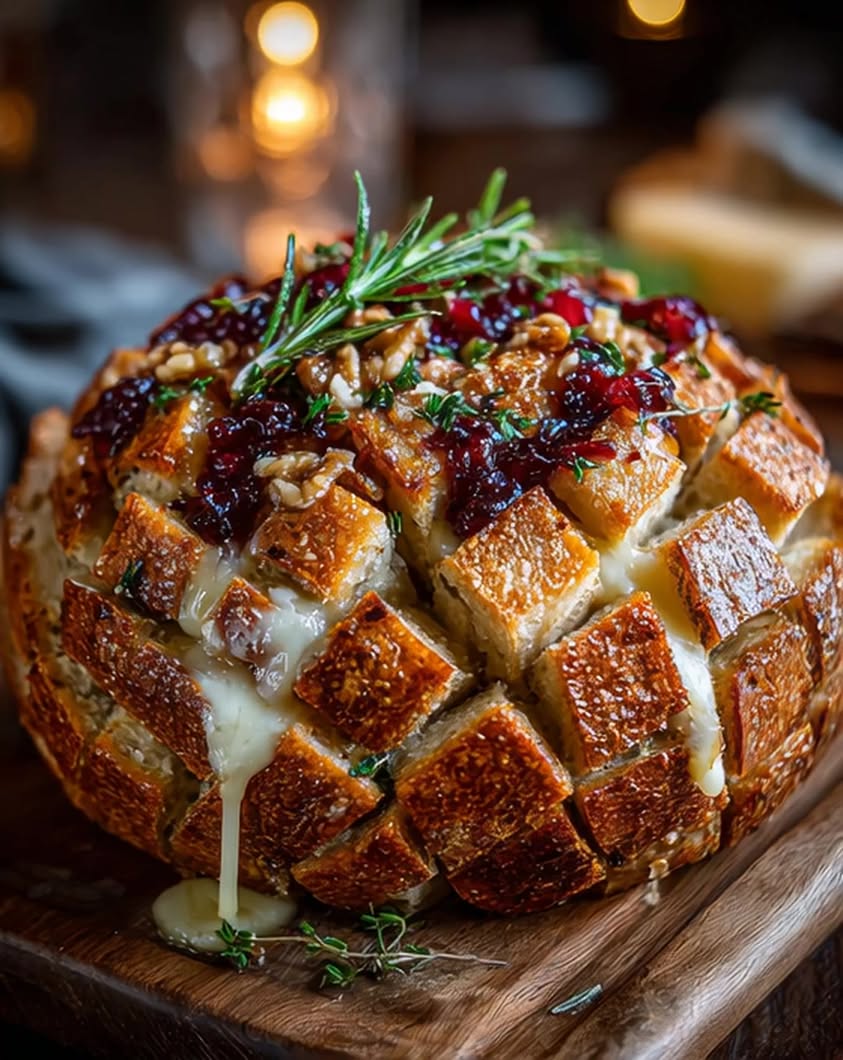
Cranberry Brie Honey Sourdough Pull-Apart Bread: The Ultimate Holiday Appetizer
Imagine pulling apart warm, crusty sourdough to reveal rivers of melted Brie and sweet-tart cranberries. This Cranberry Brie Honey Sourdough Pull-Apart Bread is not just a recipe; it is a centerpiece, a conversation starter, and the easiest way to impress a crowd. Consequently, it combines the tangy depth of artisan sourdough with the creamy luxury of Brie, the festive pop of cranberries, and the golden sweetness of honey. Ultimately, every pull-apart piece offers a perfect bite of contrasting textures and harmonious flavors.
Furthermore, this dish is incredibly versatile. For instance, you can serve it as a stunning appetizer for holiday parties, a special brunch item, or even a cozy snack for game day. The process is straightforward, requiring minimal hands-on time for maximum visual and flavorful impact. Moreover, the aroma that fills your kitchen as it bakes is absolutely irresistible, blending yeasty bread notes with melting cheese and fruit. This Cranberry Brie Honey Sourdough Pull-Apart Bread guarantees to be the first dish emptied on any table.
Quick Recipe Highlights
- Flavor Profile: This bread masterfully balances tangy, creamy, sweet, and tart notes. The sourdough provides a robust base, while the Brie adds a rich, buttery creaminess. Simultaneously, the cranberries offer a bright, acidic counterpoint, and the honey drizzle brings everything together with a floral sweetness.
- Texture: You get a fantastic contrast between the crispy, crusty exterior of the sourdough and its soft, chewy interior. The Brie melts into gooey pockets, and the cranberries provide juicy bursts. Additionally, the honey creates a delicate, sticky glaze on the baked crust.
- Aroma: While baking, the scent of toasted sourdough and melting cheese is profound. Hints of sweet honey and the warm, fruity scent of cranberries complete the olfactory experience, making your home smell like a professional bakery.
- Visual Appeal: The presentation is stunning, with a golden-brown, cross-hatched loaf oozing with white cheese and red berries. When you pull it apart at the table, the reveal of the molten interior creates a memorable moment of culinary theater.
- Skill Level Needed: This is a beginner-friendly recipe with a high reward-to-effort ratio. You need basic knife skills for scoring and the ability to assemble ingredients. No advanced baking or cooking techniques are required, making it perfect for novice entertainers.
- Special Equipment: You only need a sharp serrated knife, a baking sheet, and parchment paper. A pastry brush is helpful for applying butter but not essential. No stand mixers, proofing baskets, or special pans are necessary.
Recipe Overview
- Difficulty Level: We rate this recipe as easy because it uses a pre-baked sourdough loaf, eliminating the complex process of making bread from scratch. The assembly involves simple cutting, stuffing, and baking steps. Therefore, even someone with very limited kitchen experience can achieve beautiful, delicious results without stress.
- Category: This dish fits perfectly into multiple categories: Appetizers & Snacks, Holiday & Party Food, and Quick Breads. It is substantial enough for a light meal but designed for sharing. Consequently, it bridges the gap between casual finger food and a sophisticated starter.
- Cuisine: While pull-apart breads have roots in American party cuisine, this version draws inspiration from French ingredients (Brie) and rustic European baking traditions (artisan sourdough). The combination of cheese, fruit, and honey is a timeless pairing found in many culinary traditions, making it a globally appealing fusion dish.
- Cost: The cost is moderate, largely dependent on the price of a good quality sourdough boule and a wedge of Brie. Cranberries and honey are relatively inexpensive, especially when cranberries are in season. Overall, it is a cost-effective way to create a luxurious-tasting appetizer that feeds a group.
- Season: This recipe shines brightest during the fall and winter holidays, from Thanksgiving through New Year’s, when cranberries are freshest and festive menus prevail. However, using dried cranberries makes it a viable, delicious option year-round for any gathering.
- Occasion: It is ideal for holiday parties, potlucks, Friendsgiving, Christmas Eve gatherings, and game day spreads. It also makes a wonderful addition to a bridal or baby shower brunch. Essentially, any event where shareable, comforting, impressive food is welcome.
Why You’ll Love This Recipe
First, the taste and texture are utterly addictive. Each component plays a crucial role: the sourdough’s chew, the Brie’s decadent melt, the cranberry’s zing, and the honey’s silkiness. Consequently, every single bite delivers a complex symphony of flavors that is both comforting and exciting. This Cranberry Brie Honey Sourdough Pull-Apart Bread satisfies savory and sweet cravings simultaneously, making it a crowd-pleaser for all palates.
Next, the convenience factor is a major win. You start with a pre-made loaf, so there is no waiting for dough to rise or worrying about baking failures. The assembly takes about 15 minutes of active time. After that, the oven does the rest of the work. Moreover, cleanup is minimal, especially if you use parchment paper. This efficiency means you can spend more time with your guests and less time stuck in the kitchen.
From a nutritional perspective, this dish offers more than just empty calories. Sourdough bread, due to its fermentation process, can be easier to digest than regular bread and has a lower glycemic index. Cranberries are packed with antioxidants and vitamin C. Meanwhile, Brie provides a good source of protein and calcium. While it is certainly an indulgent treat, using quality ingredients means you are enjoying real food with recognizable benefits.
The social and entertaining value of this bread cannot be overstated. Food that encourages interaction, like pull-apart bread, naturally breaks the ice and gets people talking. The dramatic “pull” at the table creates a fun, engaging dining experience. Furthermore, its beautiful, festive appearance makes it the visual anchor of any appetizer spread, signaling to guests that this is a special occasion.
Finally, it is cost-effective and accessible. Compared to ordering a complex appetizer platter from a caterer or restaurant, making this at home saves significant money. The ingredients are readily available at most grocery stores year-round. You can easily adjust the recipe size up or down based on your guest count. Ultimately, this Cranberry Brie Honey Sourdough Pull-Apart Bread delivers gourmet results on a practical budget.
Historical Background and Cultural Significance
The concept of stuffed or pull-apart bread has ancient roots, with many cultures creating versions of filled dough. For example, Eastern European babka and Italian stromboli share the idea of encasing delicious fillings within bread. The modern American “pull-apart” or “pull-apart bread” trend, however, gained massive popularity in the late 20th and early 21st centuries, particularly as a party and holiday appetizer. It capitalized on the desire for interactive, shareable food that was both visually fun and deliciously messy.
Culturally, this Cranberry Brie Honey Sourdough Pull-Apart Bread sits at a delicious intersection. Sourdough bread carries the legacy of ancient grain fermentation, a technique revived by the modern artisan baking movement. Brie cheese hails from the Île-de-France region of France, representing centuries of cheesemaking tradition. Cranberries are one of North America’s native fruits, deeply tied to Thanksgiving and colonial history. Combining them is a celebration of both Old World craftsmanship and New World ingredients.
The recipe’s evolution is a testament to modern home cooking trends. It likely began as a simpler garlic butter pull-apart bread. Creative cooks then started experimenting with sweet and savory stuffings, leading to combinations like cinnamon sugar, spinach and artichoke, and ultimately, cheese and fruit. The addition of Brie and cranberry specifically speaks to the upscale appetizer trend, transforming humble pull-apart bread into something suitable for a sophisticated holiday table.
Regional variations of this concept are endless. In the American South, you might find a version with pimento cheese and jalapeños. On the West Coast, goat cheese and sun-dried tomatoes could be the star. In Australia, a similar concept might feature Vegemite and sharp cheddar. The basic technique of scoring, stuffing, and baking a loaf is a global canvas for local flavors. Our Cranberry Brie Honey Sourdough Pull-Apart Bread is a classic, crowd-approved iteration that has become a modern holiday staple in many households.
Ingredient Deep Dive
Sourdough Boule: Authentic sourdough is leavened naturally with a wild yeast and lactobacillus culture, or starter. This long fermentation develops its signature tangy flavor, open crumb, and crisp crust. It also breaks down gluten and phytic acid, making it potentially easier to digest. When selecting a boule, look for one with a dark, blistered crust that feels heavy for its size. A good sourdough should sound hollow when tapped on the bottom. Store it at room temperature in a paper bag for a day or two; for longer storage, freeze the whole loaf.
Brie Cheese: Brie is a soft-ripened cheese with a creamy, edible white rind of penicillium candidum mold. Originating from France, it is known as the “Queen of Cheeses.” The rind contributes a subtle mushroomy flavor, while the interior becomes luxuriously runny when warmed. For baking, a ripe Brie that yields slightly to pressure is ideal. You can use a wedge or a small round. If you dislike the rind, you can trim it off, though it melts seamlessly and adds flavor. For substitutions, Camembert is nearly identical, while a creamy goat cheese or Havarti would offer a different but pleasant profile.
Fresh Cranberries: These native North American berries are harvested in the fall and are famously tart due to their high acid and tannin content. They are a powerhouse of vitamin C, fiber, and unique antioxidants called proanthocyanidins, which support urinary tract health. Choose berries that are firm, shiny, and bright to deep red. Avoid soft, shriveled, or brown ones. Fresh cranberries freeze beautifully; just spread them on a tray to freeze solid before transferring to a bag. You can use frozen berries directly in this recipe without thawing. Dried cranberries can be substituted for a chewier, sweeter result.
Honey: Honey is one of humanity’s oldest sweeteners, produced by bees from flower nectar. Its flavor varies dramatically based on the floral source. In this recipe, it adds a floral sweetness that balances tartness and enhances browning. Honey also contains trace enzymes, minerals, and antioxidants. For the best flavor, use a locally sourced, raw honey if possible. In a pinch, maple syrup or agave nectar can be used, but they will impart their own distinct flavors. Warm the honey slightly if it is too thick to drizzle easily.
Butter & Herbs: Unsalted butter allows you to control the overall saltiness of the dish. It helps create a golden, flavorful crust on the bread. Fresh rosemary or thyme introduces an aromatic, earthy note that bridges the sweet and savory elements. If using dried herbs, use about one-third the amount. For a dairy-free version, a high-quality plant-based butter works well. The herb component is flexible; try sage for a more autumnal feel or omit it entirely for a pure cheese-and-fruit flavor.
Common Mistakes to Avoid
- Using a Dense, Sandwich-Style Loaf: A soft, pre-sliced sandwich loaf will turn soggy and lack the structural integrity needed for pulling apart. Always choose a rustic, crusty sourdough boule with a firm crust and chewy interior. This type of bread holds up to the stuffing and baking process.
- Cutting All the Way Through the Bottom Crust: When scoring the bread, you must stop about half an inch from the bottom. If you cut all the way through, the loaf will fall apart during stuffing and baking, and the fillings will leak out onto the pan instead of staying nestled inside.
- Overstuffing the Cuts: It is tempting to jam as much cheese and cranberry as possible into each slit. However, overstuffing can prevent the bread from baking evenly and cause the fillings to spill out excessively. A moderate amount in each cut allows for proper heat circulation and a cleaner presentation.
- Using Cold, Hard Brie: Trying to slice or cube refrigerator-cold Brie is difficult and messy. Let the cheese sit at room temperature for 15-20 minutes before handling. This slight softening makes it much easier to cut and ensures it will melt beautifully and evenly in the oven.
- Skipping the Butter Brush: The melted butter mixture is crucial for flavor and texture. It soaks into the scored edges, helping the bread become crispy and golden brown while infusing it with herbal notes. Do not skip this step, as it transforms the exterior from plain bread to a savory, fragrant crust.
- Underbaking: Removing the bread too early because the top looks done can leave the interior doughy and the cheese not fully melted. Bake until the bread is deeply golden brown and you can see the cheese bubbling vigorously inside the cuts. The visual and auditory cues are key.
- Not Letting it Rest Before Serving: Pulling the bread apart immediately from the oven can lead to burns from hot cheese and steam. A brief 5-minute rest allows the molten fillings to settle slightly, making it safer and easier to handle while still being gloriously warm and gooey.
- Using Only Sweetened Dried Cranberries: If substituting dried for fresh, be mindful that sweetened dried cranberries (like Craisins®) add a lot of extra sugar. This can make the final dish cloyingly sweet. Seek out unsweetened or reduced-sugar dried cranberries, or balance the sweetness by reducing the amount of honey drizzled on top.
Essential Techniques
Scoring the Bread: This technique involves making deep, parallel cuts in the loaf without severing the bottom crust. Use a sharp serrated knife and a sawing motion for clean cuts. The purpose is to create pockets for the fillings and guide how the bread will pull apart later. Consistent depth is important; a ruler or visual guide can help. The common pitfall is cutting too shallowly, which doesn’t create enough space, or too deeply, which compromises the loaf’s structure. Successful scoring results in a loaf that is still firmly connected at the base but easily separable into segments.
Cross-Cutting the Grid: After the first set of parallel cuts, you rotate the loaf 90 degrees and score again to create a diamond or square pattern. This step is crucial for the classic pull-apart effect, as it creates individual, stuff-able sections. Apply the same pressure and depth as with the first set of cuts. The visual cue for success is a uniform grid across the top of the boule. This technique transforms a solid loaf into a customizable vessel ready to receive delicious fillings.
Butter Basting: Gently separating the scored sections and brushing the melted herb butter into every crevice is a key flavor-building step. Use a pastry brush or spoon to ensure the butter penetrates. This not only seasons the bread but also promotes even browning and a crispier exterior as it bakes. The common mistake is just brushing the top surface, which leaves the interior cuts bland. Proper basting means you see butter glistening deep within the grid lines before adding the cheese and berries.
Pro Tips for Perfect Cranberry Brie Honey Sourdough Pull-Apart Bread
First, slightly stale sourdough works even better than fresh. A day-old loaf has a drier interior, which soaks up the butter and cheese flavors more effectively without becoming mushy. If you have fresh bread, you can dry it out slightly in a low oven for 10 minutes before scoring and assembling.
Second, for extra flavor, toast the whole sourdough boule lightly before you score it. A quick 5-10 minutes in a 350°F oven firms up the crust and adds another layer of nutty, toasted flavor that stands up to the rich fillings.
Third, mix a little of the honey into the melted butter before brushing. This distributes the sweetness more evenly throughout the bread, ensuring every pull-apart piece has a hint of honey, not just the top layer where you drizzle it later.
Fourth, add a sprinkle of flaky sea salt over the assembled bread just before baking. The salty flakes contrast wonderfully with the sweet honey and tart cranberries, elevating the overall flavor profile to a more sophisticated level.
Fifth, if your Brie is very ripe and runny, you can simply tear it into pieces with your fingers instead of trying to slice it neatly. This rustic approach is faster and ensures you get creamy pockets in every nook.
Sixth, place a baking sheet on the rack below the one holding your bread. This catches any potential cheese or berry drips, preventing smoke and a messy oven cleanup, especially important if your Brie is particularly gooey.
Seventh, for a beautiful finishing touch, garnish the baked bread with additional fresh rosemary sprigs and a few whole cranberries. This reinforces the visual appeal and lets guests know exactly what flavors to expect.
Eighth, serve it with small dishes of extra warmed honey and a knife for spreading any residual Brie. This allows guests to customize their bites further and ensures no delicious component goes to waste.
Variations and Adaptations
Regional Variations: Explore global flavors by changing the fillings. For a Mediterranean twist, use crumbled feta, kalamata olives, and chopped sun-dried tomatoes with oregano. For a taste of the Southwest, try pepper jack cheese, cooked chorizo, and pickled jalapeños. An Italian version could feature fresh mozzarella pearls, marinara sauce, and basil.
Seasonal Adaptations: Adapt the fruit to the season. In spring, use asparagus tips and goat cheese. For summer, try fresh peaches or cherries with burrata and basil. In autumn, roasted apples or pears with sharp cheddar and a sprinkle of nutmeg are divine. The basic method remains the same, celebrating produce at its peak.
Dietary Modifications: For a gluten-free version, use a sturdy, bakery-style gluten-free sourdough loaf. For dairy-free, substitute the Brie with a melty vegan cheese alternative and use plant-based butter. To reduce refined sugars, omit the honey or use a light drizzle of pure maple syrup.
Flavor Variations: Experiment with different cheese and condiment pairings. Blue cheese and fig jam create a bold, sweet-and-funky combination. Gouda and caramelized onions offer deep, savory sweetness. For a holiday breakfast version, try cream cheese, orange zest, and a cinnamon-sugar butter brush.
Texture Modifications: Add crunch by sprinkling chopped walnuts or pecans into the cuts with the cheese and cranberries. For a more cohesive, dip-like interior, mix the Brie (rind removed) with a little cream to create a spreadable cheese mixture before stuffing.
Presentation Alternatives: Instead of one large boule, use individual sourdough rolls or a baguette for personal-sized portions. You can also create a “wreath” shape by arranging scored and stuffed dinner rolls in a circle on a baking sheet before baking.
Serving and Presentation Guide
Plating is simple yet impactful. Place the fully baked Cranberry Brie Honey Sourdough Pull-Apart Bread on a large wooden cutting board or a rustic ceramic platter. This enhances its homemade, artisanal appeal. Have a bread knife nearby for anyone who wants a neater slice, though encourage hands-on pulling for the full experience. Provide small plates and napkins for guests, as this can be a delightfully messy affair.
Garnishing right before serving adds freshness and color. A final drizzle of honey, a sprinkle of fresh thyme leaves, and a few reserved whole cranberries make it look professionally finished. A light dusting of powdered sugar is another option for a sweeter presentation, especially if you’ve leaned into a dessert-like variation.
Traditional accompaniments are minimal, as the bread is a star on its own. However, offering a side bowl of extra honey for drizzling and a small dish of high-quality olive oil for dipping any plain crust pieces is a thoughtful touch. For a more substantial spread, pair it with a simple green salad dressed with a vinaigrette to cut through the richness.
Modern serving suggestions include setting it as the centerpiece of a grazing board. Surround it with cured meats like prosciutto, additional fruits like grapes and figs, and some Marcona almonds. This transforms it from a standalone appetizer into the anchor of a complete no-fuss meal for entertaining.
Temperature is critical. Serve this bread warm, when the cheese is at its peak meltiness. If it sits too long and the cheese resolidifies, simply pop it back in a 350°F oven for 5-8 minutes to re-melt everything. The ideal serving window is within 10-15 minutes of coming out of the oven.
Portion control is naturally built in, as people pull off pieces as they desire. One standard boule typically serves 6-8 people as an appetizer. If it is part of a larger spread with many other items, it can easily stretch to serve 10-12, as people will take smaller pieces to sample everything.
Wine and Beverage Pairing
Wine pairings should complement the sweet, tart, creamy, and tangy notes. A sparkling wine like Champagne or Prosecco is exceptional; the bubbles cut through the richness of the Brie and refresh the palate. A slightly sweet white wine, such as a Riesling or Gewürztraminer, mirrors the honey and balances the cranberry tartness beautifully. For red wine lovers, a light-bodied, low-tannin Pinot Noir works well, as it won’t overpower the delicate flavors.
Non-alcoholic alternatives are just as important. Sparkling apple cider offers the same celebratory effervescence as Champagne. A tart cranberry spritzer (cranberry juice mixed with club soda and a lime wedge) echoes the main ingredient. For a cozy option, a honey-sweetened herbal tea, like chamomile or peppermint, makes a lovely pairing, especially for a brunch or afternoon gathering.
Coffee and tea pairings are excellent for a brunch setting. A medium-roast coffee with low acidity complements the bread’s richness without clashing. A black tea like Earl Grey, with its citrusy bergamot notes, can highlight the fruitiness of the cranberries. Avoid overly bitter or dark roasts that might compete with the complex flavors of the bread.
Temperature considerations are straightforward: serve sparkling wines and spritzers well-chilled. White wines should also be served cold. Red wines and non-alcoholic ciders are best at a cool room temperature. Coffee and tea, of course, should be served hot to provide a comforting contrast to the warm bread.
Serving suggestions include setting up a small beverage station near the food. Offer a choice of two wines (one sparkling, one still) and a signature non-alcoholic drink in a dispenser. Provide appropriate glassware so guests can easily help themselves, keeping the hosting experience relaxed and fluid.
Storage and Shelf Life
Storage methods for leftovers are simple but time-sensitive. Once completely cooled to room temperature, wrap any remaining Cranberry Brie Honey Sourdough Pull-Apart Bread tightly in aluminum foil or place it in an airtight container. Refrigerate it for up to 2 days. The bread will lose its crisp exterior but the flavors will remain.
Temperature requirements are strict: never leave this cheese-filled bread at room temperature for more than 2 hours due to food safety concerns with dairy. Always refrigerate leftovers promptly. For longer storage, freezing is the best option (see below).
Container recommendations include a large airtight container or a double layer of heavy-duty foil. If using a container, ensure it is large enough that the bread isn’t crushed. Separating layers with parchment paper can help if you have multiple pieces, though it’s best stored as a whole or half loaf.
Signs of spoilage include an off or sour smell (different from the tang of sourdough), visible mold growth (which can appear as fuzzy spots in colors like green, white, or black), or an excessively hard or slimy texture. When in doubt, throw it out.
Reheating instructions are crucial for restoring enjoyment. Do not microwave, as it will make the bread rubbery and the cheese greasy. Instead, reheat in a 350°F oven for 10-15 minutes, wrapped in foil, until warmed through. For the last 2-3 minutes, open the foil to re-crisp the crust if desired.
Freezing guidelines: Wrap the completely cooled bread tightly in plastic wrap, then in foil. Freeze for up to 1 month. Thaw overnight in the refrigerator before reheating using the oven method above. Note that the texture of the cranberries may become softer after freezing and thawing.
Make Ahead Strategies
Prep timeline can be stretched to make entertaining easier. You can score the sourdough boule up to 4 hours in advance; just wrap it loosely in a clean kitchen towel to prevent it from drying out too much. The herb butter can be melted and mixed a day ahead and gently reheated before using. The Brie can be cubed and the cranberries measured out and stored separately in the fridge.
Storage between steps is straightforward. Keep pre-measured ingredients in separate containers in the refrigerator. The cranberries and cubed Brie can share a container. Bring the Brie to room temperature for 15 minutes before assembly to ensure easy handling and proper melting.
Quality impact assessment shows that full assembly more than 30 minutes before baking is not recommended. The butter will make the bread soggy, and the cranberries may start to release too much moisture. For the best texture, assemble the bread just before you plan to bake it, as the recipe directs.
Assembly tips for a streamlined process: set up a mise en place with your scored bread, melted butter brush, bowls of Brie and cranberries, and honey. This assembly-line approach makes the 15-minute prep time accurate and stress-free, even if you’re making multiple loaves.
Reheating guidelines for a make-ahead bake: You can fully bake the bread, let it cool completely, wrap it, and refrigerate it. The day of serving, reheat it, wrapped in foil, in a 325°F oven for 15-20 minutes until hot throughout. Then, unwrap and broil for 1-2 minutes to re-crisp the top if needed.
Fresh element additions should be considered if making ahead. If reheating, add a fresh drizzle of honey and a new herb garnish after reheating. This brightens up the flavors and presentation, making it taste and look freshly made.
Scaling Instructions
Halving the recipe is perfect for a small household or intimate dinner for two. Use a small sourdough boule (about 6 inches in diameter) and simply halve all other ingredient quantities. The baking time may reduce by 5-7 minutes, so watch for visual cues like golden browning and bubbling cheese.
Doubling or tripling is easy for large parties. Use multiple baking sheets, ensuring there is at least 2 inches of space between each loaf on the pan for proper air circulation. You may need to bake in batches or rotate the sheets halfway through baking for even browning. The prep time will increase linearly, but the hands-on work per loaf decreases as you get into a rhythm.
Equipment adjustments for scaling up are minimal. You will need larger or additional baking sheets. If making more than two loaves, consider using oven racks in the upper and lower thirds of the oven and swapping their positions midway through baking. Ensure you have a large enough workspace for assembly.
Timing modifications are minor. When baking multiple loaves on one sheet, they may require an extra 3-5 minutes in the oven. Always rely on the visual indicators—deep golden crust and actively bubbling filling—rather than the timer alone. The internal temperature of the bread should reach at least 160°F.
Storage considerations for scaled recipes are the same per loaf. However, if you have many leftovers, consider freezing some of the baked loaves whole for future quick meals or unexpected guests. Clearly label them with the date and reheating instructions.
Nutritional Deep Dive
Macro breakdown per serving is an estimate, as it varies with loaf size and stuffing amount. A typical serving provides a balance of carbohydrates from the bread and cranberries, a moderate amount of fat and protein from the Brie and butter, and a small amount of natural sugars from the honey and fruit. It is an energy-dense food, ideal for sharing as part of a varied spread.
Micronutrient analysis reveals contributions from each ingredient. Sourdough offers B vitamins and minerals like selenium and folate from the fermented grains. Cranberries provide a notable amount of vitamin C, vitamin E, and manganese. Brie contributes vitamin B12, riboflavin, and calcium. Honey contains trace amounts of minerals and antioxidants.
Health benefits are linked to the quality of ingredients. The fermentation in sourdough may promote gut health. The antioxidants in cranberries support cellular health. The calcium in Brie is vital for bone strength. Consuming this as part of a meal with protein and vegetables can balance its indulgent nature.
Dietary considerations are important to note. This recipe contains gluten (sourdough), dairy (Brie, butter), and added sugars (honey). It is not suitable for those with related allergies or intolerances without modification. For general health, portion awareness is key, as it is a rich, calorie-dense dish.
Portion analysis shows that one-sixth of a standard loaf is a satisfying serving as an appetizer. This portion provides a meaningful taste experience without overindulgence. Pairing it with lighter fare, like crudités or a lean protein, creates a more balanced nutritional profile for the entire meal.
Weight management tips include being mindful of the pull-apart nature, which can lead to unintentional overeating. Serve it as a planned part of your meal, not an open-ended snack. Enjoy a single portion mindfully, savoring the combination of flavors and textures, which can lead to greater satisfaction with less food.
Dietary Adaptations
Gluten-Free: Substitute the sourdough boule with a round, crusty gluten-free artisan loaf. Many bakeries and stores now offer excellent options. Ensure all other ingredients (like pre-shredded cheese) are certified gluten-free, as cross-contamination is possible. The method remains identical.
Dairy-Free: Replace Brie with a melty vegan cheese alternative; brands that mimic soft, creamy cheeses work best. Use a high-quality plant-based butter for the herb brush. Check that your bread is vegan (no dairy or honey in the dough) and use maple syrup instead of honey for the drizzle.
Vegan: Follow the dairy-free adaptations above. Additionally, ensure the sourdough is vegan (some use milk or honey). Use maple syrup or agave nectar instead of honey. For the cranberry element, fresh or frozen are ideal, as some dried cranberries are processed with animal-derived sugar.
Low-Carb/Keto: This recipe is challenging to adapt authentically due to the bread base. A conceptual alternative is to make “pull-apart” rolls using a keto-friendly fathead or mozzarella dough, then stuff them with Brie, low-sugar cranberries (like fresh or specially sweetened), and sugar-free honey substitute.
Paleo: Similar to keto, the grain-based sourdough is not paleo. A creative approach involves using a paleo-friendly bread recipe made with almond or coconut flour to form a small boule, then proceeding with the stuffing. Use ghee instead of butter and ensure the Brie is from grass-fed cows if including dairy.
Low-FODMAP: Sourdough made with a long fermentation can be low in FODMAPs in limited servings. Use a genuine, traditionally fermented sourdough. Substitute Brie with a hard, aged cheddar (low in lactose), use maple syrup instead of honey (high in fructose), and ensure cranberry quantity fits within Monash University guidelines.
Troubleshooting Guide
Bread is Soggy in the Middle: This usually means underbaking or using a loaf with too soft a crust. Next time, choose a crustier boule and bake until you see vigorous bubbling in the center cuts. For the current loaf, you can return it to the oven for an additional 5-10 minutes, possibly uncovered, to drive off excess moisture.
Cheese Leaked Out and Burned on the Pan: This is caused by overstuffing or cutting too deeply. It is mostly a cosmetic issue. Carefully lift the bread off the pan with a spatula, leaving the burnt cheese behind. Place it on a clean serving board. The bread inside is still perfectly delicious.
Bread is Too Brown but Cheese Isn’t Melted: Your oven rack may be too high, or the oven temperature too high. Next time, bake in the center of the oven. If the top is browning too fast, tent the loaf loosely with aluminum foil for the remainder of the baking time to protect it while the interior finishes.
Cranberries are Still Too Tart/Hard: Fresh cranberries vary in tart{“success”:true,”message”:”Recipe created successfully”,”post_id”:9298,”tasty_recipe_id”:9298,”shortcode”:”“}

I’m Billy, a classically trained culinary school graduate from The Culinary Institute of America with over 12 years in the restaurant industry and over 19 years of cooking experience.