
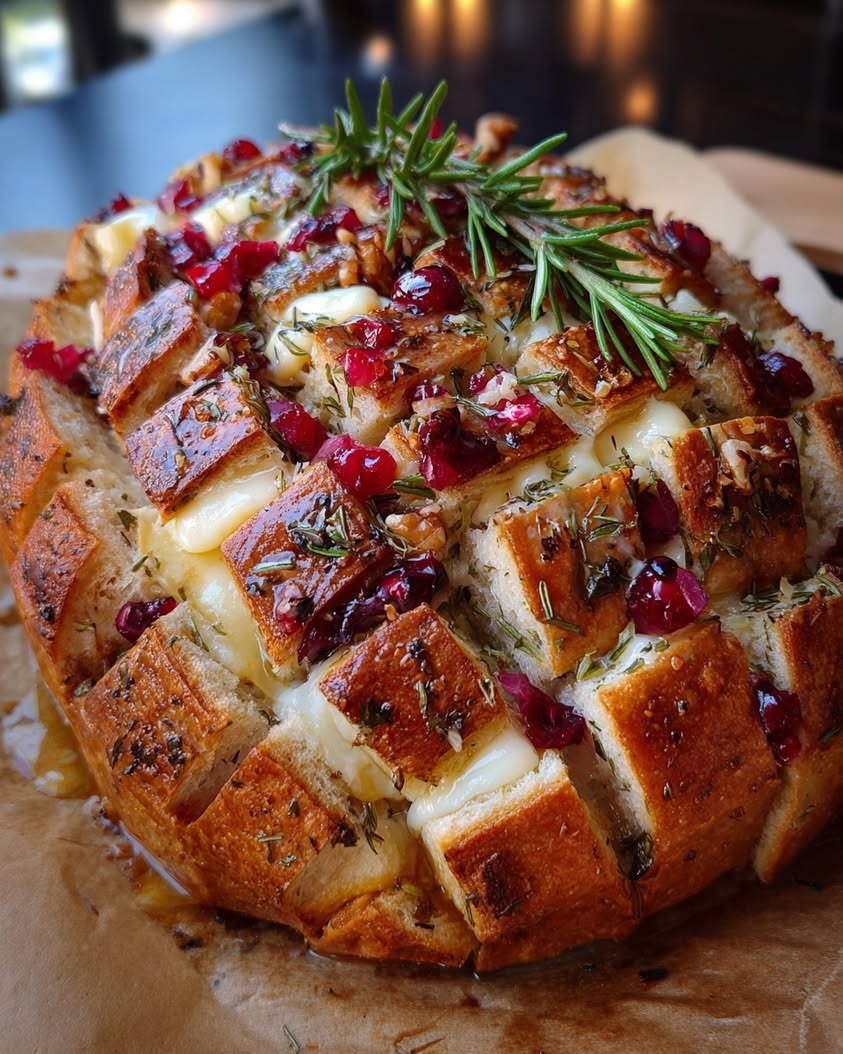
Cranberry Brie Sourdough Pull-Apart Bread Recipe for Holiday Gatherings
Imagine pulling apart warm, crusty sourdough to reveal rivers of melted brie and sweet-tart cranberries. This Cranberry Brie Sourdough Pull-Apart Bread recipe for holiday gatherings transforms a simple loaf into a stunning, shareable centerpiece. Consequently, it combines the rustic charm of artisan bread with the indulgent luxury of a cheese pull, making it an unforgettable appetizer. Moreover, the aroma of toasting bread and melting cheese will draw everyone to your kitchen, creating an instant festive atmosphere.
This recipe is surprisingly simple, yet it delivers maximum visual and flavorful impact. Essentially, you start with a round sourdough loaf, cut a crosshatch pattern, and stuff the pockets with creamy brie and vibrant cranberry sauce. After that, a generous brush of herbed butter and a quick bake in the oven work magic. The result is a golden, pull-apart masterpiece where every piece is loaded with gooey cheese and fruity filling. Ultimately, this Cranberry Brie Sourdough Pull-Apart Bread is the ultimate crowd-pleaser for any festive occasion.
Furthermore, the beauty of this dish lies in its versatility and ease. You can use homemade or store-bought components without sacrificing quality. The contrast between the tangy sourdough crust, the rich and creamy brie, and the bright pop of cranberry creates a perfect balance in every bite. Whether you host a large family dinner or an intimate friendsgiving, this bread promises to be the star of the appetizer spread. Indeed, it is a recipe that looks like you spent hours, but comes together with minimal fuss.
Quick Recipe Highlights
- Flavor Profile: This bread masterfully balances tangy, creamy, and sweet notes. The sourdough provides a pleasant tang, while the brie offers a rich, buttery creaminess. Simultaneously, the cranberry sauce cuts through the richness with its vibrant, sweet-tart flavor, creating a perfectly harmonious bite.
- Texture: You experience a wonderful contrast of textures in every pull. The exterior bakes to a satisfyingly crisp and golden crust. Meanwhile, the interior remains soft and pillowy, with pockets of luxuriously melted brie and sticky-sweet cranberry jam that ooze with every tear.
- Aroma: As it bakes, the kitchen fills with an irresistible fragrance. The scent of toasting, buttery sourdough mingles with the earthy notes of melting cheese and the sweet, fruity whisper of cranberries. This aromatic combination is quintessentially festive and utterly inviting.
- Visual Appeal: The presentation is stunningly rustic and inviting. The golden, crosshatched loaf glistens with herb butter, with hints of red cranberry and white cheese peeking through the cracks. Served whole on a board, it makes a dramatic and beautiful centerpiece for any table.
- Skill Level Needed: This is a beginner-friendly recipe requiring no advanced baking skills. The technique involves simple cutting and stuffing, making it accessible to anyone. However, attention to timing ensures the cheese melts perfectly without the bread burning.
- Special Equipment: You need only a sharp serrated knife for cutting, a baking sheet, and parchment paper. A pastry brush is helpful for applying the butter, but a spoon works in a pinch. No special or expensive kitchen tools are required for success.
Recipe Overview
- Difficulty Level: We rate this recipe as easy because it uses a pre-baked sourdough loaf as the foundation. The most technical step is cutting the crosshatch pattern without slicing through the bottom, which is simple with guidance. Additionally, the assembly is straightforward and forgiving, perfect for novice cooks and busy hosts alike.
- Category: This dish falls squarely into the appetizer or snack category, ideal for sharing. It can also serve as a decadent side dish for a holiday soup or salad. Furthermore, it blurs the line between bread course and cheese plate, offering a complete flavor experience in one dish.
- Cuisine: While not tied to one specific tradition, it draws inspiration from American holiday cooking and French bistro-style baked cheese dishes. The use of sourdough nods to San Francisco-style baking, and the brie and cranberry combination is a classic flavor pairing in modern fusion cuisine.
- Cost: This is a moderately priced appetizer, with the sourdough boule being the main investment. Using a quality store-bought cranberry sauce and a wedge of brie keeps costs manageable. Overall, it delivers gourmet appeal for a fraction of the price of a fancy cheese board.
- Season: This recipe shines brightest during the fall and winter holiday season, from Thanksgiving through New Year’s. Cranberries are at their peak, and the warm, comforting nature of the dish suits cooler weather. Nevertheless, it can be made year-round with excellent results.
- Occasion: It is perfect for holiday gatherings, potlucks, game day parties, or book club meetings. It works beautifully as a festive starter for Christmas dinner or a centerpiece for a casual cocktail party. Essentially, any event that calls for a memorable, shareable food is the right occasion.
Why You’ll Love This Recipe
First and foremost, the taste and texture are utterly irresistible. Each pull reveals a perfect bite: the slight resistance of the crust gives way to soft, warm bread, immediately followed by the luxurious melt of brie and the bright, jammy burst of cranberry. This combination of savory, creamy, and tart is universally appealing. Moreover, the interactive, shareable nature of the dish adds a fun, communal element to your meal that a pre-sliced appetizer simply cannot match.
From a convenience standpoint, this recipe is a host’s dream. You can prepare the entire loaf up to several hours in advance, cover it, and refrigerate it until ready to bake. Consequently, you free up crucial time before your guests arrive. The baking time is short, meaning you can pop it in the oven just as people start to gather, ensuring it arrives at the table piping hot and incredibly aromatic. Essentially, you get maximum impact with minimal last-minute effort.
While indulgent, this Cranberry Brie Sourdough Pull-Apart Bread offers some nutritional advantages compared to other party foods. Sourdough bread is often easier to digest due to its fermentation process. Cranberries are packed with antioxidants and vitamin C. Additionally, brie provides a good source of calcium and protein. When enjoyed in moderation as part of a varied spread, this dish can be a satisfying component of your festive eating.
The social and entertaining value of this bread cannot be overstated. It naturally becomes a focal point, encouraging conversation and interaction as people gather around to pull off their piece. It eliminates the need for serving utensils and plates for an appetizer, making cleanup easier. Furthermore, its impressive appearance guarantees compliments and makes everyone feel treated to something special, elevating the entire mood of your gathering.
Finally, this recipe is cost-effective and accessible. You likely need to buy only the sourdough loaf, brie, and cranberry sauce, as butter and herbs are pantry staples. Compared to assembling a large charcuterie board with multiple cheeses and meats, this is a budget-friendly way to serve a crowd. You can also easily adapt it based on what’s available or on sale, making it a versatile and smart choice for any entertainer.
Historical Background and Cultural Significance
The concept of stuffed or pull-apart bread has roots in many global cuisines. For instance, Ukrainian pampushky or Georgian khachapuri feature stuffed dough. The American “pull-apart bread” or “bubble bread” trend gained popularity in the mid-20th century, often using canned biscuits. Our Cranberry Brie Sourdough Pull-Apart Bread recipe for holiday gatherings is a modern, elevated twist on this comforting concept. It specifically merges the artisan sourdough revival with the classic holiday flavor pairing of brie and cranberry, creating a contemporary party staple.
Culturally, bread holds significance as a symbol of community and sharing across countless societies. Breaking bread together is a universal act of fellowship. This recipe physically embodies that symbolism; the act of pulling the bread apart and sharing it directly mirrors the communal spirit of holidays. Meanwhile, brie cheese hails from France and is synonymous with celebration and luxury. Combining it with distinctly North American cranberries creates a fusion that feels both familiar and special for modern holiday tables.
The evolution of this recipe follows broader food trends. The rise of food blogging and social media in the 2010s popularized visually dramatic, shareable foods like pull-apart breads and cheese pulls. Simultaneously, the sourdough baking boom, especially during recent times, put quality artisan loaves in home kitchens. Consequently, cooks began applying the stuffed bread technique to these robust sourdough rounds. The brie and cranberry combination, long a favorite in pastry wraps and tarts, was a natural, festive filling for this new format.
Regional variations of this idea are endless. In the South, you might find a version with pimento cheese and jalapeño. In coastal areas, crab dip-stuffed bread could be popular. The Mediterranean might inspire a version with olives, feta, and sun-dried tomatoes. Our specific Cranberry Brie Sourdough Pull-Apart Bread recipe for holiday gatherings leans into a Northern and Midwestern holiday aesthetic, where cranberries are a native crop and hearty breads are cherished. This adaptability is key to its enduring and widespread appeal.
Ingredient Deep Dive
Sourdough Boule: A round sourdough loaf, or boule, is the essential foundation. True sourdough is leavened naturally with a wild yeast starter, giving it a complex, tangy flavor and a chewy, open crumb. This robust structure is crucial; it holds up to stuffing and baking without becoming soggy. When selecting a loaf, choose one with a sturdy, crisp crust and a relatively dense interior. Avoid loaves that are too soft or airy. If unavailable, a sturdy country white or peasant bread loaf can substitute, though the signature tang will be missing.
Brie Cheese: Brie is a soft-ripened cheese from France, known for its edible white rind and creamy, buttery interior. As it bakes, it transforms into a decadently liquid filling. For best results, use a ripe brie that yields slightly to pressure. You can leave the rind on—it’s edible and helps contain the melt. If you’re sensitive to its flavor, you can trim it off. For a stronger flavor, try a triple-creme brie. As a substitute, Camembert works beautifully, offering a similar texture with a more earthy flavor.
Cranberry Sauce: This provides the essential sweet-tart contrast. Whole-berry cranberry sauce offers delightful bursts of fruit, while jellied sauce gives a smoother, more consistent spread. For superior flavor, consider a homemade sauce with orange zest or a splash of port. The sugar in the sauce also promotes caramelization on the bread’s edges. In a pinch, fig jam, apricot preserves, or even a high-quality orange marmalade can work as substitutes, each bringing a different but delicious fruit note to the dish.
Herbed Butter: The butter mixture is the unsung hero that elevates the entire loaf. Melted butter is infused with fresh herbs like rosemary or thyme, which complement the cranberry and cheese beautifully. Garlic powder or a minced fresh garlic clove adds a savory depth. Brushing this generously over the scored bread ensures every surface crisps up and browns evenly, while also carrying the herbal aroma into every nook. Using salted butter enhances all the other flavors. For a dairy-free version, a high-quality olive oil or vegan butter can be used.
Common Mistakes to Avoid
- Cutting Through the Bottom: The most common error is slicing the crosshatch all the way through the bottom crust. This causes the filling to leak out and the loaf to lose its structural integrity. Always use a sharp serrated knife and cut about 3/4 of the way down, using your fingers to gently pry open the squares.
- Using Cold Brie: Attempting to cube cold, firm brie is difficult and messy. Let the brie sit at room temperature for 20-30 minutes before dicing. This allows it to soften slightly, making it easier to cut and ensuring it melts evenly and quickly in the oven.
- Overstuffing the Pockets: It’s tempting to jam every pocket full, but overstuffing can prevent the bread from baking evenly. The cheese may not melt properly in the center, and the loaf can become too heavy. A small cube of brie and a teaspoon of cranberry sauce per square is sufficient.
- Skipping the Butter Brush: The herbed butter is not just for flavor; it promotes browning and prevents the exposed bread from drying out. Be generous and get the butter into all the cracks. Otherwise, you risk having dry, pale sections of bread amidst the gooey pockets.
- Underbaking: Removing the bread too early because the top looks brown can leave the cheese in the center unmelted. The top may brown quickly due to the butter and sugar. Always bake until you see the cheese actively bubbling in the center cuts, a sure sign of thorough heating.
- Using a Flimsy Bread: A soft, supermarket sandwich loaf will turn to mush under the weight of the filling and butter. The structure of a crusty, hearty sourdough is non-negotiable. It provides the necessary support and textural contrast that makes the dish work.
- Not Serving Immediately: This dish is at its absolute peak within 10-15 minutes of leaving the oven. As it sits, the cheese solidifies and the bread loses its crispness. Time your bake so it comes out just as guests are ready to eat. Have your serving board and tools ready to go.
- Ignoring Oven Hot Spots: If your oven has hot spots, the bread may brown unevenly. Halfway through baking, rotate the baking sheet 180 degrees to ensure uniform color and cooking. This simple step guarantees a perfectly golden loaf from edge to edge.
Essential Techniques
Scoring the Crosshatch Pattern: This technique creates the pockets for filling and the iconic pull-apart structure. Use a long, sharp serrated knife and score a grid pattern, spacing cuts about 1 inch apart. Apply steady, gentle pressure and let the knife do the work. The key is to stop before cutting through the bottom crust. Imagine the loaf is about 1 inch thick at the base; aim to leave that base intact. After scoring, use your fingers to gently open each square, creating a little well.
Stuffing Evenly: Consistent stuffing ensures every bite is perfect. Work systematically, perhaps starting from the center and moving outward. Place a cube of brie into the bottom of each pocket, then top with a small dollop of cranberry sauce. Using two small spoons or a small cookie scoop for the cranberry sauce helps with neatness and speed. Try to keep the fillings within the pockets and not overflowing excessively onto the top, as this can cause burning.
Butter Basting: Thoroughly applying the herbed butter is critical for flavor and texture. Use a pastry brush to generously coat the entire top and sides of the loaf. Then, gently separate the scored squares slightly and drizzle or brush butter down into the cracks. This step seasons the interior and ensures the sides of each bread square get crispy. If the butter starts to solidify, briefly re-warm it. The goal is a glossy, thoroughly coated loaf before it hits the oven.
Pro Tips for Perfect Cranberry Brie Sourdough Pull-Apart Bread
Warm Your Knife: For super clean cuts through the brie rind, briefly run your knife under hot water and dry it. The warmth helps slice through the soft cheese cleanly, preventing it from sticking and tearing.
Add a Savory Element: For a more complex flavor profile, sprinkle a little finely chopped crispy bacon, toasted walnuts, or a pinch of fried rosemary into the pockets along with the cheese and cranberry.
Prevent Sticking: Always use parchment paper on your baking sheet. The cranberry sauce and cheese can bubble over and create a sticky, burned mess that is difficult to clean off a bare pan.
Boost the Herbs: Add the herbs to the melted butter off the heat and let them steep for 5 minutes. This infuses the butter more deeply than simply brushing them on together. Strain out the solids if you prefer.
Check for Doneness: The visual cue is golden-brown crust and actively bubbling cranberry and cheese in the center of the loaf. You can also insert a knife into the center; it should come out very warm to the touch.
Rest Briefly: Let the bread rest for 5 minutes after baking. This allows the molten cheese to set slightly, preventing severe burns and making it easier to pull apart without making a huge mess.
Garnish for Impact: Right after baking, sprinkle with a little flaky sea salt and fresh thyme leaves. The salt enhances all flavors, and the fresh herbs add a pop of color and a bright aroma.
Double the Butter: Make extra herbed butter. Serve the baked loaf with a small bowl of the remaining warm butter on the side for dipping. This is an indulgent but wildly popular move.
Variations and Adaptations
Regional Variations: Embrace local flavors. In the Southwest, use pepper jack cheese and green chile sauce. For a French twist, use fig jam and goat cheese. An Italian version could feature mozzarella, marinara, and pepperoni for a pizza bread effect. The basic technique remains the same, inviting endless creativity based on your locale’s favorite ingredients.
Seasonal Adaptations: Move beyond the holidays. In spring, try a version with herbed goat cheese and lemon marmalade. Summer calls for fresh mozzarella, basil pesto, and sun-dried tomatoes. For autumn, caramelized onions, sharp cheddar, and apple butter make a fantastic combination. This keeps the recipe exciting and relevant all year long.
Dietary Modifications: For a gluten-free option, use a sturdy, round gluten-free sourdough loaf. For dairy-free, substitute the brie with a melty vegan cheese and use vegan butter. To reduce sugar, opt for a sugar-free or homemade low-sugar cranberry relish. The recipe is wonderfully adaptable to various dietary needs without losing its fun, shareable essence.
Flavor Variations: Experiment with different cheese and spread pairings. Sharp white cheddar and apple butter, gouda and whole-grain mustard, or blue cheese and pear preserves are all stellar combinations. Adding a thin layer of Dijon mustard or honey under the cheese before baking can also add an unexpected flavor layer.
Texture Modifications: For extra crunch, sprinkle everything bagel seasoning or chopped pecans over the buttered loaf before baking. For a sweeter, dessert-like version, use a brioche loaf, fill with cream cheese and raspberry jam, and finish with a vanilla sugar glaze after baking.
Presentation Alternatives: Instead of one large loaf, use individual sourdough rolls or a baguette cut into segments. This creates perfect single servings and can be great for a buffet where people want to grab and go. The baking time will be significantly reduced for smaller portions.
Serving and Presentation Guide
Plating Techniques: Present the whole, baked loaf directly on a wooden cutting board or a large, rustic ceramic platter. This emphasizes its homemade, artisanal quality. Place the board in the center of the table with a bread knife nearby, encouraging guests to serve themselves. For a more styled look, surround the base of the loaf with fresh cranberries, rosemary sprigs, and whole walnuts in their shells.
Garnishing Ideas: Post-bake garnishes add freshness and color. A drizzle of honey or balsamic glaze adds shine and sweetness. A sprinkle of fresh chopped parsley, thyme, or chives introduces a green element. For a festive touch, a light dusting of powdered sugar (for a sweet version) or smoked paprika (for a savory one) can be visually striking.
Traditional Accompaniments: While delicious alone, this bread pairs wonderfully with simple sides to balance its richness. Offer a light, crisp green salad with a vinaigrette, a bowl of tomato soup for dipping, or a selection of cured meats like prosciutto. These accompaniments turn the appetizer into a more substantial offering.
Modern Serving Suggestions: For a cocktail party, pre-pull a few sections to make it easier for guests. Alternatively, set up a “dip station” with small bowls of extra warmed cranberry sauce, honey, or garlic aioli for custom dipping. You can also tear it apart in the kitchen and arrange the pieces on a platter for a mess-free, grab-and-go option.
Temperature Considerations: Serve this bread as hot as possible. The magic is in the warm, stretchy cheese. If it must sit, cover it loosely with foil to retain heat, but know the cheese will begin to set after about 20 minutes. It is not ideal for serving at room temperature.
Portion Control Tips: A standard boule serves about 6 as an appetizer. If it’s part of a larger spread with many other items, it can stretch to 8-10 people, as guests will take smaller pieces. For a main component among fewer items, plan on it serving 4-6 more generously.
Wine and Beverage Pairing
Wine Pairings: The sweet-tart cranberry and rich brie create a versatile pairing canvas. A sparkling wine like Champagne or Prosecco cuts through the richness beautifully with its acidity and bubbles. A medium-bodied Pinot Noir with its red fruit notes complements the cranberry without overpowering the cheese. For white wine lovers, an off-dry Riesling or a creamy Chardonnay pairs excellently, balancing the dish’s sweetness and fat.
Non-Alcoholic Alternatives: Sparkling apple cider or a cranberry-spiced soda offer festive bubbles and flavor synergy. A tart cherry kombucha provides a complex, fermented note that echoes the sourdough tang. For a simple option, sparkling water with a twist of orange or a few muddled cranberries is refreshing and palate-cleansing.
Coffee and Tea Pairings: After a holiday meal, this bread can transition to a dessert role. Pair it with a cup of strong black coffee to contrast the sweetness, or a latte with a hint of vanilla. For tea, a bold English Breakfast or a smoky Lapsang Souchong stands up well. A chai tea’s warm spices also complement the cranberry and herbs beautifully.
Temperature Considerations: Serve white and sparkling wines well-chilled. Red wines should be served slightly below room temperature, around 60-65°F. Non-alcoholic sparklers should also be served cold to provide a refreshing contrast to the warm, rich bread.
Serving Suggestions: Offer a variety of beverages to cater to all guests. You can set up a small self-serve station with a bottle of sparkling wine, a carafe of cider, and a pitcher of infused water. This allows everyone to choose their perfect pairing and encourages mingling.
Storage and Shelf Life
Storage Methods: Once cooled completely, store any leftovers in an airtight container. For best results, wrap the remaining loaf tightly in aluminum foil first, then place it in the container or a resealable bag. This helps retain moisture and prevents the bread from staling too quickly. Do not refrigerate while still warm, as this creates condensation that will make the bread soggy.
Temperature Requirements: Store at room temperature for up to 1 day. The cheese will solidify, and the bread will lose its crispness, but it will still be edible. For longer storage, the refrigerator is necessary, but it will accelerate staling. The freezer is the best option for preserving quality beyond a day.
Container Recommendations: Use a large, rigid airtight container to prevent the loaf from being crushed. If using a bag, try to remove as much air as possible. For individual portions, wrap each piece separately in plastic wrap before placing them in a container.
Signs of Spoilage: Discard the bread if you see any visible mold, which can appear as fuzzy spots in white, green, or blue. An off, sour smell (different from the pleasant sourdough tang) is another indicator. If the cranberry filling appears excessively watery or separated in a spoiled way, it’s best to err on the side of caution.
Reheating Instructions: To revive leftovers, reheat in a 350°F oven. Wrap the loaf or portions in foil and warm for 10-15 minutes, or until heated through. For a single piece, a toaster oven or air fryer at 350°F for 5-7 minutes works well. The microwave is not recommended, as it will make the bread very tough and chewy.
Freezing Guidelines: Freeze the fully baked and cooled bread. Wrap it tightly in plastic wrap, then in foil, and place it in a freezer bag. It will keep for up to 2 months. Thaw overnight in the refrigerator, then reheat in the oven as directed above. Note that the texture of the bread may be slightly softer after freezing and reheating.
Make Ahead Strategies
Prep Timeline: You can fully assemble the Cranberry Brie Sourdough Pull-Apart Bread up to 4 hours before baking. After stuffing and buttering, cover the loaf loosely with plastic wrap and refrigerate. Remove it from the refrigerator about 30 minutes before you plan to bake to take the chill off. This ensures more even cooking and prevents the center from being too cold when the exterior is done.
Storage Between Steps: If preparing further ahead, you can prep components separately. Cube the brie and store it in a container in the fridge. Make the herbed butter and keep it covered at room temperature if using within a few hours, or refrigerate and re-melt. The bread can be scored a day ahead and kept wrapped at room temperature. Assemble just before your event for the freshest result.
Quality Impact Assessment: Assembling and refrigerating for a few hours has minimal negative impact. In fact, it can allow the flavors to meld slightly. The bread may absorb a little moisture from the fillings, resulting in a slightly denser, more pudding-like texture around the pockets, which many people enjoy. Avoid assembling more than 6 hours ahead, as the bread can become overly soggy.
Assembly Tips for Make-Ahead: When assembling ahead, be slightly more sparing with the cranberry sauce, as its moisture is the primary cause of sogginess. Ensure the butter layer is complete and seals the surface well. When ready to bake, you may need to add 3-5 extra minutes to the baking time if the loaf went into the oven cold from the fridge.
Reheating Guidelines: This dish does not reheat well as a whole after being fully baked and then cooled. It’s best made fresh or assembled ahead and baked fresh. If you must reheat a fully baked loaf, the oven method described in storage is your best bet, but expect a significant loss of textural contrast.
Fresh Element Additions: If making ahead, consider adding a final fresh garnish after baking. Sprinkle with extra fresh herbs, a drizzle of reduced balsamic, or a handful of pomegranate arils just before serving. This adds a burst of freshness and visual appeal that makes the dish taste freshly made.
Scaling Instructions
Halving the Recipe: Halving is simple for smaller gatherings. Use a smaller sourdough boule (about 6 inches in diameter) or cut a standard loaf in half horizontally, using only the top half. Halve all other ingredient quantities proportionally. Baking time may reduce by 5-7 minutes, so watch for the visual cues of bubbling cheese and golden crust.
Doubling or Tripling: Doubling is excellent for large parties. You will need multiple loaves and baking sheets. Do not try to use one enormous loaf, as the center will not cook properly. Bake on separate racks in the oven and rotate the sheets top-to-bottom and front-to-back halfway through baking to ensure even browning. You may need to add a few minutes to the bake time.
Equipment Adjustments: When scaling up, ensure you have enough baking sheets and parchment paper. If oven space is limited, you can stagger the baking times. Assemble all loaves, bake one, and keep the second assembled loaf in the fridge. Bake the second loaf as the first one is being served. This ensures a hot, fresh loaf throughout your event.
Timing Modifications: For multiple loaves, prep time increases linearly. However, you can streamline by creating an assembly line: score all loaves, then cube all cheese, then stuff all loaves, then butter all loaves. This is more efficient than completing one loaf start-to-finish before beginning the next.
Storage Considerations: If making multiple loaves ahead, store the assembled, unbaked loaves on their parchment-lined sheets in the fridge, loosely covered. You may need to remove them in batches to fit. Allow for extra time to preheat your oven again between batches if baking sequentially.
Nutritional Deep Dive
Macro Breakdown: A serving of this pull-apart bread provides a balance of carbohydrates, fat, and protein. The sourdough bread is the primary source of complex carbohydrates and fiber. The brie cheese contributes significant fat, particularly saturated fat, along with protein and calcium. The cranberry sauce adds simple sugars. This makes it an energy-dense food, ideal for an appetizer or occasional treat rather than a daily staple.
Micronutrient Analysis: Beyond macros, this dish offers valuable micronutrients. Cranberries are renowned for their vitamin C content and proanthocyanidins, which support urinary tract health. Brie provides B vitamins, vitamin A, and phosphorus. Using whole-berry cranberry sauce retains more of the fruit’s fiber and nutrients compared to jellied sauce. The herbs in the butter, like rosemary, contain antioxidants like rosmarinic acid.
Health Benefits: When enjoyed in moderation, components of this recipe offer benefits. The fermentation in sourdough may promote gut health and improve nutrient bioavailability. The calcium in cheese supports bone health. The antioxidants in cranberries and herbs combat oxidative stress. However, the overall dish is rich, so portion awareness is key to enjoying these benefits without overconsuming calories and saturated fat.
Dietary Considerations: This recipe is not suitable for vegan, dairy-free, or gluten-free diets in its standard form. It contains gluten (sourdough), dairy (brie, butter), and refined sugars (in cranberry sauce). Those with lactose intolerance may tolerate brie better than other cheeses due to its lower lactose content, but caution is advised. The following section details specific adaptations.
Portion Analysis: One serving (approximately 1/6th of a standard loaf) is a satisfying appetizer portion. It’s rich enough that people will likely not go back for seconds if other food is available. To manage intake, you can pre-pull the bread into smaller, bite-sized pieces rather than large sections, encouraging guests to take just a taste.
Weight Management Tips: If managing weight, enjoy a single, mindful portion as part of a balanced meal that includes lean protein and vegetables. You can also lighten the recipe by using a lighter butter spread, reducing the amount of cheese slightly, or opting for a low-sugar cranberry sauce. Remember, it’s a celebratory food meant to be savored, not a daily item.
Dietary Adaptations
Gluten-Free: Use a sturdy, round gluten-free sourdough loaf. Many bakeries and stores now offer excellent GF artisan bread. Ensure all other ingredients (cranberry sauce, butter) are certified gluten-free, as cross-contamination can occur. The baking time may be slightly less, as GF bread can brown faster, so monitor closely.
Dairy-Free/Vegan: Substitute the brie with a high-quality melty vegan cheese block, cutting it into cubes. Use vegan butter or olive oil for the herb brush. Check that your cranberry sauce is made without honey or other animal products. The result will be different but still deliciously gooey and flavorful.
Low-Carb/Keto: This is challenging due to the bread base. For a keto-friendly version, use a prepared keto-friendly bread loaf or a “fathead” dough round as the base. Fill with full-fat brie and a sugar-free cranberry sauce made with a keto-approved sweetener like erythritol or allulose.
Paleo: A Paleo adaptation requires a grain-free bread alternative, such as one made with almond or coconut flour. Use ghee instead of butter, and ensure the cranberry sauce is sweetened only with honey or maple syrup in moderation. Omit the cheese or use a paleo-friendly “cheese” made from nuts and nutritional yeast.
Low-FODMAP: Sourdough bread made with a long fermentation can be low in FODMAPs in limited servings (check with Monash University app for current serving sizes). Use a lactose-free hard cheese instead of brie, and make a cranberry sauce with maple syrup ({“success”:true,”message”:”Recipe created successfully”,”post_id”:7655,”tasty_recipe_id”:7655,”shortcode”:” Print
Cranberry Brie Sourdough Pull-Apart Bread
Description
A festive, gooey pull-apart bread filled with melted brie, sweet cranberry sauce, and fresh herbs, perfect for sharing as an appetizer or side.
Ingredients
For the Crust:
- 1 round sourdough bread loaf (about 1 lb)
- 8 oz brie cheese, rind removed and cubed
- 1/2 cup cranberry sauce (homemade or store-bought)
- 1/4 cup unsalted butter, melted
- 2 tbsp fresh rosemary, finely chopped
- 1 tsp garlic powder
- Salt and black pepper to taste
Instructions
1. Prepare the Crust:
- Preheat oven to 375°F (190°C). Line a baking sheet with parchment paper.
- Using a sharp knife, cut the sourdough loaf into a crosshatch pattern, slicing almost to the bottom but keeping the base intact.
- Gently separate the bread sections and stuff the gaps evenly with brie cubes and dollops of cranberry sauce.
- In a small bowl, mix melted butter, rosemary, garlic powder, salt, and pepper. Brush generously over the top and into the crevices of the loaf.
- Wrap the loaf loosely in foil and bake for 20 minutes. Remove foil and bake for another 10 minutes until cheese is melted and bread is golden.
- Let cool for 5 minutes, then serve warm by pulling apart the bread pieces.
Notes
You can customize the seasonings to taste.

I’m Billy, a classically trained culinary school graduate from The Culinary Institute of America with over 12 years in the restaurant industry and over 19 years of cooking experience.