
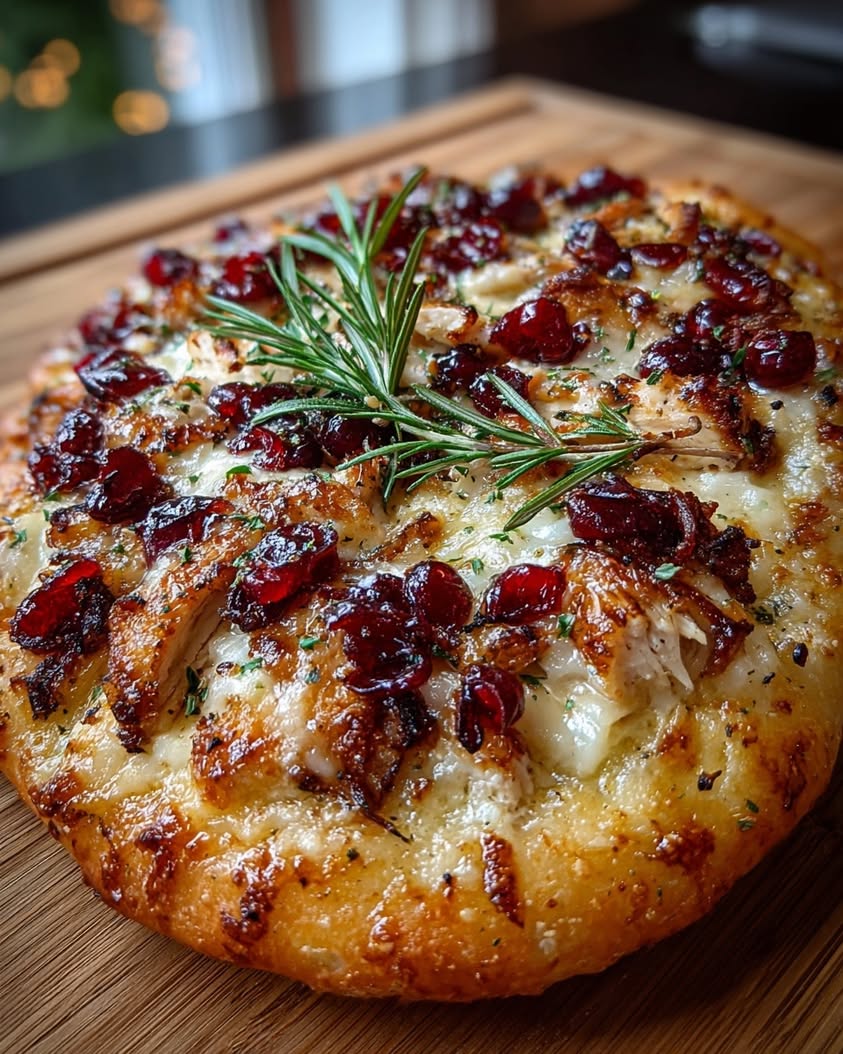
Cranberry Chicken Brie Pizza: A Festive Holiday Dinner Recipe
Imagine a pizza that captures the essence of a holiday feast in every single bite. This Cranberry Chicken Brie Pizza does exactly that, transforming classic festive flavors into a stunning and shareable main course. The combination of savory chicken, creamy brie, and tart cranberry sauce creates a symphony of taste that feels both celebratory and comforting. Ultimately, this recipe offers a brilliant shortcut to a memorable dinner, perfect for busy holiday evenings or a special weekend treat.
Furthermore, this Cranberry Chicken Brie Pizza recipe masterfully balances sweet, savory, and tangy notes. The rich, melted brie cheese provides a luxurious base, while the shredded rotisserie chicken adds hearty protein. Bright pops of flavor come from the cranberry sauce and fresh rosemary, creating a dish that is as beautiful as it is delicious. Consequently, it’s a guaranteed crowd-pleaser that will have everyone asking for the recipe.
Quick Recipe Highlights
- Flavor Profile: This pizza delivers a perfect harmony of savory chicken, rich and creamy brie, and the sweet-tart punch of cranberry sauce. Additionally, fresh rosemary adds an aromatic, earthy note that ties all the elements together beautifully.
- Texture: You get a wonderful contrast between the crisp pizza crust, the gooey melted cheese, the tender chicken, and the jammy cranberry sauce. Each bite offers a satisfying mix of creamy, chewy, and crisp sensations.
- Aroma: As it bakes, the kitchen fills with the warm, inviting scent of baking dough, melting cheese, and fragrant rosemary. The cranberry sauce caramelizes slightly, adding a sweet and festive fragrance to the air.
- Visual Appeal: The pizza is a feast for the eyes with its golden crust, white melted brie, pinkish-red cranberry swirls, and green rosemary specks. It looks impressively gourmet with minimal effort.
- Skill Level Needed: This is an accessible recipe for most home cooks. Using a pre-made crust and rotisserie chicken simplifies the process dramatically. The main skills involve simple assembly and knowing when the cheese is perfectly melted.
- Special Equipment: You need only a baking sheet or pizza stone and a standard oven. A pizza cutter or sharp knife is helpful for serving. No other specialized tools are required.
Recipe Overview
- Difficulty Level: We rate this Cranberry Chicken Brie Pizza as easy. The steps are straightforward and involve no complex techniques. Moreover, using convenient pre-cooked ingredients like rotisserie chicken and store-bought crust keeps the prep simple and stress-free.
- Category: This dish fits wonderfully as a main course for dinner, a centerpiece for a party appetizer spread, or even a unique brunch option. It’s versatile enough for any meal where you want to serve something special.
- Cuisine: While pizza has Italian roots, this version is a modern fusion creation. It borrows from American holiday traditions (cranberry sauce) and French cheese-making (brie) to create something entirely new and exciting for your table.
- Cost: This is a moderately priced recipe. Using a store-bought crust and a rotisserie chicken keeps costs down. Brie cheese and cranberry sauce are typically affordable, especially during the holiday season. Overall, it delivers restaurant-quality flavor for a fraction of the price.
- Season: This recipe shines brightest in the fall and winter months, particularly around Thanksgiving and Christmas. However, its delicious combination makes it a worthy choice any time you crave those comforting, festive flavors.
- Occasion: It’s ideal for holiday gatherings, game day parties, cozy family dinners, or even a romantic date night at home. It feels special enough for an event but is easy enough for a regular weeknight.
Why You’ll Love This Recipe
First, the taste is absolutely unforgettable. This Cranberry Chicken Brie Pizza combines flavors you already love in a surprising and delightful format. The creamy, mild brie doesn’t overwhelm the chicken but instead complements it. Meanwhile, the cranberry sauce cuts through the richness with its vibrant acidity. Every component works in harmony, creating a sophisticated flavor profile that seems like it took hours to develop.
Second, the convenience factor is a major win. By starting with a pre-cooked rotisserie chicken and a ready-made pizza crust, you eliminate the most time-consuming parts of cooking. Consequently, you can have this stunning dish on the table in about 30 minutes. This makes it a perfect solution for busy nights when you still want to serve something impressive and homemade.
Third, this pizza offers a fun twist on nutrition. Chicken provides lean protein, and cranberries are packed with antioxidants and vitamin C. While brie is a richer cheese, using it as a featured ingredient means you use less than you might with a shredded cheese blend. You can also choose a whole-grain crust for added fiber. It’s a balanced meal that feels indulgent.
Fourth, its social and entertaining value is through the roof. This pizza is meant to be shared, making it a fantastic centerpiece for a casual get-together. It sparks conversation and delights guests with its unique combination. Serving a Cranberry Chicken Brie Pizza shows thoughtfulness and a flair for creative cooking, instantly elevating any casual meal into a special occasion.
Finally, it is cost-effective and accessible. You likely have many of the ingredients, like olive oil and rosemary, on hand. The special components are easy to find at any standard grocery store. Compared to ordering gourmet pizza for delivery, making this at home saves money and allows you to control the quality of every ingredient.
Historical Background and Cultural Significance
The story of this pizza begins with the ancient tradition of flatbreads topped with local ingredients. Pizza, as we know it, originated in Naples, Italy. However, the Cranberry Chicken Brie Pizza is a distinctly modern American fusion creation. It represents the contemporary culinary trend of blending global flavors and holiday traditions onto a familiar, beloved canvas. This recipe is less about deep history and more about creative innovation in the home kitchen.
Culturally, it taps into two strong American food traditions: the holiday feast and the love of pizza. Cranberry sauce is intrinsically linked to Thanksgiving and Christmas dinners in the United States and Canada. Brie, while French, became a staple of American holiday cheese boards in the late 20th century. Combining these on a pizza is a playful yet respectful nod to these festive customs.
The evolution of this recipe follows the broader trend of “gourmet” or “artisanal” pizza that gained popularity in the 1990s and 2000s. As pizzerias and home cooks began experimenting beyond tomato sauce and mozzarella, combinations featuring fruit, specialty cheeses, and premium proteins emerged. This particular recipe evolved from the desire to use leftover holiday turkey or chicken in a new, exciting way, with cranberry sauce being a natural pairing.
Regional variations of this concept are endless. In the Pacific Northwest, you might find a version with local hazelnuts. In the South, a touch of pepper jelly could add heat. Some versions use a barbecue sauce base instead of olive oil, or swap brie for goat cheese or gorgonzola. The core idea of savory poultry, creamy cheese, and tart fruit on a crust is adaptable to local tastes and ingredients, making it a truly versatile concept.
Ingredient Deep Dive
Brie Cheese: This soft, creamy cheese originates from the Île-de-France region of France. It’s a mold-ripened cheese with an edible white rind. Nutritionally, brie provides protein, calcium, and vitamin B12. When selecting brie for your Cranberry Chicken Brie Pizza, choose a wheel that feels slightly soft to the touch at room temperature. Avoid any with an ammonia smell. You can store it in the refrigerator in its original wrapping. For a stronger flavor, use a ripe brie; for a milder taste, choose a younger one. If needed, camembert makes a fine substitute.
Cranberry Sauce: Cranberries are one of North America’s native fruits, used by Indigenous peoples for food and medicine. Jellied or whole-berry canned sauce is a Thanksgiving staple. It offers vitamins C and E, fiber, and unique antioxidants called proanthocyanidins. For this pizza, either jellied or whole-berry sauce works beautifully. If using homemade, ensure it’s thick so it doesn’t make the crust soggy. Store opened sauce in the refrigerator. For a less sweet version, seek out a “whole berry” sauce or make your own with reduced sugar.
Rotisserie Chicken: Using a pre-cooked rotisserie chicken is the ultimate time-saver. This practice became widespread with the growth of warehouse clubs and supermarket delis. It provides a large amount of ready-to-use, flavorful protein. To prepare it for the pizza, simply shred the meat from the breasts, thighs, and legs, discarding the skin and bones. You’ll need about 2 cups. Store leftover chicken in the refrigerator for up to 3 days. For a substitute, you can use any leftover cooked chicken or turkey.
Pizza Crust: The foundation of your dish can be a pre-baked flatbread, a fresh pizza dough ball, or a homemade crust. Pre-baked crusts offer incredible convenience and consistent results. If using fresh dough, par-bake it for a few minutes before adding toppings to prevent a soggy middle. For a crispier crust, bake directly on a preheated pizza stone or baking steel. Whole wheat or cauliflower crusts are excellent for adding nutrients or accommodating dietary needs.
Fresh Rosemary: This woody, aromatic herb has been used since ancient times for culinary and medicinal purposes. It adds a piney, fragrant note that cuts through the richness of the cheese and chicken. Always use fresh rosemary for this recipe, as dried rosemary is too tough and sharp. Strip the leaves from the stem and chop them finely. Store fresh rosemary in the refrigerator wrapped in a damp paper towel. If you must substitute, fresh thyme is the best alternative.
Common Mistakes to Avoid
- Using a Soggy Crust: Avoid applying cranberry sauce directly to a unbaked dough base. The moisture can seep in and create a gummy texture. Instead, always start with a par-baked or pre-baked crust, or use the sauce sparingly.
- Overloading with Toppings: It’s tempting to pile on the chicken and cheese. However, a lighter hand ensures the crust cooks evenly and gets crispy. Too many toppings will steam the crust and result in a limp pizza.
- Not Preheating the Oven: A properly preheated oven is non-negotiable for pizza. A cold oven will not generate the immediate heat needed to cook the crust properly and melt the cheese quickly. Always preheat fully.
- Slicing Brie Too Thick: Thick chunks of brie will not melt evenly. For best results, slice the brie thinly or tear it into small pieces. This allows it to melt into a smooth, creamy layer across the pizza.
- Using Dried Rosemary: Dried rosemary becomes hard and sharp when cooked. It can feel like little sticks in your mouth. Fresh rosemary is essential for its fragrant, soft texture and superior flavor in this recipe.
- Neglecting to Season: Even though the ingredients are flavorful, a light sprinkle of salt and black pepper over the chicken and cheese before baking makes a significant difference. It helps all the flavors pop.
- Baking at the Wrong Temperature: A low temperature will dry out the chicken and fail to melt the cheese properly. A very high temperature might burn the crust edges before the cheese melts. Stick to the recommended 425°F (220°C) for balanced cooking.
- Cutting Immediately After Baking: Let the pizza rest for 3-5 minutes after pulling it from the oven. This allows the cheese to set slightly so it doesn’t all slide off when you cut into it.
Essential Techniques
Shredding Rotisserie Chicken: This technique saves time and ensures even distribution. First, let the chicken cool slightly for easy handling. Then, use two forks or your hands to pull the meat apart into bite-sized shreds. Focus on the breast, thighs, and legs for the best mix of white and dark meat. Discard the skin and bones. Properly shredded chicken integrates seamlessly into each slice, guaranteeing protein in every bite.
Preparing and Slicing Brie: For easy melting, you must slice the brie correctly. Start by using a sharp knife. If the rind is very thick or tough, you can trim it off, though it is edible and adds flavor. Then, slice the cheese into thin, even pieces or tear it into small chunks. Thin pieces melt quickly and evenly, creating a uniform layer of creamy cheese without leaving large, unmelted globs on the finished pizza.
Assembling the Pizza in Layers: The order of toppings is crucial. First, brush the crust with olive oil to create a moisture barrier. Next, scatter the chicken evenly. Then, distribute the sliced brie. Finally, dollop the cranberry sauce and sprinkle the rosemary. This layering ensures the brie melts over the chicken, and the cranberry sauce caramelizes on top without making the base soggy.
Baking for Optimal Crispiness: For a crisp crust, bake the pizza directly on the oven rack or on a preheated pizza stone/baking sheet. The direct, intense heat from below cooks the dough quickly. Bake in the upper third of the oven so the top elements help melt and brown the cheese. Watch for visual cues: the crust edges should be golden brown, and the brie should be completely melted and bubbly.
Pro Tips for Perfect Cranberry Chicken Brie Pizza
First, for an extra flavor boost, toss the shredded chicken with a teaspoon of the cranberry sauce before scattering it on the crust. This simple step ensures every bit of chicken is infused with the sweet-tart flavor.
Second, if you prefer a less sweet pizza, mix a teaspoon of Dijon mustard or a pinch of black pepper into the cranberry sauce before dolloping. This adds complexity and balances the sweetness beautifully.
Third, to prevent the crust from getting soggy in the middle, you can give it a head start. Bake the naked crust for 3-5 minutes before adding any toppings. This creates a protective, crispy layer.
Fourth, add a final flourish of flavor after baking. A light drizzle of balsamic glaze or a sprinkle of chopped walnuts or pecans adds wonderful texture and a gourmet touch.
Fifth, let the baked pizza rest on a wire cooling rack for a few minutes instead of on a plate. This allows air to circulate underneath, keeping the bottom crust crisp instead of steaming it soft.
Sixth, for a beautiful presentation, reserve a few small pieces of brie and a few whole cranberries from the sauce. Place them on top after baking for a fresh, appealing look.
Variations and Adaptations
Regional Variations: Across different areas, this pizza adapts to local tastes. In the South, add a layer of pepper jelly or a sprinkle of Cajun seasoning on the chicken. A Midwest version might include crispy fried onions on top after baking. On the West Coast, try adding sliced avocado after baking or using a sprinkle of goat cheese alongside the brie.
Seasonal Adaptations: While perfect for fall and winter, you can modify this pizza for other seasons. In spring, use a lemon-herb ricotta base with asparagus and chicken. For summer, try a pesto base with grilled chicken and fresh peaches, keeping the brie for a creamy element.
Dietary Modifications: For a gluten-free Cranberry Chicken Brie Pizza, use a certified gluten-free crust. To make it dairy-free, substitute the brie with a high-quality vegan creamy cheese alternative. For a lower-carb option, use a cauliflower pizza crust or simply bake the toppings on a bed of shredded Brussels sprouts.
Flavor Variations: Experiment with different cheese and sauce combinations. Try camembert with fig jam, or blue cheese with pear slices. Swap the cranberry sauce for apricot preserves or a spicy mango chutney. Each variation creates a completely new flavor experience.
Texture Modifications: For added crunch, sprinkle chopped walnuts, pecans, or sliced almonds on top before or after baking. For a contrasting creamy element, add small dollops of herbed goat cheese alongside the brie. You can also use shredded Brussels sprouts or kale for a crispy, healthy texture when baked.
Presentation Alternatives: Instead of one large pizza, make individual flatbreads or use naan bread for personal-sized portions. You can also deconstruct the pizza into a salad: top mixed greens with shredded chicken, chunks of brie, dried cranberries, and a cranberry vinaigrette, served with crispy flatbread crackers on the side.
Serving and Presentation Guide
Plating Techniques: Serve the pizza right on a large wooden cutting board for a rustic, family-style presentation. Use a sharp pizza cutter or chef’s knife to slice it into 8 pieces. Alternatively, for a more formal setting, plate individual slices on warm plates, wiping any drips for a clean look.
Garnishing Ideas: Fresh garnishes add color and freshness. After baking, sprinkle with additional chopped fresh rosemary or thyme. A handful of arugula or microgreens adds a peppery note and vibrant green color. A final drizzle of high-quality olive oil or balsamic glaze in a zigzag pattern looks professional.
Traditional Accompaniments: This rich pizza pairs well with simple, light sides. A crisp green salad with a lemon vinaigrette is classic. For a heartier meal, serve with a bowl of roasted butternut squash soup. The flavors complement the pizza without competing with it.
Modern Serving Suggestions: For a party, cut the pizza into small squares or strips for easy finger food. Set out small bowls of optional toppings like crushed red pepper flakes, extra cranberry sauce for dipping, or grated Parmesan cheese so guests can customize their bite.
Temperature Considerations: This pizza is best served hot from the oven, when the cheese is luxuriously melted. However, it is also delicious at room temperature, making it excellent for buffets or picnics. Avoid reheating in the microwave, as it will make the crust soggy; use an oven or toaster oven instead.
Portion Control Tips: One large pizza typically serves 4 as a main course. For a larger crowd or as part of a bigger spread with multiple appetizers, you can cut it into 12 smaller slices. Remember, the rich ingredients are satisfying, so people may eat less than they would of a traditional cheese pizza.
Wine and Beverage Pairing
Wine Pairings: The sweet-tart cranberry and creamy brie create a perfect stage for certain wines. A dry Rosé with its berry notes and acidity cuts through the richness beautifully. A Pinot Noir, with its light body and red fruit flavors, complements the chicken and cranberry without overpowering them. For white wine lovers, a slightly oaked Chardonnay mirrors the creaminess of the brie, or a Riesling (not too sweet) balances the tart cranberry sauce.
Non-Alcoholic Alternatives: Sparkling apple cider is a festive and excellent pairing, offering sweetness and bubbles to cleanse the palate. For a more sophisticated option, try a cranberry and rosemary spritzer made with club soda, a splash of cranberry juice, and a rosemary sprig. Iced herbal tea, like a mint or hibiscus blend, also works wonderfully.
Coffee/Tea Pairings: After the meal, a cup of coffee or tea can be lovely. A medium-roast coffee with low acidity complements the savory notes. For tea, consider a black tea like Earl Grey, whose bergamot flavor pairs nicely with the creamy cheese, or a fruity herbal tea with cranberry or orange notes.
Temperature Considerations: Serve white wines and Rosés well-chilled, around 45-50°F. Red wines like Pinot Noir should be slightly cooler than room temperature, about 55°F. Non-alcoholic sparkling drinks should be served very cold to maximize refreshment alongside the warm, rich pizza.
Serving Suggestions: Always offer water alongside any beverage to cleanse the palate. If serving wine, consider pouring a small taste for guests to try with their first bite before filling glasses. For non-alcoholic options, present them in elegant glassware with garnishes to make them feel just as special as the alcoholic pairings.
Storage and Shelf Life
Storage Methods: Store leftover Cranberry Chicken Brie Pizza in an airtight container in the refrigerator. Place parchment paper between slices if stacking to prevent them from sticking together. Properly stored, leftovers will keep for up to 3 days. The crust will soften in the fridge but can be re-crisped.
Temperature Requirements: Refrigeration below 40°F (4°C) is essential for safety due to the dairy and chicken. Do not leave the pizza at room temperature for more than 2 hours. For longer storage, freezing is the best option to maintain quality and prevent bacterial growth.
Container Recommendations: A shallow, rectangular airtight container is ideal. Alternatively, you can wrap individual slices tightly in aluminum foil and then place them in a zip-top bag. This method minimizes air exposure, which is the enemy of crispy crust and fresh flavor.
Signs of Spoilage: Discard the pizza if you notice an off or sour smell, especially from the dairy. Visible mold growth is an obvious sign. If the chicken feels slimy or the cheese develops an unusual texture, it’s best to err on the side of caution and throw it away.
Reheating Instructions: To restore crispiness, reheat in a conventional oven or toaster oven at 375°F (190°C) for 5-10 minutes, or until heated through and the cheese is bubbly again. You can also use an air fryer for 3-4 minutes. Avoid the microwave, as it will make the crust very soggy.
Freezing Guidelines: This pizza freezes reasonably well. Cool it completely, then wrap individual slices tightly in plastic wrap and then in foil. Place in a freezer bag. Freeze for up to 2 months. Reheat from frozen in a 375°F (190°C) oven for 10-15 minutes, removing wrappers first.
Make Ahead Strategies
Prep Timeline: You can prepare almost every component a day in advance. Shred the rotisserie chicken and store it in a container in the fridge. Slice the brie and keep it wrapped in the fridge. Measure out your cranberry sauce and chop the rosemary. The morning of your dinner, simply assemble and bake.
Storage Between Steps: Keep prepped ingredients in separate airtight containers. Do not assemble the pizza until you are ready to bake it. An assembled, unbaked pizza will become soggy as the cranberry sauce and olive oil soak into the crust. Keeping components separate preserves texture and quality.
Quality Impact Assessment: Prepping ahead has minimal impact on flavor; in fact, it can enhance it as the chicken absorbs any seasoning. The only potential downside is the brie rind may dry out slightly if sliced too far in advance. To prevent this, store sliced brie in a single layer with parchment paper between slices.
Assembly Tips: When ready to bake, take your prepped ingredients from the fridge about 15 minutes before assembly. This takes the chill off, promoting more even baking. Assemble the pizza quickly on your prepared crust just before it goes into the hot oven for the best results.
Reheating Guidelines: If you fully bake the pizza ahead of time, let it cool completely, then store as directed. Reheat using the oven method described above. For the freshest taste and texture, however, baking from a just-assembled state is always superior to reheating a fully cooked pizza.
Fresh Element Additions: If you prep ahead, consider reserving a little fresh rosemary to sprinkle on after baking. You could also have garnishes like arugula or a balsamic drizzle ready to add post-reheat. This adds a burst of fresh flavor and color that makes the pizza taste newly made.
Scaling Instructions
Halving the Recipe: Halving this Cranberry Chicken Brie Pizza is simple for a smaller meal. Use a smaller pre-made crust (like a personal size) or cut a standard crust in half before topping. Use 1 cup of shredded chicken, half a small wheel of brie (about 4 oz), and ¼ cup of cranberry sauce. Baking time may reduce by 2-3 minutes, so watch closely.
Doubling or Tripling: For a crowd, you can easily double or triple the ingredients. The key is to bake pizzas one at a time on the middle rack for even cooking and proper airflow. If you have a double oven or large commercial oven, you can bake two at once on separate racks, rotating them halfway through. Prepare all crusts on separate baking sheets for efficient assembly.
Equipment Adjustments: When scaling up, you may need multiple baking sheets or pizza pans. Consider investing in a pizza stone for the best quality, baking one pizza after another. Keep the cooked pizzas warm in a 200°F (95°C) oven on a wire rack set over a baking sheet to keep the bottoms crisp while you finish baking the rest.
Timing Modifications: The prep time will increase linearly as you prepare more ingredients. However, the bake time per pizza remains the same (12-15 minutes). Factor in this staggered baking when planning your meal timeline. Start baking the first pizza about 20 minutes before you want to serve.
Storage Considerations: If making multiple pizzas ahead of time, it’s better to store them unbaked. Assemble each pizza on its crust on a parchment-lined baking sheet, then wrap the entire sheet tightly in plastic wrap and refrigerate for up to 6 hours. Bake directly from the fridge, adding 1-2 minutes to the bake time.
Nutritional Deep Dive
Macro Breakdown: A typical serving (1/4 of the pizza) provides a balance of macronutrients. The chicken and brie offer substantial protein, essential for muscle repair and satiety. The crust contributes complex carbohydrates for energy. The fats come primarily from the olive oil and brie, providing richness and helping absorb fat-soluble vitamins. The cranberry sauce adds natural sugars.
Micronutrient Analysis: This dish delivers several key micronutrients. Chicken is a good source of B vitamins, particularly B6 and niacin. Brie provides calcium and phosphorus for bone health. Cranberries are renowned for their vitamin C and antioxidant content, specifically proanthocyanidins, which support urinary tract health. Rosemary adds small amounts of iron and vitamin A.
Health Benefits: When consumed as part of a balanced diet, this pizza offers several benefits. The protein promotes fullness and supports metabolism. The antioxidants in cranberries combat oxidative stress. Using olive oil, a source of monounsaturated fats, supports heart health. Choosing a whole-grain crust adds fiber, which aids digestion and blood sugar control.
Dietary Considerations: This is not a low-calorie dish, but it is nutrient-dense. Those monitoring sodium should be aware that rotisserie chicken and some pre-made crusts can be high in salt. For a lower-fat version, use less brie or a lighter cheese alternative. The recipe is naturally nut-free, but check crust labels for allergens.
Portion Analysis: One-quarter of a standard 12-inch pizza is a satisfying portion that fits into many eating plans. Pairing it with a large side salad increases volume and nutrients without dramatically increasing calories, helping with portion control. Listening to your hunger cues is key, as the rich ingredients are very satisfying.
Weight Management Tips: To enjoy this pizza while managing weight, focus on the portion size. Load up on a fibrous green salad first to take the edge off your hunger. Use a lighter hand with the cheese and oil. Opt for a thin-crust option to reduce overall carbohydrates and calories. Remember, it’s about balance, not deprivation.
Dietary Adaptations
Gluten-Free: Use a certified gluten-free pizza crust, available in the freezer or bakery section of most grocery stores. Ensure all other ingredients, like the cranberry sauce, are labeled gluten-free, as some thickeners may contain gluten. The method remains identical.
Dairy-Free: Substitute the brie with a high-quality vegan cheese that melts well, such as those made from cashews or coconut oil. Many brands offer “cream style” vegan cheeses that mimic the texture of brie. Alternatively, use a thick, plain vegan yogurt or cashew cream as a base layer.
Vegan: For a fully vegan Cranberry “Chicken” Brie Pizza, use a plant-based pizza crust. Replace the chicken with shredded jackfruit, seasoned tofu, or a store-bought vegan chicken alternative. Use the dairy-free cheese substitute mentioned above. Check that the cranberry sauce doesn’t contain honey.
Low-Carb/Keto: Use a keto-friendly pizza crust made from almond flour, cauliflower, or cheese. Increase the chicken portion slightly and use full-fat brie. Be cautious with cranberry sauce, as it is high in sugar. Use a very small amount of a sugar-free cranberry sauce or relish, or substitute with a few fresh cranberries sliced thinly.
Paleo: Use a grain-free crust made from almond flour, tapioca flour, or cauliflower. Ensure the rotisserie chicken is seasoned without non-Paleo ingredients like soy or sugar. Omit the brie, as dairy is not Paleo. Instead, use a dollop of coconut cream or a Paleo-friendly “cheese” made from nuts and nutritional yeast.
Low-FODMAP: Use a gluten-free crust made from low-FODMAP flours like rice flour. Limit the chicken to ½ cup per serving to stay within Monash University guidelines. Omit the garlic if your olive oil is infused with it. Brie is low-FODMAP in servings of 40g, so use it sparingly. Cranberry sauce is typically low-FODMAP in 2 tablespoon servings.
Troubleshooting Guide
Soggy Crust: This is the most common issue. The solution is to create a moisture barrier. Always brush the crust with olive oil first. Par-bake the crust for 3-5 minutes before adding wet toppings like cranberry sauce. Also, ensure your cranberry sauce is thick, not runny. If using fresh dough, don’t overload it with toppings.
Bland Flavor: If your pizza tastes flat, it likely needs seasoning. Before baking, always season the shredded chicken lightly with salt and pepper. A pinch of salt sprinkled over the assembled pizza before baking can elevate all the flavors. Consider adding a thin layer of garlic-infused olive oil to the crust for a flavor base.
Unevenly Melted Cheese: If the brie isn’t melting evenly, you may have sliced it too thickly. Ensure pieces are thin and distributed well, not clumped together. Also, check that your oven is fully preheated and that you’re baking in the upper third of the oven where the heat can effectively melt the cheese from above.
Burnt Edges, Raw Middle: This happens when the oven temperature is too high or the pizza is placed too close to the top heating element. Use the recommended temperature and bake in the middle rack. If the edges are browning too quickly, you can tent the pizza loosely with foil for the last few minutes of baking.
Toppings Sliding Off: This occurs when slicing too soon or if the cheese layer is too slick. Let the pizza rest for 5 minutes after baking so the cheese can set. Using shredded chicken (which has texture) instead of large chunks helps toppings adhere better. A light base of very finely shredded mozzarella under the brie can also act as “glue.”
Dry Chicken: Rotisserie chicken can dry out if over-baked. Since it’s already cooked, you are just warming it through. To prevent dryness, don’t bake the pizza longer than necessary. You can also toss the shredded chicken with a teaspoon of olive oil or cranberry sauce before adding it to the pizza to add moisture.
Recipe Success Stories
Community feedback on this Cranberry Chicken Brie Pizza has been overwhelmingly positive. Many home cooks report it becoming their new go-to holiday appetizer or easy dinner. One reader shared that she made it for a book club and received multiple requests for the recipe before the evening was over. Another mentioned it was a brilliant way to use up Thanksgiving leftovers, calling it a “game-changer” for the weekend after the holiday.
Variation successes are fun to hear about. A reader from Texas added sliced jalapeños for a sweet-heat combination her family loved. Someone else used leftover turkey and gravy instead of chicken and olive oil, creating a “Thanksgiving Pizza” that was a huge hit. A parent made mini versions on English muffins for their kids’ holiday party, and they were the first food to disappear.

I’m Billy, a classically trained culinary school graduate from The Culinary Institute of America with over 12 years in the restaurant industry and over 19 years of cooking experience.