
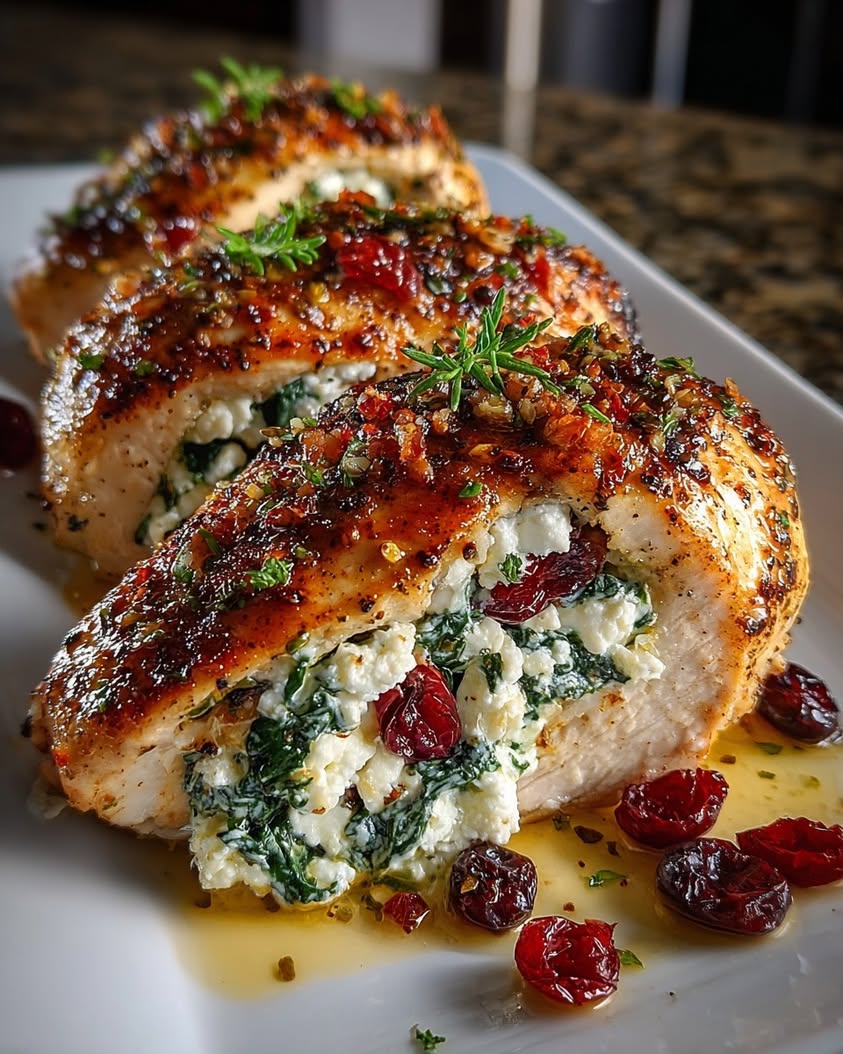
Cranberry & Spinach Stuffed Chicken Breasts with Goat Cheese: An Elegant, Flavor-Packed Dinner
Imagine cutting into a perfectly cooked chicken breast to reveal a vibrant, savory-sweet filling of wilted spinach, tangy goat cheese, and jewel-like dried cranberries. This Cranberry Spinach Stuffed Chicken with Goat Cheese Recipe transforms simple chicken breasts into a stunning centerpiece worthy of a dinner party yet simple enough for a weeknight. The combination creates a symphony of flavors and textures in every single bite.
Furthermore, this dish masterfully balances richness and brightness. The creamy, earthy goat cheese mellows the tart pop of cranberries, while the spinach adds a fresh, nutritious element. Consequently, each component complements the others, resulting in a meal that feels both indulgent and wholesome. Ultimately, this recipe is a fantastic way to elevate your chicken dinner routine with minimal fuss and maximum flavor impact.
Quick Recipe Highlights
- Flavor Profile: This dish offers a beautiful harmony of savory, tangy, and subtly sweet notes. The rich, creamy goat cheese pairs perfectly with the bright acidity of the cranberries, while the chicken provides a savory, juicy base. Additionally, herbs and seasoning tie all the elements together seamlessly.
- Texture: You will experience a delightful contrast of textures. Expect a crisp, golden-brown exterior giving way to tender, juicy chicken. Meanwhile, the interior stuffing is wonderfully creamy from the cheese, with little bursts of chewy cranberry and soft spinach.
- Aroma: As it bakes, your kitchen will fill with the irresistible scent of roasting chicken and herbs. The aroma of melted goat cheese and the sweet hint of cranberries creates an inviting, complex fragrance that promises a delicious meal.
- Visual Appeal: The presentation is truly impressive. The stuffed chicken breasts look plump and golden. Moreover, slicing them open reveals the stunning colorful stuffing, making for a beautiful plate that delights the eyes before the first bite.
- Skill Level Needed: This recipe requires some basic kitchen skills like butterflying chicken and handling a filling. However, the steps are straightforward and well-explained. Therefore, a confident home cook can absolutely achieve restaurant-quality results.
- Special Equipment: You will need a good sharp knife for butterflying the chicken and toothpicks or kitchen twine to secure the stuffed breasts. A meat mallet or rolling pin is helpful for even pounding. Otherwise, just a skillet and baking dish are required.
Recipe Overview
- Difficulty Level: We rate this Cranberry Spinach Stuffed Chicken as intermediate. The process of creating a pocket and stuffing the chicken requires a bit more care than simply seasoning and baking. However, with clear instructions and a little patience, it is a very achievable technique that yields impressive results.
- Category: This recipe falls squarely into the main dish category. It is a protein-centric meal perfect for dinner. Additionally, it can be classified as a stuffed poultry recipe or a gourmet home-cooking dish.
- Cuisine: While not tied to one specific tradition, this dish draws inspiration from modern American and European bistro cuisine. The use of goat cheese and cranberries is reminiscent of contemporary French and New American cooking styles that prioritize balanced, elegant flavors.
- Cost: This is a moderately priced meal. Chicken breasts are an affordable protein, and dried cranberries and spinach are inexpensive. Goat cheese is the premium ingredient, but a little goes a long way. Overall, you can create a restaurant-worthy dish for a fraction of the cost.
- Season: This Cranberry Spinach Stuffed Chicken is wonderfully versatile year-round. It feels festive and cozy during fall and winter holidays. Conversely, it is also light and bright enough for a spring or summer dinner when served with seasonal sides.
- Occasion: It is perfect for date nights, family gatherings, or holiday meals like Thanksgiving or Christmas. It also makes a fantastic Sunday supper or a special meal to impress guests without requiring all-day cooking.
Why You’ll Love This Recipe
First and foremost, the taste experience is extraordinary. Each bite delivers multiple layers of flavor that keep your palate interested. The juicy chicken, creamy cheese, tart fruit, and earthy greens create a complex profile that feels both sophisticated and comforting. Furthermore, the contrast between the crispy exterior and the moist, flavorful interior is deeply satisfying. This Cranberry Spinach Stuffed Chicken with Goat Cheese Recipe proves that a few quality ingredients, when combined thoughtfully, can create something truly special.
From a practical standpoint, this recipe offers incredible convenience disguised as elegance. While the final product looks impressive, the active prep time is relatively short. You can prepare the stuffing and butterfly the chicken ahead of time. Then, simply assemble and bake when ready. Consequently, you spend less time in the kitchen when your guests arrive. This make-ahead flexibility is a huge benefit for busy hosts who want to serve a memorable meal.
Nutritionally, this dish is a powerhouse. Chicken breast is an excellent source of lean protein. Spinach adds a boost of iron, vitamins A, C, and K. Goat cheese provides protein and calcium, often in a more digestible form for some people compared to cow’s milk cheese. Dried cranberries contribute antioxidants and fiber. Together, they create a meal that is as nourishing as it is delicious, supporting your health goals without sacrificing flavor.
For social and entertaining value, this recipe is a true winner. Presenting a beautifully stuffed, golden chicken breast immediately elevates the dining experience. It shows care and effort, making guests feel special. Moreover, the recipe is easy to scale for a crowd. You can prepare multiple breasts using the same method. The stunning visual of the sliced chicken with its colorful filling always sparks conversation and admiration at the table.
Finally, this dish is remarkably cost-effective and accessible. You likely have many of the seasonings already. Chicken breasts, spinach, and dried cranberries are grocery store staples. While goat cheese is a splurge, a small log stretches across four servings. Compared to ordering a similar dish at a restaurant, cooking this Cranberry Spinach Stuffed Chicken at home saves significant money. Ultimately, you gain a gourmet skill and a fantastic recipe for your permanent collection.
Historical Background and Cultural Significance
The concept of stuffing meat dates back centuries across numerous cultures, originally as a method to stretch expensive protein and add flavor with more affordable ingredients. However, the specific combination in this Cranberry Spinach Stuffed Chicken with Goat Cheese Recipe is a modern invention. It reflects a contemporary culinary trend that began in the late 20th century, focusing on bold flavor pairings and visually striking, restaurant-style presentations for home cooks.
Culturally, this dish sits at the intersection of several food movements. The use of goat cheese gained popularity in America alongside the artisanal food and farm-to-table movements. Chefs and home cooks began embracing its tangy flavor as an alternative to traditional cow’s milk cheeses. Similarly, incorporating fruits like cranberries into savory dishes moved beyond holiday condiments, inspired by European techniques that pair meat with fruit-based sauces and stuffings.
The recipe has evolved from simpler stuffed chicken breast concepts. Initially, stuffings were often bread-based. The modern shift towards vegetable and cheese-based fillings aligns with lower-carb eating trends and a desire for more nutrient-dense meals. The addition of spinach specifically capitalizes on its health halo and ability to wilt down into a manageable filling. This evolution shows how home cooking adapts to changing nutritional awareness and ingredient availability.
Regional variations of this concept are plentiful. In the Mediterranean, you might find chicken stuffed with feta, olives, and sun-dried tomatoes. In the American South, a stuffing with cream cheese and jalapeños is popular. The cranberry and goat cheese version has a particular association with the Pacific Northwest and New England, regions known for cranberry production and a culinary style that embraces sweet and savory combinations. This recipe is a delicious example of fusion cooking at its best.
Ingredient Deep Dive
Let’s start with the star: boneless, skinless chicken breasts. Chicken breast is a lean, versatile canvas prized for its mild flavor and high protein content. For this Cranberry Spinach Stuffed Chicken recipe, selecting evenly sized, plump breasts is crucial for consistent cooking. Look for breasts that are similar in weight and thickness. If they are very thick on one end, you may need to pound them to an even ½-inch thickness. This ensures the chicken cooks through without drying out before the stuffing is hot.
Fresh spinach is the green heart of the stuffing. This leafy green is packed with iron, calcium, and vitamins A, C, and K. Historically, spinach has been cultivated for over 2,000 years, originating in Persia. For the recipe, you will wilt it down, which reduces its volume dramatically and concentrates its flavor. Always choose vibrant, dark green leaves without yellowing or sliminess. After wilting, squeeze out as much liquid as possible. This critical step prevents a soggy stuffing that could steam the chicken instead of letting it brown properly.
Goat cheese, or chèvre, brings a tangy, creamy richness. Made from goat’s milk, it has been a staple in many parts of the world for millennia. It is often easier to digest for those sensitive to cow’s milk. For stuffing, use a soft, log-style goat cheese that you can crumble or spread. Its flavor mellows and becomes wonderfully creamy when baked. If you are new to goat cheese, its distinct tang might seem strong alone, but it balances perfectly with the sweet cranberries and savory chicken in this recipe.
Dried cranberries provide essential pops of sweetness and chewy texture. Unlike fresh cranberries, which are intensely tart, dried cranberries are typically sweetened. They add a festive color and flavor that complements the savory elements. When baked inside the chicken, they soften slightly and release their sweetness into the filling. You can find them sweetened with apple juice or sugar. For a less sweet version, seek out unsweetened dried cranberries, though they will be more tart.
Common Mistakes to Avoid
- Not Removing Excess Moisture from Spinach: Failing to thoroughly squeeze wilted spinach is a major error. The retained water will steam the chicken from the inside, preventing a good sear and creating a soggy texture. Always use a clean kitchen towel or paper towels to wring it out completely.
- Cutting the Pocket Too Deep or Tearing It: When butterflying the chicken, cut horizontally, but stop about ½ inch from the opposite side. Cutting all the way through creates two thin pieces instead of a pocket. If you accidentally tear it, don’t worry; you can often “seal” it shut with toothpicks during cooking.
- Overstuffing the Chicken Breast: It is tempting to pack in as much filling as possible, but this leads to problems. The chicken won’t seal properly, the stuffing can leak out, and the breast may cook unevenly. Use a moderate amount, about 2-3 tablespoons per breast.
- Skipping the Sear Before Baking: Browning the chicken in a skillet first creates a flavorful crust via the Maillard reaction. This step adds depth of flavor and improves texture. If you just bake it, the exterior will be pale and less appetizing.
- Using Cold Goat Cheese Straight from the Fridge: Very cold goat cheese is crumbly and hard to mix. Let it sit at room temperature for 15-20 minutes before combining it with the other stuffing ingredients. This makes it easier to create a cohesive filling.
- Not Securing the Opening: If you don’t use toothpicks or kitchen twine to close the pocket, the filling will almost certainly spill out during cooking. Use 2-3 toothpicks per breast, and remember to remove them before serving!
- Overcooking the Chicken: Since the breasts are stuffed, they are thicker. However, overcooking is the fastest way to dry them out. Use a meat thermometer and pull them from the oven at 165°F (74°C). The residual heat will carry them to the safe temperature.
- Not Letting the Chicken Rest: Slicing immediately after baking causes all the precious juices to run out, leaving the meat dry. Let the Cranberry Spinach Stuffed Chicken rest for 5-10 minutes. This allows the juices to redistribute, ensuring every slice is moist.
Essential Techniques
Butterflying Chicken Breasts: This technique creates a flat, even surface for stuffing and ensures quicker, more uniform cooking. Place the breast on a cutting board, smooth side down. Hold it flat with one hand. Using a sharp knife held parallel to the board, slice horizontally through the thicker side, stopping about ½ inch from the edge so it opens like a book. If needed, gently pound it to an even ½-inch thickness. The key is a sharp knife and controlled, steady pressure.
Wilting and Draining Spinach: Properly preparing the spinach is non-negotiable for a successful stuffing. Heat a drizzle of oil in a pan, add the spinach, and toss until just wilted—this takes only a minute. Immediately transfer it to a colander. Once cool enough to handle, gather it into a ball and squeeze firmly over the sink or using a towel to remove every bit of green liquid. This concentrated, dry spinach won’t waterlog your filling.
Searing for Flavor and Color: Searing the stuffed chicken in a hot, oven-safe skillet before baking is a game-changer. Heat oil until shimmering. Add the chicken and cook undisturbed for 2-3 minutes per side until a deep golden-brown crust forms. This process, called the Maillard reaction, creates hundreds of new flavor compounds. It also starts the cooking process, so the chicken spends less time in the oven, reducing the risk of drying out.
Using a Meat Thermometer: This is the single most reliable way to achieve perfectly cooked chicken. Insert the thermometer into the thickest part of the meat, avoiding the stuffing. Remove the pan from the oven when the internal temperature reads 160-162°F (71-72°C). The residual heat will carry it to the food-safe 165°F (74°C) as it rests. Guessing based on time alone often leads to overcooked, dry results.
Pro Tips for Perfect Cranberry Spinach Stuffed Chicken
First, for easier butterflying, partially freeze the chicken breasts for 15-20 minutes. This firms them up, making it simpler to get a clean, even cut with your knife. It is a small step that offers much more control.
Season the inside of the chicken pocket generously with salt and pepper before adding the stuffing. This seasons the meat itself, not just the filling, ensuring every layer is flavorful from the inside out.
Mix a teaspoon of cornstarch into your dry stuffing ingredients. This little trick helps absorb any residual moisture from the cheese or spinach during baking, keeping the filling firm and preventing sogginess.
If your skillet isn’t oven-safe, simply sear the chicken in any pan and then transfer the breasts to a preheated baking dish for the oven portion. There is no need to buy special equipment.
Add a tablespoon of chopped fresh herbs like thyme or rosemary to the stuffing mixture. The aromatic herbs will infuse the entire dish with a wonderful fragrance that complements the goat cheese and cranberries beautifully.
For an extra flavor boost, deglaze the hot skillet with a splash of white wine or chicken broth after searing the chicken. Pour this liquid over the breasts before they go in the oven to create a simple, delicious pan sauce.
Let the goat cheese come to room temperature before mixing the filling. Room-temperature cheese blends smoothly with the spinach and cranberries, creating a more uniform mixture that is easier to spoon into the chicken.
Always use a sharp knife to slice the cooked chicken. A dull knife will crush the beautiful layers and push the filling out. A sharp blade gives you clean, presentation-ready slices.
Variations and Adaptations
For regional twists, consider a Mediterranean version with crumbled feta, kalamata olives, and sun-dried tomatoes instead of goat cheese and cranberries. A Southwest variation could use pepper jack cheese, black beans, corn, and a touch of cumin. These adaptations show the versatility of the basic stuffed chicken method.
Seasonal adaptations are easy. In spring, use asparagus tips and fresh herbs. In summer, try a filling with fresh mozzarella, basil, and roasted red peppers. For fall, the original cranberry and spinach combo is perfect, or try apples and sage. In winter, a hearty stuffing with mushrooms and Gruyère cheese is wonderfully comforting.
Dietary modifications are straightforward. For a dairy-free version, use a vegan goat cheese alternative or a thick, seasoned cashew cream. To make it gluten-free, ensure any added breadcrumbs in variations are gluten-free certified. For a lower-carb option, this base recipe is already excellent, just watch for added sugar in dried cranberries.
Flavor variations can cater to different palates. For a sweeter profile, add chopped apples or pears. For a savory umami boost, incorporate finely chopped sautéed mushrooms or a teaspoon of white miso paste into the cheese mixture. A spicy kick can come from adding minced jalapeño or a pinch of red pepper flakes to the stuffing.
Texture modifications can add interest. Try adding chopped toasted walnuts or pecans to the stuffing for crunch. Alternatively, mixing in a tablespoon of cooked, finely chopped bacon adds a smoky, salty element and a different textural note against the creamy cheese.
Presentation alternatives include cutting the stuffed chicken into medallions before serving or preparing it as a roulade by rolling it instead of creating a pocket. You can also top the baked chicken with a simple pan sauce made from the drippings, a splash of broth, and a pat of butter for a restaurant-style finish.
Serving and Presentation Guide
Plating is key for visual impact. Place the whole stuffed breast slightly off-center on a warm plate. Then, using a very sharp knife, slice it on a bias (at an angle) into 4-5 medallions. Fan these slices out slightly to showcase the colorful interior stuffing. This simple technique transforms the dish from homely to haute cuisine instantly.
Garnishing adds the final touch. A simple sprinkle of fresh chopped parsley or thyme adds color and a fresh aroma. A few extra dried cranberries scattered around the plate or a light drizzle of balsamic glaze can enhance the visual appeal and hint at the flavors within. Keep garnishes minimal and edible to complement, not overwhelm, the star of the plate.
For traditional accompaniments, consider classic sides that won’t compete with the main event. Garlic mashed potatoes, buttered egg noodles, or a wild rice pilaf provide a neutral, comforting base. A simple steamed green vegetable like haricots verts or roasted carrots adds color and completes the meal nutritionally.
Modern serving suggestions lean towards lighter, vegetable-forward sides. A crisp arugula salad with a lemon vinaigrette cuts through the richness. Quinoa or farro salad with herbs and lemon zest offers a wholesome, trendy base. Roasted seasonal vegetables like Brussels sprouts or asparagus are always a excellent choice.
Temperature considerations are crucial. Serve the Cranberry Spinach Stuffed Chicken hot from the oven after its brief rest. Ensure your plates are warm to keep the food hot longer. If serving with a salad, have it chilled and ready to add to the plate at the last moment for a pleasant temperature contrast.
Portion control is built-in with this recipe. One stuffed chicken breast half is a standard serving, providing a satisfying amount of protein. For heartier appetites, serve with substantial sides. For lighter meals, pair with a large salad. The individual nature of the portions makes it easy to adjust for different dietary needs at the same table.
Wine and Beverage Pairing
Wine pairings should complement the dish’s balance of richness, tang, and subtle sweetness. A crisp, unoaked Chardonnay is a fantastic choice. Its acidity cuts through the creamy goat cheese, while its body stands up to the chicken. Alternatively, a Pinot Noir with its bright red fruit notes and low tannins pairs beautifully with the cranberries without overpowering the delicate chicken. A dry Rosé, especially from Provence, offers the best of both worlds with its acidity and berry flavors.
For non-alcoholic alternatives, consider sparkling water with a twist of lemon or lime to cleanse the palate. A tart cranberry spritzer made with unsweetened cranberry juice and club soda mirrors the dish’s flavors. Iced herbal tea, like peach or mint, can be refreshing. Apple cider, served warm or cold, also echoes the autumnal notes in the stuffing beautifully.
While not a classic coffee dish, if serving after dinner, a medium-roast coffee would work well. The nutty, low-acidity notes of a Sumatran coffee could complement the savory elements. For tea, a cup of Earl Grey with its citrusy bergamot notes can be a lovely, light finish that contrasts nicely with the meal’s richness.
Temperature is key for beverages. White wines and rosés should be served well-chilled, around 45-50°F. Red wines like Pinot Noir are best slightly cooler than room temperature, around 55-60°F. Non-alcoholic sparkling drinks should be ice-cold to provide a refreshing contrast to the warm, savory chicken.
Serving suggestions include pouring wines just before serving to preserve their temperature and bouquet. For non-alcoholic options, consider garnishing with a fresh herb sprig or a frozen cranberry in place of an ice cube to keep the drink cold without dilution. Always offer water on the table to cleanse the palate between bites.
Storage and Shelf Life
Proper storage is essential for food safety and quality. Allow any leftover Cranberry Spinach Stuffed Chicken to cool completely before storing. Place it in an airtight container within two hours of cooking. It will keep in the refrigerator for 3-4 days. For best results, store the chicken whole and slice it only when ready to reheat, as this helps retain moisture.
Refrigerator temperature should be at or below 40°F (4°C). Use the middle shelves, not the door, where temperatures fluctuate. If you have a lot of pan juices, you can store them separately in a small container and pour them over the chicken when reheating to add back moisture and flavor.
Signs of spoilage include an off or sour smell, a slimy texture on the surface of the chicken, or any visible mold. If you see any of these signs, discard the food immediately. When in doubt, remember the old adage: when in doubt, throw it out. It is not worth the risk of foodborne illness.
Reheating instructions are crucial to prevent dryness. The best method is to use the oven. Preheat to 325°F (163°C). Place the chicken in a baking dish, add a splash of chicken broth or water to the bottom, cover loosely with foil, and heat for 15-20 minutes or until warmed through. You can also use an air fryer at 300°F for 8-10 minutes. Avoid the microwave, as it will make the chicken rubbery and the stuffing soggy.
Freezing guidelines: You can freeze cooked stuffed chicken for up to 2-3 months. Wrap each breast individually in plastic wrap, then place them in a heavy-duty freezer bag, removing as much air as possible. Thaw overnight in the refrigerator before reheating using the oven method described above. Note that the texture of the spinach may become slightly softer after freezing and thawing.
Make Ahead Strategies
A detailed prep timeline can turn this into a stress-free meal. You can prepare the entire stuffing mixture up to 24 hours in advance. Simply mix the goat cheese, squeezed spinach, cranberries, and seasonings. Store it covered in the refrigerator. The chicken breasts can also be butterflied and pounded a day ahead. Keep them on a plate, covered with plastic wrap, in the fridge. This leaves only assembly, searing, and baking for the day of serving.
Storage between steps is simple. Keep prepped components in separate airtight containers in the refrigerator. If you stuff the chicken breasts ahead of time, you can refrigerate them for up to 4 hours before cooking. Do not leave stuffed raw chicken at room temperature for more than 30 minutes due to food safety concerns.
Assessing quality impact is important. Pre-mixing the stuffing may cause the spinach to darken slightly, but the flavor will be fine. The goat cheese will firm up when chilled, so let the stuffing sit at room temperature for 15 minutes before using to make it easier to handle. Pre-butterflying the chicken has no negative impact and can actually help the seasoning penetrate.
Assembly tips for make-ahead: If assembling completely ahead, place the stuffed, secured breasts on a parchment-lined baking sheet. Cover tightly with plastic wrap and refrigerate. When ready to cook, let them sit at room temperature for 20-30 minutes to take the chill off. This promotes more even cooking and better browning when you sear them.
Reheating guidelines for fully cooked make-ahead meals are the same as for leftovers. Use the oven method with added moisture. If you have par-cooked the chicken (seared but not fully baked), you can finish it in a hot oven for a shorter time. This is a great strategy for dinner parties where timing is tight.
For fresh element additions, consider garnishes. Even if the main dish is made ahead, have fresh herbs, a lemon for zesting, or a quick pan sauce prepared at the last minute. These fresh touches added just before serving make the dish taste and look freshly made, elevating the entire dining experience.
Scaling Instructions
Halving the recipe is straightforward for smaller households. Use two chicken breast halves. Prepare the full stuffing recipe, but only use half of it, saving the rest for another use like topping crostini or mixing into scrambled eggs. Cooking time may reduce slightly, so start checking for doneness a few minutes earlier. All other steps remain the same.
Doubling or tripling the recipe for a crowd is very doable. The key is to work in batches. Do not overcrowd the skillet when searing; sear the chicken in batches to ensure each piece gets a proper golden crust. You may need to use two large skillets or sear and then transfer to multiple baking dishes for the oven. Increase the oven rack position to ensure even heat circulation if using multiple dishes.
Equipment adjustments may be necessary when scaling up. Ensure you have a large enough mixing bowl for the stuffing. You will need more toothpicks or kitchen twine. Most importantly, use an instant-read meat thermometer to check multiple breasts, as cooking time can vary slightly with larger batches in the oven.
Timing modifications are minimal when scaling. The searing time per batch remains the same. The oven time might increase by 3-5 minutes for a very full baking dish, as the crowded environment creates more steam. Always rely on the internal temperature of 165°F, not just the clock, when cooking larger quantities.
Storage considerations for scaled recipes: If you have leftovers from a doubled batch, they freeze very well. Consider freezing individual portions for easy future meals. Label bags with the date and contents. This turns your cooking effort into a gift for your future self on a busy night.
Nutritional Deep Dive
A macro breakdown for one serving of this Cranberry Spinach Stuffed Chicken is impressive. It provides approximately 35-40 grams of high-quality protein from the chicken and goat cheese, essential for muscle repair and satiety. The fat content, around 15-20 grams, comes primarily from the goat cheese and cooking oil, offering a mix of saturated and unsaturated fats. Carbohydrates are relatively low, at about 10-15 grams per serving, mostly from the cranberries and spinach, making it a balanced option for various eating styles.
The micronutrient analysis reveals a wealth of vitamins and minerals. Spinach contributes significant amounts of Vitamin K for bone health, Vitamin A for vision, and folate. Goat cheese provides calcium and phosphorus. Chicken breast is a good source of B vitamins, particularly B6 and niacin, which are crucial for energy metabolism. Dried cranberries add antioxidants like proanthocyanidins, known for supporting urinary tract health.
Health benefits extend beyond basic nutrition. The high protein and moderate fat content promote feelings of fullness, which can aid in weight management. The combination of lean protein and fiber from the vegetables supports stable blood sugar levels. The antioxidants from the spinach and cranberries combat oxidative stress. This dish is a holistic choice that supports overall wellness while satisfying the palate.
Dietary considerations are mostly positive. This recipe is naturally gluten-free. It is high in protein and can fit into low-carb or keto diets if you monitor the cranberry quantity (opt for lower-sugar varieties). For those on a heart-healthy diet, the dish is moderate in sodium, especially if you control added salt. It is not suitable for a dairy-free or vegan diet without significant modifications.
Portion analysis shows one chicken breast half is a substantial and satisfying serving. The stuffing adds volume and flavor without excessive calories. This helps with natural portion control, as the dish is designed as a single, complete unit. It is difficult to unconsciously overeat when food is presented in such a defined, individual portion.
Weight management tips related to this recipe include pairing it with a large side salad or non-starchy vegetables to increase volume and fiber without many calories. Using cooking spray instead of oil for searing can reduce fat content slightly. Choosing a reduced-fat goat cheese is an option, though it may alter the creamy texture. Ultimately, this is a nutrient-dense meal that fits well into a balanced diet focused on whole foods.
Dietary Adaptations
For a gluten-free version, this base Cranberry Spinach Stuffed Chicken recipe is already compliant. Simply ensure all packaged ingredients like dried cranberries are certified gluten-free, as some processing facilities handle wheat. No other changes are needed, making this a safe and delicious option for those with celiac disease or gluten sensitivity.
A dairy-free adaptation requires replacing the goat cheese. Use a high-quality vegan cream cheese or a thick cashew cheese. To mimic the tang of goat cheese, add a teaspoon of lemon juice to the mixture. Nutritional yeast can also contribute a cheesy, umami flavor. The result will be different but still creamy and flavorful.
A vegan version is more complex but possible. Use large, thick slices of pressed extra-firm tofu or a plant-based chicken substitute. For the stuffing, combine vegan cheese, spinach, and cranberries as above. You may need to adjust baking time based on your protein substitute. The cooking method shifts to achieving a golden exterior on the plant-based product.
For a strict keto adaptation, carefully measure the dried cranberries, as they contain sugar. You can use a very small amount or substitute with a few fresh raspberries for tartness. Ensure no sugar is added to the cranberries you purchase. The rest of the recipe is naturally low in carbs, with the spinach and cheese being excellent keto-friendly ingredients.
A Paleo adaptation means eliminating dairy and processed sugars. Omit the goat cheese. Instead, use a mixture of mashed avocado or a Paleo-friendly “cheese” made from nuts and nutritional yeast. Use unsweetened dried cranberries or chopped dates for sweetness. This version focuses on whole, unprocessed ingredients aligned with Paleo principles.
For a Low-FODMAP version, this recipe needs tweaking. Goat cheese is low-FODMAP in servings of about 40 grams, so measure carefully. Spinach is safe. The main issue is garlic and onion if used in seasoning. Use garlic-infused oil (with solids removed) for flavor instead of fresh garlic. Omit onion powder. Ensure cranberries don’t have high-fructose corn syrup. These small changes make it gut-friendly.
Troubleshooting Guide
If your stuffing is leaking out during cooking, the pocket was likely overstuffed or not secured properly. For next time, use less filling and secure the opening tightly with more toothpicks. If it’s happening now, don’t panic. Carefully remove the chicken, scoop any escaped filling back in if possible, re-secure with new toothpicks, and return to the oven. The presentation may suffer slightly, but the flavor will be fine.
If the chicken is dry but the stuffing is hot, the breasts were probably overcooked or pounded too thin. Use a meat thermometer next time and pull at 160°F. For salvage, serve the dry chicken with a moistening agent like a pan sauce, gravy, or a dollop of Greek yogurt. The creamy sauce can help counteract the dryness.
If the exterior isn’t browning, your skillet may not have been hot enough before adding the chicken, or the chicken was too wet. Pat the stuffed breasts very dry with paper towels before searing. Ensure the oil is shimmering hot. Don’t move the chicken for the first 2 minutes to allow a crust to form. You can also finish under the broiler for 1-2 minutes at the end of cooking.
If the goat cheese filling is bland, it likely needs more seasoning. The stuffing mixture should be seasoned aggressively, as some flavor will dilute into the chicken. Next time, taste the raw filling (minus the raw spinach) and adjust salt, pepper, and herbs. For now, serve with a flavorful sauce or a sprinkle of flaky sea salt on top after baking.
If the chicken is cooked but the stuffing is still cold, the chicken breasts may have been very cold when they went into the oven, or the oven temperature is off. Always let stuffed chicken sit at room temperature for 15-20 minutes before cooking. Verify your oven temperature with a separate thermometer. If this happens, slice the chicken and microwave briefly just to warm the center, then finish in a hot oven for a minute to re-crisp the exterior.
If you don’t have an oven-safe skillet, simply transfer the seared chicken to any baking dish or sheet pan for the oven step. The key is to preheat the baking dish in the oven so the chicken doesn’t stick and the cooking process isn’t interrupted by a cold{“success”:true,”message”:”Recipe created successfully”,”post_id”:7791,”tasty_recipe_id”:7791,”shortcode”:” Print
Cranberry & Spinach Stuffed Chicken Breasts with Goat Cheese
Description
Juicy chicken breasts stuffed with a savory-sweet mixture of spinach, dried cranberries, and creamy goat cheese, then baked to perfection for an elegant yet easy meal.
Ingredients
For the Crust:
- 4 boneless, skinless chicken breasts
- 4 oz goat cheese, softened
- 2 cups fresh spinach, chopped
- 1/2 cup dried cranberries
- 2 cloves garlic, minced
- 1 tbsp olive oil
- 1 tsp dried thyme
- Salt and pepper to taste
- 1/4 cup chicken broth
Instructions
1. Prepare the Crust:
- Preheat oven to 375°F (190°C). Butterfly each chicken breast by slicing horizontally, leaving one edge intact to create a pocket.
- In a bowl, mix goat cheese, spinach, cranberries, garlic, thyme, salt, and pepper until combined.
- Stuff each chicken breast with the mixture, then secure with toothpicks or kitchen twine.
- Heat olive oil in an oven-safe skillet over medium-high heat. Sear chicken for 2-3 minutes per side until golden.
- Pour chicken broth into the skillet, then transfer to the oven. Bake for 20-25 minutes until chicken is cooked through.
- Let rest for 5 minutes before serving. Remove toothpicks and slice if desired.
Notes
You can customize the seasonings to taste.

I’m Billy, a classically trained culinary school graduate from The Culinary Institute of America with over 12 years in the restaurant industry and over 19 years of cooking experience.