
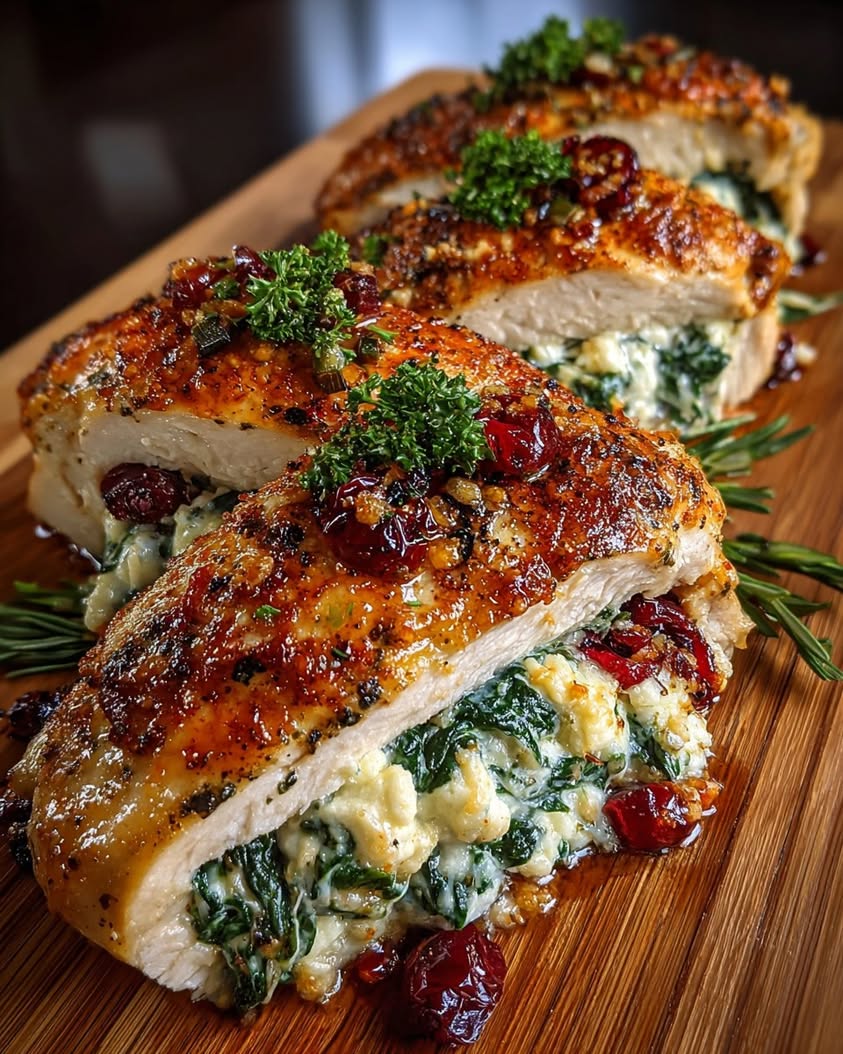
Cranberry & Spinach Stuffed Chicken Breasts with Brie: An Elegant Weeknight Feast
Imagine cutting into a perfectly cooked chicken breast to reveal a molten, savory heart of creamy brie, tart cranberries, and fresh spinach. This recipe for Cranberry Spinach Stuffed Chicken Breasts delivers exactly that experience, transforming simple ingredients into a restaurant-quality meal. Moreover, it’s a fantastic way to impress dinner guests without spending hours in the kitchen. The combination of flavors and textures is simply unforgettable, making it a dish you’ll return to again and again.
Creating these stuffed chicken breasts feels like a culinary adventure, yet the process is straightforward. You start with juicy chicken breasts, create a pocket, and fill it with a vibrant mixture. The sweet and tangy dried cranberries play beautifully against the earthy spinach and the rich, decadent brie. As the chicken bakes, the cheese melts into a luxurious sauce inside, ensuring every bite is moist and flavorful. Consequently, this dish is a guaranteed crowd-pleaser that looks far more complicated than it actually is.
Ultimately, this recipe is a celebration of balance. It marries lean protein with indulgent cheese and nutritious greens. The golden-brown exterior of the chicken gives way to a colorful, gooey surprise. Whether you’re cooking for a special date night or a festive family dinner, these Cranberry Spinach Stuffed Chicken Breasts with Brie elevate any occasion. Let’s dive into how you can master this delicious and visually stunning main course.
Quick Recipe Highlights
- Flavor Profile: This dish offers a sophisticated balance of savory, sweet, and tangy notes. The rich, buttery brie melts into the chicken, while the dried cranberries provide a bright, fruity pop. Additionally, subtle herbs and a hint of garlic tie all the elements together harmoniously.
- Texture: You’ll experience a delightful contrast in every mouthful. Expect a crisp, seasoned exterior on the chicken that yields to tender, juicy meat. Inside, the filling is wonderfully gooey from the melted brie, with slight chew from the cranberries and a delicate wilt from the spinach.
- Aroma: As the chicken roasts, your kitchen will fill with the comforting scent of roasting poultry and herbs. The melting brie adds a nutty, earthy fragrance, while the cranberries release a subtle, sweet aroma that makes the dish incredibly inviting.
- Visual Appeal: These stuffed chicken breasts are a feast for the eyes. The golden-brown crust is visually appealing, and slicing into the center reveals a stunning cross-section of white chicken, green spinach, red cranberries, and creamy melted cheese. It’s a presentation that promises a gourmet experience.
- Skill Level Needed: This recipe is perfect for confident home cooks ready to try a simple stuffing technique. While it requires careful handling to create the pocket and secure the filling, the steps are clear and manageable. Therefore, with a bit of patience, even a relative beginner can achieve excellent results.
- Special Equipment: You’ll need a sharp paring or boning knife to create a clean pocket in the chicken. A reliable meat mallet or rolling pin helps flatten the breasts evenly. Finally, a good oven-safe skillet or baking dish is essential for achieving that perfect golden finish.
Recipe Overview
- Difficulty Level: We rate this recipe as intermediate because it involves a key technique: butterflying and stuffing chicken breasts. The process requires a steady hand with a knife and careful securing of the filling. However, the cooking method itself is simple and forgiving, making it an excellent skill-building dish for aspiring cooks.
- Category: This dish firmly sits in the main course category, perfect for dinner. It’s a protein-centric meal that is both satisfying and elegant. Furthermore, it can easily be classified as a special occasion recipe or a elevated weeknight dinner, bridging the gap between everyday cooking and entertaining.
- Cuisine: While not tied to one specific tradition, this recipe draws inspiration from modern American bistro cuisine and French culinary techniques. The use of brie is a classic French touch, while the cranberry and spinach combination is popular in contemporary American cooking. Ultimately, it’s a fusion that celebrates accessible, high-quality ingredients.
- Cost: This is a moderately priced meal. Chicken breasts and spinach are typically affordable, while brie and dried cranberries may be slightly more premium. You can expect to spend about $20-$25 for four generous servings, which is excellent value for a restaurant-style dish made at home.
- Season: This recipe shines brightest in the fall and winter months. The cranberries evoke holiday warmth, and the rich, comforting nature of the baked stuffed chicken is ideal for cooler weather. That said, it’s delicious year-round, especially if you use fresh spinach when it’s in season.
- Occasion: These stuffed chicken breasts are incredibly versatile for different events. They are perfect for a romantic dinner for two, a small holiday gathering like Thanksgiving or Christmas, or even a dinner party where you want to impress. It’s a special meal that feels celebratory without being overly fussy.
Why You’ll Love This Recipe
First and foremost, the taste and texture combination is absolutely divine. Each bite delivers a symphony of flavors: the savory, umami-rich chicken, the creamy and slightly funky brie, the sweet-tart burst of cranberry, and the fresh, mineral note of spinach. The contrast between the crispy outer crust and the molten, juicy interior is what makes this Cranberry Spinach Stuffed Chicken Breasts recipe so memorable. It’s a dish that feels indulgent yet balanced, satisfying both comfort food cravings and a desire for something refined.
From a convenience standpoint, this recipe is a winner. Despite its impressive appearance, it comes together in under an hour from start to finish. The prep work is simple—mainly chopping and stuffing—and the oven does most of the heavy lifting. You can easily prepare the stuffed chicken breasts ahead of time and refrigerate them until ready to bake, making it a fantastic option for stress-free entertaining. Consequently, you get a show-stopping main course without being stuck in the kitchen while your guests arrive.
Nutritionally, this dish offers a well-rounded profile. Chicken breast is an excellent source of lean protein, while spinach packs in vitamins A, C, and K, along with iron and fiber. Using a moderate amount of brie provides calcium and flavor without overwhelming the dish with fat. The cranberries add antioxidants. By combining these elements, you create a meal that is both nourishing and deeply satisfying, proving that healthy eating doesn’t have to be bland.
The social and entertaining value of this recipe cannot be overstated. Placing a platter of these golden, stuffed chicken breasts on the table instantly elevates the meal. It sparks conversation and shows your guests you’ve put thought and care into their dining experience. Because it’s a self-contained dish with its own built-in sauce from the melted cheese, it simplifies plating and allows you to focus on your company. It’s a recipe that makes you look like a culinary rockstar.
Finally, this recipe is cost-effective and accessible. You likely have many of the seasonings in your pantry already. Chicken breasts, spinach, and even brie are readily available at most grocery stores. Compared to ordering a similar dish at a restaurant, making these Cranberry Spinach Stuffed Chicken Breasts at home saves you a significant amount of money. Furthermore, you control the quality of every ingredient, ensuring a fresh and delicious result every single time.
Historical Background and Cultural Significance
The concept of stuffing meat dates back centuries across numerous cultures, serving as a method to stretch expensive protein and add flavor and moisture. In European traditions, particularly in France and Italy, stuffing poultry and other meats with herbs, bread, and local ingredients was a hallmark of festive and peasant cooking alike. The specific combination of fruit, cheese, and meat, however, reflects a more modern, fusion-oriented approach to cuisine that became popular in late 20th-century American cooking.
Culturally, the use of cranberries immediately ties this dish to North American traditions, where the tart berry is a staple of Thanksgiving and Christmas feasts. Pairing it with poultry is a natural evolution from the classic turkey with cranberry sauce. The inclusion of brie, a cheese with deep French roots, represents a blending of culinary heritages—a testament to how global food influences have enriched home cooking. This recipe is a product of contemporary, interconnected food culture.
The evolution of this recipe likely stems from the popular trend of “gourmet” stuffed chicken breasts that emerged in the 1990s and early 2000s. As home cooks sought to replicate restaurant meals, combinations like chicken cordon bleu inspired more creative fillings. The cranberry and brie pairing, famous in baked brie appetizers, found its way into a main course. This adaptation showcases how home cooks creatively reimagine flavor profiles from one part of the meal to another.
Regional variations of stuffed chicken are endless. In the Mediterranean, you might find chicken stuffed with feta, olives, and sun-dried tomatoes. In the American South, a cornbread and sausage stuffing is common. This Cranberry Spinach Stuffed Chicken Breasts recipe, with its festive berry and rich cheese, has a particular resonance in the Northeastern United States and Canada, where cranberries are commercially cultivated. It’s a dish that feels both familiar and novel, rooted in tradition but open to personal interpretation.
Ingredient Deep Dive
Let’s start with the star: chicken breasts. Opt for large, plump breasts of even thickness for the best results. This ensures they can hold a generous pocket of filling without tearing. Look for organic or air-chilled varieties if possible, as they often have better texture and flavor. To prepare, pat them thoroughly dry with paper towels; this is a crucial step for achieving a good sear. If your breasts are very thick on one end, you can gently pound the thicker portion to an even ¾-inch thickness, which promotes even cooking.
Brie cheese is the luxurious heart of the filling. This soft-ripened French cheese is known for its edible white rind and creamy, buttery interior. When heated, it melts into an incredibly smooth and rich sauce. For stuffing, choose a ripe brie that feels slightly soft to the touch. You can leave the rind on—it’s perfectly edible and helps hold the cheese together as you dice it. If brie is unavailable, Camembert makes a fine substitute, offering a similar texture and flavor profile.
Dried cranberries provide the essential sweet and tangy counterpoint. Unlike fresh cranberries, dried ones are chewy and intensely flavored, perfect for stuffing. For the best quality, look for unsweetened or fruit juice-sweetened varieties to avoid excessive added sugar. If you don’t have cranberries, dried cherries or chopped dried apricots can work beautifully, though they will impart a slightly different flavor. Soaking the dried fruit in hot water or orange juice for 10 minutes before using can plump them up, making them even juicier in the final dish.
Fresh spinach brings color, nutrients, and a fresh flavor. You’ll wilt it down significantly, so what looks like a large volume cooks to just the right amount. Always wash spinach thoroughly, even if it’s labeled “pre-washed,” to remove any grit. For the best texture and to prevent a watery filling, squeeze the wilted spinach firmly in a clean kitchen towel or paper towels to remove as much excess moisture as possible. This step is non-negotiable for a stuffing that isn’t soggy.
Common Mistakes to Avoid
- Cutting the pocket too deep or tearing through the chicken. This is the most common error. Use a sharp knife and make a horizontal slit in the thickest part, stopping about ½ inch from the opposite side to create a secure pouch, not a tunnel.
- Overstuffing the chicken breast. An overstuffed pocket is difficult to seal and will likely burst open during cooking, letting the precious filling leak out. A moderate 2-3 tablespoons of filling per breast is usually sufficient.
- Not securing the opening properly. Use toothpicks or kitchen twine to tightly close the pocket. If using toothpicks, remember to count them so you can remove them all before serving—a critical safety step.
- Using wet spinach in the filling. Failing to thoroughly drain and squeeze the wilted spinach will introduce too much moisture. Consequently, the filling becomes watery, and the chicken skin won’t brown properly.
- Skipping the sear before baking. Searing in a hot skillet creates a flavorful golden crust and helps lock in juices. Baking from raw without searing often results in a pale, less flavorful exterior.
- Overcooking the chicken. Since the breasts are stuffed, they may take slightly longer to cook, but it’s easy to go too far. Use a meat thermometer and pull the chicken from the oven when it reaches 165°F at the thickest part. The residual heat will carry it a few degrees further.
- Using cold brie straight from the fridge. Cold cheese is harder to dice neatly and may not melt as evenly. Let the brie sit at room temperature for 15-20 minutes before cubing it for easier handling.
- Not seasoning the chicken inside and out. Remember to season the cavity of the pocket as well as the outside. This ensures flavor in every layer of the dish, not just on the surface.
Essential Techniques
Butterflying and creating a pocket is the foundational skill. Hold the chicken breast flat on your cutting board. Using a sharp paring knife, slice horizontally into the thickest side, starting about ½ inch from the top. Imagine you are cutting a hinge, stopping about ½ inch from the other side so you have a flap you can open. Gently open it up to create a wide, even pocket. If needed, you can cover the breast with plastic wrap and gently pound the thicker areas to an even thickness, which helps with both stuffing and cooking.
Searing before baking, also known as “oven-finishing,” is crucial for flavor and texture. Heat your oven-safe skillet with oil until it shimmers. Pat the stuffed chicken completely dry once more, then place it seam-side down first to seal it. Sear for 2-3 minutes per side until a deep golden-brown crust forms. This Maillard reaction creates complex flavors that pure baking cannot achieve. Then, you simply transfer the entire skillet to the oven to finish cooking through gently and evenly.
Properly wilting and drying spinach prevents a soggy disaster. Place clean spinach in a large pan over medium heat with just the water clinging to its leaves. Cover and cook for 1-2 minutes until completely wilted. Immediately transfer it to a colander to cool. Once cool enough to handle, gather the spinach in your hands or in a clean kitchen towel and squeeze firmly over the sink. You’ll be amazed at how much water releases. Only then is it ready for your filling.
Pro Tips for Perfect Cranberry Spinach Stuffed Chicken Breasts
First, bring all your filling ingredients to room temperature before assembling. This helps them meld together better and promotes even cooking, especially for the brie. Second, use a digital meat thermometer. It’s the only foolproof way to know your stuffed chicken is perfectly cooked to 165°F without cutting into it and losing juices. Third, let the cooked chicken rest for 5-10 minutes after baking. This allows the juices to redistribute, ensuring a moist result, and gives the molten cheese filling a moment to set slightly for cleaner slicing.
Fourth, season every layer generously. Don’t forget salt and pepper inside the pocket itself. Fifth, if you’re nervous about the pocket tearing, you can create a “well” by pounding the breast slightly thinner and placing the filling in the center, then folding the sides up and securing them like a package. Sixth, for extra flavor, deglaze the hot skillet with a splash of white wine or chicken broth after searing, then pour that liquid over the chicken before it goes in the oven to create a simple pan sauce.
Variations and Adaptations
For regional twists, consider a Mediterranean version with feta, kalamata olives, and sun-dried tomatoes instead of brie and cranberry. A Swiss-inspired take could use Gruyère and ham. For seasonal adaptations, in spring, try using goat cheese, asparagus tips, and fresh herbs. In summer, a filling of mozzarella, fresh basil, and roasted red peppers is delightful. For dietary modifications, to make it gluten-free, ensure your seasonings are certified GF. For a dairy-free version, use a melty vegan cheese alternative and a drizzle of olive oil in the filling.
Flavor variations are endless. Add toasted pecans or walnuts to the filling for crunch. Incorporate a teaspoon of grainy mustard or fig jam into the spinach mixture for complexity. For an herbaceous note, mix in fresh thyme, rosemary, or sage. If you prefer a different texture, substitute the fresh spinach with sautéed kale or Swiss chard for a heartier bite. For presentation, instead of searing, you can wrap the stuffed breast in a slice of prosciutto before baking for a salty, crisp outer layer.
Serving and Presentation Guide
Plating is key for visual impact. Slice each Cranberry Spinach Stuffed Chicken Breast on a slight diagonal into 3-4 pieces, revealing the beautiful spiral of filling. Fan the slices out on the plate. For garnishing, a simple sprinkle of fresh chopped parsley or thyme adds color. A drizzle of reduced balsamic glaze or a cranberry sauce on the plate makes for a restaurant-worthy presentation. Traditional accompaniments include creamy mashed potatoes, roasted root vegetables, or wild rice pilaf, which all soak up the delicious juices.
Modern serving suggestions might include a bed of quinoa with pomegranate arils or a simple arugula salad with a lemon vinaigrette to cut through the richness. Consider temperature carefully; serve the chicken hot from the oven after its brief rest. The brie filling is best when still warm and creamy. For portion control, one stuffed breast is typically a satisfying serving. If serving with multiple hearty sides, you can slice one breast between two people for a lighter meal, accompanied by a robust salad.
Wine and Beverage Pairing
Wine pairings should complement the rich cheese and tangy fruit. A medium-bodied Pinot Noir is an excellent choice, as its bright red fruit notes and mild tannins won’t overpower the chicken. Alternatively, a buttery Chardonnay mirrors the richness of the brie and stands up to the dish’s weight. For a non-alcoholic alternative, a sparkling apple cider or a tart cranberry spritzer echoes the festive flavors. Iced tea with a hint of lemon or a warm herbal tea like chamomile can also be lovely, cleansing the palate between bites.
When serving wine, a slight chill on the white (around 50-55°F) and a light chill on the red (just below room temperature) is ideal. Pour beverages just before serving to ensure they are at their peak. If offering multiple options, a simple tasting note for your guests can enhance the experience: “The Chardonnay will highlight the creamy brie, while the Pinot Noir will bring out the cranberry notes.” This thoughtful touch makes the meal feel even more special.
Storage and Shelf Life
Store leftover stuffed chicken in an airtight container in the refrigerator for up to 3 days. The texture of the chicken and spinach will soften, and the brie will solidify, but the flavors will remain delicious. For reheating, avoid the microwave, which can make the chicken rubbery and the cheese greasy. Instead, reheat gently in a covered oven-safe dish at 325°F until warmed through, or in a skillet over low heat with a splash of broth to keep it moist. You can also slice it cold and add it to a salad.
Freezing is possible but with caveats. Freeze the uncooked, stuffed, and secured chicken breasts on a parchment-lined baking sheet until solid, then transfer to a freezer bag. They can be stored for up to 2 months. Thaw completely in the refrigerator before cooking; do not cook from frozen, as the outside will overcook before the inside is safe. Note that the texture of the spinach may become softer upon thawing and cooking. Signs of spoilage include an off smell, slimy texture, or any mold; when in doubt, throw it out.
Make Ahead Strategies
You can prep this entire dish up to 24 hours in advance, which is a huge entertaining advantage. Simply prepare the stuffed chicken breasts, secure them with toothpicks, and place them on a plate. Cover tightly with plastic wrap and refrigerate. About 30 minutes before cooking, take them out to lose the chill from the fridge—this helps them sear better. You can also pre-mix the dried filling ingredients (cranberries, any herbs, diced brie) and store them separately, wilting the spinach and assembling just before cooking for the freshest texture.
The quality impact is minimal when prepped a day ahead; in fact, seasoning the chicken overnight can enhance flavor. For assembly, keep the stuffed breasts on a tray in a single layer to prevent them from getting squished. When ready to cook, pat the surface dry again before searing, as refrigeration can draw out some moisture. If you’ve pre-seared them, you can hold them in the fridge and then just finish in the oven, though the crust may soften slightly. Add a fresh herb garnish after baking to brighten up the pre-made dish.
Scaling Instructions
Halving the recipe for two people is straightforward. Simply divide all ingredient quantities by two. Use a smaller oven-safe skillet for searing. The cook time may be slightly less, so rely on your meat thermometer even more. Doubling or tripling for a crowd requires planning. Use multiple skillets for searing in batches to avoid overcrowding, which steams the chicken instead of browning it. You can then transfer all the seared chicken to a large, rimmed baking sheet to finish in the oven together. Ensure there is space between each breast for hot air to circulate.
Equipment adjustments are key when scaling up. Make sure your oven can accommodate multiple trays; you may need to rotate them halfway through cooking. Timing modifications are minimal for the searing step (you’ll just spend more time at the stove), but the baking time should remain consistent if the chicken is in a single layer. Storage considerations for leftovers increase, but fortunately, this dish reheats well. Consider preparing a mix of regular and dietary-adapted versions if needed, clearly marking them with different colored toothpicks before cooking.
Nutritional Deep Dive
This dish provides a solid macro breakdown: high-quality protein from the chicken, moderate fat from the brie and oil, and complex carbohydrates from the vegetables and cranberries. A typical serving offers around 35-40 grams of protein, which supports muscle repair and satiety. The fats are a mix of saturated from the cheese and unsaturated from the olive oil. Micronutrient-wise, it’s rich in B vitamins from the chicken, vitamin A and K from the spinach, and antioxidants from the cranberries.
The health benefits include supporting immune function, bone health, and providing anti-inflammatory compounds. For dietary considerations, it’s naturally low in carbs, making it suitable for low-carb lifestyles, though the cranberries do add some sugar. Portion analysis shows one breast is a satisfying meal that fits into a balanced diet. For weight management, pair it with a large portion of non-starchy vegetables like steamed broccoli or a big salad to increase volume and fiber without adding many calories, helping you feel full and nourished.
Dietary Adaptations
For a gluten-free version, this recipe is naturally compliant if you use gluten-free seasonings. Double-check any pre-made spice blends. For dairy-free, substitute the brie with a high-quality, melty vegan cheese block (like those from Violife or Miyoko’s). A drizzle of olive oil in the filling can help mimic richness. For a vegan adaptation, it’s more challenging but possible. Use large, thick slices of pressed and marinated tofu or seitan. Create a pocket and stuff with a mixture of vegan cheese, spinach, and cranberries, then bake as directed.
For a keto or low-carb adaptation, reduce the amount of dried cranberries slightly, as they contain sugar, or swap for a few fresh raspberries. Ensure no sugar is added to your cranberries. The rest of the recipe is already keto-friendly. For a Paleo version, omit the cheese entirely. Increase the spinach and add mashed avocado or a few tablespoons of nutritional yeast to the filling for creaminess. For Low-FODMAP, use garlic-infused oil instead of fresh garlic, ensure the cranberries are not sweetened with high-fructose corn syrup, and use only the green parts of scallions if included.
Troubleshooting Guide
If your filling is leaking out, the pocket was likely torn or overstuffed, or the opening wasn’t sealed tightly enough. Next time, be more careful with the knife and use more toothpicks or kitchen twine. If the cheese leaks, it’s not a disaster—it creates a delicious crispy cheese crust on the outside of the chicken. If the chicken is dry, it was overcooked. Use a thermometer and remember carryover cooking. Also, ensuring the pocket is properly sealed traps steam inside, helping to keep the meat moist.
If the outside is browned but the inside is undercooked, your skillet was too hot during searing, or the oven temperature is off. Sear over medium-high, not maximum heat, to allow the interior to warm before the outside burns. Then finish in a preheated 400°F oven. If you don’t have an oven-safe skillet, sear in a regular pan, then carefully transfer the chicken to a preheated baking dish for the oven finish. The transfer might cause some filling leakage, so be gentle. If the filling tastes bland, you likely under-seasoned the spinach mixture or forgot to salt the inside of the pocket.
Recipe Success Stories
Community feedback on this Cranberry Spinach Stuffed Chicken Breasts recipe has been overwhelmingly positive. Many home cooks report that it’s now their go-to “fancy” dinner for anniversaries and birthdays. One reader shared that she adds a sprinkle of chopped pecans to the filling for extra crunch, which has become a beloved family variation. Another successfully made it for a holiday potluck by preparing and searing the chicken ahead of time, then finishing it in the host’s oven upon arrival—it was the first empty platter of the night.
Adaptation stories include a reader who is lactose-intolerant using vegan brie with great success. Another cooked it on the grill in a foil packet during the summer for a smoky flavor. Photography tips from enthusiasts suggest slicing one breast cleanly to show the filling and leaving one whole on the platter for contrast. Natural light is best for capturing the golden crust and gooey cheese. Reader suggestions often include serving it with a side of cranberry sauce for dipping, amplifying the festive flavor even further.
Frequently Asked Questions
Can I use frozen spinach? Yes, but you must thaw it completely and squeeze out ALL the excess water, even more thoroughly than fresh. A 10-ounce box of frozen chopped spinach, thawed and squeezed, is equivalent to the fresh amount.
What can I use instead of toothpicks? Kitchen twine is a great alternative. Tie a couple of loops around the circumference of the breast to hold it closed. Just remember to snip and remove the twine before serving.
Can I make this with chicken thighs? Boneless, skinless chicken thighs can work, but they are smaller and harder to stuff. You can pound them flat, place the filling in the center, and roll them up, securing with toothpicks.
How do I know when the chicken is done? The only reliable method is a meat thermometer inserted into the thickest part of the chicken (avoiding the filling pocket). It should read 165°F (74°C).
Why did my brie leak out everywhere? Some leakage is normal, especially if the cheese is very ripe. To minimize, ensure your brie is cold when dicing, seal the pocket very well, and let the stuffed chicken rest for 5 minutes after baking before slicing.
Can I prepare this completely ahead and bake later? Absolutely. Assemble the stuffed breasts, cover, and refrigerate for up to 24 hours. Let them sit at room temp for 20-30 minutes before searing and baking to ensure even cooking.
Is the rind on the brie edible? Yes, the white rind on brie is completely edible and is often left on when baking. It helps hold the cheese together. If you personally dislike the texture, you can trim it off before dicing.
What’s the best side dish for this? It pairs wonderfully with creamy polenta, garlic mashed potatoes, roasted Brussels sprouts, or a simple arugula salad with a lemon vinaigrette to cut the richness.
Can I freeze the leftovers? Cooked leftovers can be frozen for up to 2 months, though the texture of the chicken and spinach may become softer upon reheating. Thaw in the fridge overnight and reheat gently in the oven.
My chicken is cooking unevenly. Why? Your chicken breasts were likely uneven in thickness. Next time, pound the thicker end to an even ¾-inch thickness before butterflying and stuffing to promote uniform cooking.
Additional Resources
If you loved these Cranberry Spinach Stuffed Chicken Breasts, explore other stuffed protein recipes like pork tenderloin with apple and sage or bell peppers stuffed with quinoa and turkey. For technique guides, our posts on “How to Butterfly Chicken Breast” and “Pan Searing 101” offer visual step-by-step instructions. To learn more about ingredients, check out our deep dives on “Choosing the Best Brie” and “A Guide to Dried Fruits in Cooking.”
For equipment, a good digital instant-read thermometer is the best investment for perfect proteins. We also recommend a sharp, flexible boning knife for easy butterflying. For seasonal variations, in spring, try our Lemon and Herb Stuffed Chicken, and in summer, our Caprese Stuffed Chicken with fresh mozzarella and basil. Mastering this recipe opens the door to endless creative stuffing combinations, making you more confident and creative in the kitchen every day.
{“success”:true,”message”:”Recipe created successfully”,”post_id”:9286,”tasty_recipe_id”:9286,”shortcode”:”“}

I’m Billy, a classically trained culinary school graduate from The Culinary Institute of America with over 12 years in the restaurant industry and over 19 years of cooking experience.