
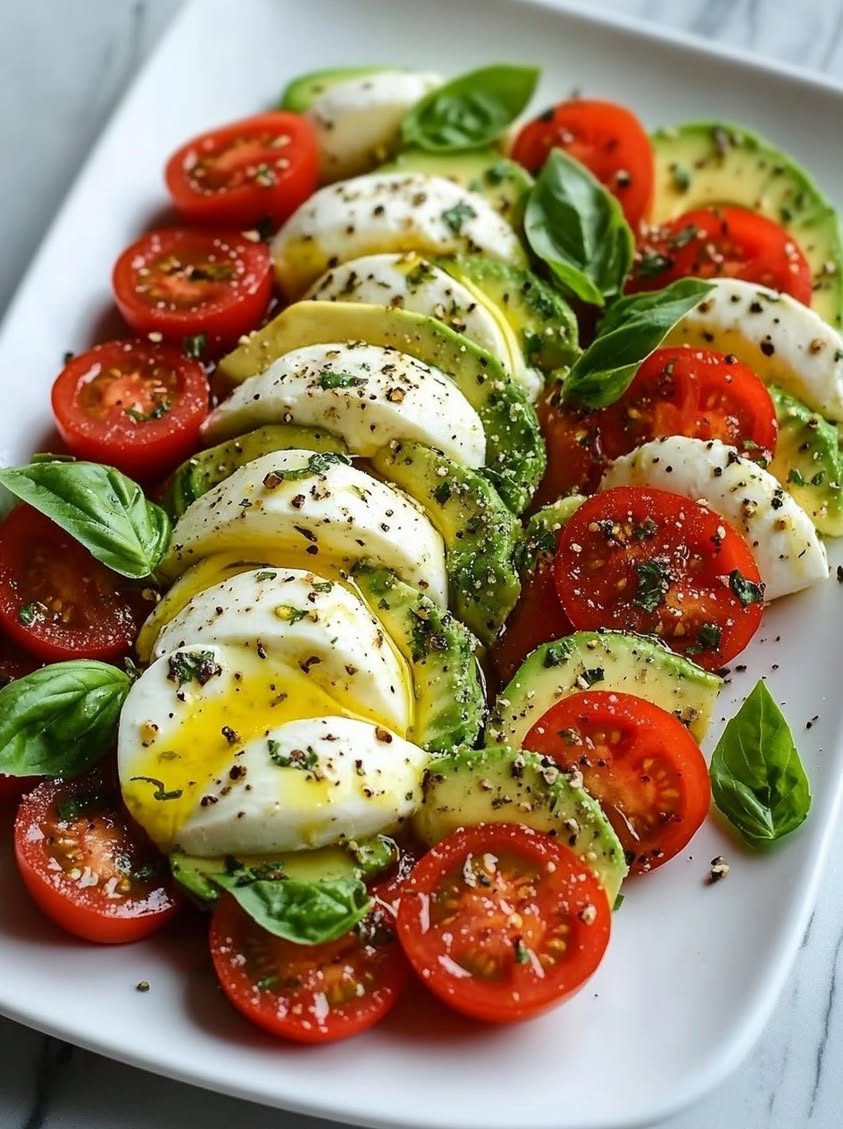
Creamy Avocado Caprese Salad: A Fresh Twist on a Classic Recipe
Imagine the classic Italian Caprese salad. Now, picture it transformed with a luscious, creamy twist that elevates every single bite. This Creamy Avocado Caprese Salad does exactly that. It marries the timeless trio of ripe tomatoes, fresh mozzarella, and fragrant basil with the rich, buttery texture of perfectly ripe avocado. The result is a dish that feels both comfortingly familiar and excitingly new. Moreover, it delivers a stunning visual presentation with its vibrant green, white, and red layers, making it a true centerpiece for any table.
This recipe is a celebration of simplicity and quality. It relies on the inherent flavors of a few stellar ingredients, enhanced by a light, bright dressing. Consequently, every component shines. The juicy tomatoes burst with sweetness, the mozzarella offers a mild, milky creaminess, and the avocado adds a decadent, velvety mouthfeel. Fresh basil ties it all together with its unmistakable peppery, anise-like aroma. Ultimately, this dish is a testament to how one simple addition can reinvent a beloved classic, creating a perfect salad for modern palates.
Furthermore, this Creamy Avocado Caprese Salad is incredibly versatile. It functions beautifully as a light lunch, an impressive appetizer, or a vibrant side dish at your next barbecue or dinner party. It requires no cooking, which means you can assemble it in minutes on even the busiest of days. The combination of healthy fats from the avocado and protein from the cheese also makes it surprisingly satisfying. In short, this recipe is your new go-to for a quick, nutritious, and utterly delicious meal that never fails to impress.
Quick Recipe Highlights
- Flavor Profile: This salad offers a beautiful harmony of fresh, creamy, and tangy notes. Sweet, sun-ripened tomatoes contrast with the mild, milky mozzarella and the rich, buttery avocado. A simple drizzle of extra virgin olive oil and a splash of balsamic glaze add layers of fruity and sweet-tart complexity, while fresh basil provides the essential herbal, peppery finish.
- Texture: The experience is a delightful textural journey. You get the juicy pop of tomato, the soft, yielding bite of fresh mozzarella, and the incredibly smooth, creamy flesh of ripe avocado. Each component contributes a distinct mouthfeel that keeps every forkful interesting and satisfying, preventing any monotony.
- Aroma: The aroma is unmistakably fresh and herbal. Fragrant basil leaves release their essential oils as you tear them, filling the air with a sweet, peppery scent. This is complemented by the fruity aroma of high-quality olive oil and the subtle, earthy sweetness of ripe avocado, creating an inviting olfactory preview.
- Visual Appeal: This dish is a feast for the eyes with its iconic Italian flag colors. The vibrant red of the tomatoes, the pure white of the mozzarella, the deep green of the avocado, and the bright green basil create a stunning, Instagram-worthy mosaic. Arranging them in an alternating pattern maximizes visual impact.
- Skill Level Needed: This recipe is perfect for absolute beginners. It requires no technical cooking skills, only simple assembly. The key is selecting high-quality, ripe ingredients and using a gentle hand to combine them. Therefore, anyone can achieve restaurant-quality results with minimal effort.
- Special Equipment: You need almost no special equipment. A sharp knife for clean slicing, a cutting board, and a serving platter are the only essentials. A small bowl for whisking the dressing and a spoon for drizzling are helpful, but you can even mix the oil and vinegar directly on the platter.
Recipe Overview
- Difficulty Level: This Creamy Avocado Caprese Salad is rated “Easy” because it involves zero cooking techniques. The entire process is assembly-based. The most challenging aspect is selecting perfectly ripe produce and handling the avocado gently to prevent bruising. With no heat application or complex procedures, it’s accessible to cooks of all levels, including children helping in the kitchen.
- Category: This dish falls primarily into the salad category, but it’s substantial enough to be a light main course. It’s also an excellent appetizer or side dish. Its fresh, clean profile makes it ideal for summer meals, healthy lunches, and as part of a larger antipasti spread for entertaining.
- Cuisine: The recipe is rooted in Italian cuisine, directly inspired by the classic Insalata Caprese from the island of Capri. The addition of avocado is a modern, global twist that introduces a creamy element often found in Californian or Mexican-inspired dishes, creating a delightful fusion that respects its origins while embracing contemporary tastes.
- Cost: The cost is moderate and depends heavily on ingredient quality. Fresh mozzarella (like mozzarella di bufala) and premium extra virgin olive oil are the potential splurges. However, using regular fresh mozzarella and a good supermarket olive oil keeps it budget-friendly. Seasonal, local tomatoes and homegrown basil can further reduce the price.
- Season: This salad is best in late summer when tomatoes and basil are at their absolute peak of flavor and abundance. Nevertheless, thanks to year-round avocado availability, you can make a very good version anytime. For the best results, always seek out the ripest, most fragrant tomatoes you can find, regardless of the season.
- Occasion: It’s perfect for casual weeknight dinners, elegant dinner parties, potlucks, picnics (assemble on-site), and holiday gatherings like Fourth of July or Labor Day. Its stunning colors make it especially fitting for Christmas or Italian-themed meals. It’s a universally appealing dish for almost any event.
Why You’ll Love This Recipe
First and foremost, the taste and texture are utterly irresistible. This Creamy Avocado Caprese Salad takes the beloved flavors of a traditional Caprese and amplifies them with a luxurious, creamy element. The avocado’s richness makes the salad feel more substantial and indulgent, while still being incredibly fresh. Each bite delivers a perfect balance: the sweet acidity of tomato, the mild creaminess of cheese, the buttery smoothness of avocado, and the aromatic punch of basil. It’s a symphony of flavors that feels both light and deeply satisfying, leaving you completely refreshed.
From a practical standpoint, the convenience is a major win. This recipe comes together in about fifteen minutes with no cooking required. It’s the ultimate solution for a hot day when you don’t want to turn on the oven, or for those evenings when time is short but you still want a wholesome, beautiful meal. The preparation is also incredibly straightforward—it’s essentially a chopping and arranging exercise. This makes it a fantastic recipe to involve kids in, teaching them about fresh ingredients and simple presentation without any stress or mess.
Nutritionally, this salad is a powerhouse. Avocados are loaded with heart-healthy monounsaturated fats, fiber, and potassium. Tomatoes provide vitamin C, potassium, and the antioxidant lycopene. Fresh mozzarella offers a good source of protein and calcium. Olive oil contributes more healthy fats and antioxidants. Combined, these ingredients create a meal that supports sustained energy, promotes satiety, and delivers a wide range of essential nutrients. It’s a delicious way to eat food that is genuinely good for your body.
For entertaining, this dish is a superstar. Its visual appeal is immediate and impressive, making guests feel special. It looks like you spent far more time than you actually did. Additionally, it’s a crowd-pleaser that caters to various preferences—it’s vegetarian, gluten-free, and can be easily adapted for other diets. Serving this Creamy Avocado Caprese Salad signals a focus on quality, fresh ingredients and thoughtful preparation, setting a wonderful tone for any meal shared with friends or family.
Finally, it’s cost-effective and accessible. While you can splurge on artisanal ingredients, a delicious version can be made with supermarket staples. The recipe is forgiving and encourages improvisation based on what’s available or on sale. Furthermore, it minimizes food waste—if you have a slightly overripe avocado or a bunch of basil that needs using, this is the perfect destination. It transforms simple, accessible ingredients into something extraordinary, proving that eating well doesn’t have to be complicated or expensive.
Historical Background and Cultural Significance
The story of the Caprese salad is as colorful as the dish itself. Widely believed to have originated on the Isle of Capri in the 1950s, it was allegedly created as a patriotic tribute to Italy. The colors—red (tomato), white (mozzarella), and green (basil)—mimic the Italian flag. While its exact origins are debated, its name firmly ties it to the island. It emerged post-World War II, coinciding with a rise in tourism to the region, and quickly became a symbol of simple, fresh Italian cooking, showcasing the exquisite local produce of the Campania region.
Culturally, the classic Caprese holds a place of honor in Italian cuisine. It embodies the philosophy of “cucina povera” or “poor cooking,” which emphasizes letting a few high-quality, seasonal ingredients shine without elaborate preparation. It’s a dish of purity and respect for the raw materials. Consequently, it’s served across Italy as a starter (antipasto), especially in the summer months. It represents a specific sense of place and time, evoking the sun-drenched cliffs of Capri and the leisurely pace of Mediterranean life.
The evolution of the recipe is a tale of global adaptation. As the Caprese traveled the world, chefs and home cooks began experimenting with additions. The introduction of avocado is a natural and popular progression, particularly in the Americas where avocados are abundant. This variation adds a creamy texture and rich flavor that complements the original trio beautifully. It represents the dynamic nature of food culture, where traditional recipes are respectfully adapted to incorporate new, local ingredients and cater to modern tastes for creamier, more substantial textures.
Regional variations now abound. In some places, you might find a drizzle of pesto instead of plain basil leaves. Others add arugula for a peppery base or include slices of prosciutto for a salty contrast. The Creamy Avocado Caprese Salad is itself a dominant variation, especially in California and Mexico-inspired kitchens. Some versions even mash the avocado into a dressing. This ongoing innovation shows the recipe’s flexibility and enduring appeal, proving that while the classic is perfect, there’s always room for a delicious twist that honors its spirit.
Ingredient Deep Dive
Let’s start with the avocado, the star of our twist. Native to south-central Mexico, avocados have been cultivated for thousands of years. They were prized by ancient Mesoamerican cultures. Nutritionally, they are a unique fruit, packed with monounsaturated fats (the heart-healthy kind), nearly 20 vitamins and minerals, and more potassium than a banana. For this recipe, select an avocado that yields slightly to gentle pressure at the stem end. Store unripe avocados at room temperature; once ripe, you can refrigerate them to slow further ripening for a day or two. If you must substitute, a ripe, creamy burrata cheese could offer a similar luxurious texture, though the flavor profile will shift.
Fresh mozzarella is the soul of the dish. Traditionally made from the milk of water buffalo (mozzarella di bufala) or cow’s milk (fior di latte), this cheese is celebrated for its delicate, milky flavor and soft, moist texture. It’s a good source of protein and calcium. Always seek out fresh mozzarella stored in water (whey or brine) for the best flavor and texture. Avoid the low-moisture, pre-shredded variety, which is rubbery and bland. For storage, keep it submerged in its liquid in the refrigerator and consume within a few days of opening. If unavailable, a fresh burrata or even a high-quality, mild feta can work in a pinch, though they will alter the classic profile.
The tomato provides the essential acidic and sweet balance. Heirloom varieties, when in season, offer incredible depth of flavor. Tomatoes are rich in vitamin C, potassium, and the antioxidant lycopene, which is more bioavailable when cooked but still present in raw fruit. Choose tomatoes that are heavy for their size, fragrant at the stem end, and have vibrant, taut skin. Never refrigerate tomatoes, as cold temperatures destroy their texture and flavor. Keep them at room temperature until ready to use. In winter, cherry or grape tomatoes are often a sweeter, more reliable choice than large, out-of-season beefsteaks. There is no true substitute for tomato in a Caprese, as it defines the dish.
Fresh basil is the aromatic heart. This herb is central to Italian and Southeast Asian cuisines and is revered for its sweet, peppery flavor with notes of anise and mint. It contains antioxidants and essential oils like eugenol. Look for bright green leaves without black spots or wilting. The best way to store basil is like a bouquet: trim the stems and place them in a glass of water on the counter, loosely covering the leaves with a plastic bag. Refrigeration often leads to blackening. If you must substitute, fresh oregano or mint could provide a different but interesting herbal note, though the flavor will diverge significantly from the classic.
Extra virgin olive oil (EVOO) and balsamic glaze are the supporting actors that elevate everything. EVOO is the highest grade, extracted mechanically without heat or chemicals, preserving its fruity, peppery flavor and antioxidants. It provides healthy fats and binds the flavors. A good balsamic glaze (a reduction of balsamic vinegar and sometimes sugar) adds a sweet-tart complexity and beautiful visual accent. For the oil, choose a bottle labeled “extra virgin” and preferably from a single region. Store it in a cool, dark place. A thick, syrupy glaze is easier to control for drizzling than straight vinegar. For a substitute, a high-quality red wine vinegar or a squeeze of fresh lemon juice can provide the necessary acidity.
Common Mistakes to Avoid
- Using unripe or overripe avocados. An unripe avocado will be hard and tasteless, while an overripe one can be brown and mushy. The perfect avocado yields slightly to gentle pressure and has a creamy, pale green interior. Check ripeness at the stem end for the most accurate assessment.
- Choosing low-quality or dry mozzarella. Pre-shredded, low-moisture mozzarella will ruin the texture and flavor. Always opt for fresh mozzarella balls stored in water. The cheese should be soft, moist, and delicately milky, providing the essential creamy contrast to the tomato and avocado.
- Refrigerating tomatoes before use. Cold temperatures break down the tomato’s cell structure, resulting in a mealy, bland texture and diminished flavor. Always store your tomatoes at room temperature until you are ready to slice and serve them for the best possible taste.
- Slicing ingredients too far in advance. This salad is best assembled just before serving. Avocado browns, tomatoes can become watery, and basil wilts. Prepare your components and have them ready, but only layer them on the platter minutes before you plan to eat to maintain peak freshness and appearance.
- Overhandling or mashing the avocado. When slicing and arranging the avocado, use a gentle touch. Rough handling can bruise the delicate flesh, making it look unappetizing. Use a sharp knife for clean cuts and carefully fan or place the slices without pressing down too hard.
- Drowning the salad in dressing. The beauty of this dish is the purity of the ingredients. A generous drizzle of good olive oil and a few artistic streaks of balsamic glaze are sufficient. Pouring on too much dressing will mask the fresh flavors and make the salad soggy.
- Using stale or dried basil. The herbal fragrance of fresh basil is non-negotiable. Dried basil has a completely different, dusty flavor profile and will not provide the same bright, aromatic quality. Always use fresh leaves, and tear them by hand just before adding to release their oils.
- Neglecting to season properly. Even the best ingredients need a pinch of salt and a crack of black pepper to make their flavors pop. Season each layer lightly as you assemble, or season the finished platter just before serving. This simple step elevates the entire dish from good to exceptional.
- Serving it ice-cold straight from the fridge. While ingredients should be fresh, serving them too cold numbs their flavor. Take the mozzarella out of its brine and pat it dry about 15-20 minutes before assembling. Let the assembled salad sit for 5-10 minutes at room temperature before serving to allow the flavors to meld and become more pronounced.
- Cutting ingredients inconsistently. Try to slice the tomatoes, mozzarella, and avocado to a similar thickness. This ensures every forkful contains a balanced ratio of all components and makes for a more elegant, professional-looking presentation on the platter.
Essential Techniques
Selecting and slicing avocado is a foundational technique. First, choose an avocado that yields slightly to gentle pressure at the stem end. To slice, use a sharp chef’s knife. Cut lengthwise around the seed, then twist the halves apart. Carefully tap the knife blade into the seed and twist to remove it. To create neat slices for presentation, make lengthwise cuts in the flesh while still in the skin, then use a large spoon to scoop out the perfectly sliced segments. The goal is clean, unbruised slices that hold their shape. A common pitfall is using a dull knife, which mashes the flesh. Visual success is achieved with intact, creamy green slices.
Preparing fresh mozzarella correctly is crucial for texture. Remove the cheese from its liquid and gently pat it dry with paper towels. This step prevents excess moisture from watering down your salad. Use a sharp, non-serrated knife to slice the cheese. You can run the knife under hot water and wipe it dry for even cleaner cuts through the soft cheese. Handle the slices gently to maintain their shape. The importance lies in presenting distinct, creamy pieces of cheese rather than a wet, shredded mess. The visual cue for success is neat, round slices that sit cleanly beside the tomato and avocado.
Arranging for maximum visual impact is the final, artistic technique. Instead of tossing, arrange the ingredients in an overlapping, alternating pattern on a large platter or individual plates. For example, place a tomato slice, then a mozzarella slice, then an avocado slice, and repeat. This method showcases the beautiful colors and makes serving easy. Scatter whole or torn basil leaves over the top. Finally, drizzle the olive oil and balsamic glaze in a zigzag or circular pattern for a professional finish. The importance is in creating a dish that delights the eyes first. The common pitfall is a haphazard pile. Success is a structured, colorful mosaic that looks intentional and inviting.
Pro Tips for Perfect Creamy Avocado Caprese Salad
For the ultimate flavor, use the best extra virgin olive oil you can afford. A fruity, high-quality oil will act as a sauce, so its flavor matters immensely. Drizzle it generously over the assembled salad.
Add a pinch of flaky sea salt (like Maldon) and freshly cracked black pepper at the very end. The large salt flakes provide delightful bursts of salinity and a subtle crunch that enhances the overall experience.
To prevent avocado browning if you must prep ahead, squeeze a tiny amount of lemon or lime juice over the sliced avocado and toss very gently. The acid creates a barrier against oxygen, though assembly at the last minute is still ideal.
Tear the basil leaves with your fingers instead of chopping them with a knife. Tearing ruptures the cells more gently, releasing more aromatic oils and preventing the blackening that can occur from a metal blade.
If your tomatoes are less than stellar, a small trick is to sprinkle the slices with a tiny pinch of sugar along with the salt. This can help balance excess acidity and mimic the natural sweetness of a peak-season tomato.
Let the assembled salad rest at room temperature for 5-10 minutes before serving. This brief period allows the olive oil to soften the cheese slightly and lets all the flavors begin to mingle and intensify.
For individual servings, use a ring mold or a small biscuit cutter to create a neat, stacked tower of tomato, avocado, and mozzarella. This creates a stunning, restaurant-style presentation with minimal extra effort.
Experiment with different heirloom tomato varieties for a stunning color palette. Incorporate yellow, orange, and purple tomatoes alongside the classic red to make the dish even more visually spectacular and flavorful.
Variations and Adaptations
For regional variations, consider a Californian twist by adding segments of sweet orange or grapefruit. A Mexican-inspired version might include a sprinkle of crumbled cotija cheese, a drizzle of crema, and a few leaves of cilantro alongside the basil. In the Mediterranean style, add cured olives and a sprinkle of dried oregano.
Seasonal adaptations are easy. In spring, use tender, peppery arugula as a base. For fall, incorporate roasted cherry tomatoes for a deeper, caramelized sweetness and add toasted pine nuts or walnuts for crunch. In winter, rely on sweet, dependable cherry tomatoes and consider adding segments of persimmon for a unique twist.
Dietary modifications are straightforward. For a vegan Creamy Avocado Caprese Salad, substitute the fresh mozzarella with a plant-based mozzarella alternative or use thick slices of marinated tofu. Ensure your balsamic glaze is vegan-friendly (some are sweetened with honey). For a dairy-free version, simply omit the cheese altogether and double up on the avocado for creaminess.
Flavor variations can take this salad in new directions. Add a layer of prosciutto or grilled shrimp for a protein boost. Incorporate a spoonful of basil pesto drizzled over the top instead of plain basil leaves. For a spicy kick, add a few slices of fresh jalapeño or a sprinkle of red pepper flakes.
Texture modifications can add interest. Include a handful of toasted pine nuts, slivered almonds, or pumpkin seeds for a satisfying crunch. For a deconstructed version, dice all ingredients into similar-sized pieces for a more rustic, spoonable salad. You could even mash the avocado slightly to create a creamy base layer on the platter.
Presentation alternatives keep the dish exciting. Serve it as skewers or kebabs for easy party finger food. Layer the ingredients in a large glass trifle bowl for a striking vertical presentation. For a family-style meal, simply toss all sliced ingredients gently in a large bowl with the dressing for a more casual, mixed salad.
Serving and Presentation Guide
Plating techniques set the stage. For a classic look, arrange overlapping slices in a circular pattern on a large, flat platter or on individual plates. Alternatively, create a linear presentation by lining up rows of tomato, mozzarella, and avocado. Use a white or neutral-colored platter to make the vibrant colors truly pop. The key is intentionality—each slice should be visible and look placed, not dumped.
Garnishing ideas go beyond basil. While fresh basil is essential, add edible flowers like nasturtiums or borage for a special occasion. A final sprinkle of flaky sea salt or freshly cracked rainbow peppercorns adds visual and textural interest. Microgreens or basil sprouts make a delicate, elegant topping that reinforces the fresh theme.
Traditional accompaniments are simple. Serve with crusty, grilled bread or breadsticks to soak up the delicious olive oil and balsamic juices. A side of mixed olives and perhaps some cured meats like salami or prosciutto can turn the salad into a complete antipasti platter. A light, crisp white wine is the classic beverage pairing.
Modern serving suggestions include placing the salad atop a bed of mixed greens or baby arugula to make it more substantial. You can also serve it alongside grilled chicken, fish, or steak as a refreshing, creamy side dish. For a brunch option, pair it with poached eggs and toast.
Temperature considerations are vital. All ingredients should be at cool room temperature, not ice-cold from the refrigerator. Cold mutes flavor. Take the mozzarella and tomatoes out about 20 minutes before assembling. The brief rest after assembly allows the oil to loosen and the flavors to marry, creating a more cohesive dish.
Portion control tips are helpful for meal planning. As a side dish, plan for one medium tomato and 2 ounces of mozzarella per person. As a light main course, increase that to one large tomato and 3-4 ounces of cheese per person, plus half an avocado. The olive oil and balsamic are calorie-dense, so a light drizzle is sufficient for flavor without excess.
Wine and Beverage Pairing
Wine pairings should complement the salad’s fresh, creamy, and acidic profile. A crisp, dry Italian white like Pinot Grigio or Vermentino is a classic and perfect choice—their bright acidity cuts through the richness of the avocado and cheese. A New Zealand Sauvignon Blanc with its grassy, citrus notes also pairs beautifully with the herbal basil and creamy textures. For a red option, choose a light, low-tannin wine like a chilled Beaujolais or a Frappato, which won’t overpower the delicate flavors.
Non-alcoholic alternatives can be just as sophisticated. Sparkling water with a twist of lemon or lime is always refreshing. For a more crafted option, try a basil-infused lemonade or iced tea, which echoes the herbal notes in the salad. A virgin mojito (mint, lime, soda) also provides a bright, zesty contrast that cleanses the palate between bites of creamy avocado and cheese.
While not traditional, certain iced teas can be delightful. A lightly sweetened green tea with hints of citrus or a peach iced tea can offer a sweet counterpoint to the salad’s savory and tangy elements. Avoid overly sweet or heavy teas, as they can clash with the dish’s freshness. Herbal iced teas, like hibiscus or mint, are also excellent, caffeine-free choices.
Temperature considerations for beverages are straightforward: keep them chilled. Iced drinks are preferable, especially if serving the salad on a warm day. Even red wines, if chosen, can benefit from a slight chill (15-20 minutes in the fridge) to make them more refreshing alongside the cool, fresh ingredients of the salad.
Serving suggestions include offering a variety of options to guests. Place bottles of chilled sparkling water and a carafe of iced tea on the table alongside the wine. Provide lemon and lime wedges for customization. Always ensure glasses are appropriate—stemmed wine glasses for whites, tumblers for iced tea, and highball glasses for sparkling beverages.
Storage and Shelf Life
Storage methods for leftovers are limited due to the fresh nature of the ingredients. If you must store it, place any leftovers in a single layer in an airtight container, separating layers with parchment paper if stacked. Do not store for more than a few hours, as the avocado will brown and the tomatoes will make everything watery. It’s truly a “make and eat immediately” dish.
Temperature requirements are strict: always refrigerate leftovers promptly. However, know that refrigeration will accelerate the deterioration of texture and flavor, especially for the tomato and basil. The salad will not be as appealing the next day, so it’s best to prepare only what you will consume in one sitting.
Container recommendations include shallow, airtight glass containers. These prevent the absorption of odors and allow you to see the contents. Avoid storing in a deep bowl where the ingredients will be crushed under their own weight. If you have components left unused, store sliced avocado with a squeeze of lemon juice in a container, tomatoes at room temperature, and mozzarella in its water in the fridge.
Signs of spoilage are usually visual and olfactory. Discard the salad if the avocado has turned extensively brown and mushy, if the tomatoes have an off smell or are slimy, or if the mozzarella develops an sour odor. The basil will wilt and blacken quickly, which is unappealing but not necessarily harmful.
Reheating instructions do not apply, as this is a cold salad. Never attempt to reheat it, as the cheese will melt into a mess and the avocado will become hot and unpleasantly textured. Any leftover components are best repurposed cold in a different dish, like an omelet or sandwich.
Freezing guidelines: Do not freeze this salad or its assembled components. Freezing will completely destroy the texture of the avocado (turning it grainy), the mozzarella (making it rubbery and watery upon thawing), and the tomatoes (turning them to mush). The dish cannot be successfully frozen.
Make Ahead Strategies
Prep timeline is key for efficiency. You can wash and dry the basil leaves up to a day ahead, storing them in a damp paper towel in a bag in the fridge. The mozzarella can be removed from its brine, patted dry, and sliced a few hours in advance; store the slices between layers of paper towels in a container in the fridge. Tomatoes should be sliced no more than an hour before serving and left at room temperature.
Storage between steps involves keeping components separate. Have small containers or plates ready for your sliced tomatoes, patted-dry mozzarella, and (most importantly) your unsliced avocado. The avocado should be cut at the very last possible moment to prevent oxidation. Keeping everything chilled but separate maintains quality far better than pre-assembling.
Quality impact assessment is crucial. Pre-assembling the entire salad, even an hour ahead, will result in a watery, brown-tinged, and less vibrant dish. The juices from the tomatoes will pool, the avocado will oxidize, and the basil will wilt. The flavor will be muted. Therefore, the only true “make-ahead” strategy is the “mise en place” approach—having everything prepped and ready to assemble in under two minutes.
Assembly tips for last-minute efficiency: Arrange your tomato and mozzarella slices on the platter first. Then, quickly slice your avocado and add it to the arrangement. Immediately scatter the basil, drizzle with oil and glaze, and season. This workflow minimizes the avocado’s exposure to air and gets the salad to the table at its absolute peak.
Reheating guidelines are not applicable. If you’ve prepped components cold from the fridge, let the mozzarella and tomatoes sit out for 10-15 minutes before final assembly to take the chill off. This ensures the flavors are more pronounced when you eat.
Fresh element additions are your secret weapon. Even if you pre-slice the mozzarella and tomatoes, always tear the basil and slice the avocado at the last second. These two elements are the most sensitive to time and are responsible for the brightest flavors and most appealing visuals in the finished Creamy Avocado Caprese Salad.
Scaling Instructions
Halving the recipe is simple for a small meal. Use one medium tomato, one small ball of mozzarella (about 4 oz), half a large avocado, and a small handful of basil. Adjust the oil and balsamic drizzle by eye, starting with a teaspoon of each. All other instructions remain the same. Use a smaller plate or bowl for serving to keep the presentation looking abundant and intentional.
Doubling or tripling for a crowd requires a bit more planning. Use multiple large platters instead of one enormous one to maintain an elegant presentation and prevent a piled, messy look. You may need to work in batches to slice avocado at the last minute for each platter. Increase seasoning proportionally, but always taste as you go. Consider setting up an assembly line for efficient slicing and arranging.
Equipment adjustments when scaling up are minimal. Ensure you have a large enough cutting board and a very sharp knife to handle the volume of slicing. Have several clean kitchen towels or paper towels ready for patting dry the increased amount of mozzarella. Multiple serving platters are more effective than one overcrowded one.
Timing modifications are important. While prep time scales linearly, the final assembly time does not increase drastically. The key is to have all your pre-sliced components (except avocado) organized. Then, just before serving, slice all avocados quickly and assemble the platters in succession. Enlist help for this final step if you’ve scaled up significantly.
Storage considerations for scaled recipes are the same: do not pre-assemble. Store prepped components separately in the fridge (except tomatoes at room temp). For a large party, you might prepare component “stations” and assemble platters in shifts throughout the event to ensure a constant supply of fresh, beautiful salad.
Nutritional Deep Dive
Macro breakdown for a typical serving is favorable. The avocado provides healthy monounsaturated fats and fiber. The fresh mozzarella contributes protein and a modest amount of saturated fat. Tomatoes offer carbohydrates in the form of natural sugars and fiber. The olive oil adds more healthy fats. This combination provides sustained energy, promotes satiety, and balances blood sugar levels, making it a excellent choice for a meal that satisfies without causing a crash.
Micronutrient analysis reveals a wealth of vitamins and minerals. Avocados are rich in potassium (more than bananas), vitamin K, folate, and vitamin E. Tomatoes provide vitamin C, vitamin K, potassium, and the antioxidant lycopene. Basil offers vitamin K, vitamin A, and antioxidants like beta-carotene. Mozzarella contributes calcium and phosphorus. Together, they support heart health, bone health, immune function, and provide anti-inflammatory benefits.
Health benefits are significant. The monounsaturated fats from avocado and olive oil can help reduce LDL (bad) cholesterol and increase HDL (good) cholesterol. The lycopene in tomatoes is linked to reduced risk of certain cancers. The potassium helps regulate blood pressure. The fiber aids digestion and promotes gut health. The calcium supports strong bones. This dish is a delicious package of preventative nutrition.
Dietary considerations are mostly positive. The salad is naturally gluten-free and vegetarian. It is high in healthy fats, which is good for those following keto or low-carb diets, though they should monitor the tomato portion. It is not suitable for a strict vegan or dairy-free diet without modification. Those with lactose intolerance often tolerate fresh mozzarella better than aged cheeses, but caution is advised.
Portion analysis shows that one serving as a main course can be a complete, balanced meal. As a side, it complements protein-rich mains perfectly. The fats and protein provide satiety, helping to control overall{“success”:true,”message”:”Recipe created successfully”,”post_id”:8495,”tasty_recipe_id”:8495,”shortcode”:” Print
Creamy Avocado & Mozzarella Caprese with Fresh Basil
Description
A refreshing twist on the classic Caprese salad, featuring creamy avocado slices, fresh mozzarella, ripe tomatoes, and basil, drizzled with balsamic glaze.
Ingredients
For the Crust:
- 2 ripe avocados, sliced
- 8 oz fresh mozzarella cheese, sliced
- 2 large ripe tomatoes, sliced
- 1/4 cup fresh basil leaves
- 2 tbsp extra virgin olive oil
- 1 tbsp balsamic glaze
- Salt and black pepper to taste
Instructions
1. Prepare the Crust:
- Arrange alternating slices of avocado, mozzarella, and tomato on a serving platter.
- Tuck fresh basil leaves between the slices.
- Drizzle with olive oil and balsamic glaze.
- Season with salt and pepper to taste.
Notes
You can customize the seasonings to taste.

I’m Billy, a classically trained culinary school graduate from The Culinary Institute of America with over 12 years in the restaurant industry and over 19 years of cooking experience.