
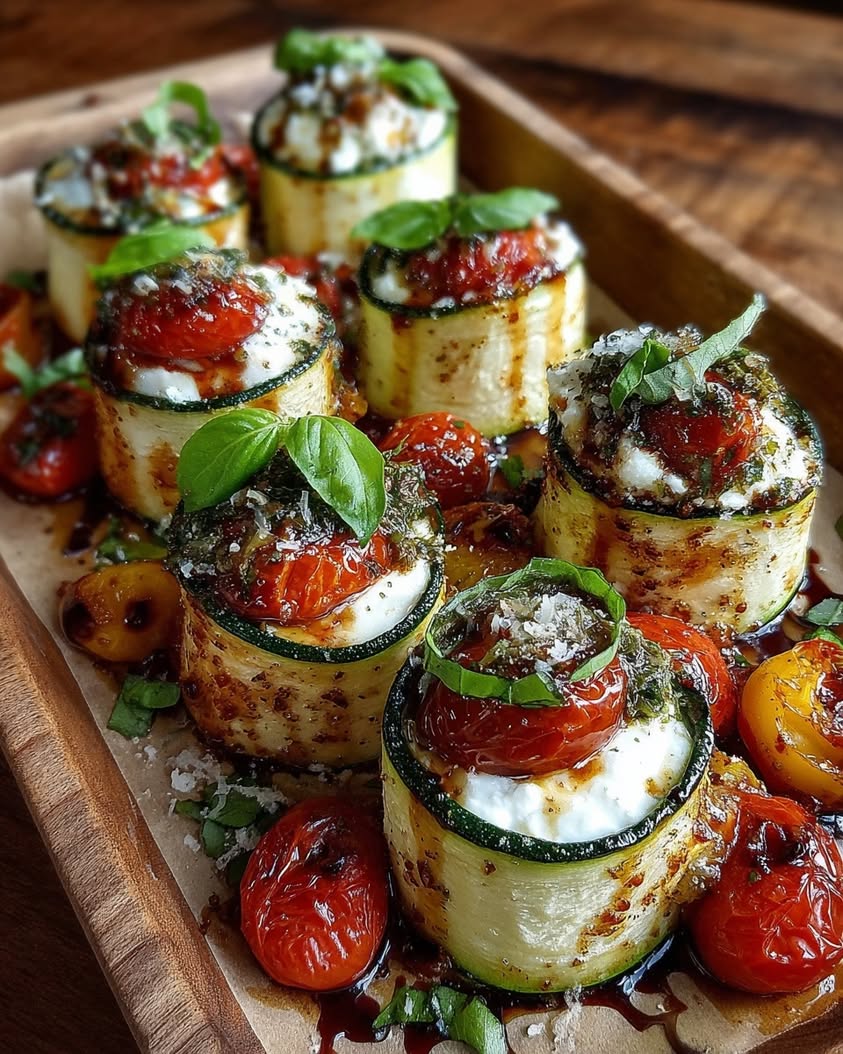
Creamy Burrata Stuffed Zucchini Rolls with Tomato Glaze: An Elegant Summer Appetizer
Imagine a dish that captures the very essence of a sun-drenched Italian garden. These Creamy Burrata Stuffed Zucchini Rolls do exactly that, transforming humble summer squash into elegant, restaurant-worthy bites. This recipe artfully combines tender, grilled zucchini ribbons with a luxurious, creamy burrata filling, all draped in a vibrant, sweet-tart tomato glaze. Consequently, each component sings in harmony, creating a symphony of textures and flavors that is both light and deeply satisfying. Ultimately, this dish proves that impressive entertaining food does not need to be complicated, just thoughtfully prepared.
The magic of these Creamy Burrata Stuffed Zucchini Rolls lies in their beautiful contrast. You start with firm, fresh zucchini, sliced thinly and kissed by the grill or a hot pan to develop a subtle smokiness. Next, you fill them with the decadent creaminess of burrata cheese, a true star ingredient that oozes rich stracciatella when cut. Finally, you tie everything together with a glossy, concentrated tomato glaze that adds a punch of umami and a touch of sweetness. As a result, you get a stunning appetizer or light main course that feels special enough for a dinner party yet simple enough for a sophisticated weeknight meal.
Furthermore, this recipe is a celebration of seasonal produce at its peak. When summer zucchini floods the markets, this is the perfect way to showcase its versatility beyond simple sautés. The process of making the rolls is surprisingly meditative and rewarding. Moreover, the final presentation, with the pale green zucchini wrapped around the snowy white cheese and topped with the ruby red glaze, is visually breathtaking. You will find that these Creamy Burrata Stuffed Zucchini Rolls are a guaranteed conversation starter, offering a taste of la dolce vita on any plate.
Quick Recipe Highlights
- Flavor Profile: These rolls deliver a sophisticated balance. The creamy, mild burrata perfectly complements the sweet, tangy tomato glaze, while the zucchini adds a fresh, slightly earthy base. Herbs like basil provide a final aromatic lift that ties all the flavors together beautifully.
- Texture: Experience a delightful textural journey. The zucchini ribbons offer a tender yet firm bite, the burrata filling is luxuriously soft and creamy, and the reduced tomato glaze provides a smooth, velvety coating. Each component contributes to a satisfying mouthfeel without being heavy.
- Aroma: The cooking process fills your kitchen with an irresistible fragrance. You will smell the grassy notes of grilling zucchini, the sweet acidity of simmering tomatoes and balsamic, and the fresh, peppery scent of torn basil. This aromatic bouquet promises a delicious meal before the first bite.
- Visual Appeal: This dish is a feast for the eyes. The spiral of green zucchini against the white cheese, all glistening under a deep red sauce, creates stunning plate presentation. Garnished with fresh herbs and a drizzle of olive oil, it looks professionally crafted.
- Skill Level Needed: This recipe is accessible to intermediate home cooks. It requires some knife skills for even zucchini slicing and a bit of finesse for rolling, but the steps are straightforward. Patience during the reduction of the tomato glaze is the key to success.
- Special Equipment: A mandoline slicer is highly recommended for achieving perfectly thin, uniform zucchini ribbons. Additionally, a good non-stick skillet or grill pan, a small saucepan, and a sharp knife are essential. You will also need toothpicks or kitchen twine to secure the rolls.
Recipe Overview
- Difficulty Level: We rate these Creamy Burrata Stuffed Zucchini Rolls as medium difficulty. The challenge lies not in complex techniques, but in the coordination of several components. You must slice zucchini thinly and evenly, manage a reduction sauce, and handle delicate rolling. However, each step is simple on its own, making the overall process very manageable with a little focus.
- Category: This versatile dish fits multiple categories perfectly. It shines as an elegant appetizer or starter for a multi-course meal. Alternatively, served with a side salad or crusty bread, it becomes a fantastic light lunch or vegetarian main course. It is also ideal for a buffet or party platter.
- Cuisine: The recipe draws deep inspiration from Italian cuisine, celebrating core Mediterranean ingredients like zucchini, tomato, basil, and fresh cheese. The technique of stuffing and rolling vegetables is classic, while the use of burrata adds a modern, luxurious twist. It embodies the Italian philosophy of letting high-quality, seasonal ingredients speak for themselves.
- Cost: This is a moderately priced dish that delivers high perceived value. The main cost drivers are the burrata cheese and good quality olive oil and balsamic. Zucchini and canned tomatoes are very affordable. Overall, you create a gourmet-looking dish for a fraction of restaurant prices, especially when zucchini is in season.
- Season: This recipe is quintessentially a summer dish. It is best made when zucchini is at its peak flavor, sweetness, and abundance, typically from late spring through early fall. The fresh herbs and bright flavors also align perfectly with warm-weather dining, whether indoors or al fresco.
- Occasion: These rolls are perfect for special occasions. They are impressive enough for dinner parties, holiday gatherings, or romantic date nights at home. Furthermore, they make a wonderful contribution to potlucks or picnics if transported carefully. They are also a great way to elevate a regular family meal.
Why You’ll Love This Recipe
First and foremost, the taste and texture combination is utterly irresistible. The creamy burrata stuffed inside the zucchini rolls creates a luxurious melt-in-your-mouth experience. Meanwhile, the tomato glaze introduces a tangy, sweet, and deeply savory note that cuts through the richness. Each bite offers a perfect harmony of creamy, fresh, and tangy elements. The subtle char from the grilled zucchini adds a whisper of smokiness that elevates the entire dish. You will find yourself savoring every single component and how they work together.
From a convenience standpoint, this recipe is brilliantly constructed. You can prepare many elements in advance. For instance, you can slice and grill the zucchini ribbons ahead of time. Similarly, you can make the tomato glaze and store it in the refrigerator. When ready to serve, simply assemble the rolls and reheat the glaze. This make-ahead flexibility makes entertaining stress-free. Moreover, the actual hands-on cooking time is reasonable, and the techniques involved are satisfying to execute.
Nutritionally, these Creamy Burrata Stuffed Zucchini Rolls offer several advantages. Zucchini is low in calories and a good source of vitamin C, potassium, and fiber. Using it as a wrap replaces heavier carbohydrate bases like pasta or dough. While burrata is rich, it provides high-quality protein and calcium. The tomato glaze is packed with lycopene, a powerful antioxidant. Consequently, this dish feels indulgent while still incorporating wholesome, vegetable-forward ingredients. It is a fantastic way to enjoy a decadent-tasting meal that is relatively light.
The social and entertaining value of this dish cannot be overstated. Visually, it is a showstopper that will garner compliments from your guests. The individual rolls are easy to serve and eat, making them perfect for passed appetizers or a plated first course. They signal effort and care, showing your guests they are worth a special culinary creation. Additionally, the recipe is easily scalable, so you can make a few for a intimate dinner or a large batch for a crowd.
Finally, this recipe is cost-effective and accessible. While burrata may seem like a splurge, a little goes a long way in this application. The other ingredients are pantry staples or inexpensive seasonal produce. You achieve a gourmet restaurant-quality presentation without the hefty price tag. Furthermore, the recipe is adaptable; if you cannot find burrata, other fresh cheeses can work in a pinch. This accessibility ensures you can create something extraordinary without a special trip to a high-end grocery store.
Historical Background and Cultural Significance
The concept of stuffing and rolling vegetables is deeply rooted in Mediterranean and Middle Eastern culinary traditions. Dishes like Greek dolmades (stuffed grape leaves) and Italian involtini (thinly sliced meat or eggplant rolls) showcase this ancient technique of maximizing flavor and presentation. These Creamy Burrata Stuffed Zucchini Rolls are a modern descendant of this tradition, applying the classic involtini method to summer squash. The technique likely evolved as a practical way to use abundant garden produce and stretch precious ingredients into more substantial dishes.
In Italian cuisine specifically, zucchini holds a place of honor during the summer months. Known as “zucchine” in Italy, they are celebrated for their versatility. Italians often grill them, fry them into fritters, or stuff their flowers. The idea of slicing them lengthwise into ribbons is a natural progression, creating a pliable “canvas” for fillings. The use of fresh cheese as a stuffing is also classic, seen in dishes like stuffed shells or manicotti. Therefore, this recipe feels both innovative and authentically Italian, respecting traditional flavors while introducing a contemporary ingredient.
The star ingredient, burrata, has a more recent history. It was invented in the 1920s in the Puglia region of Italy as a way to use the scraps from making mozzarella. “Burrata” means “buttered” in Italian, a nod to its rich, creamy interior. Originally a humble farmer’s cheese, it gained international gourmet status in the late 20th and early 21st centuries. Its inclusion in this recipe represents a beautiful fusion: a modern luxury cheese paired with a rustic, traditional preparation method. This combination speaks to the evolving nature of food culture.
Regional variations of stuffed zucchini abound. In some parts of Italy, zucchini might be hollowed out and stuffed with a meat and rice mixture. In France, courgettes are often halved and scooped out. This ribbon-roll method offers a distinct elegance and better cheese-to-vegetable ratio in every bite. The tomato glaze, while not a traditional salsa, draws from the Italian “agrodolce” (sour-sweet) tradition, often achieved with vinegar and sugar. Ultimately, this recipe is a celebration of cultural fusion, honoring time-honored techniques while embracing the global pantry available to today’s home cook.
Ingredient Deep Dive
Zucchini: This summer squash, a type of courgette, is native to the Americas but was cultivated into its modern form in Italy. It is incredibly hydrating, consisting of over 90% water, and is a good source of antioxidants like lutein and zeaxanthin, which support eye health. Select firm, glossy zucchini that feel heavy for their size, ideally no more than 6-8 inches long for easier slicing and fewer seeds. Store them unwashed in a perforated bag in the refrigerator’s crisper drawer for up to a week. For a variation, try yellow summer squash or even long, thin Japanese eggplant sliced lengthwise.
Burrata Cheese: Burrata is a fresh Italian cheese made from mozzarella and cream. The outer shell is solid mozzarella, while the inside contains stracciatella (shreds of mozzarella) and cream, giving it an irresistibly soft, almost liquid center. It is rich in protein and calcium but also high in saturated fat, so moderation is key. Always choose the freshest burrata possible, checking the packaging date. It should be stored in its liquid in the refrigerator and consumed within a day or two of purchase. If unavailable, fresh mozzarella (bocconcini) combined with a teaspoon of ricotta or cream can mimic the texture.
Canned Crushed Tomatoes: Using high-quality canned tomatoes is crucial for a rich, deep-flavored glaze. They are picked and canned at peak ripeness, often yielding more consistent flavor than off-season fresh tomatoes. They are an excellent source of lycopene, a carotenoid with potent antioxidant properties that becomes more bioavailable when cooked. Opt for cans labeled “D.O.P. San Marzano” for the best flavor, though any good-quality brand without added citric acid will work. Store unused tomatoes in a non-reactive container in the fridge for up to 5 days. For a fresh twist, you can use ripe, peeled, and seeded Roma tomatoes when in season.
Balsamic Vinegar: True traditional balsamic vinegar (Aceto Balsamico Tradizionale) is aged for years and used sparingly as a condiment. For cooking, a moderately priced, quality balsamic “of Modena” is perfect. It adds a complex sweetness and acidity that balances the tomatoes. Balsamic vinegar contains antioxidants and may have minimal probiotic benefits if unpasteurized. Choose a vinegar with a thick consistency and ingredient list that includes only grape must and wine vinegar. Store it in a cool, dark place. If you do not have balsamic, a combination of red wine vinegar and a tiny bit of honey or maple syrup can work as a substitute.
Fresh Basil: Basil is synonymous with summer Italian cooking. Its name derives from the Greek “basileus,” meaning “king,” hinting at its revered status. It contains essential oils like eugenol, which have anti-inflammatory properties. Basil is highly perishable and best used fresh. Look for vibrant green leaves without black spots. Store it like a bouquet of flowers: stems in a glass of water at room temperature, or wrap leaves in a slightly damp paper towel in the fridge. For a different herbal note, try fresh oregano, mint, or a combination of parsley and chives.
Common Mistakes to Avoid
- Slicing Zucchini Too Thick: If your zucchini ribbons are too thick, they will not be pliable enough to roll without cracking. They will also be overly dominant in texture and harder to cook through evenly. Always aim for slices about 1/8-inch thick, using a mandoline for consistency.
- Not Salting the Zucchini: Skipping the step of salting the grilled zucchini ribbons can lead to a watery final dish. The salt draws out excess moisture, preventing the rolls from becoming soggy and diluting the filling and glaze. Let them rest on paper towels after grilling.
- Overfilling the Rolls: Using too much burrata will cause it to spill out during rolling and baking, making a mess and leaving some rolls underfilled. A modest tablespoon per ribbon is sufficient. Remember, the cheese will soften and spread slightly when heated.
- Under-Reducing the Tomato Glaze: If you do not simmer the tomato mixture long enough, it will be thin and runny, failing to coat the rolls beautifully. Cook it until it thickens to a jam-like consistency that will cling to the back of a spoon.
- Using Stale or Low-Quality Burrata: Burrata has a very short shelf life. Using old burrata that has lost its creamy center will result in a dry, rubbery filling. Always check the date and buy from a reputable source with high turnover.
- Skipping the Toothpick Secure: Attempting to bake the rolls without securing them will cause them to unfurl in the oven. Use a toothpick or small skewer to hold each roll together. Remember to remove them before serving!
- Overbaking the Rolls: The goal is to warm the rolls through and melt the cheese slightly, not cook them for a long time. Overbaking can make the zucchini mushy and cause the burrata to separate or become tough. Five to seven minutes is usually perfect.
- Adding Fresh Basil Too Early: If you add the fresh basil to the hot tomato glaze or as a garnish before baking, it will wilt and turn black. Always add fresh herbs as a final garnish after the dish comes out of the oven to preserve their color and bright flavor.
Essential Techniques
Creating Even Zucchini Ribbons: Mastering this technique is foundational. Use a mandoline slicer set to 1/8-inch thickness for perfect, consistent ribbons. If using a knife, focus on long, smooth strokes and use a guide. Even thickness ensures even grilling and pliability for rolling. A common pitfall is applying uneven pressure, leading to wedged ends. The visual cue for success is a set of ribbons that are translucent at the edges when held up to light and uniformly thin.
Grilling for Flexibility: Grilling the zucchini is not just for flavor; it softens the fibers, making them rollable without snapping. Use medium-high heat and cook just until grill marks appear and the ribbon becomes limp, about 1-2 minutes per side. Do not overcook, or they will become too fragile to handle. The key is to achieve tenderness while retaining enough structure to hold the filling. Success looks like ribbons that bend easily without tearing.
Reducing a Glaze: A proper glaze should coat the back of a spoon without running off quickly. Start with a simmer and stir frequently to prevent scorching, especially as it thickens. The process concentrates flavors and creates a luxurious texture. The common mistake is rushing this step, resulting in a watery sauce. Watch for the moment when the bubbles become slower and larger, and a trail remains when you drag a spoon through the bottom of the pan.
Rolling and Securing: Place the filling at one end of a zucchini ribbon, then gently but firmly roll it up, tucking in the sides as you go. The goal is a neat, compact cylinder. Secure with a toothpick inserted at an angle through the seam. The pitfall is rolling too loosely, which creates gaps. A successful roll will hold its shape when lifted and will not leak filling from the ends before baking.
Pro Tips for Perfect Creamy Burrata Stuffed Zucchini Rolls
First, pat your grilled zucchini ribbons completely dry with paper towels after they cool. This extra step removes any residual moisture released during salting, guaranteeing your rolls stay intact and are not soggy.
Second, let the burrata come to room temperature for about 15 minutes before handling. Cold cheese is firmer and harder to spread evenly, while slightly softened burrata is much easier to work with and will melt more uniformly.
Third, use a small cookie scoop or a melon baller to portion the burrata filling. This ensures each zucchini roll gets the same amount of cheese, leading to consistent size and cooking time for every piece.
Fourth, reduce your tomato glaze until it is quite thick at room temperature. Remember, it will thin out slightly when reheated to serve. A properly reduced glaze will cling to the rolls elegantly instead of pooling on the plate.
Fifth, if your zucchini ribbons are very wide, consider cutting them in half lengthwise after grilling. This creates a more manageable size for rolling and results in perfect two-bite appetizers that are easy for guests to eat.
Sixth, add a final flourish of high-quality extra virgin olive oil and flaky sea salt over the plated rolls just before serving. This enhances the flavors and adds a professional, glossy finish to the dish.
Seventh, warm your serving plates slightly. Placing the hot zucchini rolls on a warm plate helps maintain their ideal temperature longer, ensuring your guests enjoy every creamy, warm bite.
Variations and Adaptations
Regional Variations: For a Greek twist, substitute the burrata with a mixture of feta cheese, ricotta, and fresh dill. Alternatively, for a French-inspired version, use herbed goat cheese (chèvre) and a glaze made with reduced white wine and shallots. An Italian-American variation might include finely chopped sun-dried tomatoes and pine nuts mixed into the burrata filling.
Seasonal Adaptations: In autumn, replace the zucchini with delicata squash ribbons (peel included) and add a pinch of nutmeg to the cheese. For a spring version, use asparagus spears as the “roll” instead of zucchini and fill with herbed ricotta. In winter, consider using pre-grilled eggplant slices from the freezer, thawed and patted dry.
Dietary Modifications: To make it vegan, use a high-quality vegan mozzarella or ricotta alternative mixed with a little cashew cream. For a dairy-free version, a thick, seasoned hummus or white bean purée makes an excellent filling. A keto adaptation would focus on ensuring the tomato glaze uses a sugar substitute and is used very sparingly.
Flavor Variations: Infuse the burrata with different flavors before stuffing. Try mixing in pesto, chopped roasted red peppers, or tapenade. For the glaze, experiment by adding a pinch of red pepper flakes for heat, a splash of red wine for depth, or a teaspoon of anchovy paste for umami.
Texture Modifications: Add textural contrast by mixing toasted breadcrumbs or finely chopped walnuts into the cheese filling. You could also sprinkle the finished rolls with crispy fried shallots or garlic breadcrumbs for a crunchy topping that contrasts the creamy interior.
Presentation Alternatives: Instead of individual rolls, create a “lasagna” by layering the grilled zucchini ribbons, dollops of burrata, and tomato glaze in a baking dish. Alternatively, serve the components deconstructed: a pool of tomato glaze topped with a grilled zucchini ribbon and a scoop of burrata, finished with herbs.
Serving and Presentation Guide
Plating Techniques: For individual appetizer plates, spoon a small pool of the warm tomato glaze in the center. Place one or two Creamy Burrata Stuffed Zucchini Rolls slightly off-center on the glaze. Alternatively, for a family-style presentation, arrange all the rolls snugly in a shallow serving dish and drizzle the glaze over the top in a zigzag pattern. The key is to ensure each roll has access to the sauce.
Garnishing Ideas: Fresh basil leaves are classic and essential. For added color and flavor, add microgreens, edible flowers, or a sprinkle of finely chopped chives. A light dusting of finely grated lemon zest over the top adds a bright, aromatic note. A final drizzle of a high-quality, fruity extra virgin olive oil adds shine and richness.
Traditional Accompaniments: In Italy, such a dish might be served as part of an antipasto spread alongside cured meats, marinated olives, and crusty bread for soaking up the glaze. A simple arugula salad dressed with lemon juice and olive oil provides a peppery, fresh contrast to the creamy rolls.
Modern Serving Suggestions: Serve these rolls as a sophisticated main course alongside a farro salad or a quinoa pilaf. For a low-carb meal, pair them with a large, colorful salad of heirloom tomatoes and cucumber. They also pair beautifully with a chilled soup, like gazpacho, for a complete summer menu.
Temperature Considerations: These Creamy Burrata Stuffed Zucchini Rolls are best served warm, not piping hot. The gentle warmth allows the flavors of the burrata and basil to shine. The tomato glaze should also be warm or at room temperature. Avoid serving them cold, as the cheese will firm up and lose its luxurious texture.
Portion Control Tips: As an appetizer, plan for 2-3 rolls per person. As a light main course, 4-5 rolls are sufficient, especially when served with a side. If doubling the recipe for a crowd, keep the rolls warm on a baking sheet in a low oven (200°F) until ready to serve, adding fresh garnish just before plating.
Wine and Beverage Pairing
Wine Pairings: The creamy burrata and acidic tomato glaze call for a wine with good acidity to cleanse the palate. A crisp Italian white like Vermentino, Pinot Grigio, or a lighter-style Greco di Tufo is perfect. For red wine lovers, a light-bodied, low-tannin red like a chilled Beaujolais or a Bardolino from Italy complements without overpowering. A dry Rosé from Provence is also an exceptional match, bridging the gap between red and white with its berry notes and crisp finish.
Non-Alcoholic Alternatives: Sparkling water with a twist of lemon or a cucumber ribbon is always refreshing. For something more crafted, try a basil-infused lemonade or a tart cherry spritzer. A high-quality non-alcoholic Italian bitter soda, like a Sanbitter, mimics the complexity of an aperitivo and cuts through the richness beautifully.
Coffee/Tea Pairings: While not a typical pairing for this dish, if serving as part of a brunch or lunch, a light roast coffee with bright, citrusy notes would not clash. An herbal iced tea, such as mint or hibiscus, served after the meal, can be a lovely, palate-cleansing finish.
Temperature Considerations: White and rosé wines should be well-chilled, around 45-50°F. Light reds like Beaujolais benefit from a slight chill, about 55°F. Non-alcoholic beverages are best served cold or over ice to provide a refreshing contrast to the warm, savory rolls.
Serving Suggestions: Serve wine in appropriate glassware to enhance the experience. Offer water alongside any beverage pairing to keep palates refreshed. If serving multiple courses, consider serving a crisp, dry Prosecco as an aperitif that will continue to pair well with the zucchini rolls themselves.
Storage and Shelf Life
Storage Methods: Store any leftover Creamy Burrata Stuffed Zucchini Rolls in a single layer in an airtight container in the refrigerator. Separate layers with parchment paper if stacking is necessary. Store the tomato glaze separately in its own container. This prevents the rolls from becoming soggy and allows you to reheat components properly.
Temperature Requirements: Refrigeration is mandatory due to the dairy content. The rolls and glaze must be kept at or below 40°F. Do not leave assembled rolls at room temperature for more than two hours to prevent bacterial growth.
Container Recommendations: Use shallow, glass containers with tight-fitting lids. Glass is non-reactive and allows you to see the contents. Avoid storing in deep containers where condensation can accumulate on the rolls, making them wet.
Signs of Spoilage: Discard the rolls if you notice any off smells, such as sourness or ammonia. Visible mold, excessive liquid separation, or a slimy texture on the zucchini are clear indicators that the dish is no longer safe to eat. The tomato glaze may darken but should not develop a funky odor.
Reheating Instructions: To reheat, place the rolls on a parchment-lined baking sheet. Warm in a preheated 325°F oven for 8-10 minutes, just until heated through. Microwave reheating is not recommended, as it will make the zucchini rubbery and can cause the cheese to explode. Gently reheat the tomato glaze in a small saucepan over low heat or in the microwave, stirring frequently.
Freezing Guidelines: Freezing is not recommended for this recipe. The high water content in the zucchini will cause it to become mushy and watery upon thawing. The burrata will also separate and become grainy. This is a dish best enjoyed fresh or refrigerated for short-term leftovers.
Make Ahead Strategies
Prep Timeline: You can prepare almost all components 1-2 days in advance. Day 1: Make the tomato glaze and let it cool completely before refrigerating. Slice and grill the zucchini ribbons, salt them, pat dry, and store them layered between paper towels in an airtight container in the fridge.
Storage Between Steps: Keep the cooled tomato glaze in a sealed jar or container. The grilled zucchini ribbons should be stored very dry; the paper towels between layers will absorb any residual moisture. Keep the burrata whole and in its packaging until the day of assembly.
Quality Impact Assessment: Pre-grilling the zucchini actually improves their pliability for rolling when cold. The tomato glaze’s flavors deepen overnight. The only element that must be done day-of is stuffing and rolling with the burrata, as the cheese does not hold its texture well once manipulated and refrigerated.
Assembly Tips: On the day of serving, take the zucchini and glaze out of the fridge about 30 minutes ahead. Assemble the rolls, place them on your baking dish, cover loosely with plastic wrap, and hold at cool room temperature for up to an hour before baking. Reheat the glaze gently while the rolls bake.
Reheating Guidelines: If you must assemble completely ahead, refrigerate the unbaked rolls for no more than 4 hours. Let them sit at room temperature for 20 minutes before baking, and add 1-2 minutes to the baking time since they will be starting from a colder state.
Fresh Element Additions: No matter how much you prep ahead, always add the final fresh garnishes—basil, a drizzle of oil, flaky salt—after the dish comes out of the oven and just before serving. This ensures maximum visual appeal and vibrant flavor.
Scaling Instructions
Halving the Recipe: Halving this recipe for a smaller yield is straightforward. Simply divide all ingredient quantities by two. Use a smaller skillet for the glaze, as it will reduce faster. The baking time may be slightly reduced by a minute or two since there are fewer rolls in the oven. All other techniques remain identical.
Doubling or Tripling: For larger batches, you can successfully double or triple the ingredients. However, cook the zucchini ribbons in batches to avoid steaming them in an overcrowded pan. You may need to use two baking sheets for the rolls, rotating them halfway through baking. Make the tomato glaze in a larger, wide pot to facilitate faster evaporation.
Equipment Adjustments: Scaling up requires planning. Ensure you have enough baking sheet space and a large enough mandoline bowl to hold all the sliced zucchini. A large griddle or outdoor grill is ideal for cooking many zucchini ribbons quickly. Have multiple sets of tongs and a helper for efficient assembly.
Timing Modifications: When scaling up, prep time increases linearly, but cooking time for the glaze may take longer due to the larger volume of liquid to reduce. Factor in extra time for assembling a large number of rolls. Stagger baking sheets if your oven cannot accommodate them all at once.
Storage Considerations: If making a large batch for later use, it is better to store the components separately (zucchini, glaze) rather than assembling all the rolls. Assemble only what you plan to serve immediately or within a few hours to maintain the best texture.
Nutritional Deep Dive
Macro Breakdown: A serving of these Creamy Burrata Stuffed Zucchini Rolls (approximately 3 rolls) provides a balance of macronutrients. The burrata and olive oil contribute healthy fats and saturated fats, offering richness and satiety. The zucchini provides minimal carbohydrates and a small amount of fiber. The dish is moderate in protein from the cheese. It is not a high-protein or high-carb meal, but rather a balanced appetizer or light main focused on quality fats and vegetables.
Micronutrient Analysis: This dish is a source of several key micronutrients. Zucchini contributes vitamin C, potassium, and manganese. The tomato glaze is rich in lycopene and vitamin A. Burrata provides calcium and phosphorus for bone health. The fresh basil adds vitamin K and various antioxidants. Using high-quality olive oil also introduces beneficial monounsaturated fats and vitamin E.
Health Benefits: The vegetable base and antioxidant-rich components support overall health. Lycopene from cooked tomatoes is linked to heart health and may reduce cancer risk. The fiber in zucchini aids digestion. The calcium supports bone density. The monounsaturated fats in olive oil are beneficial for cholesterol levels. This dish is a good example of the healthful Mediterranean diet pattern.
Dietary Considerations: This recipe is naturally gluten-free and vegetarian. It is not suitable for a strict vegan or dairy-free diet without modifications. It is relatively low in carbohydrates, making it friendly for low-carb or keto diets if the tomato glaze is used sparingly and with a sugar substitute. It is not low-FODMAP due to the garlic and onion in the glaze.
Portion Analysis: As an appetizer, the portion size is sensible and satisfying without being overly heavy. As a main course, complementing it with a protein-rich side like a lentil salad or a piece of grilled fish would create a more nutritionally complete meal. The richness of the burrata means a little goes a long way in terms of flavor and satiety.
Weight Management Tips: To make this dish lighter for weight management, you can reduce the amount of burrata filling slightly or use part-skim ricotta mixed with the burrata. You can also increase the proportion of zucchini by adding an extra ribbon to each roll. Using less olive oil in the plating and ensuring the tomato glaze has no added sugar will also reduce overall calories.
Dietary Adaptations
Gluten-free: This recipe is naturally gluten-free as written. Simply ensure that all packaged ingredients, like canned tomatoes and balsamic vinegar, are certified gluten-free, as cross-contamination can sometimes occur in processing facilities.
Dairy-free: Substitute the burrata with a dairy-free alternative. A thick, creamy vegan ricotta or a soft vegan mozzarella ball can work. For a different approach, a rich white bean purée (cannellini beans blended with olive oil, lemon, and herbs) makes a delicious, protein-packed filling.
Vegan: Use a high-quality vegan mozzarella or ricotta for the filling. For the creamy center effect, mix in a tablespoon of plain, unsweetened vegan yogurt or cashew cream. Ensure your balsamic vinegar does not contain any animal-derived fining agents (most do not).
I’m Billy, a classically trained culinary school graduate from The Culinary Institute of America with over 12 years in the restaurant industry and over 19 years of cooking experience.