
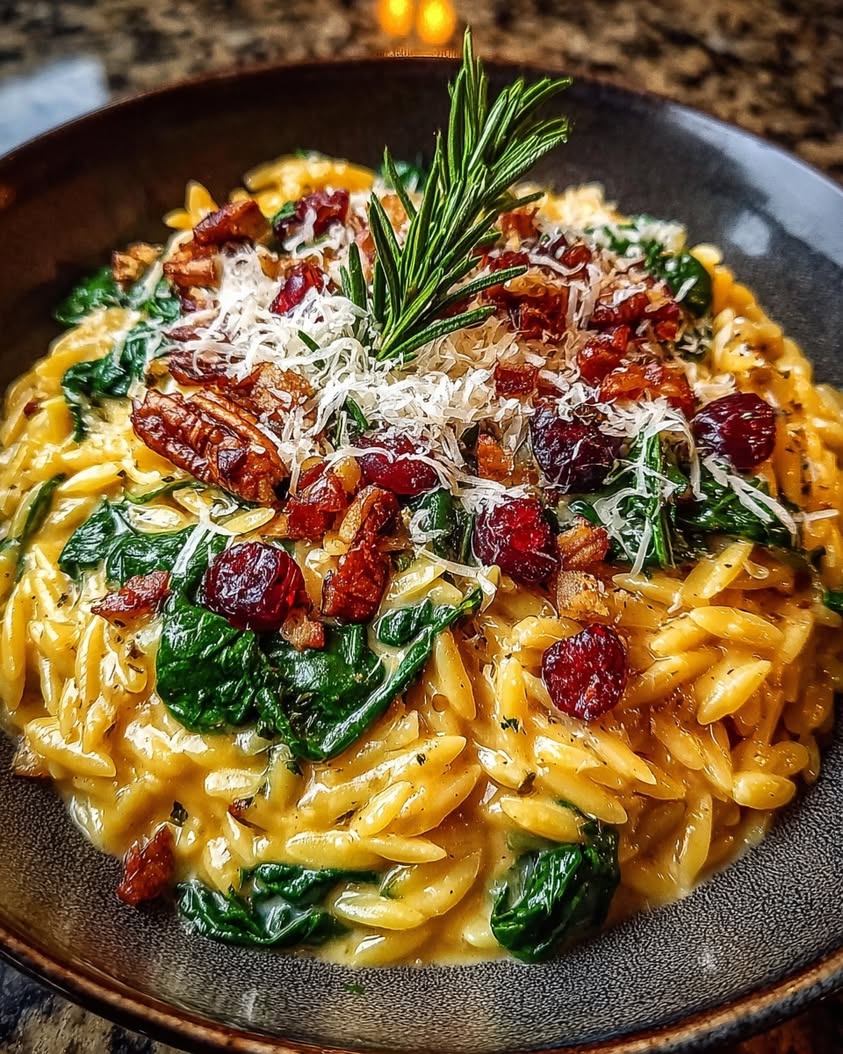
Creamy Cranberry and Spinach Orzo: A Festive One-Pot Wonder
Imagine a cozy dinner that delivers both comfort and celebration in a single, stunning dish. This creamy cranberry and spinach orzo does exactly that. It masterfully blends the sweet-tart pop of cranberries with the earthy freshness of spinach, all bound together in a luxuriously creamy Parmesan sauce. Ultimately, this one-pot wonder transforms simple pantry staples into a vibrant, restaurant-quality meal that feels special enough for a holiday table yet simple enough for a busy Tuesday night.
The magic of this creamy cranberry and spinach orzo lies in its perfect balance of flavors and textures. Each forkful offers a delightful contrast: the tender, rice-like pasta, the creamy sauce, the juicy burst of cranberries, and the gentle wilt of fresh spinach. Consequently, it creates a symphony in your mouth that is both rich and refreshing. Moreover, the beautiful red and green hues make it a visually festive centerpiece, guaranteed to impress your family and guests with minimal effort.
Furthermore, this recipe exemplifies the beauty of efficient, flavorful cooking. You can prepare the entire meal in one pot, which means less cleanup and more time to enjoy the company around your table. Whether you need a stunning vegetarian main course or a standout side dish for your holiday feast, this creamy cranberry and spinach orzo delivers on every promise. It is a versatile, crowd-pleasing recipe that you will return to season after season.
Quick Recipe Highlights
- Flavor Profile: This dish features a sophisticated balance. The sweet and tangy dried cranberries cut through the rich, savory creaminess of the Parmesan and garlic-infused sauce. Additionally, a hint of onion and vegetable broth builds a deep, comforting base flavor that ties everything together harmoniously.
- Texture: You will enjoy a wonderfully varied mouthfeel. The orzo pasta cooks to a perfectly tender, almost risotto-like consistency. Meanwhile, the cranberries offer a pleasant chewy contrast, and the fresh spinach wilts into silky ribbons. Finally, the creamy sauce coats every element luxuriously.
- Aroma: As it cooks, your kitchen will fill with an irresistible fragrance. First, you will smell the savory scent of sautéing garlic and onion. Then, that aroma will meld with the nutty, salty perfume of melting Parmesan cheese, creating a warm and inviting atmosphere.
- Visual Appeal: This dish is a feast for the eyes. The vibrant red cranberries and deep green spinach create a stunning holiday color palette against the creamy white backdrop of the orzo and sauce. Therefore, it looks as beautiful on the plate as it tastes.
- Skill Level Needed: This is a beginner-friendly recipe. It requires basic skills like chopping, sautéing, and simmering. Importantly, the one-pot method simplifies the process, making it nearly foolproof for cooks of any experience level who can follow straightforward instructions.
- Special Equipment: You need only a large skillet or Dutch oven with a lid. A standard chef’s knife and cutting board handle the minimal prep. No special appliances or tools are necessary, which makes this recipe highly accessible for any home kitchen.
Recipe Overview
- Difficulty Level: We rate this creamy cranberry and spinach orzo as easy. The steps are sequential and simple: sauté aromatics, toast the orzo, add liquid, and simmer. There is no complex technique like making a roux or performing a tricky flip. Consequently, even a novice cook can achieve excellent results by carefully following the clear instructions.
- Category: This versatile dish fits multiple categories beautifully. It serves wonderfully as a hearty vegetarian main course. Alternatively, it makes an elegant side dish for roasted chicken, turkey, or pork. It also belongs in the category of fantastic one-pot meals and perfect holiday or special occasion recipes.
- Cuisine: While orzo pasta originates from Italian cuisine, this preparation is a modern American fusion. It combines Italian pasta technique with festive, New World ingredients like cranberries. The creamy, cheesy sauce has Italian influences, but the overall flavor profile and convenience cater to contemporary American home cooking trends.
- Cost: This recipe is very cost-effective. Ingredients like orzo, onion, and garlic are pantry staples. Dried cranberries and fresh spinach are affordable, especially in season. The block Parmesan cheese and broth represent the main costs, but they stretch across four generous servings. Overall, you can create this impressive dish for a fraction of the cost of a restaurant meal.
- Season: This creamy cranberry and spinach orzo shines brightest in the fall and winter seasons. The cranberries and warm, comforting nature of the dish align perfectly with holiday meals from Thanksgiving through New Year’s. However, its bright flavors also offer a welcome pop of color and taste during the darker, colder months.
- Occasion: It is ideal for a wide range of events. Serve it as the star of a cozy family dinner. Alternatively, present it as part of a festive holiday buffet or Friendsgiving spread. It also works beautifully for potlucks because it travels well and appeals to a broad audience, including vegetarians.
Why You’ll Love This Recipe
First and foremost, the taste and texture combination is utterly irresistible. The creamy cranberry and spinach orzo delivers a party in every bite. You get the savory depth from the garlic and Parmesan, a bright tang from the cranberries, and a fresh, earthy note from the spinach. This harmony of flavors feels both comforting and sophisticated. Moreover, the contrasting textures of tender pasta, chewy fruit, and silky greens keep your palate engaged from the first forkful to the last.
Next, consider the incredible convenience. This entire meal comes together in one pot. You simply sauté, simmer, and stir. There is no need to boil pasta in a separate pot or make a sauce in another pan. This streamlined process means you spend less time cleaning and more time enjoying your meal. Furthermore, the active cook time is short, and the ingredients are simple to prep. As a result, you can have a stunning, home-cooked dinner on the table in well under an hour, even on your busiest nights.
Additionally, this dish offers notable nutritional advantages. Spinach packs a powerful punch of vitamins A, C, and K, along with iron and fiber. Cranberries are famous for their antioxidants and vitamin C. Using a whole-grain orzo option can boost the fiber content even further. While indulgent-tasting, this creamy cranberry and spinach orzo incorporates whole, nutritious ingredients that contribute to a balanced meal. You can feel good about serving it to your family.
From a social perspective, this recipe has tremendous entertaining value. Its festive appearance automatically elevates any dinner table. It is a reliable crowd-pleaser that caters to vegetarians without making meat-eaters feel like they are missing out. Because it is so visually appealing and delicious, it often becomes the conversation starter of the meal. Guests will consistently ask for the recipe, allowing you to share the culinary love.
Finally, the cost-effectiveness and accessibility are major wins. You do not need expensive, hard-to-find ingredients. Most components are available at any standard grocery store year-round. The recipe is also highly adaptable; you can swap in different cheeses, nuts, or greens based on what you have on hand. This flexibility makes the creamy cranberry and spinach orzo a practical and economical choice for regular meal rotation, not just special occasions.
Historical Background and Cultural Significance
Orzo, which means “barley” in Italian, has a history deeply rooted in Mediterranean cuisine. Although it resembles rice, it is a form of short-cut pasta traditionally made from semolina flour. Its creation likely stemmed from the desire to create a pasta that could be used in soups and pilafs similarly to grains. Over centuries, orzo became a staple in Greek and Italian kitchens, often served in simple preparations with tomatoes, herbs, and cheese. The adaptation of orzo into creamy, one-pot dishes represents a modern evolution, blending traditional pasta forms with contemporary cooking methods for convenience and rich flavor.
Cranberries hold a significant place in North American history and culture. Native Americans used them for food, dye, and medicine long before European settlers arrived. They introduced cranberries to the pilgrims, and the berry eventually became a symbol of survival and celebration, cementing its role in Thanksgiving tradition. Incorporating dried cranberries into savory dishes is a relatively recent innovation, a testament to the modern culinary exploration of sweet and savory pairings. Using them in this creamy cranberry and spinach orzo connects the dish to a deeply American culinary heritage while utilizing a modern, convenient form of the fruit.
The concept of creamy, cheesy pasta sauces has strong roots in Italian culinary traditions, particularly from regions like Emilia-Romagna, home to Parmigiano-Reggiano. However, the American “one-pot pasta” trend is a distinct 21st-century development. It arose from the desire for home-cooked meals that minimize cleanup and maximize efficiency without sacrificing flavor. This creamy cranberry and spinach orzo sits at the intersection of these cultural threads: it uses an Italian pasta, employs an Italian-inspired creamy cheese technique, incorporates a historically American fruit, and utilizes a modern American cooking method.
Regional variations of this concept are endless. In the Mediterranean, one might find orzo with spinach, lemon, and feta. In the American South, a similar dish might feature pecans and a cream sauce. The specific combination of cranberry and spinach, however, has gained popularity particularly around the winter holidays in the United States and Canada. It reflects a fusion food trend where seasonal, festive ingredients meet everyday cooking techniques, creating new traditions for modern families who value both flavor and practicality in their holiday meals.
Ingredient Deep Dive
Orzo pasta is the foundation of this dish. Culturally, this rice-shaped pasta allows the sauce to cling beautifully, offering a unique texture different from long noodles. Nutritionally, standard orzo provides carbohydrates for energy; choosing a whole-wheat variety increases fiber and protein. When selecting orzo, look for a brand with a smooth, even shape for consistent cooking. Store it in a cool, dry pantry in an airtight container. For a gluten-free adaptation, you can substitute an equal amount of gluten-free orzo or a small grain like quinoa or risotto rice, adjusting the liquid as needed.
Dried cranberries bring essential sweetness and tang. Historically, cranberries were a vital food source for Native Americans and early settlers. They are packed with antioxidants, vitamin C, and fiber, which support immune health and digestion. For the best flavor and texture, choose unsweetened or lightly sweetened dried cranberries without added oils. Store them in a sealed bag in your pantry. If you need a substitute, try dried cherries or chopped dried apricots for a different sweet-tart profile, or use golden raisins for a milder sweetness.
Fresh spinach is the green powerhouse of this recipe. It has been cultivated for thousands of years, originating in Persia. Spinach is incredibly nutrient-dense, loaded with iron, calcium, magnesium, and vitamins A, C, and K. Select bunches with vibrant, dark green leaves that show no signs of yellowing or wilting. Store it loosely wrapped in a paper towel inside a plastic bag in your refrigerator’s crisper drawer. For a twist, you can substitute other hearty greens like kale or Swiss chard; just remember to chop them finely and add a little earlier to ensure they wilt properly.
Parmesan cheese delivers the signature savory, umami depth. True Parmigiano-Reggiano, from Italy, is a culturally protected product with a history dating back to the Middle Ages. It is a good source of protein and calcium. Always buy a block of Parmesan and grate it yourself for the best flavor and meltability; pre-grated cheese contains anti-caking agents that can make your sauce grainy. Wrap the block in parchment paper and then foil, storing it in the refrigerator. For a dairy-free version, use a high-quality nutritional yeast or a vegan Parmesan alternative to mimic the salty, nutty flavor.
Vegetable broth forms the flavorful liquid base for cooking the orzo. Using a good-quality broth is crucial as it infuses the pasta with flavor from the inside out. Opt for a low-sodium version so you can control the salt level of the final dish. Homemade broth is ideal, but a reputable store-bought brand works perfectly. Store unopened boxes in a cool pantry; once opened, keep it refrigerated and use it within a week. You can easily substitute chicken broth if you do not need the dish to be vegetarian, which will add another layer of savory flavor.
Common Mistakes to Avoid
- Using Pre-Grated Parmesan: This is a critical error. Pre-grated cheese contains cellulose to prevent clumping, which prevents it from melting smoothly into a creamy sauce. Instead, it can become grainy or oily. Always buy a block of Parmesan and grate it fresh just before adding it to the pot for a silky, integrated sauce.
- Overcooking the Orzo: Orzo cooks quickly and continues to soften as it sits in the hot sauce. If you cook it until it is completely soft in the pot, it will become mushy by the time you serve it. Aim for an al dente texture—tender but with a slight bite—before you turn off the heat, as residual heat will finish the job.
- Not Toasting the Orzo: Skipping the step of toasting the dry orzo in the pan with the aromatics is a missed opportunity. Toasting for just a minute or two until it becomes fragrant adds a wonderful nutty depth to the pasta’s flavor and helps it absorb the broth more effectively. Do not rush this simple step.
- Adding Spinach Too Early: If you add the fresh spinach at the beginning of the simmer, it will overcook, lose its vibrant green color, and become slimy. You should always stir in the spinach at the very end, just until it wilts. This preserves its color, texture, and nutritional value.
- Using Sweetened Dried Cranberries: Some dried cranberries are heavily sweetened, which can make the final dish cloyingly sweet. Seek out unsweetened or “fruit juice-sweetened” varieties for the best balance of tart and sweet. If you only have sweetened ones, you may want to reduce or omit any other sweet elements in the recipe.
- Insufficient Seasoning: Because you cook the orzo in broth, you might assume the dish is seasoned enough. However, pasta absorbs a lot of salt. Always taste and adjust the seasoning at the end with salt and freshly ground black pepper. The Parmesan adds saltiness, but you still need to layer your seasoning properly.
- Not Letting it Rest: Serving the creamy cranberry and spinach orzo immediately after turning off the heat is tempting. However, allowing it to sit off the heat for 5 minutes, covered, lets the sauce thicken slightly and the flavors meld together more cohesively. This short rest makes a noticeable difference in the final texture.
- Crowding the Pan: Using a skillet that is too small will cause the ingredients to steam rather than sauté properly. Ensure you use a large, wide skillet or Dutch oven. This gives the onions and garlic space to caramelize and allows for even evaporation and reduction of the cooking liquid.
Essential Techniques
Sautéing Aromatics: This foundational technique builds the flavor base. You cook diced onion and minced garlic in olive oil over medium heat until they become soft and fragrant. The goal is to soften them without browning, which would introduce a bitter note. The key is patience; stir frequently and adjust the heat if they start to color too quickly. Properly sautéed aromatics should be translucent and smell sweet, forming the essential savory foundation for your entire dish.
Toasting the Orzo: After adding the dry orzo to the pan with the aromatics, you toast it for 1-2 minutes. This technique lightly browns the pasta’s surface, unlocking a deep, nutty flavor that plain boiled orzo lacks. Stir constantly to prevent burning and ensure even toasting. You will know it is ready when you can smell a warm, toasted grain aroma. This simple step significantly enhances the overall depth and complexity of your creamy cranberry and spinach orzo.
The One-Pot Simmer: This is the core technique where the orzo cooks directly in the broth, absorbing all the flavor. After adding the liquid, bring it to a simmer, then reduce the heat to maintain a gentle bubble. Cover the pot to ensure the orzo cooks evenly and the liquid doesn’t evaporate too quickly. Stir occasionally to prevent sticking. The orzo is done when it is tender but al dente and most of the liquid has been absorbed, leaving behind a creamy, starchy sauce.
Finishing with Fresh Ingredients: The final technique involves off-heat incorporation. Once the orzo is cooked, you remove the pot from the heat before stirring in the spinach, cranberries, and Parmesan. The residual heat is sufficient to wilt the spinach and melt the cheese without overcooking them. This preserves the spinach’s bright color and delicate texture and ensures the cheese melts into a smooth sauce rather than clumping. Stir vigorously to create a creamy, cohesive dish.
Pro Tips for Perfect Creamy Cranberry and Spinach Orzo
Use a microplane for the Parmesan. Grating your Parmesan on the fine side of a box grater or, better yet, a microplane creates a fluffy pile of cheese that melts instantly and seamlessly into the sauce, preventing any graininess.
Reserve some pasta water. Before draining if you were boiling pasta separately, you would save starchy water. For this one-pot method, if your sauce seems too thick at the end, simply add a splash of extra broth or hot water to loosen it to your preferred consistency.
Toast the orzo in the fat. Make sure the orzo is well-coated in the olive oil and onion mixture before toasting. This ensures each grain gets lightly toasted, maximizing the nutty flavor foundation for the entire dish.
Add the cranberries in two stages. For a more complex cranberry flavor, stir half of the dried cranberries in during the last few minutes of cooking so they plump up, and sprinkle the other half on top just before serving for a chewy textural contrast.
Wilt the spinach in batches. If using a large amount of fresh spinach, add it in two or three handfuls, stirring until each batch wilts slightly before adding the next. This ensures even wilting and prevents the spinach from cooling down the entire dish too much.
Finish with a drizzle and fresh herbs. Just before serving, drizzle a little high-quality extra virgin olive oil over the top and sprinkle with fresh chopped parsley or thyme. This adds a layer of fresh aroma and a professional finish.
Let it stand before serving. After adding the final ingredients, cover the pot and let it sit off the heat for 5 minutes. This allows the flavors to marry and the sauce to thicken to the perfect creamy consistency.
Season in layers. Season the sautéing onions with a pinch of salt, then season the broth as you add it, and always do a final taste and seasoning adjustment at the end after the cheese is incorporated.
Variations and Adaptations
For regional variations, consider a Greek-inspired version by swapping Parmesan for feta cheese and adding kalamata olives and fresh dill. A French twist might include herbes de Provence and a splash of white wine reduced before adding the broth. An American Southern adaptation could incorporate toasted pecans and a dash of cayenne pepper for heat. These changes transport the basic framework of the creamy cranberry and spinach orzo to different culinary landscapes while maintaining its comforting essence.
Seasonal adaptations are simple and effective. In spring, use fresh peas and asparagus tips instead of cranberries, with lemon zest. For summer, try sun-dried tomatoes and fresh basil. In autumn, roasted butternut squash cubes and sage make a wonderful addition. The winter version, as written, highlights cranberries and spinach. You can also use frozen spinach in a pinch during off-seasons; just be sure to thaw and squeeze it completely dry to avoid watering down your sauce.
Dietary modifications are straightforward. For a gluten-free creamy cranberry and spinach orzo, use certified gluten-free orzo or substitute with an equal amount of risotto rice, adjusting cook time as needed. To make it dairy-free, use a rich, unsweetened plant-based cream and a vegan Parmesan alternative. For a vegan version, combine the dairy-free adaptations and use a robust vegetable broth. A keto or low-carb version would replace the orzo with cauliflower rice, adding it later in the cooking process to avoid mushiness.
Flavor variations can personalize the dish immensely. Add cooked, shredded chicken or crumbled Italian sausage for a meaty version. Incorporate different cheeses like sharp white cheddar, Gouda, or goat cheese for a new flavor profile. Stir in a tablespoon of pesto at the end for an herbal punch. For a richer sauce, substitute half the broth with heavy cream or full-fat coconut milk. A teaspoon of Dijon mustard or a dash of white wine vinegar can add a welcome acidic brightness to cut through the creaminess.
Serving and Presentation Guide
Plating techniques can elevate this homey dish. For individual servings, use a warm, shallow bowl. Spoon the orzo into the center and use the back of your spoon to create a slight well. This adds dimension. For family-style service, transfer the entire contents to a warm, wide serving platter or a colorful ceramic baking dish. Smooth the top and create decorative swirls with a spoon. Garnish strategically in the center or around the edges to frame the dish beautifully.
Garnishing adds the final touch of color and flavor. A simple sprinkle of extra grated Parmesan is always welcome. Fresh herbs like chopped parsley, chives, or thyme provide a green contrast and fresh aroma. For texture and visual appeal, add a handful of toasted pine nuts, walnuts, or sliced almonds. A final drizzle of high-quality extra virgin olive oil or a balsamic glaze adds a professional sheen. A few extra whole dried cranberries scattered on top reinforce the key ingredient.
Traditional accompaniments might include a simple green salad with a vinaigrette to balance the richness. For a holiday meal, it pairs wonderfully with roasted turkey, glazed ham, or herb-crusted pork tenderloin. As a vegetarian main, serve it alongside roasted vegetables like Brussels sprouts or carrots. A crusty baguette or garlic bread is perfect for soaking up any remaining creamy sauce on the plate. Keep sides simple to let the orzo remain the star.
Modern serving suggestions embrace its versatility. Serve it in smaller portions as a elegant first course. Pack it warm in a thermos for a luxurious lunch. Use it as a flavorful filling for roasted bell peppers or tomatoes. For a party, serve it in a hollowed-out pumpkin or squash for a stunning seasonal presentation. Consider it as a sophisticated alternative to stuffing during the holidays. Temperature is key: serve it warm, not piping hot, to allow the flavors to be fully appreciated.
Wine and Beverage Pairing
Wine pairings should complement the dish’s creamy texture and sweet-tart elements. A crisp, acidic white wine like Sauvignon Blanc or Pinot Grigio cuts through the richness beautifully. Their citrus notes echo the cranberry’s tang. For a richer option, an unoaked Chardonnay provides a buttery quality that matches the sauce without overwhelming it. If you prefer red wine, choose a light-bodied, low-tannin option like Pinot Noir. Its red fruit flavors harmonize with the cranberries, and its acidity balances the creaminess. Serve white wines chilled and red wines slightly below room temperature.
Non-alcoholic alternatives offer just as much pairing potential. A sparkling apple cider provides sweetness and effervescence that cleanses the palate. Cranberry juice spritzer, made with equal parts unsweetened cranberry juice and sparkling water, is a thematic choice. For a warmer option, a ginger-lemon tea complements the dish’s flavors and aids digestion. Iced herbal teas, like hibiscus or raspberry zinger, mirror the fruity notes in the orzo. Always consider the beverage’s sweetness level; it should not be sweeter than the dish itself.
Coffee and tea pairings work well if serving this as a brunch or lunch item. A medium-roast coffee with low acidity won’t clash with the tangy cranberries. A cup of Earl Grey tea, with its bergamot citrus notes, can be a delightful companion. After a dinner featuring this creamy cranberry and spinach orzo, an herbal peppermint or chamomile tea provides a soothing, palate-cleansing finish. Avoid strongly bitter or overly smoky teas, as they can compete with the dish’s delicate balance of flavors.
Storage and Shelf Life
Proper storage methods are essential for maintaining quality. Allow the creamy cranberry and spinach orzo to cool completely to room temperature before storing, but do not leave it out for more than two hours. Transfer it to an airtight container. Glass containers are ideal as they do not absorb odors. You can press a piece of plastic wrap directly onto the surface of the orzo before sealing the lid to minimize exposure to air, which helps prevent the pasta from drying out and the spinach from discoloring.
Refrigerate the dish promptly. It will keep well for 3 to 4 days. The pasta will continue to absorb the sauce, so it will thicken upon standing. When reheating, you will likely need to add a small amount of broth, milk, or water to restore the creamy consistency. Reheat gently in a saucepan over medium-low heat, stirring frequently. You can also reheat individual portions in the microwave, covered, stirring every 30 seconds until hot. Always ensure reheated food reaches an internal temperature of 165°F.
Freezing is possible but with caveats. Cream-based sauces can sometimes separate or become grainy upon thawing. If you choose to freeze, do so for up to 2 months. Thaw overnight in the refrigerator. Reheat slowly on the stovetop, adding fresh liquid and stirring vigorously to re-emulsify the sauce. The spinach may lose its vibrant green color and become softer after freezing. For best results, consider freezing a portion before adding the spinach, then wilting fresh spinach into it when you reheat.
Make Ahead Strategies
You can implement an efficient prep timeline. The day before, chop your onion and mince your garlic, storing them together in a sealed container in the fridge. Grate the Parmesan cheese and keep it in a separate container. Measure out your dried cranberries and broth. This advance prep reduces your active cooking time to just about 20 minutes. You can even toast the orzo with the onions and garlic ahead of time, then cool and store the mixture; just add a few minutes to the simmer time when you proceed with the recipe.
For partial make-ahead, you can cook the entire dish up to the point of adding the spinach, cranberries, and cheese. Cool this base mixture and refrigerate it. When ready to serve, reheat the base gently on the stove, adding a splash of broth to loosen it. Once hot, remove from heat and stir in the fresh spinach, cranberries, and Parmesan. This method ensures your greens stay bright and your cheese melts perfectly, giving you the freshness of a just-made dish with the convenience of advance prep.
Assembling for a crowd is easy with planning. Double or triple the recipe in a large Dutch oven. Keep the finished dish warm in a low oven (around 200°F) in an oven-safe serving dish covered with foil for up to an hour. If holding longer, reserve a little extra broth and cheese. Stir in a bit of broth every 20-30 minutes to maintain creaminess, and add the final sprinkle of cheese just before serving to refresh the appearance and flavor.
Scaling Instructions
Halving the recipe is simple for smaller households. Use a medium saucepan instead of a large skillet. Precisely halve all ingredient measurements. The cook time may reduce slightly, so start checking the orzo for doneness a few minutes earlier than the original recipe suggests. The result will be just as creamy and flavorful. Since the volume is less, the liquid may evaporate faster, so keep an eye on it and have a little extra broth on hand to add if the pan looks dry before the pasta is tender.
Doubling or tripling for a crowd requires minor adjustments. Use a large Dutch oven or stockpot to ensure even cooking. You may need to increase the sauté time for the onions and garlic slightly due to the larger volume. The simmering time for the orzo might also extend by a few minutes. Stir more frequently to prevent sticking on the bottom. It is crucial to taste and adjust seasoning at the end, as scaling up spices and salt is not always perfectly linear. Let the dish rest covered for 10 minutes after cooking to allow the sauce to fully set.
Storage considerations change when scaling. A large batch will take longer to cool to a safe temperature for refrigeration. To speed this up and prevent bacterial growth, divide the hot creamy cranberry and spinach orzo into several smaller, shallow containers before placing them in the fridge. This promotes rapid, even cooling. Label containers with the date. Reheat only the amount you plan to consume to maintain the quality of the remaining portions.
Nutritional Deep Dive
A standard serving of this creamy cranberry and spinach orzo provides a balanced macronutrient profile. The orzo offers complex carbohydrates for sustained energy. The Parmesan cheese and olive oil contribute healthy fats and protein. The spinach adds minimal calories but significant micronutrients and fiber. Using low-sodium broth and controlling added salt helps manage sodium content. For a more precise breakdown, consider inputting your specific brand choices into a nutritional calculator, as values for cheese, broth, and cranberries can vary widely between products.
The micronutrient analysis is impressive. Spinach delivers a powerhouse of vitamins A, C, and K, along with iron, magnesium, and folate. Cranberries are renowned for their vitamin C and antioxidant content, particularly proanthocyanidins, which support urinary tract health. Parmesan cheese is an excellent source of calcium and phosphorus for bone health. Onions and garlic provide allicin and other sulfur-containing compounds with noted anti-inflammatory properties. Together, these ingredients create a dish that is as nourishing as it is delicious.
For weight management, portion awareness is key. This dish is satisfying and fiber-rich, which can promote fullness. To lighten it, you can reduce the amount of olive oil by a teaspoon, use a low-fat broth, and increase the ratio of spinach to orzo. Serving it with a large side salad filled with non-starchy vegetables adds volume to your meal without many additional calories. Remember, the inclusion of whole ingredients like spinach and cranberries contributes to a nutrient-dense meal that supports overall health as part of a balanced diet.
Dietary Adaptations
For a gluten-free version, replace the standard orzo with an equal amount of certified gluten-free orzo, which is often made from corn or rice flour. Be sure to check that your broth and other ingredients are also certified gluten-free. Alternatively, you can use an equal volume of short-grain rice like Arborio; adjust the cooking liquid and time as you would for risotto, adding it gradually until the rice is tender.
To make this creamy cranberry and spinach orzo dairy-free, omit the Parmesan. Create a creamy sauce by blending raw cashews that have been soaked in hot water until smooth, then stir this “cashew cream” in at the end. For cheesy flavor, add 2-3 tablespoons of nutritional yeast along with a pinch of salt. You could also use a store-bought vegan Parmesan shreds or a creamy, unsweetened plant-based milk beverage, though the sauce may be less thick.
A vegan adaptation combines the gluten-free and dairy-free modifications. Use vegetable broth, the cashew cream and nutritional yeast method for cheesiness, and ensure your dried cranberries are not processed with animal-derived sugar. The result is a plant-based dish that is still rich, creamy, and packed with flavor. You can also add a tablespoon of white miso paste at the end for an extra layer of savory umami depth that mimics Parmesan’s complexity.
For a lower-carb or keto approach, substitute the orzo with cauliflower rice. Sauté the cauliflower rice with the onions for just 2-3 minutes until tender-crisp. You will need significantly less broth—start with ½ cup and add more only if needed. Increase the fat content by using full-fat cream instead of some broth and adding extra Parmesan. The cranberries are higher in carbs, so reduce the quantity or substitute with a few chopped sugar-free dried berries.
Troubleshooting Guide
If your orzo is too hard or crunchy, the liquid likely evaporated before the pasta finished cooking. The solution is to add more hot broth or water, about ¼ cup at a time, and continue simmering covered until the orzo reaches an al dente texture. Next time, ensure your pot has a tight-fitting lid and you are maintaining a gentle, not rolling, simmer to control evaporation.
If your sauce is too thin or soupy, the orzo may not have released enough starch, or there was too much liquid. First, continue cooking uncovered for a few more minutes to allow excess liquid to evaporate. Stirring frequently will help the starch release. If it is still too thin, create a quick slurry by mixing a teaspoon of cornstarch with a tablespoon of cold water and stir it in, cooking for another minute until thickened.
If your sauce is too thick or gummy, the pasta may have overcooked and absorbed all the liquid. Immediately stir in a splash of broth, milk, or cream to loosen it. In the future, remember that orzo continues to absorb liquid off the heat. Aim to finish cooking while the orzo is still slightly firmer than your desired final texture, and let it rest covered to achieve perfect doneness.
If the cheese clumps instead of melting smoothly, the heat was likely too high when you added it. Remove the pot from the heat entirely before stirring in the Parmesan. Grate it finely and add it gradually, stirring constantly. If clumps persist, you can try whisking vigorously or using an immersion blender for a few seconds, though this may break down the orzo. Using freshly grated, not pre-shredded, cheese is the best prevention.
Recipe Success Stories
Community feedback on this creamy cranberry and spinach orzo has been overwhelmingly positive. Many home cooks report it becoming an instant family favorite, even with picky eaters who initially balk at the sight of spinach. One common theme is its success at potlucks and holiday{“success”:true,”message”:”Recipe created successfully”,”post_id”:7649,”tasty_recipe_id”:7649,”shortcode”:” Print
Creamy Cranberry and Spinach Orzo
Description
A comforting and festive one-pot dish featuring tender orzo pasta in a creamy sauce with sweet dried cranberries and fresh spinach, perfect for a quick weeknight dinner or holiday side.
Ingredients
For the Crust:
- 1 cup orzo pasta
- 2 tablespoons olive oil
- 1 small onion, finely chopped
- 2 cloves garlic, minced
- 2 cups vegetable broth
- 1/2 cup heavy cream
- 1/2 cup dried cranberries
- 3 cups fresh spinach, roughly chopped
- 1/4 cup grated Parmesan cheese
- Salt and black pepper to taste
Instructions
1. Prepare the Crust:
- Heat olive oil in a large skillet over medium heat. Add chopped onion and sauté until translucent, about 3-4 minutes. Stir in minced garlic and cook for another minute until fragrant.
- Add the orzo pasta to the skillet and toast for 2 minutes, stirring frequently. Pour in the vegetable broth and bring to a simmer. Cook for 8-10 minutes, stirring occasionally, until the orzo is tender and most of the liquid is absorbed.
- Reduce heat to low and stir in heavy cream, dried cranberries, and spinach. Cook until the spinach wilts, about 2-3 minutes. Remove from heat and mix in Parmesan cheese. Season with salt and pepper to taste before serving.
Notes
You can customize the seasonings to taste.

I’m Billy, a classically trained culinary school graduate from The Culinary Institute of America with over 12 years in the restaurant industry and over 19 years of cooking experience.