
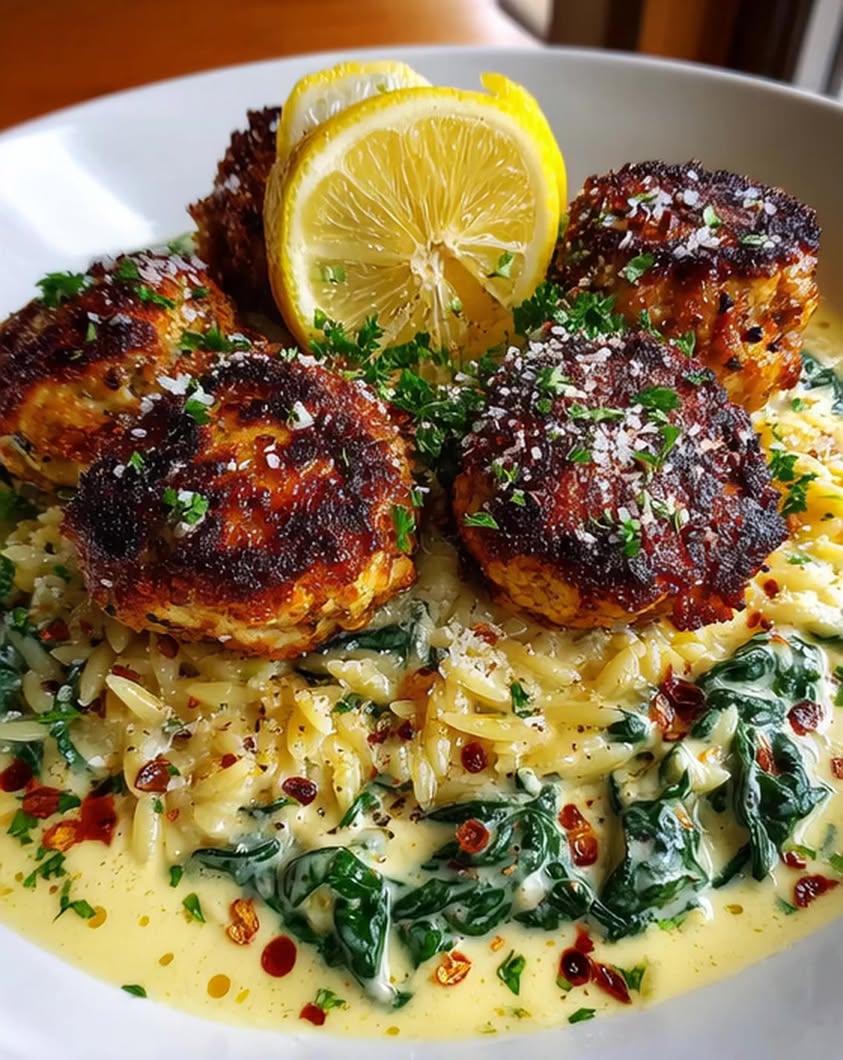
Creamy Lemon Chicken Ricotta Meatballs with Spinach & Garlic Orzo: A Bright and Comforting One-Pan Wonder
Imagine a dish that wraps you in cozy comfort while simultaneously waking up your taste buds with a burst of sunshine. That is the magic of these Creamy Lemon Chicken Ricotta Meatballs. This recipe masterfully combines tender, juicy meatballs with a silky, bright lemon sauce and a bed of garlicky orzo and spinach. Ultimately, it delivers restaurant-quality flavor from a single pan in under an hour.
Furthermore, this dish is a perfect solution for busy weeknights when you crave something special without the fuss. The lemon chicken ricotta meatballs are incredibly moist and flavorful, thanks to the ricotta cheese. Meanwhile, the orzo cooks right in the same pan, absorbing all the delicious pan juices and lemon cream sauce. Consequently, every component works in harmony, creating a complete, satisfying meal.
Visually, this dish is a stunner. The golden-brown meatballs nestle into a vibrant green sea of spinach and orzo, all coated in a pale, creamy sauce. A final sprinkle of fresh parsley and a lemon zest adds the perfect finishing touch. Importantly, it looks as impressive as it tastes, making it ideal for both family dinners and casual entertaining.
Quick Recipe Highlights
- Flavor Profile: These creamy lemon chicken ricotta meatballs offer a beautiful balance. First, you get the savory, herby depth from the meatballs. Then, a bright, tangy lemon cream sauce cuts through the richness. Finally, the garlicky orzo provides a savory, comforting base that ties everything together.
- Texture: The texture experience is wonderfully varied. The meatballs are exceptionally tender and almost melt-in-your-mouth due to the ricotta. Conversely, the orzo provides a pleasing, slightly chewy bite. Meanwhile, the wilted spinach adds a soft, silky element, and the creamy sauce coats everything in a luxurious velvety finish.
- Aroma: As this cooks, your kitchen will fill with an irresistible fragrance. Initially, the scent of browning chicken and garlic hits you. Subsequently, the fresh, zesty aroma of lemon zest and juice perfumes the air. Finally, the herbal notes from parsley and oregano complete the inviting, mouth-watering bouquet.
- Visual Appeal: This dish boasts beautiful color contrast. Golden-brown meatballs rest atop a bed of vibrant emerald green spinach and pale yellow orzo, all glistening with creamy sauce. A garnish of bright green parsley and yellow lemon zest makes the plate pop, promising a fresh and delicious meal.
- Skill Level Needed: This is a confidently easy recipe suitable for cooks of most levels. Basic skills like mixing, shaping, and pan-searing are required. However, the process is straightforward and well-explained. Therefore, even a beginner can achieve fantastic results by following the steps carefully.
- Special Equipment: You need only a large, oven-safe skillet or braiser. A standard 10 to 12-inch skillet works perfectly. Additionally, a microplane for zesting lemons is helpful but not essential. Otherwise, common kitchen tools like a mixing bowl, measuring spoons, and a wooden spoon are all you require.
Recipe Overview
- Difficulty Level: We rate this recipe as easy. The steps are sequential and logical, with no advanced techniques. While there are multiple components, they come together in one pan. The shaping of the lemon chicken ricotta meatballs is simple, and the sauce builds effortlessly from the pan drippings. Overall, it is an accessible dish with a high reward-to-effort ratio.
- Category: This is a quintessential one-pan main course. It provides protein, starch, and vegetables in a single, cohesive dish. It fits perfectly into the category of comforting pasta bakes or skillet dinners. Moreover, it is substantial enough to stand alone but can be paired with a simple side salad for a more expansive meal.
- Cuisine: The dish draws inspiration from Italian-American and Mediterranean culinary traditions. The use of ricotta, Parmesan, oregano, and orzo is classically Italian. Meanwhile, the bright, citrus-forward sauce and emphasis on fresh herbs and spinach reflect a sun-drenched Mediterranean sensibility. It is a modern fusion that celebrates fresh, vibrant flavors.
- Cost: This is a moderately priced, cost-effective meal. Ground chicken is typically affordable, and ricotta and Parmesan are used in reasonable quantities. Orzo and spinach are inexpensive pantry and produce staples. Lemon and garlic are low-cost flavor powerhouses. For a special-feeling dinner, it offers excellent value, especially compared to dining out.
- Season: This recipe shines brightest in the spring and summer when fresh herbs and bright citrus flavors are most appealing. However, it is truly a year-round dish. The creamy, comforting elements make it suitable for cooler months, while the lemon keeps it feeling light. It is a versatile choice for any season.
- Occasion: These creamy lemon chicken ricotta meatballs are incredibly versatile for different occasions. They are quick enough for a Tuesday family dinner yet elegant enough for a weekend date night at home or casual dinner party with friends. The all-in-one presentation minimizes cleanup, which is a win for any event.
Why You’ll Love This Recipe
First and foremost, the taste and texture are simply outstanding. Each bite of these lemon chicken ricotta meatballs delivers a symphony of flavors. The tender, savory meatball pairs with the bright, tangy cream sauce in a way that feels both indulgent and refreshing. Additionally, the garlicky orzo and spinach provide the perfect savory base, ensuring every forkful is balanced and complete. The experience is restaurant-quality, achieved in your own kitchen with familiar ingredients.
From a convenience standpoint, this recipe is a weeknight hero. Everything cooks in one pan, meaning less time washing dishes and more time enjoying your meal. The process flows logically from one step to the next, building layers of flavor effortlessly. Moreover, the active cooking time is manageable, and the result looks and tastes like you spent far longer. It is the perfect solution when you want an impressive, home-cooked meal without a complicated process or a pile of dirty pots.
Nutritionally, this dish offers a well-rounded profile. Ground chicken is a lean protein source, and ricotta adds calcium and protein without excessive fat. Spinach packs a powerful punch of vitamins A, C, and K, along with iron and fiber. Using whole milk or half-and-half for the sauce adds richness in moderation. Ultimately, you get a meal that feels decadent but is built on wholesome, recognizable components.
For social and entertaining value, this recipe is a guaranteed crowd-pleaser. The presentation is beautiful straight from the skillet, making for a rustic yet elegant tableside serving. The flavors are universally appealing, not overly spicy or exotic, yet interesting enough to feel special. Serving these creamy lemon chicken ricotta meatballs allows you to be present with your guests instead of stuck in the kitchen assembling multiple courses. It creates a warm, welcoming, and delicious centerpiece for any gathering.
Finally, this dish is cost-effective and accessible. The ingredients are easy to find at any standard grocery store and won’t break the bank. You can easily adapt it based on what you have; for instance, using ground turkey instead of chicken or adding different greens. The recipe yields generous portions, often with leftovers that reheat beautifully. Therefore, it delivers maximum flavor and satisfaction for a minimal investment, both in time and money.
Historical Background and Cultural Significance
The concept of meatballs spans countless cultures, from Swedish köttbullar to Middle Eastern kofta. Italian-American meatballs, however, are the clear inspiration for this dish. Immigrants from Southern Italy brought recipes for polpette, small meatballs often containing breadcrumbs and cheese, to America. Here, ingredients like beef and pork became more affordable and prevalent, leading to the larger, sauced meatballs we know today. The addition of ricotta is a nod to Southern Italian cooking, where fresh cheese is frequently used to add moisture and richness to meat mixtures.
Orzo, meaning “barley” in Italian for its resemblance to the grain, is a pasta shape that plays a versatile role in Mediterranean cuisines. In Greece, it is often used in pilafs and baked dishes. In Italy, it’s found in soups and simple side dishes. Using orzo as a bed for saucy components is a modern, practical approach that turns a starch into an integral part of the main dish. This method maximizes flavor absorption and simplifies serving.
The evolution of this specific recipe reflects contemporary cooking trends. The move towards one-pan meals answers the modern desire for efficiency and minimal cleanup. Incorporating bright, citrusy flavors like lemon into creamy sauces is a hallmark of modern Italian-inspired cuisine, offering a lighter alternative to heavy tomato or cream-based sauces. Combining the comforting concept of meatballs and pasta with a vibrant, pan-made sauce creates a dish that feels both timeless and fresh.
Regional variations of this concept are easy to imagine. In coastal regions, a pinch of crushed red pepper or a garnish of fresh basil might be added. A Northern Italian twist might use a touch of white wine in the sauce or substitute mascarpone for some of the ricotta. The spinach could be swapped for Swiss chard or kale in different seasons. This adaptability is a testament to the solid foundation of the recipe—tender meatballs, a flavorful starch, and a bright, binding sauce—which can be tweaked to reflect local tastes and ingredients.
Ingredient Deep Dive
Ground Chicken: A lean and versatile protein, ground chicken forms the base of our meatballs. Opt for a mix of white and dark meat if available, as the dark meat adds more flavor and moisture. When selecting, look for packages with a recent sell-by date and a bright pink color. If you have the option, ask your butcher to grind it fresh. Store it in the coldest part of your refrigerator and use within 1-2 days of purchase, or freeze for longer storage. For a substitution, ground turkey is an excellent and nearly identical alternative.
Ricotta Cheese: This fresh, mild cheese is the secret to incredibly moist lemon chicken ricotta meatballs. It adds fat, protein, and a delicate creaminess without making the mixture heavy. Look for whole-milk ricotta for the best flavor and texture. Always drain any excess liquid from the tub before using. Store ricotta tightly sealed in its original container in the refrigerator. For a dairy-free version, a well-drained, firm tofu pureed with a little lemon juice can mimic the texture, though the flavor profile will change.
Lemon (Zest and Juice): The lemon provides the essential bright, aromatic backbone of the dish. The zest contains potent citrus oils, offering intense fragrance without acidity, while the juice delivers the tangy punch. Always use fresh lemons; bottled juice lacks vibrancy. Choose lemons that are heavy for their size with smooth, brightly colored skin. Before zesting, wash the lemon thoroughly. To store, keep lemons at room temperature for a week or in the fridge for longer. In a pinch, a combination of fresh orange zest and a splash of white wine vinegar can provide a different but pleasing citrus note.
Orzo: Orzo is a small, rice-shaped pasta that cooks quickly and absorbs flavors beautifully. It acts as a fantastic vehicle for the creamy sauce in this dish. There is no significant substitute for its unique size and texture, though other small pastas like ditalini or even arborio rice (cooked with more liquid) could be used in a different context. Store orzo in a cool, dry pantry in a sealed container. Always cook it just until al dente, as it will continue to absorb liquid from the sauce.
Fresh Spinach: Spinach adds color, nutrients, and a mild, earthy flavor that balances the richness. It wilts down dramatically, so don’t be intimidated by a large volume. Baby spinach is ideal for its tenderness. Ensure it is washed and thoroughly dried to prevent watering down the sauce. Store spinach unwashed in the original container or a plastic bag with a paper towel in the refrigerator’s crisper. For a variation, kale (with stems removed) or Swiss chard can be used, though they may require a slightly longer wilting time.
Common Mistakes to Avoid
- Overmixing the Meatball Mixture: Combine the ingredients just until they are incorporated. Overmixing develops the proteins in the meat, leading to tough, dense meatballs. Use a gentle hand or a fork to blend everything together.
- Using Cold Ingredients: For easier mixing and more consistent cooking, let your ricotta and egg sit at room temperature for about 15 minutes before making the meatball mixture. Cold ingredients can cause the fat to seize and make blending more difficult.
- Not Browning the Meatballs Properly: Do not rush the browning step. Get a good, golden-brown sear on most sides of the meatballs before removing them from the pan. This fond (the browned bits) is essential for building a deeply flavorful sauce.
- Crowding the Pan: Cook the meatballs in batches if your skillet isn’t large enough to hold them all without touching. Crowding steams them instead of searing them, resulting in pale, less flavorful exteriors and uneven cooking.
- Adding Lemon Juice Too Early: Add the lemon juice after you’ve created the cream sauce base. Adding it directly to a very hot, dry pan can cause it to evaporate instantly and turn bitter. Incorporating it into the liquid base preserves its fresh, bright flavor.
- Overcooking the Orzo: The orzo will continue to cook and absorb liquid as it sits in the hot sauce with the meatballs. Therefore, aim for al dente when you first boil it—it should still have a slight bite. Otherwise, it can become mushy in the final dish.
- Skipping the Deglazing Step: After browning the meatballs, always add a liquid (like broth) to the hot pan and scrape up all the browned bits. This step, called deglazing, is non-negotiable for capturing maximum flavor for your sauce.
- Using Pre-Grated Parmesan: For the best flavor and meltability, grate your own Parmesan cheese from a block. Pre-grated cheese often contains anti-caking agents that can make your sauce grainy and less smooth.
- Not Tasting for Seasoning: Season in layers. Taste your meatball mixture before shaping (cook a tiny piece in the microwave to check). Taste the sauce before adding the orzo and spinach. Finally, taste the finished dish and adjust salt, pepper, or lemon juice as needed.
- Adding All the Spinach at Once: Add the spinach in two or three batches, allowing the first batch to wilt down before adding more. This makes it easier to incorporate evenly and prevents a huge, unmanageable mound of greens in your pan.
Essential Techniques
Pan-Searing for Flavor (The Maillard Reaction): Browning the meatballs is not just for color; it triggers the Maillard reaction. This complex chemical process between amino acids and sugars creates hundreds of new flavor compounds, resulting in a deep, savory, roasted taste. To master it, ensure your pan and oil are properly hot before adding the meatballs. Do not move them for a minute or two to allow a crust to form. The visual cue for success is a golden-brown, caramelized exterior on most sides of the meatball.
Deglazing to Build Sauce: After removing the meatballs, you’ll see browned bits stuck to the pan. This is flavor gold. Deglazing involves adding a liquid (chicken broth) to the hot pan and using a wooden spoon to vigorously scrape those bits loose. They dissolve into the liquid, forming the foundational flavor of your sauce. The key is to use a liquid that complements the dish and to scrape thoroughly until the pan bottom is mostly clean.
Creating a Simple Pan Sauce: A pan sauce builds on the fond and deglazing liquid. After deglazing, you’ll often add aromatics (garlic), then a creamy element (half-and-half), and a flavor accent (lemon juice). The sauce should simmer gently to thicken slightly and meld the flavors. The pitfall is boiling it too vigorously, which can cause the cream to separate or the sauce to become too thick. Success is a velvety, cohesive sauce that coats the back of a spoon.
Wilting Greens Efficiently: Wilting a large volume of spinach seems daunting, but heat and moisture make it quick. Adding the greens to the hot pan with the orzo and sauce provides both. The key is to add them in batches, stirring constantly. As the first batch wilts and reduces in volume, you add more. The visual cue is the spinach turning bright green and becoming limp, which happens in just a minute or two.
Pro Tips for Perfect Creamy Lemon Chicken Ricotta Meatballs
1. For uniform cooking, use a small cookie scoop or a tablespoon to portion out the meatball mixture before rolling. This ensures they are all roughly the same size.
2. Wet your hands with a little water or oil before rolling the meatballs. This prevents the sticky mixture from clinging to your palms and makes for smoother, rounder meatballs.
3. Let the shaped meatballs rest on a plate for 5-10 minutes before browning. This brief rest helps them firm up slightly, reducing the chance they’ll break apart in the pan.
4. Use the time while the meatballs are browning to zest and juice your lemon and measure out your other sauce ingredients (mise en place). This makes the sauce-building process seamless and stress-free.
5. When adding the lemon juice to the cream sauce, do it off the heat or on very low heat. High heat can cause the dairy to curdle when mixed with high acidity.
6. If your sauce seems too thick after adding the orzo and spinach, simply stir in a splash of additional chicken broth or water until it reaches your desired consistency.
7. For an extra flavor boost, toast the dry orzo in a separate pan with a little butter or olive oil before boiling it. This adds a subtle nutty dimension to the pasta.
8. Always finish the dish with a fresh element. A final sprinkle of chopped parsley, a little extra lemon zest, or a few cracks of black pepper right before serving elevates the flavors and presentation immensely.
Variations and Adaptations
Regional Variations: Give these lemon chicken ricotta meatballs a Greek twist by adding a pinch of dried mint and oregano to the meat mixture and using feta cheese instead of Parmesan. For a more French-inspired version, use tarragon instead of oregano and finish the sauce with a tablespoon of Dijon mustard and a swirl of crème fraîche.
Seasonal Adaptations: In spring, add fresh peas or asparagus tips to the orzo during the last few minutes of cooking. For summer, incorporate chopped sun-dried tomatoes and fresh basil. In fall, swap spinach for sautéed mushrooms and kale. For a winter comfort version, use a mix of root vegetables like diced carrots and parsnips, roasted and folded in at the end.
Dietary Modifications: For a gluten-free version, use certified gluten-free breadcrumbs or almond flour in the meatballs, and substitute the orzo with cooked quinoa or gluten-free pasta. To make it dairy-free, use a dairy-free ricotta alternative, nutritional yeast instead of Parmesan, and full-fat coconut milk or a cashew cream for the half-and-half.
Flavor Variations: Introduce warmth with a teaspoon of Italian seasoning or a pinch of red pepper flakes in the meatball mix. For an herby punch, double the fresh parsley and add chopped fresh dill or chives. For a richer, deeper flavor, substitute half the chicken broth with a dry white wine when deglazing the pan.
Texture Modifications: For a more textured meatball, use panko breadcrumbs instead of regular. For a smoother, more delicate meatball, process the breadcrumbs into a fine powder in a food processor before adding. If you prefer a chunkier dish, use a larger pasta shape like campanelle or cavatappi instead of orzo.
Presentation Alternatives: Serve the meatballs and sauce over creamy polenta or mashed potatoes instead of orzo for a ultra-comforting meal. For individual servings, bake the assembled dish in small ramekins. For a party appetizer, make miniature meatballs, skewer them, and serve the creamy lemon sauce on the side for dipping.
Serving and Presentation Guide
Plating Techniques: For family-style serving, bring the entire skillet to the table—it’s rustic and inviting. For individual plates, use a shallow bowl or wide pasta plate. First, create a bed of the spinach and orzo mixture. Then, artfully arrange 3-4 meatballs on top. Finally, spoon extra sauce over the meatballs and around the plate.
Garnishing Ideas: Fresh herbs are your best friend. Chopped flat-leaf parsley is classic, but basil, chives, or dill also work beautifully. A final grating of lemon zest over the top adds a burst of color and aroma. A light dusting of grated Parmesan or a drizzle of high-quality extra virgin olive oil just before serving adds a professional touch.
Traditional Accompaniments: This is a complete meal, but a simple, crisp side salad is the perfect partner. A classic arugula salad with a lemon vinaigrette echoes the citrus notes. Garlic bread or a crusty baguette is excellent for sopping up any remaining sauce. For a more substantial spread, start with a light soup, like a minestrone or tomato basil.
Modern Serving Suggestions: For a lighter meal, serve a smaller portion of the meatballs and orzo alongside roasted vegetables like broccoli or zucchini. For a brunch twist, top a poached or fried egg on each serving—the runny yolk creates an incredible additional sauce. Serve in small portions as a sophisticated first course for a multi-course dinner.
Temperature Considerations: This dish is best served immediately while the sauce is creamy and the meatballs are tender. However, it also holds heat well. If you need to let it sit for a few minutes before serving, cover the skillet with a lid to retain warmth and moisture. The residual heat will continue to cook the orzo slightly, so account for that.
Portion Control Tips: The recipe yields about 16 meatballs, serving 4 people (4 meatballs each). For heartier appetites, you can stretch it to 3 servings. For smaller appetites or as part of a larger meal, it can serve 5-6. If serving with substantial sides, you may find 3 meatballs per person is sufficient.
Wine and Beverage Pairing
Wine Pairings: The bright acidity and creamy texture of these lemon chicken ricotta meatballs call for wines with good acidity to cut through the richness. A crisp, unoaked Italian white like Pinot Grigio or Vermentino is a classic choice. A Sauvignon Blanc, especially from New Zealand, with its grassy and citrus notes, complements the lemon beautifully. For red wine lovers, a light-bodied, low-tannin red like a Beaujolais or a Pinot Noir served slightly chilled works surprisingly well.
Non-Alcoholic Alternatives: Sparkling water with a twist of lemon or lime is a refreshing, palate-cleansing choice. For something more complex, try a homemade lemonade infused with herbs like rosemary or thyme. Iced herbal teas, such as mint or chamomile, offer a soothing counterpoint. A high-quality ginger beer or a non-alcoholic sparkling cider can also provide a pleasant sweet-and-spicy contrast.
Coffee and Tea Pairings: After the meal, a cup of lightly roasted coffee with bright, citrusy notes can be a delightful finish. For tea, consider an Earl Grey, whose bergamot flavor echoes the citrus in the dish, or a gentle green tea like Dragonwell, which is clean and palate-cleansing without being astringent.
Temperature Considerations: White wines and non-alcoholic sparklers should be served well-chilled, around 45-50°F. Light reds like Pinot Noir are best served slightly cooler than room temperature, around 55°F. Iced beverages should be cold but not watered down—use large ice cubes or frozen fruit to keep them cool without excessive dilution.
Serving Suggestions: Always offer water on the table alongside any other beverage. When serving wine, pour modestly to allow guests to enjoy the pairing without overwhelming the food. For non-alcoholic options, consider serving them in elegant glassware to make the experience feel just as special.
Storage and Shelf Life
Storage Methods: Allow the dish to cool completely before storing. Transfer leftovers to an airtight container. You can store the meatballs, orzo, and sauce together, but for best texture, some prefer to store the components separately. The creamy sauce may thicken significantly when chilled.
Temperature Requirements: Refrigerate leftovers promptly. Do not leave the cooked dish at room temperature for more than two hours. The ideal refrigerator temperature is 40°F or below. For longer storage, freezing is an effective option.
Container Recommendations: Use glass or BPA-free plastic containers with tight-fitting lids. For freezing, use heavy-duty freezer bags, pressing out as much air as possible, or freezer-safe containers. Label containers with the date to keep track of freshness.
Signs of Spoilage: Discard the food if you notice an off or sour smell, significant mold growth (even small spots), or a slimy texture on the meatballs or orzo. If the sauce has separated irreversibly and smells fermented, it is best to err on the side of caution and throw it out.
Reheating Instructions: Reheat gently to prevent the sauce from breaking and the meatballs from drying out. The best method is on the stovetop over low heat, adding a splash of broth, milk, or water to loosen the sauce. Stir frequently. You can also reheat in the microwave in 60-second intervals, stirring between each, and adding liquid as needed.
Freezing Guidelines: This dish freezes reasonably well for up to 2-3 months. Freeze in portion-sized containers. Thaw overnight in the refrigerator before reheating. Note that the texture of the orzo may become slightly softer upon thawing and reheating. The spinach may also lose some of its vibrant green color but will remain safe to eat.
Make Ahead Strategies
Prep Timeline: You can prepare components 1-2 days in advance. Mix and shape the lemon chicken ricotta meatballs, then store them covered on a plate in the refrigerator. Cook the orzo al dente, toss it with a tiny bit of olive oil to prevent sticking, and refrigerate separately. Measure out your sauce ingredients (broth, cream, lemon zest/juice) and store them in containers in the fridge.
Storage Between Steps: Keep the raw meatballs on a plate, covered tightly with plastic wrap. Store cooked orzo in an airtight container. Keep pre-measured wet ingredients in jars or bowls with lids. This “mise en place” approach turns final assembly into a quick 20-minute process on the day of serving.
Quality Impact Assessment: Making the meatballs ahead allows the flavors to meld, often improving their taste. The orzo may dry out slightly, but the sauce will rehydrate it. The fresh lemon juice may lose a tiny bit of its brightest punch, so you can reserve a little fresh juice to add at the end if desired.
Assembly Tips: When ready to cook, proceed with the recipe from the browning step. You may need to add an extra minute to the sauce simmering time if your broth and cream are cold from the fridge. Add the pre-cooked orzo to the sauce just to heat through, rather than to cook from scratch.
Reheating Guidelines: If you fully assemble and cook the entire dish ahead, reheat it gently in a covered skillet over low heat with a added splash of liquid. Alternatively, reheat in a 350°F oven, covered with foil, until warmed through. Stir gently to redistribute the sauce.
Fresh Element Additions: Always add any fresh herbs (parsley, basil) and a final grating of lemon zest just before serving, even if the rest of the dish was made ahead. This restores the bright, aromatic top notes that make the dish so vibrant.
Scaling Instructions
Halving the Recipe: Halving is straightforward for smaller households. Use a medium skillet instead of a large one. Precisely halve all ingredients. The cooking times will remain roughly the same, though you may need to reduce the sauce simmering time by a minute or two as there is less volume to reduce. You’ll get about 8 meatballs, perfect for 2 generous servings.
Doubling or Tripling: For a crowd, doubling or tripling works well. Use the largest skillet or braiser you have, or cook in batches. You may need to brown the meatballs in multiple batches to avoid crowding. Use a large pot to boil the orzo. When building the sauce, you may need to extend the simmering time by a few minutes to allow it to thicken properly with the increased liquid volume.
Equipment Adjustments: Scaling up requires matching your equipment to the volume. A Dutch oven is excellent for a doubled recipe. Ensure you have a large enough pot for boiling the increased amount of orzo. Have a large baking sheet ready to hold browned meatballs if cooking in batches.
Timing Modifications: While prep time increases linearly with ingredient volume, active cooking time does not double. Browning meatballs in batches adds time. Simmering a larger volume of sauce may add a few minutes. Factor in an extra 10-15 minutes of active time when doubling the recipe.
Storage Considerations: A larger batch means more potential leftovers. Plan your storage containers in advance. Consider freezing a portion of the finished dish if you don’t plan to eat it all within 3-4 days. Label and date everything clearly.
Nutritional Deep Dive
Macro Breakdown: A serving of these creamy lemon chicken ricotta meatballs provides a balanced mix of macronutrients. The ground chicken and ricotta offer high-quality protein essential for muscle repair and satiety. The orzo contributes complex carbohydrates for sustained energy. The half-and-half and olive oil provide healthy fats necessary for nutrient absorption and flavor. This balance helps keep you full and satisfied for hours.
Micronutrient Analysis: This dish is a good source of several key vitamins and minerals. Spinach delivers vitamins A, C, and K, along with iron and folate. Lemon juice is rich in vitamin C, which aids iron absorption from the spinach. Ricotta and Parmesan provide calcium and phosphorus for bone health. Garlic contains allicin, a compound with noted antioxidant properties.
Health Benefits: The combination of lean protein, fiber from spinach, and complex carbs supports stable blood sugar levels. The antioxidants in spinach, lemon, and garlic contribute to reducing inflammation. The calcium supports bone density. Using olive oil, a source of monounsaturated fats, promotes heart health. Overall, it’s a nutrient-dense meal that supports overall wellness.
Dietary Considerations: This recipe contains dairy (ricotta, Parmesan, half-and-half) and gluten (breadcrumbs, orzo). It is not suitable for those with lactose intolerance, dairy allergies, or celiac disease without modifications. However, as detailed in the adaptations section, it can be modified to fit many dietary needs with careful ingredient swaps.
Portion Analysis: A standard serving (4 meatballs with orzo) is satisfying without being overly heavy. For those monitoring caloric intake, you can reduce the portion to 3 meatballs. You can also increase the ratio of spinach to orzo to boost fiber and volume without significantly increasing calories. Using a lean ground chicken breast can further reduce fat content if desired.
Weight Management Tips: This dish can fit into a weight management plan due to its high protein and fiber content, which promote fullness. To reduce calories, you can use low-fat ricotta, reduce the amount of half-and-half by substituting with more broth, or increase the spinach volume. Be mindful of added salt if using store-bought broth; opt for low-sodium versions.
Dietary Adaptations
Gluten-Free: Replace the regular breadcrumbs with certified gluten-free breadcrumbs or 1/4 cup of almond flour. Substitute the orzo with an equal amount of cooked gluten-free pasta, quinoa, or cauliflower rice. Ensure your chicken broth is certified gluten-free. All other ingredients are naturally gluten-free.
Dairy-Free: Use a dairy-free ricotta alternative (often made from almonds or tofu). Replace the Parmesan with nutritional yeast or a vegan Parmesan substitute. Substitute the half-and-half with full-fat canned coconut milk or a plain, unsweetened dairy-free creamer. Use a neutral oil like avocado oil instead of butter for cooking the garlic.
Vegan: This requires a more significant adaptation. For the meatballs, use a base of cooked lentils or a vegan ground “meat” mixed with dairy-free ricotta and breadcrumbs. Use vegetable broth. For the sauce, use a cashew cream (blended soaked cashews with water) or coconut milk. Fold in the spinach at the end. The flavor profile will be different but can be delicious.
Low{“success”:true,”message”:”Recipe created successfully”,”post_id”:9379,”tasty_recipe_id”:9379,”shortcode”:”“}

I’m Billy, a classically trained culinary school graduate from The Culinary Institute of America with over 12 years in the restaurant industry and over 19 years of cooking experience.