
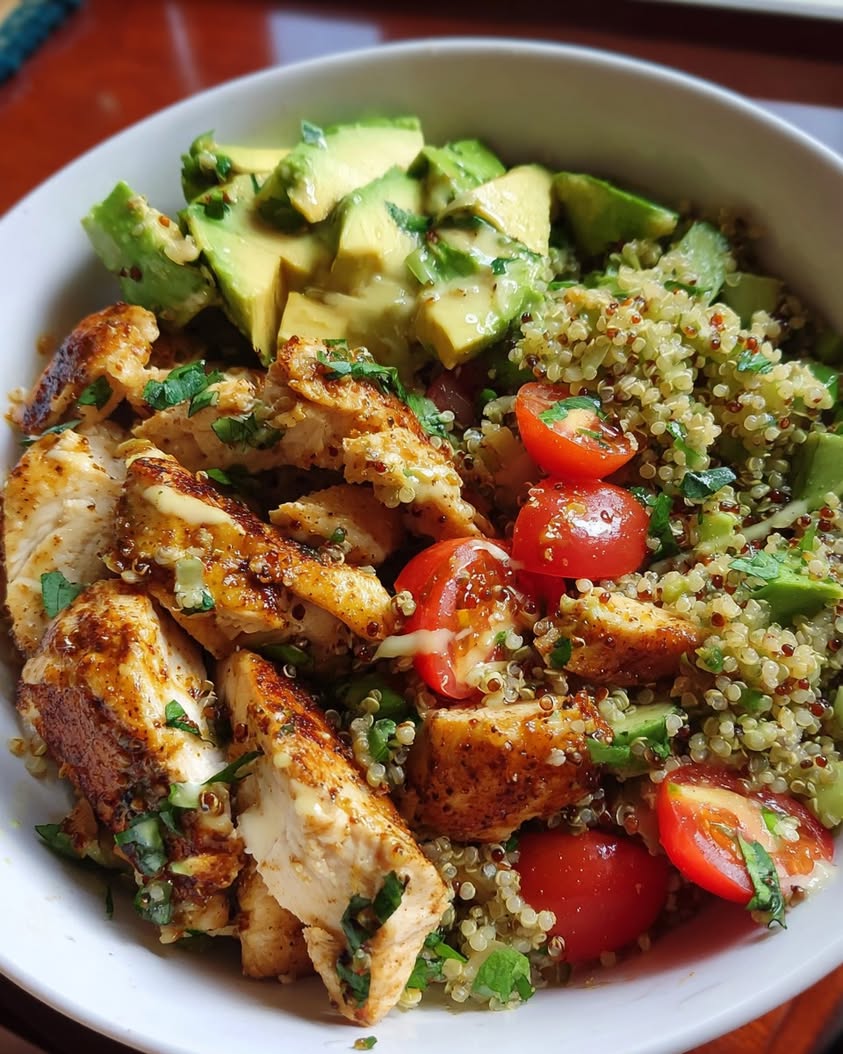
Creamy Lime Chicken and Quinoa Bowl with Fresh Avocado: A Vibrant, Protein-Packed Meal
Imagine a meal that feels like a burst of sunshine on your plate. This Creamy Lime Chicken and Quinoa Bowl with Fresh Avocado delivers exactly that experience. Furthermore, it combines tender, perfectly seasoned chicken with fluffy quinoa and a luxuriously tangy sauce. Ultimately, every bite offers a satisfying harmony of textures and bright, fresh flavors that will make you feel nourished and energized.
These quinoa bowls are the ultimate answer to the question of what to make for a healthy, delicious dinner. They are incredibly versatile, for instance, allowing you to use up whatever vegetables you have on hand. Moreover, the creamy lime sauce, made with Greek yogurt and fresh citrus, clings to every ingredient beautifully. Consequently, you get a dish that is both light and indulgent-tasting, perfect for a quick weeknight meal or a impressive lunch prep.
The beauty of this recipe lies in its balanced simplicity. You get lean protein from the chicken, complex carbohydrates and fiber from the quinoa, and healthy fats from the avocado. Additionally, the fresh herbs and lime juice add a vibrant pop without any heaviness. Therefore, this Creamy Lime Chicken Quinoa Bowl is a guaranteed crowd-pleaser that supports your wellness goals without sacrificing an ounce of flavor.
Quick Recipe Highlights
- Flavor Profile: This dish features a dominant, zesty lime note that is perfectly balanced by the richness of the creamy yogurt sauce. The garlic and cilantro add aromatic depth, while the chicken provides a savory, umami foundation that ties everything together.
- Texture: You will enjoy a wonderful contrast between the tender, juicy chicken, the fluffy and slightly chewy quinoa, and the cool, creamy avocado. The sauce adds a smooth, velvety component that coats every element for a cohesive mouthfeel.
- Aroma: As you cook, the scent of sautéing garlic and chicken will fill your kitchen. Then, the fresh lime zest and chopped cilantro introduce a bright, herbaceous fragrance that signals a fresh and healthy meal is moments away.
- Visual Appeal: This bowl is a feast for the eyes with its vibrant green avocado, white creamy sauce, golden chicken, and specks of fresh herbs. It is a colorful, Instagram-worthy presentation that looks as good as it tastes.
- Skill Level Needed: This is a beginner-friendly recipe that requires basic skills like chopping, sautéing, and simmering. If you can cook chicken and boil water, you can absolutely master these delicious quinoa bowls.
- Special Equipment: You only need standard kitchen tools: a good skillet, a medium saucepan, a mixing bowl, and basic utensils. A microplane for zesting the lime is helpful but not strictly necessary.
Recipe Overview
- Difficulty Level: We rate this recipe as easy because it uses straightforward techniques and common ingredients. The steps are sequential and logical, meaning you can cook the quinoa while preparing the chicken. Additionally, the sauce comes together quickly in one bowl, minimizing cleanup and complexity.
- Category: This recipe fits perfectly into the categories of healthy dinner ideas, high-protein meals, and meal prep lunches. It is a complete, balanced bowl that provides protein, carbs, and fats in one satisfying dish, making it ideal for focused nutrition.
- Cuisine: While not tied to one specific tradition, this bowl draws inspiration from fresh, modern Californian and Southwest cuisines. It utilizes ingredients like lime, cilantro, and avocado which are staples in those regions, creating a fusion-style dish that is light and vibrant.
- Cost: This is a very cost-effective meal, especially if you buy chicken in bulk. Quinoa, while sometimes pricier than rice, is nutrient-dense and a little goes a long way. Overall, you can expect to spend less per serving than you would on takeout, making it a budget-friendly choice.
- Season: This Creamy Lime Chicken Quinoa Bowl is truly a year-round champion. It feels light and refreshing in the summer, yet the warm chicken and quinoa provide comforting warmth in the winter. Spring and fall are also perfect, as the bright flavors complement seasonal produce.
- Occasion: Serve it for a casual family dinner, pack it for a work lunch, or even plate it beautifully for a dinner party with friends. It is versatile enough for any day of the week and special enough to serve to guests.
Why You’ll Love This Recipe
First and foremost, the taste and texture are utterly irresistible. The tangy lime cuts through the richness of the creamy sauce, creating a flavor profile that is both exciting and comforting. Meanwhile, each component contributes a unique texture, from the tender chicken to the creamy avocado, ensuring every forkful is interesting. Ultimately, this combination makes the eating experience deeply satisfying and far from boring.
From a convenience standpoint, this recipe is a true weeknight hero. You can have a healthy, restaurant-quality meal on the table in well under an hour. Moreover, the steps are simple and mostly hands-off, like simmering the quinoa. Consequently, you can multitask efficiently, perhaps preparing a side salad or simply relaxing while dinner cooks itself.
Nutritionally, this Creamy Lime Chicken Quinoa Bowl is a powerhouse. Quinoa is a complete protein and full of fiber, while the chicken provides lean protein to keep you full. Additionally, the avocado contributes heart-healthy monounsaturated fats. Therefore, this single bowl delivers a macro-balanced meal that fuels your body properly and supports sustained energy levels.
For social and entertaining value, this dish is a fantastic option. It is easy to scale up for a crowd and the vibrant presentation always impresses. Furthermore, you can set up a “bowl bar” with extra toppings like diced tomatoes, black beans, or roasted corn, allowing guests to customize their own creation. This interactive element makes dinner fun and engaging for everyone.
Finally, this recipe is incredibly cost-effective and accessible. You likely have many of the pantry staples, like spices and olive oil, already on hand. The main ingredients are affordable and readily available at any grocery store. By cooking this at home, you save significant money compared to ordering a similar bowl from a restaurant, all while controlling the quality and freshness of every ingredient.
Historical Background and Cultural Significance
The concept of the grain bowl is ancient, with roots in global culinary traditions where communities combined available grains, proteins, and vegetables for a complete meal. However, the modern “bowl” trend, especially in Western health-focused cuisine, gained massive popularity in the early 21st century. This particular Creamy Lime Chicken Quinoa Bowl is a direct descendant of that movement, emphasizing balance, nutrition, and bold, fresh flavors in a convenient, single-serving format.
Culturally, this bowl represents a fusion of influences. Quinoa itself hails from the Andean region of South America, where it has been a staple for thousands of years. The use of lime and cilantro is prominent in Mexican, Thai, and Vietnamese cuisines, ingredients celebrated for their ability to brighten and define a dish. Therefore, this recipe is a beautiful example of how global ingredients can come together to create something new and delicious.
The evolution of this recipe mirrors the growing public interest in functional, healthy eating. As quinoa became a mainstream superfood and Greek yogurt gained popularity as a healthy alternative to sour cream, recipes like this naturally emerged. Chefs and home cooks alike began experimenting, swapping heavy creams for yogurt and bland grains for nutrient-dense quinoa, leading to the creation of lighter, more vibrant bowls.
Regional variations of this concept are endless. In the Southwest U.S., you might find a version with black beans, corn, and a chipotle crema. On the West Coast, it could feature kale and a tahini-lime dressing. In the Mediterranean, feta and olives might make an appearance. This adaptability is a key part of the bowl’s significance, demonstrating how a simple template can be infinitely customized to local tastes and ingredients.
Ingredient Deep Dive
Let’s start with quinoa, the star grain. Originally cultivated by the Incas in the Andes, it was revered as the “mother of all grains.” Nutritionally, it is a complete protein, containing all nine essential amino acids, and is high in fiber, magnesium, and iron. When selecting quinoa, look for a clean, dry product without any moisture. Always rinse it thoroughly under cold water before cooking to remove its natural bitter coating, called saponin. Store uncooked quinoa in an airtight container in a cool, dark pantry.
Boneless, skinless chicken breasts are our lean protein source. They are incredibly versatile and take on the flavors of the marinade and sauce beautifully. Chicken is an excellent source of high-quality protein and B vitamins. For the best texture, look for breasts that are relatively uniform in thickness so they cook evenly. You can substitute chicken thighs for a juicier, more flavorful result, or use tofu or chickpeas for a plant-based version. Always cook chicken to an internal temperature of 165°F.
Plain Greek yogurt forms the base of our creamy lime sauce. This strained yogurt is thicker and higher in protein than regular yogurt. It provides a tangy richness without the fat of mayonnaise or sour cream. Culturally, variations of strained yogurt appear from the Middle East (labneh) to India (hung curd). For this recipe, use full-fat or 2% Greek yogurt for the creamiest result. Non-dairy yogurts made from coconut or soy can work as substitutes, though the flavor will vary slightly.
Fresh lime juice and zest are non-negotiable for the vibrant flavor in these quinoa bowls. Limes originated in Southeast Asia and were carried across the world by traders and explorers. They are packed with vitamin C and antioxidants. Always zest your lime before juicing it, as it’s much easier. For the best flavor, use fresh limes rather than bottled juice. Roll the lime firmly on the counter before cutting to help release more juice. In a pinch, lemon can be used, but it will alter the distinct “lime” character of the dish.
Finally, the fresh avocado adds a luxurious, creamy texture and healthy fats. Avocados are native to south-central Mexico and are a cornerstone of cuisines from that region. They are rich in monounsaturated fats, potassium, and fiber. Choose an avocado that yields slightly to gentle pressure at the stem end. To prevent browning, add it just before serving. If you need a substitute, a dollop of guacamole or even a ripe, mashed pea spread can provide a similar creamy element.
Common Mistakes to Avoid
- Not rinsing the quinoa. This is a critical step to remove the bitter saponin coating. If you skip it, your grain may have an unpleasant, soapy aftertaste that can ruin the entire bowl.
- Overcooking the chicken. Chicken breasts cook quickly and can become dry and tough if left in the pan too long. Use a meat thermometer and remove them from the heat as soon as they reach 165°F internally.
- Using low-fat or non-fat yogurt in the sauce. These varieties often contain stabilizers and can separate or become watery when mixed. For a luxuriously creamy and stable sauce, stick with full-fat or 2% plain Greek yogurt.
- Adding the avocado too early. Avocado browns quickly when exposed to air. For the best visual appeal and freshest taste, dice your avocado and add it to the bowls just before you are ready to serve.
- Forgetting to season the quinoa cooking water. Quinoa absorbs the liquid it’s cooked in. If you don’t salt the water, the grain itself will taste bland, no matter how flavorful your sauce and chicken are.
- Zesting the lime after juicing it. This is a small but frustrating mistake. It is very difficult to zest a limp, juiced lime half. Always zest the whole fruit first, then cut and juice it.
- Not letting the chicken rest before slicing. Slicing chicken immediately after cooking causes all the precious juices to run out onto the cutting board. Let it rest for 5-10 minutes to allow the juices to redistribute, resulting in much moister meat.
- Over-mixing the creamy lime sauce. Stir the sauce ingredients just until combined. Over-whisking can sometimes cause the yogurt to break down and become thin. A gentle stir is all you need.
Essential Techniques
Perfectly cooking quinoa is foundational. The key is using the correct water-to-grain ratio, typically 2:1. After bringing it to a boil, reduce the heat to the lowest setting, cover tightly, and simmer. Do not peek, as this releases steam. After 15 minutes, remove it from the heat and let it sit, covered, for another 10 minutes. This steaming period fluffs it up beautifully. The visual cue for success is that the grains are tender, each has a little white “tail” (the germ), and all the water is absorbed.
Sautéing chicken to juicy perfection requires managing heat. Start with a hot pan to get a nice sear, which locks in juices and creates flavor. Then, you can reduce the heat slightly to cook through without burning. Avoid moving the chicken constantly; let it develop a golden crust before flipping. The most important technique, however, is using a digital meat thermometer. Insert it into the thickest part of the breast. At 165°F, immediately remove the chicken to a plate. Letting it rest afterwards is the final, crucial step for juiciness.
Emulsifying the creamy lime sauce ensures a smooth, cohesive texture. While simply stirring works, the technique of adding the olive oil slowly while whisking creates a more stable emulsion. This means the oil and yogurt bind together more completely, preventing separation. If your sauce seems too thick, you can thin it with a teaspoon of water or extra lime juice. The goal is a pourable, spoonable consistency that will coat the quinoa and chicken without being gloppy or runny.
Pro Tips for Perfect Creamy Lime Chicken Quinoa Bowls
For maximum flavor, marinate your chicken. Even a quick 15-minute soak in a little lime juice, olive oil, and minced garlic before cooking will infuse it with extra zestiness.
Toast your quinoa in the dry saucepan for a minute or two before adding water. This simple step enhances its natural nutty flavor, adding another layer of complexity to your bowls.
Double the sauce recipe. Having extra creamy lime sauce on hand is fantastic for drizzling over leftovers, using as a veggie dip, or thinning out for a salad dressing.
Use kitchen shears to easily chop your cilantro. This is much faster than using a knife and cutting board, and it prevents bruising the delicate leaves.
Warm your serving bowls. Placing your bowls in a warm oven or running them under hot water for a minute before assembling keeps the meal hot longer, especially important if you are serving immediately.
If meal prepping, store the components separately. Keep the quinoa, chicken, sauce, and avocado in different containers. Assemble your bowl just before eating to maintain perfect textures.
Add a pinch of sugar or honey to the creamy lime sauce if it tastes too sharp. This tiny addition can balance the acidity of the lime and yogurt perfectly.
Variations and Adaptations
For regional twists, consider a Southwest version by adding black beans, corn, diced red onion, and a sprinkle of chili powder to the chicken. Alternatively, a Mediterranean adaptation could feature chopped cucumbers, cherry tomatoes, kalamata olives, and a sprinkle of feta cheese, using lemon and dill in the sauce instead of lime and cilantro.
Seasonal adaptations are easy. In summer, add fresh, raw corn off the cob and heirloom cherry tomatoes. For fall, incorporate roasted sweet potato cubes and toasted pepitas. Winter bowls can be heartier with roasted Brussels sprouts, while spring welcomes steamed asparagus and fresh peas.
Dietary modifications are straightforward. For a vegan bowl, use crispy baked chickpeas or marinated tofu instead of chicken, and a vegan yogurt or tahini base for the sauce. To make it gluten-free, ensure all your packaged ingredients like spices and yogurt are certified GF, which they typically are. For a lower-carb option, serve the chicken and sauce over cauliflower rice or a big bed of greens instead of quinoa.
Experiment with flavor variations by changing the herb profile. Try using fresh mint or basil instead of cilantro. For a spicy kick, add a minced jalapeño to the sauce or use a chipotle-infused yogurt. A teaspoon of curry powder in the chicken seasoning can take the bowl in a completely different, warming direction.
Texture modifications can keep the recipe exciting. Instead of dicing the chicken, shred it for a pulled-pork style feel. Swap the quinoa for farro or brown rice for a chewier base. Add crunch with toppings like toasted slivered almonds, sunflower seeds, or crispy chickpeas.
Presentation alternatives include deconstructing the bowl into a vibrant salad, stuffing the mixture into a whole wheat wrap or lettuce cups, or even layering it in a mason jar for a portable lunch with the sauce at the bottom and greens on top.
Serving and Presentation Guide
Plating is key for visual appeal. Start with a generous base of fluffy quinoa, slightly mounded in the center of a wide, shallow bowl. Then, artfully arrange your sliced chicken on one side. Next, place your diced avocado and any other fresh toppings (like cherry tomatoes or red onion) in separate little piles around the bowl. This method keeps flavors distinct and looks professional.
Garnishing adds the final touch. A generous drizzle of the creamy lime sauce over everything is essential. Then, finish with a sprinkle of extra chopped cilantro, a lime wedge on the side for an extra squeeze, and perhaps a light dusting of paprika or black pepper for color contrast. A few microgreens or edible flowers can elevate it for a special occasion.
For traditional accompaniments, keep it simple. A side of warm corn tortillas or tortilla chips for scooping is always welcome. A light, citrusy salad with a simple vinaigrette complements the bowl without competing with its flavors. For a heartier meal, a cup of black bean soup would pair beautifully.
Modern serving suggestions include a DIY bowl bar for gatherings. Set out bowls of quinoa, chicken, and all the potential toppings and sauces. Let guests build their own masterpiece, which is both fun and ensures everyone gets exactly what they want. This interactive style is perfect for casual dinners and parties.
Temperature considerations are important. The quinoa and chicken should be served warm or at room temperature, while the avocado and sauce should be cold. This contrast is part of the magic. If you prepared components ahead, briefly reheat the quinoa and chicken before assembling, but keep the sauce and avocado chilled.
Portion control is easy with bowls. A good rule of thumb is about ¾ cup of cooked quinoa, 4-6 ounces of chicken, half an avocado, and 2-3 tablespoons of sauce per serving. Of course, you can adjust based on appetite and dietary needs. Using a kitchen scale for the chicken and a measuring cup for the quinoa ensures consistent, balanced servings every time.
Wine and Beverage Pairing
For wine pairings, you want something that complements the dish’s brightness and creaminess. A crisp, unoaked white wine like Sauvignon Blanc or Pinot Grigio is a classic choice, as their acidity mirrors the lime. Alternatively, a dry Riesling or a Vinho Verde would also work beautifully, cutting through the richness of the sauce. If you prefer red, opt for a light-bodied, fruity option like a Beaujolais or Pinot Noir served slightly chilled.
Non-alcoholic alternatives are just as exciting. Sparkling water with a squeeze of lime and a few mint leaves is refreshing and hydrating. For a more substantial drink, a tangy hibiscus iced tea (agua de jamaica) or a cucumber-mint lemonade would complement the Mexican-inspired flavors perfectly. A classic limeade is always a winner.
While not a traditional pairing for this dish, if you enjoy coffee or tea after your meal, opt for a light roast coffee or a green tea. Their clean, slightly bitter notes can provide a pleasant palate cleanser after the creamy, tangy flavors of the bowl. Avoid heavy, chocolatey coffees that might clash.
Always consider serving temperature. White wines and non-alcoholic sparklers should be well-chilled. Iced teas and lemonades are best served cold. If you choose a light red, aim for a “cellar temperature” or a brief 15-minute chill in the refrigerator to take the edge off the warmth.
Presentation matters for beverages too. Serve wines in appropriate stemware, iced teas in tall glasses with plenty of ice, and sparkling water in a stemless wine glass with a citrus garnish. Matching the casual-yet-thoughtful vibe of the quinoa bowls makes the entire dining experience feel special.
Storage and Shelf Life
Proper storage is crucial for food safety and quality. Store all components separately in airtight containers in the refrigerator. Cooked chicken and quinoa will last for 3-4 days. The creamy lime sauce, due to the dairy, is best used within 3 days. Always store diced avocado with the pit and a squeeze of lime juice pressed directly on the surface, covered tightly with plastic wrap; it will last 1 day before browning significantly.
Temperature control is non-negotiable. Perishable items must be refrigerated within two hours of cooking. Do not leave assembled bowls at room temperature for extended periods, especially if they contain the dairy-based sauce. The danger zone for bacterial growth is between 40°F and 140°F.
For containers, glass meal prep containers with dividers are ideal for keeping components separate. Mason jars are great for layering if you plan to shake the bowl together later. Always use clean, dry containers to prevent moisture buildup, which can lead to spoilage.
Signs of spoilage include an off or sour smell, visible mold (especially on sauce or avocado), slimy texture on the chicken or quinoa, or an excessively watery or separated sauce. When in doubt, throw it out. It is not worth the risk of foodborne illness.
Reheating instructions are simple. Reheat quinoa and chicken separately in the microwave with a splash of water, covered, until steaming hot. You can also reheat them in a skillet over medium heat. The sauce and avocado should never be reheated; add them cold to the hot components.
Freezing is possible for some parts. Cooked, plain quinoa freezes beautifully for up to 2 months. Cooked, un-sauced chicken can also be frozen. However, do not freeze the creamy yogurt sauce or the avocado, as they will separate and become grainy or mushy upon thawing. Thaw frozen components in the refrigerator overnight before using.
Make Ahead Strategies
Creating a prep timeline makes weeknights effortless. On a Sunday, cook a large batch of quinoa and let it cool completely before storing. Then, cook and slice your chicken. Prepare the creamy lime sauce and store it in a squeeze bottle or jar. Finally, wash and chop any sturdy vegetables like bell peppers or onions. This advance work means a fresh, healthy dinner is just minutes away on a busy Tuesday.
Storage between steps is about maintaining quality. Let the quinoa and chicken cool to room temperature before sealing them in containers; this prevents condensation that can make them soggy. Store the sauce in the coldest part of your fridge. Keep all prepped ingredients toward the front so you remember to use them.
Assessing quality impact is important. Quinoa and chicken reheat very well. The sauce may thicken slightly in the fridge; simply stir in a teaspoon of water or lime juice to loosen it. Fresh herbs and avocado will always be best added right before serving. Planning with this in mind ensures your make-ahead meal still tastes fantastic.
Assembly tips for prepped components are simple. When ready to eat, portion the cold quinoa into your bowl and microwave it for 60-90 seconds until warm. Add the cold chicken on top and microwave for another 30-60 seconds. Then, top with cold avocado, sauce, and fresh herbs. This staggered heating keeps everything at its ideal temperature and texture.
If you need to reheat a fully assembled bowl (minus avocado and herbs), do so gently in the microwave at 50% power to prevent the sauce from breaking or the chicken from overcooking. Stir halfway through. It is always better, however, to add the fresh, cold elements after reheating the base.
For the freshest result, only add the avocado, a final squeeze of lime, and the chopped cilantro at the very last moment. These elements provide the bright, fresh contrast that defines the dish and do not benefit from being prepared too far in advance.
Scaling Instructions
Halving the recipe is simple for one or two people. Use one chicken breast, ½ cup dry quinoa (which yields about 1.5 cups cooked), and halve all other sauce and seasoning ingredients. Cooking times will remain roughly the same, though you may need a smaller skillet. This is a perfect way to avoid leftovers if desired.
Doubling or tripling the recipe for a crowd is easy. Use a large, wide skillet or cook the chicken in batches to avoid overcrowding, which steams instead of sears the meat. You may need to cook the quinoa in two separate pots or use a very large Dutch oven. For the sauce, simply whisk everything together in a large mixing bowl.
Equipment adjustments are necessary when scaling up. For a double batch, your standard skillet may not hold all the chicken comfortably. Consider using two skillets or a large roasting pan in the oven. For quinoa, ensure your pot is large enough to hold the increased volume without boiling over; a 4-quart pot is good for a double batch.
Timing modifications are minimal when scaling. The quinoa cooking time remains constant regardless of batch size if you use an appropriately sized pot. Chicken cooking time may increase slightly if you are cooking a very large batch in a single pan, as adding more cold meat lowers the pan temperature. Always rely on the meat thermometer, not just the clock.
Storage considerations change with scale. A large batch means more leftovers. Plan your storage containers in advance. It is often helpful to divide the finished components into individual meal-prep portions immediately after cooking for easy grab-and-go lunches throughout the week.
Nutritional Deep Dive
This Creamy Lime Chicken Quinoa Bowl offers an excellent macro breakdown. One serving provides approximately 35-40 grams of high-quality protein from the chicken and quinoa, 35-40 grams of complex carbohydrates primarily from the quinoa, and 20-25 grams of healthy fats from the avocado, olive oil, and yogurt. This balance supports muscle repair, sustained energy, and hormone health, making it a truly complete meal.
The micronutrient profile is impressive. Quinoa is rich in magnesium, iron, and B vitamins. Chicken provides niacin and selenium. Avocado contributes nearly 20 vitamins and minerals, including potassium and vitamins C, E, and K. The lime juice is a great source of vitamin C, and the Greek yogurt adds calcium and probiotics. Together, they cover a wide spectrum of nutritional needs.
Specific health benefits include supporting heart health through the monounsaturated fats in avocado and olive oil, aiding digestion with the fiber from quinoa and avocado, and boosting the immune system with vitamin C from lime. The high protein content promotes satiety and helps maintain lean muscle mass, which is crucial for metabolism.
For dietary considerations, this bowl is naturally gluten-free. It can be adapted to be dairy-free by using a plant-based yogurt. It is not suitable for a strict vegan or paleo diet in its original form, but simple swaps can accommodate those needs, as discussed in the adaptations section.
Portion analysis shows this is a substantial, calorie-dense meal, typically ranging from 500-600 calories per serving depending on exact measurements. This makes it ideal for a main meal, especially for active individuals. The balance of macros means the calories come from nutritious, whole-food sources that provide lasting fuel.
For weight management, this bowl is an excellent tool. The high protein and fiber content promote feelings of fullness, which can help prevent overeating later. To reduce calories slightly, you can use a bit less avocado or olive oil. Remember, the healthy fats are essential for nutrient absorption and satisfaction, so do not eliminate them entirely.
Dietary Adaptations
For a gluten-free version, this recipe is already compliant as written. Simply double-check that your Greek yogurt and any packaged spices are certified gluten-free, which they almost always are. This is an easy, safe choice for those with celiac disease or gluten sensitivity.
To make it dairy-free, substitute the Greek yogurt with an unsweetened, plain plant-based yogurt. Coconut yogurt offers the richest texture, but almond or soy varieties also work. The flavor will be slightly different but still delicious. Ensure the yogurt is thick; you may need to strain it through cheesecloth if it is too runny.
A vegan adaptation requires replacing the chicken and yogurt. Use a block of extra-firm tofu, pressed and cubed, or two cans of rinsed chickpeas. For the sauce, blend soaked cashews with lime juice, water, and a pinch of salt until ultra-smooth, or use a vegan yogurt as above. The result is a completely plant-powered bowl.
For a low-carb or keto version, replace the quinoa with cauliflower rice. Sauté the riced cauliflower in a pan until tender. Increase the amount of chicken and avocado to maintain satiety. Check that your yogurt is full-fat and unsweetened, and be mindful of the carb count in the lime juice, though it is minimal.
A Paleo adaptation also involves swapping the quinoa for cauliflower rice or a bed of leafy greens. Use full-fat coconut milk or a homemade avocado crema instead of yogurt. Ensure all spices are pure and without additives. This focuses the meal on whole, unprocessed ingredients aligned with Paleo principles.
For a Low-FODMAP version, use garlic-infused olive oil instead of minced garlic to impart flavor without the high-FODMAP compounds. Limit the avocado to 1/8 of a fruit per serving, as it is moderate in FODMAPs. The quinoa, chicken, lime, and cilantro are all low-FODMAP friendly in standard servings.
Troubleshooting Guide
If your quinoa is mushy or watery, you likely used too much water or did not let it steam uncovered after cooking. Next time, measure water precisely and let it sit, covered but off the heat, for the full 10 minutes. For salvage, spread the wet quinoa on a baking sheet and bake at a low temperature (300°F) for 10-15 minutes to dry it out.
If your chicken is dry, it was overcooked. For future batches, use a thermometer and remove at 165°F. To salvage dry chicken, chop it finely and mix it with extra creamy lime sauce or a bit of chicken broth to add moisture back. Using it in the bowl with the juicy avocado and sauce will also help mask the dryness.
If your sauce is too thin, the yogurt may have had a higher water content. To thicken it, you can stir in a teaspoon of mayonnaise or let it sit in the fridge for an hour to firm up. If it is too thick, simply whisk in lime juice or water, one teaspoon at a time, until it reaches the desired consistency.
If your avocado browns before serving, you can scrape off the top oxidized layer. To prevent this, always add avocado last and store any leftover diced avocado with the pit and a squeeze of lime juice in an airtight container. The acid helps slow the enzymatic browning process.
If the overall flavor is bland, you likely underseasoned at multiple stages. Remember to salt the quinoa water, season the chicken generously, and taste the sauce for balance. You can fix a finished bowl by adding a pinch of flaky sea salt, an extra squeeze of lime, and a drizzle of good olive oil to wake up the flavors.
If you do not have a key ingredient, substitutions work. No fresh lime? Use lemon. No Greek yogurt? Sour cream or even a thinned-out mayonnaise mixed with lime juice can work in a pinch. No fresh cilantro? Try parsley, basil, or simply omit it. Cooking is adaptable.
Recipe Success Stories
Community feedback on this Creamy Lime Chicken Quinoa Bowl has been overwhelmingly positive. Many readers report it has become a weekly staple in their meal rotation. One home cook shared that her picky teenager now requests it for lunch prep, calling it “the good chicken bowl.” Another mentioned that doubling the sauce recipe was a game-changer for using on salads all week.
Variation successes are fun to hear about. A reader from Texas added charred corn and a dash of smoked paprika, creating a fantastic Tex-Mex version. Someone else used the recipe as a template for a salmon bowl, swapping the chicken for pan-seared salmon fillets and reporting incredible results. This adaptability is a testament to the recipe’s solid foundation.
Adaptation stories for dietary needs are particularly rewarding. A vegan follower successfully used the cashew-cream sauce suggestion and baked tofu, saying it was one of the best plant-based meals she had made. Another reader with a dairy allergy used coconut yogurt and said the tropical hint it added was a delightful surprise.
Reader suggestions have also improved the recipe. One tip that came from the community is to add a teaspoon of honey to the sauce for those who find plain Greek yogurt too tangy. Another suggested toasting the quinoa in the pot with a teaspoon of cumin seeds before adding water, which adds a wonderful warm aroma.
Photography tips from successful makers include using natural light near a window and garnishing with an extra sprig of cilantro and a lime wedge placed on the rim of the bowl. Several readers have noted that the vibrant colors of the dish make it almost impossible to take a bad photo, which is a great confidence booster for sharing their culinary creations online.
Frequently Asked Questions
Can I use chicken thighs instead of breasts? Absolutely. Chicken thighs are more forgiving and flavorful. Simply adjust the cooking time slightly, as they may take a few minutes longer to cook{“success”:true,”message”:”Recipe created successfully”,”post_id”:8578,”tasty_recipe_id”:8578,”shortcode”:” Print
Creamy Lime Chicken and Quinoa Bowl with Fresh Avocado
Description
A vibrant and healthy bowl featuring tender lime-marinated chicken, fluffy quinoa, and creamy avocado, all tied together with a zesty cilantro-lime dressing.
Ingredients
For the Crust:
- 2 boneless, skinless chicken breasts, thinly sliced
- 1 cup quinoa, rinsed
- 2 cups chicken broth
- 2 ripe avocados, sliced
- 1/4 cup plain Greek yogurt
- 3 limes (juice and zest)
- 1/4 cup fresh cilantro, chopped
- 2 cloves garlic, minced
- 1 tablespoon olive oil
- 1 teaspoon ground cumin
- Salt and black pepper to taste
- Red pepper flakes (optional)
Instructions
1. Prepare the Crust:
- In a bowl, combine the sliced chicken, juice of 1 lime, minced garlic, cumin, salt, and pepper. Marinate for 10-15 minutes.
- Cook quinoa in chicken broth according to package instructions until fluffy. Fluff with a fork and set aside.
- Heat olive oil in a skillet over medium-high heat. Cook the marinated chicken for 5-7 minutes per side until golden and cooked through.
- In a small bowl, whisk together Greek yogurt, juice and zest of the remaining limes, chopped cilantro, salt, and pepper to make the dressing.
- Assemble bowls by dividing quinoa, chicken, and avocado slices. Drizzle with the creamy lime dressing and sprinkle with red pepper flakes if desired.
Notes
You can customize the seasonings to taste.

I’m Billy, a classically trained culinary school graduate from The Culinary Institute of America with over 12 years in the restaurant industry and over 19 years of cooking experience.