
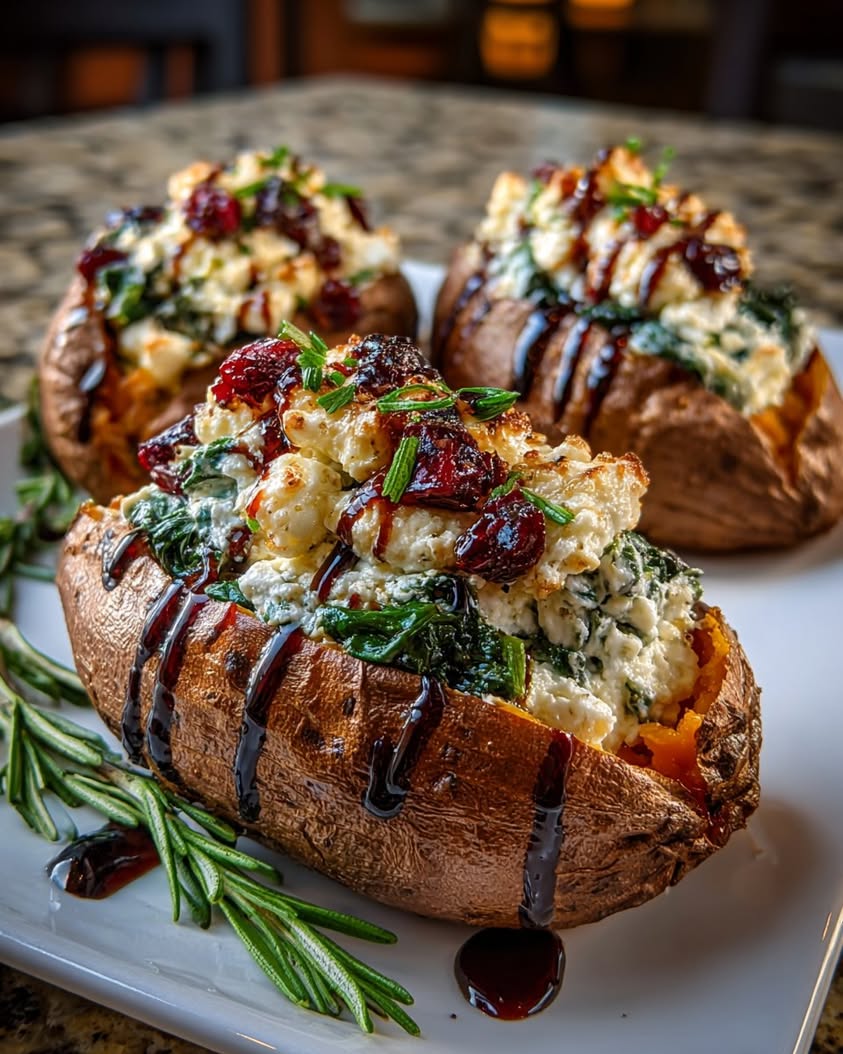
Creamy Ricotta & Spinach Stuffed Sweet Potatoes with Balsamic Cranberry Glaze: A Festive Vegetarian Feast
Imagine a dish that perfectly captures the cozy, festive spirit of the holiday season while remaining a healthy, satisfying meal. These Creamy Ricotta Stuffed Sweet Potatoes with Balsamic Cranberry Glaze do exactly that. They transform humble sweet potatoes into a stunning centerpiece worthy of any dinner table. The natural sweetness of the roasted potato perfectly balances the savory, herbed ricotta and spinach filling. Ultimately, a tangy-sweet balsamic cranberry glaze cascades over the top, tying every flavor together in a beautiful, gourmet package.
This recipe is a true celebration of texture and taste. You get the fluffy, tender flesh of a perfectly baked sweet potato. Then, you encounter the rich, creamy ricotta filling speckled with vibrant green spinach and aromatic garlic. Finally, the glossy, jewel-toned glaze adds a pop of bright acidity and fruity depth. It is a vegetarian main course that feels indulgent and special. Moreover, it is surprisingly simple to prepare, making it ideal for both weeknight dinners and holiday entertaining.
The beauty of these Creamy Ricotta Stuffed Sweet Potatoes lies in their versatility. They are a complete meal in themselves, packed with protein, fiber, and vitamins. Alternatively, they can serve as an impressive side dish alongside a roast or other protein. The combination of sweet, savory, creamy, and tangy elements is universally appealing. Consequently, this dish is sure to become a new seasonal favorite in your recipe rotation.
Quick Recipe Highlights
- Flavor Profile: This dish masterfully combines sweet, savory, and tangy notes. The natural sweetness of the roasted potato meets the creamy, garlicky ricotta filling. Meanwhile, the balsamic cranberry glaze introduces a sophisticated tartness that cuts through the richness.
- Texture: Experience a delightful contrast of textures. The sweet potato skin becomes slightly crisp, while the interior is fluffy and soft. The ricotta filling is luxuriously smooth and creamy, and the glaze adds a sticky, glossy finish that clings beautifully to every bite.
- Aroma: As these bake, your kitchen will fill with the warm, caramelized scent of roasting sweet potatoes and toasted garlic. The fresh thyme and rosemary in the filling release their earthy, aromatic oils. Finally, the simmering glaze fills the air with the sweet-tart fragrance of cranberries and balsamic vinegar.
- Visual Appeal: This dish is a feast for the eyes. The vibrant orange potato halves are piled high with white and green filling. The deep red, shiny glaze drapes over everything, creating a stunning color contrast. Garnished with fresh herbs and chopped nuts, it looks restaurant-worthy.
- Skill Level Needed: This is an accessible recipe for cooks of all levels. The techniques involved—baking, mixing, and reducing a sauce—are fundamental. Therefore, even a beginner can achieve fantastic results by following the clear, step-by-step instructions.
- Special Equipment: You only need basic kitchen tools. A baking sheet, a medium bowl, and a small saucepan are essential. A fork for fluffing the potatoes and a spoon for mixing the filling are all the other tools required. No fancy gadgets are necessary.
Recipe Overview
- Difficulty Level: We rate this recipe as “Easy.” The steps are straightforward and sequential. Most of the hands-on time is simple prep work like washing spinach and mincing garlic. The oven does the majority of the work roasting the potatoes. Consequently, you can prepare the filling and glaze while the potatoes bake, making efficient use of your time.
- Category: This dish is wonderfully versatile. It stands proudly as a hearty vegetarian main course, providing ample protein and satisfaction. Alternatively, it can be served as a substantial side dish. It fits beautifully into holiday menus, weeknight dinners, and even meal-prep lunches.
- Cuisine: This recipe draws inspiration from modern American and Mediterranean culinary traditions. The use of ricotta and herbs like thyme is classically Mediterranean. Meanwhile, the sweet potato and cranberry combination is a beloved staple of American fall and winter cuisine. The result is a delicious fusion that feels both familiar and new.
- Cost: This is a very cost-effective meal. Sweet potatoes and fresh spinach are typically inexpensive, especially in season. Ricotta cheese is an affordable dairy option. The glaze ingredients—cranberries, balsamic, and maple syrup—are pantry staples for many. Overall, you can create an impressive gourmet meal for a family without straining your grocery budget.
- Season: This recipe shines brightest in the autumn and winter months. Sweet potatoes and cranberries are at their peak flavor and availability during this time. The warm, hearty nature of the dish is perfect for cooler weather. However, it can certainly be enjoyed year-round with frozen cranberries.
- Occasion: These stuffed sweet potatoes are perfect for numerous occasions. They make an elegant yet easy main for Thanksgiving or Christmas, especially for vegetarian guests. They are also ideal for a cozy date night at home or a festive potluck contribution. Furthermore, they are substantial enough for a satisfying family dinner any night of the week.
Why You’ll Love This Recipe
First and foremost, the taste and texture combination is absolutely irresistible. Each component brings something unique to the table. The sweet potato base is comforting and familiar. The creamy ricotta and spinach filling is rich and savory, with pops of garlic and herb flavor. However, the real showstopper is the balsamic cranberry glaze. It adds a complex, grown-up sweetness that elevates the entire dish from simple to spectacular. Every forkful delivers a perfect harmony of sweet, creamy, and tangy flavors that will have everyone asking for seconds.
From a practical standpoint, this recipe offers tremendous convenience. The preparation is simple and mostly hands-off. While the sweet potatoes roast in the oven, you have ample time to whip up the filling and simmer the glaze. This efficient workflow means you are not stuck at the stove for hours. Additionally, the ingredients are easy to find at any standard grocery store. You likely have many of them in your pantry already. Therefore, you can decide to make this impressive meal without a special shopping trip.
Nutritionally, this dish is a powerhouse. Sweet potatoes are loaded with beta-carotene, fiber, and vitamins. Spinach adds iron, folate, and more vitamins. Ricotta provides a good source of protein and calcium. Using maple syrup instead of refined sugar in the glaze offers a more natural sweetness. Together, they create a meal that is as nourishing as it is delicious. You can feel good about serving this to your family, knowing they are getting a balanced, nutrient-dense dinner.
For entertaining, these stuffed sweet potatoes are a true winner. They look incredibly impressive on the plate, giving the appearance of a chef-crafted dish. They are also easy to scale up for a crowd. You can prepare the components ahead of time and simply assemble and reheat before serving. This makes hosting much less stressful. Moreover, because it is a vegetarian centerpiece, it simplifies menu planning for mixed-diet gatherings. It is a dish that will impress both vegetarians and meat-eaters alike with its depth of flavor and satisfying nature.
Finally, this recipe is wonderfully cost-effective and accessible. It transforms affordable, humble ingredients into something that feels luxurious and special. You do not need any expensive cuts of meat or rare cheeses. The technique is simple enough for a novice cook to master. Consequently, it proves that you do not need a big budget or professional skills to create a memorable, restaurant-quality meal at home. It is the kind of recipe that builds confidence in the kitchen and brings joy to the table.
Historical Background and Cultural Significance
The concept of stuffing vegetables is an ancient culinary practice found across many cultures. It was a practical method to extend precious fillings like grains, meats, and cheeses. In the Americas, indigenous peoples have been cultivating and cooking sweet potatoes for thousands of years. European settlers adopted the tuber, but often prepared it in simpler ways, like baking or boiling. The idea of stuffing a sweet potato with a creamy, cheesy filling is a relatively modern fusion. It represents the contemporary trend of elevating whole, plant-based ingredients into centerpiece dishes.
Cranberries hold a significant place in North American food history, particularly in the United States and Canada. Native American tribes used them for food, dye, and medicine long before European arrival. They were a vital source of vitamin C. The tart berry naturally pairs with sweet potatoes, as both are native to the continent and harvested in the fall. This pairing is now iconic in Thanksgiving meals, symbolizing the bounty of the autumn harvest. Incorporating them into a glaze for a stuffed vegetable is a creative, modern twist on that traditional flavor combination.
Ricotta cheese, on the other hand, has its roots in Italy. The name literally means “recooked,” referring to the process of using the whey leftover from making other cheeses. It was a resourceful way to prevent waste, creating a mild, creamy cheese perfect for fillings and spreads. Italian immigrants brought ricotta to America, where it became a staple in dishes like lasagna and cannoli. Its use here as the primary protein in a stuffed vegetable is a testament to its versatility. It bridges the gap between Old World tradition and New World ingredients beautifully.
The evolution of this specific recipe reflects broader food trends. There is a growing desire for vegetarian meals that are hearty and visually stunning. The balsamic glaze technique is a hallmark of modern restaurant plating, adding a touch of gourmet elegance. Therefore, Creamy Ricotta Stuffed Sweet Potatoes with Balsamic Cranberry Glaze is more than just a recipe. It is a culinary snapshot of our time—a blend of historical ingredients, cultural techniques, and contemporary presentation that results in a uniquely delicious dish.
Ingredient Deep Dive
Let us start with the star: sweet potatoes. Botanically distinct from yams, sweet potatoes are native to Central and South America. They were a staple crop for indigenous peoples for centuries. Columbus brought them to Europe, and they eventually spread worldwide. Nutritionally, they are superstar vegetables. They are incredibly rich in beta-carotene, which your body converts to vitamin A. They also provide a good amount of vitamin C, potassium, and fiber. When selecting sweet potatoes, look for firm ones with smooth, unblemished skin. Avoid any with soft spots or signs of sprouting. Store them in a cool, dark, well-ventilated place—not in the refrigerator, as cold temperatures can alter their texture and flavor.
Whole milk ricotta cheese is the heart of the creamy filling. As mentioned, it is an Italian cheese made from whey. The whole milk variety has a richer flavor and creamier texture than part-skim versions, which is crucial for a luxurious filling. It is a good source of protein and calcium. For the best results, look for fresh ricotta in the dairy section, often sold in tubs. If possible, avoid the shelf-stable cans, as the texture can be grainy. If you cannot find whole milk ricotta, a good-quality full-fat cottage cheese pulsed in a food processor until smooth can work in a pinch. Store ricotta in its original container in the refrigerator and use it by the date on the package.
Fresh cranberries bring the essential tart, fruity note to the glaze. These native North American berries are typically harvested in the fall. They are packed with antioxidants and vitamin C. When buying fresh cranberries, look for plump, shiny, deep red berries. They should be firm to the touch. Avoid any that are shriveled, soft, or discolored. Fresh cranberries freeze beautifully; simply pour the bag into a freezer-safe container. You can use them directly from frozen for the glaze, though you may need to add a minute or two to the simmering time. If fresh are unavailable, frozen cranberries are a perfect substitute. Do not use dried cranberries, as they will not break down into a proper glaze.
Balsamic vinegar is the other key component of the glaze. True traditional balsamic vinegar, Aceto Balsamico Tradizionale, is aged for years and comes from Modena, Italy. For cooking, a good-quality, moderately priced balsamic vinegar is perfect. It should have a balanced sweet-tart flavor. The vinegar reduces with the cranberries and maple syrup, thickening and concentrating its flavor to create a glossy, complex sauce. A cheap, overly acidic balsamic will not yield the same depth. If you do not have balsamic, a combination of red wine vinegar and a teaspoon of sugar can be a last-resort substitute, though the flavor profile will be different. Store balsamic vinegar in a cool, dark cupboard.
Common Mistakes to Avoid
- Undercooking the Sweet Potatoes: The most common error is not baking the potatoes long enough. They should be extremely tender all the way to the center when pierced with a fork. An undercooked potato will be difficult to fluff and fill, and the texture will be unpleasantly firm. Always test for doneness before removing them from the oven.
- Overfilling the Potato Skins: It is tempting to pile the filling high, but overstuffing can lead to a messy presentation and uneven heating. The filling may spill over the sides and burn on the baking sheet. Aim for a generous but contained mound that sits nicely within the cavity of the potato half.
- Not Fluffing the Potato Flesh: Before adding the ricotta mixture, use a fork to gently fluff the sweet potato flesh. This step creates little crevices for the filling to nestle into, ensuring each bite has a perfect mix of potato and ricotta. Skipping this results in a layered, less integrated texture.
- Using Watery Ricotta: If your ricotta is very wet, it can make the filling runny. To prevent this, you can drain it in a fine-mesh strainer for 15-20 minutes before mixing. Alternatively, blot the thawed and squeezed spinach very thoroughly with paper towels to remove excess moisture.
- Overcooking the Glaze: The balsamic cranberry glaze should thicken to a syrupy consistency that coats the back of a spoon. If you reduce it for too long, it can become too thick and sticky, almost like candy. It will harden as it cools. Remove it from the heat when it is slightly thinner than you think, as it will continue to thicken off the heat.
- Adding Salt to the Filling Too Early: If you are using pre-salted nuts (like pecans) as a garnish, be cautious when seasoning the ricotta filling. Taste it after mixing, before adding any additional salt. The cheese and other components may provide enough seasoning on their own.
- Skipping the Fresh Herbs: While dried thyme and rosemary can be used in a pinch, fresh herbs make a significant difference in the brightness and aroma of the filling. Their flavor is more vibrant and less dusty than dried. The small investment in a fresh herb bundle is worth it for this recipe.
- Not Letting the Potatoes Cool Slightly: Handling the sweet potatoes straight out of the oven is a sure way to burn your fingers. Let them cool for 5-10 minutes until they are manageable to touch. This also allows the flesh to set slightly, making it easier to fluff without completely mashing it.
Essential Techniques
Perfectly Roasting Sweet Potatoes is the foundational technique. Pricking the skin with a fork before baking is non-negotiable. This allows steam to escape, preventing the potatoes from bursting in your oven. Placing them directly on the oven rack promotes even heat circulation, leading to a more evenly cooked interior and a slightly crisp skin. However, placing a baking sheet on the rack below catches any drips. The visual cue for doneness is a skin that appears puffed and slightly caramelized in spots, and a fork should slide into the center with absolutely no resistance.
Creating a Thick, Flavorful Glaze requires patience and attention. The process of reduction is key. As the cranberries, balsamic vinegar, and maple syrup simmer, water evaporates. This concentrates the flavors and allows the natural pectin in the cranberries to thicken the mixture. You must stir frequently, especially towards the end, to prevent scorching. The success cue is when the glaze coats the back of a spoon and leaves a clear path when you run your finger through it. It should be syrupy, not watery, and will continue to thicken as it cools.
Preparing the Spinach correctly ensures your filling is not watery. If using frozen spinach, it must be thoroughly thawed and then squeezed of all excess liquid. The best method is to place it in a clean kitchen towel or several layers of paper towels and wring it out firmly. For fresh spinach, wilting it in a pan with the garlic is perfect, but you must also let it cool and press out any accumulated liquid. This step is crucial; excess moisture will dilute the creamy ricotta and can make the filling separate or become soggy during the final bake.
Pro Tips for Perfect Creamy Ricotta Stuffed Sweet Potatoes
Choose sweet potatoes that are similar in size and shape. This ensures they all finish roasting at the same time. Oval, medium-sized potatoes are ideal for creating stable halves that hold filling well.
For an extra flavor boost, rub the sweet potato skins with a tiny amount of olive oil and sprinkle with coarse salt before baking. This enhances the edible skin and adds another layer of seasoning.
Toast the pecans or walnuts for the garnish in a dry skillet for a few minutes. This simple step unlocks their natural oils and intensifies their nutty flavor, adding a wonderful crunch to the finished dish.
Let the balsamic cranberry glaze cool for a few minutes before drizzling. A slightly cooled glaze is thicker and will cling to the potatoes in beautiful ribbons rather than running off immediately.
If your ricotta filling seems a bit loose, you can stir in a tablespoon of grated Parmesan cheese or breadcrumbs. This will help absorb any excess moisture and bind the mixture slightly.
For a beautiful presentation, transfer the stuffed potatoes to a clean serving platter before adding the glaze and garnishes. This avoids any messy drips or baked-on bits from the baking sheet.
If preparing for a crowd, you can roast the sweet potatoes and make the filling and glaze up to a day ahead. Store separately in the fridge, then assemble and reheat just before serving.
Use a piping bag or a zip-top bag with the corner snipped off to fill the sweet potatoes. This gives you more control for a neat, restaurant-style presentation.
Variations and Adaptations
For regional variations, consider incorporating different cultural flavors. A Mediterranean twist could include adding sun-dried tomatoes, kalamata olives, and feta cheese to the ricotta filling. A Southwestern version might feature black beans, corn, cumin, and a chipotle-lime crema instead of the cranberry glaze. An Italian-inspired take could use marinara sauce and melted mozzarella on top.
Seasonal adaptations are easy. In spring, try a filling with ricotta, peas, lemon zest, and fresh mint, topped with a lemony herb oil. For summer, a filling with corn, basil, and cherry tomatoes would be lovely. If cranberries are out of season, the glaze can be made with other fruits like pomegranate juice, cherries, or even a fig jam thinned with balsamic vinegar.
Dietary modifications are straightforward. For a vegan version, use a high-quality plant-based ricotta and omit the Parmesan. Substitute the maple syrup with agave nectar. For a gluten-free diet, this recipe is naturally compliant as written. To make it nut-free, simply omit the pecan garnish or substitute with toasted pumpkin seeds (pepitas).
Flavor variations can personalize the dish. Add a pinch of red pepper flakes or a dash of smoked paprika to the ricotta for a spicy kick. Stir in some crumbled cooked sausage or bacon for a meatier version. For an earthy note, add sautéed mushrooms to the spinach mixture.
Texture modifications can cater to different preferences. For more crunch, add finely diced celery or water chestnuts to the filling. For a smoother, more uniform filling, blend the ricotta mixture in a food processor before stuffing. To make the potatoes even creamier, mix a tablespoon of cream cheese into the ricotta.
Presentation alternatives offer creative freedom. Instead of stuffing large halves, use smaller sweet potatoes and serve them as appetizer bites. You can also completely scoop out the flesh, mix it with the ricotta filling, and then pile it back into the skins for a more homogenous texture. For individual servings, use ramekins and layer mashed sweet potato, then the filling, then more potato, and bake until heated through.
Serving and Presentation Guide
Plating is key to making this dish look its best. Place each stuffed sweet potato half on an individual plate or arrange them on a large serving platter. Use a spoon to create a slight well in the center of the ricotta filling; this acts as a reservoir for the beautiful balsamic cranberry glaze. Drizzle the glaze generously over each potato, allowing it to cascade down the sides. For a professional touch, you can use a squeeze bottle to create precise zig-zags or dots of glaze.
Garnishing adds the final touch of color and texture. A sprinkle of freshly chopped herbs like parsley, thyme, or chives provides a vibrant green contrast. The toasted chopped pecans add a necessary crunch and earthy flavor. A few whole fresh cranberries or a twist of orange zest on the plate can elevate the presentation even further for a special occasion.
Traditional accompaniments might include a simple green salad with a light vinaigrette to balance the richness. Roasted Brussels sprouts or green beans would also complement the flavors beautifully. For a heartier meal, consider serving with a warm, crusty loaf of bread to soak up any extra glaze.
Modern serving suggestions could involve deconstructing the dish. Serve the components in separate bowls for a interactive “stuffed potato bar” at a party. Alternatively, slice the stuffed potatoes into rounds after baking for a unique finger-food appetizer. You could also serve them alongside a grain like farro or quinoa for added substance.
Temperature considerations are important. These are best served warm, straight from the oven after the final bake. The glaze should be warm or at room temperature when drizzled. If the glaze has thickened too much upon standing, you can gently reheat it with a teaspoon of water to bring it back to a drizzling consistency.
Portion control is simple with this recipe. One medium sweet potato half is a very satisfying main course serving. For a larger appetite or as a side dish, you can certainly serve a whole potato (two halves) per person. If serving as part of a larger holiday spread with many other rich dishes, one half per person as a side is likely sufficient.
Wine and Beverage Pairing
Selecting the right wine can enhance this meal wonderfully. A crisp, acidic white wine like a Sauvignon Blanc or Pinot Grigio cuts through the richness of the ricotta beautifully. The citrus notes in these wines also complement the cranberry glaze. For red wine lovers, a lighter-bodied red with low tannins is best. A Pinot Noir or a Beaujolais has enough acidity and fruity notes (often cherry or raspberry) to pair harmoniously with the sweet and savory elements without overpowering the dish.
Non-alcoholic alternatives are just as important. A sparkling apple cider provides festive bubbles and a touch of sweetness that mirrors the sweet potatoes. For a more sophisticated option, a cranberry spritzer made with unsweetened cranberry juice, club soda, and a squeeze of lime is a perfect thematic match. Herbal teas, especially ones with notes of orange, cinnamon, or hibiscus, can be a lovely warm pairing that echoes the fall flavors in the meal.
If considering coffee or tea after the meal, opt for choices that complement the dessert-like quality of the glaze. A medium-roast coffee with low acidity would be pleasant. For tea, a black tea like Earl Grey (with its citrusy bergamot) or a spiced chai would be delightful. The key is to avoid overly bitter or robust beverages that might clash with the sweet and tangy notes you just enjoyed.
Temperature considerations for beverages are standard. White wines and spritzers should be served well-chilled. Red wines should be served slightly below room temperature, around 60-65°F. Non-alcoholic sparkling drinks are best ice-cold. Coffee and tea, of course, should be served hot unless iced versions are preferred.
Serving suggestions include offering a variety of options if you are hosting. Having both a white and a red wine available caters to different preferences. Always provide a thoughtful non-alcoholic option that feels just as special as the alcoholic ones. Present drinks in appropriate glassware to elevate the entire dining experience.
Storage and Shelf Life
Proper storage is essential for maintaining quality and safety. Store any leftover stuffed sweet potatoes in an airtight container in the refrigerator. They will keep for up to 3-4 days. It is best to store the components separately if possible: the stuffed potatoes in one container and the remaining glaze in another. This prevents the potatoes from becoming soggy. The glaze will thicken considerably when chilled.
Temperature requirements are straightforward: always refrigerate leftovers within two hours of cooking. The “danger zone” for bacterial growth is between 40°F and 140°F, so prompt cooling is important. When reheating, ensure the internal temperature reaches 165°F to guarantee food safety.
Container recommendations include glass meal-prep containers with tight-fitting lids. These are ideal for both refrigeration and reheating. For the glaze, a small glass jar or container with a lid works perfectly. Avoid storing in metal containers, as the acidity from the balsamic glaze can react with the metal over time.
Signs of spoilage to watch for include an off or sour smell, visible mold (often fuzzy spots in white, green, or blue), or a slimy texture on the surface of the potato or filling. If you observe any of these signs, discard the food immediately. When in doubt, it is always safer to throw it out.
Reheating instructions are simple. The best method is to reheat in the oven at 350°F until warmed through, about 15-20 minutes. This helps restore some texture to the potato skin. You can also microwave individual portions for 1-2 minutes, though the skin may become soft. Reheat the glaze separately in the microwave for 15-20 seconds, stirring until fluid again, then drizzle over the reheated potatoes.
Freezing guidelines are not generally recommended for the fully assembled dish. The texture of the ricotta and the sweet potato can become watery and grainy upon thawing. However, you can freeze the roasted sweet potato halves (without filling) and the balsamic cranberry glaze separately for up to 3 months. Thaw in the refrigerator before assembling with fresh ricotta filling.
Make Ahead Strategies
A smart prep timeline can make hosting a breeze. You can roast the sweet potatoes up to two days in advance. Let them cool completely, then wrap them tightly in plastic wrap and refrigerate. The balsamic cranberry glaze can be made up to 5 days ahead and stored in a jar in the fridge. The ricotta filling can be prepared 1 day ahead. Store it in a separate airtight container. This leaves only assembly and a quick reheat for the day of your meal.
Storage between steps is simple with proper planning. Keep the cooled roasted potatoes, the prepared filling, and the glaze in separate, labeled containers in the refrigerator. This modular approach gives you maximum flexibility and prevents any component from affecting the texture of another prematurely.
Assessing the quality impact of make-ahead steps is important. The roasted potatoes may soften slightly in the fridge but will reheat well. The glaze will thicken significantly when cold but reheats to a perfect consistency. The ricotta filling may release a tiny bit of moisture; just give it a good stir before using. None of these changes negatively impact the final dish in a significant way.
Assembly tips for pre-prepped components are easy. Take the chilled potato halves and warm them in a 350°F oven for about 10 minutes to take the chill off. This makes them easier to handle. Then, fluff the flesh, fill with the cold ricotta mixture, and return to the oven for the final 10-15 minute bake until everything is heated through.
Reheating guidelines ensure everything comes together perfectly. Always reheat the assembled potatoes in the oven, not the microwave, for the best texture. The gentle, dry heat of the oven will re-crisp the skin slightly and warm the filling evenly without making it rubbery. Reheat the glaze gently on the stovetop or in the microwave, adding a teaspoon of water if needed to thin it.
Fresh element additions are the final touch. Even if you make everything else ahead, add any fresh herb garnishes and the toasted nuts right before serving. This ensures they retain their vibrant color, aroma, and crunch, providing a perfect contrast to the warm, creamy components.
Scaling Instructions
Halving the recipe is simple for smaller households. Use two medium sweet potatoes (yielding four halves). Halve all other ingredient quantities precisely. The bake times will remain the same, as you are still roasting whole potatoes. Keep an eye on the glaze, as a smaller quantity in the same saucepan may reduce more quickly.
Doubling or tripling the recipe for a crowd is very manageable. The key is to use multiple baking sheets for the potatoes, ensuring they are not crowded. You may need to rotate the sheets halfway through baking for even cooking. For the filling and glaze, use a larger saucepan for the glaze and a big mixing bowl for the ricotta. Taste the filling after mixing a large batch to ensure seasoning is consistent throughout.
Equipment adjustments may be necessary when scaling up. You will need a larger mixing bowl for the filling. A wider, heavy-bottomed pot is better for making a large batch of glaze, as it provides more surface area for evaporation. If roasting many potatoes, consider convection bake mode if your oven has it, as it promotes better air circulation.
Timing modifications are minimal when scaling. The sweet potato roasting time is dependent on their individual size, not how many are in the oven. However, a very full oven may take slightly longer to come to temperature. The glaze will take a few minutes longer to reduce when making a larger volume. Always rely on visual cues (tenderness, glaze thickness) rather than strict timers.
Storage considerations become more important for large batches. You will need ample refrigerator space for prepped components or leftovers. Consider using disposable aluminum pans for both roasting and storing if you are preparing for a big event. Label everything clearly if making multiple batches for future meals.
Nutritional Deep Dive
This dish offers a favorable macro breakdown. One serving provides a good balance of complex carbohydrates from the sweet potato, healthy fats from the ricotta and nuts, and a moderate amount of protein from the cheese. The maple syrup and cranberries contribute natural sugars, but the fiber from the potatoes and spinach helps moderate the blood sugar response. It is a satisfying meal that provides sustained energy.
The micronutrient analysis is impressive. Sweet potatoes are famously rich in beta-carotene (vitamin A), crucial for vision and immune health. Spinach contributes iron, vitamin K, and folate. Ricotta provides calcium and phosphorus for bone health. Cranberries are packed with vitamin C and unique antioxidants called proanthocyanidins, which are beneficial for urinary tract health. The garlic and herbs offer various phytonutrients with anti-inflammatory properties.
Overall health benefits are significant. This meal supports eye health, immune function, and digestive health due to its high fiber and vitamin content. The combination of protein, fat, and fiber promotes satiety, which can aid in weight management. The antioxidants from the colorful vegetables and berries help combat oxidative stress in the body.
Dietary considerations are mostly positive. This recipe is naturally vegetarian and can be adapted to be gluten-free and nut-free with simple modifications. It is not suitable for a strict vegan or dairy-free diet without substitutions. For those watching sodium, you can control the amount of added salt in the filling. For diabetics, the carbohydrate content is substantial but comes with significant fiber, which is beneficial.
Portion analysis shows that one stuffed potato half is a substantial and nutritionally complete main course. It is typically around 400-500 calories, depending on the exact size of the potato and amount of glaze used. This makes it a reasonable calorie choice for a main meal, especially when paired with a light side salad.
Weight management tips include being mindful of the amount of glaze drizzled, as it contains concentrated sugars. You can reduce the maple syrup in the glaze by a tablespoon if desired. Using part-skim ricotta can slightly reduce the fat content, though whole milk provides more satiety. The high fiber content is your ally, helping you feel full and satisfied on a reasonable portion.
Dietary Adaptations
For a gluten-free diet, this recipe is naturally compliant as written. Simply ensure that all packaged ingredients, like balsamic vinegar, are certified gluten-free, as some may use wheat-based caramel coloring or be processed in facilities with gluten.
Creating a dairy-free version requires substitutions for the ricotta and Parmesan. Use a high-quality, firm plant-based ricotta alternative made from almonds, cashews, or tofu. Nutritional yeast can replace the Parmesan for a cheesy, umami flavor. Be sure to check the labels of vegan cheeses for binders if you have other allergies.
A vegan adaptation builds on the dairy-free changes. Use plant-based ricotta and Parmesan substitutes. For the glaze, ensure the maple syrup is vegan (it almost always is). The only other consideration is the optional honey in some variations; always use maple syrup or agave instead. Garnish with vegan-friendly nuts or seeds.
For a low-carb or keto diet, this recipe in its standard form is not suitable due to the high carbohydrate content of sweet potatoes and cranberries. A adaptation would involve using roasted cauliflower steaks as the base and making a berry glaze with low-sugar berries like blackberries and a sugar-free sweetener like erythritol or allulose.
A Paleo adaptation would omit the dairy. Use a dairy-free ricotta alternative made from nuts (like cashews){“success”:true,”message”:”Recipe created successfully”,”post_id”:7875,”tasty_recipe_id”:7875,”shortcode”:” Print
Creamy Ricotta & Spinach Stuffed Sweet Potatoes with Balsamic Cranberry Glaze
Description
A wholesome and flavorful vegetarian dish featuring roasted sweet potatoes stuffed with a creamy ricotta and spinach filling, topped with a tangy-sweet balsamic cranberry glaze.
Ingredients
For the Crust:
- 4 medium sweet potatoes
- 1 tablespoon olive oil
- 1 cup fresh spinach, chopped
- 1 cup ricotta cheese
- 1/4 cup grated Parmesan cheese
- 1 clove garlic, minced
- 1/2 teaspoon dried thyme
- Salt and black pepper to taste
- 1/2 cup fresh or frozen cranberries
- 1/4 cup balsamic vinegar
- 2 tablespoons honey
- 1 tablespoon water
Instructions
1. Prepare the Crust:
- Preheat oven to 400°F (200°C). Scrub sweet potatoes, pierce with a fork, rub with olive oil, and place on a baking sheet. Roast for 45-50 minutes until tender.
- While potatoes roast, prepare the glaze: In a small saucepan, combine cranberries, balsamic vinegar, honey, and water. Simmer over medium heat for 10-12 minutes until cranberries burst and sauce thickens. Set aside.
- In a mixing bowl, combine ricotta, Parmesan, chopped spinach, minced garlic, thyme, salt, and pepper. Mix until well blended.
- Once sweet potatoes are cooked, let cool slightly, then slice each lengthwise and fluff the insides with a fork. Spoon the ricotta-spinach mixture into each potato.
- Return stuffed potatoes to the oven for 5-7 minutes until filling is warmed through. Drizzle with balsamic cranberry glaze before serving.
Notes
You can customize the seasonings to taste.

I’m Billy, a classically trained culinary school graduate from The Culinary Institute of America with over 12 years in the restaurant industry and over 19 years of cooking experience.