
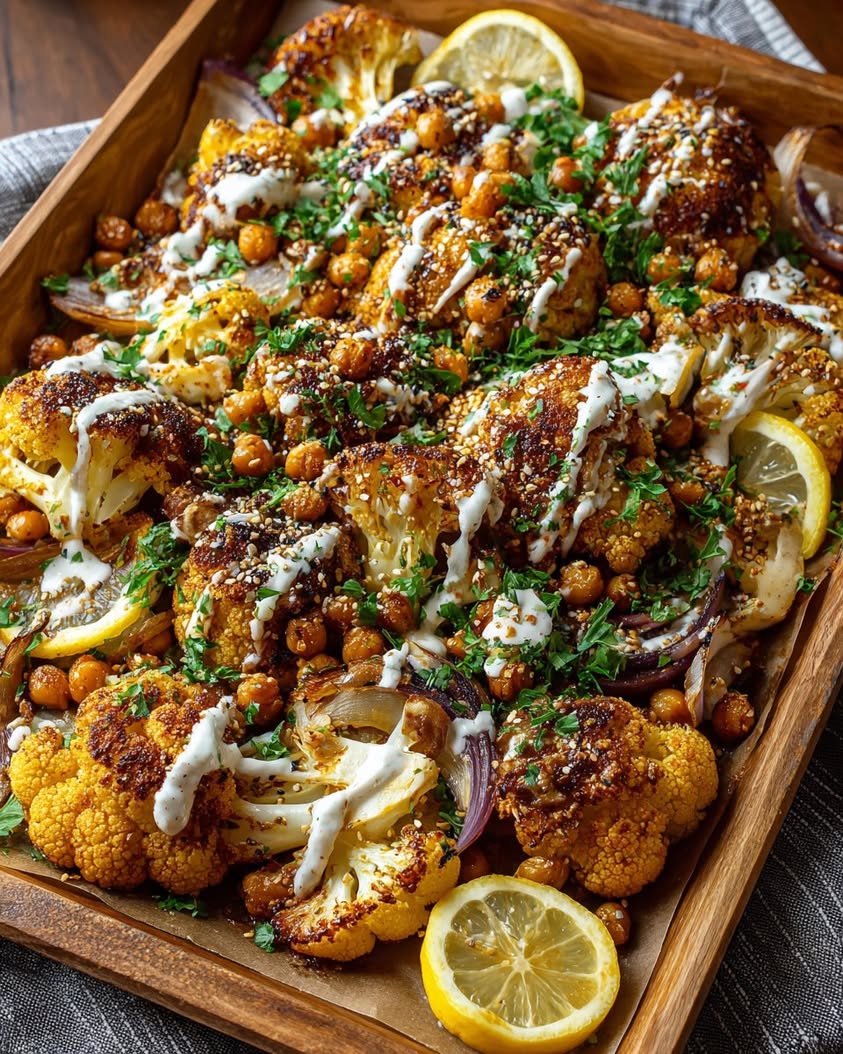
Crispy Chickpea & Cauliflower Sheet Pan with Tahini-Honey Drizzle: Your New Favorite Weeknight Wonder
Imagine a dinner that fills your kitchen with the warm, toasty aroma of roasting spices and requires just one pan to clean. This Crispy Chickpea & Cauliflower Sheet Pan with Tahini-Honey Drizzle delivers exactly that. It is a symphony of textures and flavors that transforms humble vegetables into a crave-worthy main dish. The chickpeas become impossibly crunchy, the cauliflower florets caramelize at the edges, and a simple, luscious drizzle ties everything together with creamy, tangy, and subtly sweet notes.
Moreover, this recipe is a testament to the magic of high-heat roasting. Consequently, it coaxes out deep, nutty flavors you simply cannot achieve through other cooking methods. The result is a vibrant, satisfying meal that feels indulgent yet remains incredibly wholesome. Whether you are a busy parent, a solo cook, or someone simply craving a delicious meatless Monday option, this sheet pan dinner is your answer. It is a reliable path to a fantastic dinner with minimal effort and maximum reward.
Furthermore, the beauty of this Crispy Chickpea & Cauliflower Sheet Pan lies in its versatility. You can serve it over a bed of fluffy quinoa, stuff it into a warm pita, or enjoy it straight from the pan. The tahini-honey drizzle adds a luxurious finish that elevates the entire dish from simple roasted veggies to a restaurant-quality experience. Ultimately, it is a recipe you will return to again and again, especially on those nights when time is short but your standards for flavor are high.
Quick Recipe Highlights
- Flavor Profile: This dish boasts a complex flavor profile featuring smoky paprika, earthy cumin, and savory garlic powder. The tahini-honey drizzle introduces a delightful contrast with its creamy nuttiness and a hint of floral sweetness, perfectly balancing the savory spices.
- Texture: Expect a fantastic textural play. The chickpeas roast to a satisfying, crispy-crunchy exterior with a soft interior, while the cauliflower achieves tender-crisp bites with beautifully caramelized, slightly charred edges. The smooth, velvety drizzle adds a luxurious, creamy component.
- Aroma: As it roasts, your kitchen will fill with an irresistible fragrance. Key aromatic notes include the warm, toasty scent of roasting chickpeas, the sweet nuttiness of caramelizing cauliflower, and the earthy, smoky perfume of paprika and cumin blooming in the oven’s heat.
- Visual Appeal: This dish is a feast for the eyes. The golden-brown chickpeas and deeply caramelized cauliflower florets create a rustic, inviting canvas. The creamy white tahini drizzle artfully zigzagged over top adds elegant contrast, while a final sprinkle of fresh herbs provides a vibrant pop of green.
- Skill Level Needed: This recipe is perfect for beginners. It requires no advanced techniques—just simple chopping, mixing, and roasting. The process is forgiving, making it an excellent confidence-builder for new cooks looking to create impressive, flavorful meals.
- Special Equipment: You truly only need one essential tool: a large, rimmed sheet pan. Using parchment paper or a silicone baking mat is highly recommended for easy cleanup and to prevent sticking. A good chef’s knife for cutting the cauliflower and a few mixing bowls complete the setup.
Recipe Overview
- Difficulty Level: We rate this recipe as “Easy” for several compelling reasons. First, the ingredient list is short and composed of pantry staples. Second, the technique involves straightforward mixing and roasting without any fussy steps. Finally, the margin for error is wide; slight variations in roasting time still yield delicious results. It is an accessible recipe that guarantees success.
- Category: This versatile dish fits multiple meal categories beautifully. It shines as a hearty vegetarian main course, a substantial side dish alongside grilled proteins, or a fantastic component for meal prep bowls. Its adaptability makes it a valuable addition to any weekly rotation, effortlessly fitting into lunch or dinner plans.
- Cuisine: While not strictly traditional to one region, this recipe draws inspiration from Eastern Mediterranean and Middle Eastern culinary traditions. The use of chickpeas, cumin, and tahini are hallmarks of these cuisines. This fusion approach creates a globally-inspired, flavor-packed dish that feels both familiar and excitingly new.
- Cost: This is an incredibly cost-effective meal. A head of cauliflower and a can of chickpeas form the affordable base. Spices, oil, and the drizzle ingredients are pantry items with a low cost per use. Overall, you can create this satisfying, restaurant-quality meal for a fraction of the price of takeout, making it budget-friendly.
- Season: This Crispy Chickpea & Cauliflower Sheet Pan is truly a year-round champion. In cooler months, its warm, roasted spices provide comforting nourishment. During summer, it is a perfect oven-friendly option that does not heat up the kitchen for too long, and it pairs wonderfully with fresh, seasonal salads. It is always in season.
- Occasion: This dish is suitable for countless occasions. It is a reliable weeknight family dinner, an impressive yet easy option for casual entertaining, and a standout potluck contribution. Additionally, it makes for excellent next-day leftovers, meaning you can cook once and enjoy it for multiple meals, simplifying your routine.
Why You’ll Love This Recipe
First and foremost, the taste and texture combination is utterly addictive. Each forkful delivers a symphony of sensations: the salty crunch of a chickpea, the sweet, tender bite of roasted cauliflower, and the rich, creamy tang of the drizzle. The spices meld together into a deeply savory, almost smoky flavor that is incredibly satisfying. This is not a bland vegetable dish; it is a flavor powerhouse that will have everyone asking for seconds. The contrast between the hot, crispy vegetables and the cool, smooth sauce creates a dining experience that feels thoughtfully composed and deeply delicious.
Convenience is another major winning point. The beauty of any sheet pan recipe, especially this Crispy Chickpea & Cauliflower Sheet Pan, is the streamlined cleanup. You mix your ingredients, spread them on a single pan, and let the oven do the work. There is no need to juggle multiple pots and pans on the stovetop. This one-pan approach means you spend less time washing dishes and more time relaxing. It is the ultimate solution for busy evenings when you want a wholesome, homemade meal without the associated kitchen chaos. Simply toss, roast, drizzle, and serve.
From a nutritional standpoint, this meal is a superstar. Chickpeas are an excellent source of plant-based protein and fiber, promoting fullness and stable energy. Cauliflower is low in calories but high in vitamins C and K, along with various antioxidants. Using olive oil provides heart-healthy fats. Together, they create a balanced, nutrient-dense plate. This recipe allows you to enjoy a deeply flavorful meal that also fuels your body well. It is a perfect example of how healthy eating can and should be delicious and indulgent-tasting.
This dish also holds tremendous social and entertaining value. Its vibrant, colorful presentation makes it look far more elaborate than it actually is. You can confidently serve it to guests, and it accommodates various dietary preferences with ease—it is naturally vegetarian and can be made vegan with one simple swap. Sharing a beautifully presented, flavor-packed meal like this creates a warm, welcoming atmosphere. It is a conversation starter that demonstrates care and culinary skill, even though the effort required was minimal.
Finally, the cost-effectiveness and accessibility of this Crispy Chickpea & Cauliflower Sheet Pan cannot be overstated. The core ingredients are inexpensive and widely available at any grocery store. You likely already have many of the spices and condiments in your pantry. This recipe demonstrates how to create a spectacular meal from simple, affordable components. It is a fantastic way to eat well on a budget, reducing reliance on expensive prepared foods or restaurant meals without sacrificing an ounce of satisfaction or flavor.
Historical Background and Cultural Significance
The story of this dish is a modern tale of global fusion, but its roots dig deep into ancient culinary traditions. Chickpeas, one of the primary stars, are among the earliest cultivated legumes, with origins tracing back over 7,000 years to the Middle East. Civilizations across the Mediterranean and Indian subcontinent have relied on them as a dietary staple for millennia. Similarly, cauliflower has a long history, believed to have been selectively bred from wild cabbage in the Mediterranean region. Roasting vegetables over fire is one of humanity’s oldest cooking methods. Consequently, this recipe connects us to these ancient, fundamental practices of combining readily available plants with heat to create sustenance and flavor.
Culturally, the ingredients speak to specific regions. Chickpeas are central to the cuisines of the Levant, North Africa, and South Asia, appearing in iconic dishes like hummus, falafel, and chana masala. Tahini, a paste made from sesame seeds, is a cornerstone of Eastern Mediterranean and Middle Eastern cooking. The technique of roasting spices to bloom their flavor is also prevalent in these culinary traditions. While combining them on a sheet pan is a contemporary, Western convenience-driven approach, the soul of the flavor profile honors these rich food cultures. It is a respectful homage that makes these traditional flavors accessible in a new format.
The evolution of this specific recipe is a direct product of modern home cooking trends. The rise of the “sheet pan dinner” concept over the last decade responded to a growing desire for healthy, simple, and quick meals with minimal cleanup. Food bloggers and home cooks began experimenting with global flavors in this convenient format. A Crispy Chickpea & Cauliflower Sheet Pan is a natural evolution: it takes the beloved, textural contrast of roasted chickpeas, pairs them with a versatile vegetable like cauliflower, and finishes with a signature sauce from another cuisine. This evolution represents how home cooking adapts and innovates, blending tradition with contemporary lifestyle needs.
Regional variations of this concept are endless, showcasing its adaptability. In the Eastern Mediterranean, one might find similar flavors in a roasted vegetable mezze platter served with tahini sauce. In parts of India, spiced roasted chickpeas (chana) are a common street food. The sheet pan method consolidates these ideas. Today, you might see variations using harissa paste for North African heat, za’atar for a herbal Levantine twist, or a curry powder blend for South Asian inspiration. The basic formula—protein-rich legume, hearty vegetable, robust spices, creamy sauce—provides a global canvas. This adaptability is a testament to the universal appeal of these simple, powerful ingredients and techniques.
Ingredient Deep Dive
Chickpeas (Garbanzo Beans): These humble legumes boast a history spanning millennia and continents. Cultivated since ancient times in the Middle East, they spread along trade routes to become staples in Mediterranean, Indian, and Latin American cuisines. Nutritionally, they are a powerhouse: rich in plant-based protein, dietary fiber, iron, and folate. For the best crispy result in your sheet pan dinner, always drain and rinse canned chickpeas thoroughly, then pat them completely dry with a clean kitchen towel. This removes the starchy aquafaba liquid that steams them instead of letting them roast and crisp. Store dried chickpeas in a pantry; keep cooked or canned chickpeas in the fridge for up to four days. For a substitution, try canned white beans or even crispy roasted lentils, though cooking times may vary slightly.
Cauliflower: A member of the brassica family, cauliflower’s history is one of careful cultivation from wild cabbage. It gained popularity in Europe before spreading worldwide. It is famously low in carbohydrates but high in vitamins C and K, choline, and antioxidants like sulforaphane. When selecting a head, look for tight, compact florets that are creamy white with no brown spots or yellowing. The leaves should be crisp and green. Store it whole in a perforated plastic bag in your refrigerator’s crisper drawer. While broccoli is the most common swap, romanesco cauliflower or even chopped Brussels sprouts would work beautifully, offering a similar density that stands up to high-heat roasting.
Tahini: This creamy sesame seed paste is a cornerstone of Middle Eastern cuisine, with references dating back to ancient Mesopotamia. It is made by grinding hulled sesame seeds into a smooth, oily paste. Tahini is an excellent source of healthy fats, calcium, phosphorus, and magnesium. When choosing tahini, opt for a brand with a smooth, pourable consistency and a nutty, not bitter, aroma. Stir it well before using, as the oil naturally separates. Store opened jars in the refrigerator to prevent rancidity. For a nut-free alternative in the drizzle, sunflower seed butter makes a good substitute, though the flavor profile will shift slightly.
Spices (Paprika, Cumin, Garlic Powder): This spice trio forms the flavor backbone. Paprika, made from dried peppers, originated in Central America but became central to Hungarian and Spanish cooking. Cumin seeds, with their earthy warmth, have been used since ancient Egyptian times. Garlic powder offers convenient, concentrated savoriness. Together, they provide antioxidants and anti-inflammatory compounds. For the best flavor, ensure your spices are fresh—they should smell potent, not dusty. Buy whole cumin seeds and toast and grind them yourself for maximum aroma. Store all spices in a cool, dark place away from heat and light. Smoked paprika can replace sweet paprika for a deeper flavor, while ground coriander could complement or partially replace cumin for a citrusy note.
Common Mistakes to Avoid
- Crowding the Pan: This is the number one enemy of crispiness. If the chickpeas and cauliflower are piled on top of each other, they will steam instead of roast. Always use a large enough sheet pan and spread the ingredients in a single, even layer. If necessary, use two pans to ensure proper air circulation around each piece.
- Not Drying the Chickpeas: Skipping the step of thoroughly patting the canned chickpeas dry is a critical error. Excess moisture creates steam, which prevents the chickpeas from achieving that desirable crunchy exterior. Take the extra minute to dry them well with a clean kitchen towel or paper towels for a major textural payoff.
- Using Old, Dull Spices: Spices lose their potency over time. Using paprika or cumin that has been sitting in your cabinet for years will result in a bland, dusty-tasting dish. Always smell your spices before using them. If the aroma is weak, it is time to replace them to ensure vibrant, flavorful results.
- Neglecting to Preheat the Oven: Starting with a cold oven drastically changes the cooking process. A properly preheated oven ensures immediate searing and caramelization. If you add the pan to a cold oven, the vegetables will start to stew and release moisture, leading to soggy, rather than crispy, results.
- Overmixing the Tahini Drizzle: When combining tahini with lemon juice and water, it can initially seize up and become thick and pasty. The mistake is stopping there. Simply continue whisking and slowly adding liquid; it will magically transform into a smooth, creamy, pourable sauce. Patience is key.
- Cutting the Cauliflower Florets Unevenly: If your cauliflower pieces are vastly different sizes, they will cook unevenly. Smaller pieces will burn before larger pieces are tender. Aim for uniformly sized florets, about 1 to 1.5 inches, to ensure everything finishes roasting at the same time for perfect texture.
- Forgetting to Season Generously: Vegetables need ample seasoning to shine. Do not be shy with the salt and pepper, both before roasting and as a final touch before serving. Seasoning in layers builds depth of flavor. Underseasoning is a common reason home-cooked vegetables taste bland compared to restaurant versions.
- Not Rotating the Pan: Most ovens have hot spots. If you do not rotate the sheet pan halfway through the cooking time, one side may brown or burn much faster than the other. Taking a moment to rotate the pan ensures even cooking and consistent caramelization on all the vegetables.
Essential Techniques
High-Heat Roasting: This technique is the engine of the entire recipe. Roasting at a high temperature (around 425°F) is crucial because it rapidly caramelizes the natural sugars in the cauliflower and chickpeas. This caramelization creates complex, nutty, sweet flavors and a beautiful brown color. The high heat also quickly evaporates surface moisture, which is essential for achieving a crispy texture rather than a soft, steamed one. To master it, always preheat your oven fully and avoid opening the door frequently, which causes temperature drops. A visual cue for success is seeing deep golden-brown spots and slightly charred edges on the vegetables.
Thoroughly Drying Ingredients: This preparatory step is non-negotiable for crispiness. Surface water on the chickpeas or wet cauliflower will turn to steam in the oven, creating a humid environment that inhibits browning and crisping. The technique involves draining canned chickpeas in a colander, rinsing them, and then systematically patting them completely dry with a clean kitchen towel or layers of paper towels. For cauliflower, ensure it is washed and dried well before cutting. The pitfall is rushing this step. The payoff is a pan of vegetables that roast and crisp perfectly instead of stewing in their own moisture.
Emulsifying the Tahini Sauce: Creating a smooth, creamy tahini drizzle involves a simple but important emulsification process. When you first whisk tahini with acidic lemon juice, it will thicken dramatically and may look broken or grainy. This is normal. The key is to continue whisking vigorously while slowly adding water. Gradually, the mixture will loosen, become homogenous, and transform into a velvety, pourable emulsion. The importance lies in texture and mouthfeel; a properly emulsified sauce coats the vegetables beautifully. The common pitfall is adding too much liquid too quickly. Master it by adding water just a tablespoon at a time until you reach the perfect consistency.
Pro Tips for Perfect Crispy Chickpea & Cauliflower Sheet Pan
First, for the ultimate crispy chickpeas, after patting them dry, you can optionally toss them in a separate bowl with a half-teaspoon of baking powder. This alters the pH on their surface and can help achieve an even crispier, puffier texture during roasting.
Second, let your sheet pan get hot in the preheating oven for 5-10 minutes before adding the oiled vegetables. A hot pan jumpstarts the searing process, leading to better caramelization and less sticking, much like preheating a skillet.
Third, use your hands to toss the cauliflower and chickpeas with oil and spices. This ensures every nook and cranny gets evenly coated, which is essential for consistent flavor and browning. A spoon or spatula simply cannot do the job as effectively.
Fourth, if you love fresh herbs, add delicate ones like chopped parsley, cilantro, or dill only after roasting. Tossing them in at the end preserves their bright color and fresh flavor, which contrasts wonderfully with the deep roasted notes.
Fifth, do not discard the tahini drizzle leftovers. It makes an incredible dressing for salads, a dip for raw vegetables, or a sauce for grilled chicken or fish. Store it in a sealed jar in the fridge for up to a week.
Sixth, for a flavor boost, consider adding a strip of lemon zest to the sheet pan while roasting. The citrus oils will perfume the vegetables, adding a subtle, bright layer of aroma that complements the drizzle perfectly.
Seventh, if you want to incorporate a leafy green, toss a handful of baby spinach or arugula onto the hot sheet pan right when it comes out of the oven. The residual heat will gently wilt the greens, adding color and nutrients.
Eighth, always taste and adjust the seasoning of the finished dish with a final pinch of flaky sea salt. This “finishing salt” adds a delightful textural crunch and brightens all the layered flavors just before serving.
Variations and Adaptations
Regional Variations: Take your taste buds on a trip by swapping the spice blend. For a North African twist, use ras el hanout or harissa paste mixed with the oil. For a taste of the Levant, toss the vegetables with za’atar seasoning. For an Indian-inspired version, use garam masala, turmeric, and a pinch of cayenne. The sheet pan method remains the same, but the flavor profile transports you somewhere new.
Seasonal Adaptations: This recipe is a fantastic template for seasonal produce. In spring, add asparagus spears in the last 10 minutes of cooking. Summer calls for cherry tomatoes and zucchini chunks. In fall, swap half the cauliflower for cubed sweet potato or butternut squash, adjusting the time as needed. Winter is perfect with additions like thick slices of Brussels sprouts or parsnips.
Dietary Modifications: For a vegan Crispy Chickpea & Cauliflower Sheet Pan, simply replace the honey in the drizzle with maple syrup or agave nectar. To make it gluten-free, ensure all your spices are certified GF (which they typically are) and serve it over quinoa or rice. For a nut-free version, use sunflower seed butter instead of tahini in the sauce.
Flavor Variations: Experiment with different acid components. Replace the lemon juice in the drizzle with lime juice for a brighter zip or a splash of apple cider vinegar for a fruitier tang. You can also infuse the olive oil with a crushed garlic clove or rosemary sprig before tossing the vegetables for an aromatic base note.
Texture Modifications: If you prefer softer vegetables, cover the sheet pan with foil for the first 15 minutes of roasting, then uncover to finish and crisp. For extra crunch, sprinkle a handful of raw sunflower seeds or slivered almonds onto the pan for the last 5 minutes of cooking to toast them lightly.
Presentation Alternatives: Instead of drizzling the sauce, serve it on the side as a dipping sauce. You can also turn the roasted components into a warm grain bowl by layering them over farro or couscous. For a fun appetizer, scoop the mixture into endive leaves or small lettuce cups for a healthy, finger-food option.
Serving and Presentation Guide
Plating Techniques: For a family-style presentation, simply pour the entire contents of the sheet pan onto a large, rustic platter. Zigzag the tahini-honey drizzle generously over the top. For individual plates, use a spoon or small bowl to create a mound of the roasted mixture in the center of each plate, then artfully drizzle the sauce around and over it. This controlled plating looks elegant and ensures each bite has the perfect sauce-to-vegetable ratio.
Garnishing Ideas: Garnishes add the final touch of color and freshness. A generous sprinkle of chopped fresh parsley, cilantro, or mint provides a vibrant green contrast. A scattering of pomegranate arils adds jewel-toned color and a sweet-tart pop. For texture and salt, a sprinkle of toasted sesame seeds or a crumble of feta cheese (if not vegan) works beautifully.
Traditional Accompaniments: In the spirit of its flavor inspiration, serve this dish with warm, fluffy pita bread or lavash for scooping. A side of simple, chopped cucumber and tomato salad with lemon and olive oil provides a cool, refreshing contrast. A dollop of plain yogurt or labneh on the side complements the spices wonderfully.
Modern Serving Suggestions: For a complete meal, serve it over a bed of cooked quinoa, couscous, or farro to soak up the delicious drizzle. It also makes an incredible filling for a warm wrap or pita pocket, topped with shredded lettuce and extra sauce. For a brunch twist, top it with a fried or poached egg, letting the yolk become an additional sauce.
Temperature Considerations: This dish is best served warm, straight from the oven, when the chickpeas are at their crispiest. However, it is also delicious at room temperature, making it excellent for picnics or potlucks. If you need to reheat, do so in a hot oven or toaster oven for a few minutes to re-crisp, as microwaving will make the chickpeas soft.
Portion Control Tips: As a main course, plan for about one-quarter of the sheet pan per person. As a side dish, one-sixth is sufficient. Using a large serving spoon helps control portions. Remember, the dish is nutrient-dense and filling, so a little goes a long way, especially when paired with a whole grain.
Wine and Beverage Pairing
Wine Pairings: The earthy, smoky, and slightly sweet notes of this dish pair beautifully with a variety of wines. A crisp, citrusy Sauvignon Blanc or Pinot Grigio cuts through the richness of the tahini. For red wine lovers, a light-bodied, low-tannin red like a Gamay (Beaujolais) or a Grenache-based rosé complements the spices without overpowering them. An off-dry Riesling is also a fantastic match, as its hint of sweetness mirrors the honey in the drizzle and balances the savory elements.
Non-Alcoholic Alternatives: Sparkling water with a squeeze of lemon or lime is a classic, refreshing palate cleanser. For something more special, try a ginger beer or a tart cherry juice spritzer (mix with seltzer). A chilled, mint-infused iced tea also pairs wonderfully, as the herbal notes echo potential garnishes and refresh the palate between bites.
Coffee/Tea Pairing: While not a typical dinner pairing, if enjoying this as a lunch, a medium-roast coffee with low acidity would complement the roasted flavors. For tea, a smoky Lapsang Souchong would echo the paprika’s smokiness, or a green tea with lemongrass would provide a clean, bright finish that contrasts the dish’s richness.
Temperature Considerations: Serve white wines and non-alcoholic spritzers well-chilled. Light reds and rosés are best served slightly cooler than room temperature. The contrast between the cool beverage and the warm, roasted food is part of the enjoyable sensory experience.
Serving Suggestions: Always offer water alongside any other beverage. The saltiness and richness of the dish make hydration welcome. If serving wine, pour a small taste first to allow guests to see how the pairing works for them before filling the glass. For non-alcoholic options, consider serving in a elegant glass to make the experience feel just as special.
Storage and Shelf Life
Storage Methods: Allow the roasted chickpea and cauliflower mixture to cool completely to room temperature before storing. Transfer it to an airtight container. Store the tahini-honey drizzle separately in its own sealed container or jar. This prevents the crispy components from becoming soggy from the sauce’s moisture. Proper separation is the key to maintaining the best possible texture for leftovers.
Temperature Requirements: Both components must be stored in the refrigerator. The roasted vegetables and the sauce are perishable and should not be left at room temperature for more than two hours after cooking. The cool, consistent temperature of the fridge slows bacterial growth and preserves freshness.
Container Recommendations: Use glass or BPA-free plastic containers with tight-fitting lids. For the drizzle, a small mason jar is ideal because you can shake it to recombine if it separates. For the vegetables, a shallow container is better than a deep one, as it allows for more even cooling and prevents condensation from making the bottom layer soggy.
Signs of Spoilage: Discard the food if you notice an off or sour smell, visible mold growth, or a significant change in texture (e.g., the vegetables become unpleasantly slimy). The tahini sauce may separate, which is normal, but if it develops an odd smell or taste, it should be thrown out.
Reheating Instructions: To restore crispiness, always reheat the vegetables in a conventional oven, toaster oven, or air fryer at 375°F for 5-10 minutes. Spread them in a single layer for best results. Avoid the microwave, as it will steam them and make the chickpeas soft and chewy. The drizzle can be used cold or brought to room temperature.
Freezing Guidelines: Freezing is not recommended for this dish. The cauliflower will become mushy and waterlogged upon thawing, and the chickpeas will lose their prized crispy texture. The tahini sauce may also separate irreparably. This recipe is best enjoyed fresh or refrigerated for short-term leftovers.
Make Ahead Strategies
Prep Timeline: You can prep components 1-2 days in advance to streamline dinner. Wash and cut the cauliflower into florets, storing them in a sealed container or zip-top bag with a paper towel to absorb moisture in the fridge. Drain, rinse, and dry the chickpeas, storing them separately. Mix the dry spice blend in a small bowl. Prepare the tahini-honey drizzle and store it in a jar in the refrigerator.
Storage Between Steps: Keep the pre-cut cauliflower and dried chickpeas in separate containers in the fridge. The dry spice mix can sit at room temperature. The prepared tahini sauce will thicken when chilled; simply let it sit at room temperature for 15 minutes and whisk in a teaspoon of warm water to loosen it back to a drizzling consistency before serving.
Quality Impact Assessment: Pre-cutting the cauliflower may lead to minimal moisture loss but will not significantly impact final roasting quality. Pre-drying the chickpeas is actually beneficial. The spice mix benefits from sitting, allowing the flavors to meld. The tahini sauce’s flavor often improves after a day, as the garlic and lemon mellow and integrate. Overall, make-ahead prep has a very positive impact on this recipe’s ease.
Assembly Tips: On cooking day, simply take your prepped ingredients from the fridge. Toss the cauliflower and chickpeas with oil and your pre-mixed spices on the sheet pan. Proceed with roasting as directed. This cuts your active prep time on a busy night down to just a few minutes.
Reheating Guidelines: If you fully cook the sheet pan ahead, follow the reheating instructions above using an oven or toaster oven to re-crisp. Add the fresh drizzle and any garnishes after reheating, not before, to maintain their vibrant qualities.
Fresh Element Additions: Any fresh herbs (parsley, cilantro), crunchy garnishes (seeds, nuts), or juicy elements (pomegranate arils) should always be added just before serving, even if the main components were made ahead. This ensures they provide their intended textural contrast and bright, fresh flavor.
Scaling Instructions
Halving the Recipe: To serve two, simply halve all ingredient quantities. Use a standard quarter sheet pan or a smaller baking dish to maintain the essential single-layer spacing. Cooking time may be reduced by 5-10 minutes, so start checking for doneness around the 20-minute mark. The tahini drizzle will make more than needed for a half batch, but the extra stores beautifully for salads or dips.
Doubling or Tripling: For a crowd, double or triple the ingredients proportionally. The critical adjustment is to use multiple sheet pans. Do not pile everything onto one pan, or you will steam the vegetables. Rotate the pans between oven racks halfway through cooking to ensure even browning. You may need to add a few extra minutes to the total cook time. Mix the tahini drizzle in a larger bowl or directly in a liquid measuring cup for easy pouring.
Equipment Adjustments: Scaling up requires more pans. If you only have one sheet pan, you must cook in batches, which is less ideal for serving everything hot. Consider borrowing an extra pan if needed. For very large batches, you may need to use your oven’s convection setting (if available) to promote even air circulation and browning across multiple pans.
Timing Modifications: When using multiple pans, the total oven time may increase slightly due to the added volume of food and potential for reduced air flow. Always rely on visual cues—golden-brown cauliflower and crispy chickpeas—rather than strictly adhering to the original timer. Start checking at the original time, then add time in 5-minute increments as necessary.
Storage Considerations: Leftovers from a scaled-up batch will be plentiful. Plan your storage accordingly with multiple airtight containers. Remember to store the roasted components and the sauce separately, even for leftovers, to preserve the best texture for future meals.
Nutritional Deep Dive
Macro Breakdown: This dish provides a well-balanced macronutrient profile. The chickpeas are an excellent source of complex carbohydrates and plant-based protein, offering sustained energy and satiety. The cauliflower adds volume and fiber with minimal calories. The olive oil and tahini contribute healthy monounsaturated and polyunsaturated fats, which are essential for nutrient absorption and hormone health. The honey in the drizzle adds a small amount of simple carbohydrates for quick energy and flavor balance.
Micronutrient Analysis: This meal is a micronutrient powerhouse. Cauliflower is rich in vitamin C (immune support) and vitamin K (bone health). Chickpeas provide significant iron (oxygen transport) and folate (cell growth). Tahini is a notable source of calcium, phosphorus, and magnesium (crucial for bone health and muscle function). The spices, particularly paprika, contain antioxidants like carotenoids, which combat oxidative stress in the body.
Health Benefits: Consuming this Crispy Chickpea & Cauliflower Sheet Pan supports overall health in several ways. The high fiber content promotes digestive health and stable blood sugar levels. The plant-based protein and healthy fats contribute to sustained fullness, aiding in weight management. The array of vitamins, minerals, and antioxidants supports immune function{“success”:true,”message”:”Recipe created successfully”,”post_id”:9388,”tasty_recipe_id”:9388,”shortcode”:”“}

I’m Billy, a classically trained culinary school graduate from The Culinary Institute of America with over 12 years in the restaurant industry and over 19 years of cooking experience.