
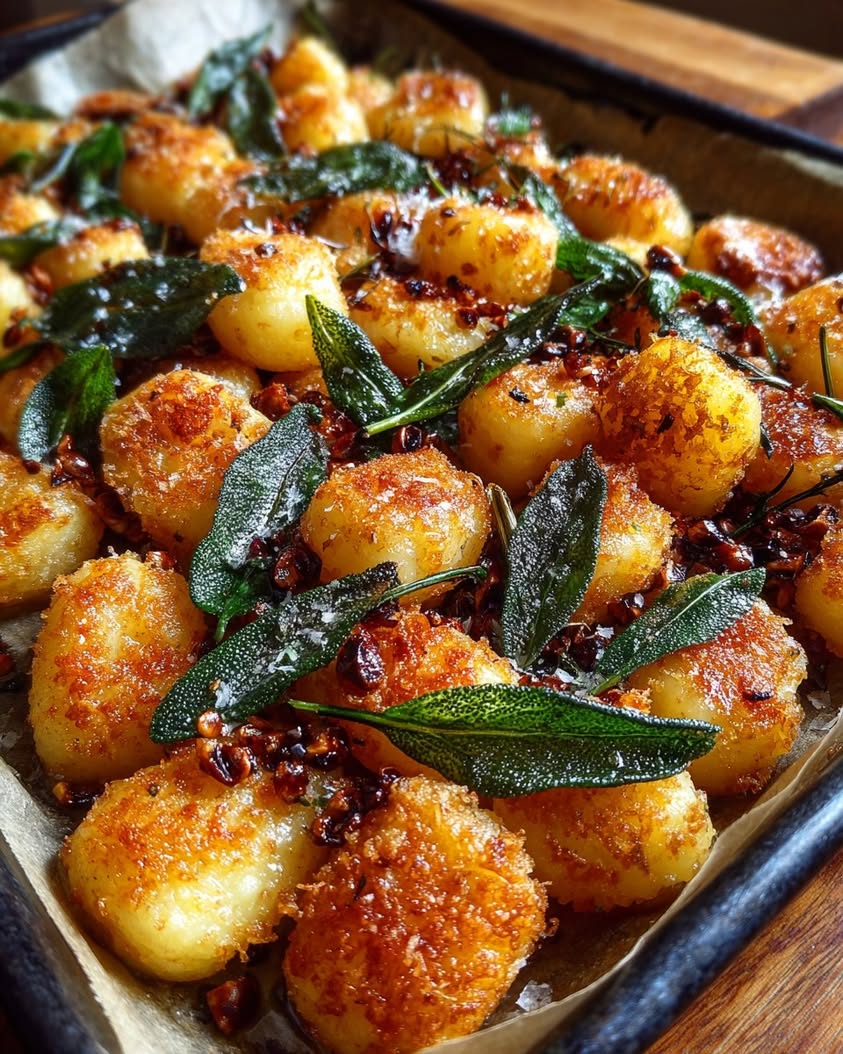
Crispy Gnocchi Sheet Pan with Brown Butter Sage & Hazelnuts: A One-Pan Wonder
Imagine a dinner that delivers restaurant-quality flavor with minimal effort and cleanup. This crispy gnocchi sheet pan with brown butter sage is exactly that kind of magical meal. Essentially, it transforms humble store-bought potato gnocchi into golden, crispy pillows of delight, all while infusing them with the nutty, aromatic embrace of brown butter and fragrant sage. The result is a dish that feels incredibly special yet is deceptively simple to pull off on any busy weeknight.
Furthermore, the combination of textures and flavors here is nothing short of spectacular. You get the satisfying crunch of the pan-seared gnocchi, the rich depth of the hazelnuts, and the bright, almost lemon-like perfume of fresh sage. Each bite is a harmonious blend of earthy, nutty, and savory notes. This crispy gnocchi sheet pan recipe is a testament to how a few quality ingredients, when treated with care, can create something truly extraordinary.
Ultimately, this dish is a celebration of simplicity and smart cooking. By using a sheet pan, you ensure everything cooks evenly and gets beautifully caramelized without constant stirring. The method guarantees that every piece of gnocchi achieves maximum crispiness. Consequently, you are left with a stunning, flavorful centerpiece that requires just one pan and about thirty minutes of your time.
Quick Recipe Highlights
- Flavor Profile: This dish centers on the deep, nutty complexity of brown butter, which is perfectly complemented by the earthy, pine-like fragrance of fresh sage. Additionally, the toasted hazelnuts add a rich crunch, while a finish of lemon zest and Parmesan cheese provides a necessary bright and salty counterpoint to the brown butter.
- Texture: The magic lies in the contrast between the crispy, golden exterior of the pan-seared gnocchi and their soft, pillowy interior. Meanwhile, the toasted hazelnuts contribute a satisfying crunch, and the wilted sage leaves offer a delicate, almost crispy herbaceous note.
- Aroma: As the butter browns, it releases a warm, toasty scent that is unmistakable and incredibly inviting. Then, the sage hits the hot butter, filling your kitchen with an aromatic, woodsy fragrance that promises a delicious meal.
- Visual Appeal: The dish presents a beautiful mosaic of golden-brown gnocchi, vibrant green sage leaves, and the rustic brown of toasted hazelnuts. A final sprinkle of fresh Parmesan and lemon zest adds specks of white and yellow, making it as gorgeous on the plate as it is on the palate.
- Skill Level Needed: This is a beginner-friendly recipe that teaches foundational skills like making brown butter and achieving a perfect sear. Importantly, it requires no special pasta-making expertise, as it uses store-bought gnocchi, making it accessible for cooks of all levels.
- Special Equipment: You only need a sturdy sheet pan and a good oven. A large baking sheet ensures the gnocchi have enough space to crisp up instead of steam. Otherwise, standard kitchen tools like a small saucepan for the brown butter and a microplane for zesting are all you require.
Recipe Overview
- Difficulty Level: We rate this crispy gnocchi sheet pan recipe as easy because it uses pre-made gnocchi and involves straightforward techniques. The most advanced step, browning butter, simply requires attention rather than advanced skill. Overall, the process is largely hands-off once the sheet pan goes into the oven, making it very manageable.
- Category: This dish sits comfortably as a hearty vegetarian main course but also shines as a impressive side dish. It is perfect for a quick family dinner, yet elegant enough for casual entertaining. You can easily build a meal around it with a simple green salad and some crusty bread.
- Cuisine: The recipe draws inspiration from Northern Italian cuisine, where sage and brown butter (burro e salvia) are classic pasta companions. However, the sheet pan method is a modern, American-inspired twist that prioritizes convenience without sacrificing the soul of the traditional flavor pairing.
- Cost: This is a very cost-effective meal, especially considering the gourmet result. Store-bought gnocchi, butter, sage, and nuts are all relatively inexpensive pantry staples. As a result, you can create a restaurant-worthy dish for a fraction of the price of dining out.
- Season: While truly a year-round favorite, this crispy gnocchi with brown butter sage feels particularly fitting for fall and winter. The warm, nutty, and savory flavors are inherently comforting during cooler weather. That said, the bright pop of lemon zest makes it light enough for a spring or summer evening as well.
- Occasion: It is ideal for busy weeknights when you need something fast and fabulous. Simultaneously, it is impressive enough for a date night in or a small dinner party where you want to spend time with guests, not in the kitchen. It is a versatile recipe that suits many scenarios.
Why You’ll Love This Recipe
First and foremost, the taste and texture are utterly irresistible. The process of roasting gnocchi on a sheet pan transforms it completely, giving you bites that are shatteringly crisp on the outside and cloud-soft within. When you toss those crispy nuggets in aromatic brown butter and sage, you create a flavor bomb that is both sophisticated and deeply comforting. Each component, from the toasty hazelnuts to the sharp Parmesan, plays a crucial role in building a complex, satisfying dish that will have everyone asking for seconds.
From a convenience standpoint, this crispy gnocchi sheet pan recipe is a true weeknight hero. It requires minimal active prep time—just boiling water for the gnocchi and browning some butter. After that, the oven does most of the work. You get a complete, flavorful dish using just one pan, which means cleanup is a breeze. This efficiency makes it possible to enjoy a gourmet-tasting meal even on your busiest days, without any compromise on quality or flavor.
Nutritionally, this dish offers a good balance. Potato gnocchi provides carbohydrates for energy, while the hazelnuts contribute healthy fats, protein, and essential nutrients like vitamin E. Using a moderate amount of butter to create a potent brown butter sauce means you get maximum flavor without needing excessive quantities. You can also easily add vegetables like cherry tomatoes or broccoli to the sheet pan for an extra nutrient boost, making it a more rounded meal.
For entertaining, this crispy gnocchi with brown butter sage is a secret weapon. It looks incredibly impressive on the table, with its golden hues and elegant garnish, yet it allows you to be present with your guests. You can prepare components in advance and simply toss everything together just before serving. Its universally appealing flavors please both adventurous and picky eaters alike, making it a reliable choice for any gathering.
Finally, it is remarkably cost-effective and accessible. The ingredients are easy to find at any standard grocery store and are not prohibitively expensive. This recipe demonstrates how to elevate simple, affordable staples into something extraordinary through technique. Consequently, it empowers you to create a luxurious-feeling meal without straining your budget, proving that great cooking is often about cleverness, not cost.
Historical Background and Cultural Significance
The story of gnocchi dates back centuries, with roots in ancient Roman times. Early versions were likely simple mixtures of semolina flour, eggs, and water. However, the potato-based gnocchi we know today, known as “gnocchi di patate,” originated much later, following the introduction of potatoes to Europe from the Americas in the 16th century. Initially, potatoes were viewed with suspicion, but eventually, resourceful Italian cooks, particularly in the northern regions, embraced them. They discovered that mashed potatoes mixed with flour created a delicate, pillowy dumpling that was both filling and delicious, leading to the gnocchi we cherish today.
In Italian culture, gnocchi holds a special place, often associated with tradition and family. Traditionally, Thursday is known as “gnocchi day” (Giovedì gnocchi) in many parts of Italy, a custom that may stem from the Catholic practice of eating a meatless meal on Fridays. Preparing gnocchi on Thursday ensured a hearty, satisfying meal before the Friday fast. Making gnocchi was frequently a family affair, with generations gathering to shape the dumplings by hand. This communal aspect underscores its role as a dish that brings people together, symbolizing comfort and home.
The pairing of brown butter and sage, or “burro e salvia,” is a cornerstone of Northern Italian cuisine, especially in regions like Lombardy and Trentino-Alto Adige. This simple sauce is a masterpiece of Italian culinary philosophy: using few, high-quality ingredients to achieve maximum flavor. Sage grows abundantly in the Mediterranean climate and its robust, earthy flavor stands up beautifully to the rich, nutty notes of browned butter. Historically, this sauce was a quick, elegant way to dress pasta or stuffed pastas like ravioli, showcasing the Italian genius for creating sublime dishes from humble components.
The evolution of this recipe into a crispy gnocchi sheet pan dish is a modern adaptation that reflects contemporary cooking trends. The sheet pan method speaks to today’s desire for efficient, minimal-cleanup meals without sacrificing taste. By roasting the gnocchi, we achieve a texture that is different from the traditional boiled-and-sauced version, offering a delightful crispness that adds a new dimension. This innovation shows how classic flavor profiles can be successfully translated into new, convenient formats, keeping timeless culinary traditions alive and relevant for modern home cooks.
Ingredient Deep Dive
Potato Gnocchi: Store-bought potato gnocchi is the convenient star of this sheet pan dinner. Originating as a peasant food to stretch expensive ingredients, gnocchi is now a beloved staple. Nutritionally, it provides energy-boosting carbohydrates from potatoes and wheat flour. For best results, look for gnocchi in the refrigerated pasta section, not the dry goods aisle, as they often have a better texture. You can use shelf-stable gnocchi in a pinch. For a gluten-free version, seek out gnocchi made with rice flour or potato starch. After opening, store any unused gnocchi in the refrigerator and use within a few days for optimal freshness.
Unsalted Butter: Butter is transformed into the flavor powerhouse of this dish through browning. Culturally, butter is more prevalent in Northern Italian cooking compared to the olive oil-dominated south. Browning butter, or “beurre noisette,” is a French technique that intensifies its flavor, giving it a deep, nutty aroma. It is rich in fat-soluble vitamins like A and E. Always use unsalted butter so you can control the seasoning. For storage, keep butter tightly wrapped in the fridge; for browning, start with cold butter cut into pieces to ensure it melts and browns evenly without burning.
Fresh Sage: Sage is an herb with a long history of culinary and medicinal use, revered by ancient Romans. Its strong, slightly peppery flavor with hints of eucalyptus and lemon is essential to this recipe’s character. Fresh sage is far superior to dried here, as it wilts beautifully in the hot butter and retains a vibrant flavor. Look for perky, gray-green leaves without dark spots. To store, wrap sage loosely in a damp paper towel and place it in a plastic bag in the refrigerator. If you must substitute, fresh thyme is the best alternative, though it will impart a different, but still lovely, flavor profile.
Hazelnuts: Also known as filberts, hazelnuts add crucial texture and a rich, toasty flavor. They are a classic pairing with brown butter in European pastries and savory dishes. Nutritionally, they are packed with healthy fats, protein, fiber, and antioxidants like vitamin E. For this recipe, buying raw hazelnuts and toasting them yourself is key for maximum flavor. You can toast them in a dry skillet or in the oven alongside the gnocchi for a few minutes. Store unused nuts in an airtight container in the freezer to prevent their oils from turning rancid.
Parmesan Cheese: Parmigiano-Reggiano, the king of cheeses, provides a salty, umami-rich finish. This hard cheese has been produced in Italy for nearly 1,000 years under strict regulations. It is a natural source of calcium and protein. For the best flavor, always buy a block of Parmesan and grate it yourself just before using; pre-grated cheese contains anti-caking agents that can affect melt and flavor. Store the block tightly wrapped in the refrigerator. If you need a substitute, a similar hard, aged cheese like Pecorino Romano or Grana Padano would work, though the flavor will be slightly different.
Common Mistakes to Avoid
- Crowding the Sheet Pan: This is the number one error. If you dump all the gnocchi onto a small pan, they will steam instead of roast, resulting in a soggy, chewy texture. Always use a large, rimmed baking sheet and spread the gnocchi in a single, even layer with plenty of space between pieces to ensure they get properly crispy.
- Burning the Brown Butter: Brown butter goes from perfectly nutty to acrid and burned in seconds. Use a light-colored saucepan so you can see the color change clearly. Swirl the pan constantly over medium heat and remove it from the heat as soon as the butter turns a golden amber color and smells nutty. Immediately pour it into a heatproof bowl to stop the cooking.
- Using Dried Sage: Dried sage cannot replicate the vibrant flavor and texture of fresh sage in this sauce. Its dusty, concentrated flavor will overpower the dish and lack the aromatic freshness. Fresh sage wilts beautifully in the hot butter, releasing its essential oils and becoming a crispy, edible garnish. Always seek out fresh sage for this recipe.
- Skipping the Gnocchi Par-Boil: Some recipes call for roasting gnocchi straight from the package, but a quick par-boil is a pro secret. It ensures the interior is fully cooked and tender by the time the exterior crisps up. If you skip this step, you risk having gnocchi that are crunchy on the outside but still dense and gummy inside.
- Adding Lemon Juice Too Early: If you add lemon juice directly to the hot brown butter in the pan, the acidity can cause the milk solids to seize up and create a grainy sauce. Instead, add the lemon zest and a squeeze of juice at the very end, after tossing the gnocchi with the butter and sage. This preserves the sauce’s silky texture and the lemon’s bright flavor.
- Forgetting to Toast the Nuts: Raw hazelnuts lack the deep, toasty flavor that complements the brown butter. Taking the extra two minutes to toast them in a dry pan or in the oven awakens their oils and intensifies their taste and crunch. This small step makes a significant difference in the overall depth of the dish.
- Not Preheating the Sheet Pan: Placing oiled gnocchi on a hot sheet pan gives them an immediate sear, promoting better browning and crispiness. If you start with a cold pan, the gnocchi will absorb the oil and stick more easily, leading to less-than-ideal texture and a messy cleanup.
- Overlooking Seasoning at the End: Brown butter and Parmesan are salty, but you still need to taste and adjust the final seasoning. The gnocchi themselves are often bland. Always finish the dish with a final pinch of flaky sea salt and black pepper just before serving to make all the flavors pop.
Essential Techniques
Mastering Brown Butter: Browning butter is the technique that defines this sauce. It is important because it transforms butter’s simple creaminess into a complex, nutty, and aromatic ingredient. To master it, start with cold, cubed unsalted butter in a light-colored saucepan over medium heat. Melt the butter, then continue cooking, swirling the pan frequently. Watch for the milk solids at the bottom to turn from white to a deep golden brown and listen for the crackling sound to subside. The visual cue for success is a rich amber color and a distinctly nutty smell. The common pitfall is walking away, as it can burn in an instant.
Achieving Crispy Gnocchi: The goal is a crispy exterior with a tender interior, a texture contrast that elevates the entire dish. This is important for mouthfeel and preventing a monotonous, soft bite. The key is the two-step process: par-boiling to cook the inside, then roasting on a preheated, oiled sheet pan. Spread the gnocchi in a single layer without touching. The visual cue for success is an even, golden-brown crust on most sides. The common mistake is overcrowding, which leads to steaming. Shake the pan halfway through roasting to ensure even browning.
Toasting Nuts: Toasting nuts like hazelnuts unlocks their full flavor potential and maximizes crunch. This step is important because raw nuts can taste bland and feel soft. To master it, place raw nuts in a single layer in a dry skillet over medium-low heat. Shake the pan frequently until they are fragrant and lightly browned, about 3-5 minutes. You can also toast them on a sheet pan in a 350°F oven for 8-10 minutes. The visual cue is a deepened color and you should smell their rich aroma. The common pitfall is high heat, which burns the outside before the inside toasts.
Pro Tips for Perfect Crispy Gnocchi
First, always par-boil your gnocchi, even if the package says “ready to cook.” This guarantees a perfectly tender center by the time the outside is crisp. Shock them in cold water after boiling to stop the cooking process and prevent sticking.
Second, preheat your sheet pan with the oil in the oven. This gives the gnocchi an immediate sear upon contact, mimicking the effect of a hot skillet and promoting superior, all-over crispiness from the very start of the roasting time.
Third, use a light-colored saucepan to brown your butter. A dark pan makes it impossible to monitor the color change of the milk solids, which is your only reliable indicator that the butter is perfectly browned and not burned.
Fourth, add a splash of the gnocchi cooking water to your brown butter sauce. The starchy water acts as an emulsifier, helping the butter coat the gnocchi in a light, silky sauce rather than just pooling at the bottom of the bowl.
Fifth, finish the dish with high-quality finishing ingredients. Use a microplane for the lemon zest to get fluffy zest without bitter pith, and grate your Parmesan cheese fresh for the best melt and flavor. These final touches elevate the dish immensely.
Sixth, let the gnocchi sit for a minute on the sheet pan after roasting. This allows them to release from the pan naturally, preventing them from tearing and ensuring you get every delicious, crispy piece intact when you transfer them to the serving bowl.
Variations and Adaptations
Regional Variations: To explore different Italian regions, substitute the hazelnuts with toasted pine nuts (pignoli) for a Ligurian touch, or use walnuts, which are common in Sicilian cooking. For a Roman twist, you could finish the dish with guanciale or pancetta crisped up before making the brown butter. Each nut or addition brings a unique regional character to this versatile crispy gnocchi sheet pan recipe.
Seasonal Adaptations: In spring, add asparagus tips and fresh peas to the sheet pan during the last 5 minutes of cooking. For summer, incorporate halved cherry tomatoes and torn basil instead of sage. In autumn, roast cubes of butternut squash alongside the gnocchi. These additions make the dish a complete, seasonal meal while utilizing the same efficient sheet pan method.
Dietary Modifications: For a gluten-free version, use certified gluten-free potato gnocchi. To make it vegan, substitute the butter with a high-quality vegan butter that browns well (some coconut oil-based versions work) and use nutritional yeast or a vegan Parmesan alternative. For a dairy-free option, use olive oil and focus on toasting the sage and nuts for depth, finishing with a squeeze of lemon.
Flavor Variations: Experiment with different herbs. Rosemary or thyme can stand in for sage, offering a different but equally wonderful aromatic profile. For a spicy kick, add a pinch of red pepper flakes to the brown butter as it cooks. A teaspoon of whole grain mustard whisked into the finished sauce adds a pleasant tangy complexity.
Texture Modifications: If you prefer extra vegetables, add broccoli florets or sliced mushrooms to the sheet pan. They will roast alongside the gnocchi, becoming caramelized and tender. For added protein, scatter cooked chickpeas or white beans on the pan to crisp up. These additions create more varied textures and turn the dish into a heartier, one-pan feast.
Presentation Alternatives: Instead of tossing everything in a bowl, serve the crispy gnocchi directly on the warm sheet pan for a rustic, family-style presentation. Alternatively, plate individual portions in shallow bowls, drizzle with extra brown butter, and garnish with a few whole, crispy fried sage leaves for a more restaurant-style look.
Serving and Presentation Guide
Plating Techniques: For a family-style meal, transfer the tossed crispy gnocchi with brown butter sage to a large, warm serving platter or bowl. Ensure the golden gnocchi, toasted hazelnuts, and crispy sage leaves are evenly distributed and visible on top. For individual plating, use a pair of tongs to create a small mound of gnocchi in the center of each warm plate, then artfully sprinkle the nuts and sage around and on top.
Garnishing Ideas: The classic garnish is the crispy sage leaves from the butter and a sprinkle of Parmesan. Elevate it further with a final drizzle of high-quality extra virgin olive oil, a few cracks of black pepper, and a pinch of flaky sea salt like Maldon. For color and freshness, add a small handful of microgreens or arugula just before serving.
Traditional Accompaniments: In Italy, a dish like this would often be served as a “primo” (first course). Follow it with a simple “secondo” like a grilled chicken cutlet or a light fish fillet. A crisp, bitter green salad dressed with lemon vinaigrette is the perfect accompaniment to cut through the richness of the brown butter.
Modern Serving Suggestions: Treat this as a complete vegetarian main course. Pair it with a glass of chilled Pinot Grigio or a light red like Chianti. For a casual dinner, serve it directly from the sheet pan with crusty bread on the side to soak up every last drop of the delicious brown butter sauce left behind.
Temperature Considerations: This dish is best served immediately, while the gnocchi are still hot and crisp. Warm your serving bowls or platter beforehand to keep the food hot longer. The brown butter sauce will begin to solidify as it cools, so prompt serving ensures the ideal silky texture.
Portion Control Tips: One standard 17.6-ounce package of gnocchi typically serves four as a main course when accompanied by a salad. As a hearty side dish or appetizer, it can stretch to serve six. If adding significant vegetables or protein to the sheet pan, you can easily stretch the main course servings for four heartier appetites.
Wine and Beverage Pairing
Wine Pairings: The rich, nutty flavors of this crispy gnocchi dish pair beautifully with white wines that have good acidity to cut through the butter. A Northern Italian Pinot Grigio or a Vermentino are classic and excellent choices. For a more aromatic option, try an Austrian Grüner Veltliner. If you prefer red, opt for a light-bodied, low-tannin red like a Bardolino or a young Pinot Noir, which won’t overpower the dish.
Non-Alcoholic Alternatives: A sparkling water with a twist of lemon or lime cleanses the palate beautifully between bites. For a more crafted option, try a non-alcoholic bitter aperitif mixed with soda water, which mimics the complexity of wine. A cold, tart cherry juice or a ginger beer also provides a nice flavor contrast to the savory, rich notes of the sage and brown butter.
Coffee/Tea Pairings: While not a typical pairing for the meal itself, an after-dinner espresso is a perfect Italian-inspired finish. The strong, bitter coffee contrasts with the residual richness of the dish. A cup of herbal tea, such as peppermint or chamomile, would also be a soothing and digestif-friendly way to end the meal.
Temperature Considerations: White wines should be served well-chilled, between 45-50°F. Light reds like Pinot Noir are best served slightly cooler than room temperature, around 55°F. Non-alcoholic sparkling drinks should be ice-cold to provide the most refreshing counterpoint to the warm, savory gnocchi.
Serving Suggestions: Always serve wine in appropriate glassware to enhance the aroma and tasting experience. For a casual dinner, pouring drinks into nice tumblers is perfectly acceptable. Have a carafe of cold water on the table as well, as the salty Parmesan and rich butter will naturally make guests thirsty.
Storage and Shelf Life
Storage Methods: Store any leftover crispy gnocchi in an airtight container in the refrigerator for up to 3 days. It is best to store the gnocchi separately from any extra brown butter sauce if possible, as the butter will solidify. The hazelnuts and sage may lose some crispness but will still be flavorful.
Temperature Requirements: Refrigeration is essential for leftovers. Do not leave the dish at room temperature for more than two hours after cooking. The dairy-based sauce makes it perishable. Always cool leftovers to room temperature before sealing the container and placing it in the fridge to prevent condensation.
Container Recommendations: Use a shallow, airtight container to allow the gnocchi to cool quickly and evenly. Glass containers are ideal as they do not absorb odors and allow you to see the contents. If storing the components separately, use small jars for any extra brown butter sauce.
Signs of Spoilage: Discard leftovers if you notice an off or sour smell, significant moisture or slime on the gnocchi, or any signs of mold. The sage leaves will wilt and darken, which is normal, but any fuzzy growth is a clear sign of spoilage.
Reheating Instructions: To restore crispiness, reheat leftovers in an oven or toaster oven at 375°F for 10-15 minutes, spreading them on a sheet pan. Avoid the microwave, as it will make the gnocchi soggy. You can also re-crisp them in a skillet over medium heat with a tiny bit of oil or butter.
Freezing Guidelines: Freezing is not recommended for this assembled dish. The gnocchi will become mushy upon thawing and reheating, and the dairy-based sauce may separate. It is best enjoyed fresh or stored in the refrigerator for short-term leftovers.
Make Ahead Strategies
Prep Timeline: You can prepare several components 1-2 days in advance. Toast the hazelnuts and store them at room temperature in an airtight container. Grate the Parmesan cheese and store it in the fridge. Wash and dry the sage leaves. You can even brown the butter a few hours ahead; gently re-warm it before using.
Storage Between Steps: Store pre-toasted nuts and grated cheese in separate containers. Keep the sage wrapped in a damp paper towel in a bag in the crisper drawer. If you make brown butter ahead, let it cool, then cover and refrigerate. It will solidify; simply gently re-melt it when ready to use.
Quality Impact Assessment: Pre-toasting nuts has no negative impact; it actually deepens their flavor. Pre-grated Parmesan is acceptable but fresh grating is always superior for melt and taste. Brown butter holds its flavor well for a day. The only step that must be done just before serving is roasting the gnocchi for optimal crispiness.
Assembly Tips: On the day of serving, par-boil the gnocchi, roast them on the sheet pan, and while they roast, gently re-warm the brown butter if made ahead. Have all your prepped ingredients (nuts, cheese, lemon) measured and ready by the stove for a quick, seamless toss the moment the gnocchi come out of the oven.
Reheating Guidelines: If you must reheat a fully assembled dish, use the oven method described in the storage section. For the best texture, consider re-crisping the gnocchi first, then tossing them with the pre-made components (re-warmed butter, nuts, etc.) fresh.
Fresh Element Additions: Always add the final garnishes—fresh lemon zest, an extra grating of Parmesan, and a final crack of pepper—right before serving. This ensures their flavors and textures are bright and pronounced, providing the perfect finishing touch to the make-ahead components.
Scaling Instructions
Halving the Recipe: To serve two, use half a standard package of gnocchi (about 9 ounces), 4 tablespoons of butter, and proportionally reduce all other ingredients. Use a standard quarter sheet pan or a smaller baking dish to maintain the necessary single-layer spacing for the gnocchi to crisp. Cooking time may reduce by a few minutes, so watch closely.
Doubling or Tripling: For a crowd, simply double or triple all ingredients. The critical adjustment is to use multiple sheet pans. Do not pile gnocchi onto one pan; you must roast in batches or use multiple ovens racks with rotated pans to ensure even cooking and crispiness. You may need to brown the butter in batches as well.
Equipment Adjustments: When scaling up, ensure you have enough large sheet pans and a saucepan large enough to hold the increased volume of butter for browning. A Dutch oven can work for browning larger quantities of butter. Have a large heatproof bowl ready for tossing the big batch of gnocchi with the sauce.
Timing Modifications: When cooking multiple sheet pans, allow extra time for the oven to recover temperature between batches. Roasting time may increase slightly if the oven is very full, as air circulation is reduced. It is better to cook in successive batches than to overcrowd and steam the gnocchi.
Storage Considerations: Leftovers from a large batch should be cooled completely and stored in several shallow containers rather than one deep one. This promotes faster cooling and safer storage. Reheat in the oven in a single layer for best results.
Nutritional Deep Dive
Macro Breakdown: A serving of this crispy gnocchi sheet pan provides a balance of carbohydrates from the potato gnocchi, fats from the butter, hazelnuts, and Parmesan, and a moderate amount of protein from the nuts and cheese. The exact values depend on brands and portions, but it is a satisfying, energy-dense meal. The hazelnuts contribute healthy monounsaturated fats, which are beneficial for heart health.
Micronutrient Analysis: This dish offers several key micronutrients. Hazelnuts are an excellent source of vitamin E, a powerful antioxidant. Parmesan cheese provides calcium and phosphorus for bone health. Sage contains vitamin K and various antioxidants. Using whole, real ingredients ensures you are consuming food with inherent nutritional value beyond just calories.
Health Benefits: The monounsaturated fats in hazelnuts can help support healthy cholesterol levels. Antioxidants from the sage, nuts, and even the browned butter (in the form of compounds like diacetyl) may have anti-inflammatory properties. As a vegetarian main, it can be part of a balanced diet that includes plant-based fats and complex carbohydrates.
Dietary Considerations: This is a vegetarian dish but not vegan or gluten-free as written. It contains dairy (butter, cheese) and gluten (in standard gnocchi). Those with lactose intolerance may tolerate the aged Parmesan better than other dairy, but the butter could still be an issue. Refer to the Dietary Adaptations section for modification ideas.
Portion Analysis: A standard serving is about one-quarter of the recipe. This is satisfying as a main course with a side salad. If you are watching your calorie intake, you can slightly reduce the amount of butter or nuts, or increase the proportion of non-starchy vegetables added to the sheet pan to create a larger volume with similar flavor for fewer calories per bite.
Weight Management Tips: To make this dish more weight-management friendly, focus on portion control and balance. Serve it with a large side of non-starchy vegetables like a big green salad or roasted broccoli. You can also reduce the hazelnuts by half and use a light hand with the Parmesan. The key is enjoying the rich flavors in a mindful portion as part of an overall balanced diet.
Dietary Adaptations
Gluten-Free: To make this crispy gnocchi sheet pan gluten-free, the only necessary change is to use certified gluten-free potato gnocchi. Many brands now offer excellent GF options made with rice flour or potato starch. Ensure all other ingredients, like pre-grated cheese, are certified gluten-free if cross-contamination is a concern. The method remains exactly the same.
Dairy-Free: For a dairy-free version, replace the butter with a high-quality vegan butter stick that browns well (look for one with a high fat content). Substitute the Parmesan cheese with a sprinkle of nutritional yeast for a cheesy, umami flavor, or use a store-bought vegan Parmesan alternative. The result will be different but still deliciously savory and nut{“success”:true,”message”:”Recipe created successfully”,”post_id”:8955,”tasty_recipe_id”:8955,”shortcode”:” Print
Crispy Gnocchi Sheet Pan with Brown Butter Sage & Hazelnuts
Description
A simple, elegant sheet pan dinner featuring crispy gnocchi tossed in nutty brown butter, fragrant sage, and crunchy toasted hazelnuts.
Ingredients
For the Crust:
- 1 lb shelf-stable potato gnocchi
- 4 tbsp unsalted butter
- 1/4 cup fresh sage leaves
- 1/2 cup hazelnuts, roughly chopped
- 2 cloves garlic, minced
- 1/4 tsp red pepper flakes
- Salt and black pepper to taste
- Parmesan cheese for serving
Instructions
1. Prepare the Crust:
- Preheat oven to 425°F (220°C). Spread gnocchi on a parchment-lined sheet pan, drizzle with 1 tbsp olive oil, season with salt and pepper, and bake for 20-25 minutes until crispy, tossing halfway.
- While gnocchi bakes, toast hazelnuts in a dry skillet over medium heat for 3-4 minutes until fragrant. Set aside.
- In the same skillet, melt butter over medium heat. Cook until butter foams, turns golden brown, and smells nutty (about 3-4 minutes). Add sage, garlic, and red pepper flakes; cook for 1 minute until fragrant.
- Toss baked gnocchi and toasted hazelnuts in the brown butter sauce. Serve immediately with grated Parmesan.
Notes
You can customize the seasonings to taste.

I’m Billy, a classically trained culinary school graduate from The Culinary Institute of America with over 12 years in the restaurant industry and over 19 years of cooking experience.