
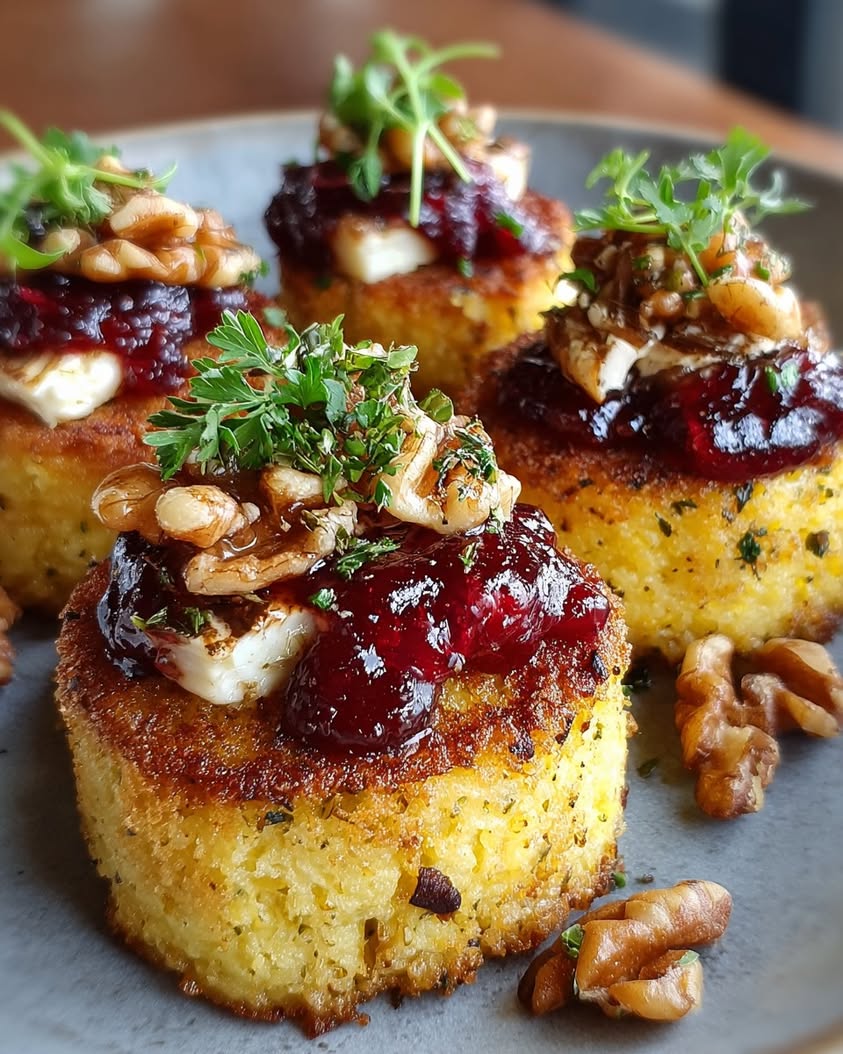
Crispy Polenta Rounds with Brie and Cranberry Walnut Glaze: An Elegant Holiday Appetizer
These Crispy Polenta Rounds with Brie and Cranberry Walnut Glaze are the ultimate show-stopping appetizer for any festive gathering. Imagine a golden, crispy base topped with creamy, melted brie, a sweet-tart cranberry glaze, and a satisfying walnut crunch. This recipe masterfully combines textures and flavors for a bite that feels both luxurious and comforting. Moreover, it is a fantastic make-ahead option, allowing you to enjoy your own party.
Creating these Crispy Polenta Rounds with Brie and Cranberry Walnut Glaze is surprisingly simple. You start with pre-made polenta, which you slice and pan-fry until perfectly golden. Then, you top each round with a slice of rich brie cheese. The crowning glory is a quick, homemade cranberry glaze studded with toasted walnuts. The result is a visually stunning appetizer that delivers a symphony of flavors in every single bite.
Ultimately, this dish is a celebration of seasonal ingredients. The warm, creamy brie melts beautifully over the crispy polenta. Meanwhile, the vibrant cranberry glaze adds a pop of color and a burst of tangy sweetness. Finally, the toasted walnuts provide an essential earthy crunch. This combination makes the Crispy Polenta Rounds with Brie and Cranberry Walnut Glaze an unforgettable start to any meal.
Quick Recipe Highlights
- Flavor Profile: These rounds deliver a perfect balance. You get the savory, creamy richness of melted brie paired with the bright, tangy sweetness of the cranberry glaze. The toasted walnuts add a deep, earthy note that ties everything together beautifully.
- Texture: This appetizer is a textural masterpiece. Each bite offers a crispy exterior from the pan-fried polenta, a soft and creamy center from the melted brie, and a delightful crunch from the walnut topping. The contrast is absolutely irresistible.
- Aroma: As these Crispy Polenta Rounds with Brie and Cranberry Walnut Glaze cook, your kitchen will fill with inviting scents. You will smell the nutty toastiness of browning polenta, the sweet fragrance of simmering cranberries, and the rich aroma of melting cheese.
- Visual Appeal: The presentation is stunning. The golden-brown polenta rounds provide a perfect canvas for the white, oozing brie and the jewel-toned red cranberry glaze. A sprinkle of chopped walnuts adds a final touch of rustic elegance.
- Skill Level Needed: This is a beginner-friendly recipe. The steps are straightforward, involving slicing, frying, and simple stovetop simmering. No advanced culinary techniques are required, making it accessible for cooks of all levels.
- Special Equipment: You only need basic kitchen tools. A good non-stick skillet is essential for frying the polenta rounds evenly. Additionally, a small saucepan is needed for the glaze, and a sharp knife makes slicing the polenta log easy.
Recipe Overview
- Difficulty Level: We rate this recipe as easy. The process involves simple techniques like slicing, pan-frying, and making a quick stovetop sauce. There is no complex dough or intricate assembly. Consequently, even novice cooks can achieve impressive results with minimal stress.
- Category: This dish falls squarely into the appetizer or hors d’oeuvre category. It is perfect for finger food at parties, holiday gatherings, or as a sophisticated starter before a sit-down dinner. Alternatively, you could serve a larger portion as a light lunch.
- Cuisine: While polenta is a staple of Northern Italian cuisine, this recipe takes a modern, fusion approach. The combination with brie, cranberry, and walnuts feels inspired by contemporary American holiday cooking. It blends rustic Italian roots with festive New World flavors.
- Cost: This is a moderately priced appetizer. A tube of pre-cooked polenta is very affordable. Brie cheese and fresh cranberries are seasonal items that can be found at reasonable prices, especially around the holidays. Walnuts are a pantry staple for many.
- Season: This recipe shines in the fall and winter seasons. Cranberries are at their peak in late autumn, making the glaze particularly flavorful and festive. The warm, comforting nature of the dish is ideal for cooler weather and holiday celebrations.
- Occasion: These rounds are perfect for any special gathering. They are ideal for Thanksgiving, Christmas parties, New Year’s Eve, or a fancy dinner party. Their elegant appearance and make-ahead potential make them a stress-free choice for entertaining.
Why You’ll Love This Recipe
First, the taste and texture are absolutely divine. You get a wonderful contrast in every single bite. The crispy, golden polenta base provides a sturdy foundation. Then, the warm, melted brie adds a luxurious creaminess that coats your palate. The sweet and tart cranberry glaze cuts through the richness perfectly. Finally, the toasted walnut crunch offers a satisfying finish that keeps you coming back for more. This harmonious blend is what makes these Crispy Polenta Rounds with Brie and Cranberry Walnut Glaze so addictive.
Next, consider the convenience factor. This recipe is a lifesaver for busy hosts. You can prepare the cranberry walnut glaze a day or two in advance. Similarly, you can slice the polenta and toast the walnuts ahead of time. When guests arrive, you simply fry the polenta rounds, top them with brie to melt, and spoon on the pre-made glaze. The assembly is quick and stress-free. Therefore, you can spend less time in the kitchen and more time enjoying your company.
Furthermore, there are some notable nutritional advantages. Polenta is naturally gluten-free and a good source of complex carbohydrates for sustained energy. Walnuts are packed with heart-healthy omega-3 fatty acids and antioxidants. Cranberries are famous for their vitamin C content and urinary tract health benefits. While brie is rich, it provides protein and calcium. So, while this is an indulgent treat, it incorporates wholesome ingredients.
Additionally, the social and entertaining value is through the roof. These appetizers look incredibly professional and gourmet. They are perfect for passing on a tray at a cocktail party or arranging beautifully on a platter. Guests are always impressed by the combination of flavors and the elegant presentation. They spark conversation and make any event feel more special. Serving these Crispy Polenta Rounds with Brie and Cranberry Walnut Glaze instantly elevates your hosting game.
Finally, the recipe is cost-effective and accessible. The ingredients are not exotic or hard to find. A log of pre-cooked polenta is available at most grocery stores year-round. Brie, cranberries, and walnuts are standard items, especially during the holiday season. You can create a stunning, restaurant-quality appetizer for a fraction of the cost of store-bought equivalents. This accessibility makes it a fantastic go-to recipe for any occasion.
Historical Background and Cultural Significance
Polenta, the star of our base, has a long and humble history. Originally, it was a simple porridge made from various ground grains like barley, millet, or spelt in ancient Roman times. After the introduction of maize from the Americas, cornmeal polenta became a staple for peasants in Northern Italy, particularly in regions like Lombardy and Veneto. It was affordable, filling, and versatile. Families would cook it in a large copper pot called a “paiolo” over an open fire, often enjoying it as a main dish topped with sauces, cheeses, or meats. This rustic heritage gives our crispy rounds a connection to centuries of culinary tradition.
Brie cheese brings its own noble history to the dish. Hailing from the Île-de-France region, Brie de Meaux is known as the “King of Cheeses” and was famously favored by French royalty, including Charlemagne. Its creamy, edible rind and soft interior made it a luxurious delicacy. Combining this regal French cheese with rustic Italian polenta is a beautiful fusion of European culinary classics. The marriage represents how modern cooking often blends traditions to create something new and exciting.
The use of cranberries and walnuts roots the recipe firmly in North American soil. Native Americans used cranberries for food, dye, and medicine long before European settlers arrived. They introduced cranberries to the Pilgrims, who incorporated them into celebrations, eventually cementing their place in Thanksgiving tradition. Walnuts, specifically the Eastern Black Walnut, are also native to North America. Their rich, bold flavor has been cherished for generations. Including these ingredients transforms the dish from a simple Italian-inspired snack into a festive celebration of New World harvest flavors.
The evolution of this specific recipe is a testament to modern appetizer trends. Today’s home cooks and chefs love creating bites that offer a complete flavor and texture experience in one or two mouthfuls. The concept of a crispy base (like crostini or a potato round) topped with cheese, fruit, and nuts is incredibly popular. Our Crispy Polenta Rounds with Brie and Cranberry Walnut Glaze fits perfectly into this trend, offering a gourmet, seasonal twist on a familiar format. It is a contemporary creation built on timeless ingredients.
Ingredient Deep Dive
Pre-Cooked Polenta: Using a tube of pre-cooked polenta is the ultimate shortcut for this recipe. Traditionally, polenta requires slow stirring of cornmeal into simmering liquid, a process that can take 30-45 minutes. The pre-cooked version is already set and firm, allowing you to simply slice and cook. Nutritionally, polenta is a whole grain (if made from whole-grain cornmeal) and is naturally gluten-free. It provides complex carbohydrates and a small amount of fiber. For the best results, look for a plain polenta log without added herbs or cheese. Store unopened tubes in your pantry; once opened, wrap tightly and refrigerate for up to a week.
Brie Cheese: Brie is a soft-ripened cheese known for its creamy, buttery interior and edible white rind. It melts beautifully, creating a luxurious texture. When selecting brie, choose a wheel that feels slightly soft when gently pressed; this indicates ripeness. Avoid any with an ammonia smell. Brie is a good source of protein, calcium, and vitamins A and B12, though it is also high in saturated fat. For a stronger flavor, you can use a triple-creme brie. If you need to substitute, Camembert is the closest alternative, though any good melting cheese like havarti or fontina would work in a pinch.
Fresh Cranberries: Fresh cranberries are essential for the bright, tart flavor of the glaze. They are native to North America and are harvested in the fall. Cranberries are packed with vitamin C, fiber, and unique antioxidants called proanthocyanidins, which are famous for supporting urinary tract health. When buying, look for berries that are firm, shiny, and deep red in color. They should bounce if dropped. Avoid soft, shriveled, or discolored berries. Store fresh cranberries in their original bag in the refrigerator for up to a month, or freeze them for up to a year for use in sauces and baking.
Walnuts: Walnuts add the essential “crunch” element to this dish. They are one of the best plant sources of omega-3 fatty acids, which are beneficial for heart and brain health. They also contain antioxidants and melatonin. Toasting walnuts is a non-negotiable step; it deepens their flavor and improves their texture. Always toast nuts in a dry skillet over medium heat or on a baking sheet in the oven until fragrant, watching carefully to prevent burning. Store walnuts in an airtight container in the refrigerator or freezer to prevent their oils from going rancid.
Common Mistakes to Avoid
- Skipping the Polenta Drying Step: Patting the polenta slices completely dry with a paper towel is crucial. Any surface moisture will cause the slices to steam instead of fry, resulting in a soft, pale exterior rather than a crispy, golden one. Take an extra moment to ensure they are thoroughly dry.
- Overcrowding the Pan: Frying too many polenta rounds at once is a common error. Overcrowding lowers the pan’s temperature dramatically, causing the rounds to absorb oil and become soggy. Cook in batches to maintain a consistent, hot temperature for perfect crispiness.
- Using Cold Brie: Attempting to slice cold brie straight from the refrigerator often leads to tearing and messy pieces. Let the brie sit at room temperature for 15-20 minutes before slicing. A slightly warmer brie will cut cleanly and melt more evenly on the warm polenta.
- Overcooking the Cranberry Glaze: Simmering the cranberry sauce for too long can make it overly thick and jam-like. Remember, it will continue to thicken as it cools. Aim for a consistency that coats the back of a spoon but is still easily pourable.
- Neglecting to Toast the Walnuts: Raw walnuts can taste somewhat bitter and have a softer texture. Toasting them unlocks their full, rich, nutty flavor and gives them a satisfying crunch. This simple step makes a significant difference in the final dish.
- Adding the Glaze Too Early: If you spoon the cold cranberry glaze onto the hot brie immediately after removing the rounds from the pan, the cheese can firm up too quickly. Let the rounds sit for a minute so the brie stays wonderfully creamy under the glaze.
- Using a Dull Knife to Slice Polenta: A dull knife will crush the firm polenta log rather than slicing it cleanly, leading to ragged edges that may break during frying. Use a sharp chef’s knife for clean, even rounds.
- Forgetting to Season: While the ingredients are flavorful, a light seasoning of salt and pepper on the polenta rounds before or after frying can elevate all the other flavors. Do not forget this basic but important step.
Essential Techniques
Pan-Frying for Maximum Crispness: Achieving the perfect crispy exterior on your polenta rounds is the foundation of this recipe. The key is using a consistent medium-high heat and enough oil to lightly coat the pan. Let the oil get hot before adding the dried polenta slices. Then, resist the urge to move them constantly. Allow them to cook undisturbed for 3-4 minutes to develop a deep golden-brown crust. You will know they are ready to flip when they release easily from the pan. This technique ensures a sturdy base that can support the toppings without becoming soggy.
Creating a Balanced Fruit Glaze: The cranberry walnut glaze should strike a perfect balance between sweet and tart. Start by simmering the cranberries with sugar and liquid until they pop and break down. The visual cue for success is when most berries have burst and the sauce has thickened slightly. Taste it as it cools; the tartness will mellow. If it is too sharp, a tiny pinch of salt can help balance it, not just more sugar. The final consistency should be syrupy, not gelatinous, allowing it to drape beautifully over the brie.
Melting the Brie Perfectly: The goal is to warm the brie until it is soft, creamy, and slightly oozy, but not so hot that it completely liquefies and runs off the polenta. The residual heat from the freshly fried polenta round is often enough. Simply place the room-temperature slice of brie on the hot round and let it sit for 1-2 minutes. If needed, you can briefly place the assembled rounds under a broiler for 30-60 seconds, but watch closely. The cheese should look glossy and soft when gently pressed.
Pro Tips for Perfect Crispy Polenta Rounds with Brie and Cranberry Walnut Glaze
First, for extra crispy polenta, dust the dried slices lightly with cornstarch or arrowroot powder before frying. This creates an additional thin, crispy layer that holds up exceptionally well under the toppings.
Second, add a flavor boost to your oil. Infuse your frying oil with a sprig of fresh rosemary or a smashed garlic clove as it heats up. Remove the herb or garlic before adding the polenta for a subtle, aromatic background note.
Third, control your glaze consistency. If your cranberry glaze thickens too much upon standing, simply whisk in a teaspoon of warm water or orange juice at a time until it returns to a spoonable consistency.
Fourth, experiment with cheese varieties. For a more pronounced flavor, try using a brie that includes herbs like dill or peppercorns. Alternatively, a small piece of creamy goat cheese can be a delightful substitute.
Fifth, ensure even walnut distribution. Chop your toasted walnuts finely enough so they integrate well into the glaze, but leave a few larger pieces for textural contrast in every spoonful.
Sixth, master the make-ahead strategy. Fry all your polenta rounds ahead of time and let them cool completely. Store them layered between parchment paper. Re-crisp them in a 400°F oven for 5 minutes before topping with brie and glaze.
Seventh, garnish for impact. Just before serving, add a final flourish with a few fresh thyme leaves, a tiny drizzle of honey, or a light sprinkle of flaky sea salt over the assembled rounds.
Eighth, consider dietary needs. To make this recipe gluten-free, ensure your pre-cooked polenta is certified gluten-free. For a dairy-free version, use a high-quality vegan melty cheese alternative.
Variations and Adaptations
Regional Variations: You can easily adapt this recipe to reflect different culinary traditions. For a Mediterranean twist, substitute the cranberry glaze with a sun-dried tomato pesto and use feta cheese instead of brie. For a French-inspired version, use a fig jam and top with crumbled blue cheese and a drizzle of honey after baking.
Seasonal Adaptations: While perfect for fall and winter, this concept works year-round. In spring, try a base of lemon-herb polenta rounds topped with herbed goat cheese and a fresh strawberry-balsamic reduction. In summer, use grilled polenta slices with fresh mozzarella, basil, and a cherry tomato relish.
Dietary Modifications: For a vegan version, use a firm, pre-cooked vegan polenta and a high-quality vegan “brie” or cashew-based spread. Make the glaze with maple syrup instead of honey. For a nut-free version, replace the walnuts with toasted pumpkin seeds (pepitas) for a similar crunch.
Flavor Variations: Infuse the polenta itself before slicing. Stir chopped fresh herbs like rosemary or thyme into warm, freshly cooked polenta before chilling it in a loaf pan. You can also add a pinch of smoked paprika or garlic powder to the cornmeal for a savory base.
Texture Modifications: If you prefer a softer bite, you can bake the polenta rounds instead of frying them. Brush with oil and bake at 425°F for 20-25 minutes, flipping once, until golden. The texture will be less shatteringly crisp but still delicious.
Presentation Alternatives: Instead of rounds, slice the polenta log into small squares or triangles for a different look. For a passed appetizer, use a small cookie cutter to create festive shapes like stars or circles. You can also serve the components deconstructed: a bowl of crispy polenta chips, a pot of warm brie, and a dish of cranberry walnut glaze for dipping.
Serving and Presentation Guide
Plating is key for visual impact. Arrange the finished Crispy Polenta Rounds with Brie and Cranberry Walnut Glaze on a large, rustic wooden board or a sleek slate platter. Space them slightly apart so the toppings do not run together. Consider placing a small piece of parchment paper underneath each round to catch any drips and keep the platter clean. For a more formal presentation, serve them on individual small plates garnished with a microgreen salad.
Garnishing adds the final professional touch. A few fresh herb sprigs like thyme, rosemary, or sage scattered around the platter enhance the seasonal feel. A light dusting of finely chopped fresh parsley or chives over the glazed rounds adds a pop of green. For a touch of sweetness and shine, a very light drizzle of honey or reduced balsamic vinegar over the top just before serving is stunning.
Traditional accompaniments include other complementary finger foods. Serve alongside a board of cured meats like prosciutto, a bowl of mixed olives, or some simple crostini. For beverages, offer a sparkling wine or a crisp white wine. These rounds are rich, so lighter, acidic accompaniments help balance the palate.
Modern serving suggestions embrace simplicity. Let these appetizers be the star by serving them as the sole passed hors d’oeuvre with cocktails. Alternatively, present them as part of a larger “holiday bites” buffet with clear labels. For a sit-down dinner, one or two rounds make an elegant first course placed atop a small swipe of the extra cranberry glaze on the plate.
Temperature considerations are crucial. These are best served warm, when the brie is soft and the polenta is still crisp. If you must hold them, keep them in a single layer on a baking sheet in a 200°F oven for no more than 15-20 minutes. Avoid covering them tightly, as steam will soften the crispy polenta.
Portion control is easy. One standard polenta log yields about 12 half-inch rounds, which is perfect for 4-6 people as an appetizer if other snacks are available. For a larger party where this is the primary appetizer, plan for 2-3 rounds per person and consider doubling the recipe. The components scale up beautifully.
Wine and Beverage Pairing
Choosing the right wine enhances this appetizer beautifully. The creamy brie and tart cranberry call for wines with good acidity to cut through the richness. A sparkling wine like Champagne, Prosecco, or Cava is a classic and celebratory pairing; the bubbles cleanse the palate. A dry Riesling or a Gewürztraminer with slight sweetness complements the fruitiness of the glaze perfectly. For red wine lovers, a lighter, low-tannin red like a Pinot Noir or a Beaujolais works well without overpowering the dish.
Non-alcoholic alternatives can be just as sophisticated. A sparkling apple cider or a non-alcoholic brut sparkling wine mirrors the effervescence of Champagne. A tart cranberry spritzer made with club soda, a splash of cranberry juice, and a twist of lime is a thematic choice. For a warmer option, a mulled cranberry punch or a spiced apple cider would be delightful during the holidays.
While not a classic pairing for this dish, coffee and tea can work if served as part of a brunch or afternoon gathering. A medium-roast coffee with low acidity would not clash with the tart cranberries. A black tea like Earl Grey, with its citrus notes, or a spiced chai tea could provide an interesting flavor contrast.
Always consider serving temperature. White and sparkling wines should be well-chilled, around 45-50°F. Red wines should be served slightly cooler than room temperature, around 55-60°F, especially lighter reds like Pinot Noir. Non-alcoholic sparkling drinks should be served very cold to maximize refreshment.
Presentation of beverages matters. Serve wines in appropriate glassware to appreciate their aroma and taste. For a party, you can create a signature cocktail inspired by the dish, such as a “Cranberry Brie Fizz” with vodka, cranberry juice, lime, and soda. Offer drinks on a separate table to avoid congestion where the food is being served.
Storage and Shelf Life
Storage methods depend on the component. Unassembled, the fried polenta rounds can be stored in an airtight container in the refrigerator for up to 3 days. The cranberry walnut glaze will keep in a sealed jar in the fridge for 5-7 days. Any leftover brie should be re-wrapped tightly in its original wax paper or parchment and stored in the cheese drawer.
Temperature requirements are standard refrigerator temps, below 40°F. Do not leave assembled appetizers at room temperature for more than 2 hours due to the dairy content. If transporting, keep components chilled in a cooler with ice packs and assemble on-site.
Container recommendations are simple. Use shallow containers for polenta rounds to prevent stacking and crushing. Glass jars are ideal for the glaze. For partial logs of polenta, wrap the cut end tightly in plastic wrap and then place the whole tube in a resealable bag.
Signs of spoilage are easy to spot. Discard polenta rounds if they develop any mold or an off smell. The cranberry glaze may develop a fermented smell if it has gone bad. Brie will become overly runny, develop an ammonia odor, or show spots of blue or green mold beyond its natural rind.
Reheating instructions are specific. To re-crisp polenta rounds, place them on a baking sheet in a 400°F oven for 5-8 minutes. Do not microwave, as this will make them rubbery. The cranberry glaze can be gently warmed in a saucepan over low heat or in the microwave in short bursts, stirring in between.
Freezing guidelines are limited. The cranberry glaze freezes exceptionally well for up to 3 months. Thaw overnight in the refrigerator. Fried polenta rounds can be frozen, but they may lose some crispiness upon thawing and reheating. It is not recommended to freeze brie or assembled appetizers.
Make Ahead Strategies
A smart prep timeline reduces day-of stress. Up to 3 days ahead, make the cranberry walnut glaze and store it in the fridge. Toast and chop the walnuts, storing them at room temperature. You can also slice the polenta and brie, storing them separately in the fridge. The day of your event, simply fry the polenta, assemble, and garnish.
Storage between steps is straightforward. Keep sliced, dried polenta rounds in a single layer between sheets of parchment paper in a covered container in the fridge. Store sliced brie on a plate covered with plastic wrap. Keep the glaze and walnuts in separate sealed containers.
The quality impact of make-ahead prep is minimal if done correctly. The glaze’s flavors often improve after a day, allowing them to meld. Pre-slicing polenta and brie saves crucial minutes when you are ready to cook. The only element that must be done close to serving is frying the polenta for optimal crispness.
Assembly tips for efficiency are key. Set up a workstation: fried polenta rounds on a tray, sliced brie next to it, warm glaze in a bowl with a spoon, and chopped walnuts in another bowl. Work in an assembly line to top all rounds quickly and consistently before serving.
Reheating guidelines for pre-fried polenta are simple. If you fried rounds ahead and refrigerated them, reheat them on a baking sheet in a 400°F oven for 5-8 minutes until hot and crisp again. Then proceed with adding the brie and glaze.
Fresh element additions should be last-minute. Any final garnishes like fresh herbs, a drizzle of honey, or a sprinkle of flaky salt should be added just before the platter goes out to guests. This ensures they look vibrant and fresh, not wilted or dissolved into the glaze.
Scaling Instructions
Halving the recipe is simple for smaller gatherings. Use half a tube of polenta (about 6 rounds), 4 ounces of brie, and halve all the glaze ingredients. The cooking times remain the same. This is perfect for a romantic appetizer for two or a small family snack.
Doubling or tripling the recipe for a crowd is very manageable. Use multiple skillets or cook the polenta rounds in batches, keeping finished batches warm on a baking sheet in a low oven. For the glaze, use a larger saucepan. Consider grating the brie instead of slicing for faster topping if making a very large quantity.
Equipment adjustments may be needed when scaling up. For large batches, using two skillets simultaneously cuts cooking time in half. A large electric griddle can fry many polenta rounds at once. For the glaze, ensure your saucepan is large enough to prevent boil-overs when doubling or tripling the liquid.
Timing modifications are minimal. Frying time per batch remains constant, but the total active time increases linearly with the number of batches. Factor this in when planning. You can fry all polenta rounds ahead and keep them warm, then top them all at once just before serving.
Storage considerations for scaled recipes are similar. Leftover glaze from a doubled batch will keep just as well. However, it is best to only assemble the number of rounds you need for immediate serving. Store leftover fried polenta and toppings separately to maintain the best texture for leftovers.
Nutritional Deep Dive
A macro breakdown for one round (approximate) includes about 120-150 calories, with 7-9 grams of fat (primarily from the brie and walnuts), 10-12 grams of carbohydrates (from the polenta and cranberry sugar), and 4-5 grams of protein (from the cheese and nuts). The fat content is a mix of saturated (from brie) and unsaturated (from walnuts).
The micronutrient analysis reveals valuable vitamins and minerals. Cranberries contribute vitamin C and manganese. Walnuts provide a significant amount of copper and magnesium, along with antioxidants. Brie offers calcium, vitamin B12, and vitamin A. Polenta, especially if whole-grain, provides some iron and B vitamins.
Health benefits are linked to the individual ingredients. The omega-3s in walnuts support brain and heart health. The antioxidants in cranberries and walnuts combat oxidative stress. The probiotics in aged brie can be beneficial for gut health, though the amounts in a cooked dish may be reduced.
Dietary considerations are important to note. This recipe is naturally gluten-free if using certified gluten-free polenta. It is vegetarian but not vegan. It is high in saturated fat due to the cheese, so those monitoring cholesterol intake should enjoy in moderation.
Portion analysis shows this is a rich appetizer. One or two rounds are satisfying as a starter. Consuming many in one sitting will significantly increase calorie, fat, and sodium intake. Being mindful of portion size allows you to enjoy the flavors without overindulgence.
Weight management tips include using a light hand with the oil when frying, opting for a “light” brie if available, and reducing the sugar in the cranberry glaze by 25%. You can also bake the polenta rounds instead of frying to reduce added fat. Remember, these are treats best enjoyed as part of a balanced diet.
Dietary Adaptations
Gluten-Free: This recipe is naturally gluten-free as long as you use a certified gluten-free polenta. Always check the label on the polenta tube, as some brands may process grains containing gluten in the same facility. All other ingredients—brie, cranberries, walnuts—are inherently gluten-free.
Dairy-Free/Vegan: For a dairy-free version, substitute the brie with a high-quality vegan cheese that melts well, such as those made from cashews or coconut oil. Ensure your polenta is vegan (some may contain butter or cheese). For the glaze, use maple syrup or agave instead of honey, and use water or vegetable broth instead of chicken broth.
Low-Carb/Keto: This recipe is not naturally low-carb due to the polenta and sugar in the glaze. For a keto adaptation, replace the polenta round with a base of a large, thick slice of pan-fried halloumi cheese or a small portobello mushroom cap. Use a sugar-free sweetener like erythritol or allulose in the cranberry glaze, and reduce the number of cranberries, supplementing with a low-carb berry like raspberry.
Paleo: A paleo version requires significant changes. Replace the polenta with a round of baked sweet potato or a plantain slice. Omit the dairy-based brie and use a dollop of homemade cashew “cheese.” For the glaze, use only fresh cranberries sweetened with a paleo-approved sweetener like pure maple syrup or coconut sugar.
Low-FODMAP: For those following a low-FODMAP diet, brie is allowed in 40g servings, so keep the slice small. Walnuts are low-FODMAP in servings of about 10 halves. The primary issue is the cranberries and potential garlic/onion in the broth. Use a garlic-infused oil for frying (remove solids) and ensure your broth is onion and garlic-free. Limit cranberries to a small amount per serving.
Nut-Free: Simply omit the walnuts from the glaze. You can replace the crunch with toasted sunflower seeds or pumpkin seeds (pepitas), which are seeds, not tree nuts. Always check labels to ensure no cross-contamination if you have a severe allergy.
Troubleshooting Guide
Polenta Rounds Are Soggy: This is usually due to excess moisture or overcrowding. Ensure you pat the slices bone-dry before frying. Make sure your oil is hot enough before adding them—it should shimmer. Do not overcrowd the pan; cook in batches. If they still seem soft, increase the heat slightly and cook for an extra minute per side to drive off moisture.
Glaze Is Too Thick or Too Thin: If your glaze sets into a firm jam, you reduced it too much. Fix it by whisking in a tablespoon of warm water, broth, or orange juice at a time until it loosens. If it is too thin and runny, return it to the heat and simmer for a few more minutes, stirring frequently, until it coats the back of a spoon.
Brie Isn’t Melting: If the brie stays firm, the polenta round{“success”:true,”message”:”Recipe created successfully”,”post_id”:8149,”tasty_recipe_id”:8149,”shortcode”:” Print
Crispy Polenta Rounds with Brie, Cranberry Glaze & Walnut Crunch
Description
Golden, pan-fried polenta rounds topped with melted brie, a sweet-tart cranberry glaze, and a crunchy walnut topping for a festive appetizer.
Ingredients
For the Crust:
- 1 tube (18 oz) pre-cooked polenta, sliced into 1/2-inch rounds
- 4 oz brie cheese, cut into small slices
- 1/2 cup whole-berry cranberry sauce
- 2 tbsp honey
- 1 tbsp balsamic vinegar
- 1/2 cup walnuts, chopped and toasted
- 2 tbsp olive oil
- Salt and black pepper to taste
- Fresh thyme leaves for garnish
Instructions
1. Prepare the Crust:
- Heat olive oil in a large skillet over medium-high heat. Pat polenta rounds dry and season with salt and pepper. Fry for 3-4 minutes per side until crispy and golden. Transfer to a baking sheet.
- Preheat broiler. Top each polenta round with a slice of brie. Broil for 1-2 minutes until cheese is melted and bubbly.
- In a small saucepan, combine cranberry sauce, honey, and balsamic vinegar. Warm over low heat for 3-4 minutes, stirring until smooth. Spoon glaze over polenta rounds, sprinkle with toasted walnuts and thyme. Serve warm.
Notes
You can customize the seasonings to taste.

I’m Billy, a classically trained culinary school graduate from The Culinary Institute of America with over 12 years in the restaurant industry and over 19 years of cooking experience.