
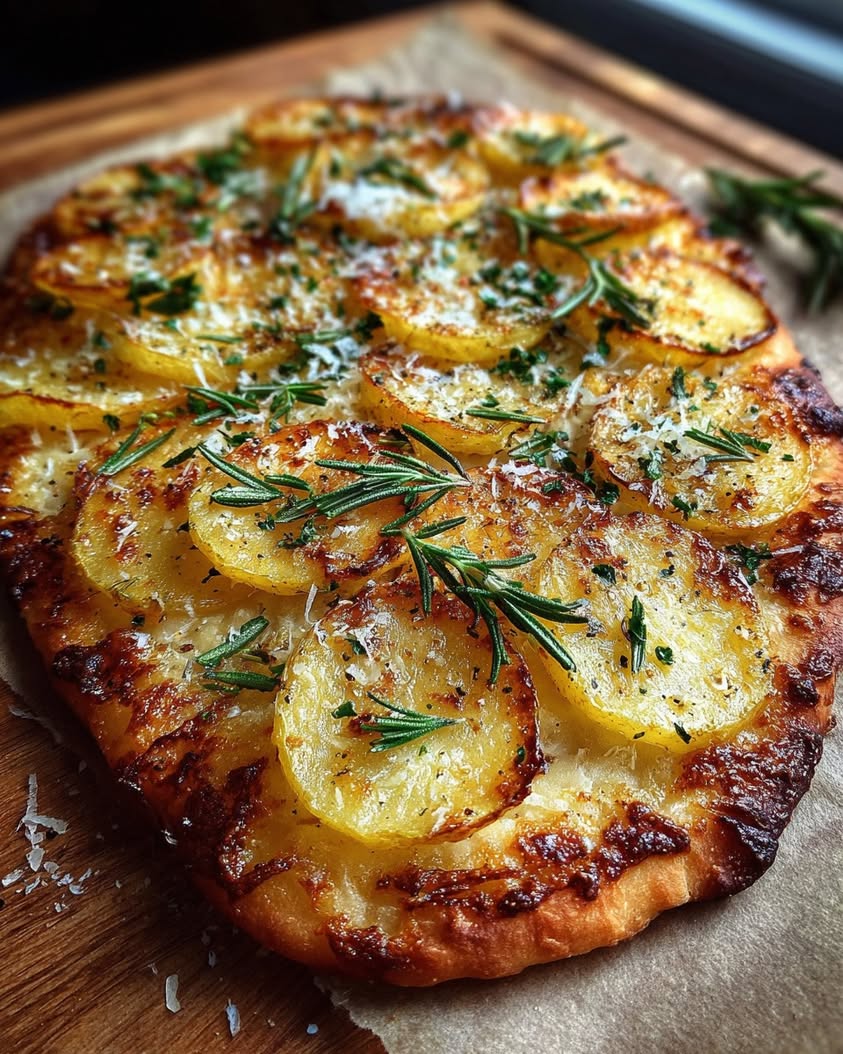
Crispy Potato & Rosemary Flatbread with Truffle Oil & Sea Salt: An Elegant Homemade Appetizer
Imagine the irresistible aroma of freshly baked bread, earthy truffle, and fragrant rosemary wafting from your oven. This Crispy Potato & Rosemary Flatbread with Truffle Oil & Sea Salt delivers exactly that experience, transforming simple ingredients into a show-stopping appetizer or light meal. Moreover, it masterfully combines rustic comfort with gourmet flair, making it perfect for both casual family dinners and sophisticated gatherings. Consequently, you get a golden, cracker-thin crust topped with tender, thinly sliced potatoes and aromatic herbs.
The magic of this recipe lies in its beautiful contrasts. For instance, you experience a symphony of textures and flavors in every bite: the shatteringly crisp flatbread base, the soft and creamy potato slices, the woodsy punch of fresh rosemary, and the luxurious finish of truffle oil. Ultimately, this dish proves that impressive food doesn’t require complicated techniques or obscure ingredients. In fact, with a store-bought pizza dough and a few humble components, you can create a restaurant-quality flatbread that will have everyone asking for the recipe.
Quick Recipe Highlights
- Flavor Profile: This flatbread features a deeply savory base with the earthy, umami-rich notes of truffle oil perfectly complementing the starchy sweetness of potatoes. Additionally, fresh rosemary adds a piney, aromatic brightness that cuts through the richness, while flaky sea salt provides the essential finishing touch.
- Texture: The foundation is a delightfully crispy and crackly flatbread, achieving an almost cracker-like quality. Meanwhile, the paper-thin potato slices become tender and slightly caramelized in the oven, creating a wonderful contrast against the crisp base for a truly satisfying mouthfeel.
- Aroma: As it bakes, the kitchen fills with the unmistakable, comforting scent of baking bread and roasted potatoes. Furthermore, the heady, intoxicating fragrance of truffle oil and the herbal warmth of rosemary elevate the entire sensory experience before you even take a bite.
- Visual Appeal: The presentation is stunningly simple yet elegant. Golden-brown potatoes are arranged in a beautiful, overlapping pattern on a crisp, bubbled crust. Finally, a drizzle of dark truffle oil and a sprinkle of sparkling sea salt create a visually sophisticated finish.
- Skill Level Needed: This is an accessible recipe for cooks of all levels. Primarily, it requires basic knife skills for slicing potatoes and the ability to roll out dough. Therefore, even beginner bakers can achieve fantastic results with careful attention to baking time.
- Special Equipment: You need only a few standard kitchen tools: a rolling pin, a sharp knife or mandoline for even potato slices, a baking sheet, and a pastry brush. Notably, a pizza stone or baking steel can enhance crispiness but is not mandatory for success.
Recipe Overview
- Difficulty Level: We rate this Crispy Potato & Rosemary Flatbread with Truffle Oil & Sea Salt as “Easy.” The steps are straightforward and sequential. First, you prepare the dough and potatoes. Next, you assemble and bake. Crucially, there’s no yeast-proofing or complex dough handling, as store-bought dough streamlines the process significantly. The most technical aspect is achieving uniformly thin potato slices, which a mandoline easily solves.
- Category: This versatile dish straddles multiple categories beautifully. It functions perfectly as an appetizer or starter, cut into small pieces for passing around. Alternatively, served in larger wedges alongside a simple salad, it becomes a satisfying light lunch or dinner. It also excels as a sophisticated party snack or a unique side dish for soups and stews.
- Cuisine: While flatbreads have roots in countless global traditions, from Italian focaccia to Indian naan, this recipe leans into a modern, fusion-style approach. It takes the universal concept of baked dough with toppings and elevates it with gourmet ingredients like truffle oil. The result is a contemporary dish that feels both familiar and excitingly new.
- Cost: This is a cost-effective way to enjoy luxurious flavors. A bottle of truffle oil is an investment, but only a small amount is used per recipe, making it last for many meals. Potatoes, rosemary, and olive oil are pantry staples. Store-bought pizza dough is very affordable. Overall, you can create this impressive flatbread for a fraction of a restaurant’s price.
- Season: This Crispy Potato & Rosemary Flatbread with Truffle Oil & Sea Salt is truly a year-round winner. During cooler months, its warm, roasted flavors provide comforting nourishment. In warmer seasons, it pairs wonderfully with light salads and chilled wines for an al fresco meal. The ingredients are consistently available, making it a reliable choice anytime.
- Occasion: Its versatility makes it suitable for countless occasions. It’s an effortless yet impressive Friday night treat, a standout item on a holiday appetizer spread, or a beautiful centerpiece for a casual brunch with friends. Ultimately, it brings a touch of gourmet elegance to any table without demanding excessive effort from the cook.
Why You’ll Love This Recipe
First and foremost, the taste and texture combination is utterly addictive. The Crispy Potato & Rosemary Flatbread with Truffle Oil & Sea Salt delivers a multi-sensory eating experience that is deeply satisfying. Each bite starts with a satisfying crunch, gives way to the softness of the potato, and finishes with the lingering, luxurious essence of truffle. This harmonious blend of rustic and refined elements makes it a recipe you’ll return to again and again. Furthermore, the balance of flavors—salty, earthy, herbal, and savory—is perfectly calibrated to please a wide range of palates.
From a practical standpoint, the convenience factor is a major win. By utilizing high-quality store-bought pizza dough, you bypass the most time-consuming step of bread-making. Consequently, you go from idea to plated dish in well under an hour. The assembly process is meditative and simple: rolling, brushing, layering, and baking. This makes it an ideal recipe for busy weeknights when you want something special without a lengthy kitchen project. Moreover, the ingredients are easy to source, often already residing in your pantry or a quick trip to the grocery store away.
Nutritionally, this flatbread offers some distinct advantages when enjoyed in moderation. Potatoes provide a good source of vitamin C, potassium, and fiber, especially when the skin is left on. Using olive oil contributes heart-healthy monounsaturated fats. Rosemary is not just a flavoring agent; it contains antioxidants and anti-inflammatory compounds. By making it at home, you control the quality of fats and the amount of salt, avoiding the excessive oils and preservatives often found in takeout or frozen versions. Pairing a wedge with a large, leafy green salad creates a well-rounded meal.
The social and entertaining value of this dish is incredibly high. There’s something universally appealing about a beautiful, hot flatbread brought straight to the table. It encourages sharing and conversation. Serving this Crispy Potato & Rosemary Flatbread with Truffle Oil & Sea Salt immediately signals to your guests that you’ve made an effort to create something delicious and beautiful for them. It’s visually impressive yet approachable, making it a fantastic conversation starter. Whether it’s the centerpiece of a casual get-together or part of a larger feast, it always receives rave reviews.
Finally, its cost-effectiveness and accessibility are undeniable. As mentioned, truffle oil is the sole “splurge” ingredient, and a little goes a very long way. Potatoes are one of the most affordable vegetables available. Compared to ordering a similar artisanal flatbread at a restaurant or upscale market, making it yourself saves a substantial amount of money. This accessibility means you can enjoy a taste of gourmet cooking regularly, not just on special occasions. It democratizes luxury flavor, proving that eating well doesn’t have to be expensive or complicated.
Historical Background and Cultural Significance
The story of flatbread is as old as civilization itself, representing one of humanity’s earliest and most fundamental prepared foods. Archaeologists have found evidence of simple flour-and-water cakes baked on hot stones dating back over 10,000 years. Essentially, every culture with access to grain developed its own version: tortillas in the Americas, naan in South Asia, lavash in the Middle East, and piadina in Italy. Our Crispy Potato & Rosemary Flatbread with Truffle Oil & Sea Salt is a modern descendant of this ancient culinary tradition, marrying the primal appeal of baked dough with contemporary, globalized ingredients.
Culturally, flatbreads have always been more than just sustenance; they are utensils, plates, and symbols of community. In many traditions, bread is sacred, and the act of breaking bread together is a universal gesture of peace and fellowship. The addition of toppings transformed simple flatbread into a canvas for regional flavors and seasonal harvests. The potato’s journey from the Andes to global staple, and the truffle’s status as a prized European luxury, show how this recipe is a tapestry of food history. It connects the everyday with the extraordinary on a single, crispy platform.
The evolution of the recipe specifically combining potatoes and bread is fascinating. Potatoes on bread might seem intuitive, but it’s a pairing celebrated in specific regional dishes. For instance, the Swiss Rösti and the Spanish Tortilla de Patatas showcase the potato’s versatility, while Italian pizza patate is a direct ancestor. The modern twist of adding truffle oil reflects our current culinary era, where once-exclusive ingredients become accessible to home cooks. This evolution speaks to a desire for rustic comfort food elevated with a touch of gourmet sophistication, a defining trend in contemporary home cooking.
Regional variations of potato flatbreads abound, each telling a story of local taste and resourcefulness. In Southern Italy, pizza con patate might feature thinly sliced potatoes, rosemary, and olive oil, much like our base. In Alsace, a Tarte Flambée might include crème fraîche, onions, and lardons alongside potatoes. Our version, with its truffle oil finish, leans into a more modern, fusion-inspired direction. Exploring these variations highlights the incredible adaptability of the core concept. Ultimately, this Crispy Potato & Rosemary Flatbread with Truffle Oil & Sea Salt is your personal contribution to this long, delicious, and ever-evolving story.
Ingredient Deep Dive
Pizza Dough: The foundation of your flatbread, store-bought pizza dough is a brilliant shortcut that ensures consistent results. Historically, flatbread doughs were simple mixtures of local grains and water. Today, pre-made dough offers convenience without sacrificing quality. Look for dough from the refrigerated section of your grocery store, often near the cheeses, or from a local pizzeria. For best results, let the dough sit at room temperature for about 30 minutes before rolling; this relaxes the gluten and makes it much easier to shape. If you prefer homemade, a simple no-knead dough works wonderfully. Store unused dough tightly wrapped in the refrigerator for a few days or freeze for longer storage.
Yukon Gold Potatoes: Chosen for their perfect balance of starch and moisture, Yukon Golds have a naturally buttery flavor and creamy texture that melts when baked thinly. They originated in Canada in the 1970s and have since become a kitchen favorite worldwide. Nutritionally, they are a good source of vitamin C, potassium, and vitamin B6. Their thin, delicate skin is edible and adds fiber. When selecting, choose firm potatoes without sprouts or green tinges. Store them in a cool, dark, well-ventilated place—not the refrigerator, as cold temperatures can convert their starch to sugar. For this recipe, slicing them paper-thin is non-negotiable for even cooking and perfect texture.
Fresh Rosemary: This hardy, woody herb brings an aromatic, pine-like fragrance that is quintessential to Mediterranean cooking. It has been used since ancient times for culinary, medicinal, and symbolic purposes, often associated with remembrance. Rosemary contains antioxidants like rosmarinic acid and is a source of iron, calcium, and vitamin B6. Always use fresh sprigs for this recipe; dried rosemary becomes needle-like and unpleasant. To strip the leaves, simply hold the top of the sprig and run your fingers down the stem. Store fresh rosemary loosely wrapped in a damp paper towel in the refrigerator. For a different flavor profile, fresh thyme makes an excellent substitute.
Truffle Oil: This ingredient provides the luxurious, earthy finish that defines the dish. Importantly, truffle oil is typically a neutral oil infused with synthetic or natural truffle aroma, making real truffles affordable. A little goes an incredibly long way. For the best flavor, seek out oil that lists “truffle essence” or pieces of truffle in the ingredients. Drizzle it on after baking to preserve its delicate aroma. Store it in a cool, dark cupboard to prevent rancidity. If you cannot find truffle oil, a high-quality, robust extra virgin olive oil makes a delicious, though different, alternative. Consider adding a very light sprinkle of porcini mushroom powder to the olive oil to mimic some of the earthy depth.
Flaky Sea Salt: This is not just salt; it’s a final garnish that adds texture and bursts of flavor. Flaky salts, like Maldon or fleur de sel, have a delicate, crunchy structure that dissolves slowly. They are harvested through traditional evaporation methods. Using them as a finish preserves their unique texture and provides a more complex salinity than table salt. The large crystals also create visual sparkle. Store sea salt in a dry, sealed container. In a pinch, any coarse kosher salt can be used, though the textural effect will be less pronounced. This final sprinkle is crucial for balancing the richness of the oil and potatoes.
Common Mistakes to Avoid
- Using Thick Potato Slices: Slicing potatoes too thick is the primary reason for undercooked toppings. Thick slices won’t cook through before the flatbread crust burns. Consequently, you must aim for paper-thin, translucent slices, ideally using a mandoline for uniformity and safety.
- Skipping the Pre-Bake (Par-baking): Neglecting to partially bake the rolled-out dough before adding toppings leads to a soggy bottom. The initial bake in a hot oven sets the crust and creates a moisture barrier, ensuring it stays crispy under the potato layer.
- Overloading with Toppings: While it’s tempting to add more, a heavy layer of potatoes traps steam. This steam prevents crisping and results in a soft, doughy center. Less is more; a single, overlapping layer of thin slices is perfect.
- Adding Truffle Oil Before Baking: Drizzling the truffle oil prior to baking is a critical error. The high heat will destroy its delicate aroma completely. Always add truffle oil as a finishing drizzle the moment the flatbread comes out of the oven.
- Using a Cold Baking Sheet: Placing your dough on a room-temperature sheet pan slows down the initial oven spring and crisping. For a better result, preheat your baking sheet in the oven for 5-10 minutes before carefully placing the dough on it.
- Not Brushing with Enough Olive Oil: The olive oil brushed on the dough before adding potatoes is essential for flavor, browning, and creating a barrier against sogginess. Be generous but not pooling. Similarly, lightly brushing the potato tops helps them crisp and golden.
- Cutting Immediately After Baking: Slicing into the flatbread the second it leaves the oven causes the steam to escape rapidly, which can make the crust soften. Let it rest on a wire rack for 3-5 minutes to allow the structure to set slightly for cleaner cuts.
- Storing Leftovers Improperly: Storing leftover flatbread in an airtight container or plastic bag traps moisture and turns it rubbery. Instead, store it uncovered or loosely tented with foil at room temperature and re-crisp in a hot oven or toaster oven.
Essential Techniques
Rolling Dough Thinly and Evenly: Achieving a uniformly thin crust is paramount for the signature crispiness. Start with room-temperature dough on a lightly floured surface. Press it into a disc, then roll from the center outward, rotating the dough a quarter turn after each roll to maintain an even circle or rectangle. Don’t fight the dough; if it springs back, let it rest for 5 minutes to relax the gluten. The goal is about 1/8-inch thickness. A common pitfall is rolling too thick in the center, leading to a doughy middle. Visual success is a flat, even sheet without major tears.
Mandoline Slicing for Potatoes: Using a mandoline is the single best way to guarantee paper-thin, consistent potato slices that cook evenly. Always use the safety guard to protect your fingers. Select a blade setting that yields nearly translucent slices. If you don’t have a mandoline, use a very sharp chef’s knife and take your time. The importance lies in surface area: thin slices maximize contact with heat and oil, promoting caramelization and tenderness. The pitfall is uneven thickness, resulting in some slices being crunchy while others are raw. Success yields a stack of flexible, uniform slices.
Par-baking the Crust: This technique involves partially baking the dough before adding toppings. It creates a firm, dry base that resists sogginess from the moist potatoes. Preheat your oven and baking sheet. Roll the dough, transfer it to the hot sheet, prick it with a fork to prevent giant bubbles, and bake until just set and beginning to pale golden, but not fully browned. This step is crucial because it seals the dough’s surface. The visual cue is the loss of raw, doughy shine and the formation of small bubbles. Skipping this step almost guarantees a limp flatbread.
Layering Potatoes in a Shingle Pattern: Arranging the potato slices is about aesthetics and even cooking. Overlap the slices like roof shingles or fish scales, starting at one edge. This overlapping ensures every bite includes potato and allows for slight steam release between slices, aiding crispness. Avoid stacking slices directly on top of each other, which creates wet, dense patches. The pattern should be tight but not crowded. This technique guarantees a beautiful, professional presentation and consistent texture across the entire flatbread.
Pro Tips for Perfect Crispy Potato & Rosemary Flatbread with Truffle Oil & Sea Salt
First, for maximum crispiness, consider using a pizza stone or steel. Preheat it for at least 45 minutes and bake the flatbread directly on it, either on parchment or a pizza peel dusted with cornmeal. This professional-grade heat transfer mimics a wood-fired oven.
Second, after slicing your potatoes, pat them dry thoroughly with a clean kitchen towel. Removing excess surface starch and moisture helps them crisp up beautifully in the oven instead of steaming.
Third, infuse your olive oil with rosemary for an extra flavor layer. Gently warm the olive oil with a sprig of rosemary for 5 minutes, then let it cool. Use this fragrant oil to brush the dough and potatoes.
Fourth, don’t just sprinkle rosemary; ensure it makes contact with the oiled potatoes or dough. Rosemary tossed on top can burn quickly. Gently press some into the potato slices so they adhere and roast instead of incinerate.
Fifth, for a gorgeous golden finish, very lightly brush the assembled potato tops with a bit more olive oil just before the final bake. This promotes even browning and a slight crisp on the potato edges.
Sixth, let the baked flatbread rest on a wire cooling rack, not on the hot baking sheet. This allows air to circulate underneath, preventing condensation from softening your perfectly crisp crust.
Seventh, experiment with different potato varieties. While Yukon Gold is ideal, very thin slices of sweet potato or purple potato can create stunning visual contrast and subtle flavor variations.
Eighth, if your truffle oil is very strong, consider mixing a few drops with a tablespoon of high-quality extra virgin olive oil before drizzling. This mellows the intensity and allows for more even distribution.
Variations and Adaptations
Regional Variations: Travel the world via your flatbread. For a French twist, spread a thin layer of crème fraîche over the par-baked crust before adding potatoes and finish with grated Gruyère. An Italian version might include scattered slices of spicy soppressata or pancetta. For a Spanish flair, add thinly sliced chorizo and manchego cheese after baking. Each adaptation honors a different culinary tradition while utilizing the same master technique.
Seasonal Adaptations: Embrace the produce of the moment. In spring, add thin asparagus spears and fresh peas. Summer calls for heirloom cherry tomato halves and zucchini ribbons. Autumn welcomes thinly sliced mushrooms or caramelized onions mixed with the potatoes. Winter variations can include a dusting of grated Parmesan or Pecorino Romano for extra savory depth against the cold.
Dietary Modifications: This recipe is wonderfully adaptable. For a gluten-free Crispy Potato & Rosemary Flatbread, use a high-quality gluten-free pizza dough blend. To make it vegan, ensure your store-bought dough contains no dairy or honey, and substitute a plant-based butter or oil wash. For a dairy-free version, it’s naturally so, just confirm your dough ingredients.
Flavor Variations: The herb and oil canvas is yours to paint. Substitute rosemary with fresh thyme, oregano, or sage. Infuse the olive oil with garlic or chili flakes before brushing. Add a sprinkle of smoked paprika or sumac over the potatoes before baking. Instead of truffle oil, finish with a balsamic glaze reduction or a lemon-infused olive oil for brightness.
Texture Modifications: Play with the potato preparation for different results. For extra crunch, toss the very thin potato slices in a little oil and salt and bake them separately on a rack until crisp, then scatter them over the baked flatbread like chips. For a richer, softer texture, mix the potato slices with a little cream or mascarpone before layering.
Presentation Alternatives: Instead of one large flatbread, divide the dough into four portions to create individual personal-sized flatbreads. Cut the baked flatbread into long, thin strips to serve as dippers for soups or whipped ricotta. For a party, cut into small one-bite squares for easy passing. The shape is endlessly flexible.
Serving and Presentation Guide
Plating begins with the cut. Use a sharp pizza wheel or chef’s knife to slice the warm flatbread. For appetizers, cut into small squares or triangles. For a main, cut into larger wedges. Always present it on a simple, large wooden board or a plain slate platter to let the food’s colors and textures shine. The golden-brown potatoes and dark truffle oil drizzle are the stars.
Garnishing is your final artistic touch. Beyond the truffle oil and sea salt, consider a light scattering of microgreens or arugula for a peppery freshness and pop of green. A few edible flowers add elegance for a special occasion. A small bowl of flaky sea salt on the side allows guests to adjust seasoning to their taste.
Traditional accompaniments keep it simple. In Italy, such a flatbread might stand alone as a snack or precede a meal. It pairs beautifully with a simple, bitter green salad dressed with lemon vinaigrette to cut the richness. A bowl of marinated olives or roasted nuts on the side continues the Mediterranean theme effortlessly.
Modern serving suggestions expand its role. Serve it as a base for a poached or fried egg at brunch. Offer alongside a charcuterie and cheese board as a crisp, savory element. Pair it with a creamy soup, like mushroom or cauliflower, using the flatbread as both a dipper and a side. It’s incredibly versatile.
Temperature considerations are key. This Crispy Potato & Rosemary Flatbread with Truffle Oil & Sea Salt is best served warm from the oven, when the crust is at its peak crispness. However, it is also delicious at room temperature, making it excellent for buffets or picnics. Avoid serving it cold from the refrigerator, as the crust will soften.
Portion control is intuitive. As an appetizer for 4-6 people, one recipe is perfect. For a light lunch for two, it’s a satisfying meal with a salad. If doubling for a crowd, consider making two separate flatbreads rather than one giant one, as a larger dough can be difficult to handle and may not cook as evenly in a home oven.
Wine and Beverage Pairing
Wine pairings should complement the earthy, savory, and herbal notes. A crisp, unoaked white wine like a Sauvignon Blanc or Pinot Grigio cuts through the richness with acidity. For red wine lovers, a light-bodied Pinot Noir with earthy undertones mirrors the truffle flavor beautifully. An elegant Champagne or dry sparkling wine provides celebratory effervescence that cleanses the palate with every bite, making each taste as exciting as the first.
Non-alcoholic alternatives can be just as sophisticated. A sparkling water with a twist of lemon or lime offers refreshment. For more flavor, try a chilled herbal iced tea, such as rosemary or lemon verbena, which echoes the herbal notes on the flatbread. A non-alcoholic sparkling cider provides a touch of autumnal sweetness that pairs well with the savory potatoes.
While not a classic coffee dish, this flatbread could pair with a light meal that includes coffee. If serving for brunch, a medium-roast coffee with low acidity would work well. For tea, consider a green tea like Sencha, which has vegetal notes, or a light oolong. The key is to avoid overly sweet or heavy beverages that would clash with the flatbread’s elegant savoriness.
Temperature considerations for beverages are straightforward. White wines, sparkling wines, and non-alcoholic options should be served well-chilled. Red wines should be served slightly below room temperature, around 60-65°F. Iced teas and sparkling waters are most refreshing when ice-cold. Proper temperature ensures the beverage performs its role as a palate cleanser and complement.
Serving suggestions involve presentation. Pour wines into appropriate glassware to enhance aroma. For non-alcoholic options, use beautiful pitchers and glasses with ice and garnishes like citrus wheels or herb sprigs. Offering a choice between one red and one white wine, plus a sparkling water, covers all guest preferences elegantly and simply.
Storage and Shelf Life
Storage methods for leftovers are critical to preserving texture. Never store in an airtight container or plastic bag while still warm, as trapped steam will create sogginess. Instead, allow the flatbread to cool completely on a wire rack. Once cool, you can store it loosely wrapped in parchment paper or foil, or simply place it on a plate uncovered. The goal is to let any residual moisture escape.
Temperature requirements are simple: room temperature is best for short-term storage. The flatbread will keep at room temperature for up to 8 hours. Do not refrigerate, as the cold environment promotes starch retrogradation, making the bread tough and the potatoes unpleasant. The refrigerator is the enemy of crispness for this particular dish.
Container recommendations are minimal. A baking sheet loosely tented with foil or a pizza box are ideal as they allow for air circulation. If you must stack slices, place a sheet of parchment paper between layers to prevent sticking. Avoid deep containers that put pressure on the crisp crust.
Signs of spoilage are typical for potato-based foods. Look for any off odors, significant softening with moisture, or mold (extremely rare at room temperature within a day). Because it contains no highly perishable dairy or meat, it is relatively stable. However, its prime eating window is within hours of baking.
Reheating instructions are non-negotiable for restoring glory. To re-crisp, preheat your oven or toaster oven to 375°F. Place slices directly on the oven rack or on a wire rack set over a baking sheet for 5-8 minutes, until hot and crisp again. The microwave will make it rubbery and should be avoided at all costs.
Freezing guidelines are not recommended for the fully assembled flatbread. The potatoes and dough do not freeze and reheat well together, often becoming watery and soggy. However, you can freeze the rolled-out, par-baked crust alone. Wrap it tightly in plastic and foil. To use, thaw, add toppings, and bake as directed, adding a few extra minutes to the final bake.
Make Ahead Strategies
Prep timeline can be stretched over a day for easy entertaining. The day before, slice your potatoes and store them completely submerged in cold water in the refrigerator. This prevents browning. Also, strip your rosemary sprigs. You can even measure out your olive oil and have your truffle oil ready. The dough can be purchased ahead and stored in the fridge.
Storage between steps is straightforward. The water-submerged potatoes will keep for 24 hours. Drain and pat them very dry before using. Prepped rosemary can be wrapped in a damp paper towel and stored in a bag in the fridge. Having everything measured and ready turns the assembly process into a 10-minute task before baking.
Quality impact assessment is positive for most make-ahead steps. Potatoes in water may lose a tiny amount of starch, which can actually help them crisp. The rosemary’s flavor remains intact. The key is ensuring the potatoes are thoroughly dried before assembly to avoid introducing excess moisture that wasn’t there in the original recipe.
Assembly tips for a make-ahead scenario: You can par-bake the crust up to 2 hours ahead. Let it cool completely on a rack. Then, just before your guests arrive or you’re ready to eat, add the potatoes and rosemary and proceed with the final bake. This spreads the work and minimizes last-minute kitchen time.
Reheating guidelines for a fully made-ahead flatbread are the same as for leftovers. If you bake it completely ahead, let it cool, then re-crisp in a hot oven for 5-8 minutes before serving. However, for optimal quality, the final bake is best done just before serving.
Fresh element additions are what make it shine. Regardless of your make-ahead prep, the truffle oil drizzle and flaky sea salt must always be added fresh, after the final bake or reheat. This guarantees the aromatic punch and textural contrast that define the dish.
Scaling Instructions
Halving the recipe is simple for a smaller yield. Use half a pound of store-bought dough (most are 1 lb balls). Use one medium potato. Halve all other ingredient quantities. The baking time may reduce slightly, perhaps by 3-5 minutes, so watch for visual cues—golden crust and tender potatoes. Use a smaller baking sheet or simply shape a smaller round.
Doubling or tripling for a crowd is best managed by making multiple flatbreads separately, not one enormous one. Home ovens have hot spots, and a very large dough is difficult to transfer and may cook unevenly. Bake them sequentially, keeping the first ones warm in a 200°F oven on a wire rack while the others bake. This ensures everyone gets a hot, crisp piece.
Equipment adjustments may be needed when scaling. If making multiple flatbreads, having two baking sheets and rotating them in the oven (top to bottom, front to back) halfway through baking ensures even browning. If you only have one sheet, let it cool slightly between batches or run it under cold water to cool it down before adding the next dough to prevent premature cooking on the bottom.
Timing modifications are minimal when making multiple separate flatbreads. The par-bake and final bake times remain the same per flatbread. The total active time increases linearly, but much of it is hands-off oven time. Good planning allows you to have a steady stream of fresh flatbreads coming out of the oven throughout a party.
Storage considerations for scaled-up batches: If you have leftovers from a doubled batch, follow the same room-temperature, uncovered storage advice. However, with more volume, ensure they are not stacked high while still warm. Spread them out on a large table or multiple racks to cool quickly and evenly before loosely covering.
Nutritional Deep Dive
Macro breakdown for a serving (1/4 of the flatbread) provides a balanced profile. The carbohydrates come primarily from the dough and potatoes, offering energy. Fats are predominantly from the heart-healthy monounsaturated fats in olive oil, with the truffle oil contributing minimal additional fat. Protein content is modest, coming from the wheat in the dough. This makes it an ideal component of a meal rather than a complete protein source on its own.
Micronutrient analysis reveals valuable vitamins and minerals. Potatoes contribute vitamin C, potassium, and vitamin B6. Olive oil provides vitamin E and K. Rosemary offers traces of iron, calcium, and antioxidants like rosmarinic acid. Using whole wheat pizza dough would increase the fiber, magnesium, and zinc content significantly, making it a more nutrient-dense choice.
Health benefits are linked to its whole-food ingredients. The monounsaturated fats in olive oil support heart health. Potassium from potatoes aids in blood pressure regulation. The antioxidants in rosemary have anti-inflammatory properties. When consumed as part of a diet rich in vegetables and lean proteins, this flatbread contributes beneficial nutrients and satisfying complex carbohydrates.
Dietary considerations are important for specific needs. The recipe is naturally vegetarian and can be made vegan with dough verification. It contains gluten from standard pizza dough. For those monitoring sodium, the amount of added salt can be adjusted downward, relying more on the truffle oil and rosemary for flavor. The fat content is primarily from plant-based oils.
Portion analysis is key to enjoyment. One quarter of this flatbread is a satisfying serving as an appetizer or light meal with a salad. It’s more substantial than a slice of plain bread due to the potato topping and oils. Being mindful of portion size allows you to enjoy the rich flavors without overconsuming calories, especially from the carbohydrate-dense base.
Weight management tips involve strategic pairing. To make this part of a weight-conscious diet, pair a smaller wedge with a large, protein-rich salad filled with greens, chickpeas, and grilled chicken. This balances the meal and provides satiating fiber and{“success”:true,”message”:”Recipe created successfully”,”post_id”:9015,”tasty_recipe_id”:9015,”shortcode”:” Print
Crispy Potato & Rosemary Flatbread with Truffle Oil & Sea Salt
Description
A rustic, savory flatbread topped with thinly sliced potatoes, fresh rosemary, and a drizzle of truffle oil, finished with flaky sea salt for a gourmet touch.
Ingredients
For the Crust:
- 1 large russet potato, thinly sliced
- 1 lb pizza dough, store-bought or homemade
- 2 tbsp olive oil
- 2 tbsp fresh rosemary, chopped
- 1 tbsp truffle oil
- 1 tsp flaky sea salt
- 1/2 tsp black pepper
- 1/4 cup grated Parmesan cheese (optional)
Instructions
1. Prepare the Crust:
- Preheat oven to 450°F (230°C). Roll out pizza dough on a floured surface into a thin, rustic oval or rectangle.
- Brush the dough with olive oil, then arrange potato slices in a single layer, slightly overlapping.
- Sprinkle rosemary, black pepper, and Parmesan (if using) evenly over the potatoes.
- Bake for 20-25 minutes until the crust is golden and potatoes are crispy.
- Remove from oven, drizzle with truffle oil, and sprinkle with flaky sea salt. Slice and serve warm.
Notes
You can customize the seasonings to taste.

I’m Billy, a classically trained culinary school graduate from The Culinary Institute of America with over 12 years in the restaurant industry and over 19 years of cooking experience.